
SPEECH CODES THEORY COM 472 BALDWIN John R
SPEECH CODES THEORY COM 472 --BALDWIN John R. Baldwin jrbaldw@ilstu. edu January 26, 2007
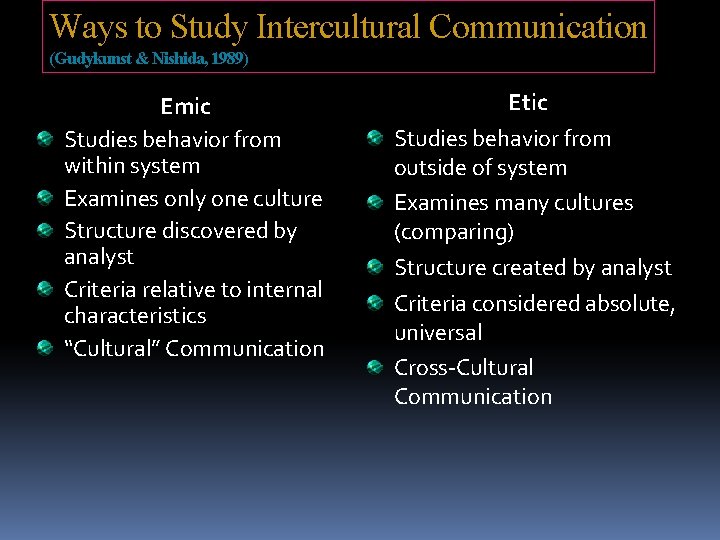
Ways to Study Intercultural Communication (Gudykunst & Nishida, 1989) Emic Studies behavior from within system Examines only one culture Structure discovered by analyst Criteria relative to internal characteristics “Cultural” Communication Etic Studies behavior from outside of system Examines many cultures (comparing) Structure created by analyst Criteria considered absolute, universal Cross-Cultural Communication
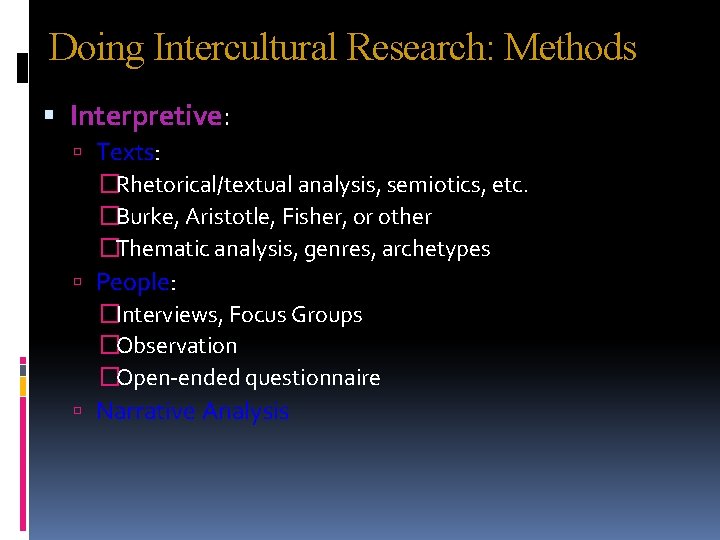
Doing Intercultural Research: Methods Interpretive: Texts: �Rhetorical/textual analysis, semiotics, etc. �Burke, Aristotle, Fisher, or other �Thematic analysis, genres, archetypes People: �Interviews, Focus Groups �Observation �Open-ended questionnaire Narrative Analysis
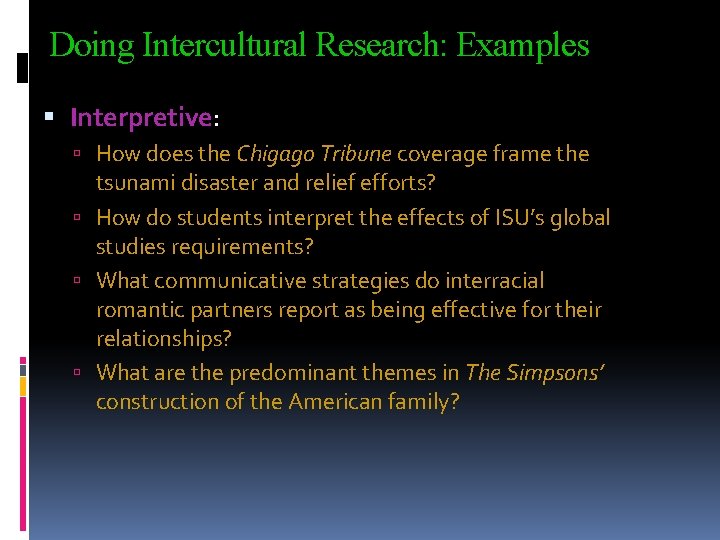
Doing Intercultural Research: Examples Interpretive: How does the Chigago Tribune coverage frame the tsunami disaster and relief efforts? How do students interpret the effects of ISU’s global studies requirements? What communicative strategies do interracial romantic partners report as being effective for their relationships? What are the predominant themes in The Simpsons’ construction of the American family?
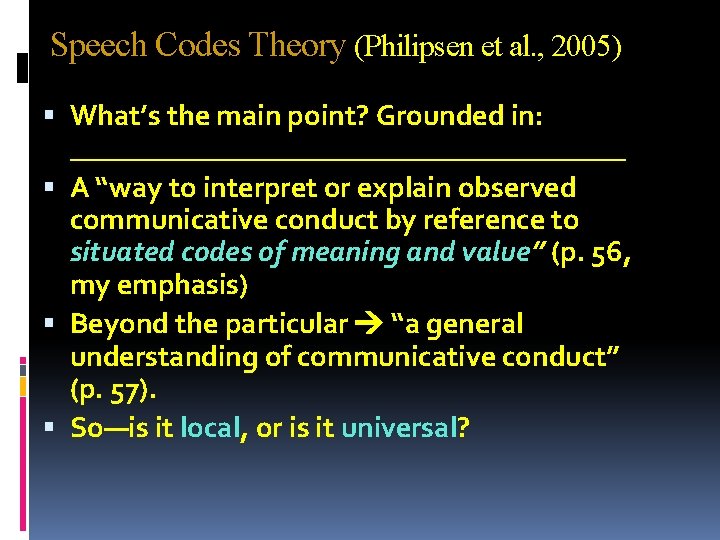
Speech Codes Theory (Philipsen et al. , 2005) What’s the main point? Grounded in: ___________________ A “way to interpret or explain observed communicative conduct by reference to situated codes of meaning and value” (p. 56, my emphasis) Beyond the particular “a general understanding of communicative conduct” (p. 57). So—is it local, or is it universal?
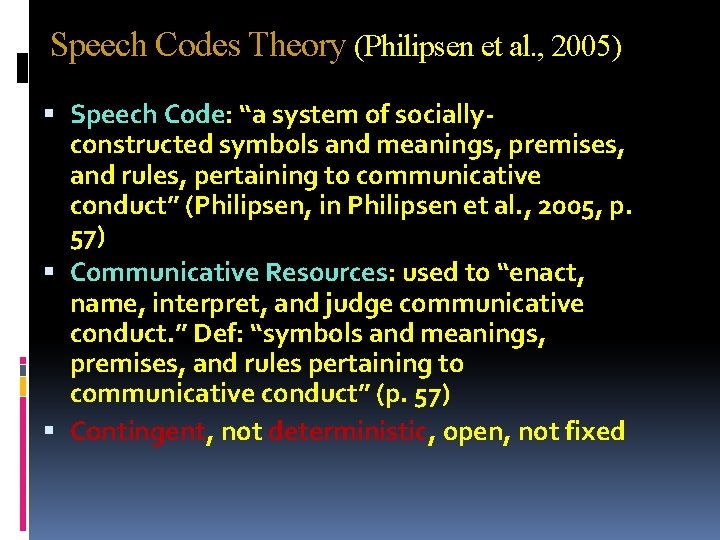
Speech Codes Theory (Philipsen et al. , 2005) Speech Code: “a system of sociallyconstructed symbols and meanings, premises, and rules, pertaining to communicative conduct” (Philipsen, in Philipsen et al. , 2005, p. 57) Communicative Resources: used to “enact, name, interpret, and judge communicative conduct. ” Def: “symbols and meanings, premises, and rules pertaining to communicative conduct” (p. 57) Contingent, not deterministic, open, not fixed
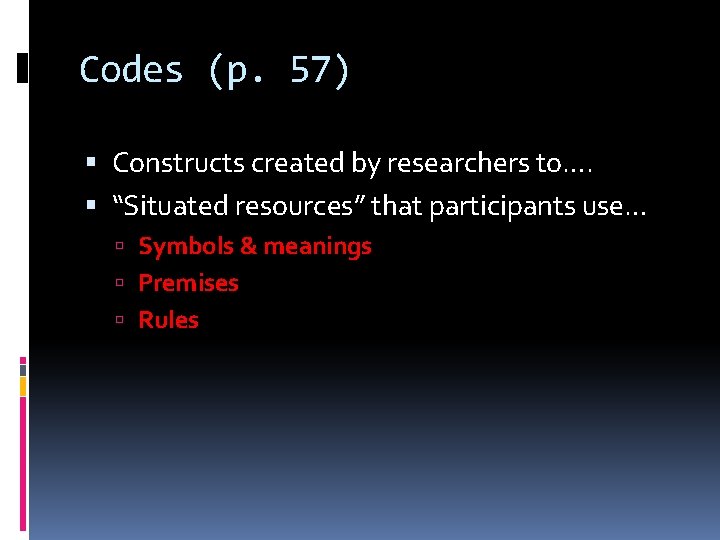
Codes (p. 57) Constructs created by researchers to…. “Situated resources” that participants use… Symbols & meanings Premises Rules
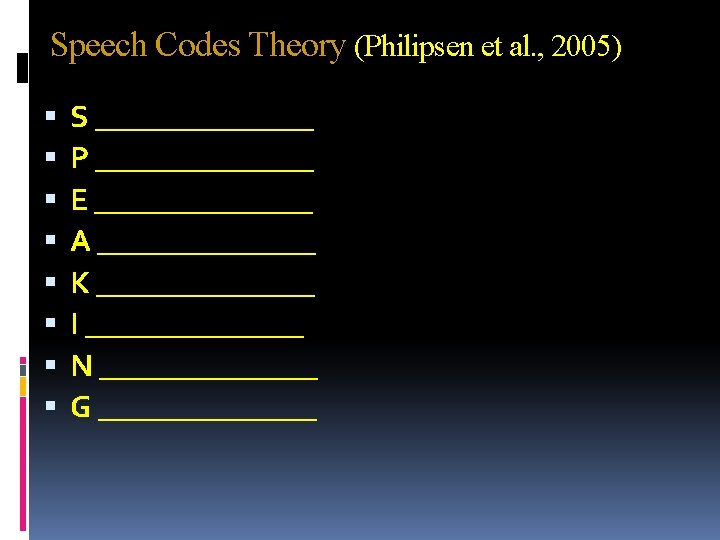
Speech Codes Theory (Philipsen et al. , 2005) S _______ P _______ E _______ A _______ K _______ I _______ N _______ G _______
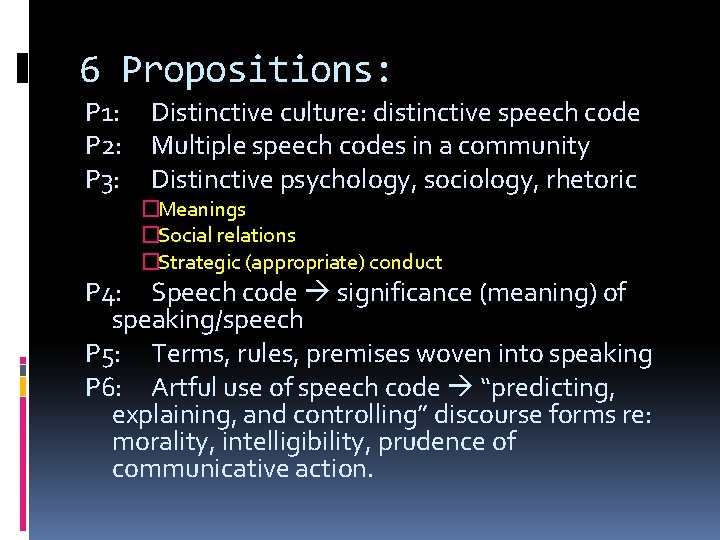
6 Propositions: P 1: P 2: P 3: Distinctive culture: distinctive speech code Multiple speech codes in a community Distinctive psychology, sociology, rhetoric �Meanings �Social relations �Strategic (appropriate) conduct P 4: Speech code significance (meaning) of speaking/speech P 5: Terms, rules, premises woven into speaking P 6: Artful use of speech code “predicting, explaining, and controlling” discourse forms re: morality, intelligibility, prudence of communicative action.
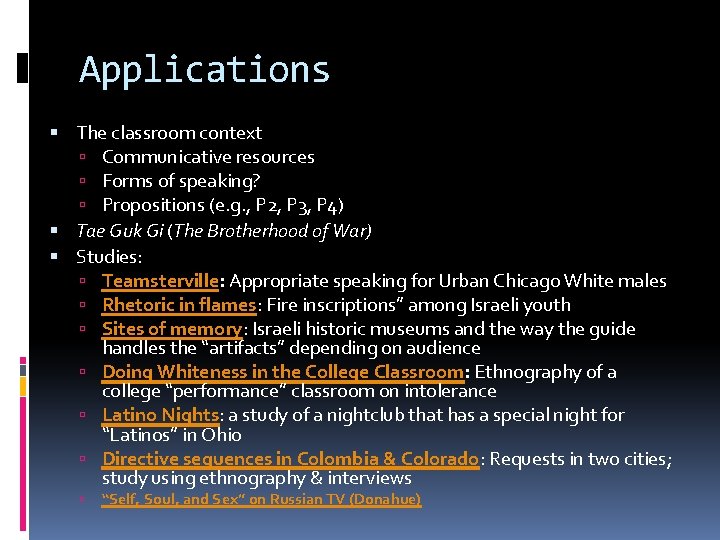
Applications The classroom context Communicative resources Forms of speaking? Propositions (e. g. , P 2, P 3, P 4) Tae Guk Gi (The Brotherhood of War) Studies: Teamsterville: Appropriate speaking for Urban Chicago White males Rhetoric in flames: Fire inscriptions” among Israeli youth Sites of memory: Israeli historic museums and the way the guide handles the “artifacts” depending on audience Doing Whiteness in the College Classroom: Ethnography of a college “performance” classroom on intolerance Latino Nights: a study of a nightclub that has a special night for “Latinos” in Ohio Directive sequences in Colombia & Colorado: Requests in two cities; study using ethnography & interviews “Self, Soul, and Sex” on Russian TV (Donahue)
Application http: //www. youtube. com/w atch? v=tnea. Zh. FSSGU
Evaluation
- Slides: 12