
Speech and Language Disorders By Tiffany Wiley and
Speech and Language Disorders By: Tiffany Wiley and Genise Theodore
Types of Speech Disorders � There are FOUR main types of Speech and Language Disorders: › › Articulation Disorder Voice Disorder Fluency Disorder Language Disorder (Resonance) � http: //www. youtube. com/watch? v=m- RAAoi 3 c. U 4

Speech and Language Disorders Statistics… � According to Friend (Ch. 9, pgs. 288 -297)… › Approximately 1. 07 million students ages 6 to 21 received services for a speech or language disorder as their primary area of disability. › Researchers estimated that 5% of all children in first grade have a speech disorder and 6% of children in the primary grades have a language disorder NOT caused by a physical or sensory disability. › Boys are more likely than girls to be identified as having speech disorders in a ratio of approximately 2: 1.
Student Background… Meet Pedro J. � 6 year old Hispanic/Latino male in the first grade � Lives with both parents and two additional siblings � Both parents speak fluent Spanish in the home � Home language is Spanish and Academic language is English � Understands and follows directions at home and in class.
Student Background continued… � Language skills are appropriate to teacher and mother. � Speech is often difficult to understand. � Sometimes struggles to keep himself organized as well as paying attention in class. � Likes to talk and play with family and friends. � Overall, performs well academically. � No emotional and behavioral problems.
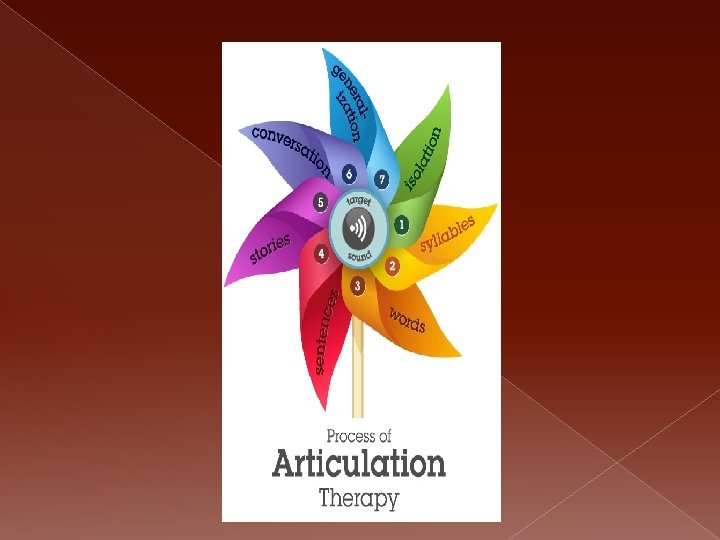
Student Information… What is Articulation? ? ? � Pedro’s Speech and Language Disorder is an Articulation Disorder. � According to Friend (p. 291), an articulation disorder is defined as “a speech disorder involving the abnormal production of sounds, including additions, omissions, substitutions, and distortions. ”
Instructional Concerns � Speech is often difficult to understand. � Sometimes struggles to keep himself organized as well as paying attention in class. � Demonstrates articulation errors at the word to conversation level. When using sentences, has more errors than when just naming words. � Tends to delete ends on words that end in the /s/ sound and substitute /t/ for /s/ in the initial position of words.
Previous Interventions/ Accommodations/ Modifications � TIER 1 -3 accommodations to include: › TIER 1 – Small group reading intervention to help model appropriate articulation skills. › TIER 2 - Istation Monitoring (increased number of repetitions and SRA early interventions in reading). › TIER 3 – Intensive individual interventions other than Special Education.
FIE Summary… Pedro was referred for a Speech evaluation by the IAT committee on 4 -28 -2014 in the area of articulation, based on information received from the classroom teacher. � He received TIER 1 interventions starting on 9 -162013. Information was sent home for parents to help Pedro. TIER 2 interventions was started on 10 -12013, and TIER 3 interventions was started on 10 -142013. These and other accommodations were not successful in improving his articulation skills; therefore, a speech referral was made. � He likes school and does very well in class. �
FIE Summary continued… Pedro scored in the 4 th percentile on the Goldman. Friscoe Test of Articulation (GFTA), 2 nd edition. � He demonstrates many articulation errors at the word to conversation level. When using sentences, he has more errors than when just naming words. He tends to delete his ends on words that end in the /s/ sound and substitute /t/ for /s/ in the initial position of words. � Pedro has no difficulties in the areas of voice, stuttering, language, or oral peripheral speech. � He passed the hearing and vision screenings completed by the school nurse and has no additional health concerns at this time. �
FIE Summary continued… Pedro’s speech skills affect his ability to communicate effectively in the classroom setting. � Based on data gathered from this FIE, it is noted that the student meets the criteria for the Primary handicapping condition of a Speech Impairment. � It is recommended by the committee that Pedro receive services by a speech pathologist to improve his articulation skills so that he may better communicate and be understood in the classroom setting; as well, he should practice learned skills in the home setting. �
Recommendations by the ARD/IEP committee… The ARD committee recommended the following for both teaching staff and parents: � Parents: � › Reading to him daily. › Emphasizing misarticulated sounds in spoken words. › Encouraging imitation, without insisting of misarticulated sounds. › Model and repeat correct production of misarticulated words (i. e. , demonstrate how to make the sound). › Sing songs, recite poems and nursery rhymes that contain target sounds. › Reinforce correct pronunciations.
Recommendations by the ARD/IEP committee continued… The ARD committee recommended the following for both teaching staff and parents: � Teachers: � › › Show the student how to make the specific sound. Provide opportunities for practice. Avoid baby talk! Repeat what your student says; never imitate incorrect speech. › Use visual phonics cues for instruction. › Reinforce correct production. › https: //www. youtube. com/watch? feature=player_emb edded&v=NLk. EQGtvv. OI
Questions and Recommendations… � 1. Are there specialists that focus on Articulation Therapy that could assist Pedro outside of the school setting? › Yes. Personal Touch Therapy – a pediatric home-health company dedicated to providing a personal touch when providing outstanding therapy services to children of all ages throughout the Houston area. (713 -510 -5699) � 2. What are some evidence based strategies that the classroom teacher could use to generalize skills taught by Speech Therapist? � Phonics/Phonemic Awareness, Blending, and Read-Aloud (Wendling & Mather)
References Friend, M. (2014). Special Education: Contemporary Perspectives for School Professionals (4 th ed. ) Boston: Pearson Education, Inc. � Wendling, B. J. & Mather, N. (2009). Essentials of evidence-based academic interventions. Hoboken, NJ: John Wiley & Sons, Inc. �
Thank you � https: //www. youtube. com/watch? feature=pl ayer_embedded&v=Ocfq. DPAy 7 zc
- Slides: 17