
Speech and Informal Essay Structures How to organize


- Slides: 18
Speech (and Informal Essay) Structures
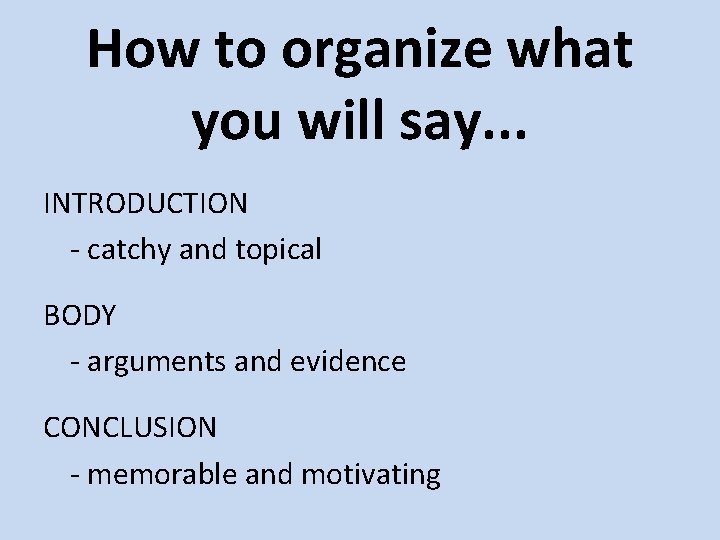
How to organize what you will say. . . INTRODUCTION - catchy and topical BODY - arguments and evidence CONCLUSION - memorable and motivating
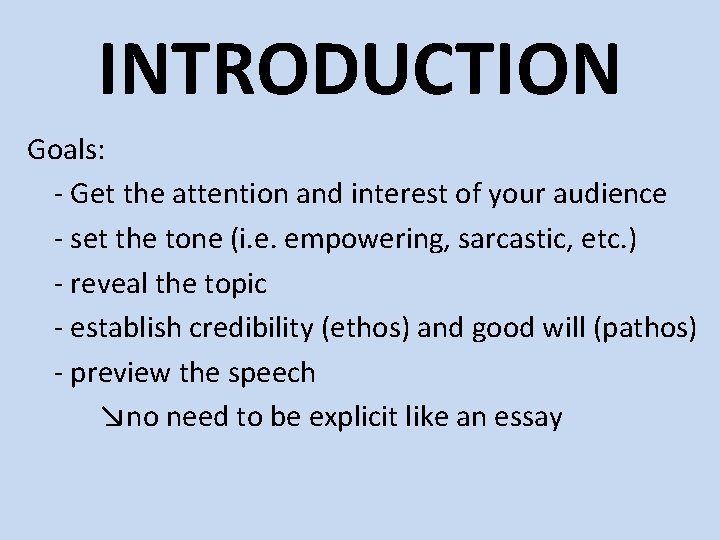
INTRODUCTION Goals: - Get the attention and interest of your audience - set the tone (i. e. empowering, sarcastic, etc. ) - reveal the topic - establish credibility (ethos) and good will (pathos) - preview the speech ↘no need to be explicit like an essay
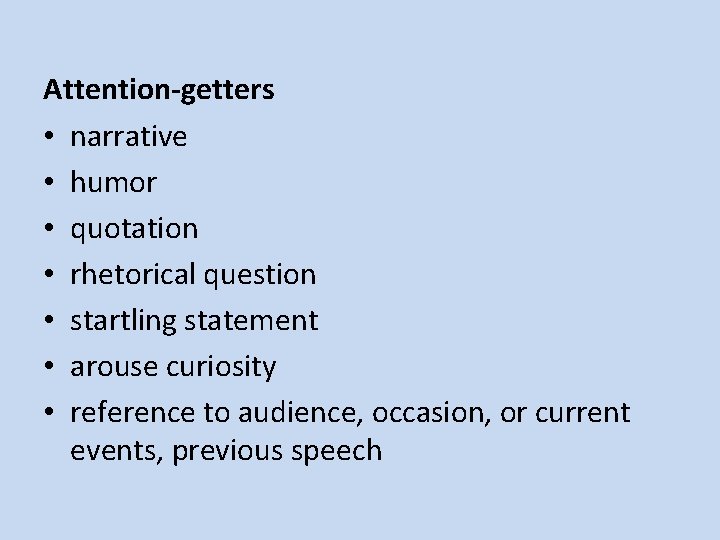
Attention-getters • narrative • humor • quotation • rhetorical question • startling statement • arouse curiosity • reference to audience, occasion, or current events, previous speech
Need • Create desire on the part of the audience to listen. Answer the questions: “Why should I care? ” and “How does this topic relate to me? ” • Show the scope of the issue, the degree of importance, and the ramifications.
BODY • 3 -5 main points • Choose your organizational pattern based on the topic and your approach. • State your main ideas as complete sentences and a single idea. • Parallel the main ideas grammatically if possible. • Your audience should be able to recognize and remember your main points.
Factors of attention, understanding and remembering • • • tone (humour, sarcasm, etc. ) Magnitude and relevance Passion and intensity Repetition and emphasis Novelty, innovation, creativity compare/contrast narratives and anecdotes Examples, descriptions and illustrations rhetorical devices
Support • Use a variety of support (facts/statistics, testimony, examples), picked for your particular audience. • Make sure each point is developed completely before going on to the next. • If needed, summarize the point before making a transition to the next point.
CONCLUSION • Summarize • Close with impact – quotation – narrative – appeal to action • Return to opening theme
Types of organization patterns • Persuasive • Chronological • Spatial • Cause and Effect or Problem/(Cause)/Solution • Comparative Advantages • Monroe’s Motivated Sequence
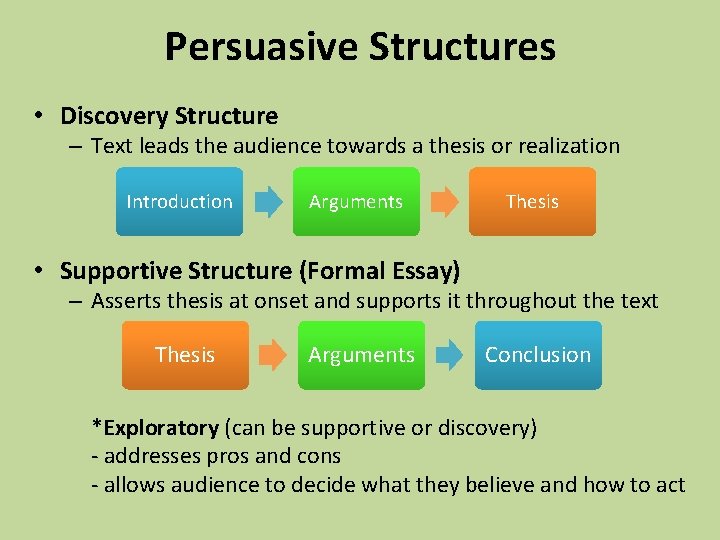
Persuasive Structures • Discovery Structure – Text leads the audience towards a thesis or realization Introduction Arguments Thesis • Supportive Structure (Formal Essay) – Asserts thesis at onset and supports it throughout the text Thesis Arguments Conclusion *Exploratory (can be supportive or discovery) - addresses pros and cons - allows audience to decide what they believe and how to act
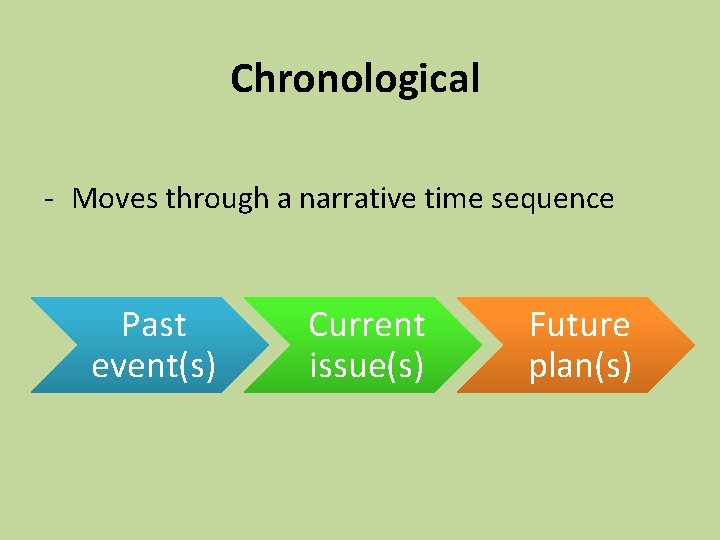
Chronological - Moves through a narrative time sequence Past event(s) Current issue(s) Future plan(s)
Spatial • Describes a person, place, thing or issue 3 dimensionally • arranges the details of your essay by describing the item from top to bottom, left to right, inside out, outside in, most prominent part to least, least prominent to most, etc.
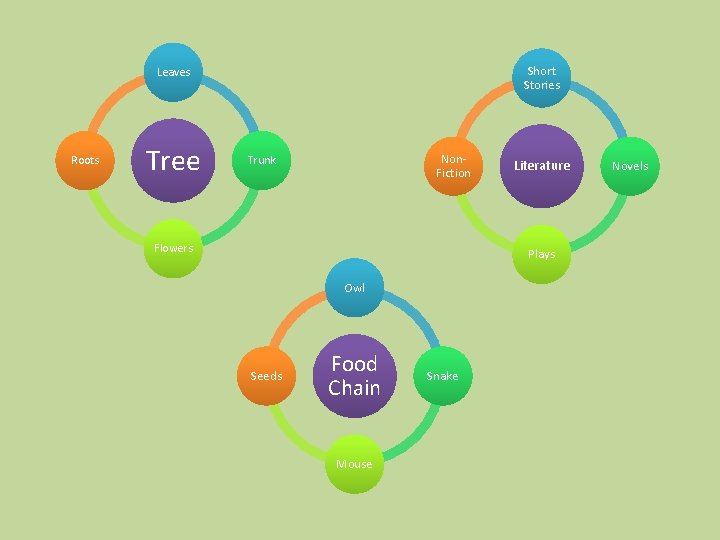
Short Stories Leaves Roots Tree Non. Fiction Trunk Flowers Literature Plays Owl Seeds Food Chain Mouse Snake Novels
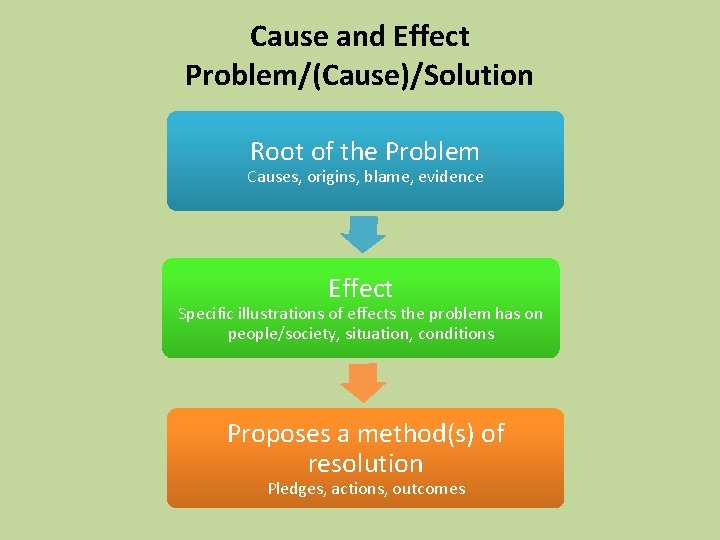
Cause and Effect Problem/(Cause)/Solution Root of the Problem Causes, origins, blame, evidence Effect Specific illustrations of effects the problem has on people/society, situation, conditions Proposes a method(s) of resolution Pledges, actions, outcomes
Comparative Advantage Introduces a problem References opposition’s resolution plan Acknowledges parts of opposition that are valid, explains disadvantages Introduces New Resolution Plan and its Advantages Examples, illustrations, evidence
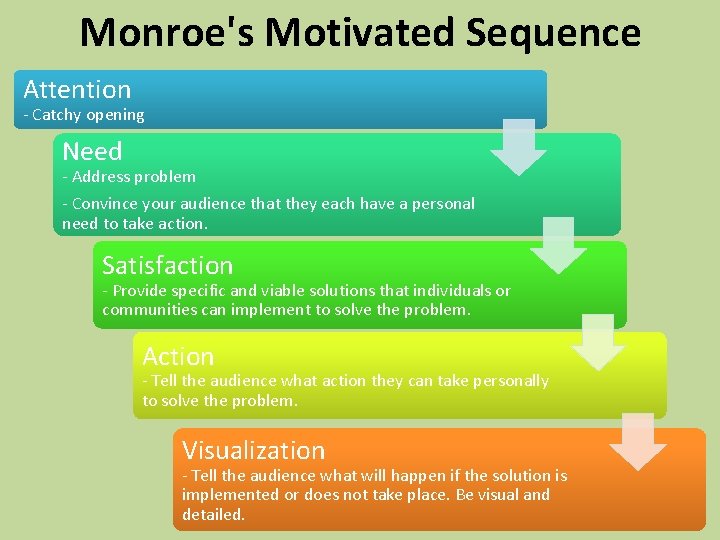
Monroe's Motivated Sequence Attention - Catchy opening Need - Address problem - Convince your audience that they each have a personal need to take action. Satisfaction - Provide specific and viable solutions that individuals or communities can implement to solve the problem. Action - Tell the audience what action they can take personally to solve the problem. Visualization - Tell the audience what will happen if the solution is implemented or does not take place. Be visual and detailed.
POINTS TO REMEMBER • Always open with something catchy • Choose an organizational structure that matches your exigence and purpose • Conclude with something memorable