
Specular reflectivity Examples and applications Sandip Argekar Specular
- Slides: 15
Specular reflectivity – Examples and applications Sandip Argekar
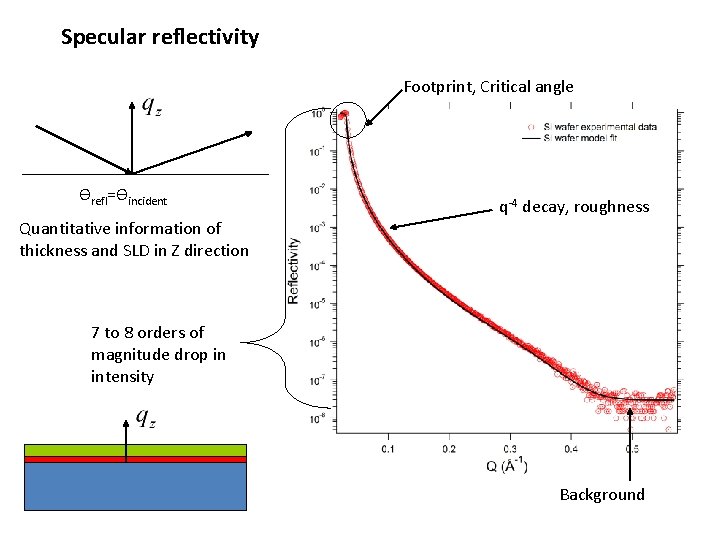
Specular reflectivity Footprint, Critical angle Ѳrefl=Ѳincident Quantitative information of thickness and SLD in Z direction q-4 decay, roughness 7 to 8 orders of magnitude drop in intensity Background
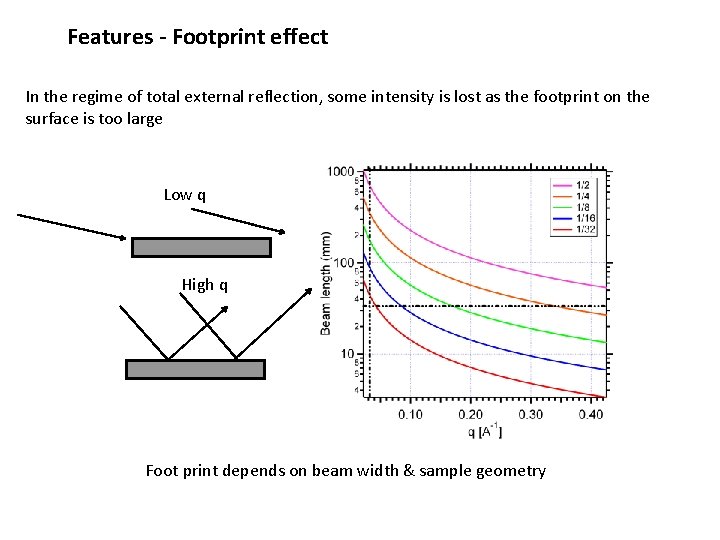
Features - Footprint effect In the regime of total external reflection, some intensity is lost as the footprint on the surface is too large Low q High q Foot print depends on beam width & sample geometry
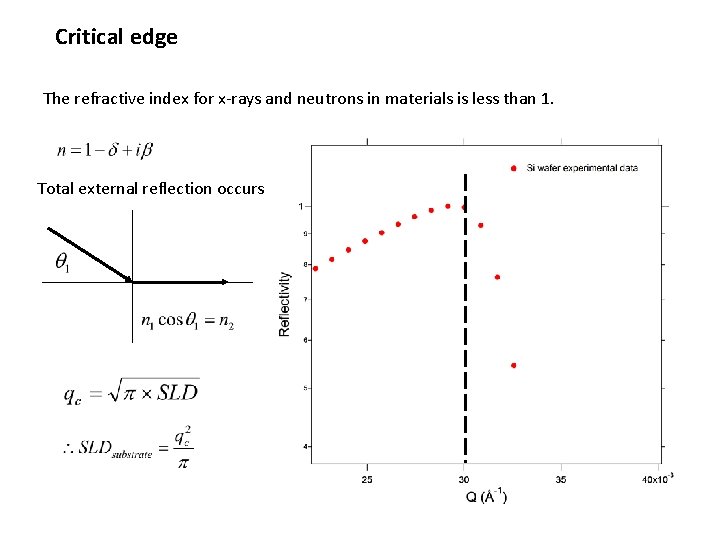
Critical edge The refractive index for x-rays and neutrons in materials is less than 1. Total external reflection occurs
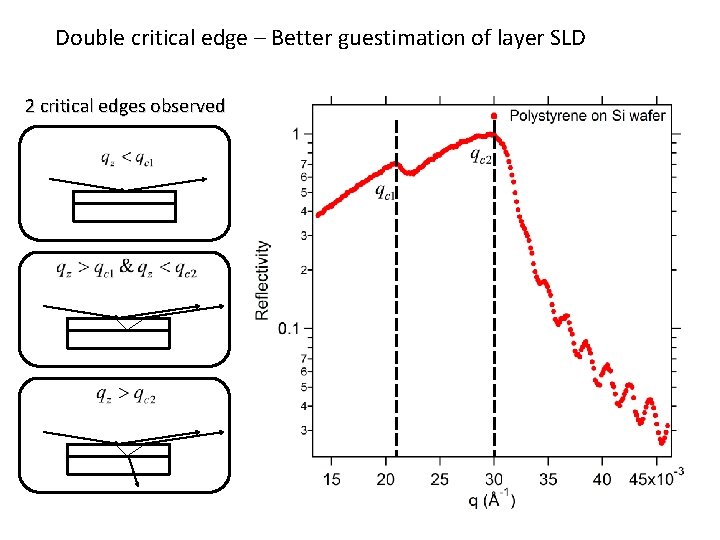
Double critical edge – Better guestimation of layer SLD 2 critical edges observed
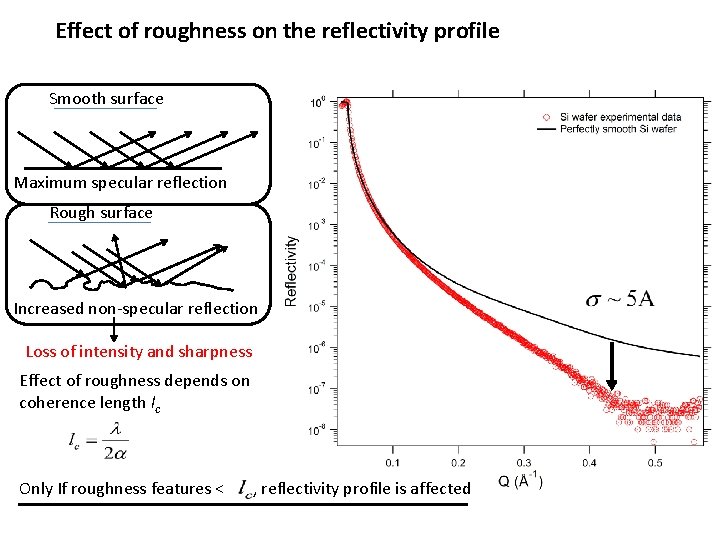
Effect of roughness on the reflectivity profile Smooth surface Maximum specular reflection Rough surface Increased non-specular reflection Loss of intensity and sharpness Effect of roughness depends on coherence length lc Only If roughness features < , reflectivity profile is affected
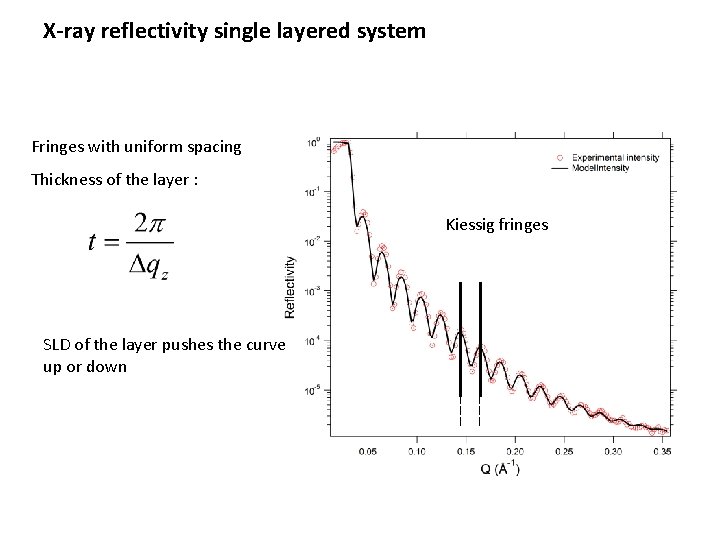
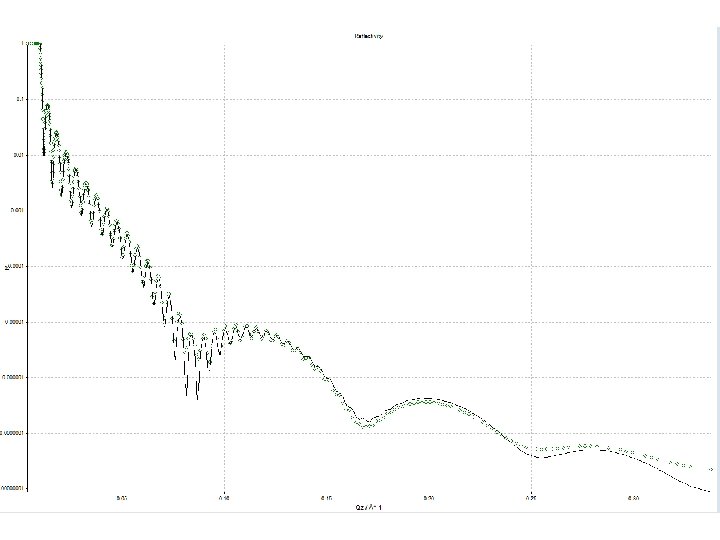
X-ray reflectivity single layered system Fringes with uniform spacing Thickness of the layer : Kiessig fringes SLD of the layer pushes the curve up or down
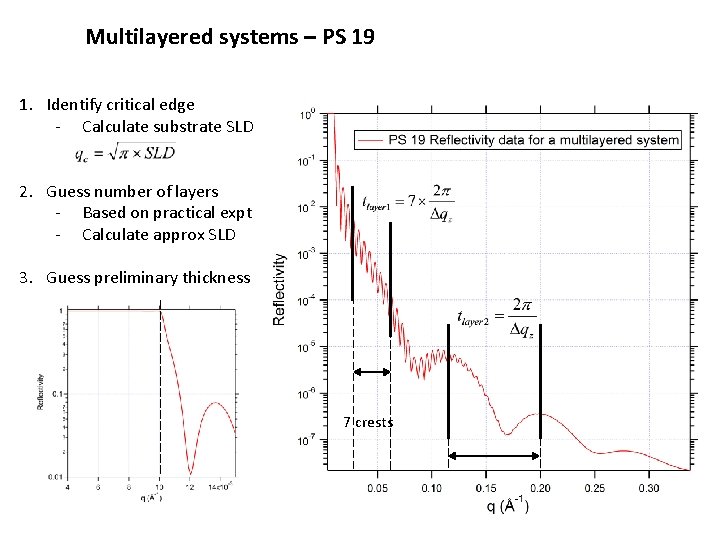
Multilayered systems – PS 19 1. Identify critical edge - Calculate substrate SLD 2. Guess number of layers - Based on practical expt - Calculate approx SLD 3. Guess preliminary thickness 7 crests
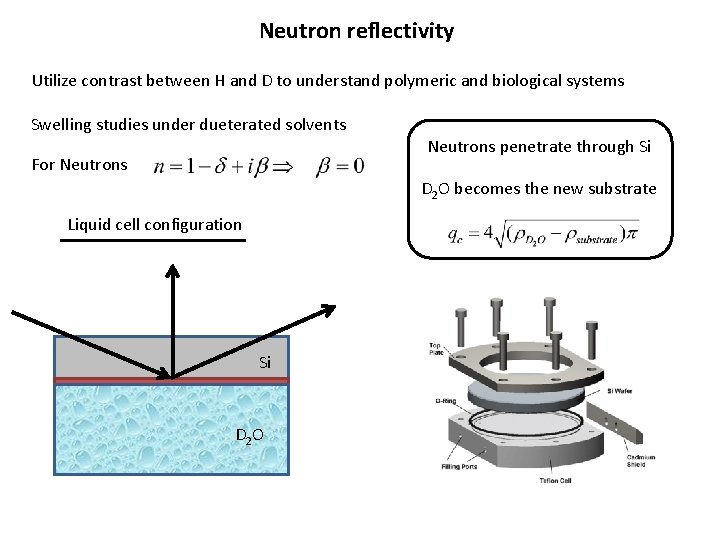
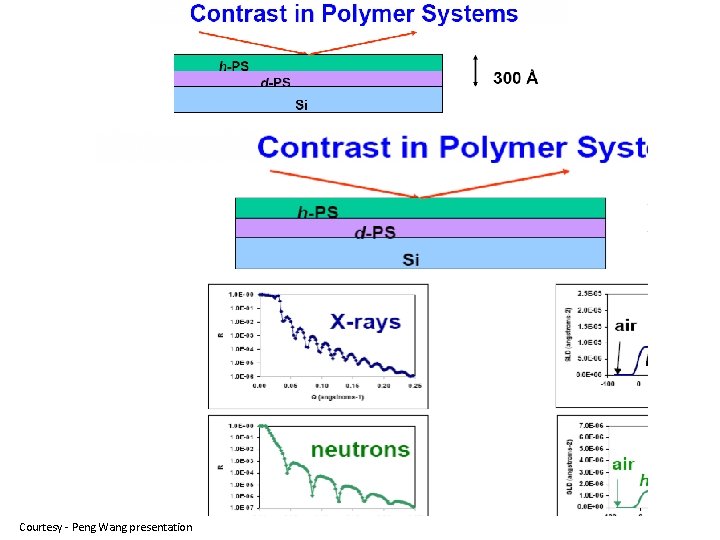
Neutron reflectivity Utilize contrast between H and D to understand polymeric and biological systems Swelling studies under dueterated solvents Neutrons penetrate through Si For Neutrons D 2 O becomes the new substrate Liquid cell configuration Si D 2 O
Courtesy - Peng Wang presentation
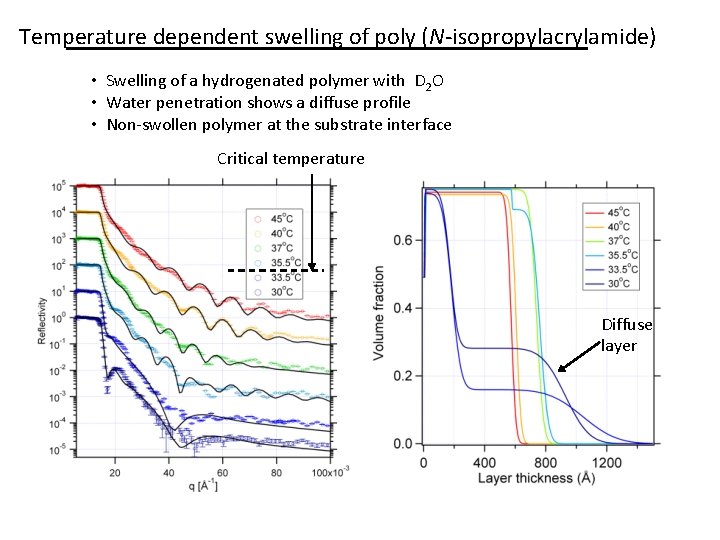
Temperature dependent swelling of poly (N-isopropylacrylamide) • Swelling of a hydrogenated polymer with D 2 O • Water penetration shows a diffuse profile • Non-swollen polymer at the substrate interface Critical temperature Diffuse layer
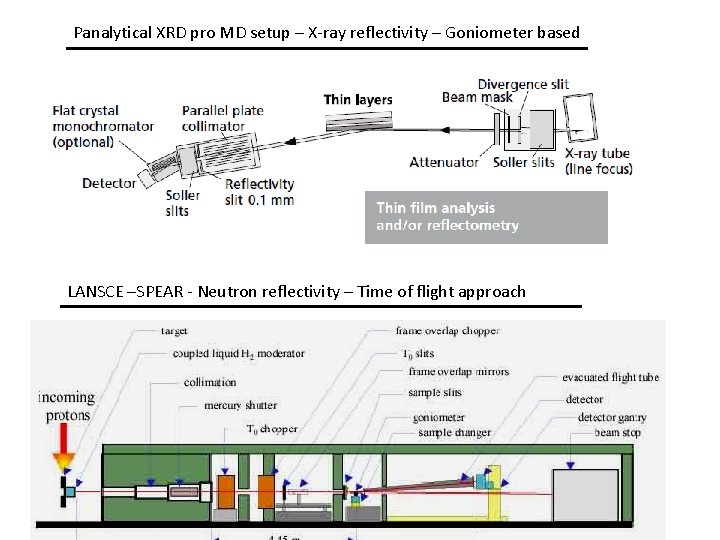
Panalytical XRD pro MD setup – X-ray reflectivity – Goniometer based LANSCE –SPEAR - Neutron reflectivity – Time of flight approach
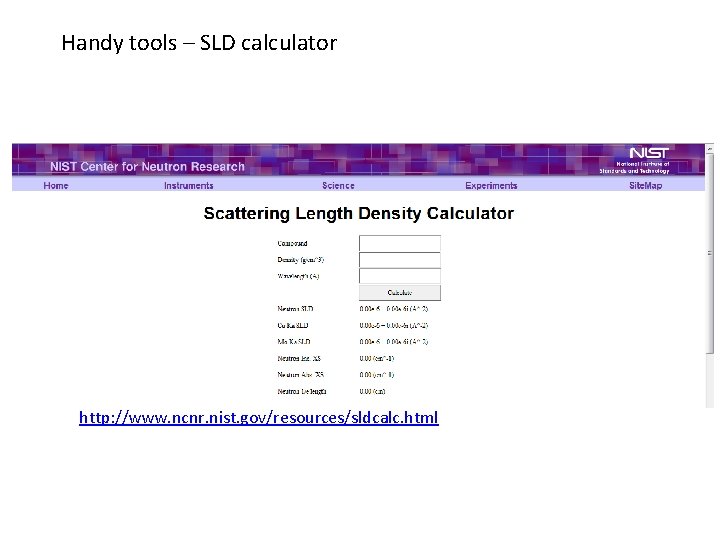
Handy tools – SLD calculator http: //www. ncnr. nist. gov/resources/sldcalc. html
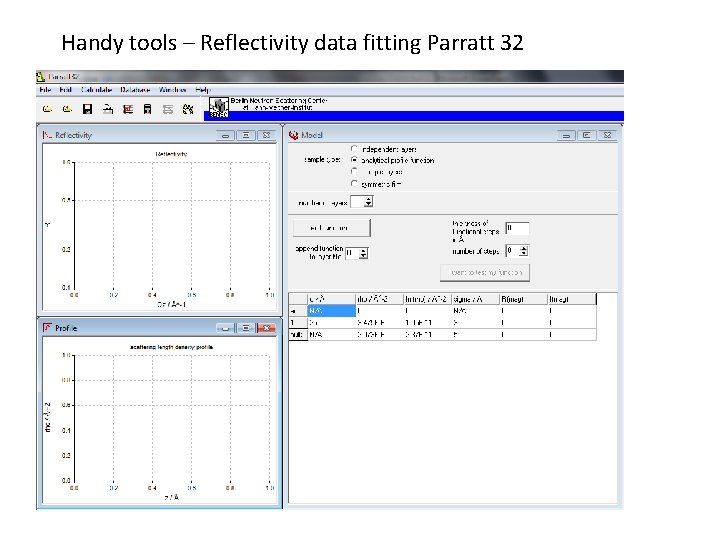
Handy tools – Reflectivity data fitting Parratt 32