
Spectroscopy and Atomic Structure Introduction Spectral Lines The






- Slides: 31
Spectroscopy and Atomic Structure
Introduction Spectral Lines The Formation of Spectral Lines The Energy Levels of the Hydrogen Atom The Photoelectric Effect Molecules Spectral-Line Analysis
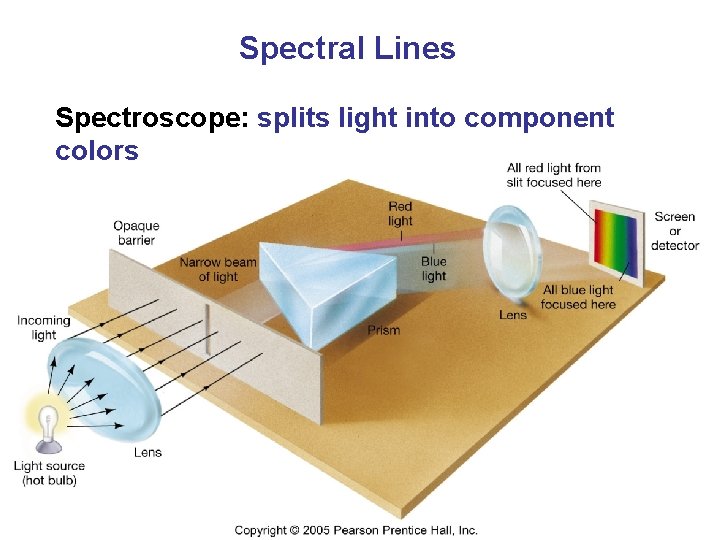
Spectral Lines Spectroscope: splits light into component colors
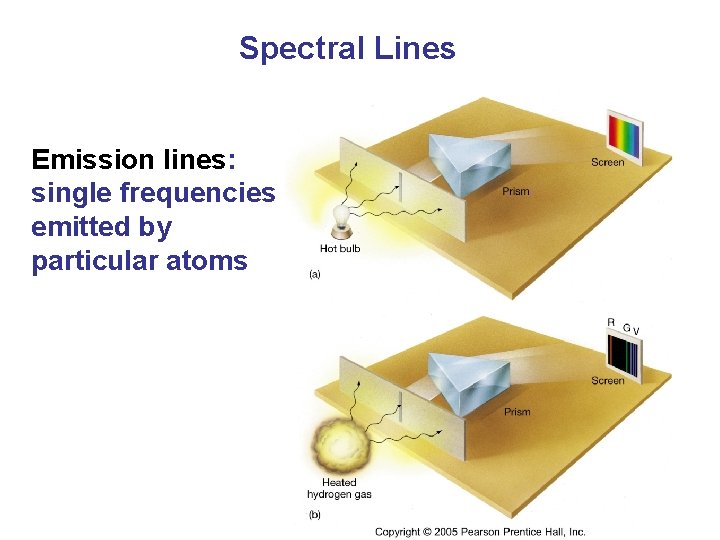
Spectral Lines Emission lines: single frequencies emitted by particular atoms
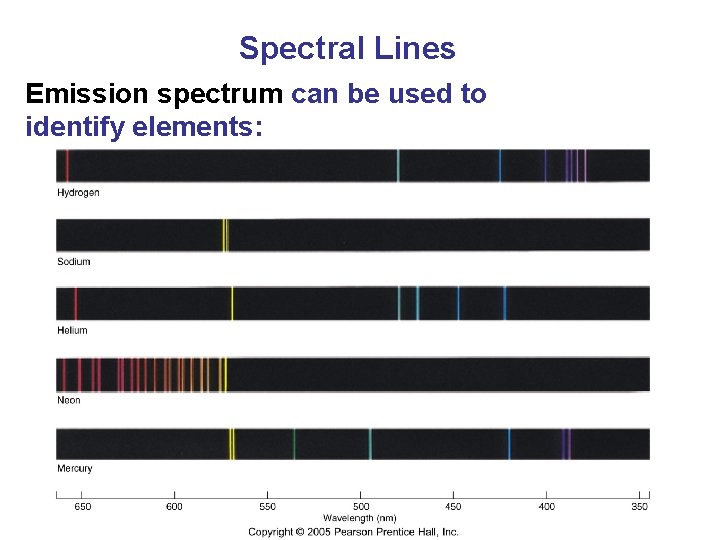
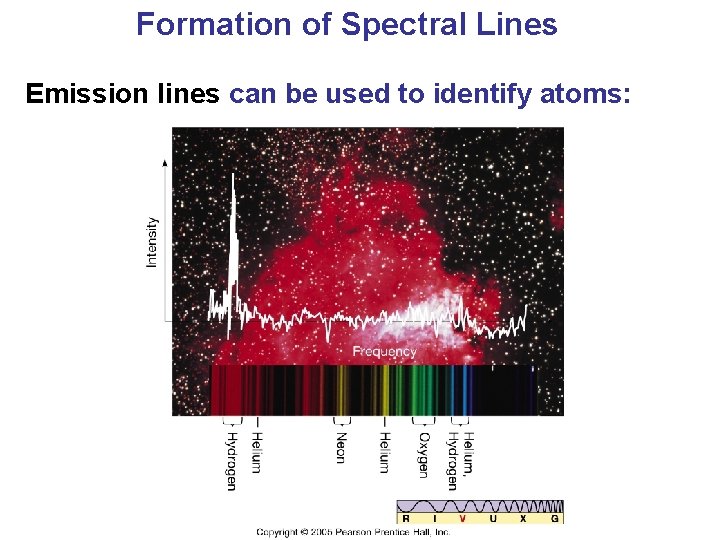
Spectral Lines Emission spectrum can be used to identify elements:
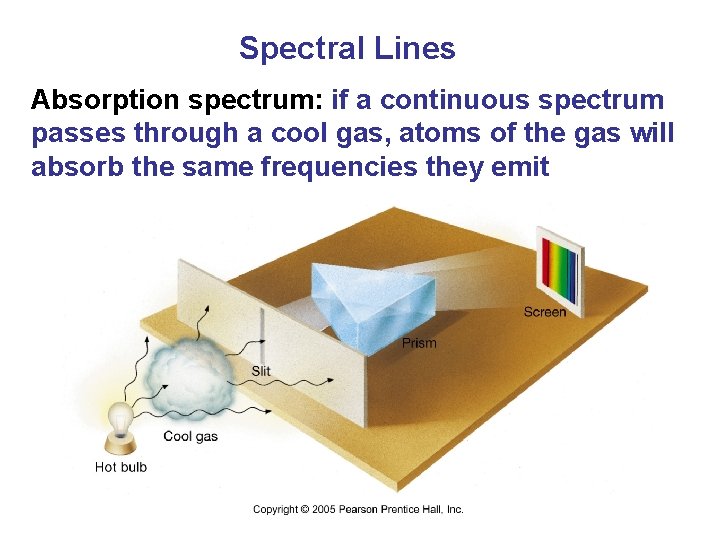
Spectral Lines Absorption spectrum: if a continuous spectrum passes through a cool gas, atoms of the gas will absorb the same frequencies they emit
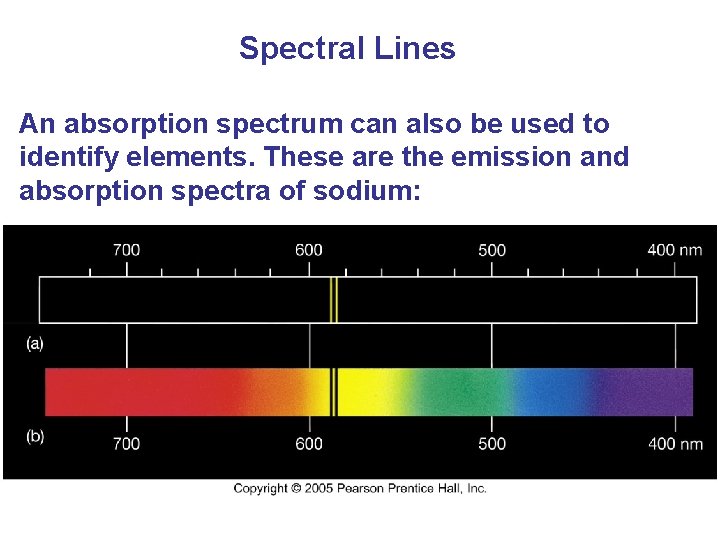
Spectral Lines An absorption spectrum can also be used to identify elements. These are the emission and absorption spectra of sodium:
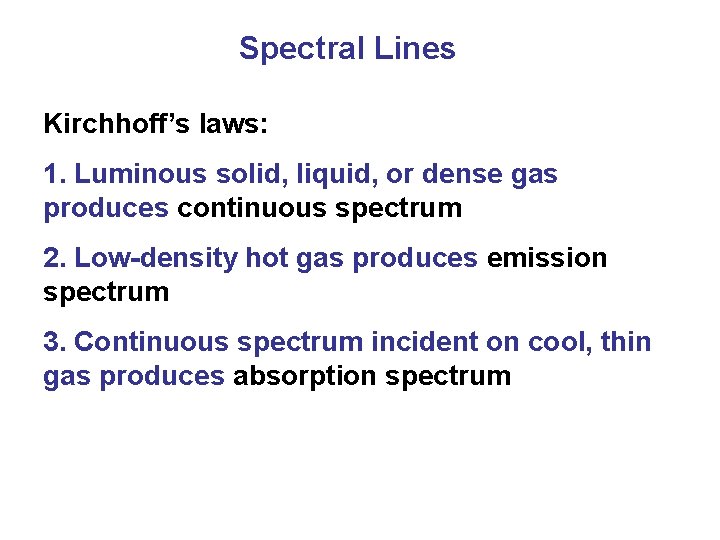
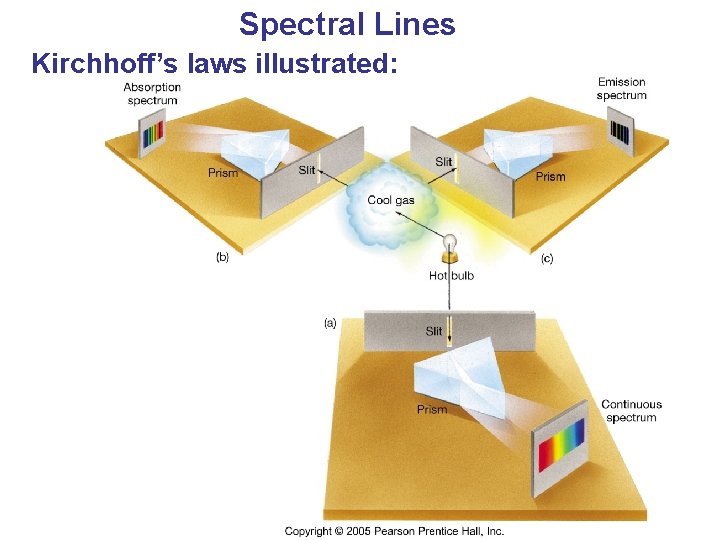
Spectral Lines Kirchhoff’s laws: 1. Luminous solid, liquid, or dense gas produces continuous spectrum 2. Low-density hot gas produces emission spectrum 3. Continuous spectrum incident on cool, thin gas produces absorption spectrum
Spectral Lines Kirchhoff’s laws illustrated:
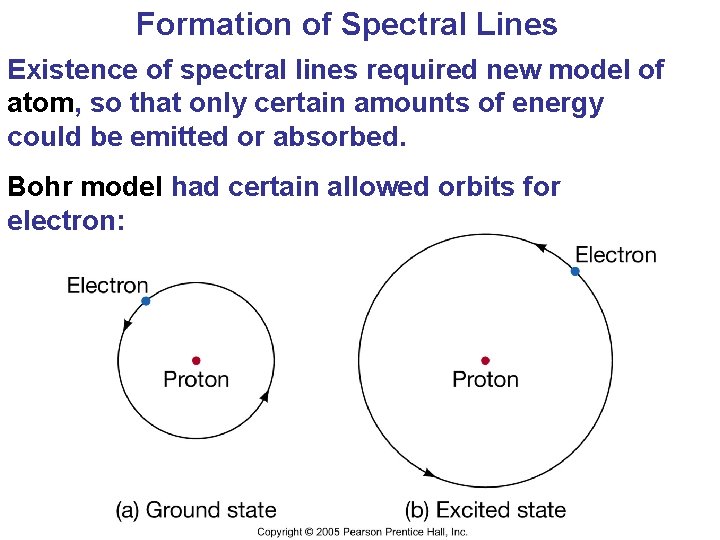
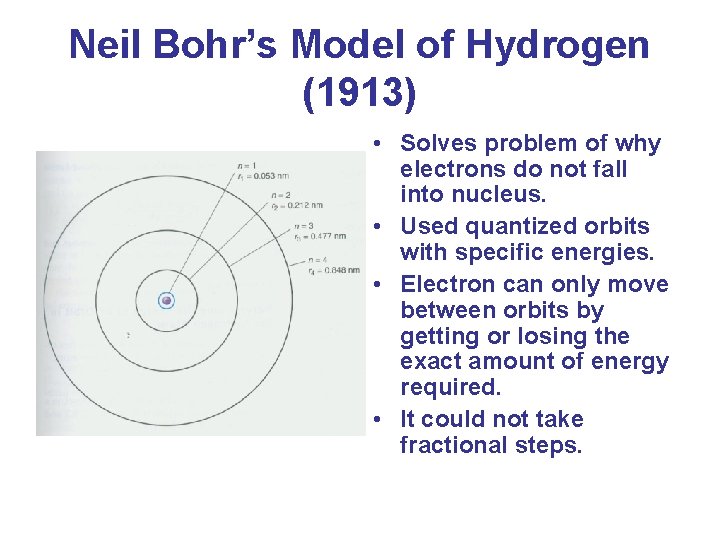
Formation of Spectral Lines Existence of spectral lines required new model of atom, so that only certain amounts of energy could be emitted or absorbed. Bohr model had certain allowed orbits for electron:
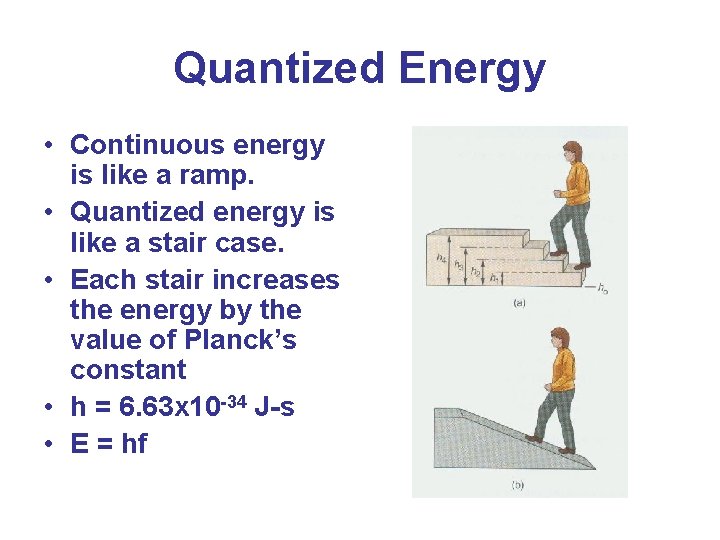
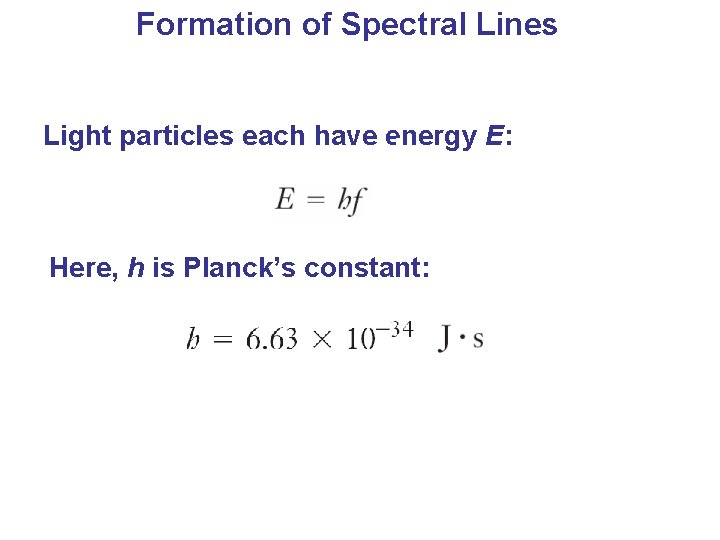
Quantized Energy • Continuous energy is like a ramp. • Quantized energy is like a stair case. • Each stair increases the energy by the value of Planck’s constant • h = 6. 63 x 10 -34 J-s • E = hf
Neil Bohr’s Model of Hydrogen (1913) • Solves problem of why electrons do not fall into nucleus. • Used quantized orbits with specific energies. • Electron can only move between orbits by getting or losing the exact amount of energy required. • It could not take fractional steps.
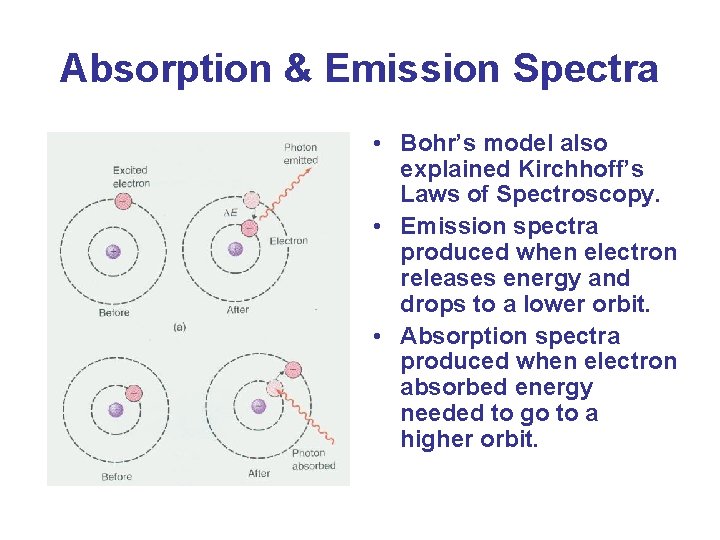
Absorption & Emission Spectra • Bohr’s model also explained Kirchhoff’s Laws of Spectroscopy. • Emission spectra produced when electron releases energy and drops to a lower orbit. • Absorption spectra produced when electron absorbed energy needed to go to a higher orbit.
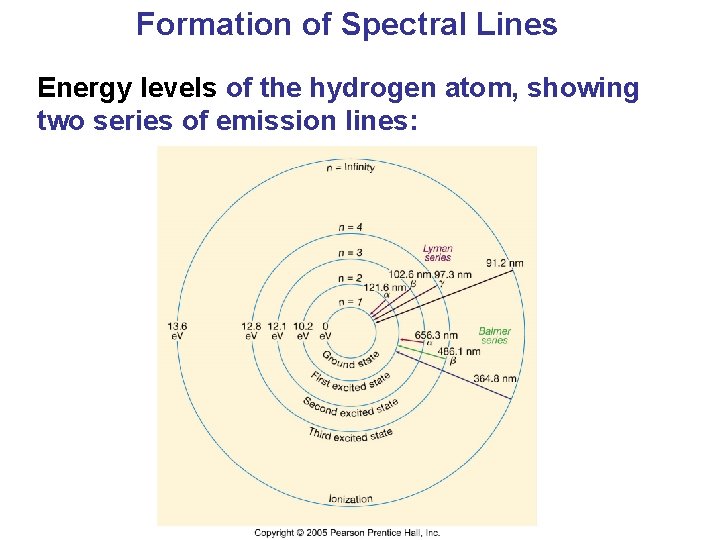
Formation of Spectral Lines Energy levels of the hydrogen atom, showing two series of emission lines:
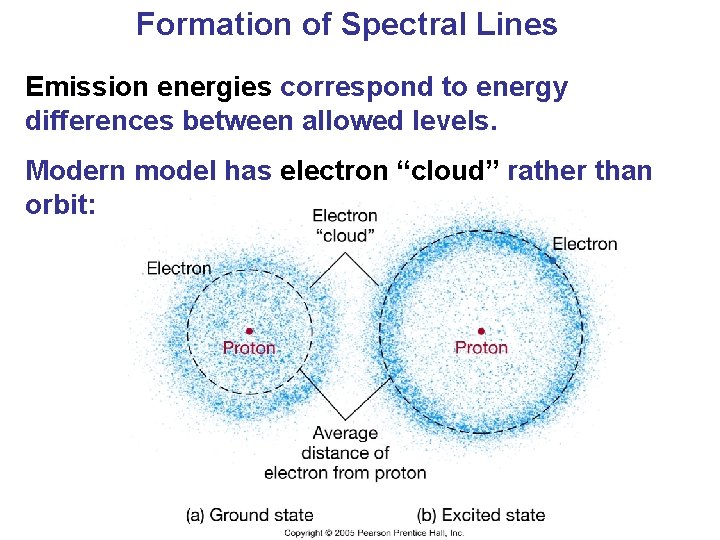
Formation of Spectral Lines Emission energies correspond to energy differences between allowed levels. Modern model has electron “cloud” rather than orbit:
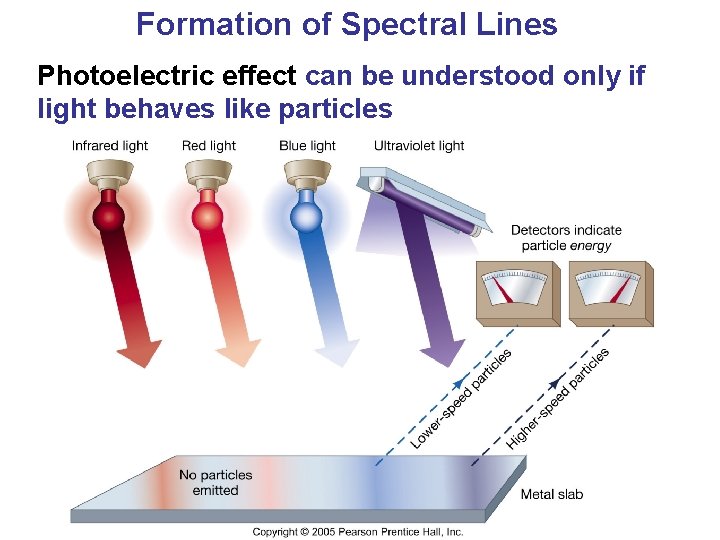
Formation of Spectral Lines The photoelectric effect: • When light shines on metal, electrons can be emitted • Frequency must be higher than minimum, characteristic of material • Increased frequency – more energetic electrons • Increased intensity – more electrons, same energy
Formation of Spectral Lines Photoelectric effect can be understood only if light behaves like particles
The Dual Nature of Light is a wave – – Reflection Refraction Interference Polarization Light is a particle – Photoelectric effect – reflection E = hf Light is both a wave and particle!!
Formation of Spectral Lines Light particles each have energy E: Here, h is Planck’s constant:
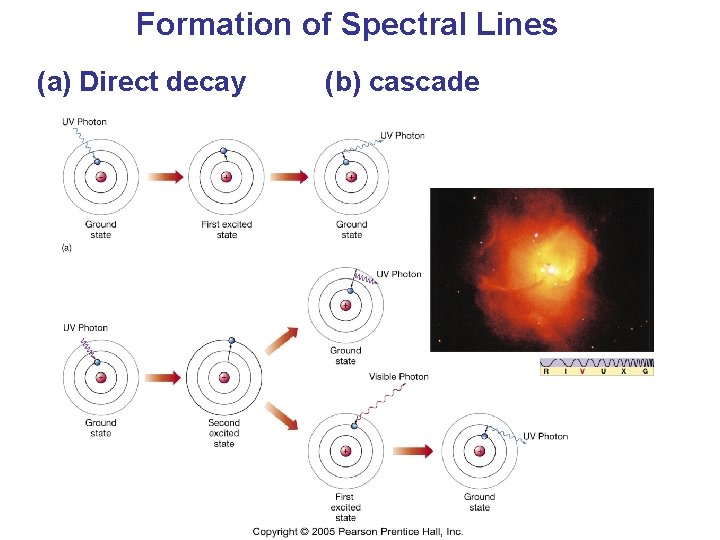
Formation of Spectral Lines Absorption can boost an electron to the second (or higher) excited state Two ways to decay: 1. to ground state 2. cascade one orbital at a time
Formation of Spectral Lines (a) Direct decay (b) cascade
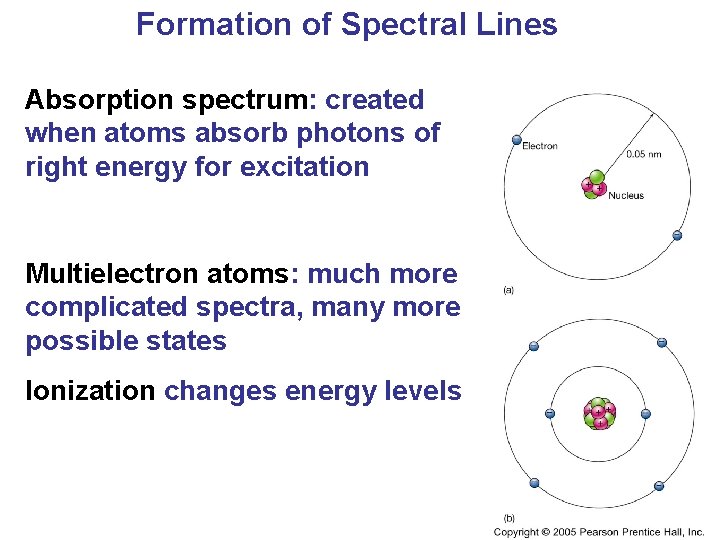
Formation of Spectral Lines Absorption spectrum: created when atoms absorb photons of right energy for excitation Multielectron atoms: much more complicated spectra, many more possible states Ionization changes energy levels
Formation of Spectral Lines Emission lines can be used to identify atoms:
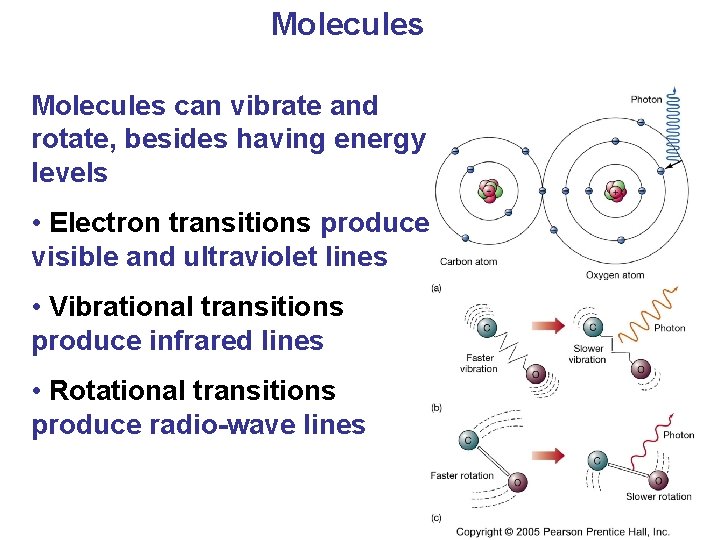
Molecules can vibrate and rotate, besides having energy levels • Electron transitions produce visible and ultraviolet lines • Vibrational transitions produce infrared lines • Rotational transitions produce radio-wave lines
Molecules Molecular spectra are much more complex than atomic spectra, even for hydrogen: (a) Molecular hydrogen (b) Atomic hydrogen
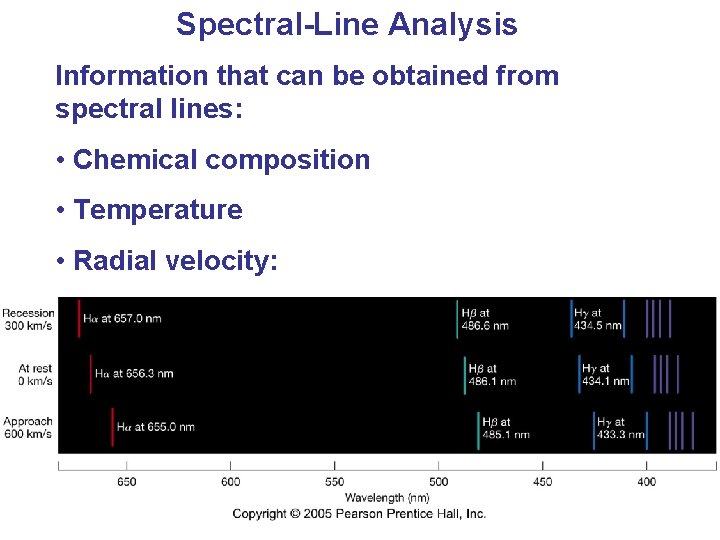
Spectral-Line Analysis Information that can be obtained from spectral lines: • Chemical composition • Temperature • Radial velocity:
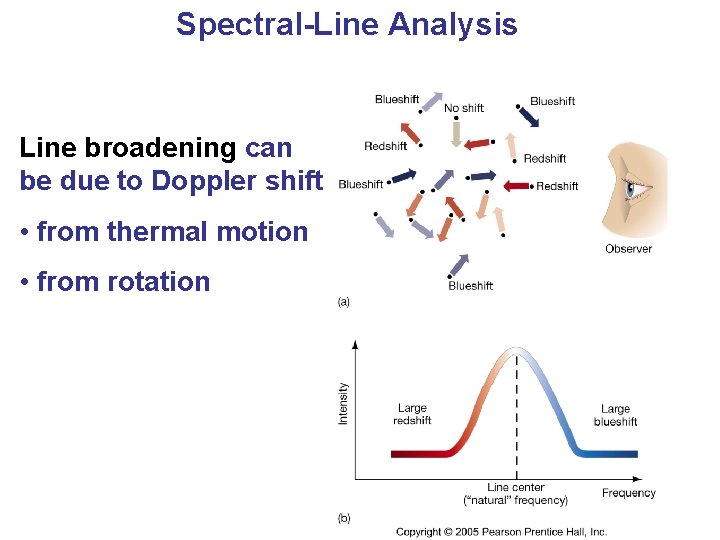
Spectral-Line Analysis Line broadening can be due to Doppler shift • from thermal motion • from rotation
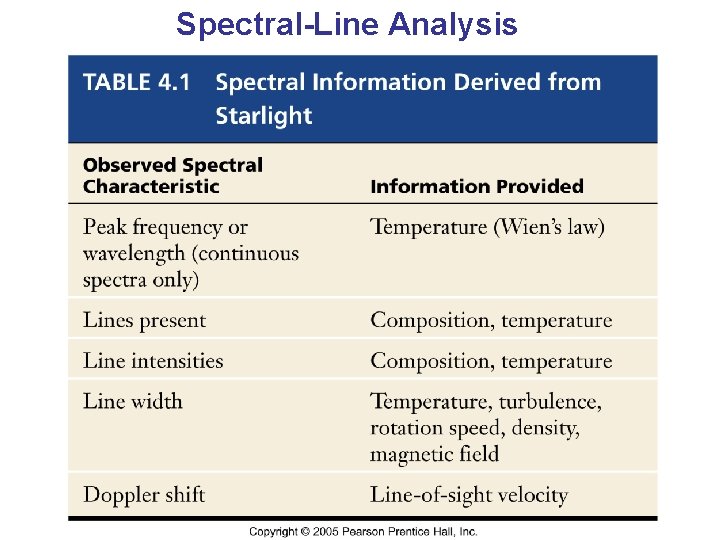
Spectral-Line Analysis
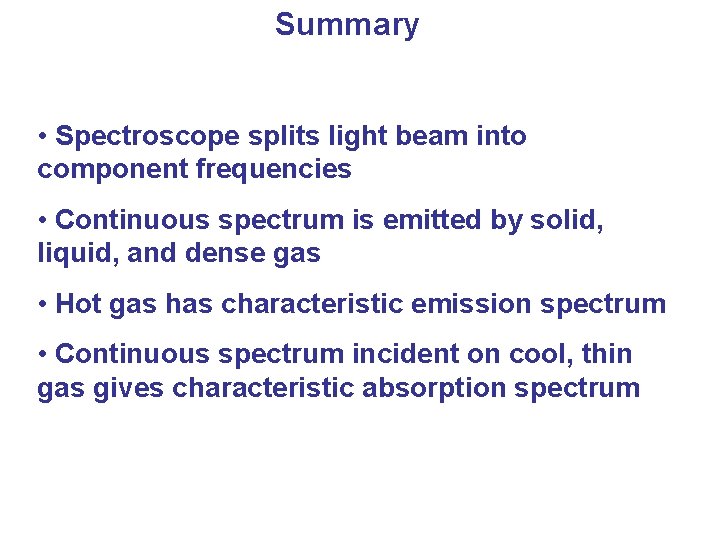
Summary • Spectroscope splits light beam into component frequencies • Continuous spectrum is emitted by solid, liquid, and dense gas • Hot gas has characteristic emission spectrum • Continuous spectrum incident on cool, thin gas gives characteristic absorption spectrum
Summary, cont. • Spectra can be explained using atomic models, with electrons occupying specific orbitals • Emission and absorption lines result from transitions between orbitals • Molecules can also emit and absorb radiation when making transitions between vibrational or rotational states
Resources Chaisson and Mc. Millian, (2005). Astronomy Today (5 th Ed. ) Shipman, Wilson, and Todd, (2003). An Introduction to Physical Science (10 th Edition).