
Spectral Processing Misha Kazhdan Taubin 1995 A Signal
Spectral Processing Misha Kazhdan [Taubin, 1995] A Signal Processing Approach to Fair Surface Design [Desbrun, et al. , 1999] Implicit Fairing of Arbitrary Meshes… [Vallet and Levy, 2008] Spectral Geometry Processing with Manifold Harmonics [Bhat et al. , 2008] Fourier Analysis of the 2 D Screened Poisson Equation… And much, more…
Outline • • Motivation Laplacian Spectrum Applications Conclusion
Motivation •
Motivation •
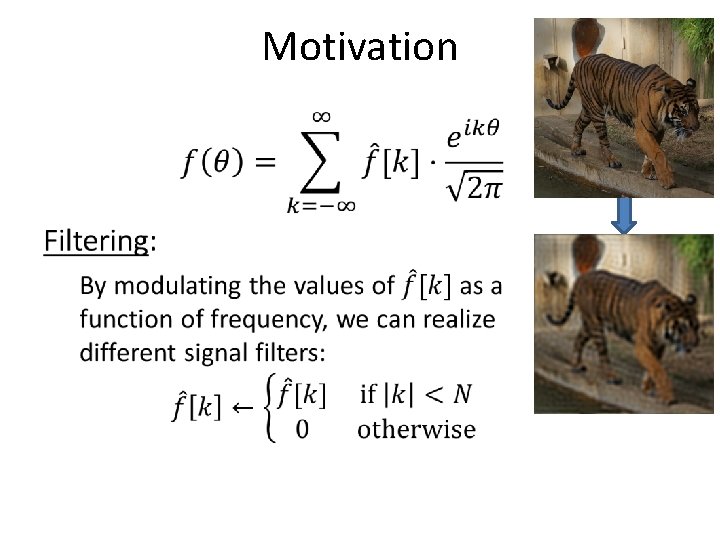
Motivation •
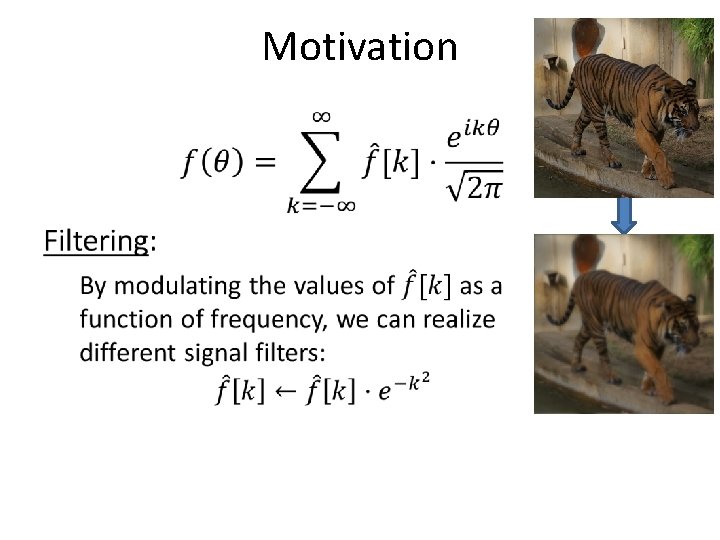
Motivation •
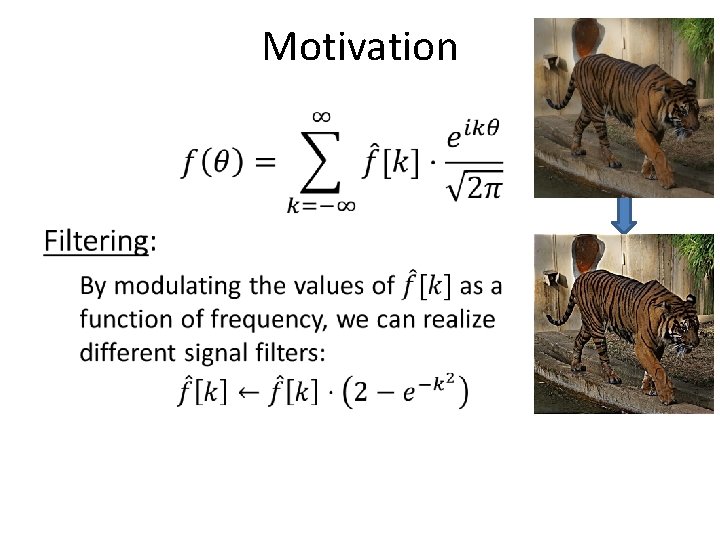
Motivation •
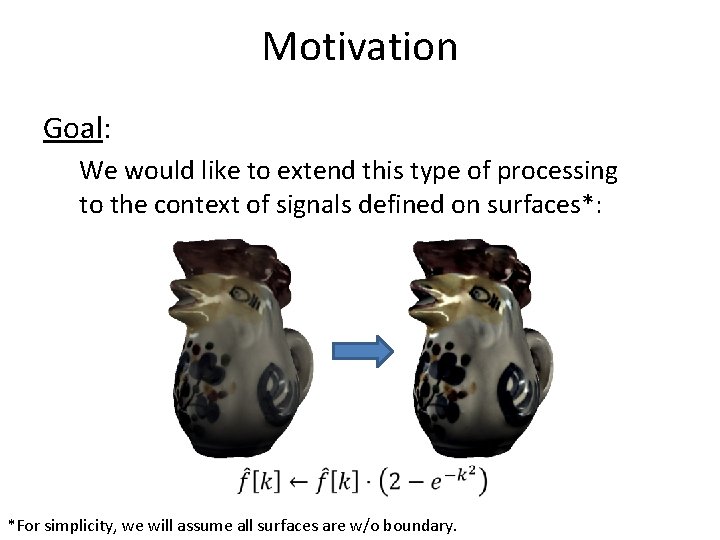
Motivation Goal: We would like to extend this type of processing to the context of signals defined on surfaces*: *For simplicity, we will assume all surfaces are w/o boundary.
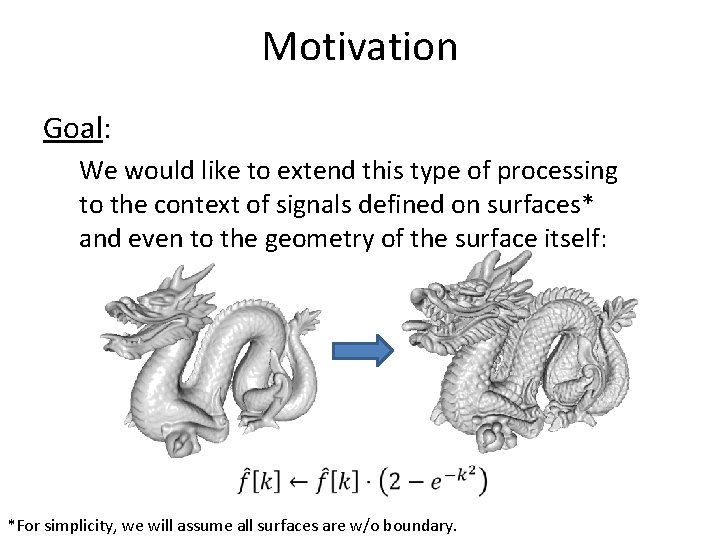
Motivation Goal: We would like to extend this type of processing to the context of signals defined on surfaces* and even to the geometry of the surface itself: *For simplicity, we will assume all surfaces are w/o boundary.
Motivation •
Outline •
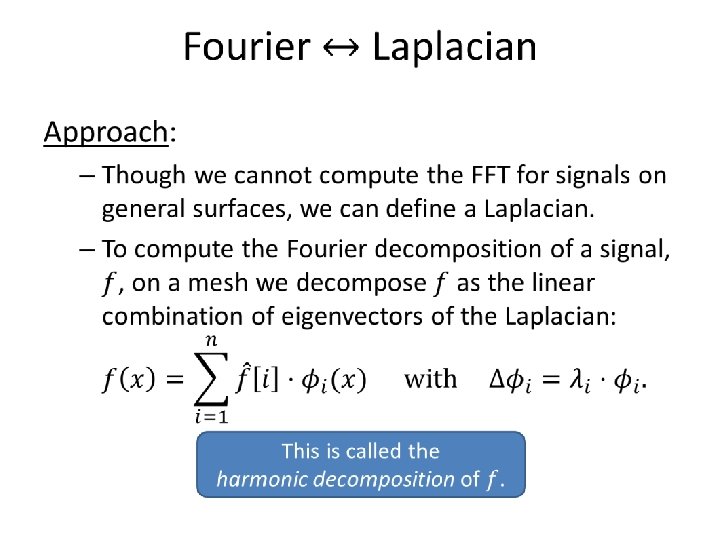
How do we obtain the Fourier decomposition?
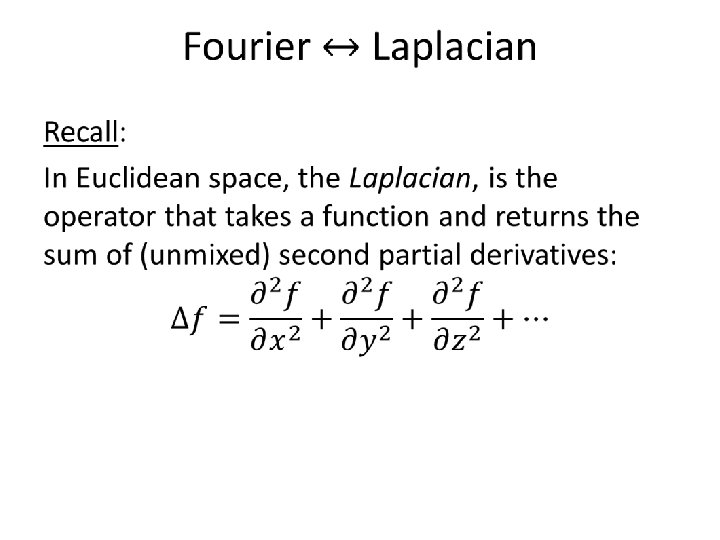
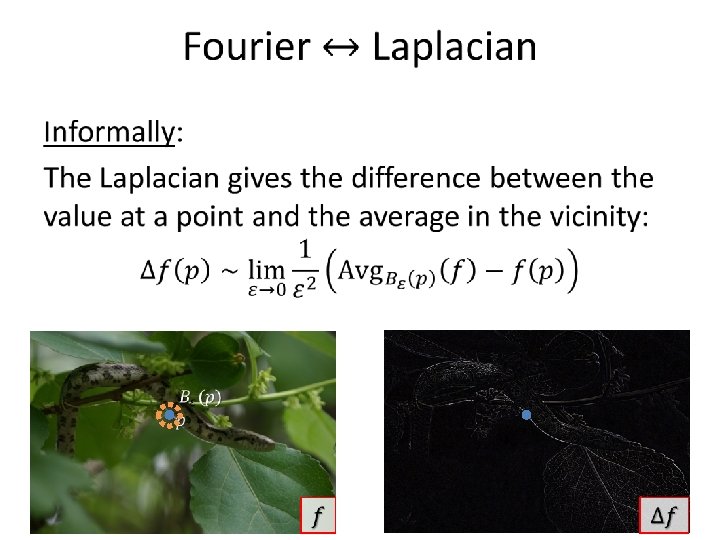
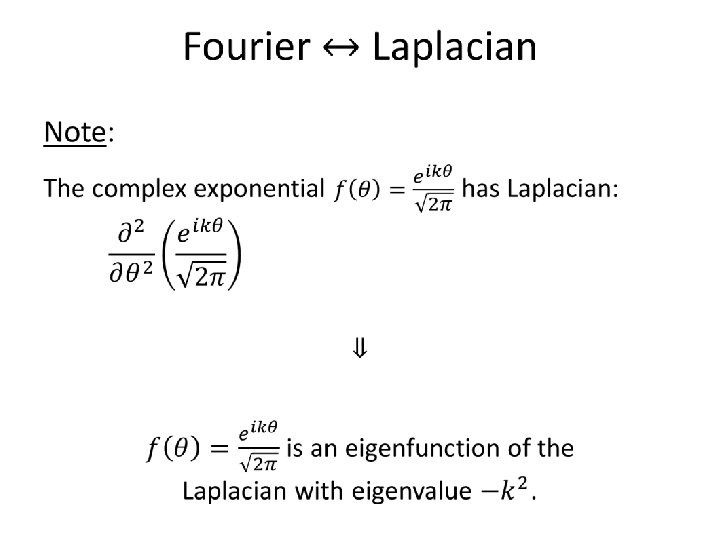
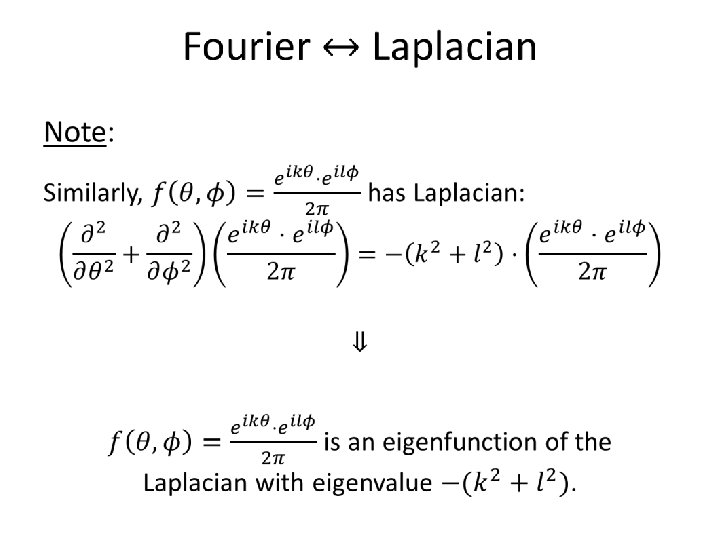
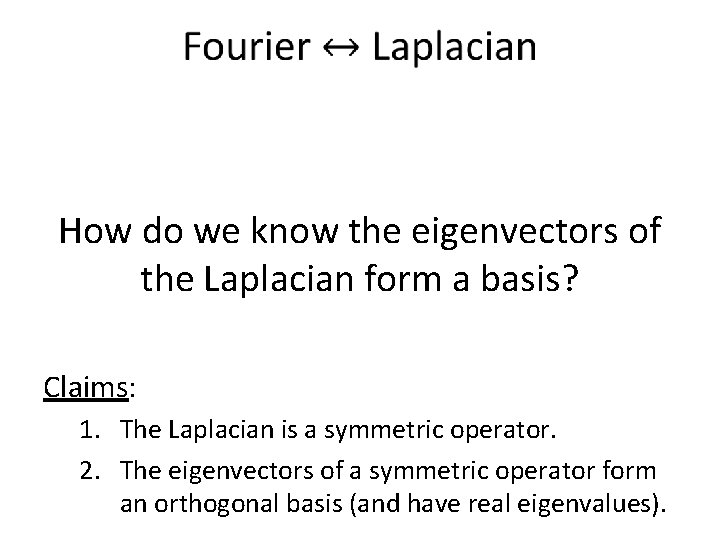
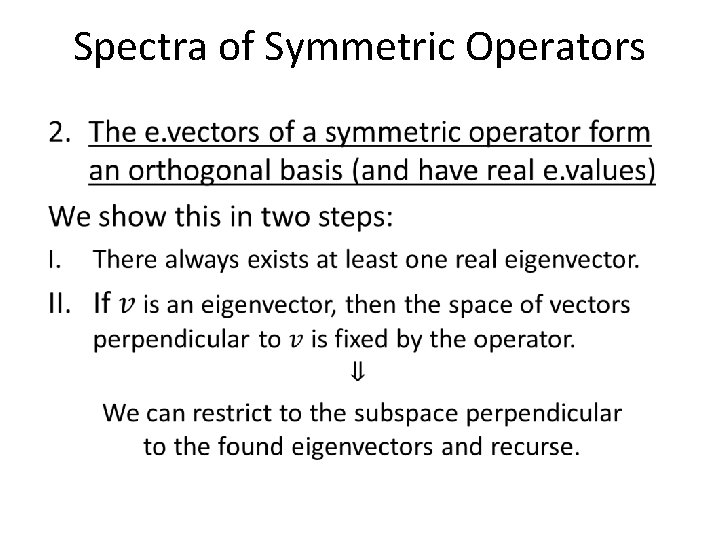
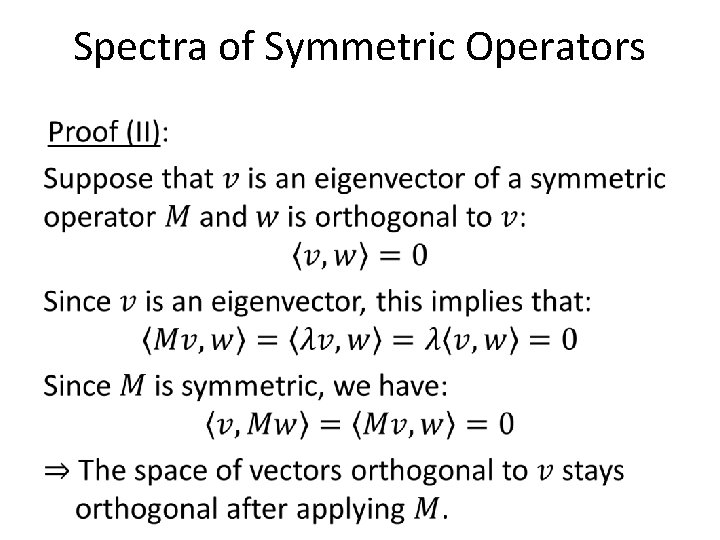
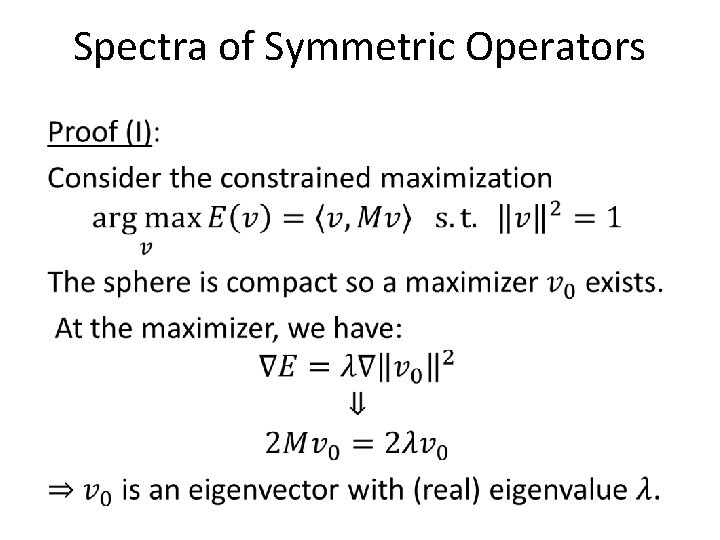
How do we know the eigenvectors of the Laplacian form a basis? Claims: 1. The Laplacian is a symmetric operator. 2. The eigenvectors of a symmetric operator form an orthogonal basis (and have real eigenvalues).
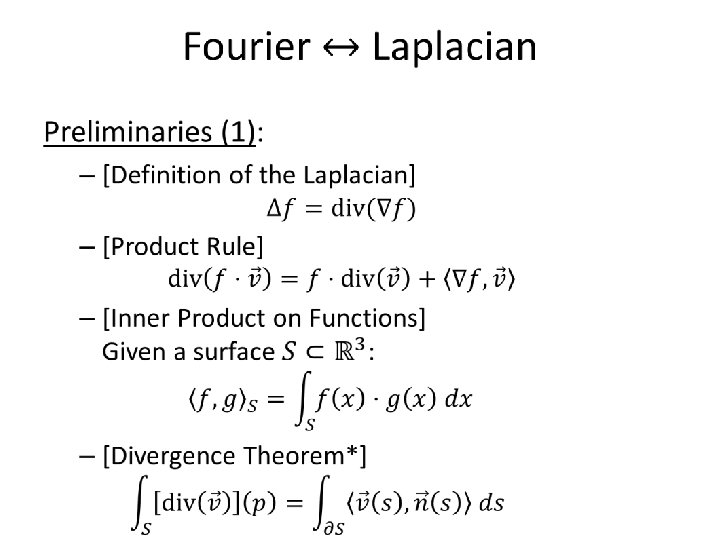
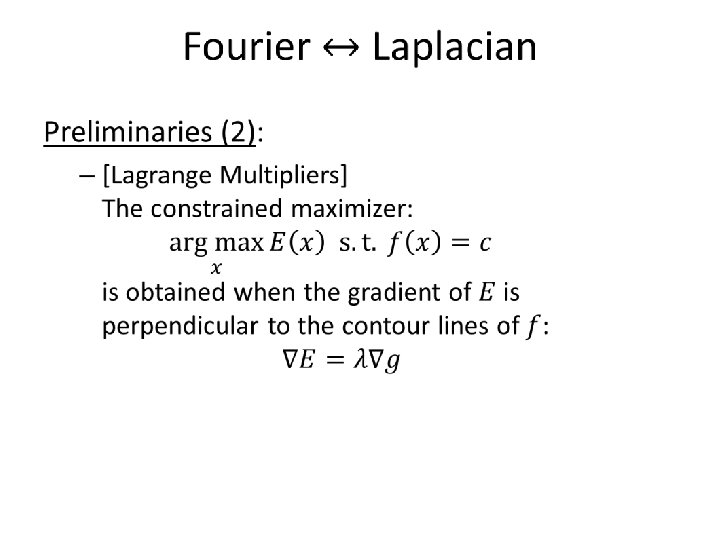
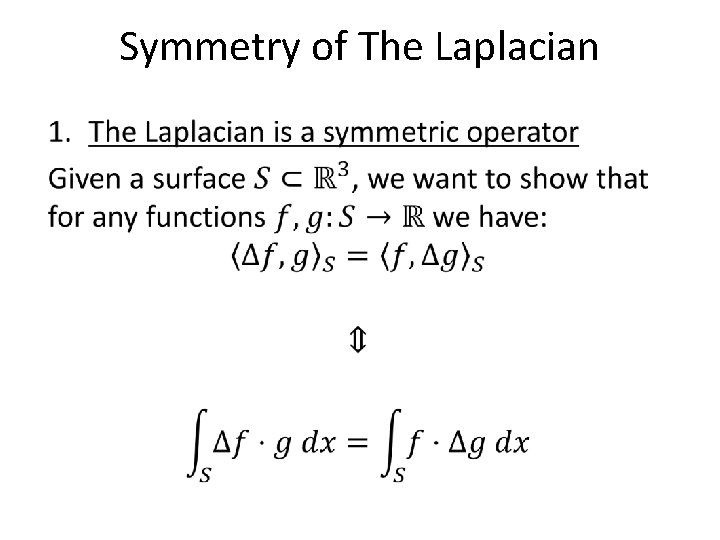
Symmetry of The Laplacian •
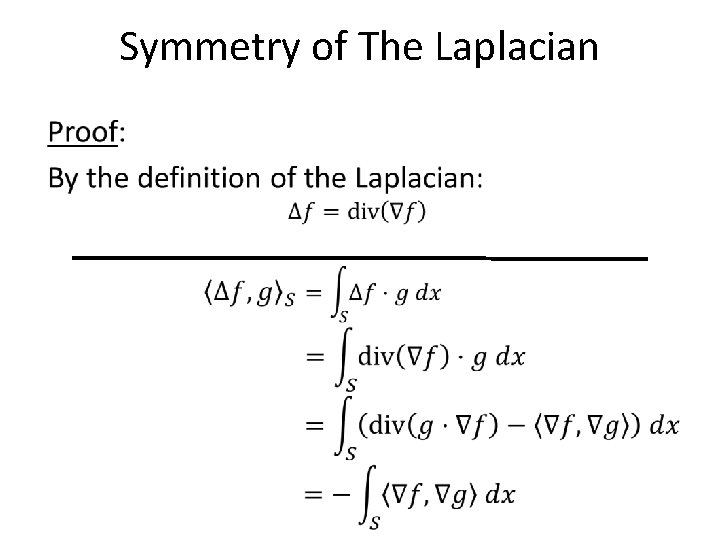
Symmetry of The Laplacian •
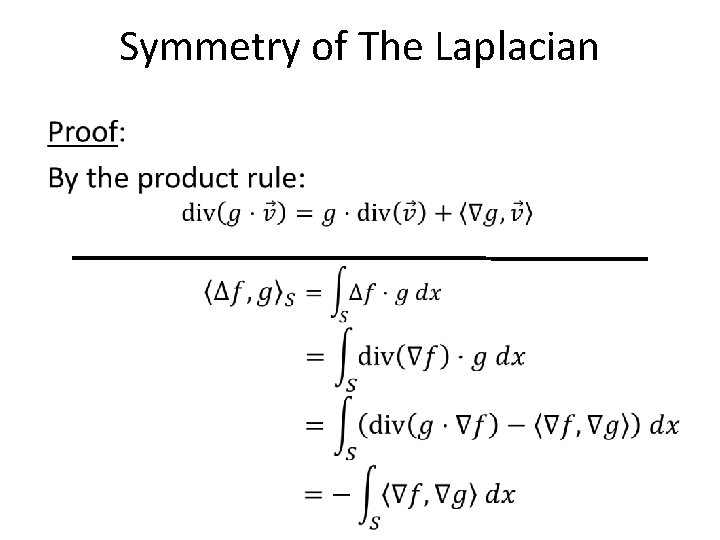
Symmetry of The Laplacian •
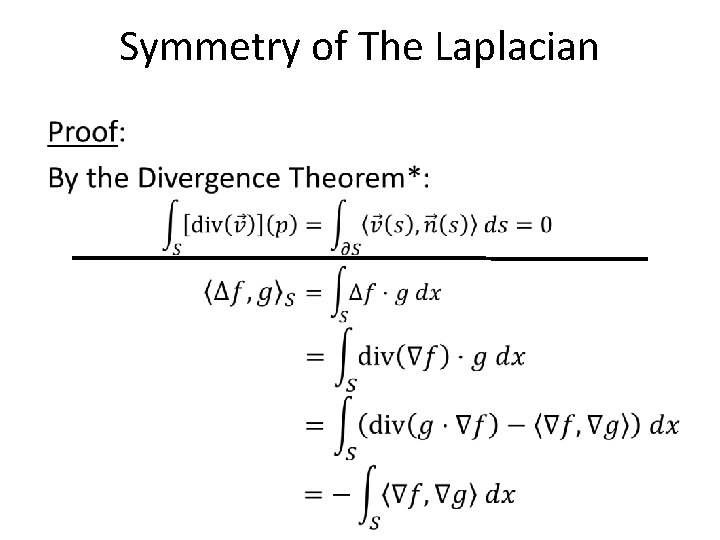
Symmetry of The Laplacian •
Spectra of Symmetric Operators •
Spectra of Symmetric Operators •
Spectra of Symmetric Operators •
What happens in the discrete setting?
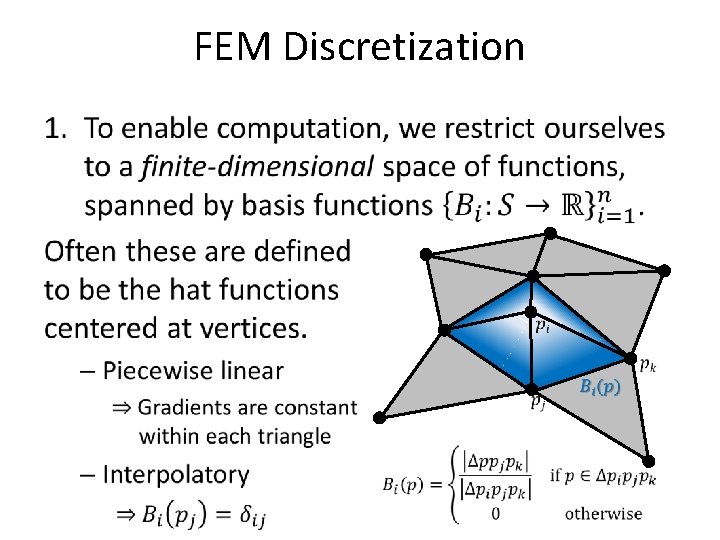
FEM Discretization •
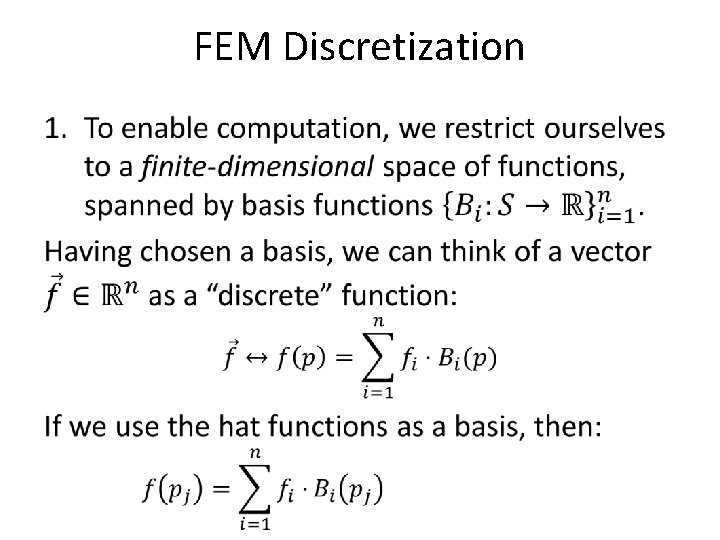
FEM Discretization •
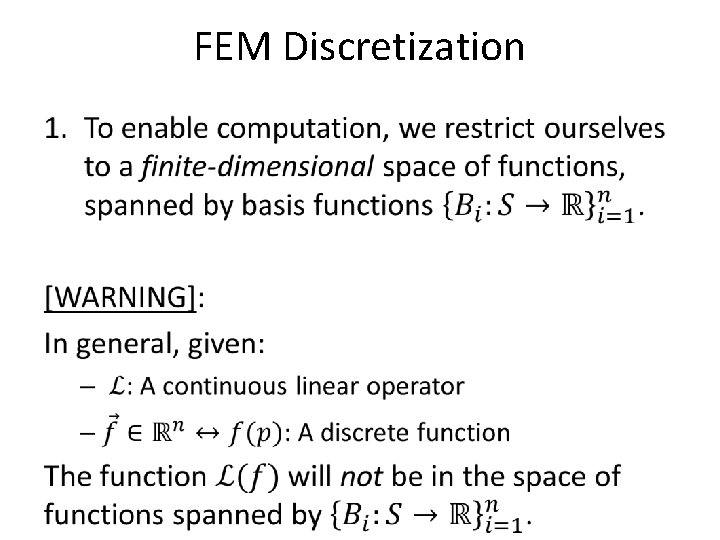
FEM Discretization •
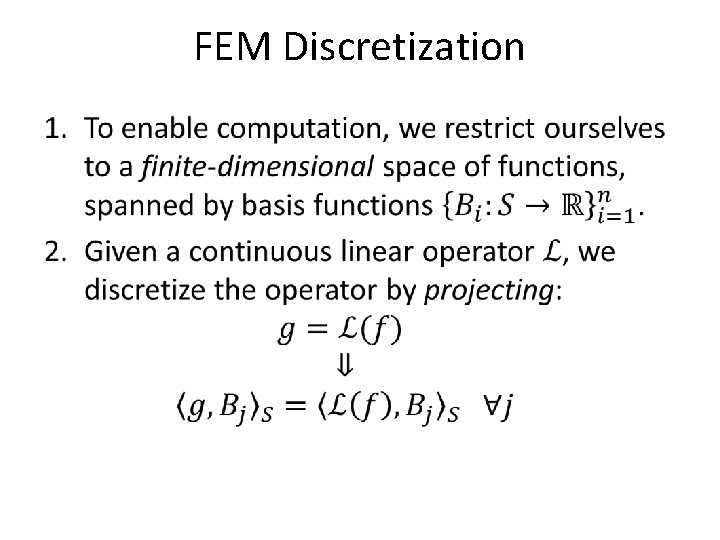
FEM Discretization •
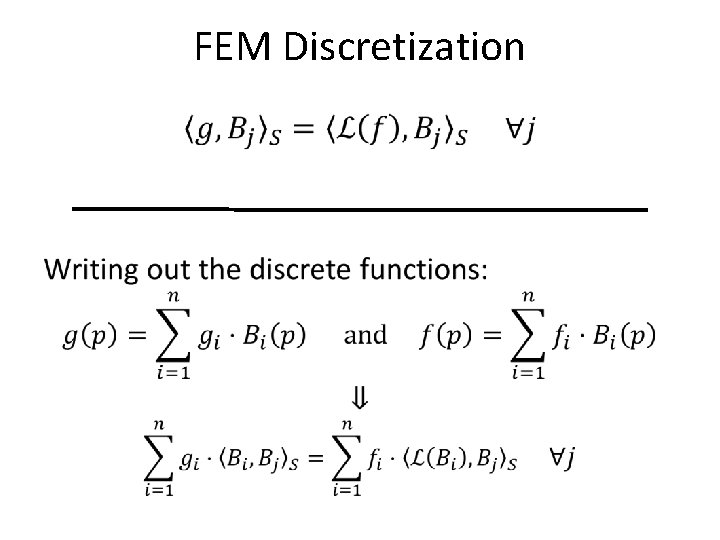
FEM Discretization •
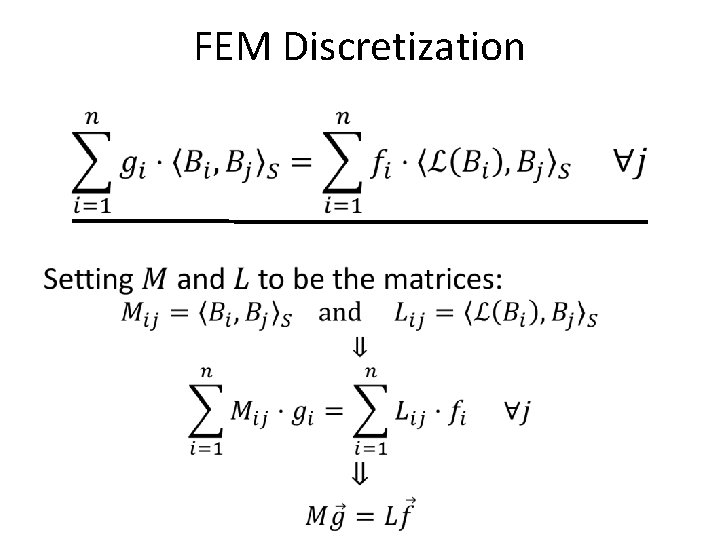
FEM Discretization •
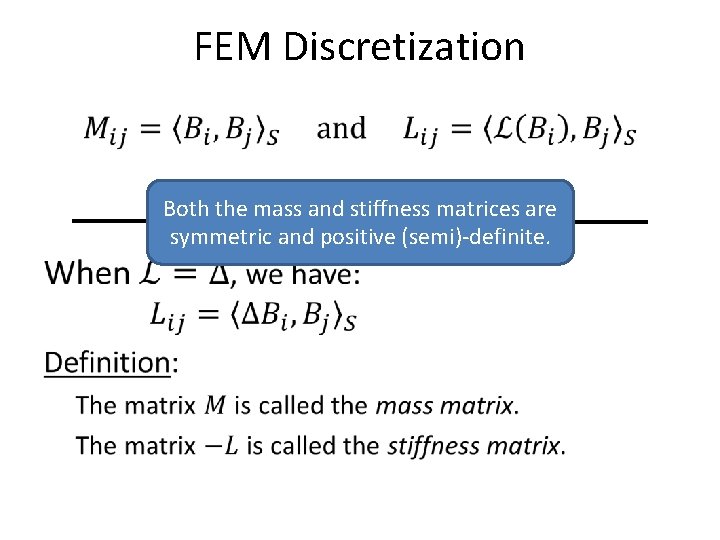
FEM Discretization • Both the mass and stiffness matrices are symmetric and positive (semi)-definite.
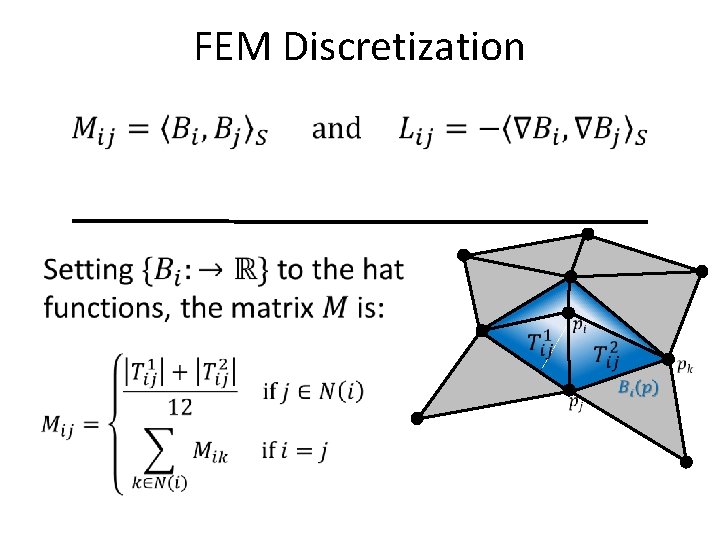
FEM Discretization •
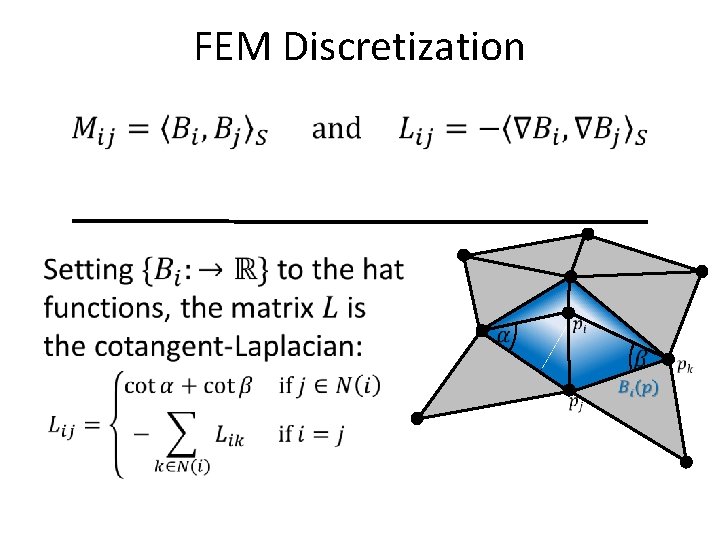
FEM Discretization •
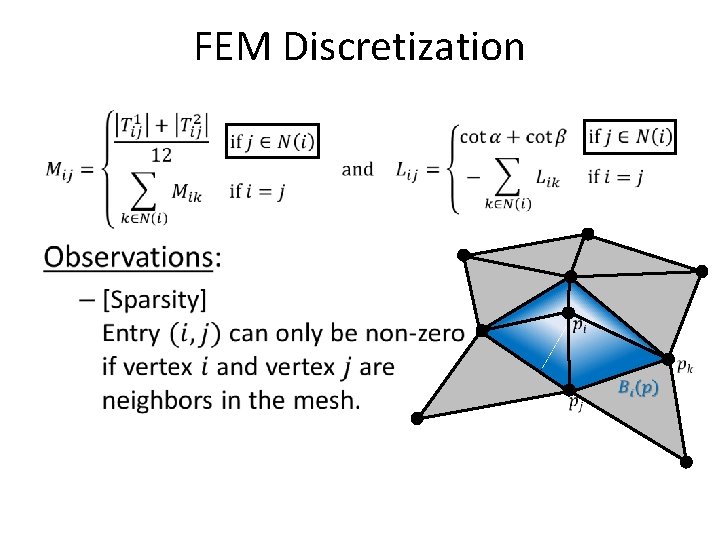
FEM Discretization •
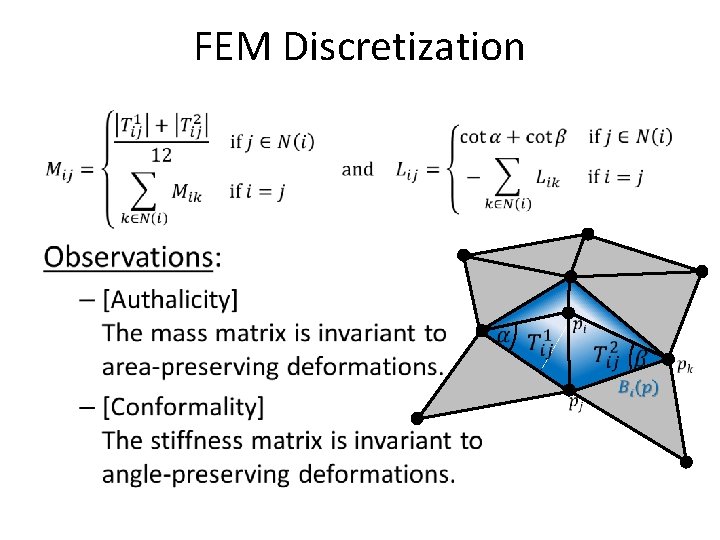
FEM Discretization •
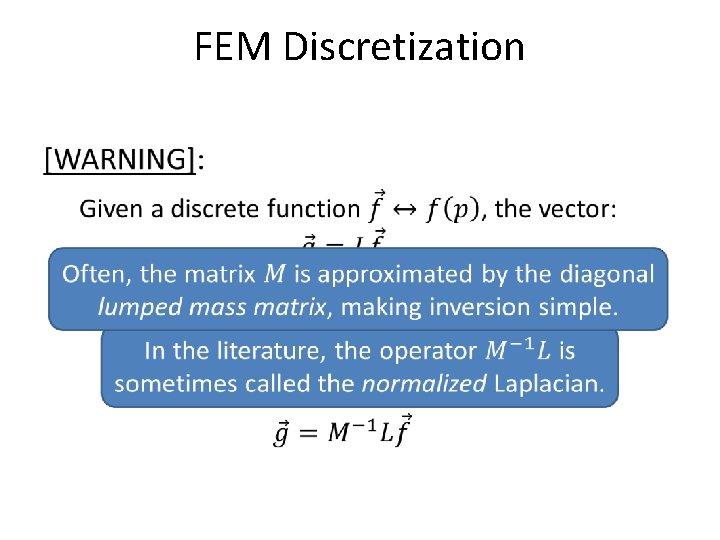
FEM Discretization •
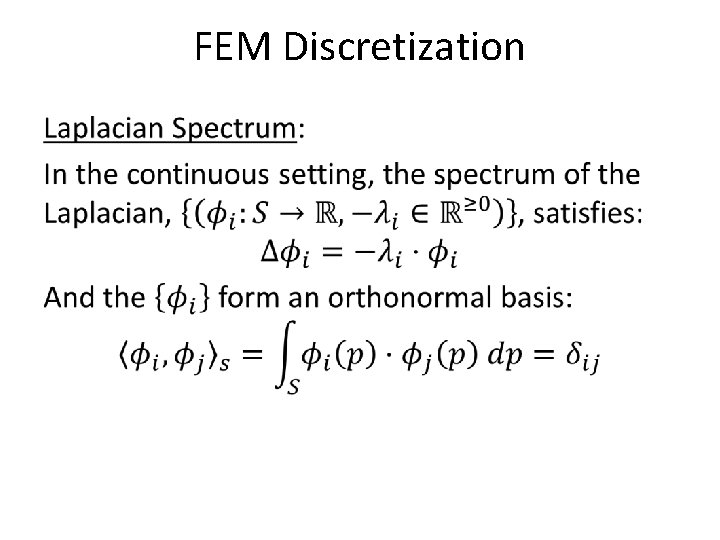
FEM Discretization •
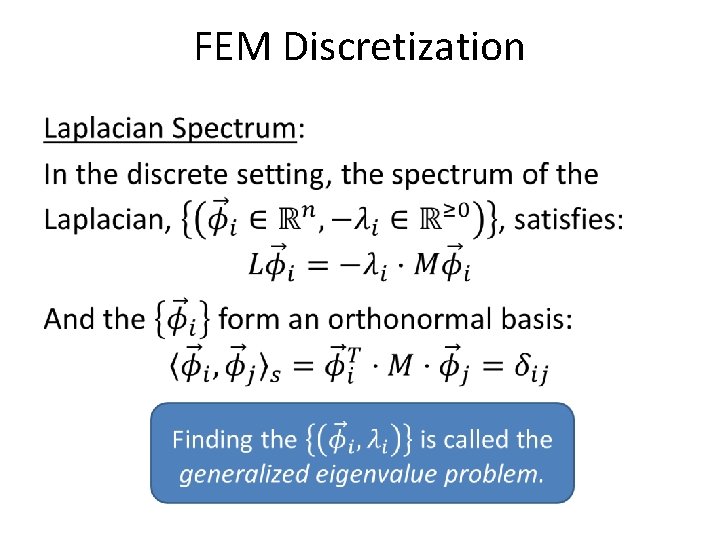
FEM Discretization •
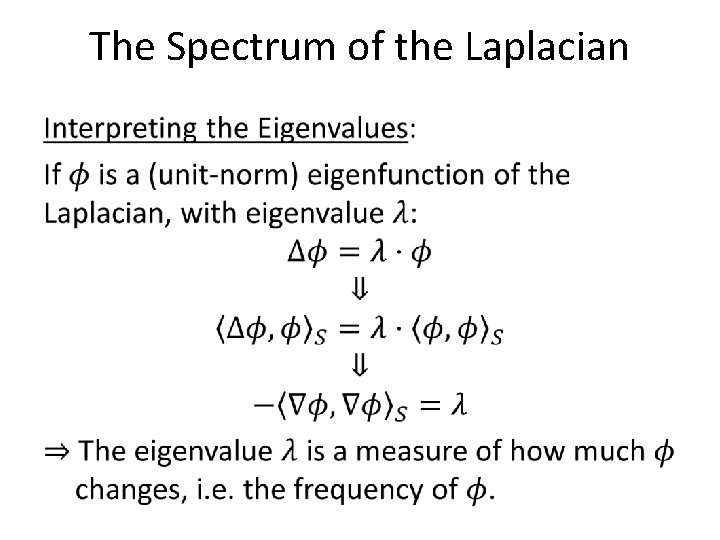
The Spectrum of the Laplacian •
How do we compute the spectral decomposition?
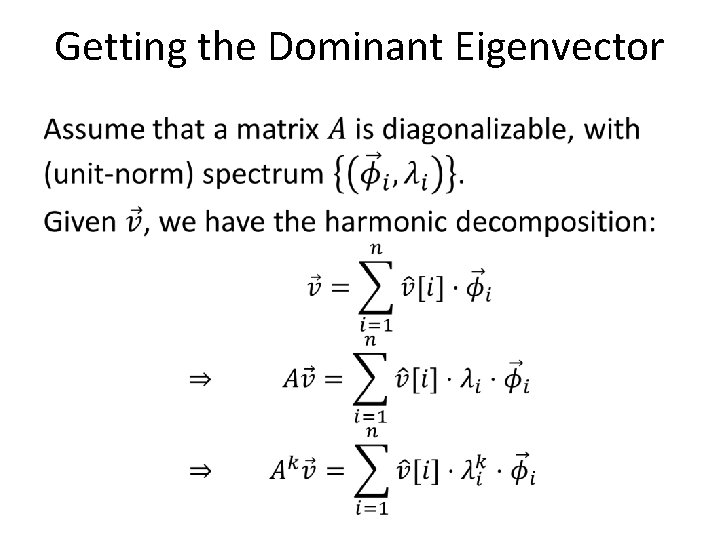
Getting the Dominant Eigenvector •
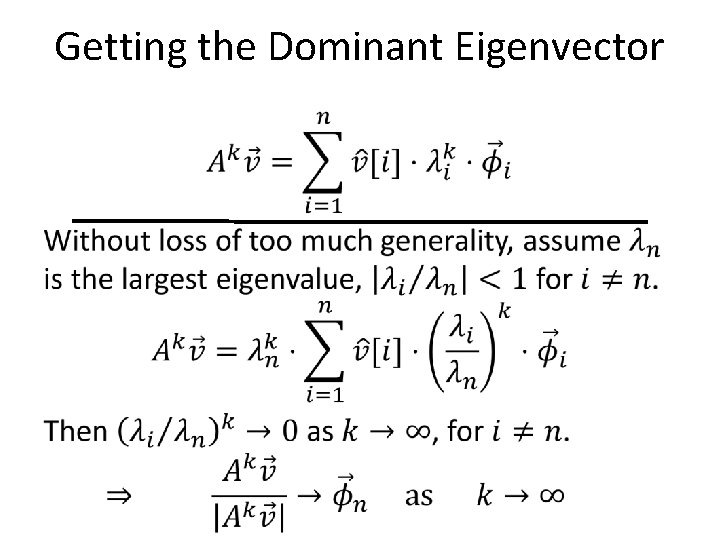
Getting the Dominant Eigenvector •
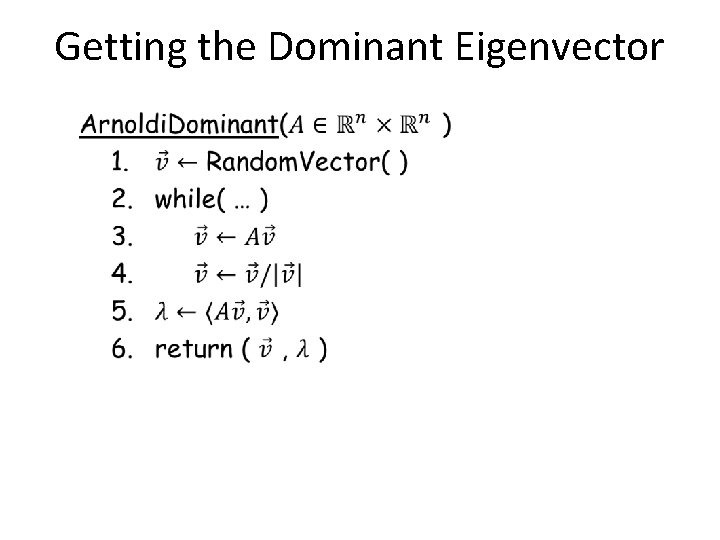
Getting the Dominant Eigenvector •
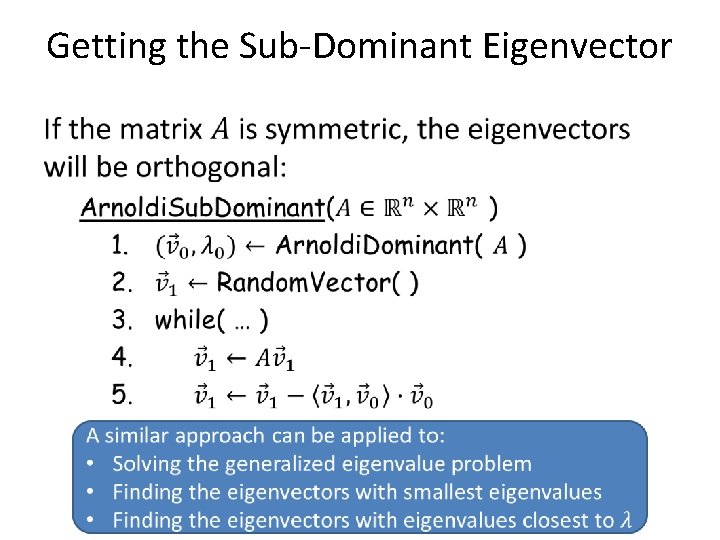
Getting the Sub-Dominant Eigenvector •
Outline • Motivation • Laplacian Spectrum • Applications – Signal/Geometry Filtering – Partial Differential Equations – Complexity and Approximation • Conclusion
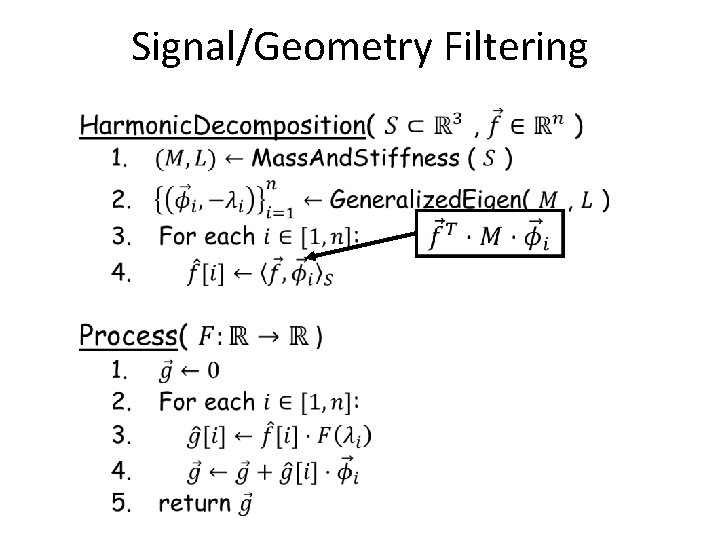
Signal/Geometry Filtering •
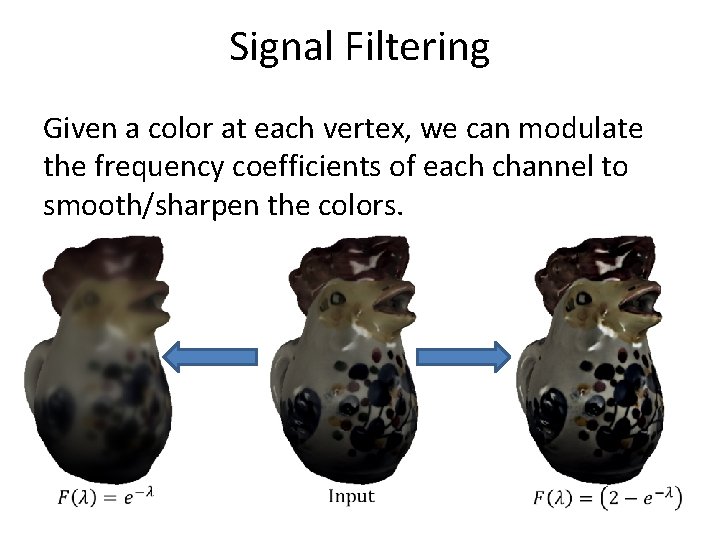
Signal Filtering Given a color at each vertex, we can modulate the frequency coefficients of each channel to smooth/sharpen the colors.
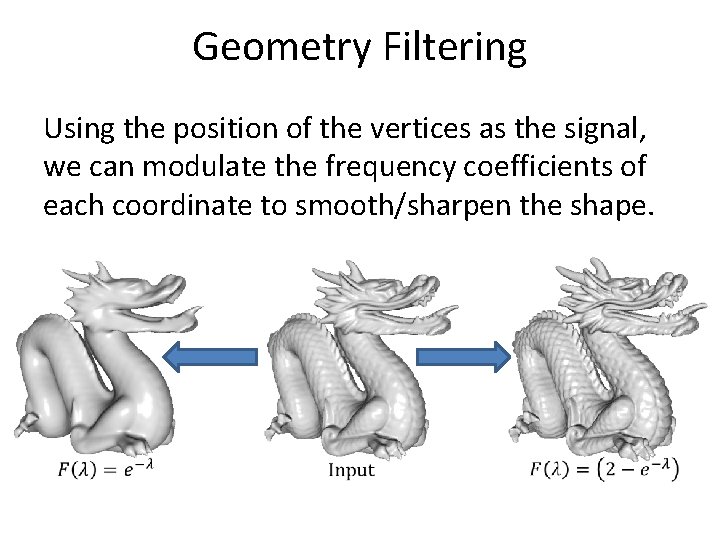
Geometry Filtering Using the position of the vertices as the signal, we can modulate the frequency coefficients of each coordinate to smooth/sharpen the shape.
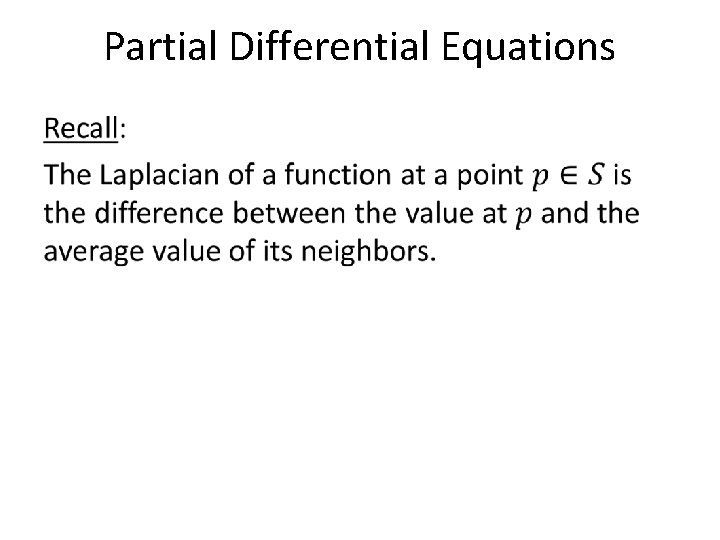
Partial Differential Equations •
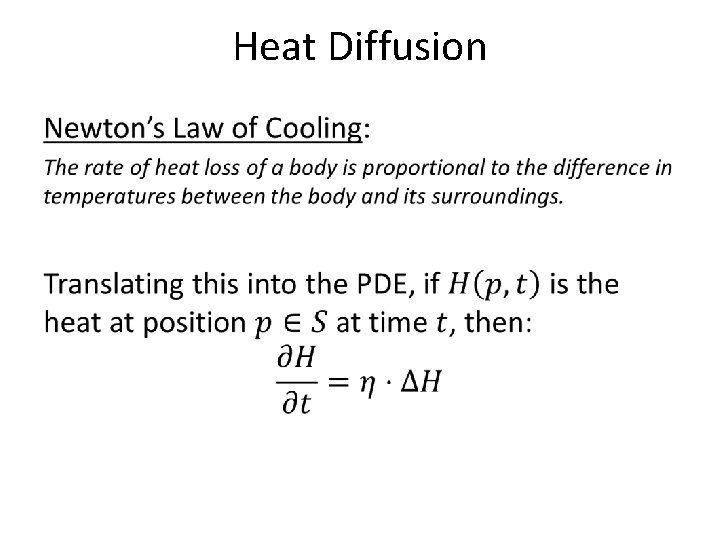
Heat Diffusion •
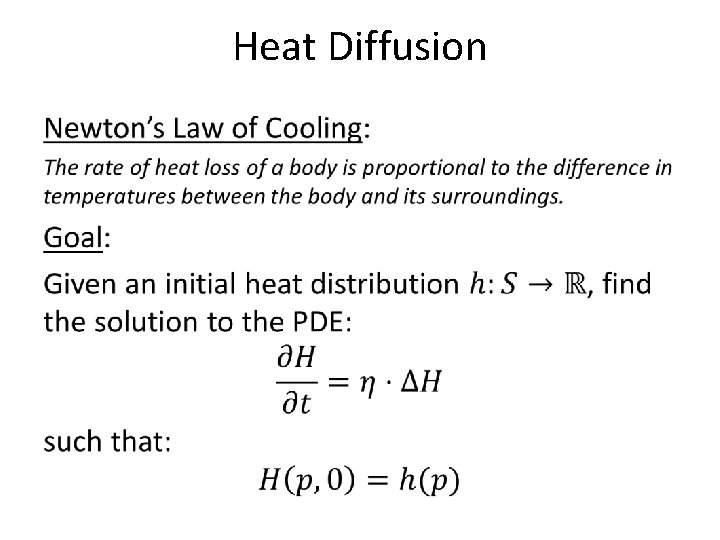
Heat Diffusion •
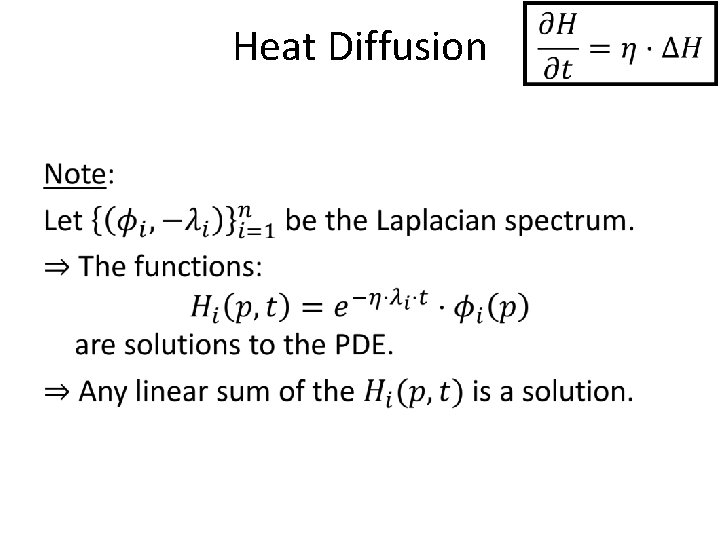
Heat Diffusion •
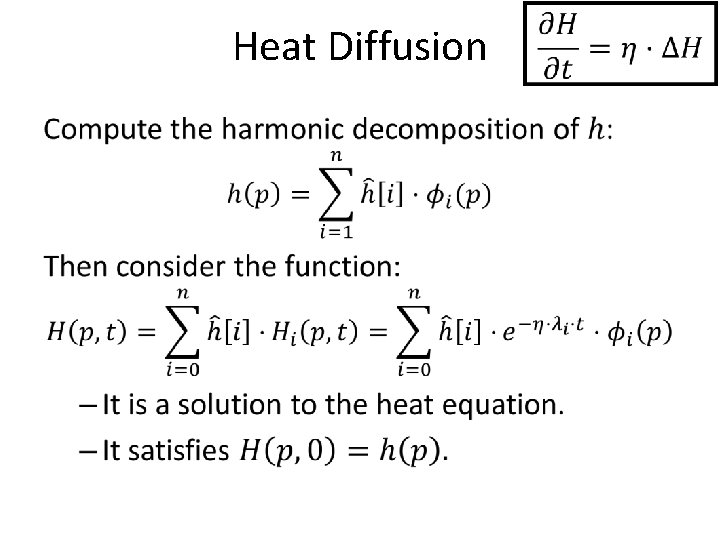
Heat Diffusion •
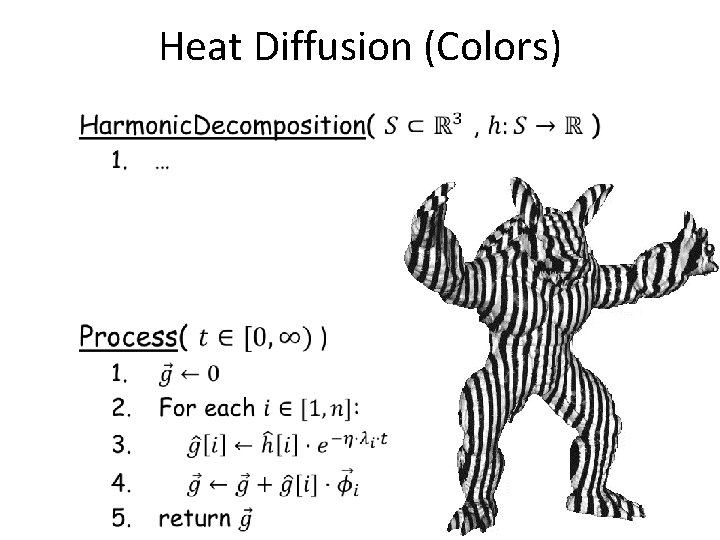
Heat Diffusion (Colors) •
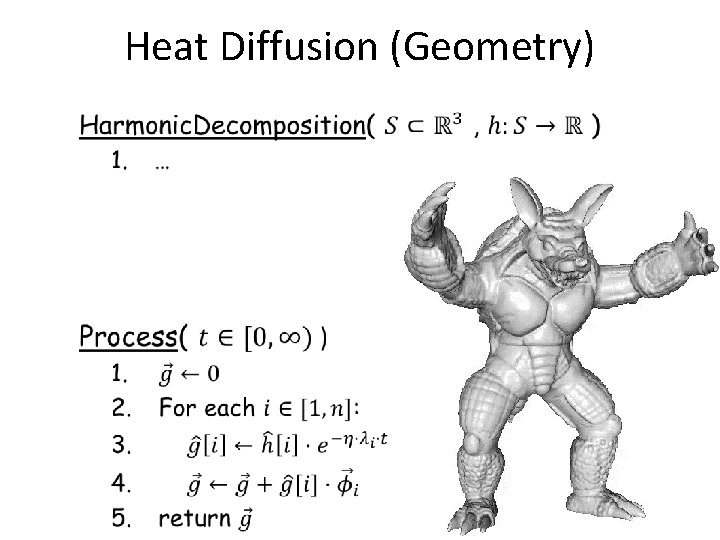
Heat Diffusion (Geometry) •
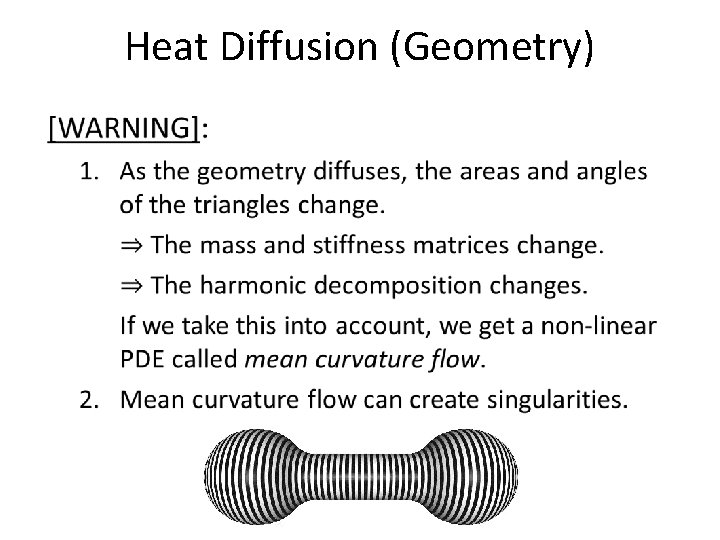
Heat Diffusion (Geometry) •
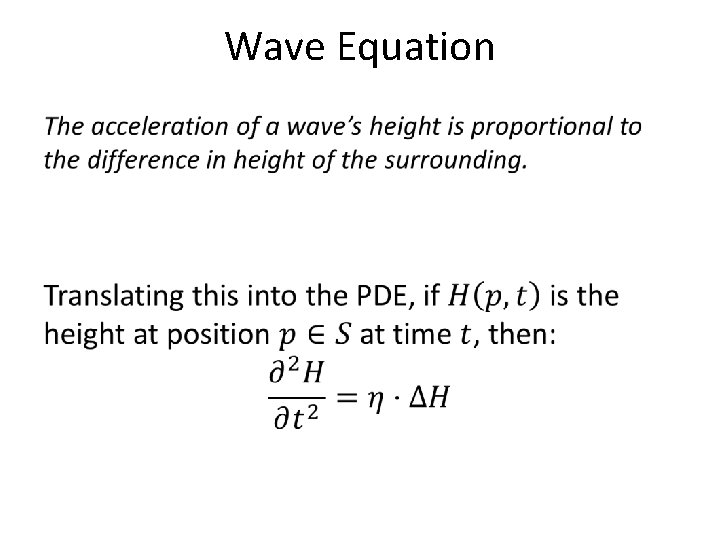
Wave Equation •
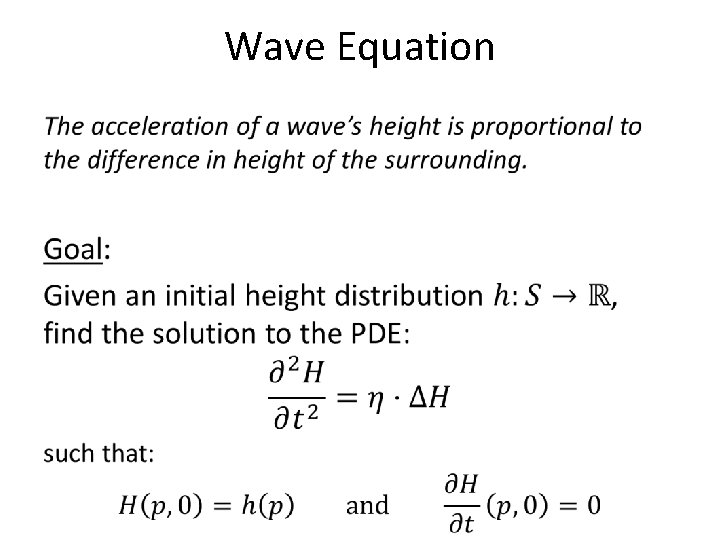
Wave Equation •
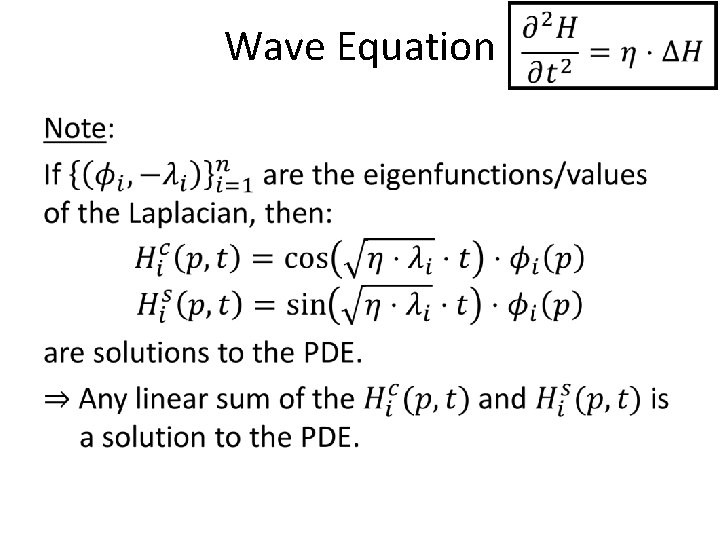
Wave Equation •
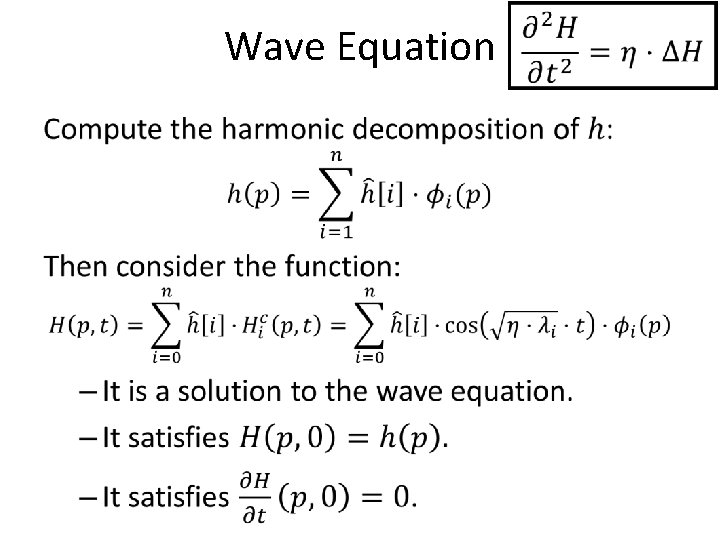
Wave Equation •
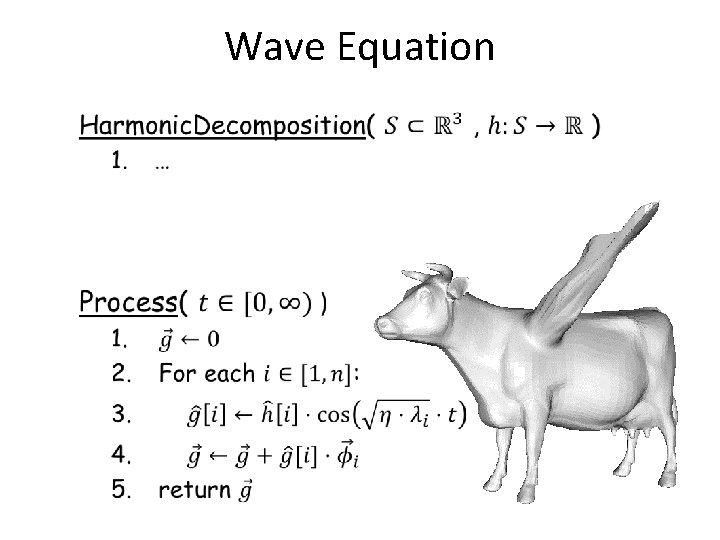
Wave Equation •
How practical is it to use the spectral decomposition?
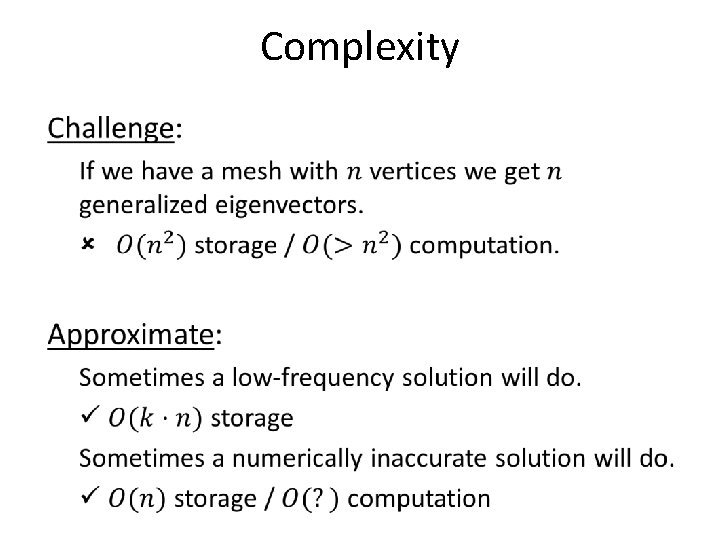
Complexity •
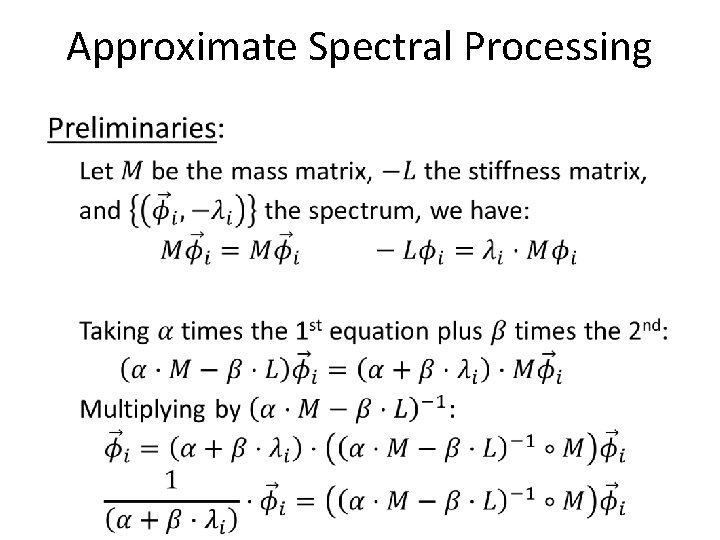
Approximate Spectral Processing •
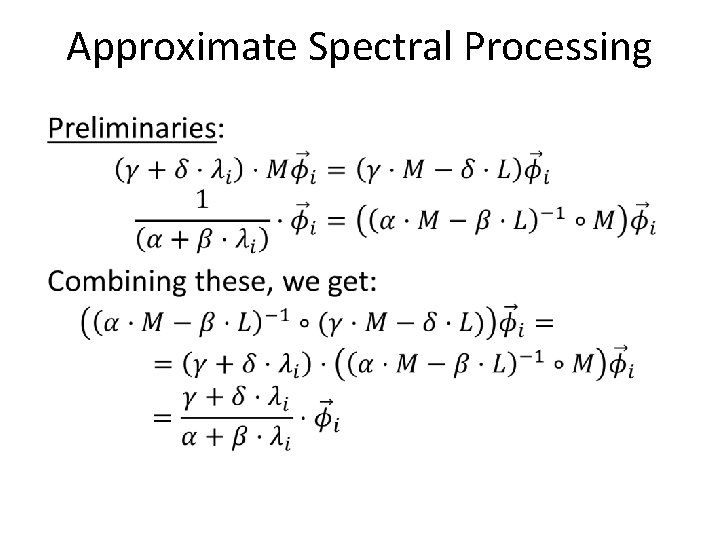
Approximate Spectral Processing •
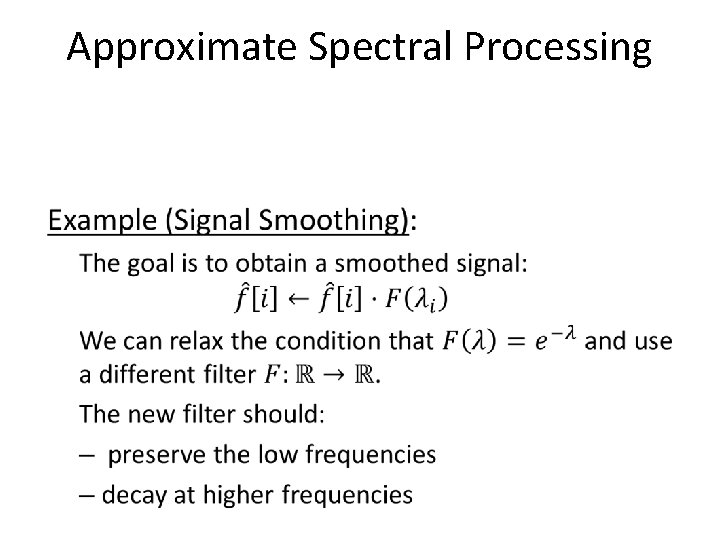
Approximate Spectral Processing •
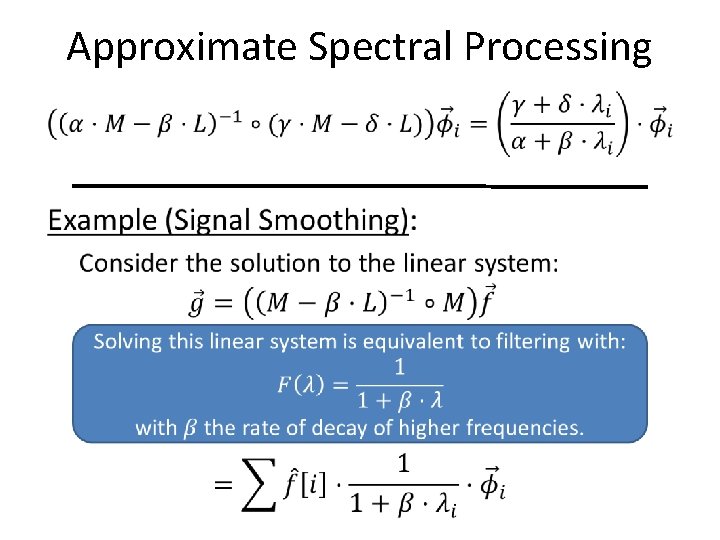
Approximate Spectral Processing •
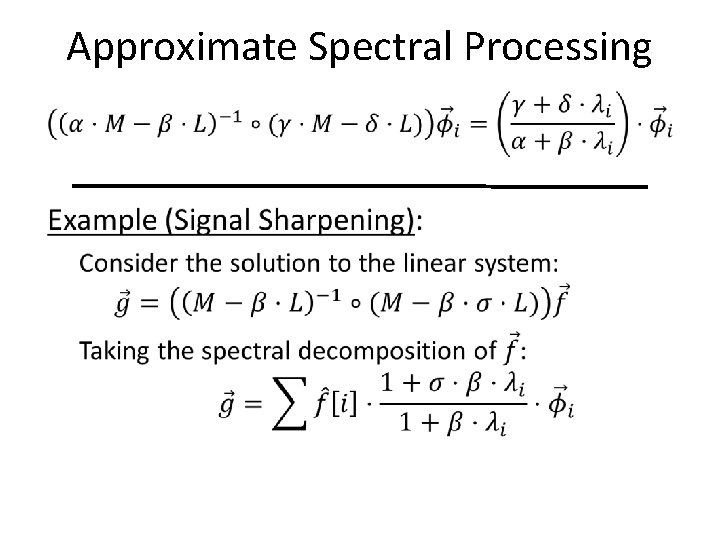
Approximate Spectral Processing •
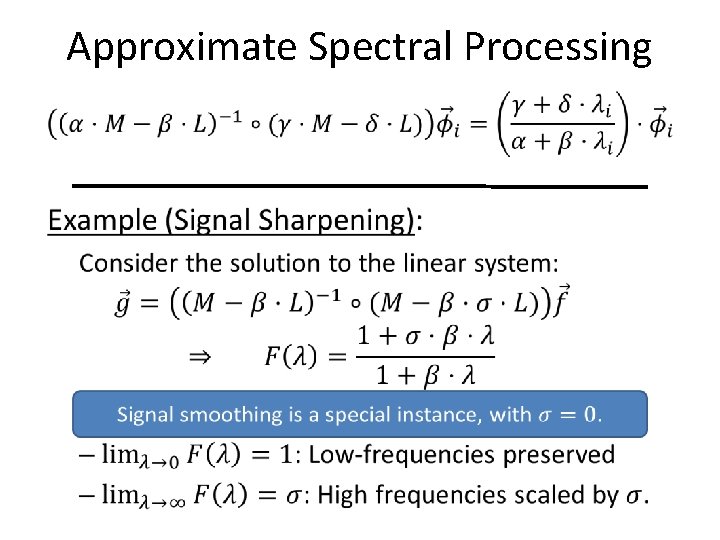
Approximate Spectral Processing •
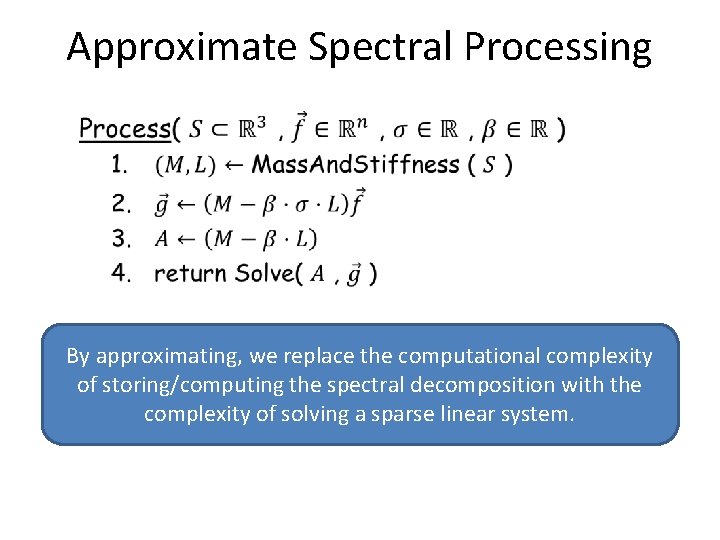
Approximate Spectral Processing • By approximating, we replace the computational complexity of storing/computing the spectral decomposition with the complexity of solving a sparse linear system.
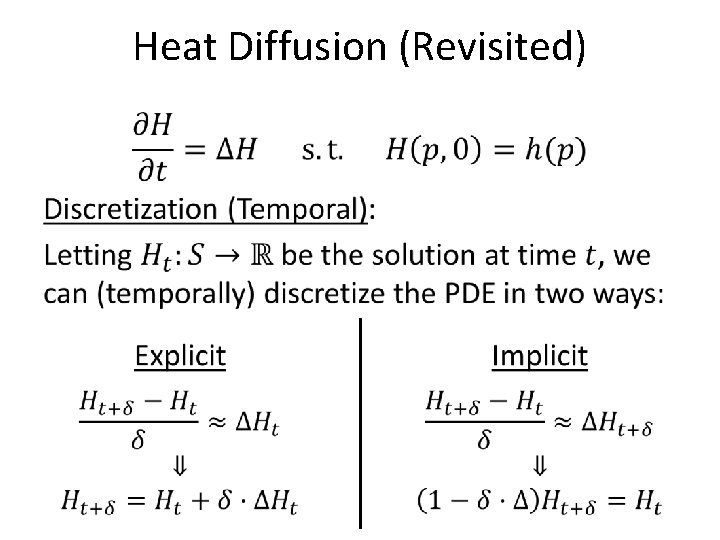
Heat Diffusion (Revisited) •
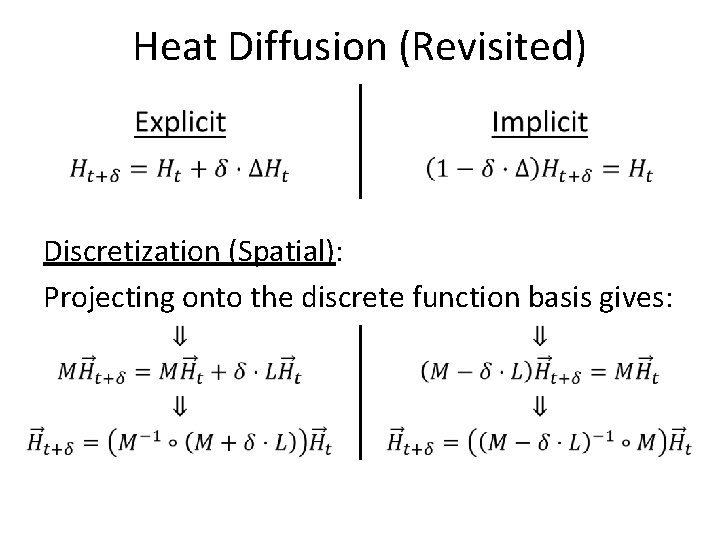
Heat Diffusion (Revisited) Discretization (Spatial): Projecting onto the discrete function basis gives:
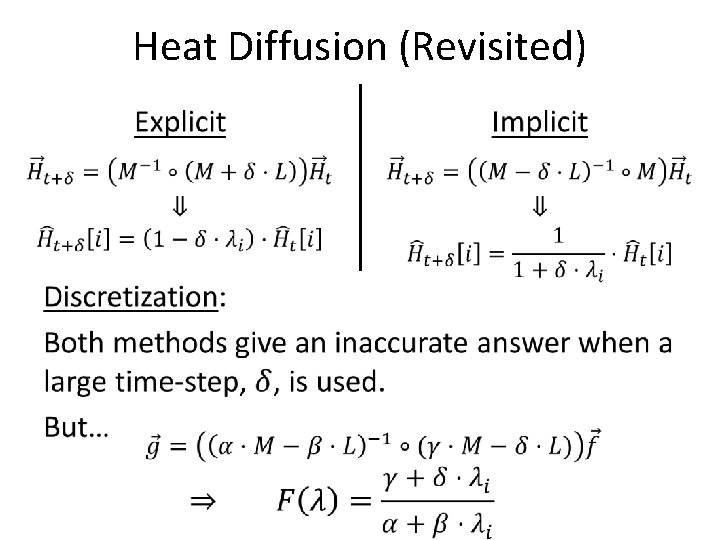
Heat Diffusion (Revisited) •
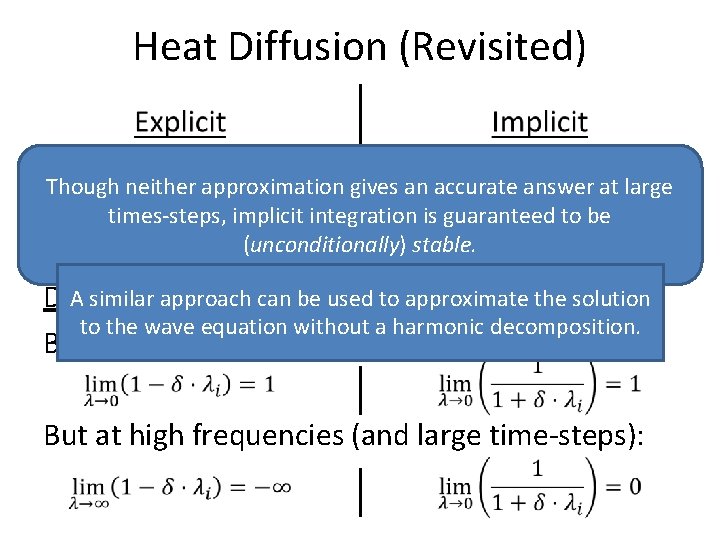
Heat Diffusion (Revisited) Though neither approximation gives an accurate answer at large times-steps, implicit integration is guaranteed to be (unconditionally) stable. A similar approach can be used to approximate the solution Discretization: to the wave equation without a harmonic decomposition. Both filters preserve low frequencies: But at high frequencies (and large time-steps):
Outline • • Motivation Laplacian Spectrum Applications Conclusion
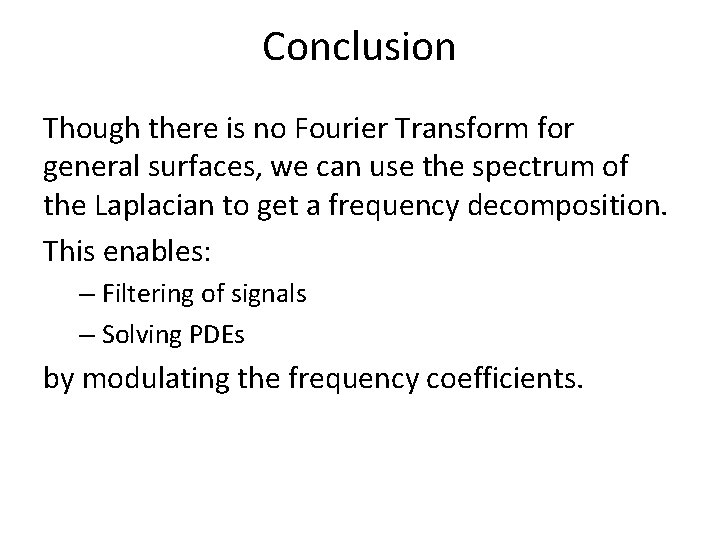
Conclusion Though there is no Fourier Transform for general surfaces, we can use the spectrum of the Laplacian to get a frequency decomposition. This enables: – Filtering of signals – Solving PDEs by modulating the frequency coefficients.
Conclusion Though computing a full spectral decomposition is not space/time efficient, we can often: – Use the lower frequencies. – Design linear operators whose solution has the desired frequency modulation. Using theory of spectral decomposition: – We can design stable simulations, without explicitly computing the decomposition.
Future •

Thank You!
- Slides: 83