
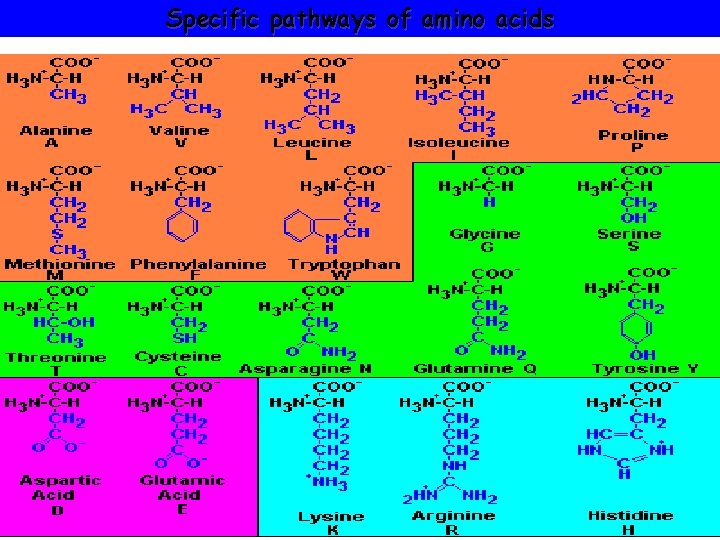
Specific pathways of amino acids SPECIFIC WAYS OF
- Slides: 12
Specific pathways of amino acids
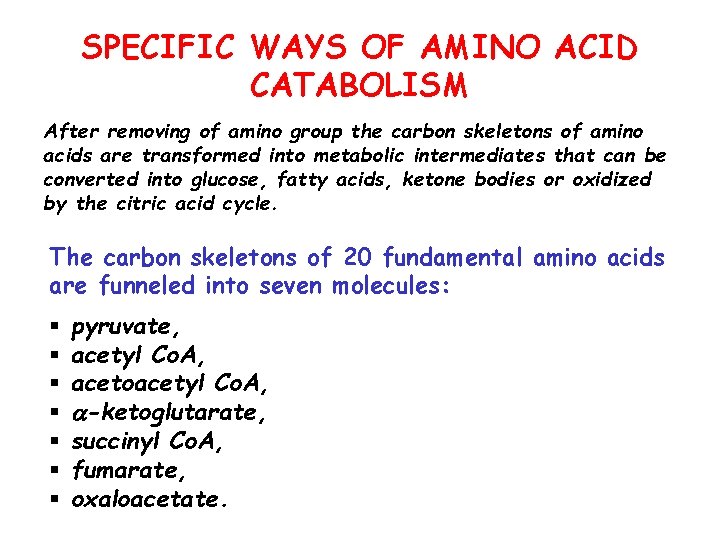
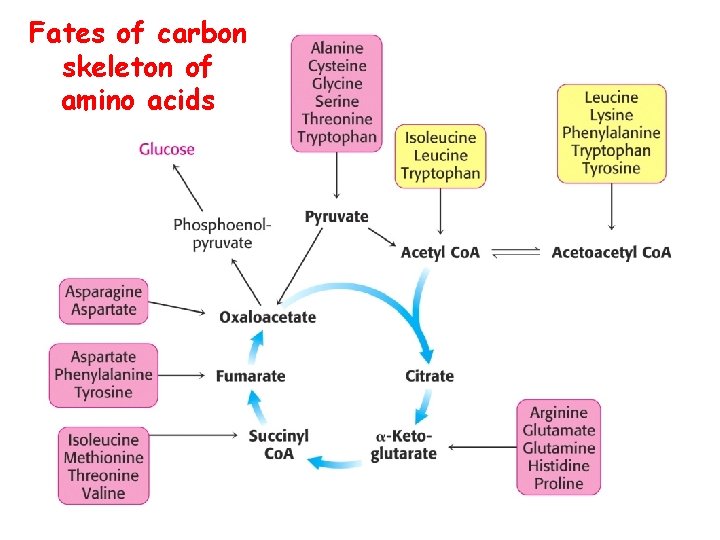
SPECIFIC WAYS OF AMINO ACID CATABOLISM After removing of amino group the carbon skeletons of amino acids are transformed into metabolic intermediates that can be converted into glucose, fatty acids, ketone bodies or oxidized by the citric acid cycle. The carbon skeletons of 20 fundamental amino acids are funneled into seven molecules: § § § § pyruvate, acetyl Co. A, acetoacetyl Co. A, -ketoglutarate, succinyl Co. A, fumarate, oxaloacetate.
Fates of carbon skeleton of amino acids
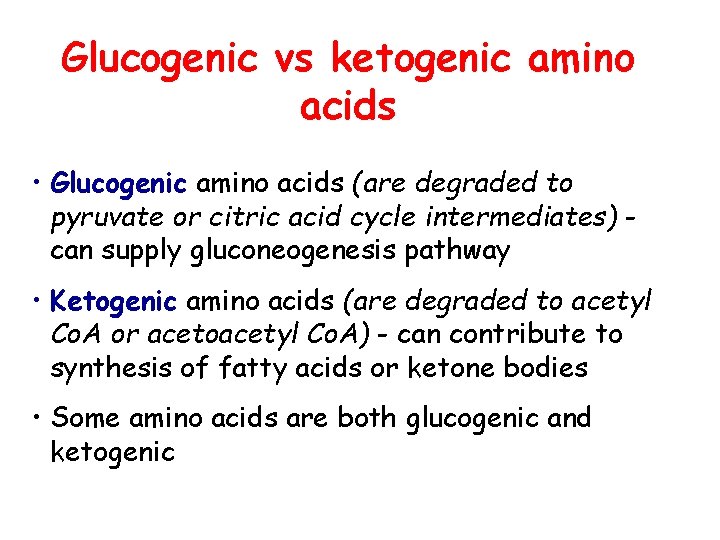
Glucogenic vs ketogenic amino acids • Glucogenic amino acids (are degraded to pyruvate or citric acid cycle intermediates) can supply gluconeogenesis pathway • Ketogenic amino acids (are degraded to acetyl Co. A or acetoacetyl Co. A) - can contribute to synthesis of fatty acids or ketone bodies • Some amino acids are both glucogenic and ketogenic
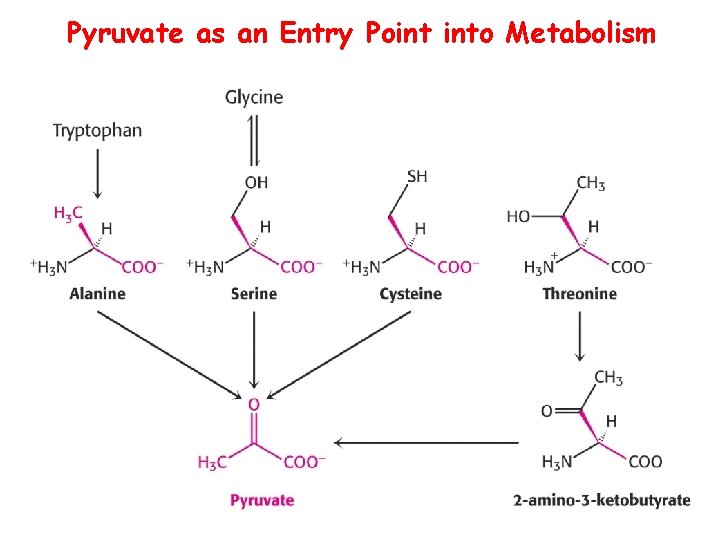
Pyruvate as an Entry Point into Metabolism
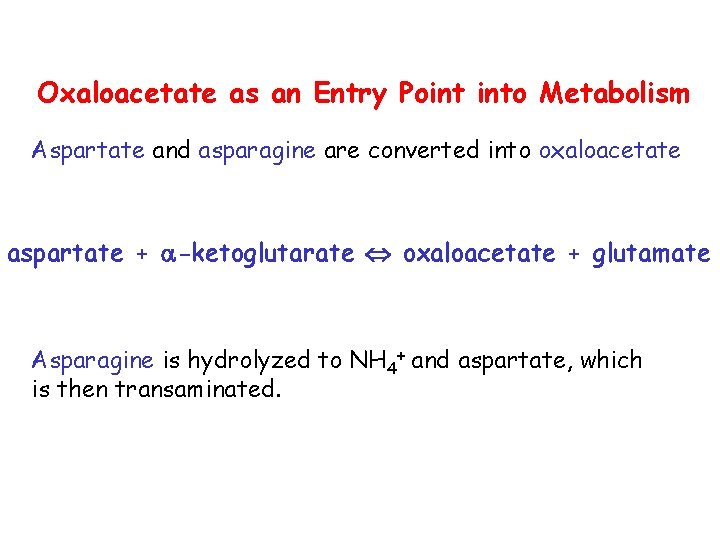
Oxaloacetate as an Entry Point into Metabolism Aspartate and asparagine are converted into oxaloacetate aspartate + -ketoglutarate oxaloacetate + glutamate Asparagine is hydrolyzed to NH 4+ and aspartate, which is then transaminated.
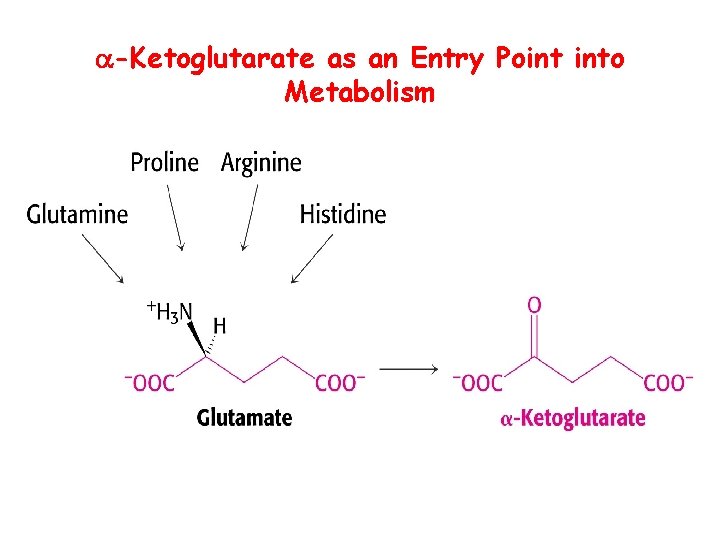
-Ketoglutarate as an Entry Point into Metabolism
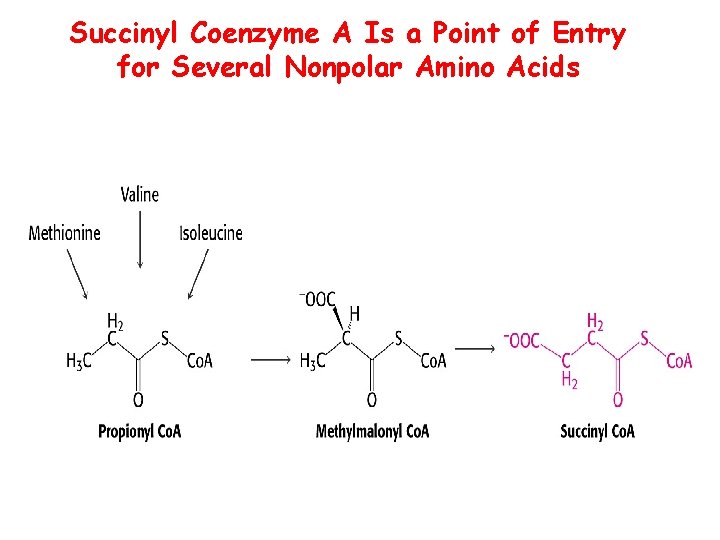
Succinyl Coenzyme A Is a Point of Entry for Several Nonpolar Amino Acids
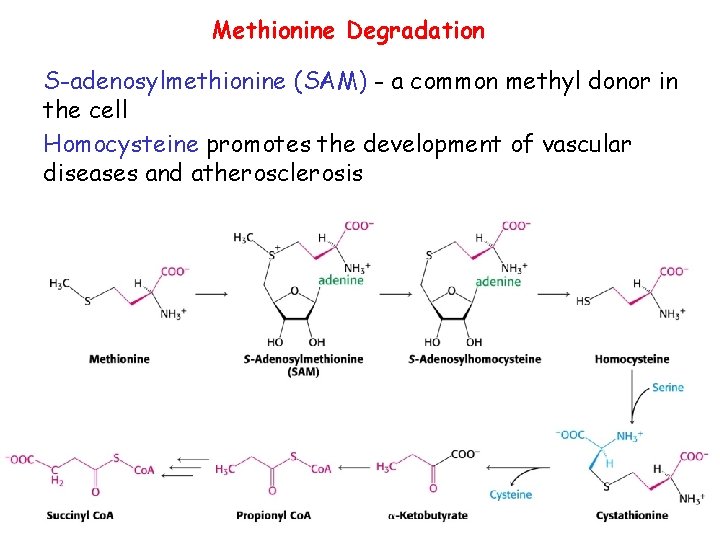
Methionine Degradation S-adenosylmethionine (SAM) - a common methyl donor in the cell Homocysteine promotes the development of vascular diseases and atherosclerosis
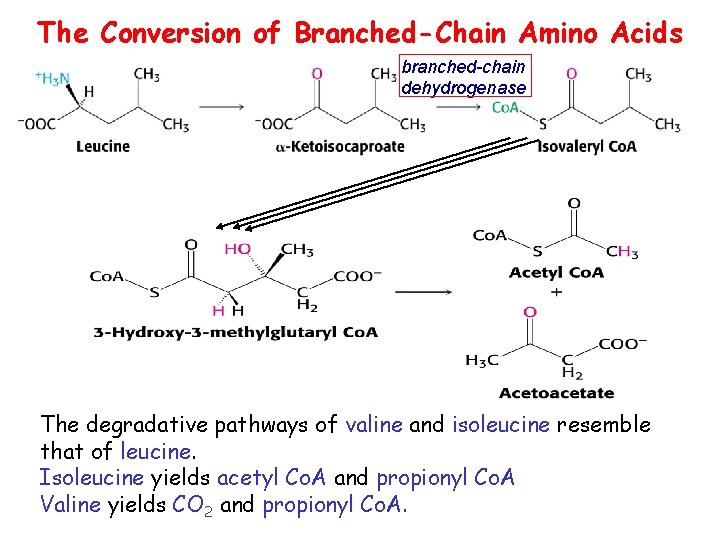
The Conversion of Branched-Chain Amino Acids branched-chain dehydrogenase The degradative pathways of valine and isoleucine resemble that of leucine. Isoleucine yields acetyl Co. A and propionyl Co. A Valine yields CO 2 and propionyl Co. A.
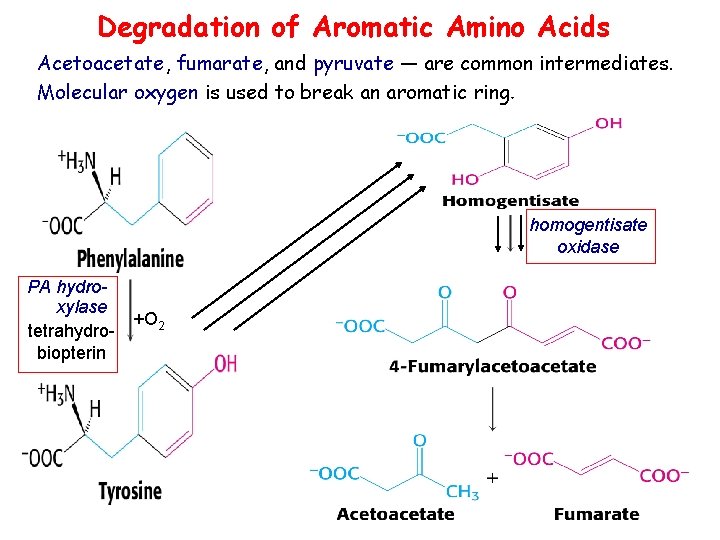
Degradation of Aromatic Amino Acids Acetoacetate, fumarate, and pyruvate — are common intermediates. Molecular oxygen is used to break an aromatic ring. homogentisate oxidase PA hydroxylase +O 2 tetrahydrobiopterin
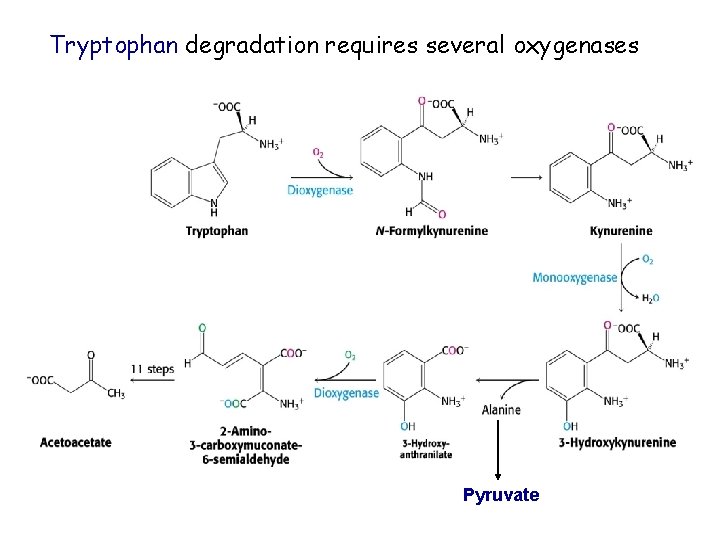
Tryptophan degradation requires several oxygenases Pyruvate