
Specific Pain Conditions Some Highlights Fibromyalgia Diagnosis o
Specific Pain Conditions Some Highlights
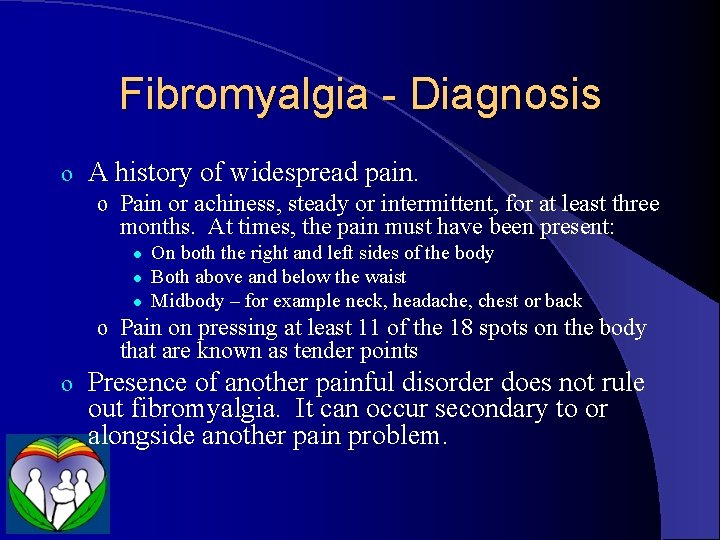
Fibromyalgia - Diagnosis o A history of widespread pain. o Pain or achiness, steady or intermittent, for at least three months. At times, the pain must have been present: l l l On both the right and left sides of the body Both above and below the waist Midbody – for example neck, headache, chest or back o Pain on pressing at least 11 of the 18 spots on the body that are known as tender points o Presence of another painful disorder does not rule out fibromyalgia. It can occur secondary to or alongside another pain problem.
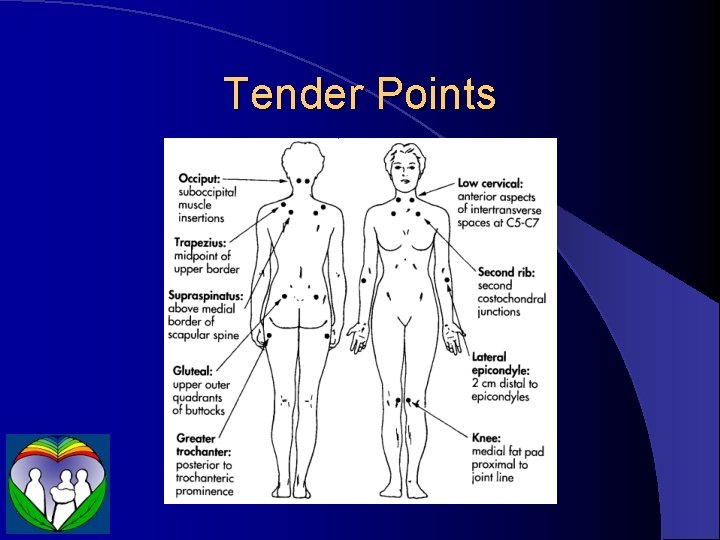
Tender Points
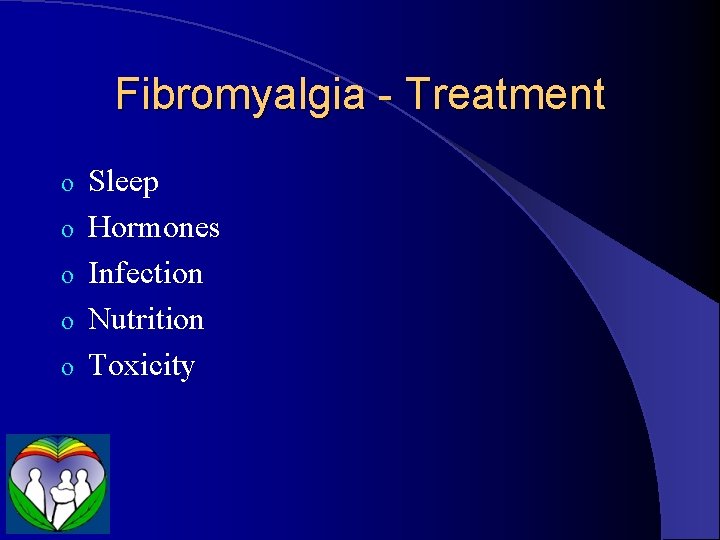
Fibromyalgia - Treatment o o o Sleep Hormones Infection Nutrition Toxicity
Infection o Look for and treat: o Chronic mycoplasma and chlamydia infections l Particularly if onset or exacerbation is related to respiratory infection or if chronic respiratory symptoms are present o Yeast overgrowth in gut, sinuses l More likely in setting of frequent antibiotic administration o Chronic viral infections o Treatment may be o Immune support: l Pro. Boost – thymic protein A l Reishi l Saventaro o Specific antimicrobials: l Doxycycline l Antifungals l Herbals: Goldenseal/Berberis, Olive Leaf, Grapefruit seed, etc.
Nutrition o End Fatigue Daily Energy Enfusion o Mitochondrial support: Carnitine l Co. Q 10 l Magnesium malate or citramate l Riboflavin l NADH l Etc. l
Toxicity o This is a controversial aspect of the treatment of fibromyalgia, but attention to neurotoxins and other toxicity may be helpful in those not responding to correction of the other factors
Headaches Migraine appears to be a disorder of energy production in the brain o The old distinction between vascular and tension headaches turns out to be artificial; there is much crossover o Specific issues to be ruled out: o o Elevated intracranial pressure (tumors) – l Worse after lying down o Sleep apnea o Giant Cell Arteritis – ESR blood test
Headache Triggers o Changes are not tolerated well o o o Chemical sensitivity/allergy o o o Hormonal changes Blood sugar changes Dehydration Schedule changes- sleeping in on certain days Food allergy – particularly with onset in childhood Scents – household products as well as personal care products Food additives: MSG, aspartame, caffeine Chronic use of pain medications Musculoskeletal Problems o Neck o TMJ o Eye strain
Headache Treatment Remove tacks/triggers – headache diary o Rescue Medication – most risk rebound o Prophylaxis – regular medications or supplements taken to decrease frequency or severity of headaches o o Diaries are very helpful in monitoring the effectiveness of these interventions
Rescue Medications for Headache In some trials, reglan and compazine were as effective as narcotics or moreso o Triptans – associated with increased risk of heart attack o Combinations including caffeine o o Excedrin o Fiorinal, fioricet, etc. o IV Magnesium
Headache Prophylaxis o Medications o Antidepressants l Nortriptyline o Anticonvulsants l l Depakote Topamax o Blood pressure medications l l Propranolol Calcium channel blockers o Antihistamines l Cyproheptadine
Headache Prophylaxis o Nutritional Supplements o Anti-inflammatory l Feverfew o Vascular l Petadolex o Mitochondrial Support B 2 -Riboflavin 400 mg per day l Magnesium – particularly for hormonal headaches l Coenzyme Q 10 150 mg per day l
Neuropathy o Medications: o Antidepressants o Anticonvulsants o Anti-arrhythmics o Nutritional: o Aggressive B-complex, B 12 if level under 540, especially if homocysteine > 9 o Alpha Lipoic Acid o Acetyl-carnitine (with carnitine to flood muscle cells so acetyl-carnitine gets to nerves)
Chronic Pancreatitis o Rest the pancreas: o Low fat diet o Pancreatic or vegetarian digestive enzymes with meals o Antioxidant support: o Methionine 2000 mg per day or more (monitor homocysteine) o Antioxidant blend including N-acetyl-cysteine
- Slides: 15