
Specific Learning Disorders in The Inclusive Classroom Presented
- Slides: 28
Specific Learning Disorders in The Inclusive Classroom Presented by: Krista Power, Matt Wallace and Renée Le. Blanc
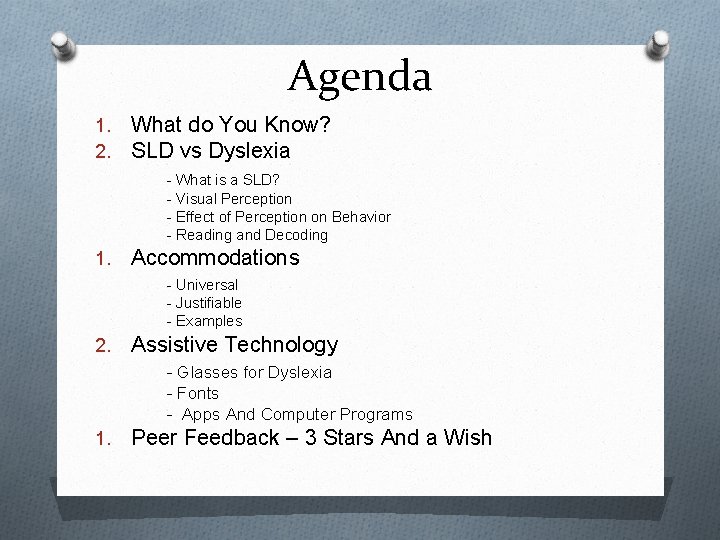
Agenda 1. 2. What do You Know? SLD vs Dyslexia What is a SLD? Visual Perception Effect of Perception on Behavior Reading and Decoding 1. Accommodations Universal Justifiable Examples 2. Assistive Technology Glasses for Dyslexia Fonts Apps And Computer Programs 1. Peer Feedback – 3 Stars And a Wish
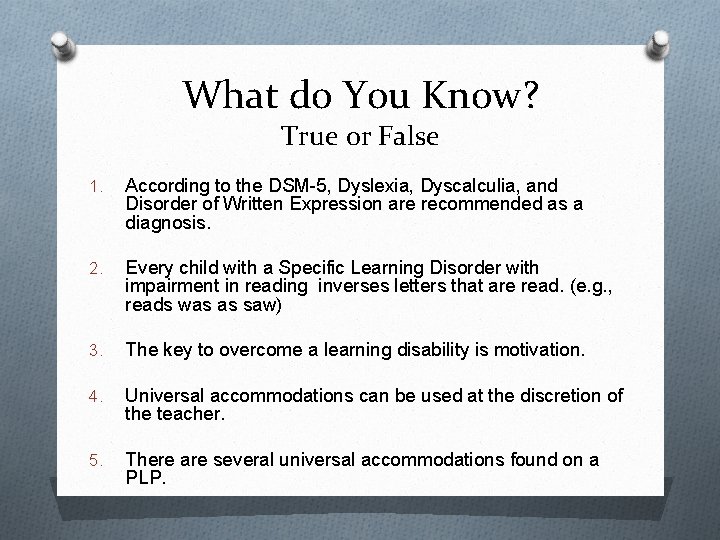
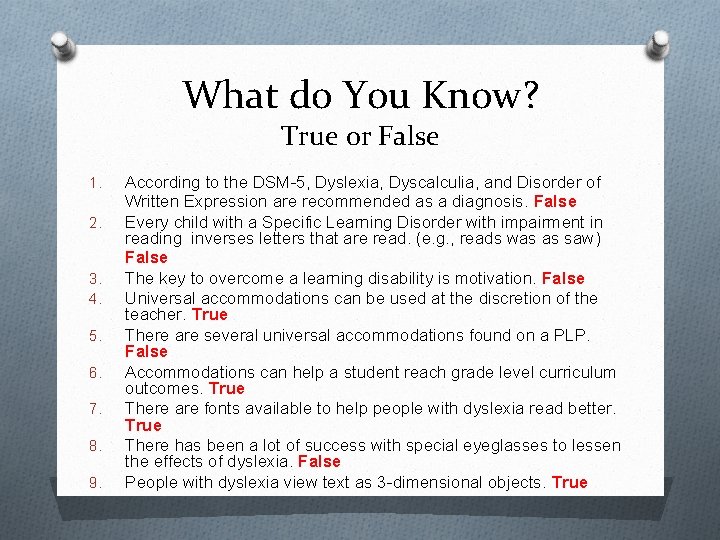
What do You Know? True or False 1. According to the DSM 5, Dyslexia, Dyscalculia, and Disorder of Written Expression are recommended as a diagnosis. 2. Every child with a Specific Learning Disorder with impairment in reading inverses letters that are read. (e. g. , reads was as saw) 3. The key to overcome a learning disability is motivation. 4. Universal accommodations can be used at the discretion of the teacher. 5. There are several universal accommodations found on a PLP.
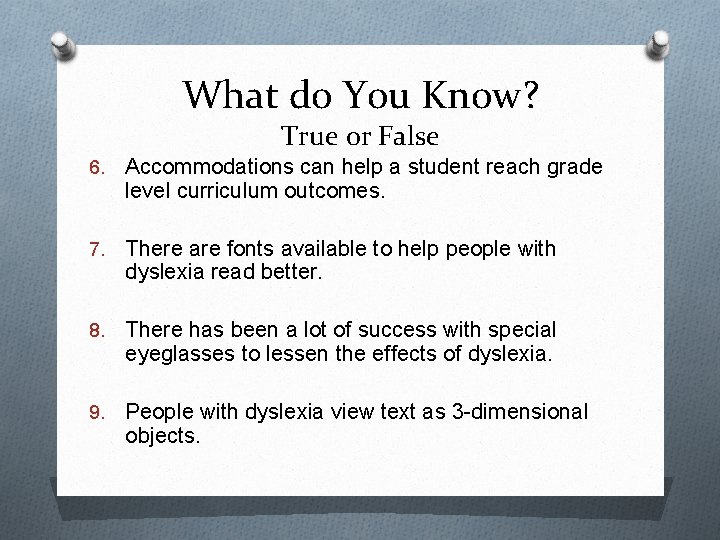
What do You Know? True or False 6. Accommodations can help a student reach grade level curriculum outcomes. 7. There are fonts available to help people with dyslexia read better. 8. There has been a lot of success with special eyeglasses to lessen the effects of dyslexia. 9. People with dyslexia view text as 3 dimensional objects.
SLD vs Dyslexia According to the DSM 5, Learning Disorder has been changed to Specific Learning Disorder and the previous types of Learning Disorder (Dyslexia, Dyscalculia, and Disorder of Written Expression) are no longer being recommended. The type of Learning Disorder will instead be specified as noted in the diagnosis.
What is a SLD? DSM 5 considers SLD to be a type of Neurodevelopmental Disorder that impedes the ability to learn or use specific academic skills (e. g. , reading, writing, or arithmetic), which are the foundations for other academic learning. Two major changes: 1) one category of SLD with ‘specifiers’ in three major academic domains, namely reading, writing, mathematics (e. g. , SLD With impairment in reading) 2) elimination of the IQ achievement discrepancy requirement and its replacement with four criteria (A – D), all of which must be met.
Video
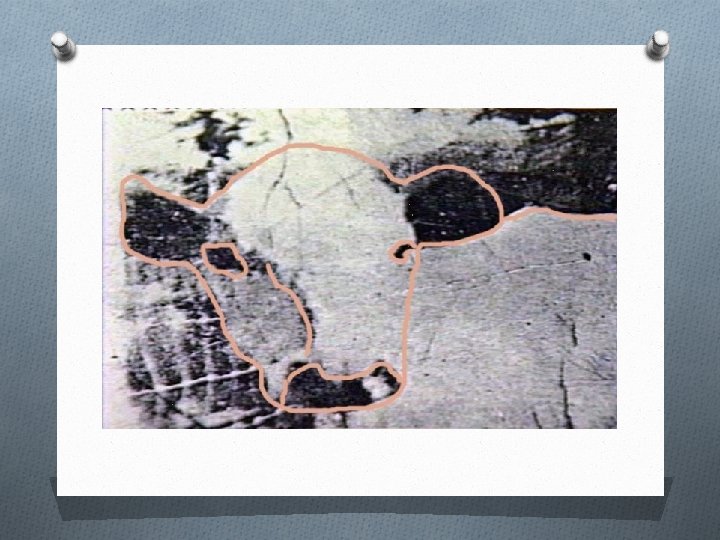
Visual perception
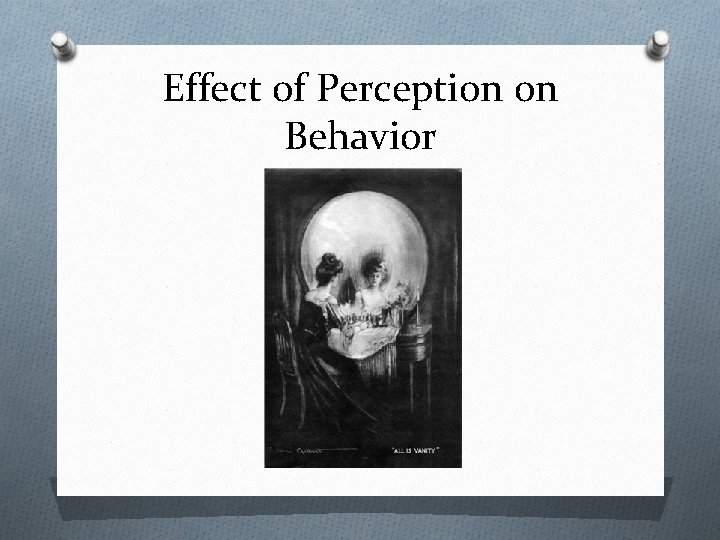
Effect of Perception on Behavior
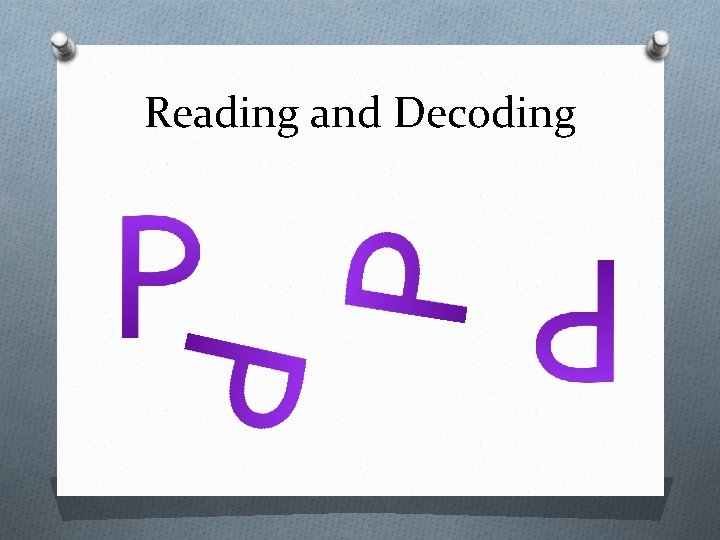
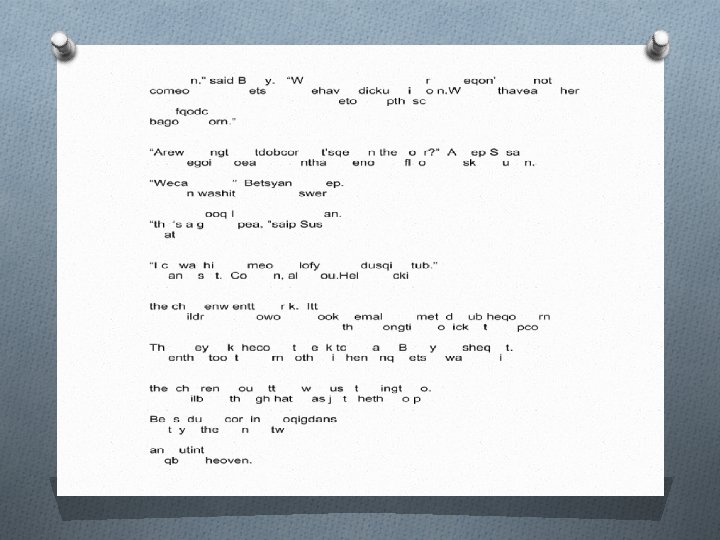
Reading and Decoding
Accommodations Universal- strategies, technologies or adjustments that help a student reach curriculum outcomes and can be used at the teacher’s discretion. Universal accommodations do not warrant a PLP or prior approval for provincial assessments.
Accommodations Justifiable – documented strategies, technological adjustments without which the students would not be able to reach grade level curriculum outcomes. These accommodations are documented in a PLP and need approval from the Department of Education before they can be used on a provincial assessment.
Some examples of accommodations Presentation: O Provide on audio tape O Provide in large print O Reduced number of items O Present instructions orally O Dark lined paper O Photocopied notes O Point form notes
More Accommodations Response O Scribe O Oral testing O Provide alternative to written reports ie: create video, mural, etc O Spelling not counted O Open book tests O Fill in the blank tests – choices provided
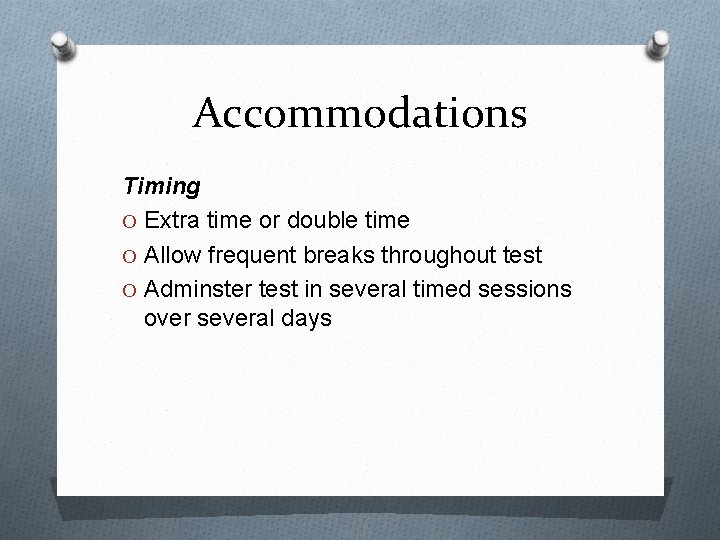
Accommodations Timing O Extra time or double time O Allow frequent breaks throughout test O Adminster test in several timed sessions over several days
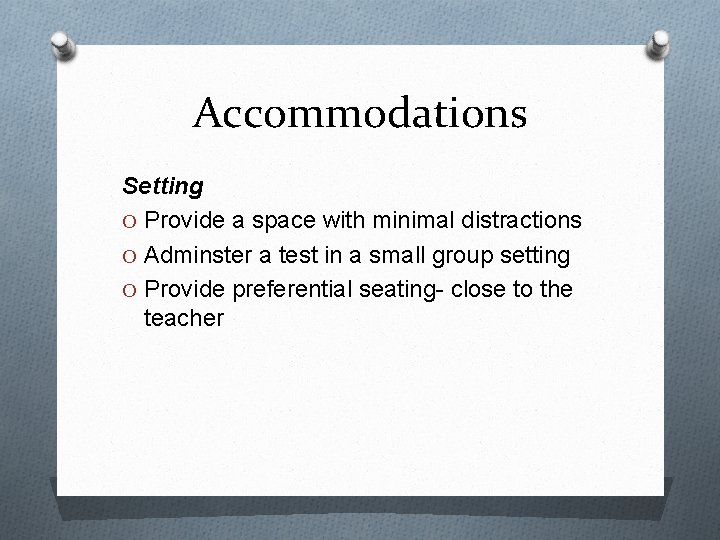
Accommodations Setting O Provide a space with minimal distractions O Adminster a test in a small group setting O Provide preferential seating close to the teacher
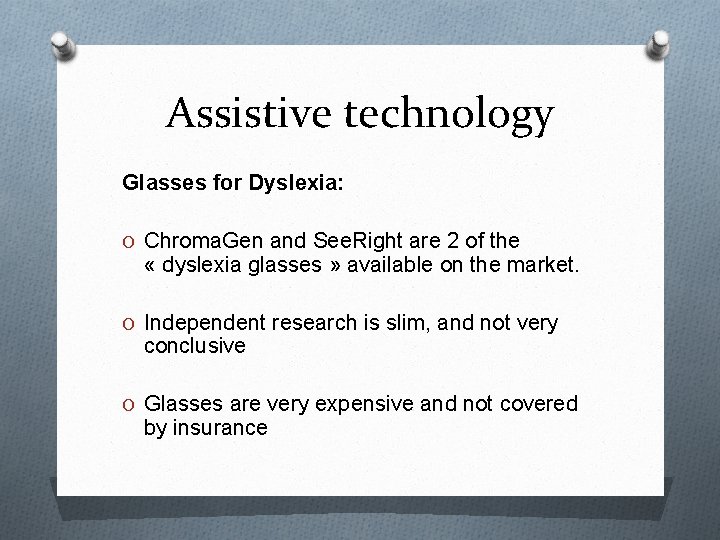
Assistive technology Glasses for Dyslexia: O Chroma. Gen and See. Right are 2 of the « dyslexia glasses » available on the market. O Independent research is slim, and not very conclusive O Glasses are very expensive and not covered by insurance
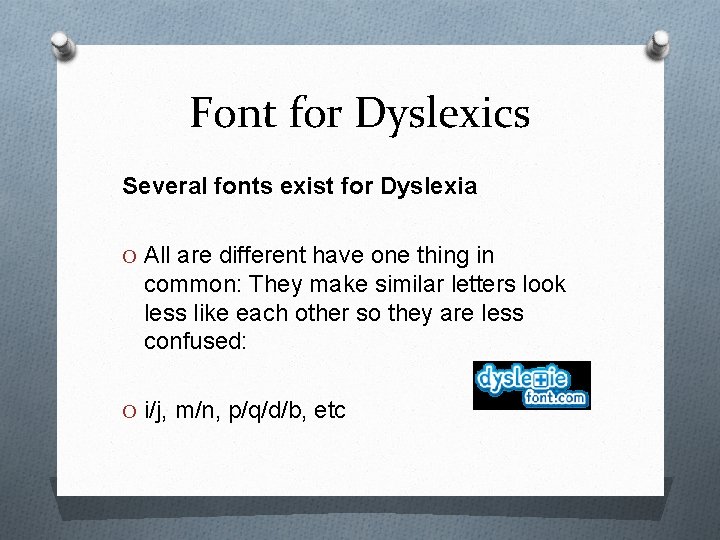
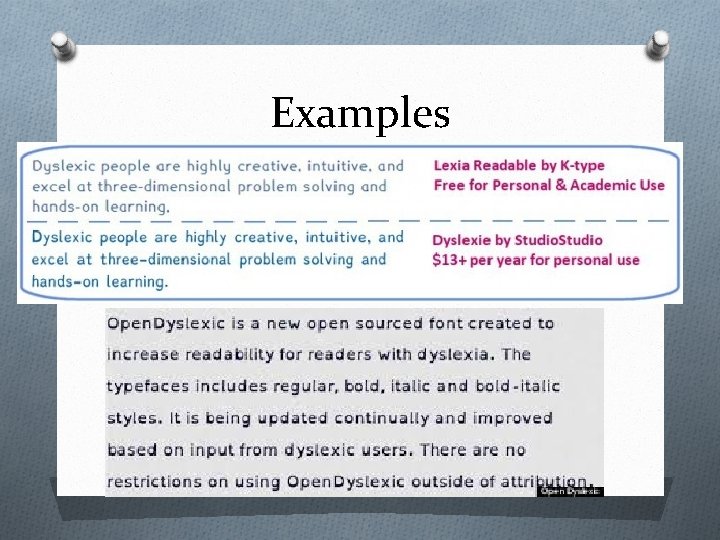
Font for Dyslexics Several fonts exist for Dyslexia O All are different have one thing in common: They make similar letters look less like each other so they are less confused: O i/j, m/n, p/q/d/b, etc
Examples
Research on Dyslexia Fonts O Mostly inconclusive (one study on “Dyslexie” said reading speed was same but less errors) O Very little research done O Plenty of positive testimonials on independent websites O Most are free…Worth a shot!
Apps & Computer Programs O There are plenty of speech to text and text to speech apps available for smartphones. O Most are free or inexpensive. O List available from http: //www. idaga. org/Downloads/Assistive Technology. For. Dyslexic. Students. pdf O We will take a look at Word. Q and Speak. Q
What do You Know? True or False 1. 2. 3. 4. 5. 6. 7. 8. 9. According to the DSM 5, Dyslexia, Dyscalculia, and Disorder of Written Expression are recommended as a diagnosis. False Every child with a Specific Learning Disorder with impairment in reading inverses letters that are read. (e. g. , reads was as saw) False The key to overcome a learning disability is motivation. False Universal accommodations can be used at the discretion of the teacher. True There are several universal accommodations found on a PLP. False Accommodations can help a student reach grade level curriculum outcomes. True There are fonts available to help people with dyslexia read better. True There has been a lot of success with special eyeglasses to lessen the effects of dyslexia. False People with dyslexia view text as 3 dimensional objects. True
Fairness ‘’Fairness does not mean that everyone gets the same. Fairness actually means that everyone gets what he or she needs’’ Rick Lavoie
Peer Feedback
Sources Chroma. Gen glasses review: http: //www. healthnewsreview. org/review/the healthy skeptic promise of chromagen lenses for dyslexia a bit blurry/ http: //eyedocnews. com/006325 dyslexic children see major reading improvement with new tinted glasses/ Dyslexia Fonts: http: //blog. dyslexia. com/a font for dyslexia to pay or not to pay/ Anecdotal Evidence for Open Dyslexia font: http: //www. examiner. com/article/opendyslexic does the new dyslexia font help review by teacher and students Brain. Pop: www. Brain. Pop. com http: //www. aapos. org/resources/learning_disabilities_/
Sources (continued) http: //www. dsm 5. org/Pages/Recent. Updates. aspx http: //dyslexiahelp. umich. edu/sites/default/files/IDA_DSM 5%20 Changes. pdf http: //www. youtube. com/watch? v=zhzh 9 kt 8 z 7 c http: //www. vsi. net. au/uploads/understanding_learning_difficulties_fat_city_workshop _handout. pdf Hallahan, D. P. & Lloyd, J. W. (2005). Learning disabilities, foundations, characteristics, and effective teaching(3 rd ed. ). New York: Pearson Education, Inc. Department of Education and Early Child Education. Accommodations for Instruction and Assessment, 2010. http: //www. ldonline. org/