
Specific Gravity References TDOT Standard Specifications AASHTO T

- Slides: 12
Specific Gravity References TDOT Standard Specifications AASHTO T 84 & T 85 ASTM C 128 & C 127
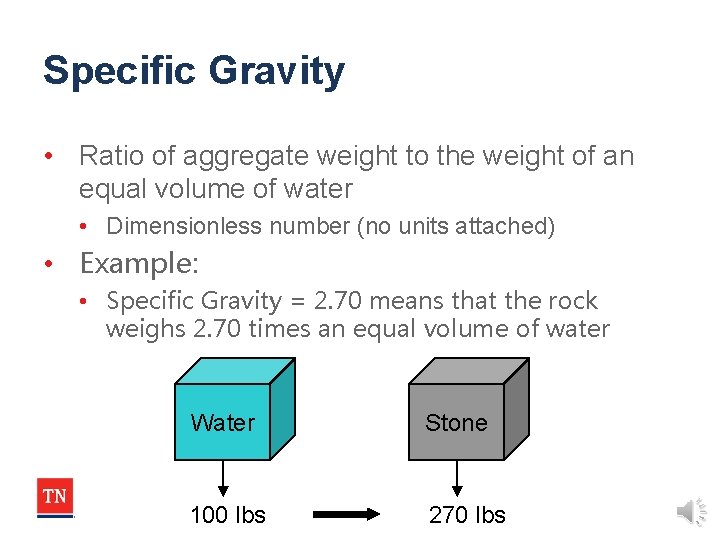
Specific Gravity • Ratio of aggregate weight to the weight of an equal volume of water • Dimensionless number (no units attached) • Example: • Specific Gravity = 2. 70 means that the rock weighs 2. 70 times an equal volume of water Water Stone 100 lbs 270 lbs
Uses of Specific Gravity • Weight-Volume Conversions • Identifying Deleterious Materials (e. g. shale or chert) • Mining Operations/Planning • Void Calculations • Float/Separation Systems
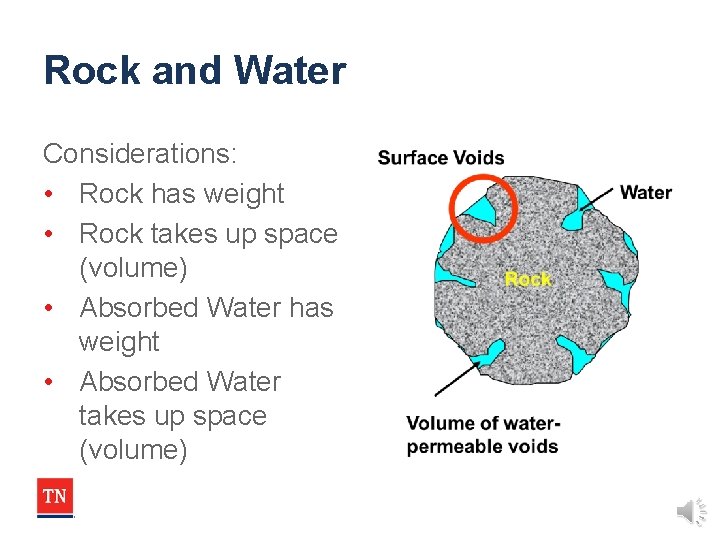
Rock and Water Considerations: • Rock has weight • Rock takes up space (volume) • Absorbed Water has weight • Absorbed Water takes up space (volume)
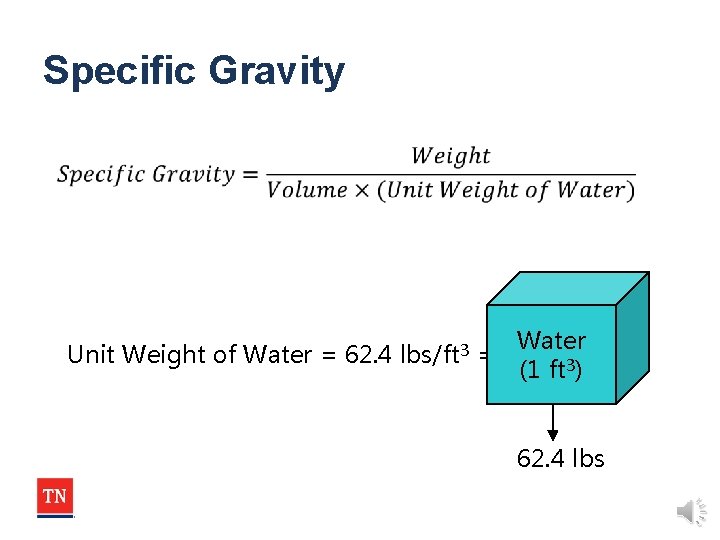
Specific Gravity Unit Weight of Water = 62. 4 lbs/ft 3 = Water (1 ft 3) 62. 4 lbs
Recording Specific Gravity • Specific gravity results reported to the nearest 0. 001 • Specific gravity for concrete aggregate may be reported to the nearest 0. 01
Types of Specific Gravity • Apparent (GSA) • Bulk (GSB) • Bulk Saturated Surface Dry (GSSD) • All three types of specific gravity can be calculated using one test
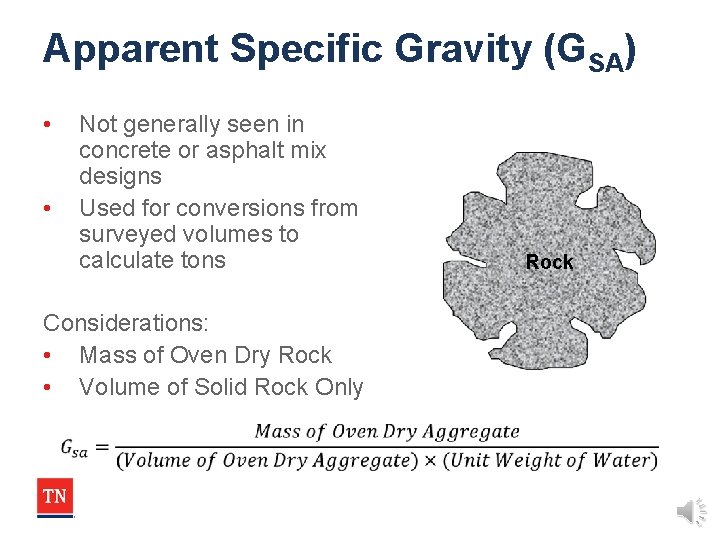
Apparent Specific Gravity (GSA) • • Not generally seen in concrete or asphalt mix designs Used for conversions from surveyed volumes to calculate tons Considerations: • Mass of Oven Dry Rock • Volume of Solid Rock Only Rock
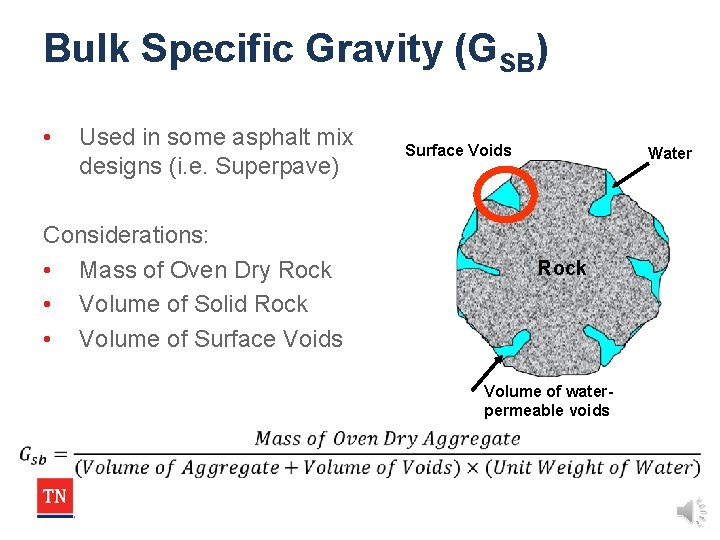
Bulk Specific Gravity (GSB) • Used in some asphalt mix designs (i. e. Superpave) Considerations: • Mass of Oven Dry Rock • Volume of Solid Rock • Volume of Surface Voids Water Rock Volume of waterpermeable voids
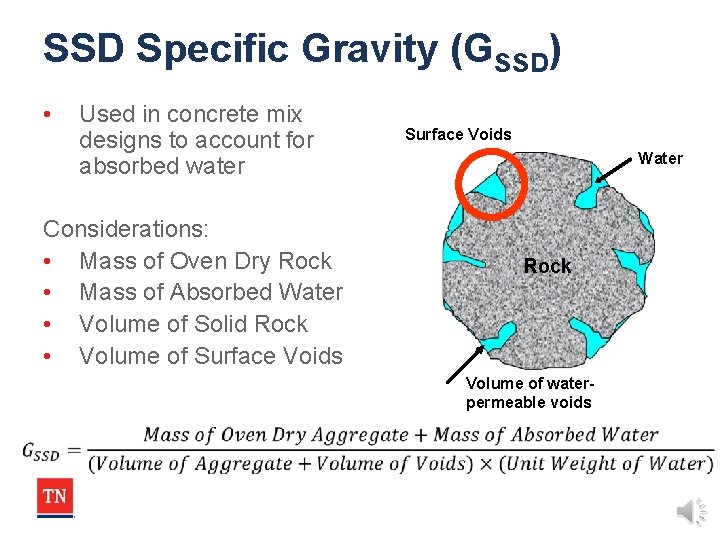
SSD Specific Gravity (GSSD) • Used in concrete mix designs to account for absorbed water Considerations: • Mass of Oven Dry Rock • Mass of Absorbed Water • Volume of Solid Rock • Volume of Surface Voids Water Rock Volume of waterpermeable voids
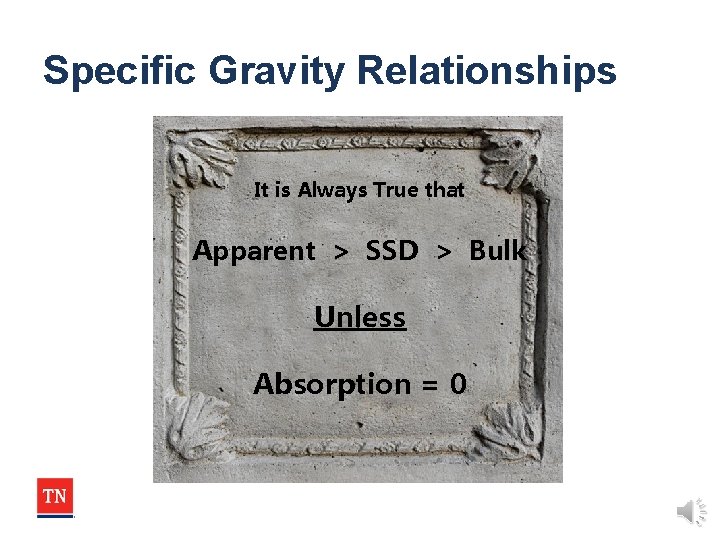
Specific Gravity Relationships It is Always True that Apparent > SSD > Bulk Unless Absorption = 0
Questions