
SPECIFIC FACTORS AFFECTING LEARNING Essentials pg 248 6
- Slides: 13
SPECIFIC FACTORS AFFECTING LEARNING Essentials: pg 248 6. 5 Retention of Learning
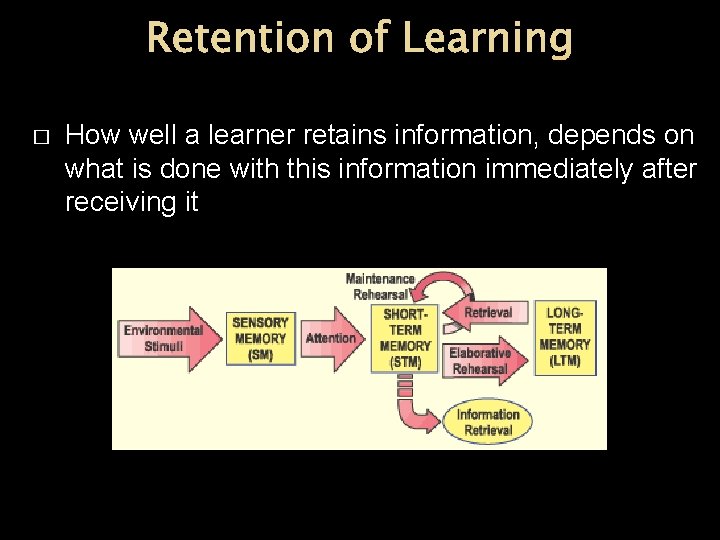
Retention of Learning � How well a learner retains information, depends on what is done with this information immediately after receiving it
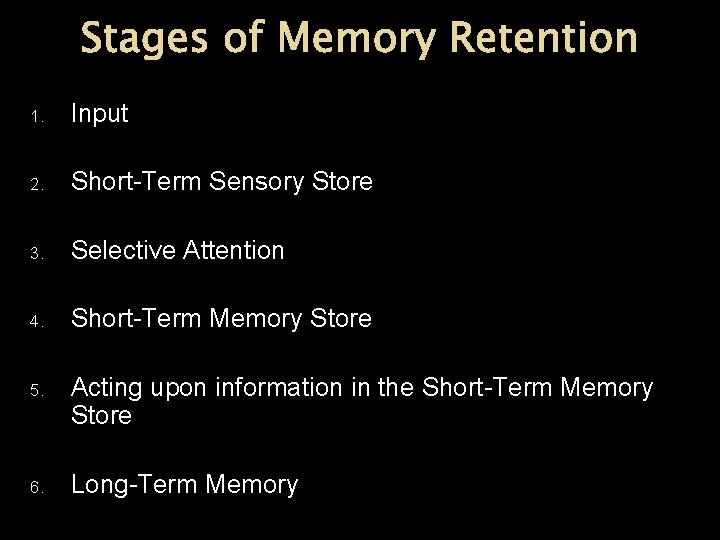
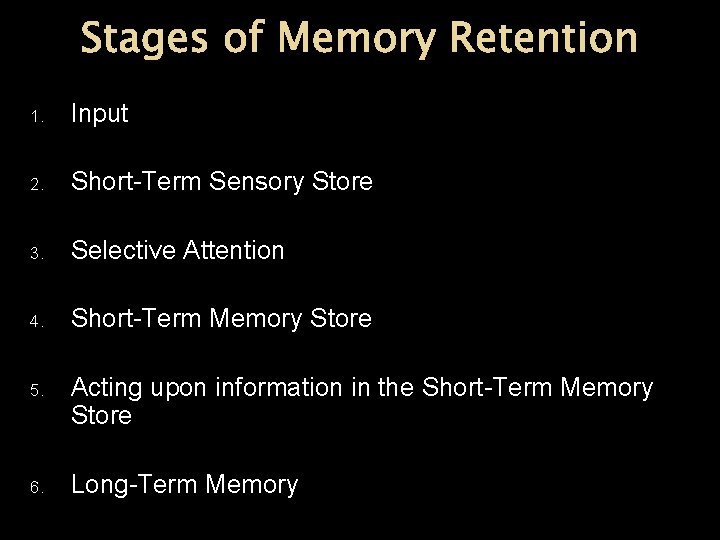
Stages of Memory Retention 1. Input 2. Short-Term Sensory Store 3. Selective Attention 4. Short-Term Memory Store 5. Acting upon information in the Short-Term Memory Store 6. Long-Term Memory
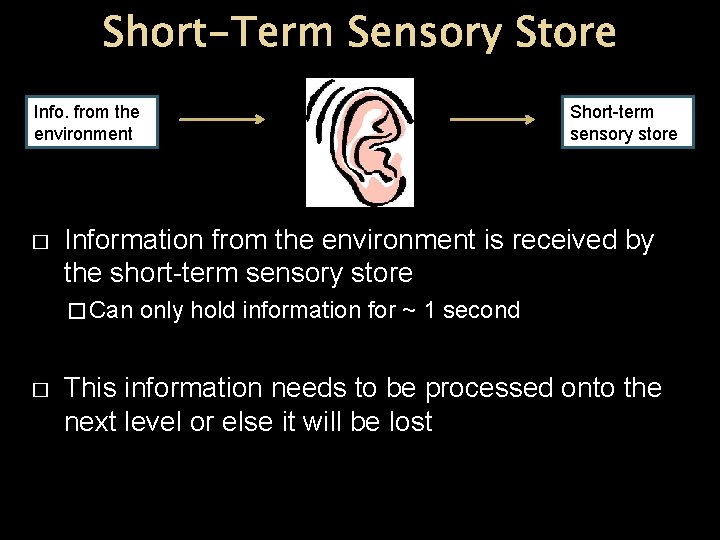
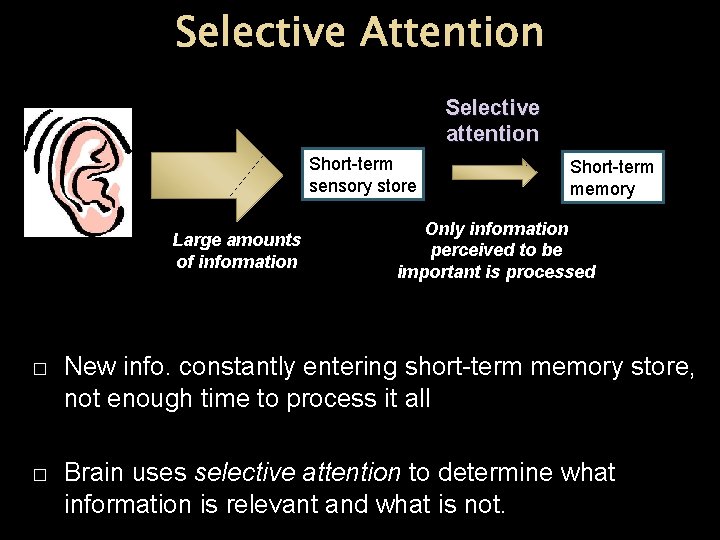
Short-Term Sensory Store Info. from the environment � Information from the environment is received by the short-term sensory store � Can � Short-term sensory store only hold information for ~ 1 second This information needs to be processed onto the next level or else it will be lost
Selective Attention Selective attention Short-term sensory store Large amounts of information Short-term memory Only information perceived to be important is processed � New info. constantly entering short-term memory store, not enough time to process it all � Brain uses selective attention to determine what information is relevant and what is not.
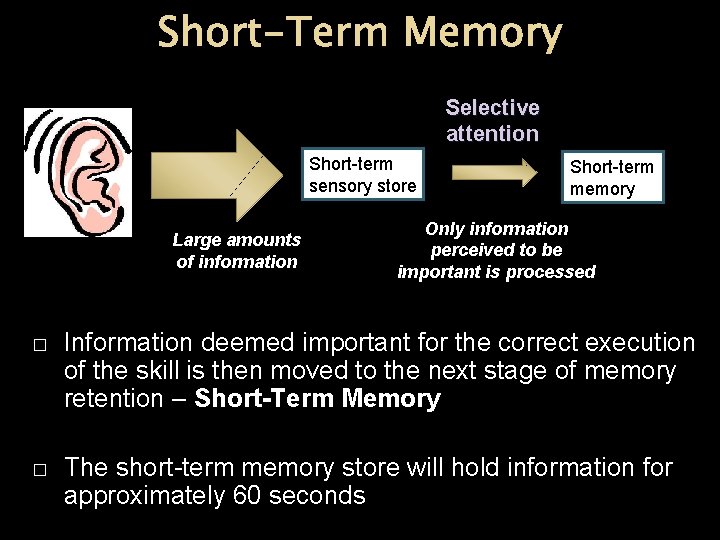
Short-Term Memory Selective attention Short-term sensory store Large amounts of information Short-term memory Only information perceived to be important is processed � Information deemed important for the correct execution of the skill is then moved to the next stage of memory retention – Short-Term Memory � The short-term memory store will hold information for approximately 60 seconds
Short-Term Memory � For information to be retained, the information must be acted upon while in the Short-Term Memory Store � For coaching, short-term memory store is important � Feedback on technique can be given and the learner can work on this without immediately losing the feedback from their memory (60 seconds for short-term memory store) � Only 7 ± 2 pieces of information can be processed at a time
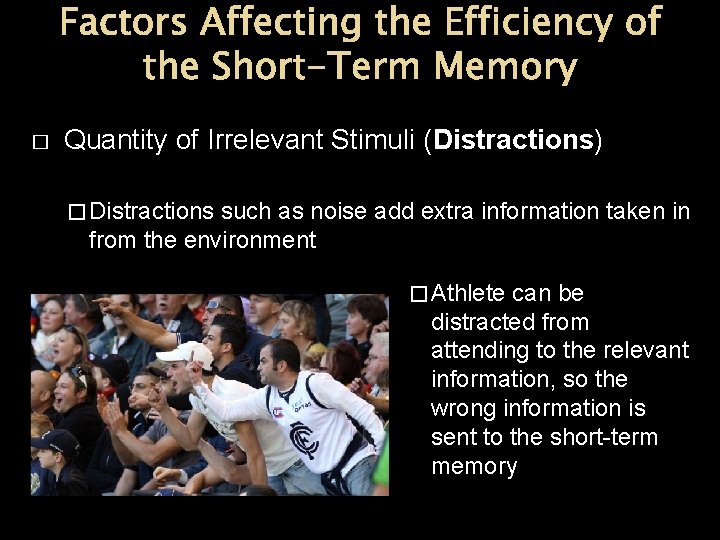
Factors Affecting the Efficiency of the Short-Term Memory � Quantity of Irrelevant Stimuli (Distractions) � Distractions such as noise add extra information taken in from the environment � Athlete can be distracted from attending to the relevant information, so the wrong information is sent to the short-term memory
Factors Affecting the Efficiency of the Short-Term Memory � Chunking � Short-Term Memory can only hold 6 -7 bits of information � If a coach can ‘chunk’ these bits together, there will be less bits of information to process E. g. : Rather than presenting the tennis serve as ‘ensure that the line of your feet is directed to your opponent; slowly thrust your hips backwards, transferring your weight from your front foot to the back foot; …’, the tennis player would chunk the information bits into – ball toss, backswing, contact and follow through.
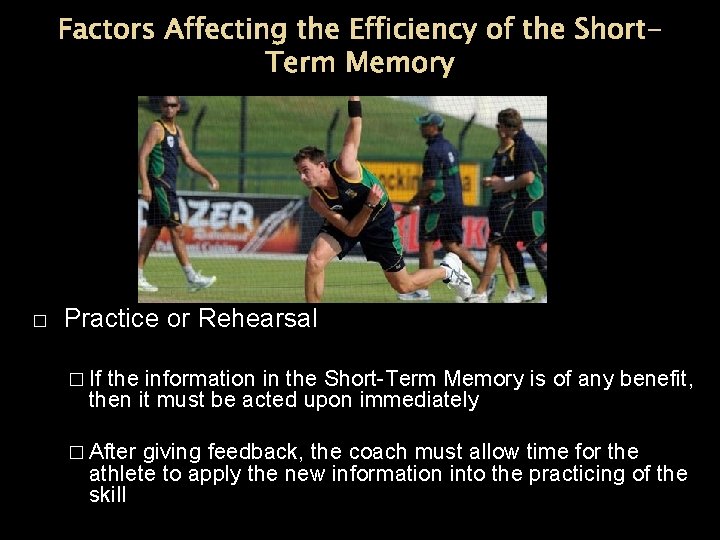
Factors Affecting the Efficiency of the Short. Term Memory � Practice or Rehearsal � If the information in the Short-Term Memory is of any benefit, then it must be acted upon immediately � After giving feedback, the coach must allow time for the athlete to apply the new information into the practicing of the skill
Factors Affecting the Efficiency of the Short-Term Memory � Relevance � How meaningful or relevant the information is to the learner will affect the ability to transfer it into the shortterm memory. � Learners will be quickly turned off the learning if the information or feedback is irrelevant, not meaningful or of no interest.
Stages of Memory Retention 1. Input 2. Short-Term Sensory Store 3. Selective Attention 4. Short-Term Memory Store 5. Acting upon information in the Short-Term Memory Store 6. Long-Term Memory
Long-Term Memory � Information moving from the short-term memory store to the long-term memory store is the final step in memory retention � Long-term memory has unlimited capacity and holds information there indefinitely � Information moving into the long-term memory store is coded and stored for future retrieval from the long-term memory store back into the shortterm memory