
SpeciesoftheDay Wood Duck Aix sponsa Brink of Extinction
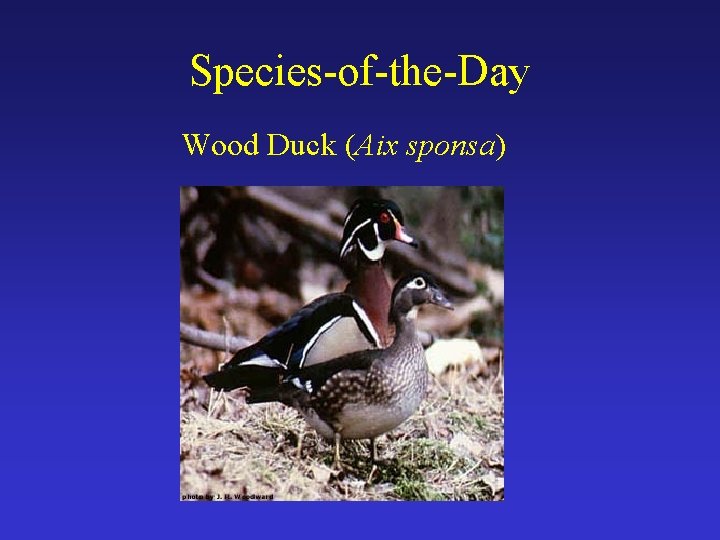
Species-of-the-Day Wood Duck (Aix sponsa)
Brink of Extinction By early 1900’s, culminative effects of: 1) wetland drainage (ag. expansion) 2) deforestation 3) overhunting
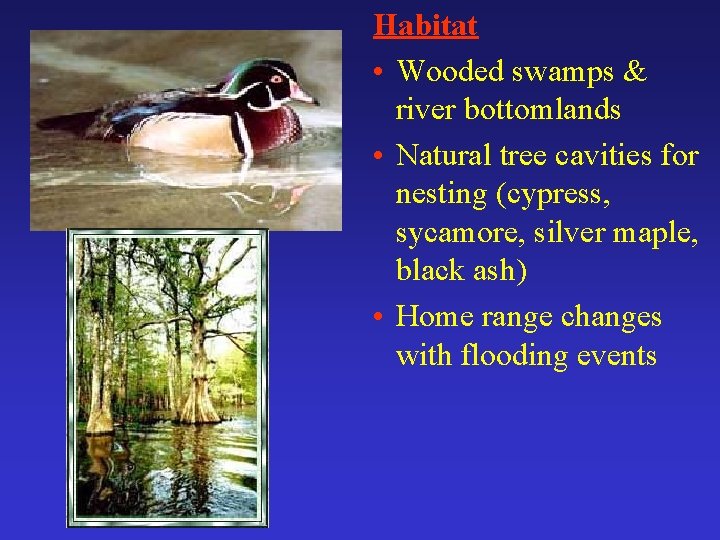
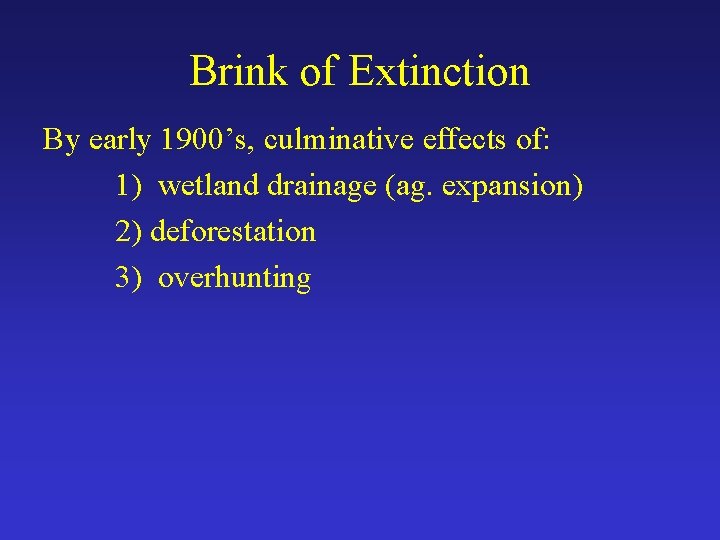
Habitat • Wooded swamps & river bottomlands • Natural tree cavities for nesting (cypress, sycamore, silver maple, black ash) • Home range changes with flooding events
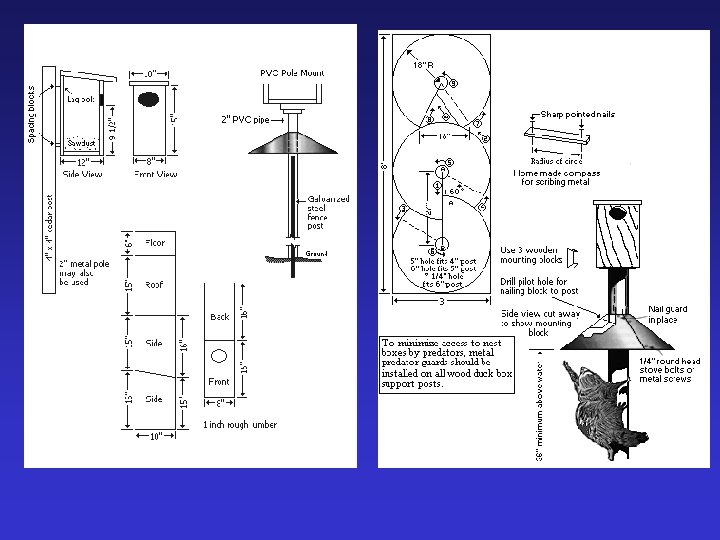
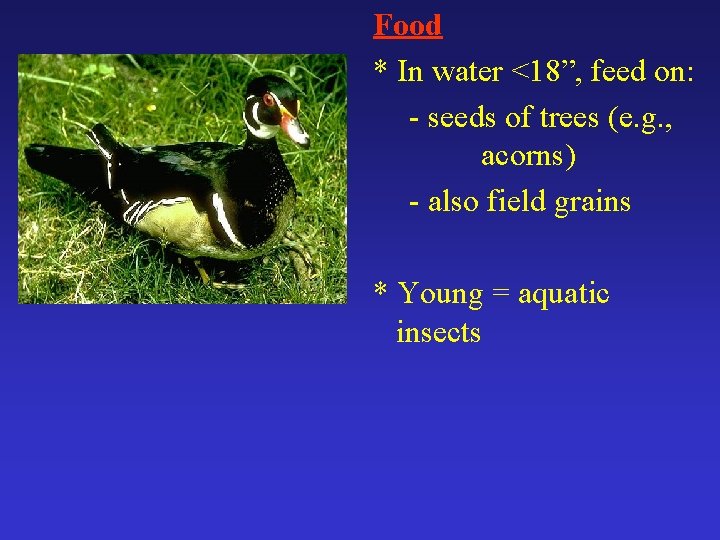
Food * In water <18”, feed on: - seeds of trees (e. g. , acorns) - also field grains * Young = aquatic insects
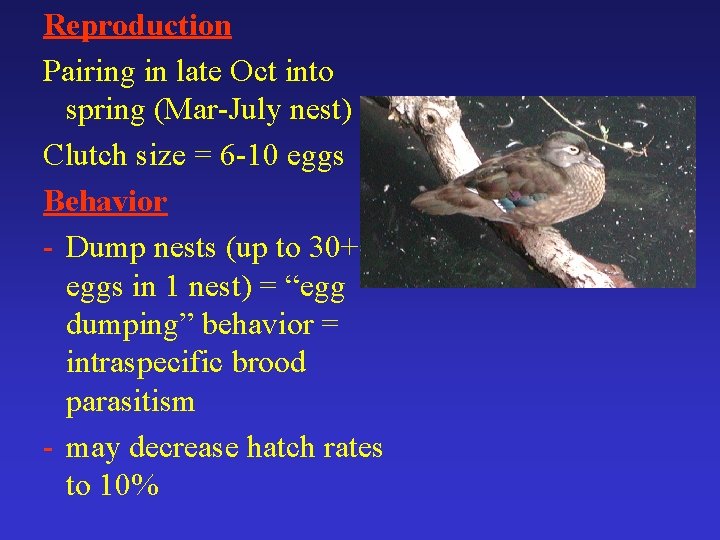
Reproduction Pairing in late Oct into spring (Mar-July nest) Clutch size = 6 -10 eggs Behavior - Dump nests (up to 30+ eggs in 1 nest) = “egg dumping” behavior = intraspecific brood parasitism - may decrease hatch rates to 10%
Factors Determining Patterns of Habitat Use • Competition • Predation
Concept of Habitat Selection • Wildlife perceiving correct configuration of habitat needed for survival – differences based on age/experience/chance? – hierarchy to decision process • Niche concept (time/place/functional role) & habitat selection • For example, in open habitats, bats use lowfrequency / long-distance calls (ultrasound) while foraging • Whereas, bats in closed canopy settings = constant/high frequency = detect wing beats
Hutchison’s n-dimensional hypervolume
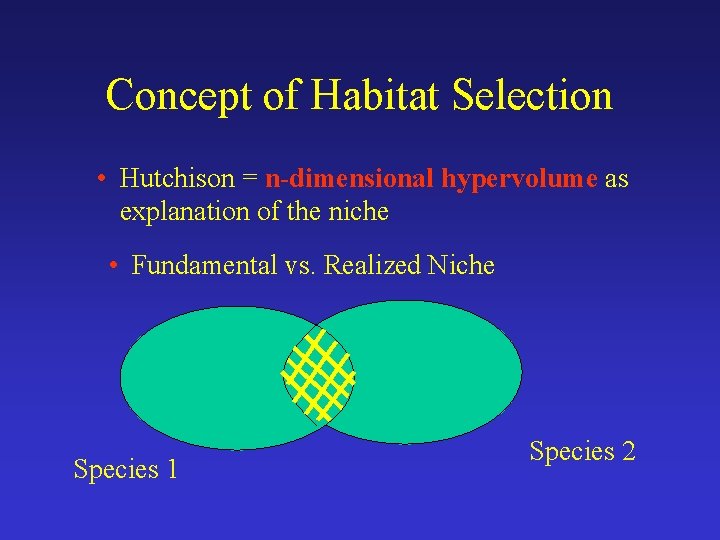
Concept of Habitat Selection • Hutchison = n-dimensional hypervolume as explanation of the niche • Fundamental vs. Realized Niche Species 1 Species 2
Testing the Hutchinsonian Niche Concept of Habitat Selection • James – work with birds in Arkansas…quantified habitat relationships • How do birds select habitat? • niche gestalt : each species has characteristic perceptual world…responds to that world as organized whole … search image concept • How do we (as wildlife biologists) “see” through the eyes of wildlife species?
Wildlife Habitat Ecology & Mgt • Habitat from an evolutionary perspective • Species distribution relative to habitat dist’n • Climatic events • Pleistocene Epoch & dist’n of modern species

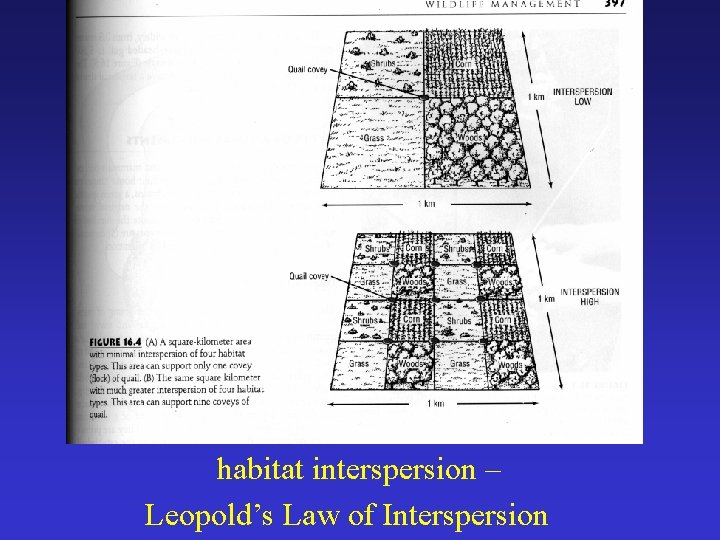
habitat interspersion – Leopold’s Law of Interspersion
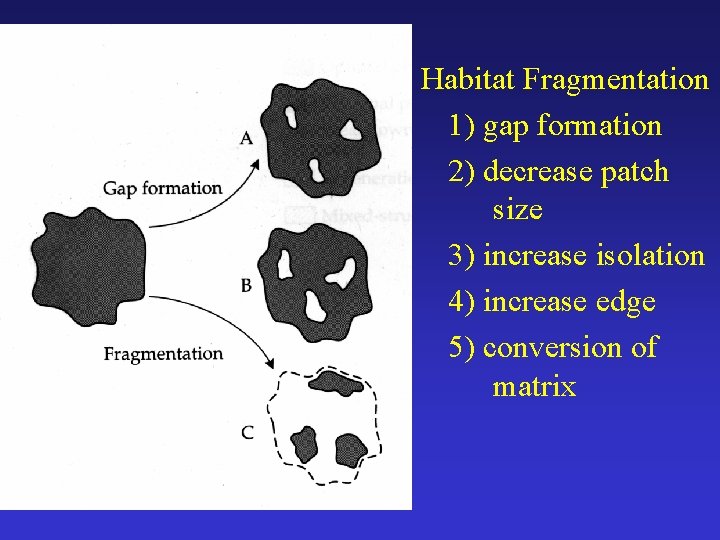
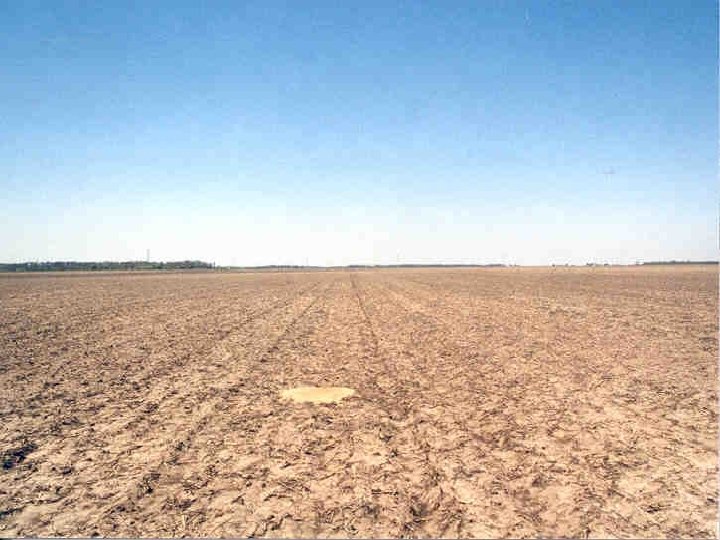
Habitat Fragmentation 1) gap formation 2) decrease patch size 3) increase isolation 4) increase edge 5) conversion of matrix
Concepts • Habitat = species-specific resources available (relative quality) • Habitat Use = manner in which species use resources • Habitat Selection = hierarchical decision process (innate & learned) of what habitats to use • Habitat Preference = based on selection of habitat, which are used more than others (preferred vs. avoided)
Concepts • Habitat Availability = accessibility of resources • Habitat Quality = positive relation with fitness (not just density) • Critical Habitat = resources essential to the species…. ESA designation…. How is it determined?
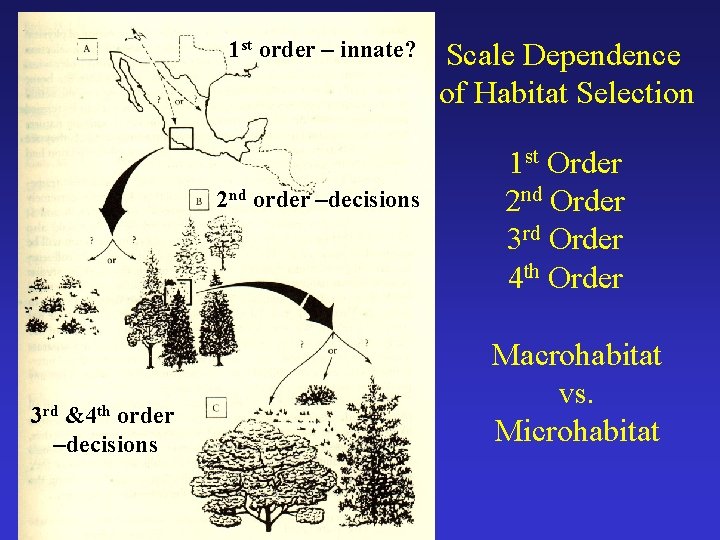
1 st order – innate? 2 nd order –decisions 3 rd &4 th order –decisions Scale Dependence of Habitat Selection 1 st Order 2 nd Order 3 rd Order 4 th Order Macrohabitat vs. Microhabitat

Need for Multiscale Analysis • e. g. , Australian leadbeater’s possum • landscape vs. local scales
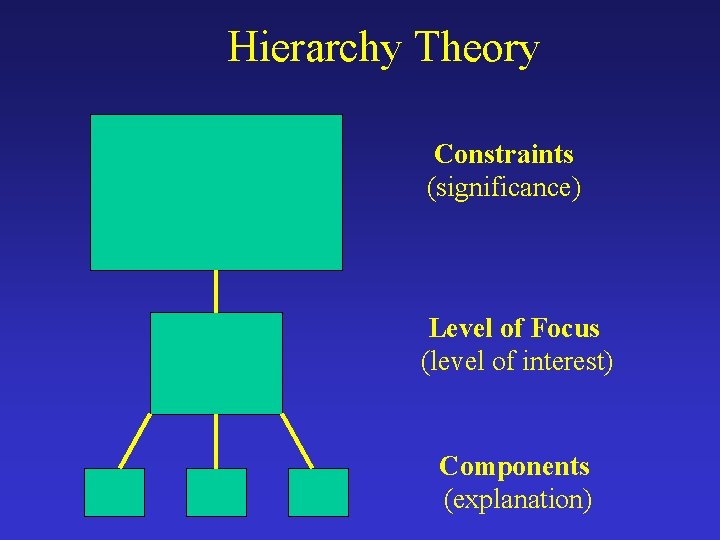
Hierarchy Theory Constraints (significance) Level of Focus (level of interest) Components (explanation)
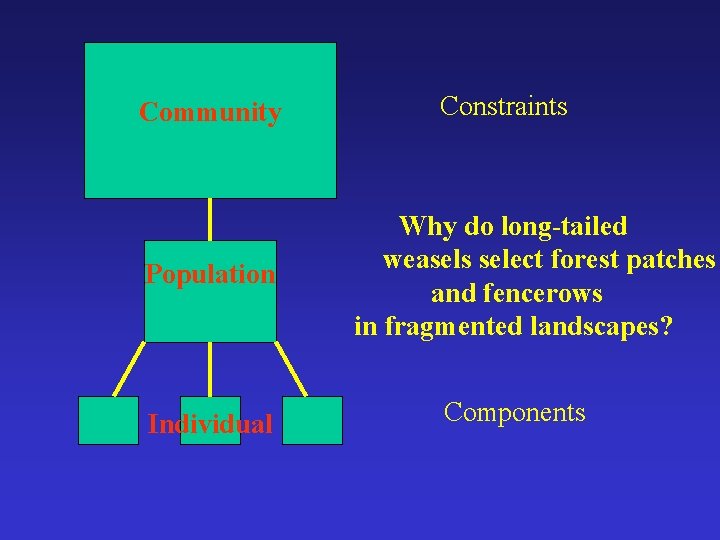
Community Population Individual Constraints Why do long-tailed weasels select forest patches and fencerows in fragmented landscapes? Components
Guild Concept • guild = group of species that exploit the same class of resources in similar way • community guild = no taxonomic restrictions; guild members chosen based on investigator-defined resources • assemblage guild = guild members based on taxonomic relations
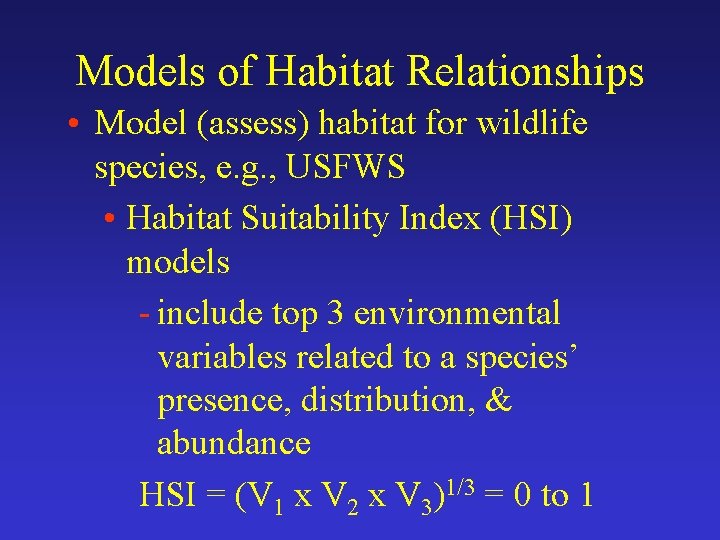
Models of Habitat Relationships • Model (assess) habitat for wildlife species, e. g. , USFWS • Habitat Suitability Index (HSI) models - include top 3 environmental variables related to a species’ presence, distribution, & abundance HSI = (V 1 x V 2 x V 3)1/3 = 0 to 1
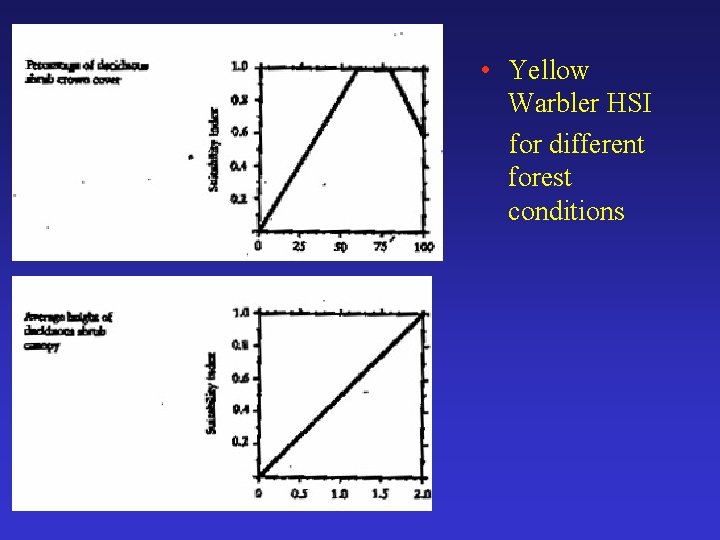
• Yellow Warbler HSI for different forest conditions
HSI models • useful for representing possible major habitat factors • true value as hypotheses • Do not provide information on: - population size or trend - behavioral responses • single-species approach
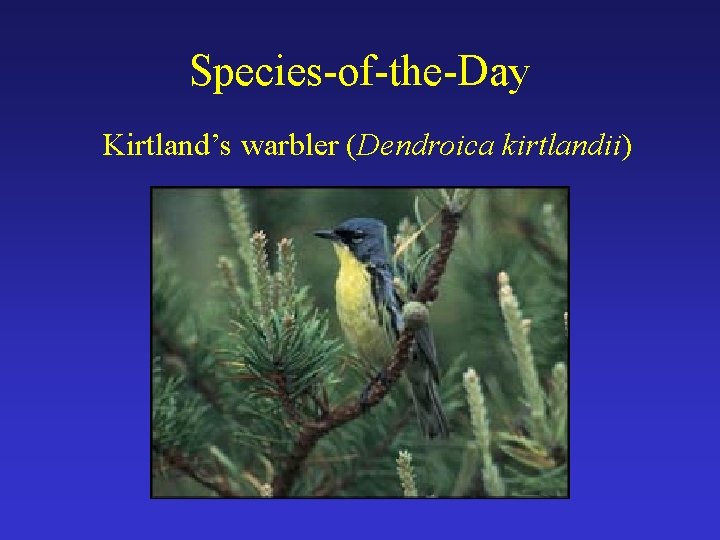
Species-of-the-Day Kirtland’s warbler (Dendroica kirtlandii)
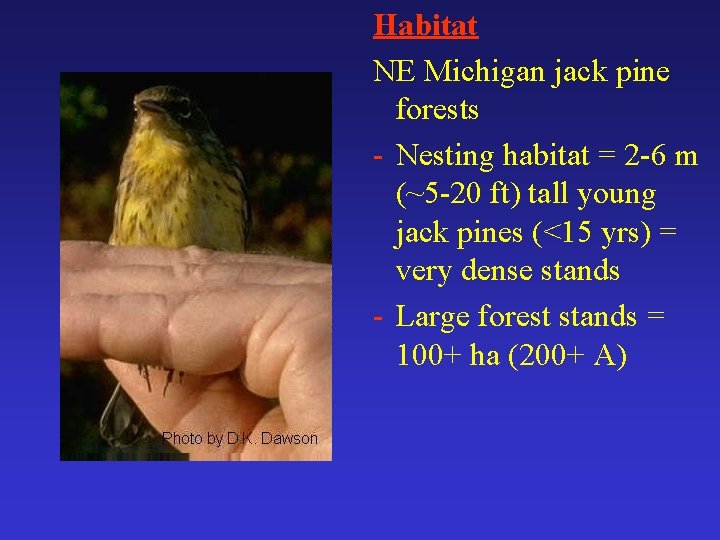
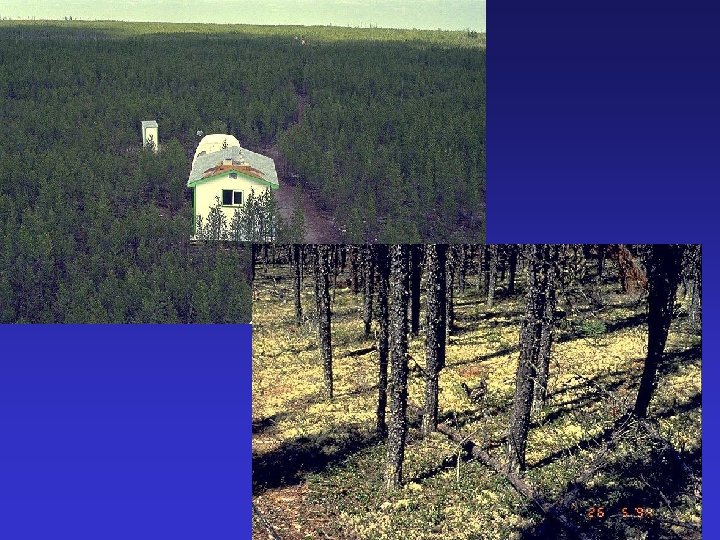
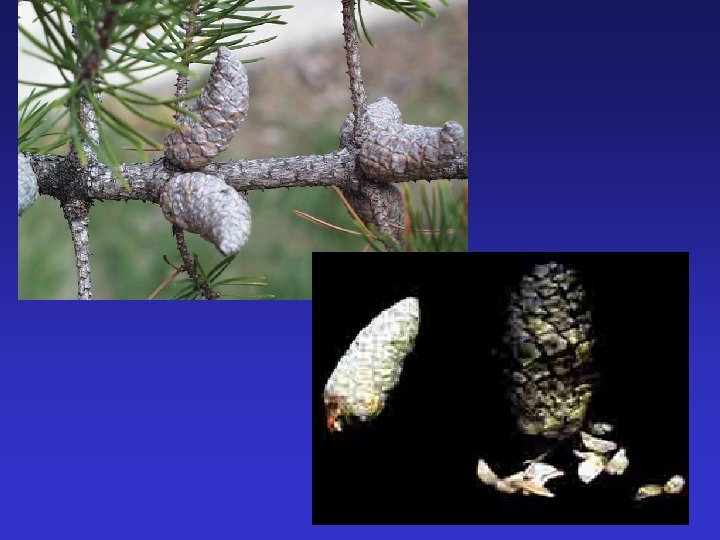
Habitat NE Michigan jack pine forests - Nesting habitat = 2 -6 m (~5 -20 ft) tall young jack pines (<15 yrs) = very dense stands - Large forest stands = 100+ ha (200+ A)
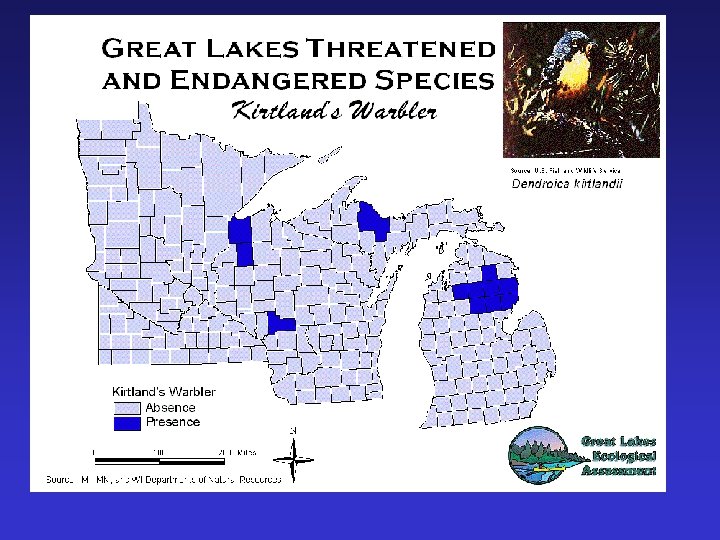
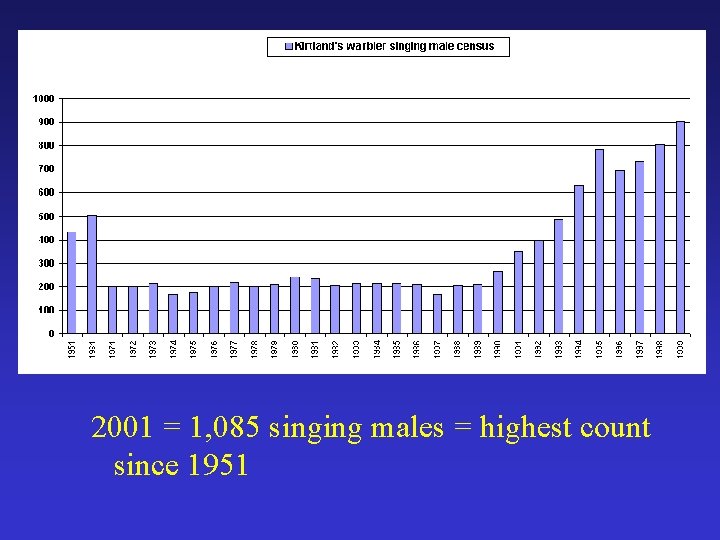
2001 = 1, 085 singing males = highest count since 1951
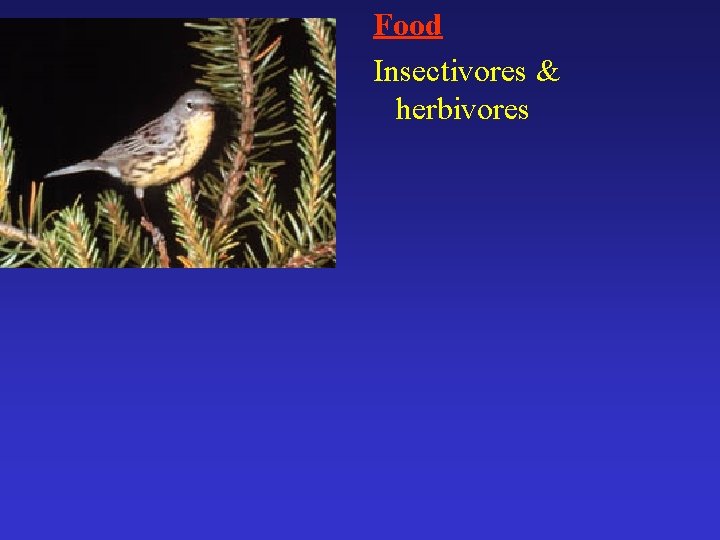
Food Insectivores & herbivores
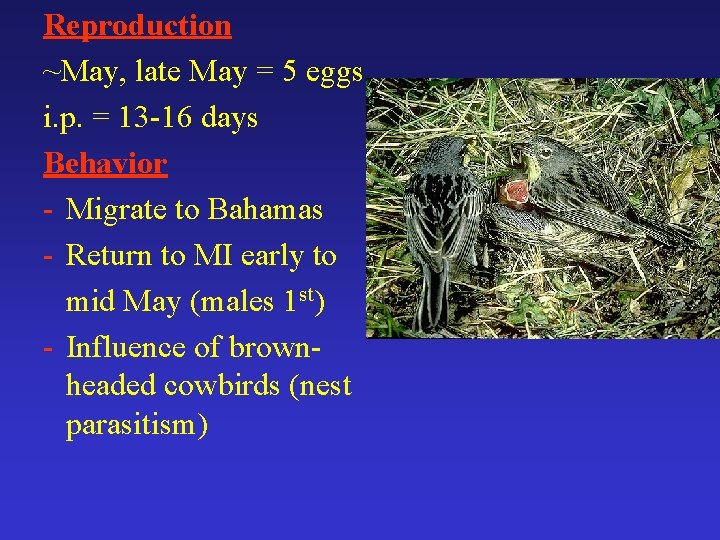
Reproduction ~May, late May = 5 eggs i. p. = 13 -16 days Behavior - Migrate to Bahamas - Return to MI early to mid May (males 1 st) - Influence of brownheaded cowbirds (nest parasitism)
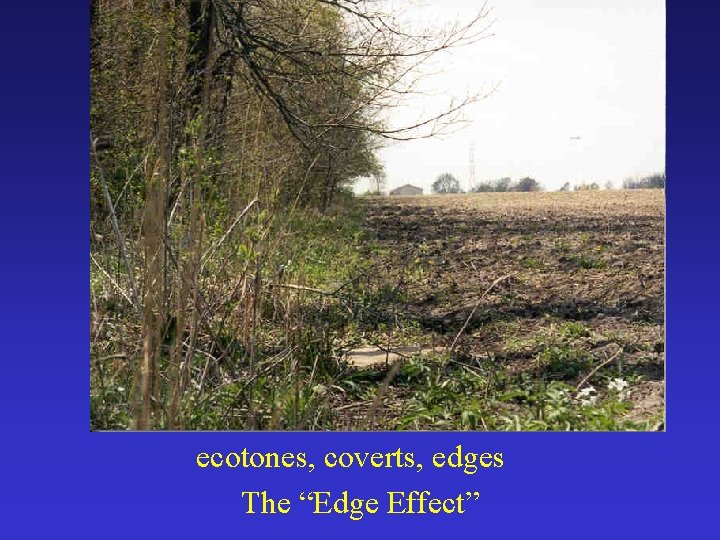
ecotones, coverts, edges The “Edge Effect”
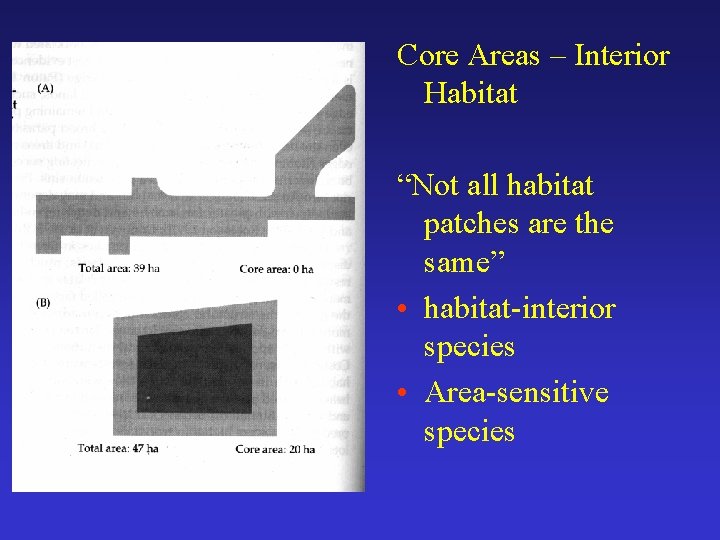
Core Areas – Interior Habitat “Not all habitat patches are the same” • habitat-interior species • Area-sensitive species
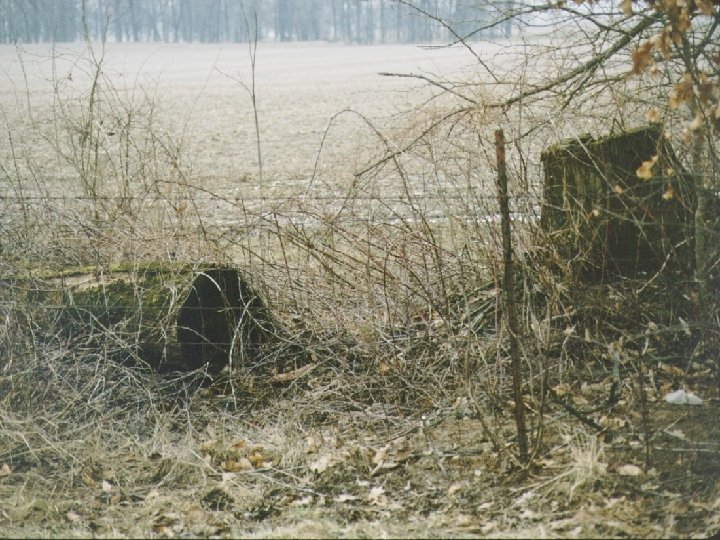
Countering Edge Effects & Habitat Fragmentation • Increase edge complexity
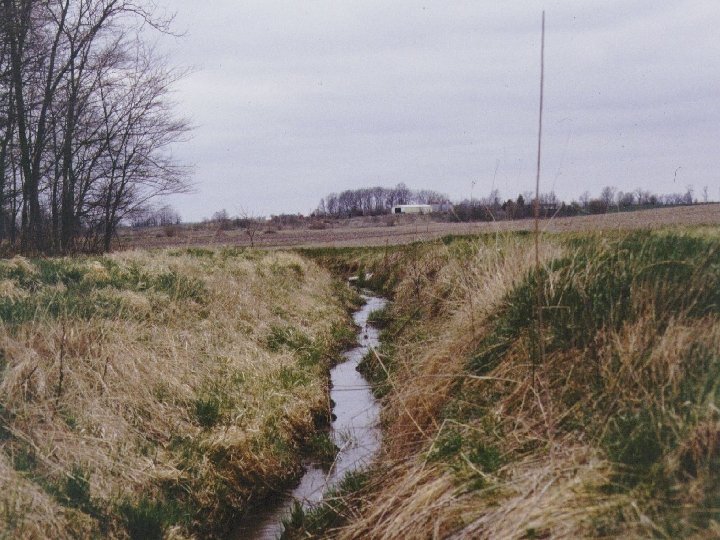
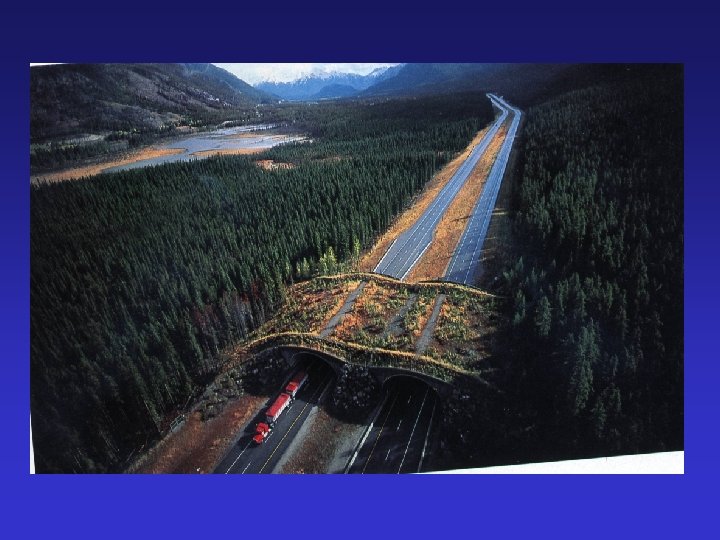
Countering Edge Effects & Habitat Fragmentation • Increase edge complexity • Develop connective corridors

Linking Core Areas & Refuges
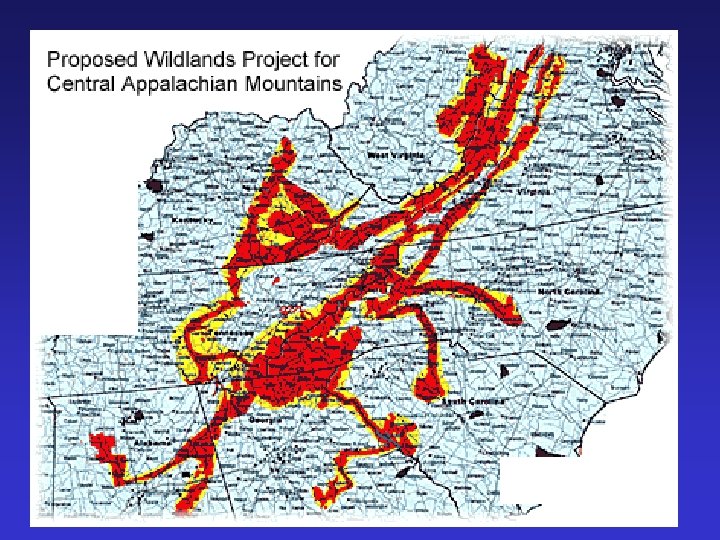
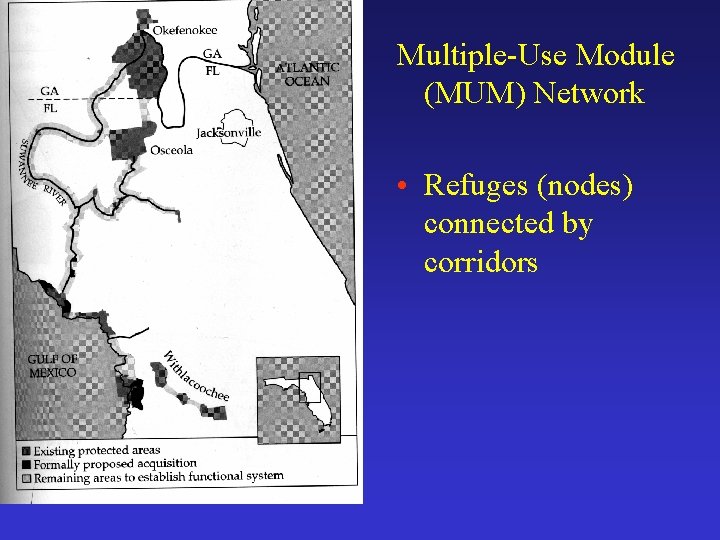
Multiple-Use Module (MUM) Network • Refuges (nodes) connected by corridors
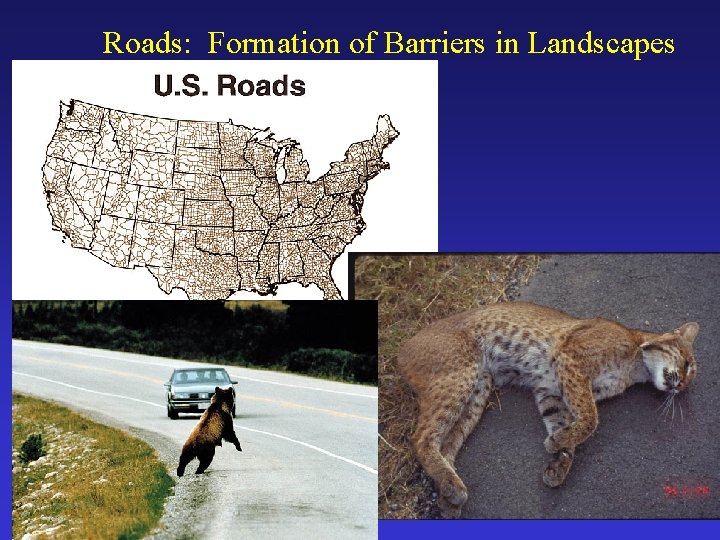
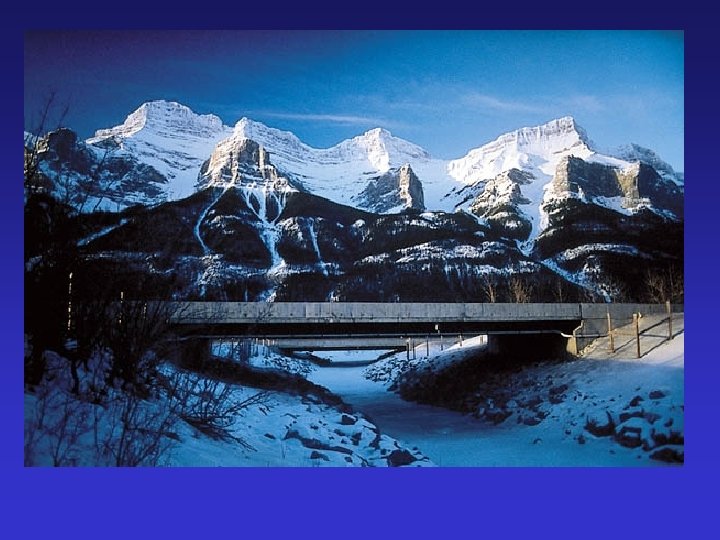
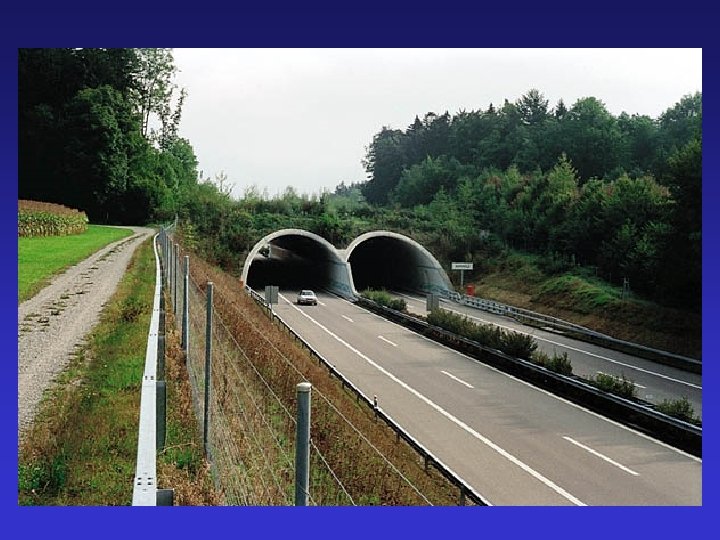
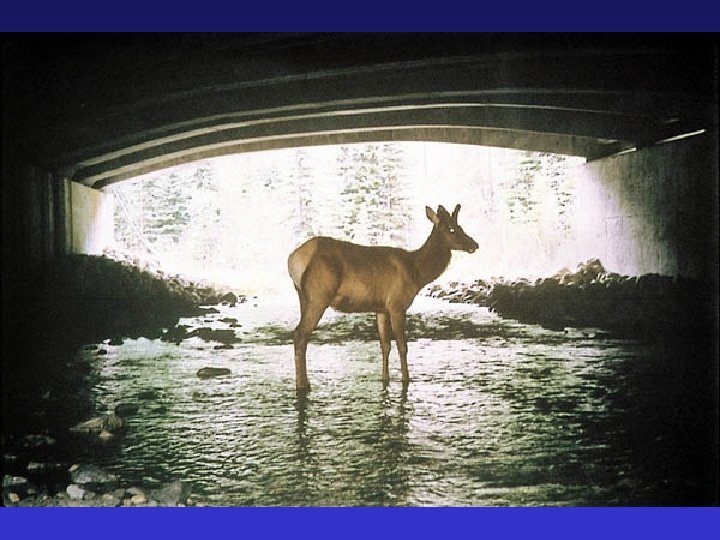
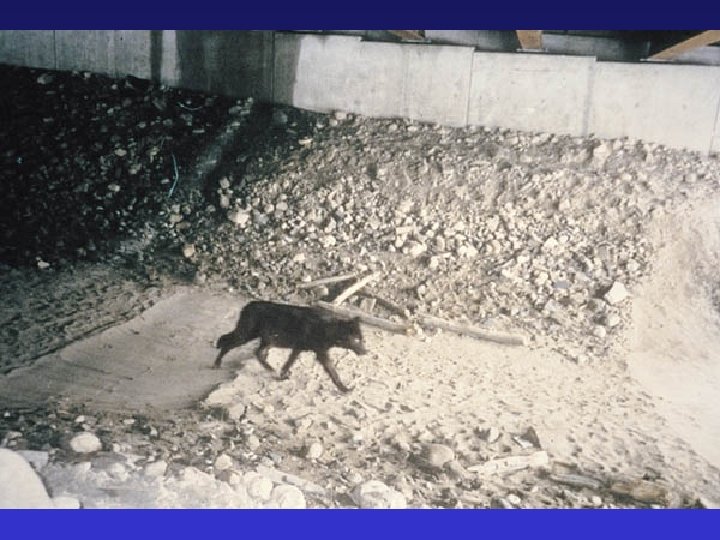
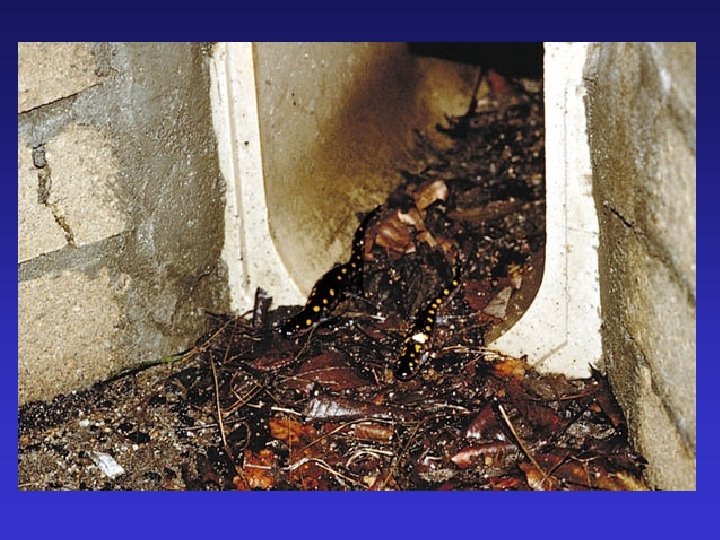
Roads: Formation of Barriers in Landscapes
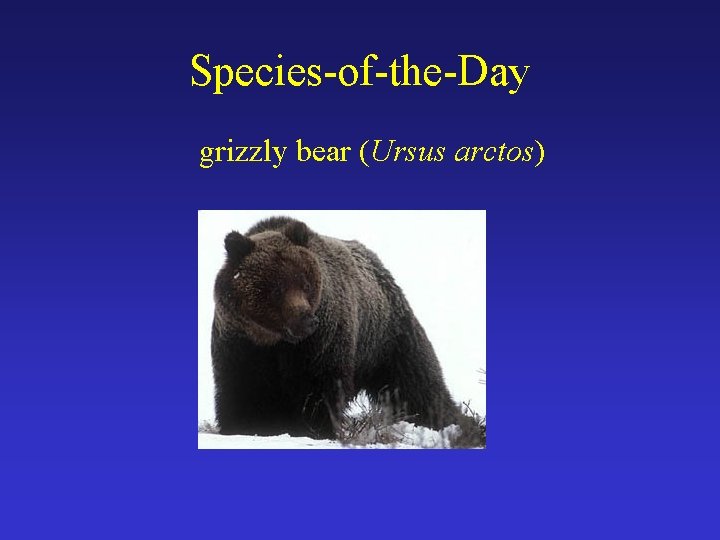
Species-of-the-Day grizzly bear (Ursus arctos)
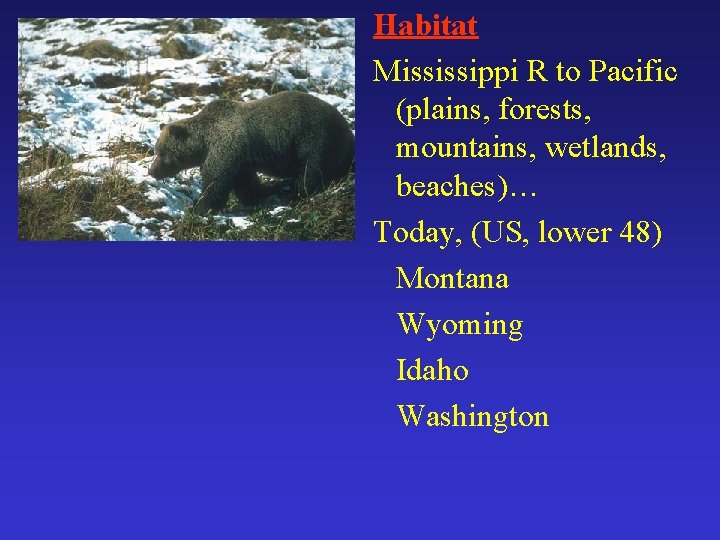
Habitat Mississippi R to Pacific (plains, forests, mountains, wetlands, beaches)… Today, (US, lower 48) Montana Wyoming Idaho Washington
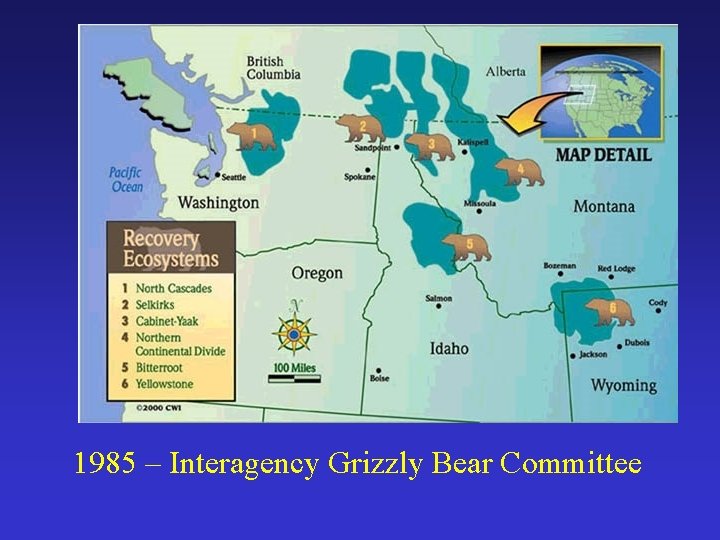
1985 – Interagency Grizzly Bear Committee
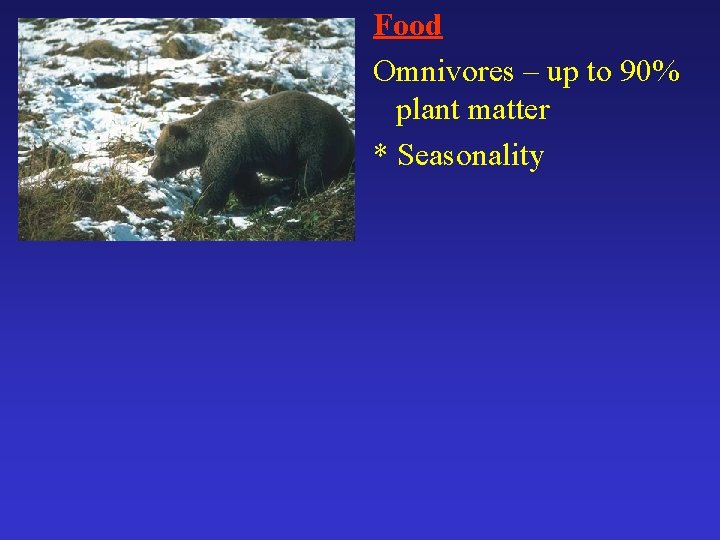
Food Omnivores – up to 90% plant matter * Seasonality
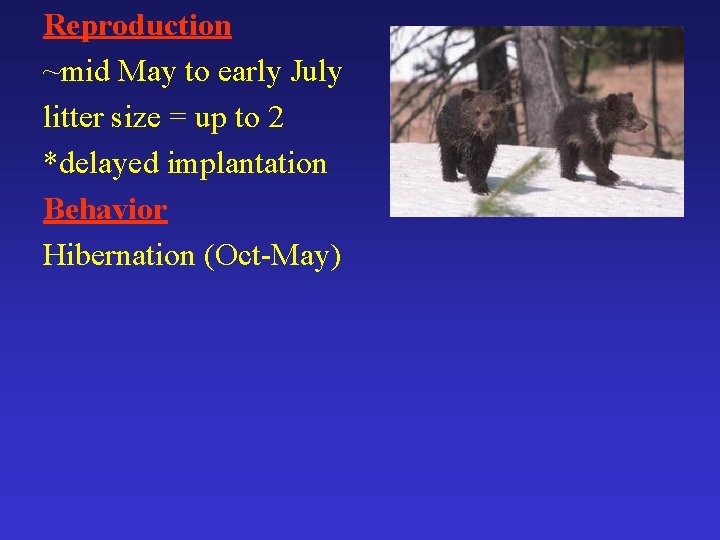
Reproduction ~mid May to early July litter size = up to 2 *delayed implantation Behavior Hibernation (Oct-May)
- Slides: 59