
Species Interactions Population Control Five Major Interactions Interspecific

- Slides: 37
Species Interactions & Population Control
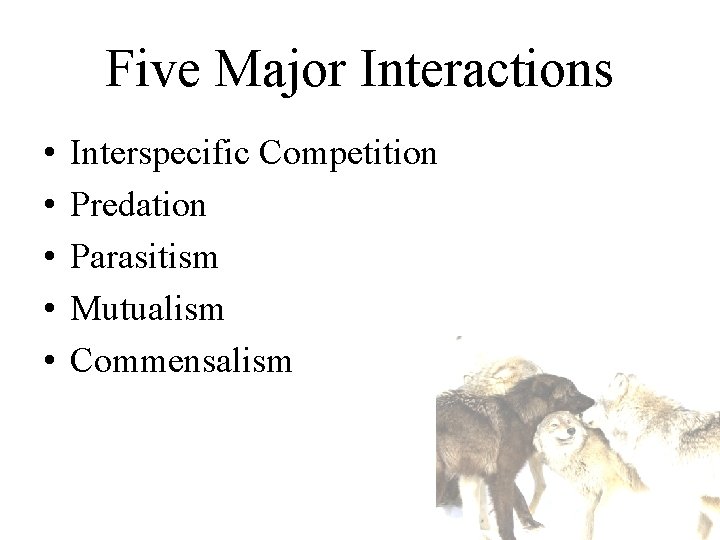
Five Major Interactions • • • Interspecific Competition Predation Parasitism Mutualism Commensalism
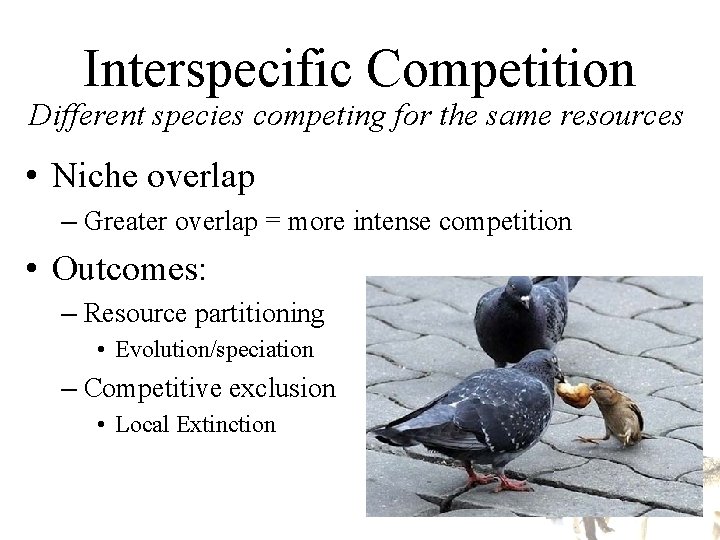
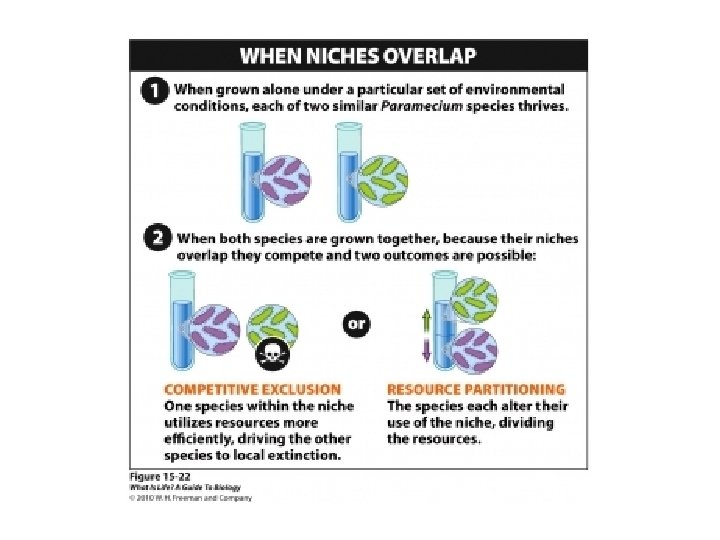
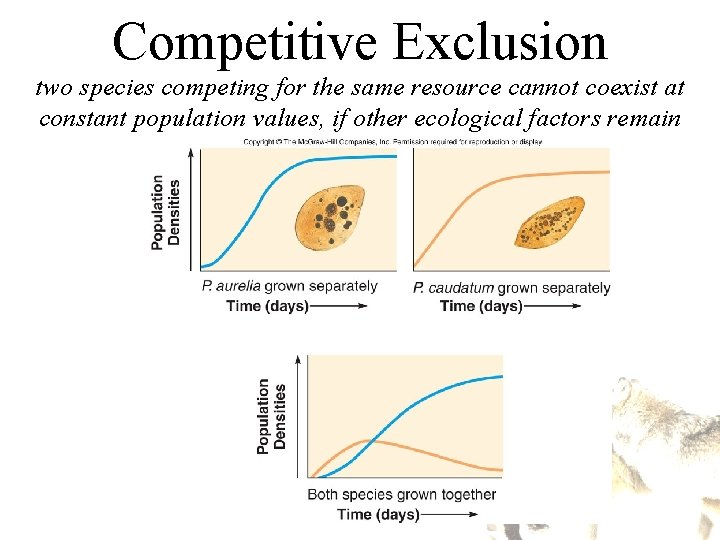
Interspecific Competition Different species competing for the same resources • Niche overlap – Greater overlap = more intense competition • Outcomes: – Resource partitioning • Evolution/speciation – Competitive exclusion • Local Extinction
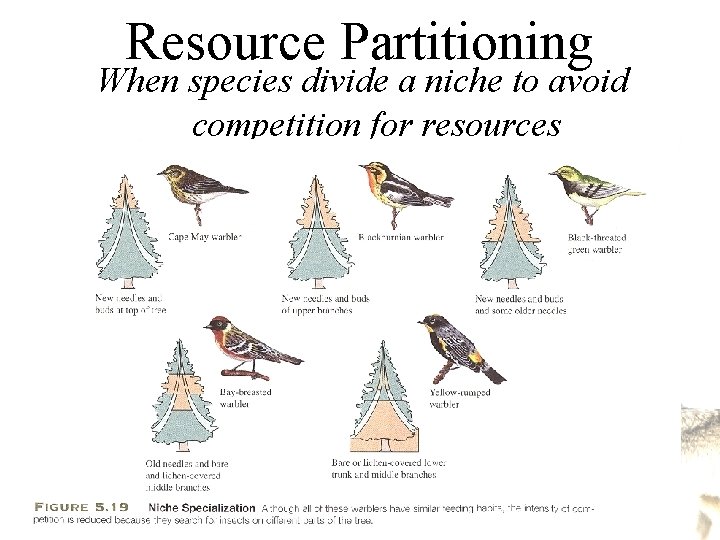
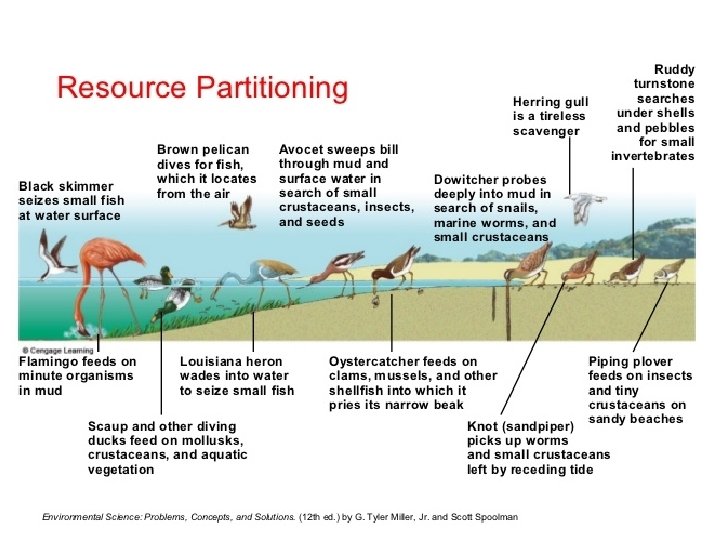
Resource Partitioning When species divide a niche to avoid competition for resources
Competitive Exclusion two species competing for the same resource cannot coexist at constant population values, if other ecological factors remain constant
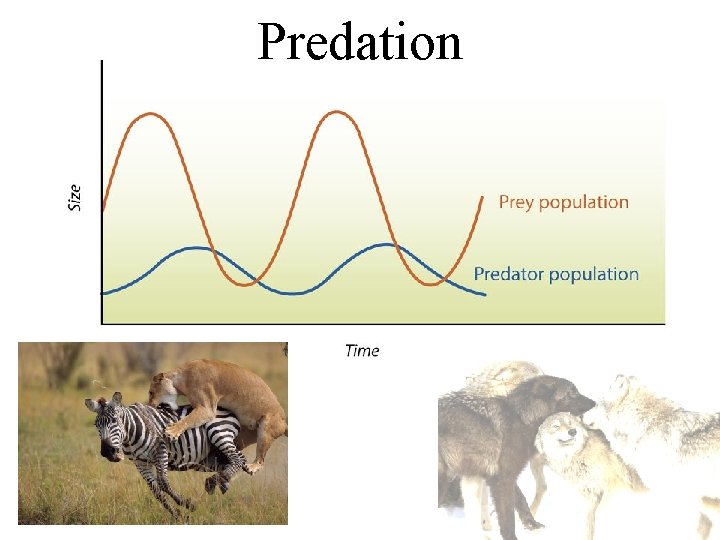
Predation
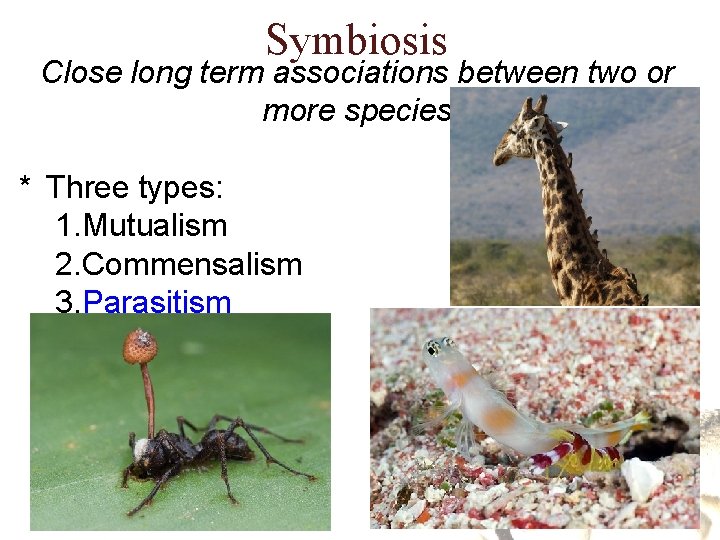
Symbiosis Close long term associations between two or more species * Three types: 1. Mutualism 2. Commensalism 3. Parasitism
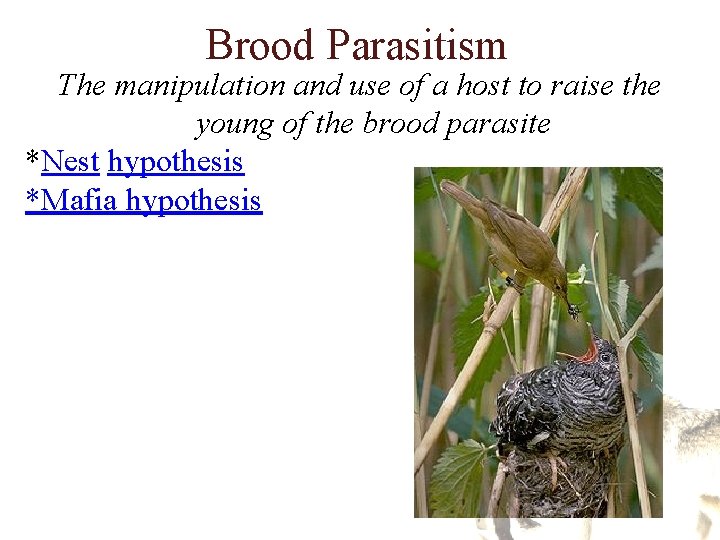
Brood Parasitism The manipulation and use of a host to raise the young of the brood parasite *Nest hypothesis *Mafia hypothesis
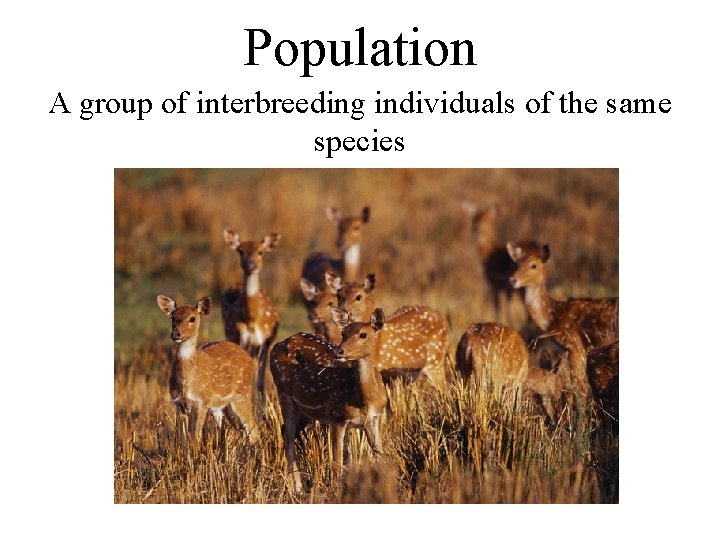
Population A group of interbreeding individuals of the same species
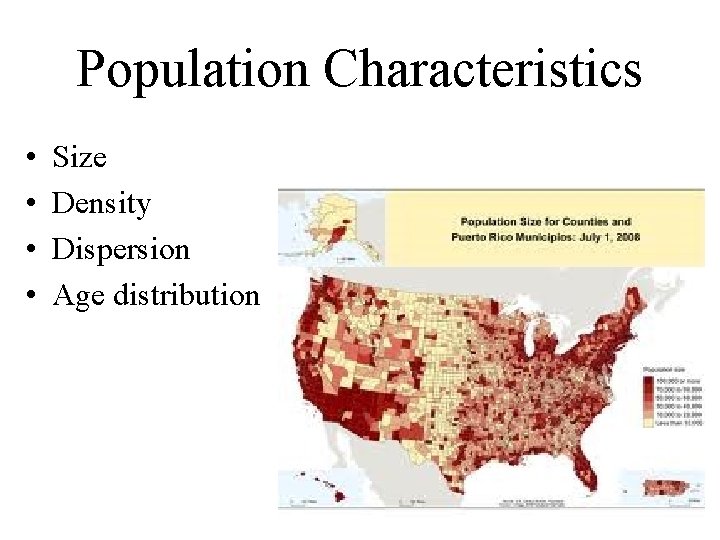
Population Characteristics • • Size Density Dispersion Age distribution
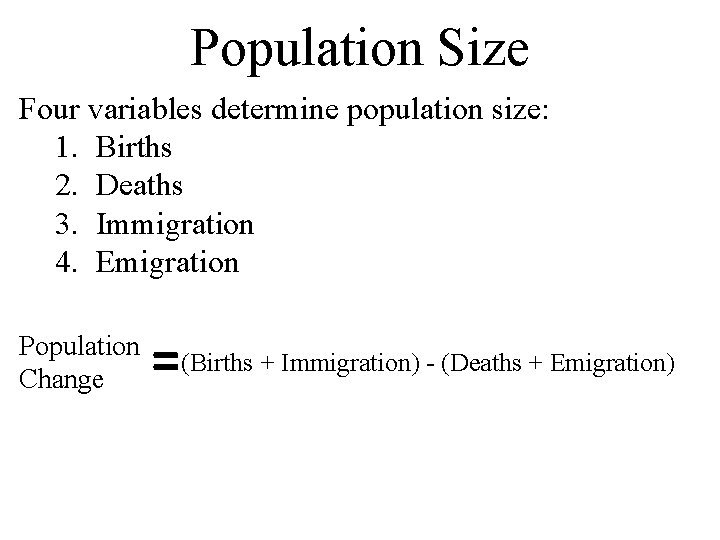
Population Size Four variables determine population size: 1. Births 2. Deaths 3. Immigration 4. Emigration Population Change =(Births + Immigration) - (Deaths + Emigration)
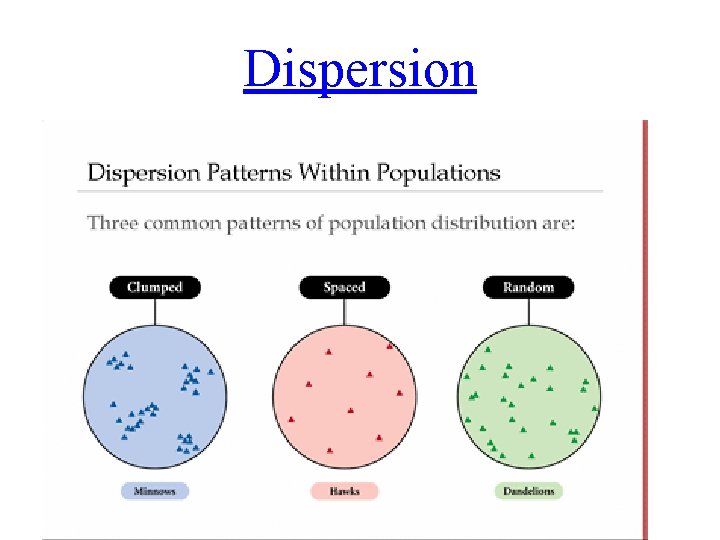
Dispersion
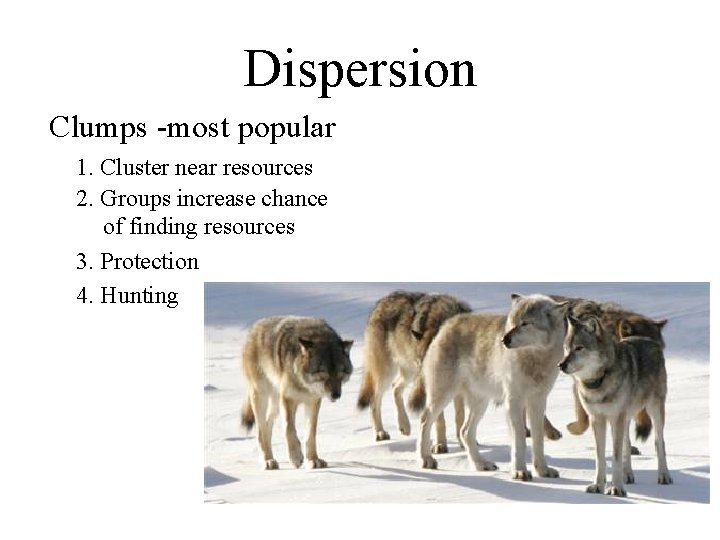
Dispersion Clumps -most popular 1. Cluster near resources 2. Groups increase chance of finding resources 3. Protection 4. Hunting
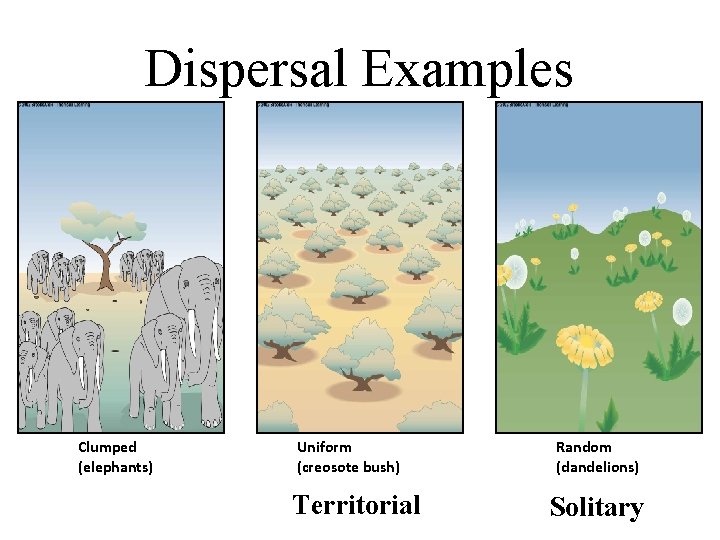
Dispersal Examples Clumped (elephants) Uniform (creosote bush) Territorial Random (dandelions) Solitary
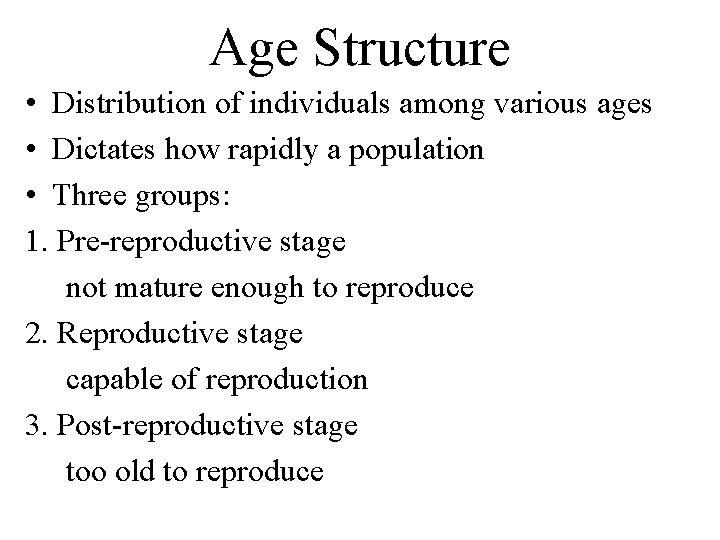
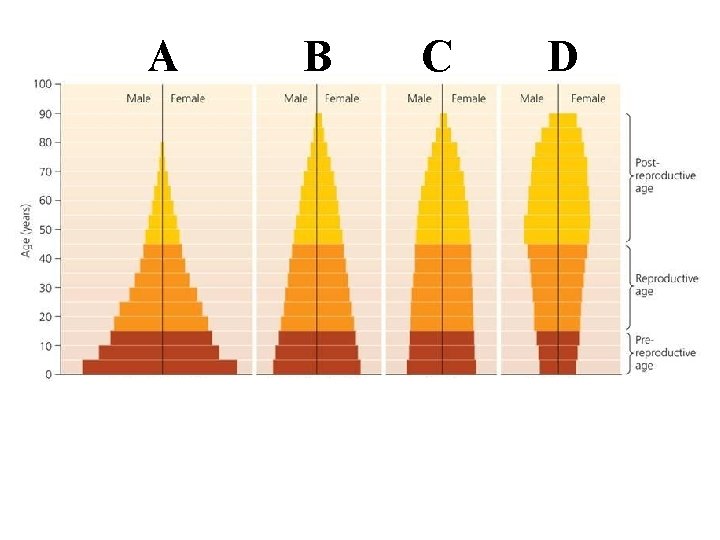
Age Structure • Distribution of individuals among various ages • Dictates how rapidly a population • Three groups: 1. Pre-reproductive stage not mature enough to reproduce 2. Reproductive stage capable of reproduction 3. Post-reproductive stage too old to reproduce
A B C D
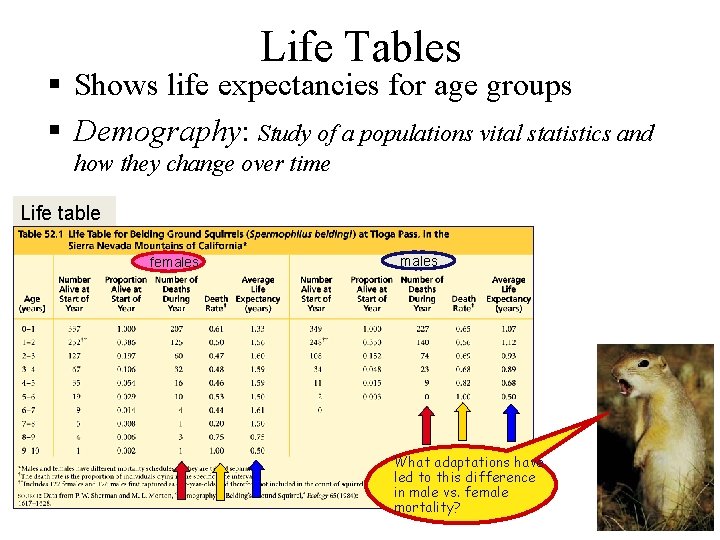
Life Tables § Shows life expectancies for age groups § Demography: Study of a populations vital statistics and how they change over time Life table females What adaptations have led to this difference in male vs. female mortality?
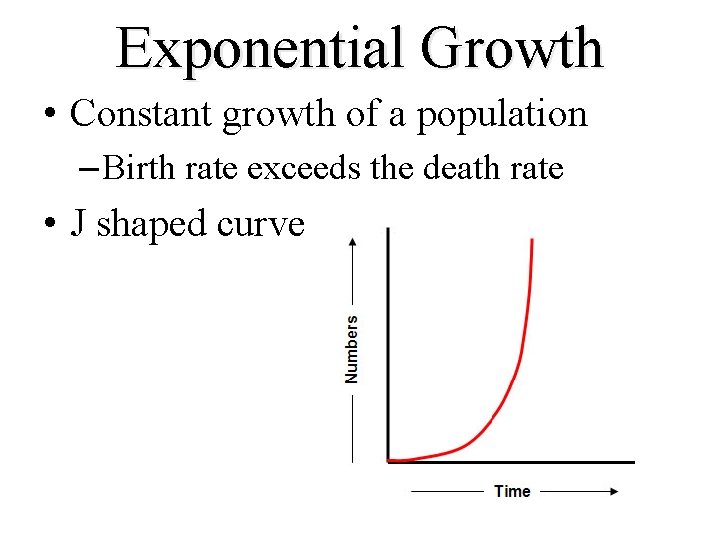
Exponential Growth • Constant growth of a population – Birth rate exceeds the death rate • J shaped curve
Conditions for Exponential Growth • Unlimited resources – Abundant space – Abundant food – Shelter – Decrease in predators – Decrease in disease – Reproduction
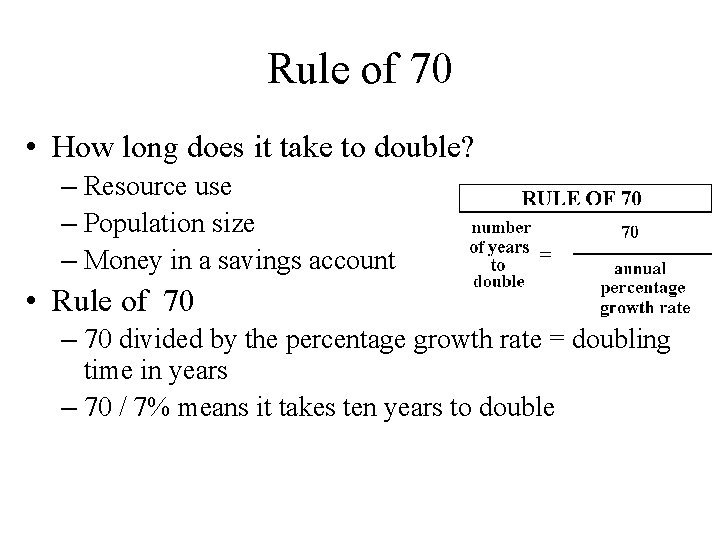
Rule of 70 • How long does it take to double? – Resource use – Population size – Money in a savings account • Rule of 70 – 70 divided by the percentage growth rate = doubling time in years – 70 / 7% means it takes ten years to double
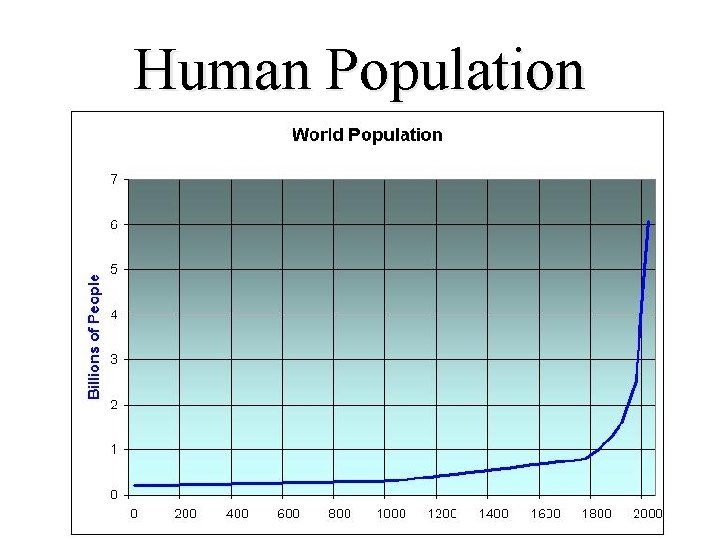
Human Population
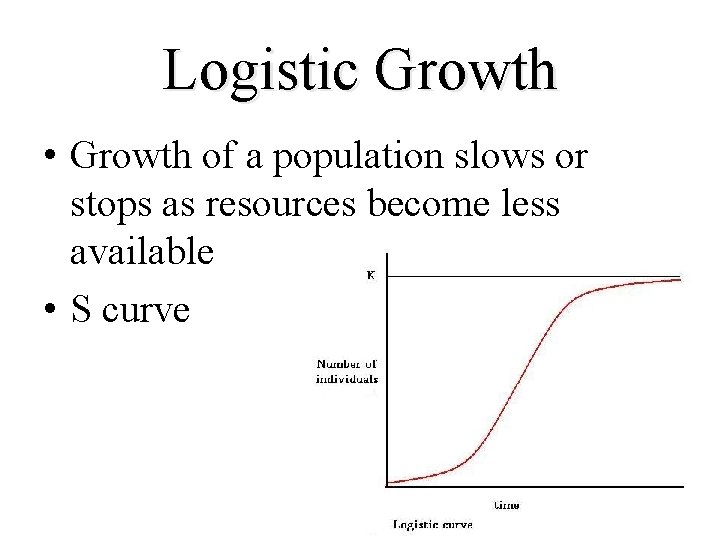
Logistic Growth • Growth of a population slows or stops as resources become less available • S curve
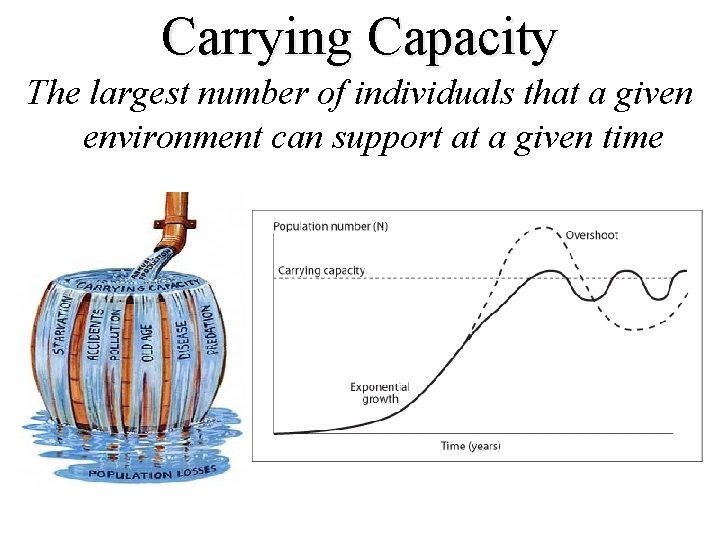
Carrying Capacity The largest number of individuals that a given environment can support at a given time
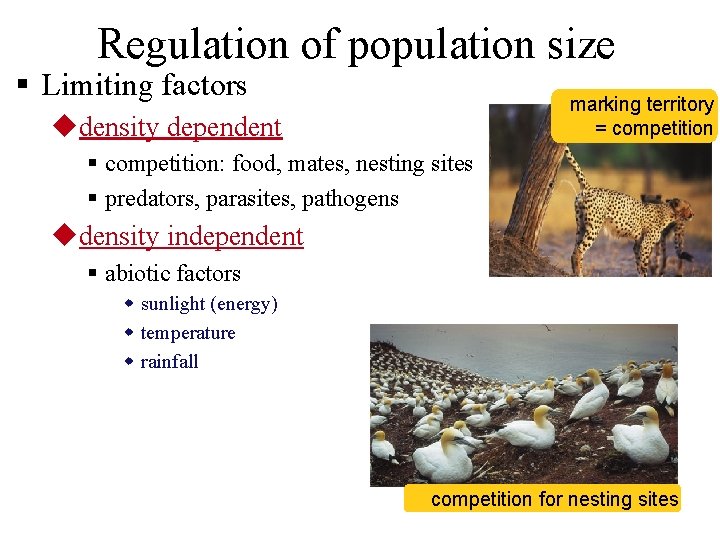
Regulation of population size § Limiting factors marking territory = competition udensity dependent § competition: food, mates, nesting sites § predators, parasites, pathogens udensity independent § abiotic factors w sunlight (energy) w temperature w rainfall competition for nesting sites
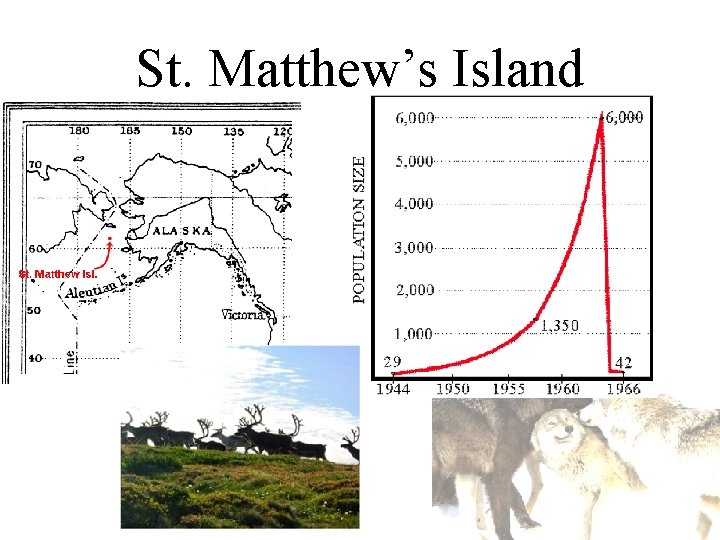
St. Matthew’s Island
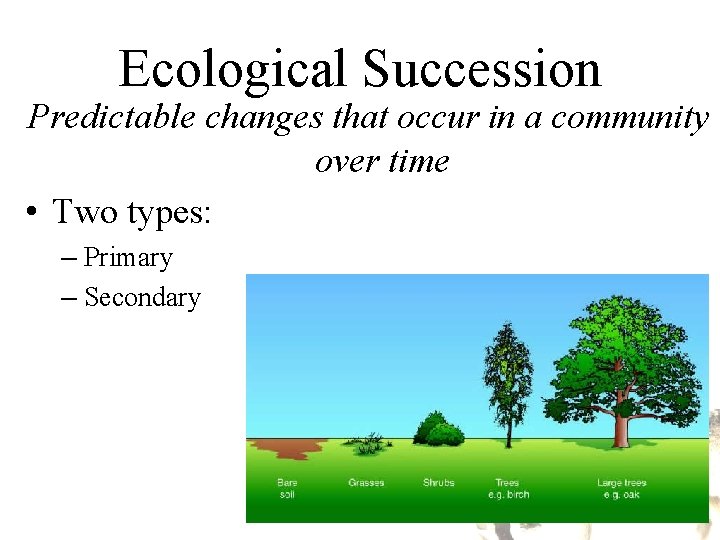
Ecological Succession Predictable changes that occur in a community over time • Two types: – Primary – Secondary
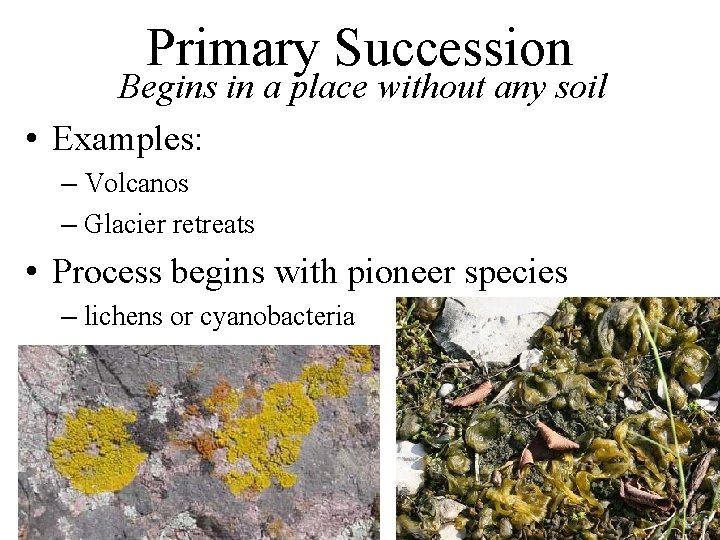
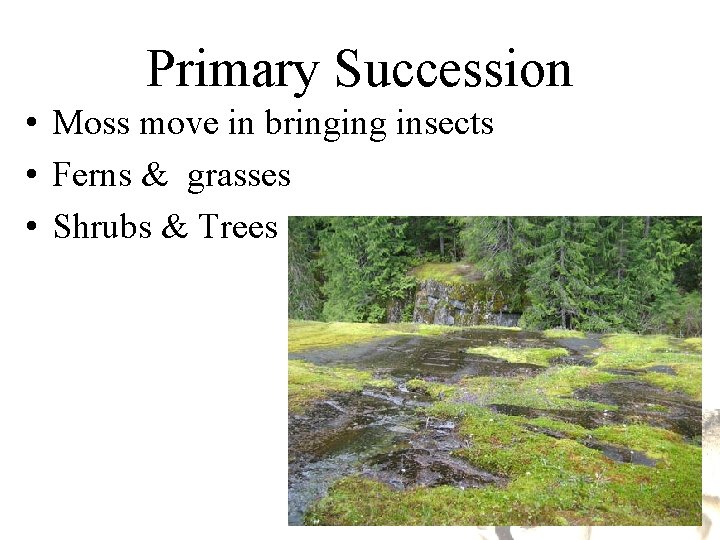
Primary Succession Begins in a place without any soil • Examples: – Volcanos – Glacier retreats • Process begins with pioneer species – lichens or cyanobacteria
Primary Succession • Moss move in bringing insects • Ferns & grasses • Shrubs & Trees
Secondary Succession Organisms evades an ecosystem that already existed before • Usually a result of disturbance –Human disturbance –Natural catastrophes
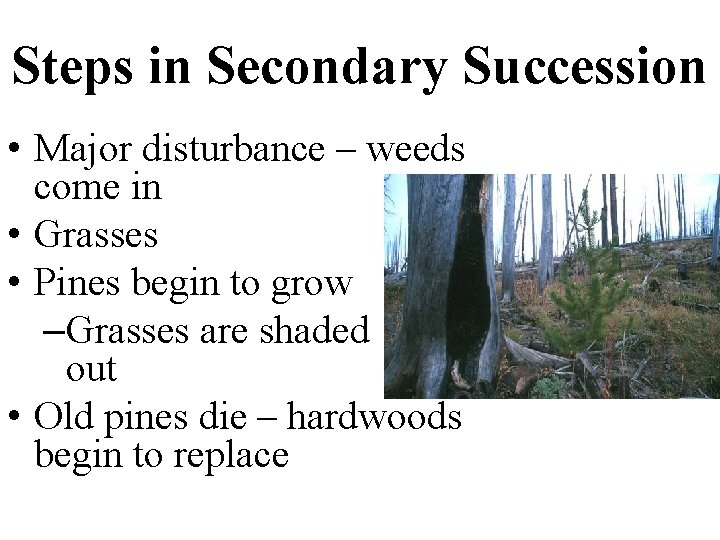
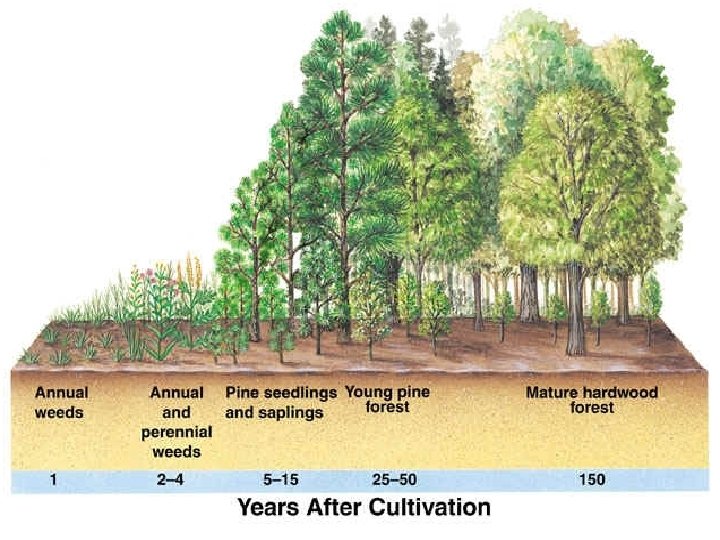
Steps in Secondary Succession • Major disturbance – weeds come in • Grasses • Pines begin to grow –Grasses are shaded out • Old pines die – hardwoods begin to replace
Secondary Succession
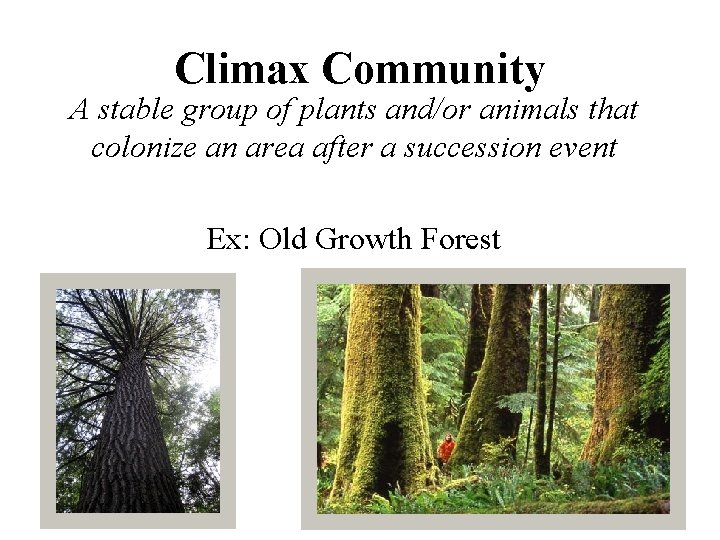
Climax Community A stable group of plants and/or animals that colonize an area after a succession event Ex: Old Growth Forest
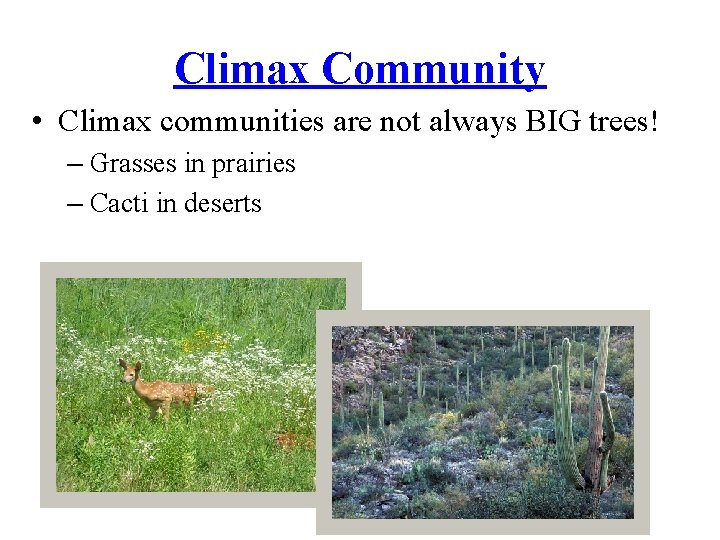
Climax Community • Climax communities are not always BIG trees! – Grasses in prairies – Cacti in deserts
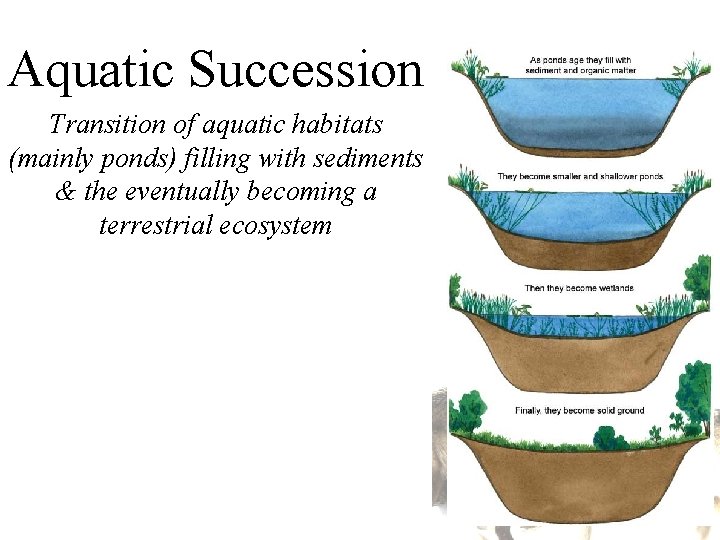
Aquatic Succession Transition of aquatic habitats (mainly ponds) filling with sediments & the eventually becoming a terrestrial ecosystem