
Species Interactions Competition interaction Mutualism interaction Commensalism 0

- Slides: 36
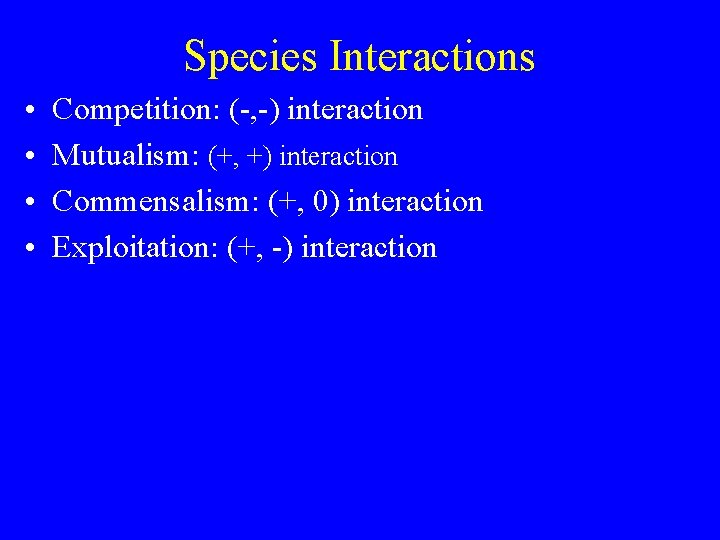
Species Interactions • • Competition: (-, -) interaction Mutualism: (+, +) interaction Commensalism: (+, 0) interaction Exploitation: (+, -) interaction
Competition • Def’n: Mutually adverse interaction between organisms that use a shared resource that is in limiting supply • Interaction: ( -, - ) Effect on Sp. 1 Effect on Sp. 2
Plant Competition • Light very important: explains trees!
Competition: (-, -) interaction • Interference Competition: – Individuals interact directly to limit one another’s access to resource • Resource Competition: – Individuals interact with resource in effort to obtain more. Once gained, resource unavailable to competitor.
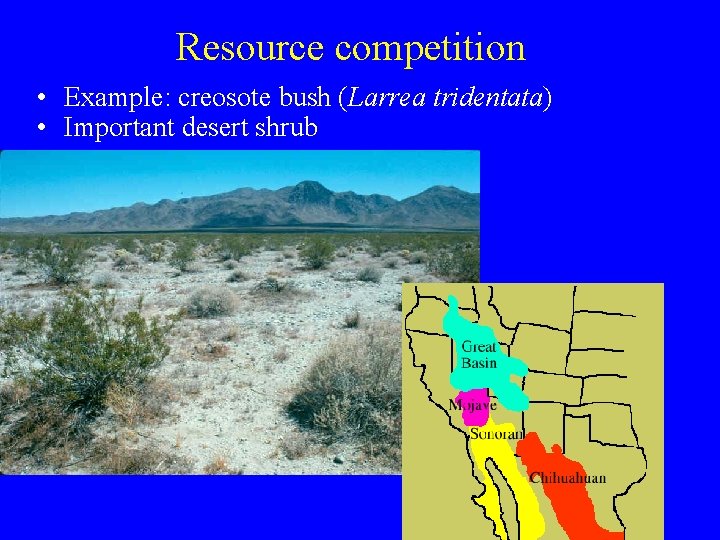
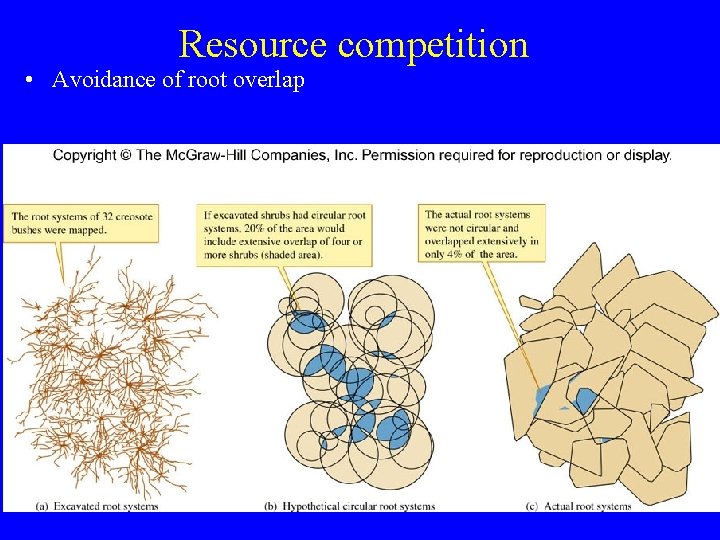
Resource competition • Example: creosote bush (Larrea tridentata) • Important desert shrub
Resource competition • Avoidance of root overlap
Interference Competition: Allelopathy • Allelopathy: chemical released by one plant species negatively impacts another • Differs from resource competition, where resources removed from environment • In allelopathy chemicals are added to environment
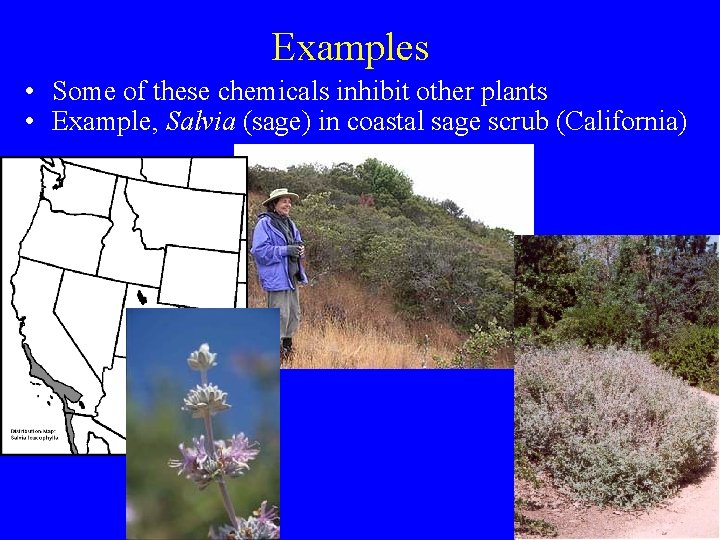
Examples • Some of these chemicals inhibit other plants • Example, Salvia (sage) in coastal sage scrub (California)
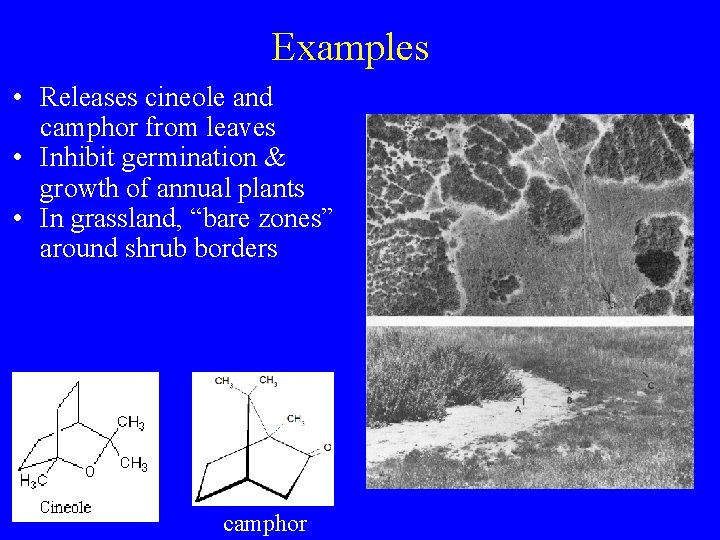
Examples • Releases cineole and camphor from leaves • Inhibit germination & growth of annual plants • In grassland, “bare zones” around shrub borders camphor
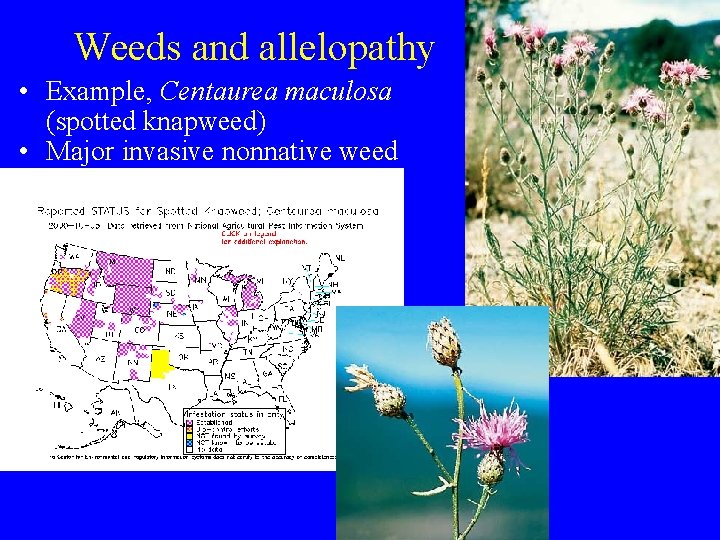
Weeds and allelopathy • Example, Centaurea maculosa (spotted knapweed) • Major invasive nonnative weed
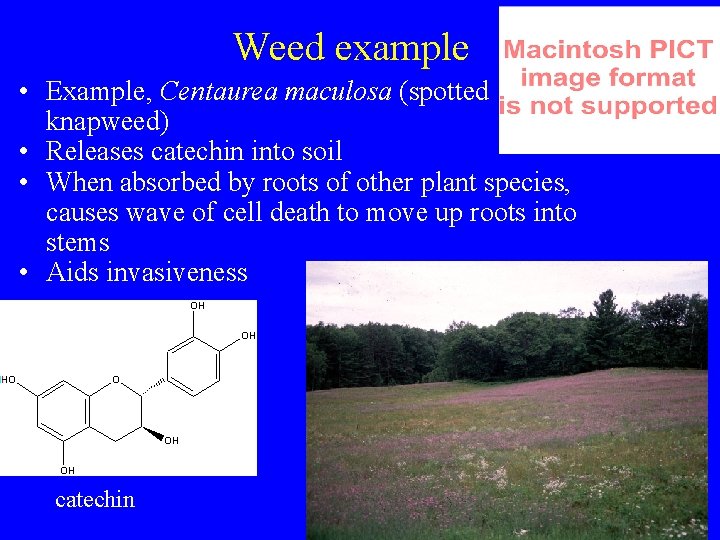
Weed example • Example, Centaurea maculosa (spotted knapweed) • Releases catechin into soil • When absorbed by roots of other plant species, causes wave of cell death to move up roots into stems • Aids invasiveness catechin
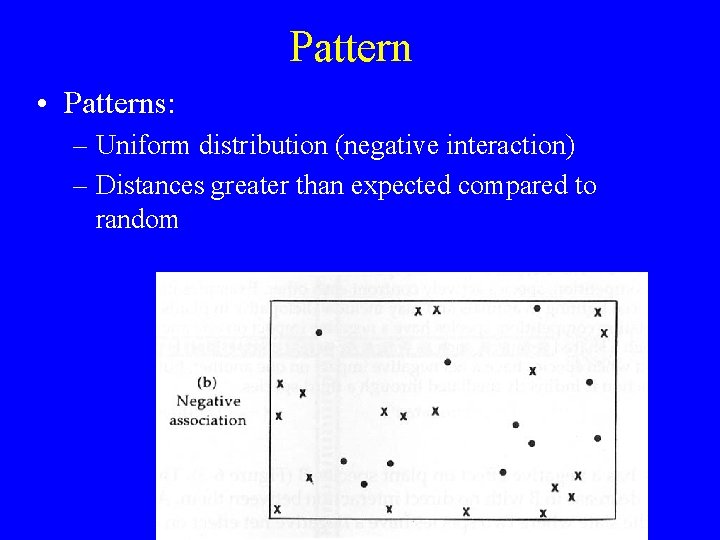
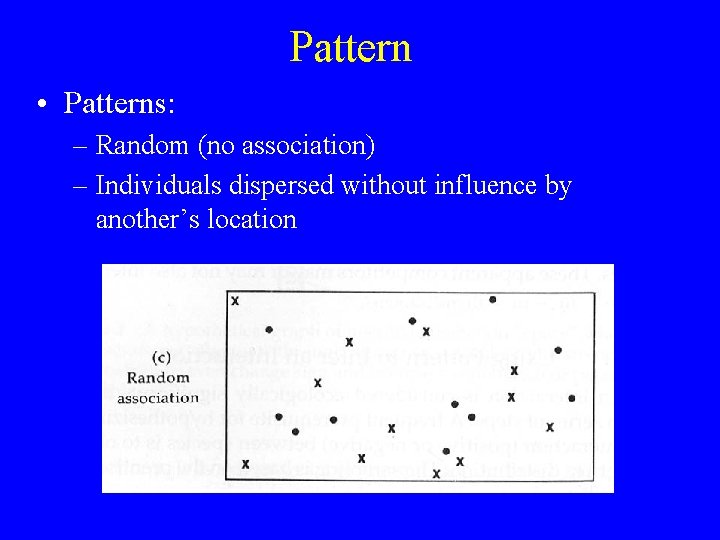
Pattern • Pattern: placement of individuals of a species relative to each other or members of another species • Important for sessile organisms (ex, plants) • May reveal species interactions – Positive may result in clumping – Negative may result in wide spacing
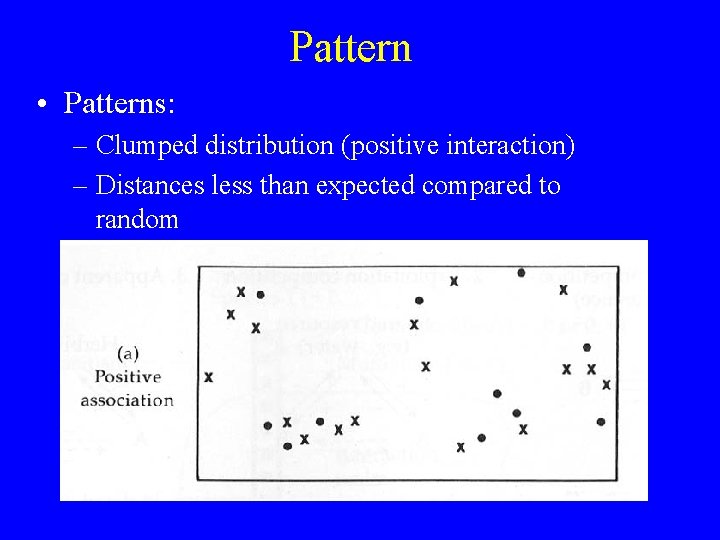
Pattern • Patterns: – Clumped distribution (positive interaction) – Distances less than expected compared to random
Pattern • Patterns: – Uniform distribution (negative interaction) – Distances greater than expected compared to random
Pattern • Patterns: – Random (no association) – Individuals dispersed without influence by another’s location
Prediction? • What pattern predicted for creosote bushes? • Clumped, uniform, random?
Species Interactions • • Competition: (-, -) interaction Mutualism: (+, +) interaction Commensalism: (+, 0) interaction Exploitation: (+, -) interaction
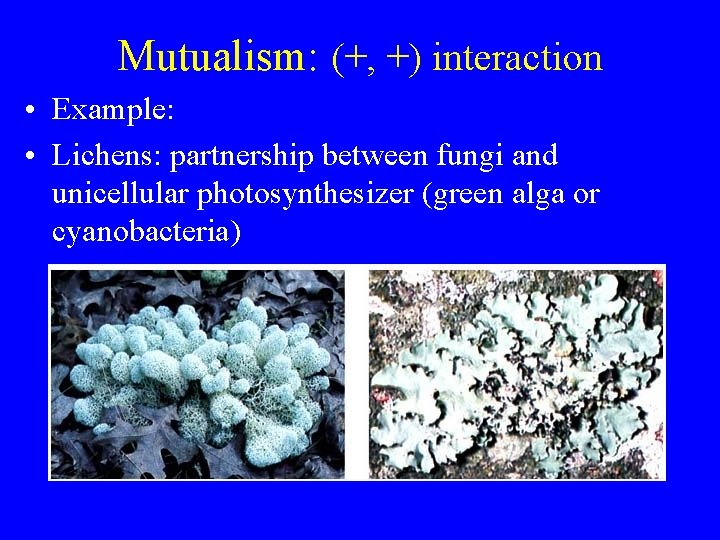
Mutualism: (+, +) interaction • Example: • Lichens: partnership between fungi and unicellular photosynthesizer (green alga or cyanobacteria)
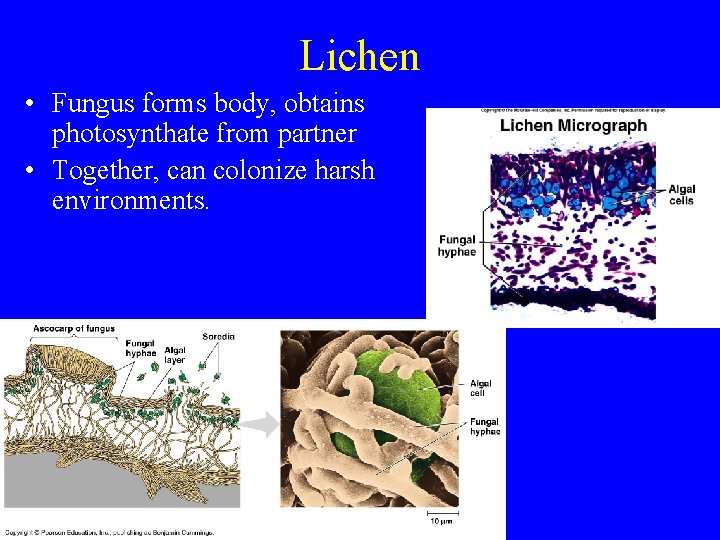
Lichen • Fungus forms body, obtains photosynthate from partner • Together, can colonize harsh environments.
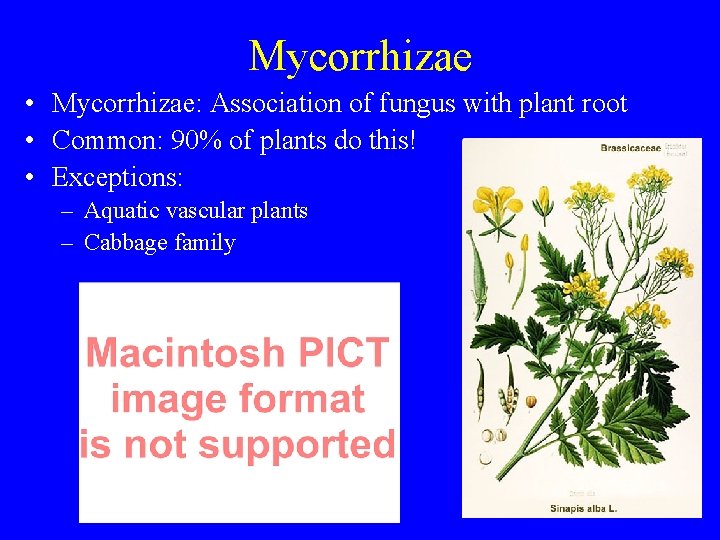
Mycorrhizae • Mycorrhizae: Association of fungus with plant root • Common: 90% of plants do this! • Exceptions: – Aquatic vascular plants – Cabbage family
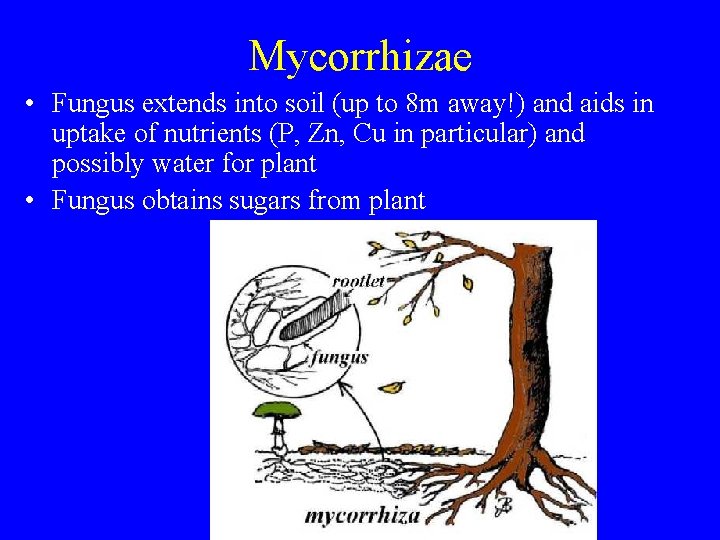
Mycorrhizae • Fungus extends into soil (up to 8 m away!) and aids in uptake of nutrients (P, Zn, Cu in particular) and possibly water for plant • Fungus obtains sugars from plant
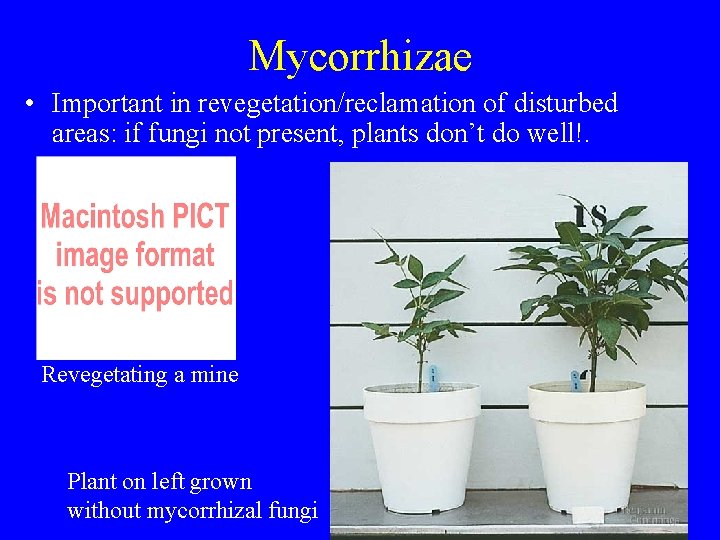
Mycorrhizae • Important in revegetation/reclamation of disturbed areas: if fungi not present, plants don’t do well!. Revegetating a mine Plant on left grown without mycorrhizal fungi
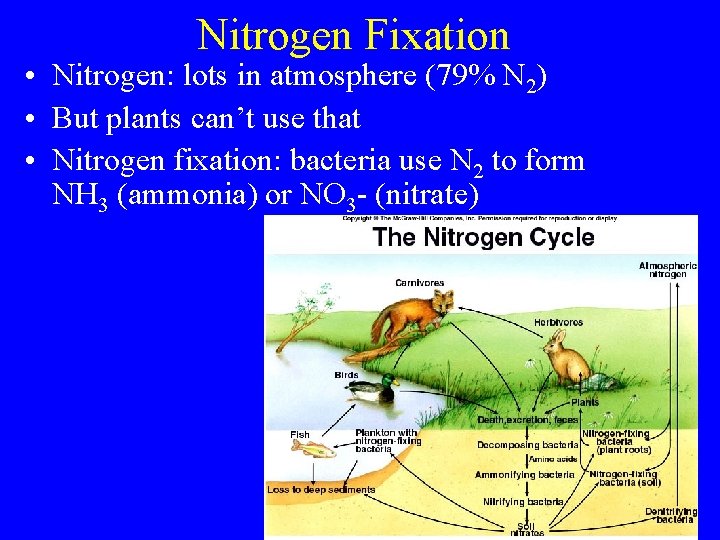
Nitrogen Fixation • Nitrogen: lots in atmosphere (79% N 2) • But plants can’t use that • Nitrogen fixation: bacteria use N 2 to form NH 3 (ammonia) or NO 3 - (nitrate)
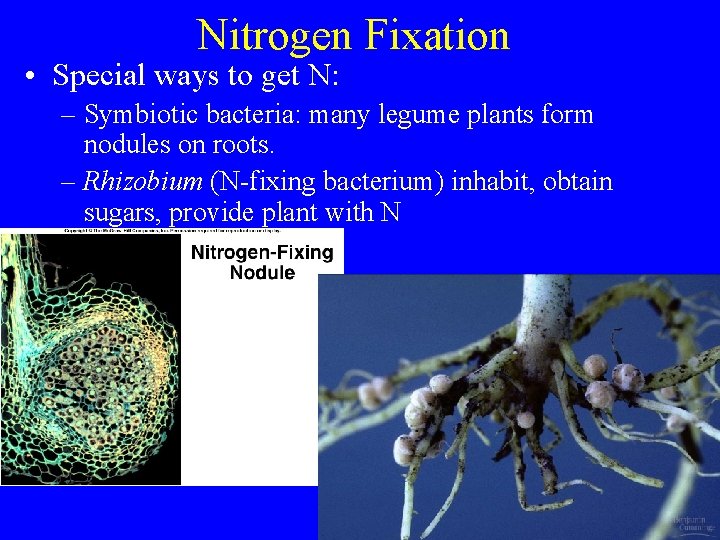
Nitrogen Fixation • Special ways to get N: – Symbiotic bacteria: many legume plants form nodules on roots. – Rhizobium (N-fixing bacterium) inhabit, obtain sugars, provide plant with N
Defensive mutualisms • Typically between plants and insects • Insect gets home/food, plant gets protection from herbivory/competitors/hazards
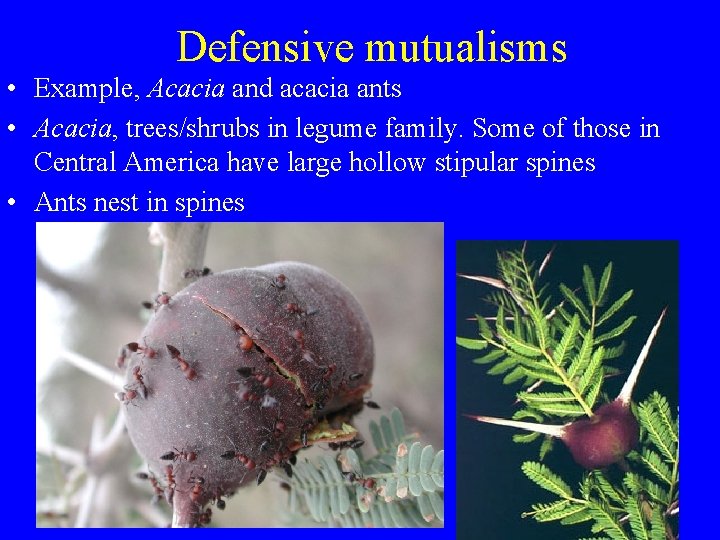
Defensive mutualisms • Example, Acacia and acacia ants • Acacia, trees/shrubs in legume family. Some of those in Central America have large hollow stipular spines • Ants nest in spines
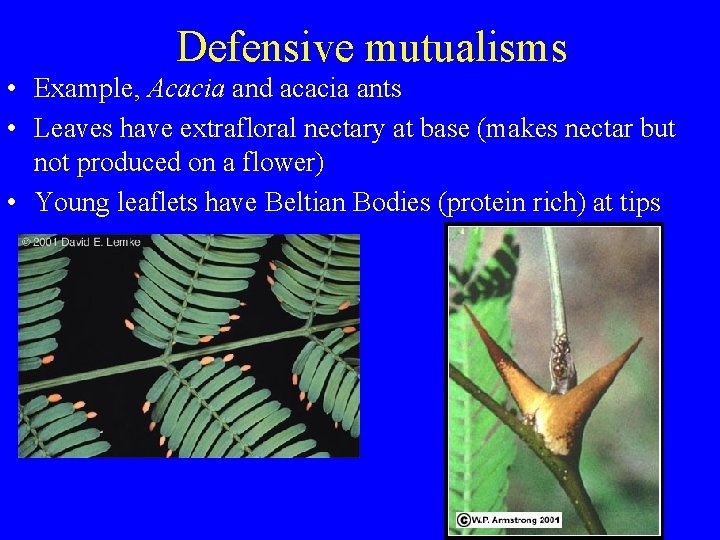
Defensive mutualisms • Example, Acacia and acacia ants • Leaves have extrafloral nectary at base (makes nectar but not produced on a flower) • Young leaflets have Beltian Bodies (protein rich) at tips
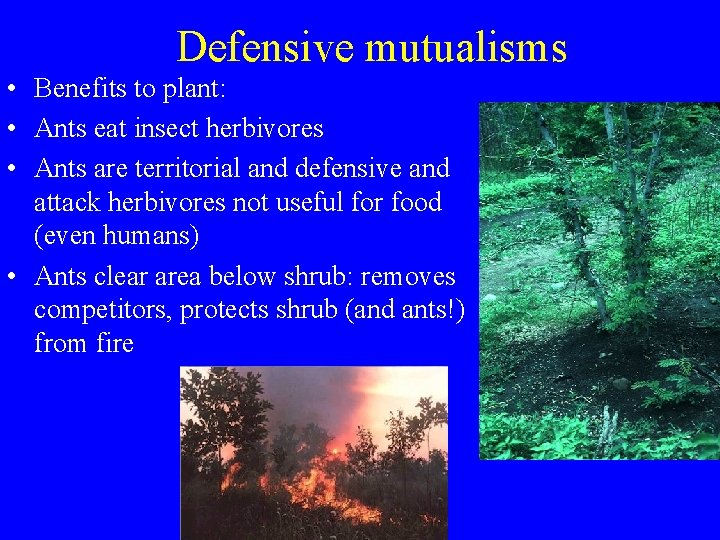
Defensive mutualisms • Benefits to plant: • Ants eat insect herbivores • Ants are territorial and defensive and attack herbivores not useful for food (even humans) • Ants clear area below shrub: removes competitors, protects shrub (and ants!) from fire
Species Interactions • • Competition: (-, -) interaction Mutualism: (+, +) interaction Commensalism: (+, 0) interaction Exploitation: (+, -) interaction
Commensalism: (+, 0) interaction • Interaction that benefits one species but has no effect on other • Plant/plant examples: – some epiphytes – “nurse plant effect”
Example: some epiphytes • Epiphyte: Plant that grows on surface of other plants • Example: – Spanish moss
Example: some epiphytes • Epiphyte: Plant that grows on surface of other plants • Example: – Lots in wet tropics
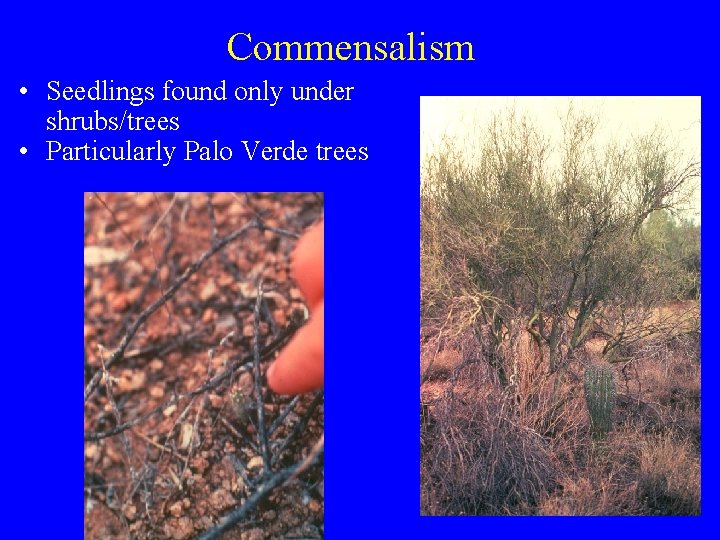
Commensalism • Nurse plant effect (+, 0) • Larger plant provides favorable microhabitat for seedlings of another species (+) • Seedling so small it has no effect on larger plant (0)
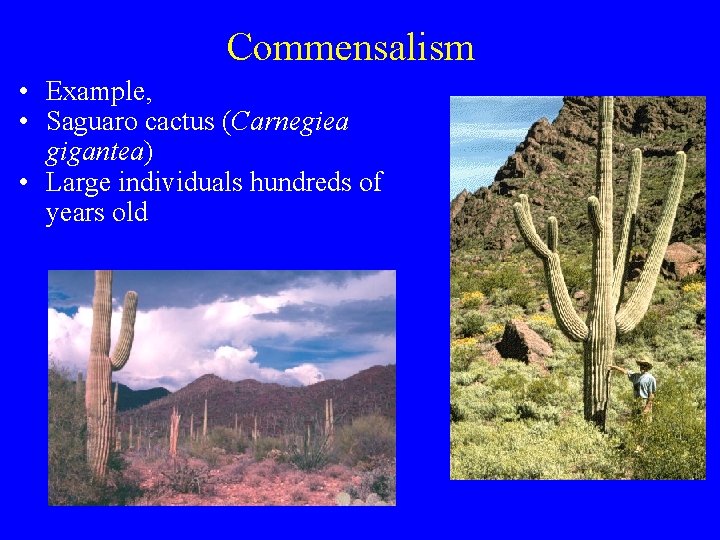
Commensalism • Example, • Saguaro cactus (Carnegiea gigantea) • Large individuals hundreds of years old
Commensalism • Seedlings found only under shrubs/trees • Particularly Palo Verde trees
Species Interactions • • Competition: (-, -) interaction Mutualism: (+, +) interaction Commensalism: (+, 0) interaction Exploitation: (+, -) interaction