
Species Interaction Notes Relationships Symbiosis Two different organisms
Species Interaction Notes Relationships…
Symbiosis • Two different organisms live in close association with each other. • Often used to describe a relationship in which at least one species benefits. • Major Categories: • 1. Competition • 2. Predation • 3. Parasitism • 4. Mutualism • 5. Commensalism
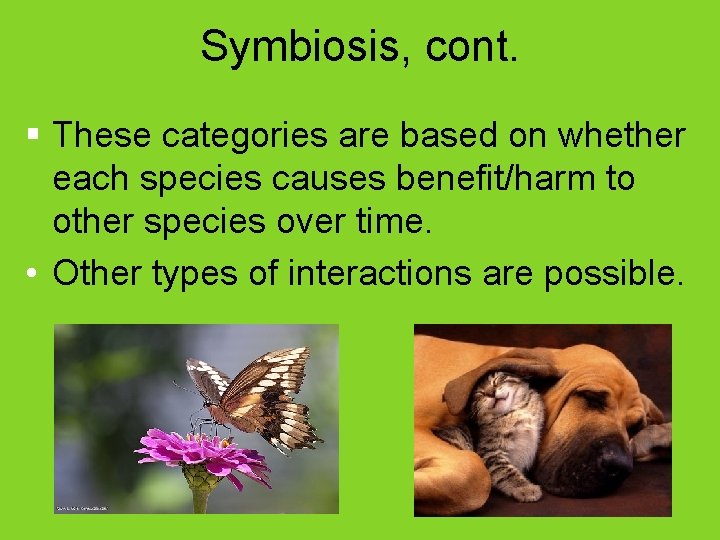
Symbiosis, cont. § These categories are based on whether each species causes benefit/harm to other species over time. • Other types of interactions are possible.
FYI. • Many interactions between species are indirect, some interactions do not fit in a category clearly, and other types seem possible but are rarely found. Therefore, many interactions are not categorized/well studied.
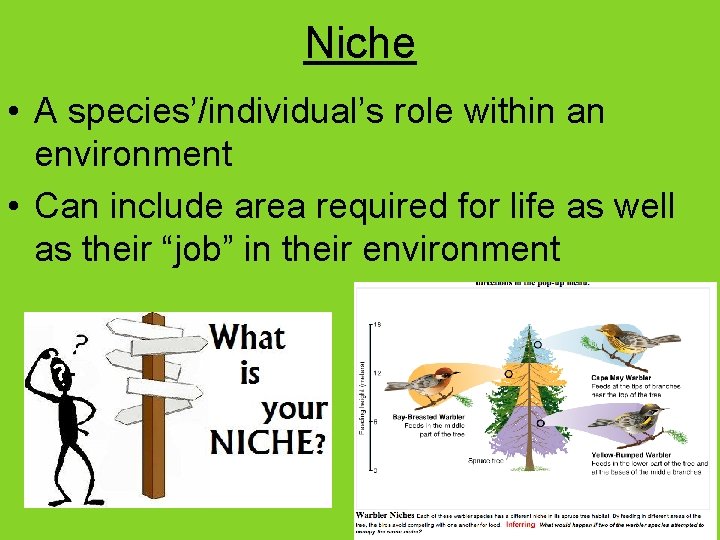
Niche • A species’/individual’s role within an environment • Can include area required for life as well as their “job” in their environment
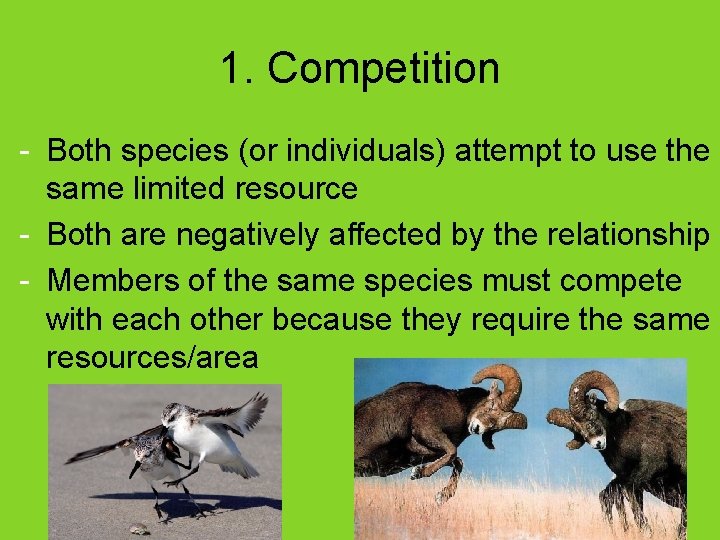
1. Competition - Both species (or individuals) attempt to use the same limited resource - Both are negatively affected by the relationship - Members of the same species must compete with each other because they require the same resources/area
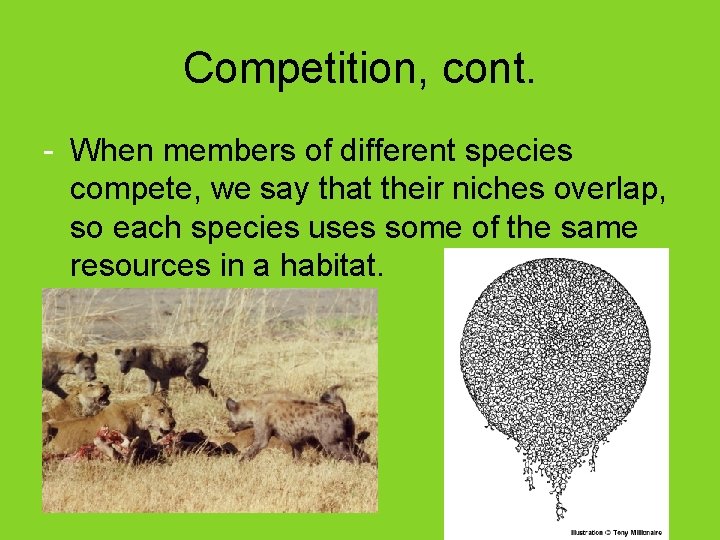
Competition, cont. - When members of different species compete, we say that their niches overlap, so each species uses some of the same resources in a habitat.
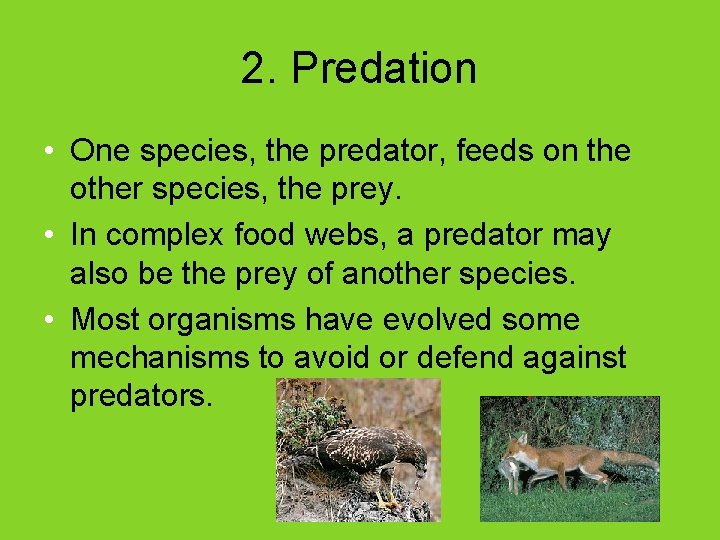
2. Predation • One species, the predator, feeds on the other species, the prey. • In complex food webs, a predator may also be the prey of another species. • Most organisms have evolved some mechanisms to avoid or defend against predators.
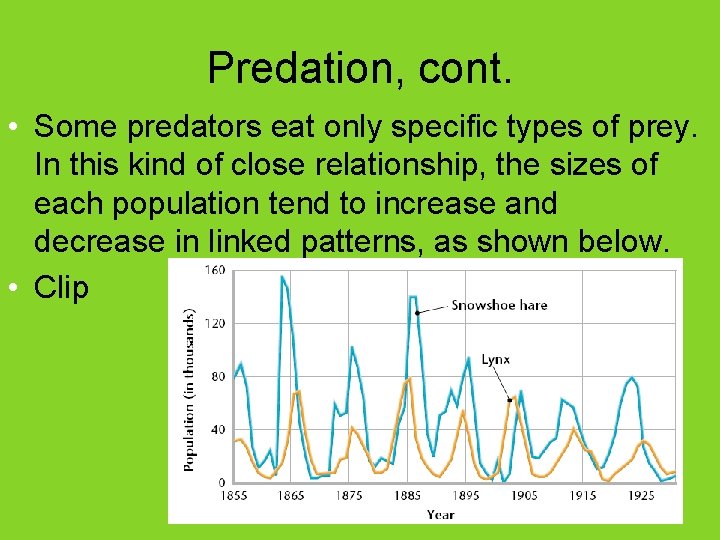
Predation, cont. • Some predators eat only specific types of prey. In this kind of close relationship, the sizes of each population tend to increase and decrease in linked patterns, as shown below. • Clip
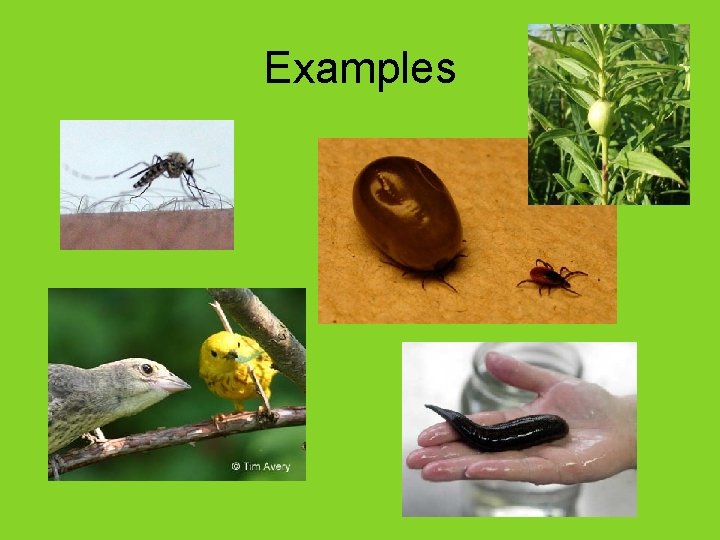
3. Parasitism • An organism that lives in or on another organism and feeds on the other organism is a parasite. • Ex: Ticks, fleas, tapeworms, heartworms, and bloodsucking leeches. • The organisms the parasite takes its nourishment from is known as the host. • Parasitism is a relationship between two species, the parasite, benefits from the other species, the host, and usually harms the host.
Examples
Parasitism, cont. -The differences between a parasite and a predator are that a parasite spends some of its life in or on the host, and that the parasites do not usually kill their hosts. -In fact, the parasite has an evolutionary advantage if it allows its host to live longer. -However, the host is often weakened or exposed to disease by the parasite.
4. Mutualism - Many species depend on another species for survival. In some cases, neither organism can survive alone. Both species benefit. -Certain species of bacteria in your intestines form a mutualistic relationship with you. These bacteria help break down food that you cannot digest. In return, you give the bacteria a warm, food-rich habitat.
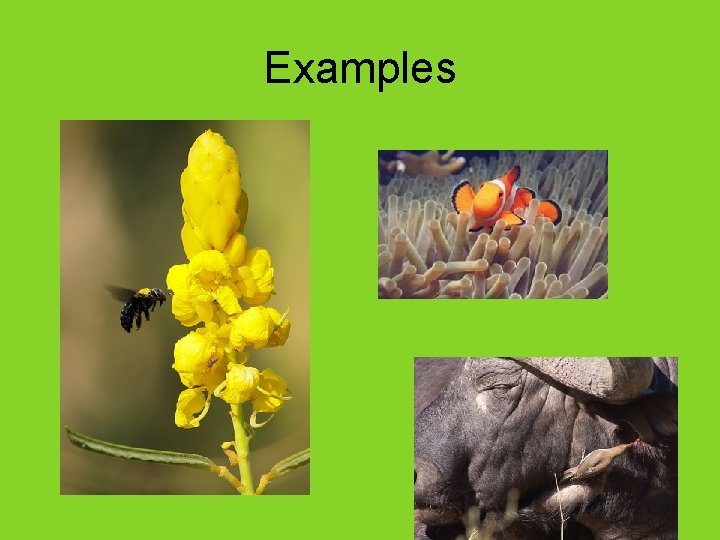
Examples
5. Commensalism -One organism benefits and the other in unaffected. -An example is the relationship between sharks and a type of fish called remoras. Remoras attach themselves to sharks and feed on scraps of food left over from the shark’s meals. -Even seemingly harmless activity, however, might have an effect on another species.
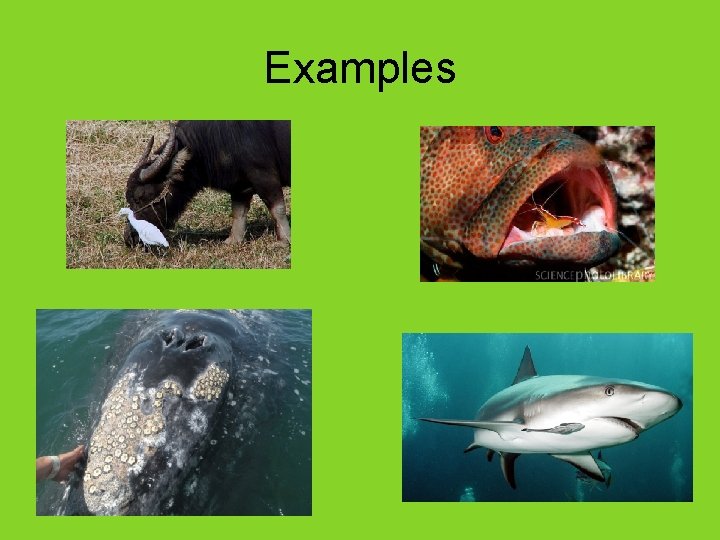
Examples
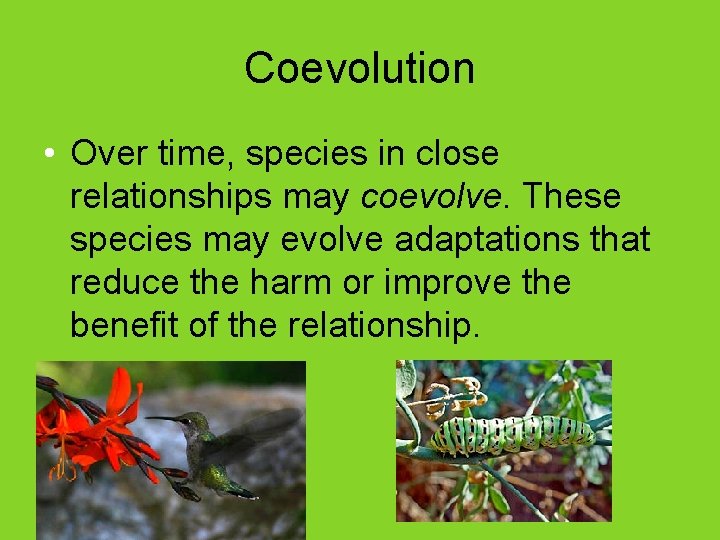
Coevolution • Over time, species in close relationships may coevolve. These species may evolve adaptations that reduce the harm or improve the benefit of the relationship.

Examples • Try some out!
- Slides: 18