
Species Diversity Richness and evenness are components of

- Slides: 7
Species Diversity
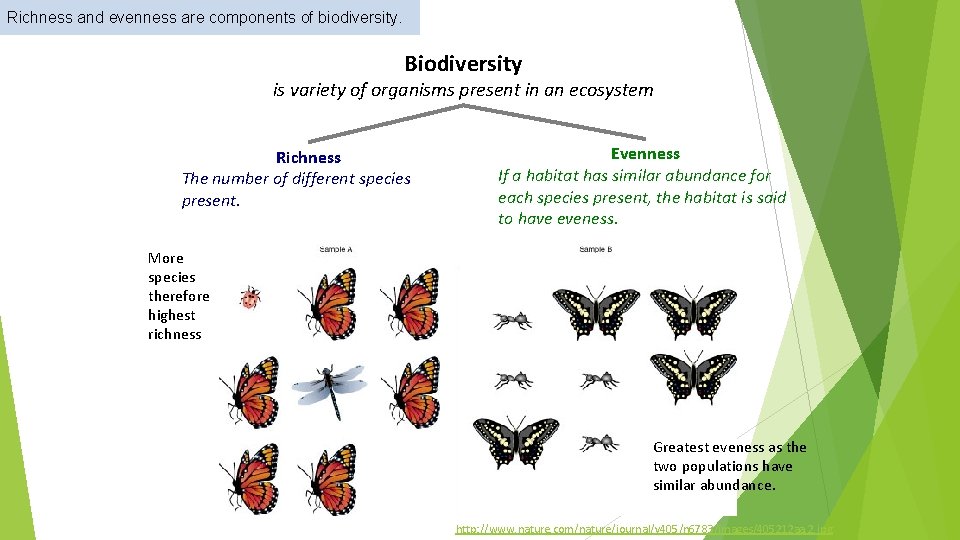
Richness and evenness are components of biodiversity. Biodiversity is variety of organisms present in an ecosystem Richness The number of different species present. Evenness If a habitat has similar abundance for each species present, the habitat is said to have eveness. More species therefore highest richness Greatest eveness as the two populations have similar abundance. http: //www. nature. com/nature/journal/v 405/n 6783/images/405212 aa. 2. jpg
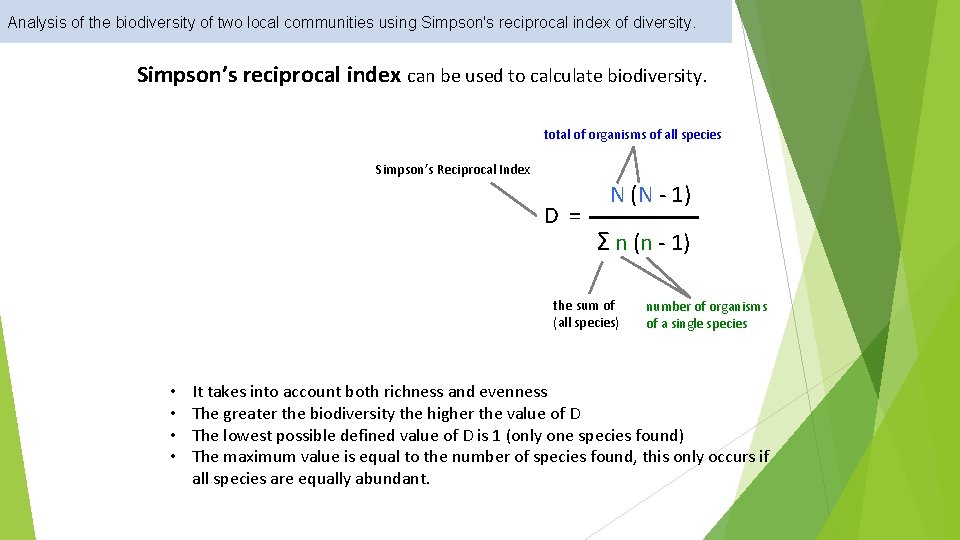
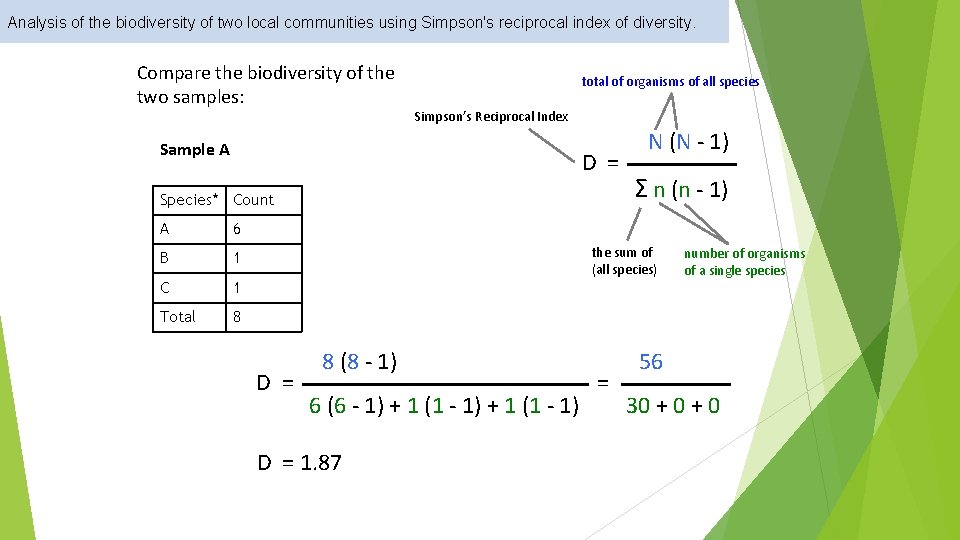
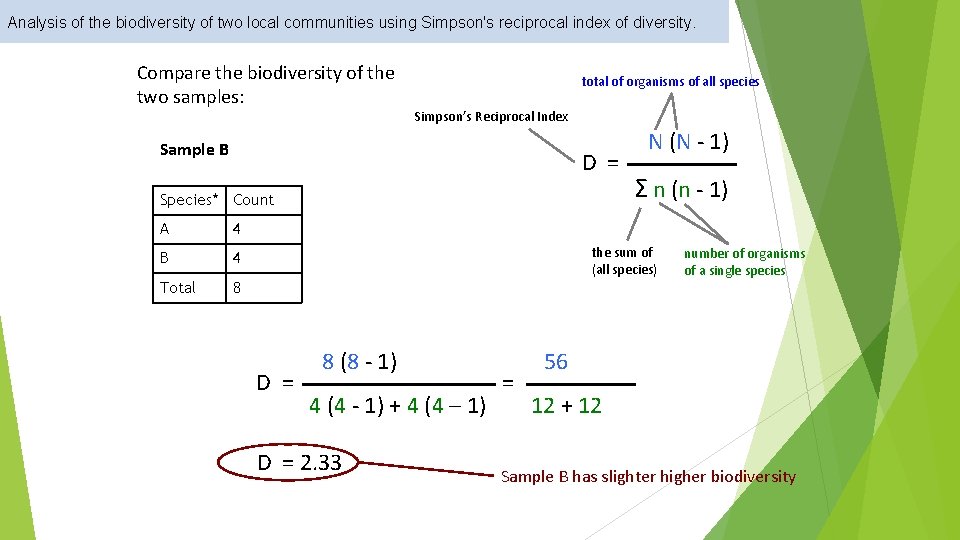
Analysis of the biodiversity of two local communities using Simpson's reciprocal index of diversity. Simpson’s reciprocal index can be used to calculate biodiversity. total of organisms of all species Simpson’s Reciprocal Index D = N (N - 1) Σ n (n - 1) the sum of (all species) • • number of organisms of a single species It takes into account both richness and evenness The greater the biodiversity the higher the value of D The lowest possible defined value of D is 1 (only one species found) The maximum value is equal to the number of species found, this only occurs if all species are equally abundant.
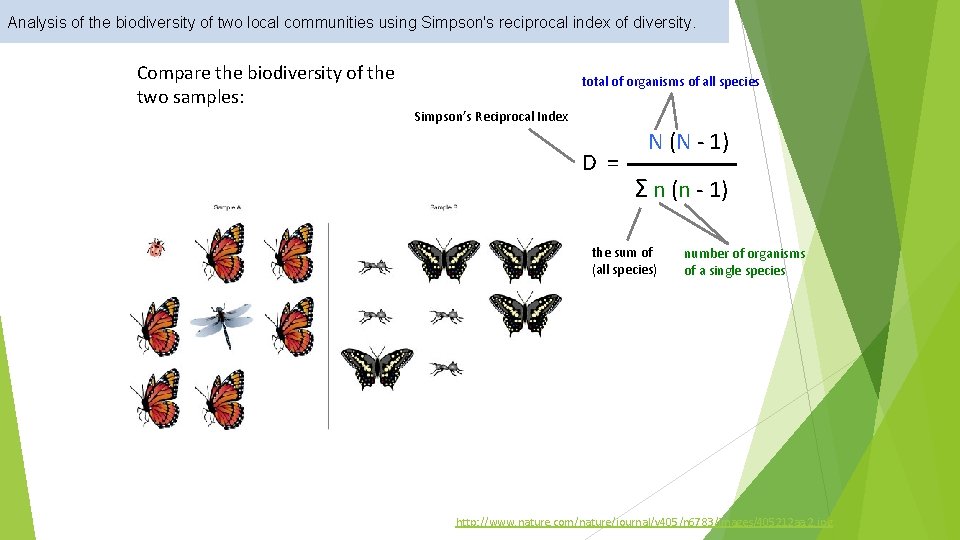
Analysis of the biodiversity of two local communities using Simpson's reciprocal index of diversity. Compare the biodiversity of the two samples: total of organisms of all species Simpson’s Reciprocal Index D = N (N - 1) Σ n (n - 1) the sum of (all species) number of organisms of a single species http: //www. nature. com/nature/journal/v 405/n 6783/images/405212 aa. 2. jpg
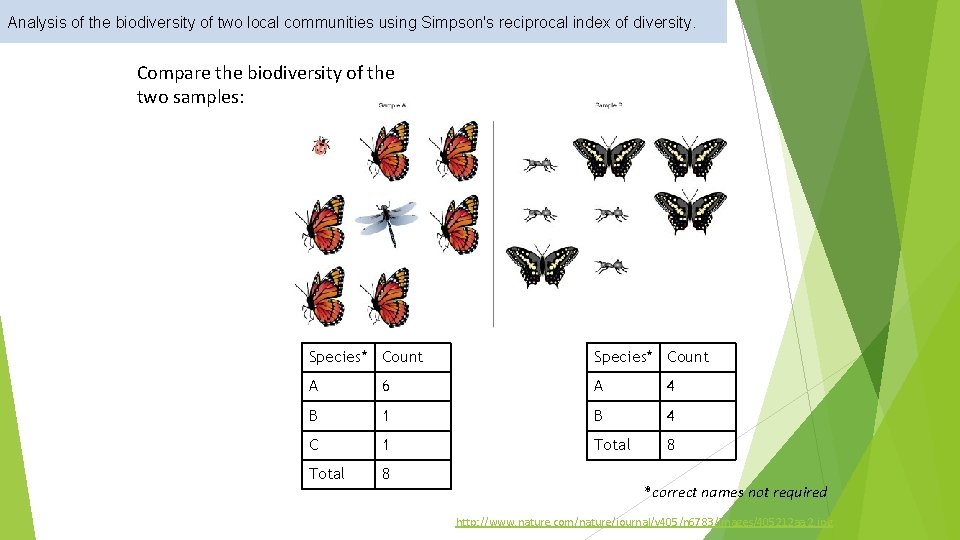
Analysis of the biodiversity of two local communities using Simpson's reciprocal index of diversity. Compare the biodiversity of the two samples: Species* Count A 6 A 4 B 1 B 4 C 1 Total 8 *correct names not required http: //www. nature. com/nature/journal/v 405/n 6783/images/405212 aa. 2. jpg
Analysis of the biodiversity of two local communities using Simpson's reciprocal index of diversity. Compare the biodiversity of the two samples: total of organisms of all species Simpson’s Reciprocal Index Sample A D = Species* Count A 6 B 1 C 1 Total 8 N (N - 1) Σ n (n - 1) the sum of (all species) D = 8 (8 - 1) 6 (6 - 1) + 1 (1 - 1) D = 1. 87 = number of organisms of a single species 56 30 + 0
Analysis of the biodiversity of two local communities using Simpson's reciprocal index of diversity. Compare the biodiversity of the two samples: total of organisms of all species Simpson’s Reciprocal Index Sample B D = Species* Count A 4 B 4 Total 8 N (N - 1) Σ n (n - 1) the sum of (all species) D = 8 (8 - 1) 4 (4 - 1) + 4 (4 – 1) D = 2. 33 = number of organisms of a single species 56 12 + 12 Sample B has slighter higher biodiversity