
Species Changing Over Time Biological Evolution Unifying theme


Species Changing Over Time
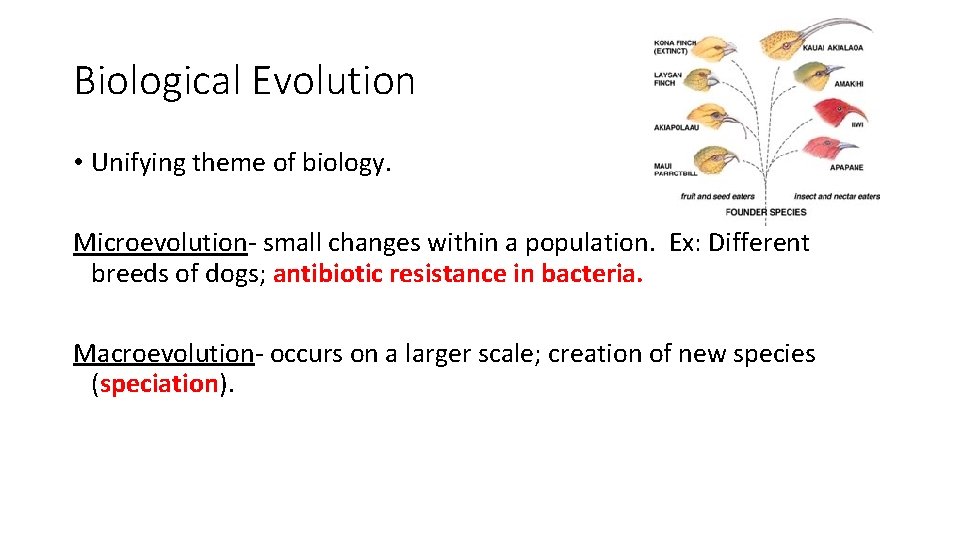
Biological Evolution • Unifying theme of biology. Microevolution- small changes within a population. Ex: Different breeds of dogs; antibiotic resistance in bacteria. Macroevolution- occurs on a larger scale; creation of new species (speciation).
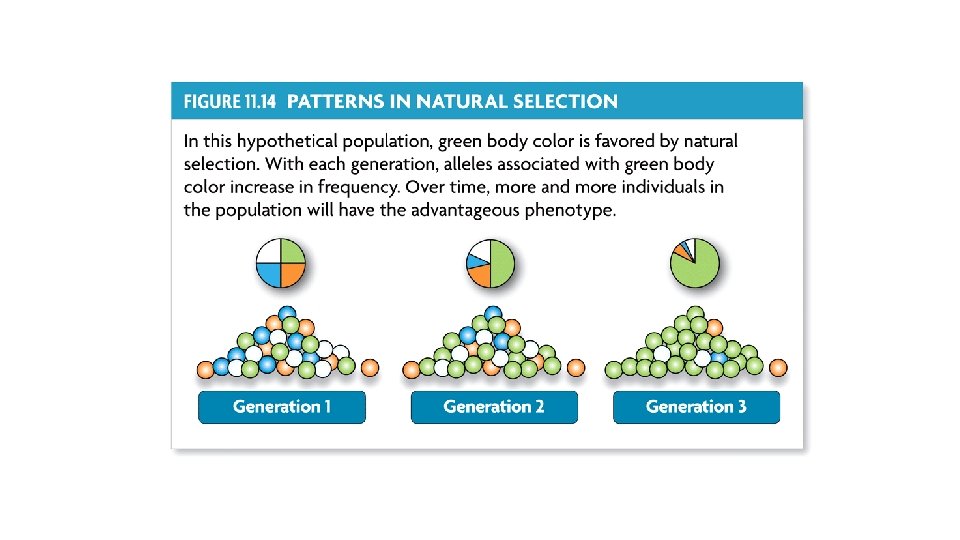
It’s all about the Genes • It is not the organism that is important, but the genes they carry. • Evolution can be viewed as a change in frequency of alleles in a population. • Change in the total genetic makeup of a population, known as the gene pool
Genetic Variation • Important to evolution because some variations may give an advantage to an individual leading to natural selection • Results from: 1. Crossing over 2. Sexual reproduction 3. Mutations
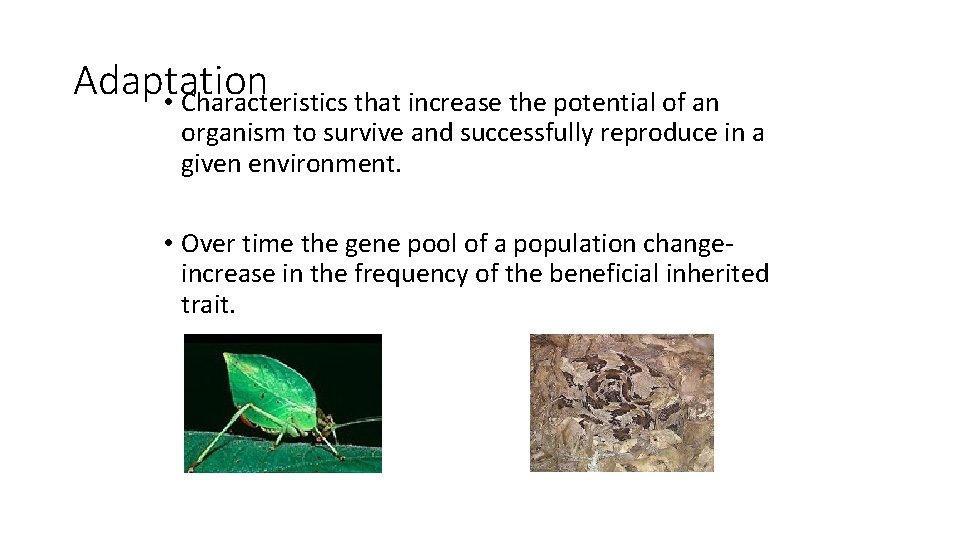
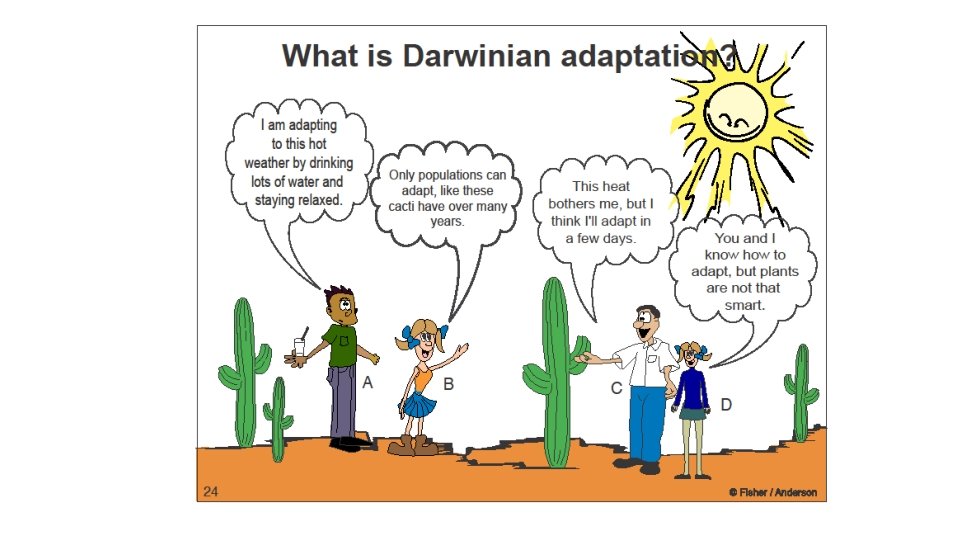
Adaptation • Characteristics that increase the potential of an organism to survive and successfully reproduce in a given environment. • Over time the gene pool of a population changeincrease in the frequency of the beneficial inherited trait.
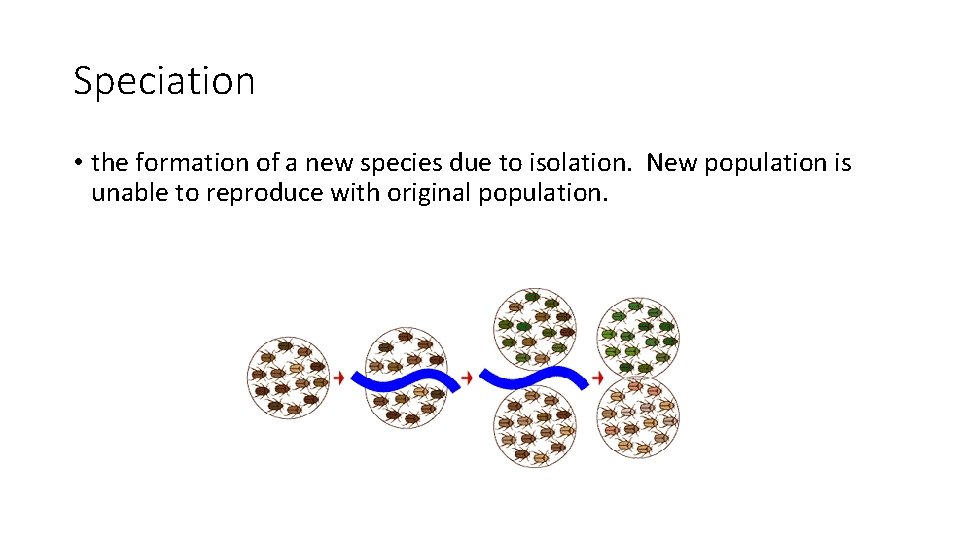
Speciation • the formation of a new species due to isolation. New population is unable to reproduce with original population.
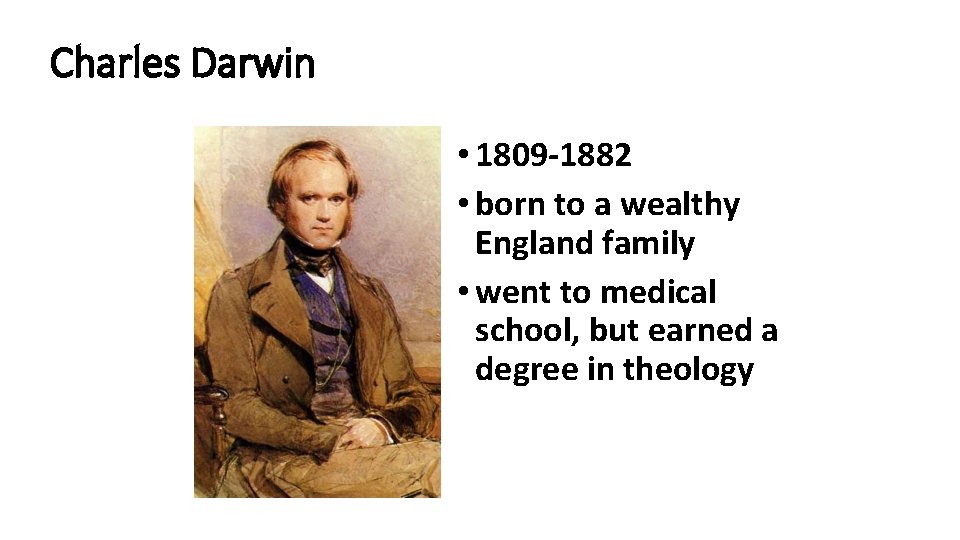
Charles Darwin • 1809 -1882 • born to a wealthy England family • went to medical school, but earned a degree in theology
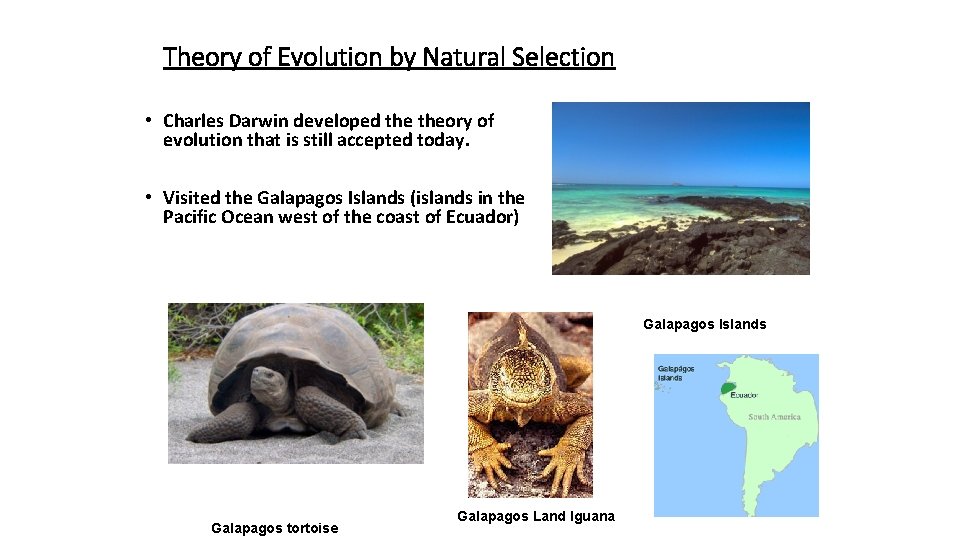
Theory of Evolution by Natural Selection • Charles Darwin developed theory of evolution that is still accepted today. • Visited the Galapagos Islands (islands in the Pacific Ocean west of the coast of Ecuador) Galapagos Islands Galapagos tortoise Galapagos Land Iguana
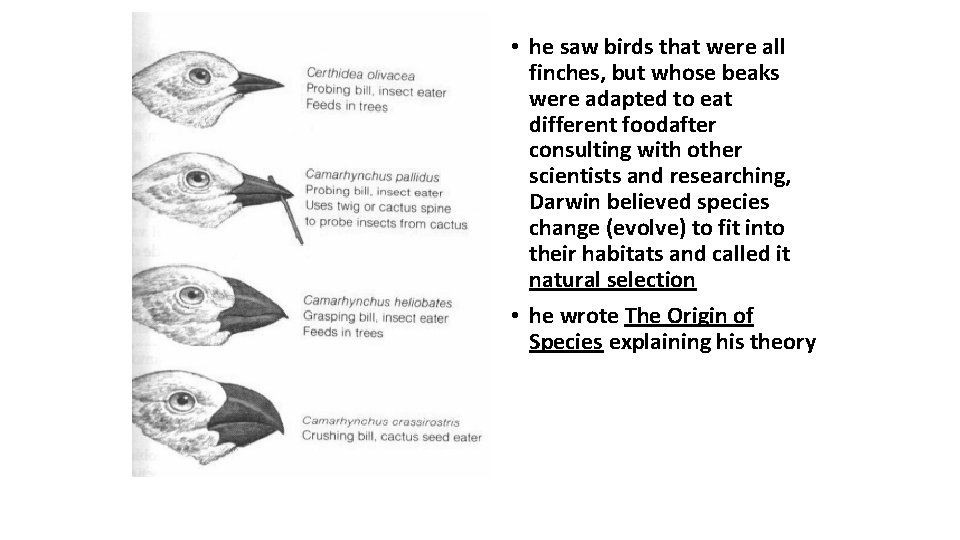
• he saw birds that were all finches, but whose beaks were adapted to eat different foodafter consulting with other scientists and researching, Darwin believed species change (evolve) to fit into their habitats and called it natural selection • he wrote The Origin of Species explaining his theory
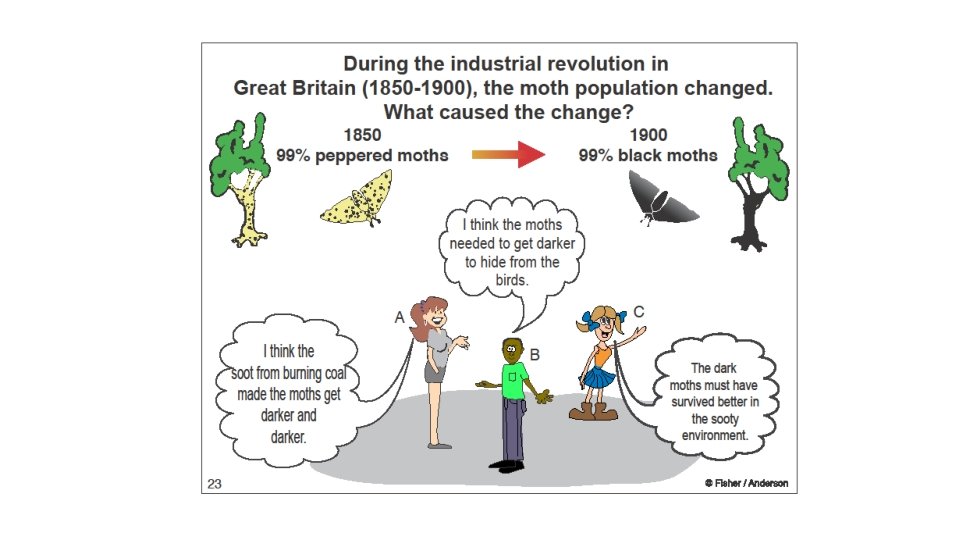
Natural Selection • Occurs because the individual members of a population have different traits which allow them to interact with the environment either more or less effectively than the other members of the population. • results in changes in the inherited traits of a population over time SURVIVAL OF THE FITTEST (SURVIVAL OF THE SEXIEST)
Natural Selection • Improve species “fitness” • 4 principles: • • over production of offspring variation adaptation descent with modification
Fields of Science contributing to scientific evidence • Anatomy • Embryology • Biochemistry • Paleontology https: //www. youtube. com/watch? v=c. Flj. Tj. Jwy 1 k https: //www. youtube. com/watch? v=AYBRb. CLI 4 z. U
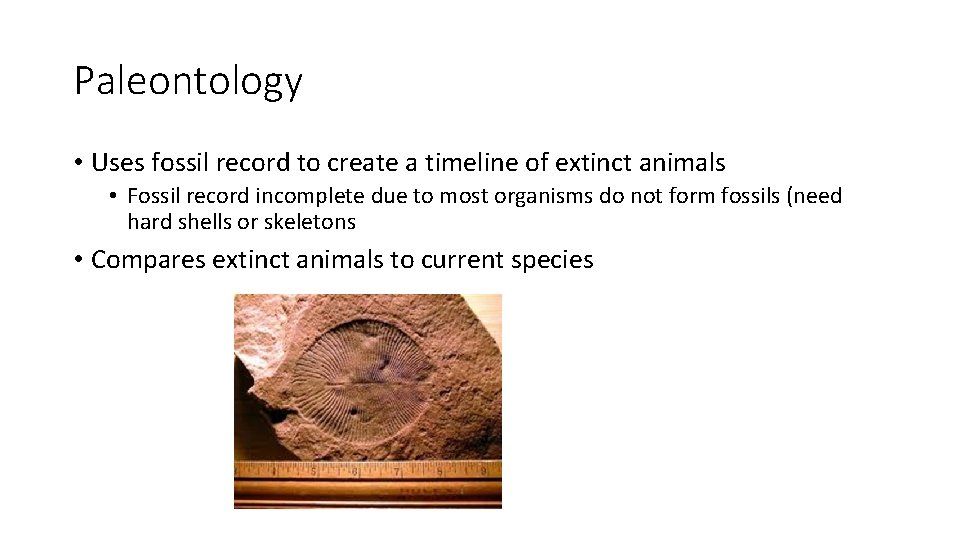
Paleontology • Uses fossil record to create a timeline of extinct animals • Fossil record incomplete due to most organisms do not form fossils (need hard shells or skeletons • Compares extinct animals to current species
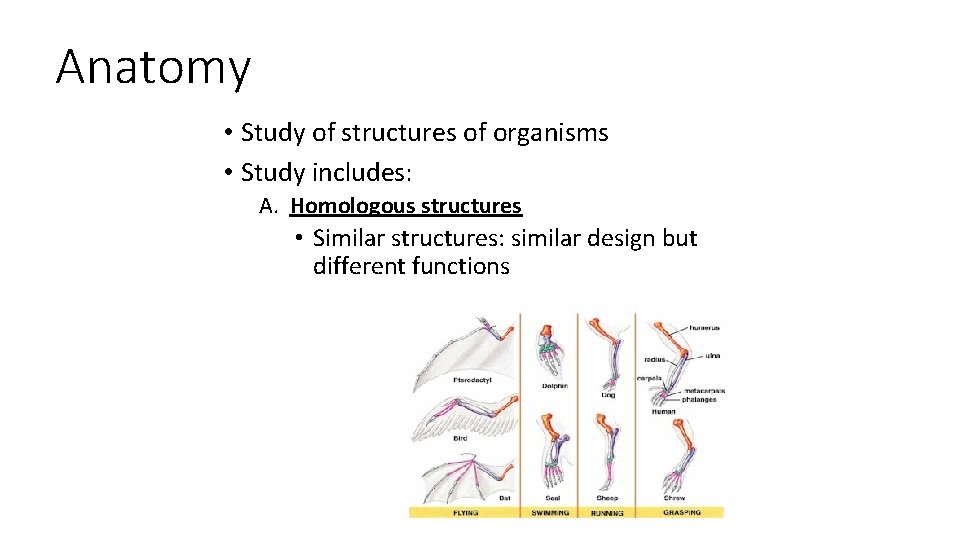
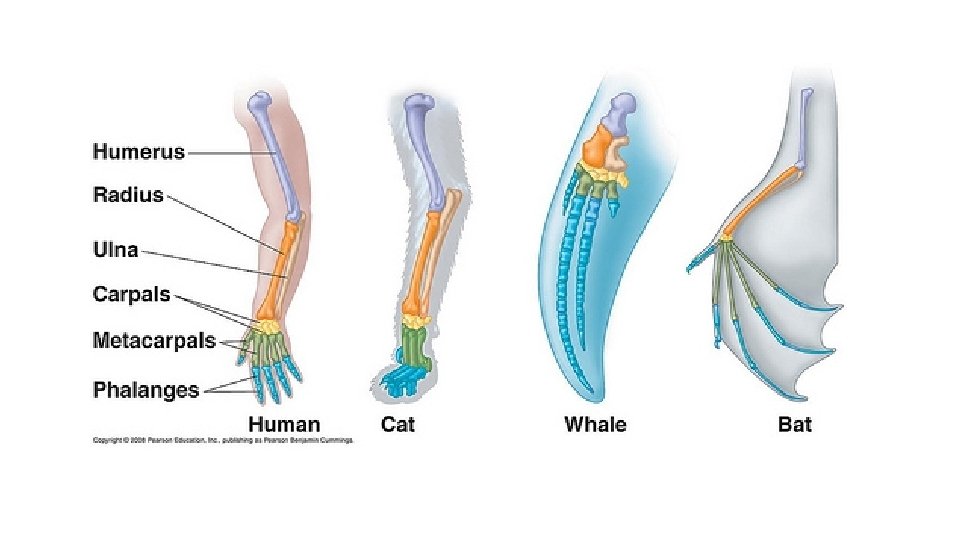
Anatomy • Study of structures of organisms • Study includes: A. Homologous structures • Similar structures: similar design but different functions
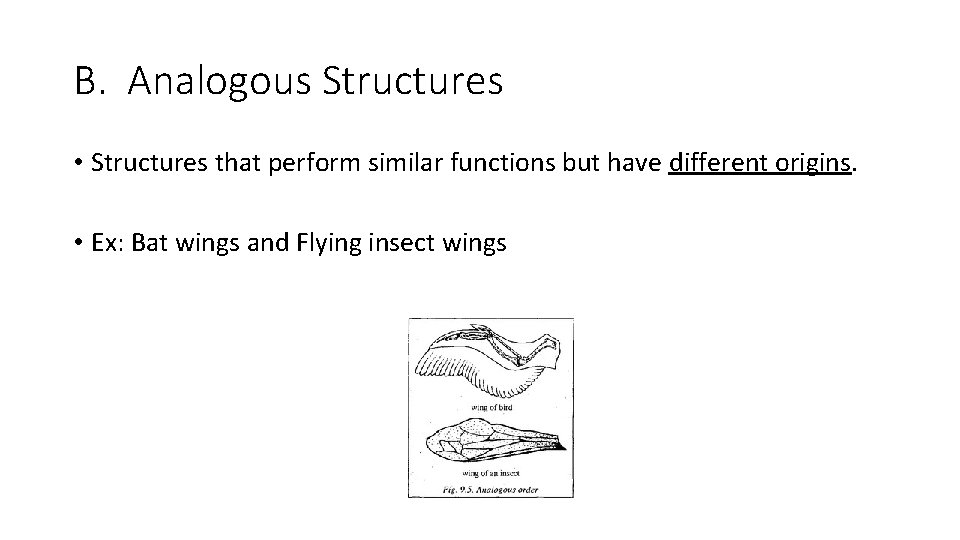
B. Analogous Structures • Structures that perform similar functions but have different origins. • Ex: Bat wings and Flying insect wings
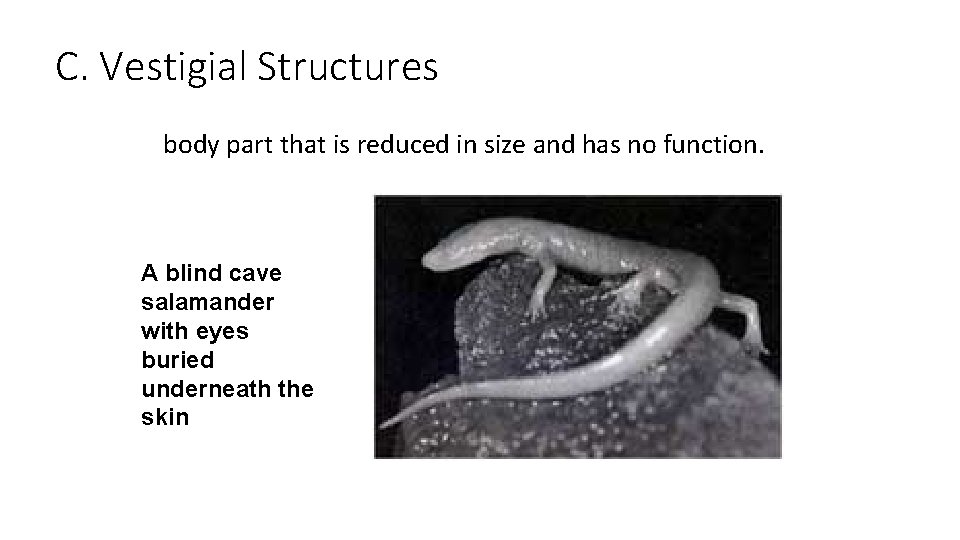
C. Vestigial Structures body part that is reduced in size and has no function. A blind cave salamander with eyes buried underneath the skin
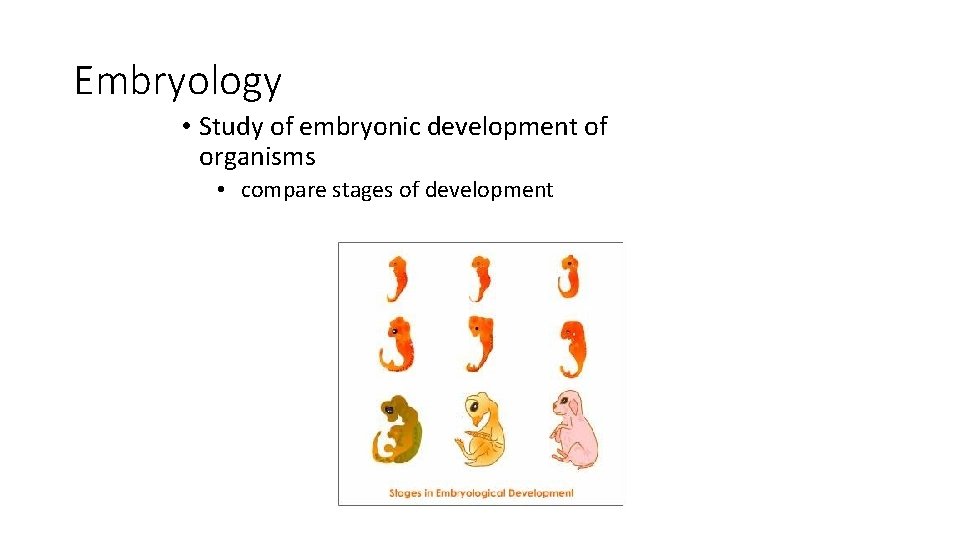
Embryology • Study of embryonic development of organisms • compare stages of development
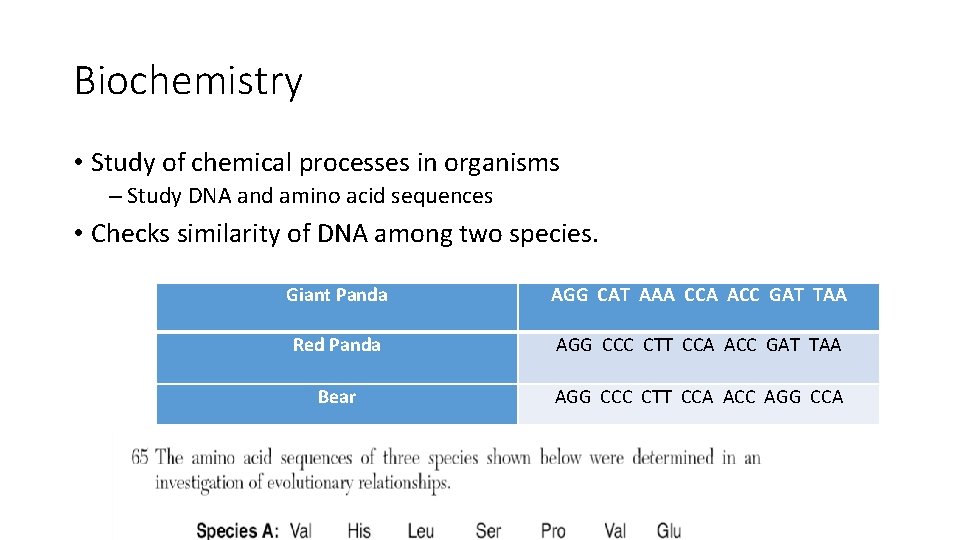
Biochemistry • Study of chemical processes in organisms – Study DNA and amino acid sequences • Checks similarity of DNA among two species. Giant Panda AGG CAT AAA CCA ACC GAT TAA Red Panda AGG CCC CTT CCA ACC GAT TAA Bear AGG CCC CTT CCA ACC AGG CCA
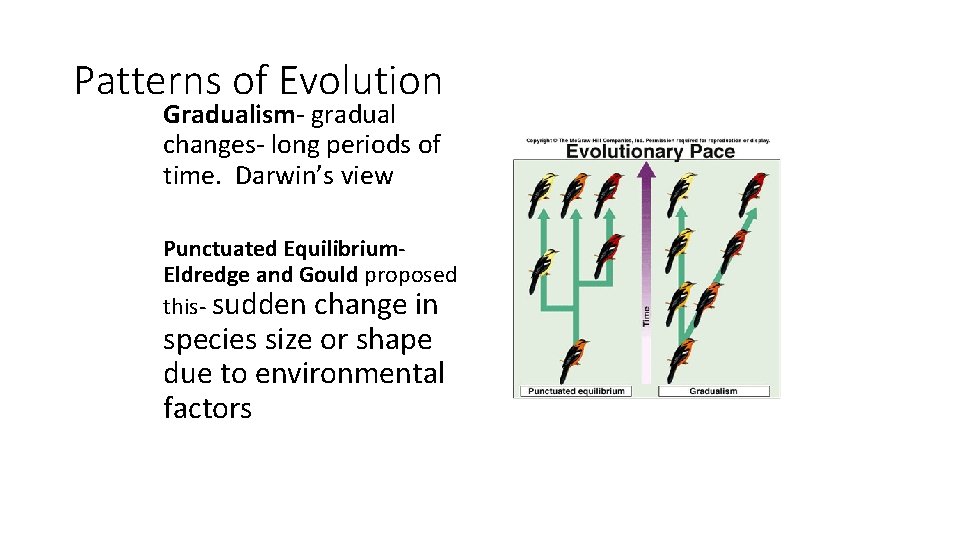
Patterns of Evolution Gradualism- gradual changes- long periods of time. Darwin’s view Punctuated Equilibrium. Eldredge and Gould proposed this- sudden change in species size or shape due to environmental factors
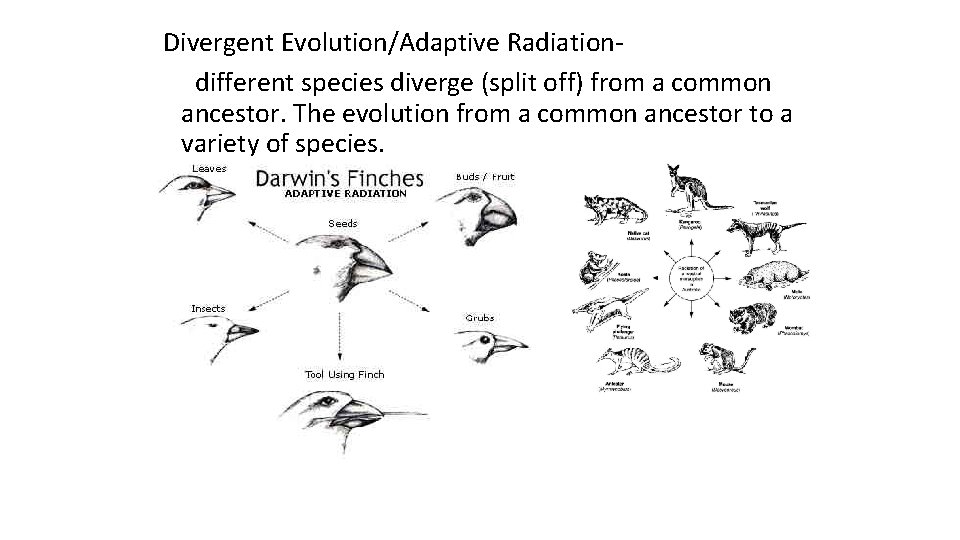
Divergent Evolution/Adaptive Radiationdifferent species diverge (split off) from a common ancestor. The evolution from a common ancestor to a variety of species.
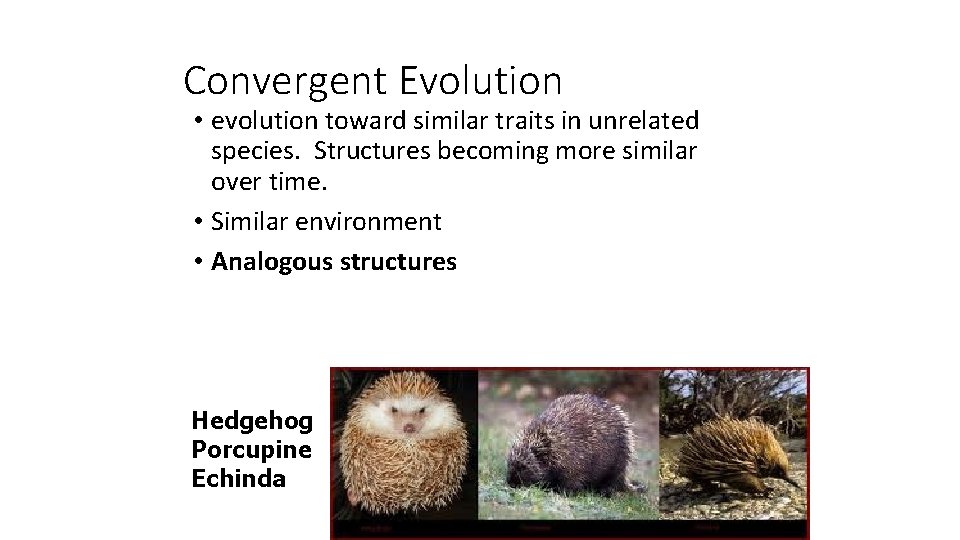
Convergent Evolution • evolution toward similar traits in unrelated species. Structures becoming more similar over time. • Similar environment • Analogous structures Hedgehog Porcupine Echinda
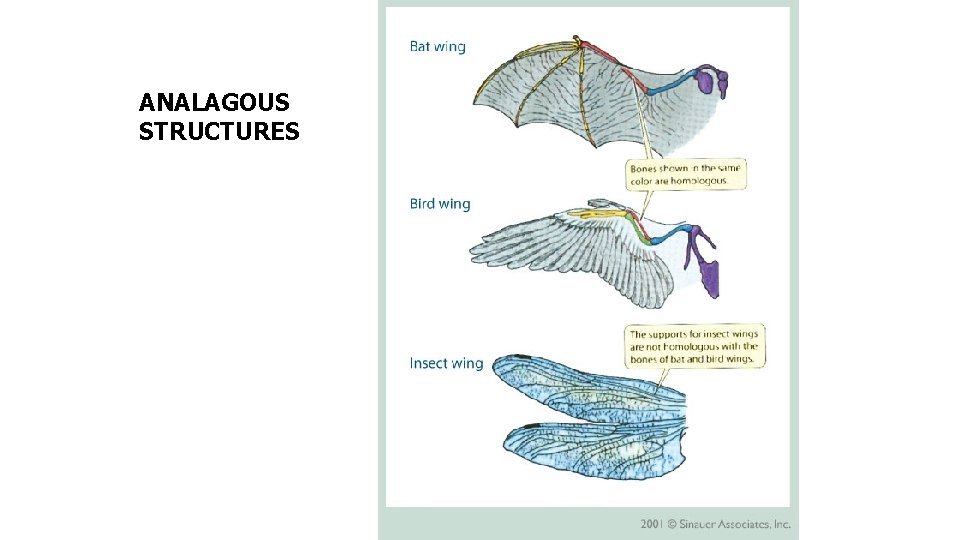
ANALAGOUS STRUCTURES
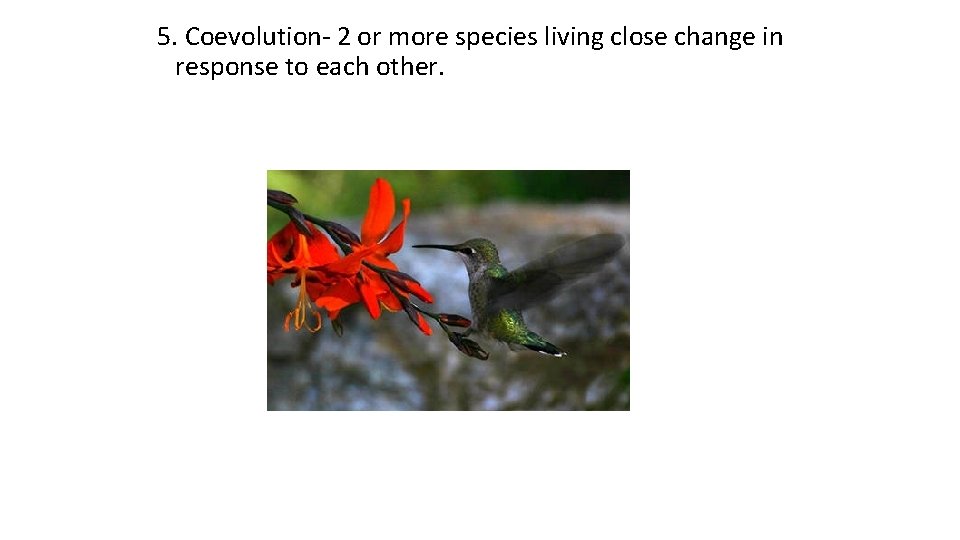
5. Coevolution- 2 or more species living close change in response to each other.
Extinction • Elimination of a species often occurring when a species as a whole cannot adapt to a change in environment • Can be rapid • Mass extinction – catastrophic event changes environment suddenly (volcanic eruption, meteor) • Can be gradual • Slow rate, due to other organisms, climate, or natural disasters
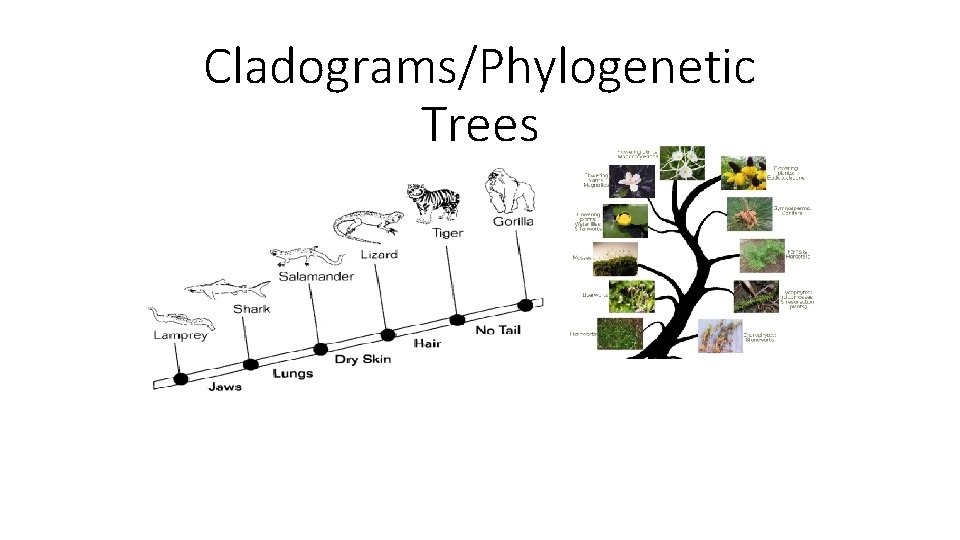
Cladograms/Phylogenetic Trees
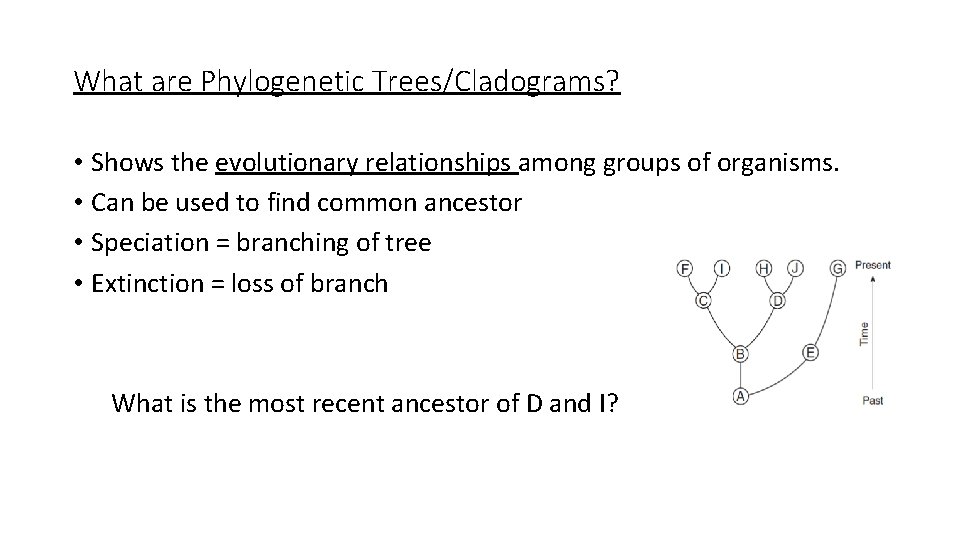
What are Phylogenetic Trees/Cladograms? • Shows the evolutionary relationships among groups of organisms. • Can be used to find common ancestor • Speciation = branching of tree • Extinction = loss of branch What is the most recent ancestor of D and I?
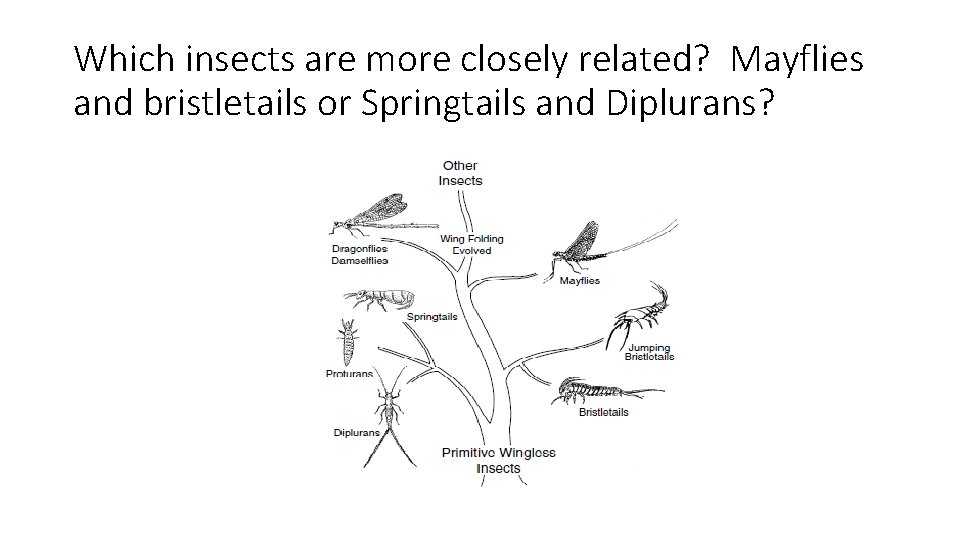
Which insects are more closely related? Mayflies and bristletails or Springtails and Diplurans?
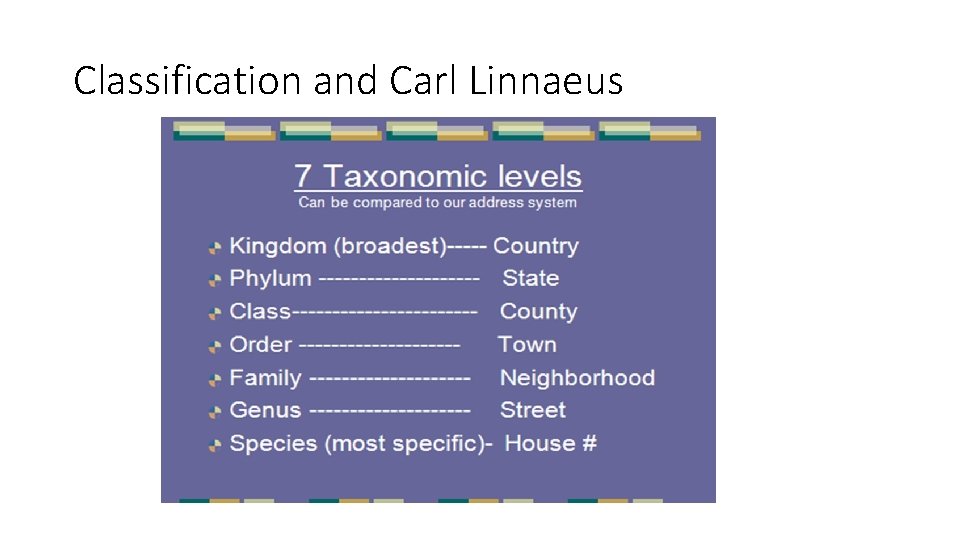
Classification and Carl Linnaeus
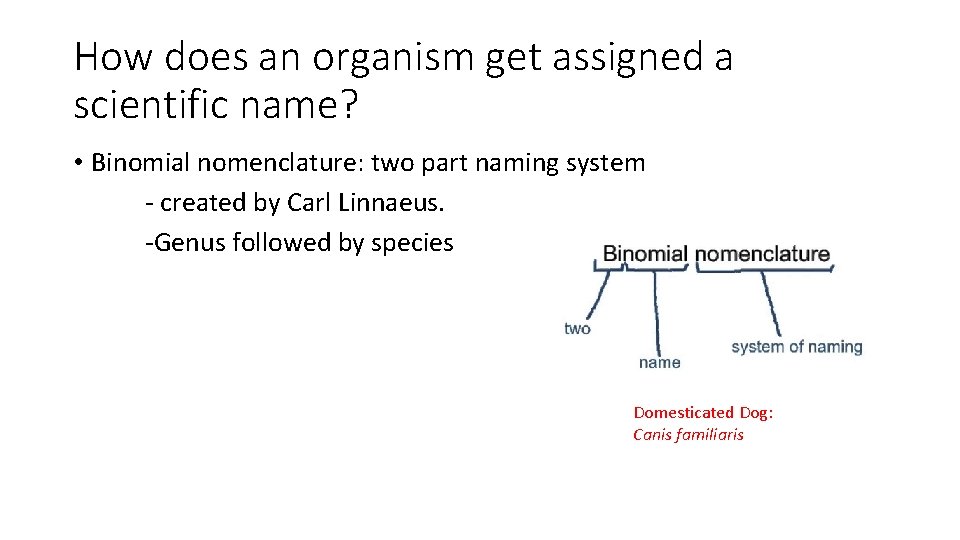
How does an organism get assigned a scientific name? • Binomial nomenclature: two part naming system - created by Carl Linnaeus. -Genus followed by species Domesticated Dog: Canis familiaris
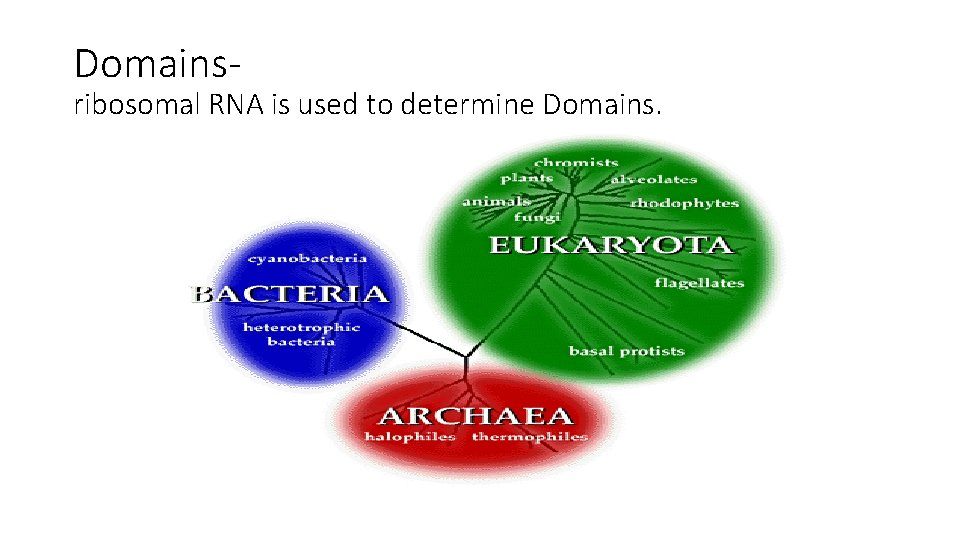
Domains- ribosomal RNA is used to determine Domains.
6 Kingdoms of Living Things • Archaebacteria- PRO • Eubacteria- PRO • Protista- EU • Fungi-EU • Plantae-EU • Animalia-EU
- Slides: 36