
Speciation Rates of Evolution Biology 101 B Reproductive
Speciation & Rates of Evolution Biology 101 B
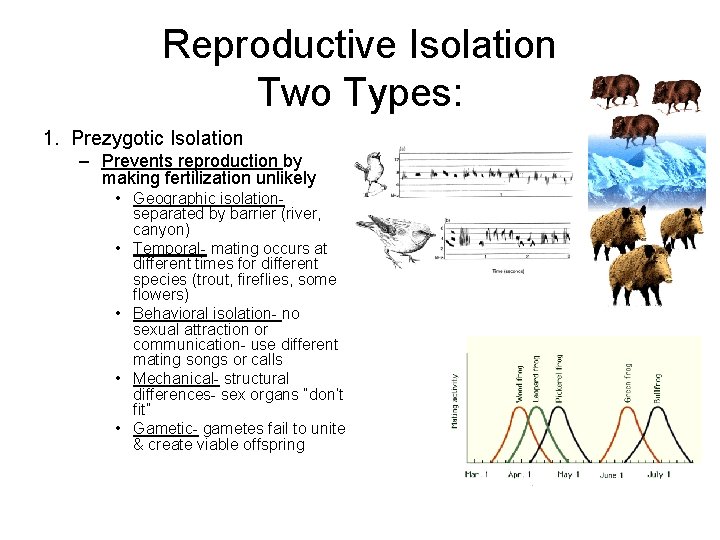
Reproductive Isolation Two Types: 1. Prezygotic Isolation – Prevents reproduction by making fertilization unlikely • Geographic isolationseparated by barrier (river, canyon) • Temporal- mating occurs at different times for different species (trout, fireflies, some flowers) • Behavioral isolation- no sexual attraction or communication- use different mating songs or calls • Mechanical- structural differences- sex organs “don’t fit” • Gametic- gametes fail to unite & create viable offspring
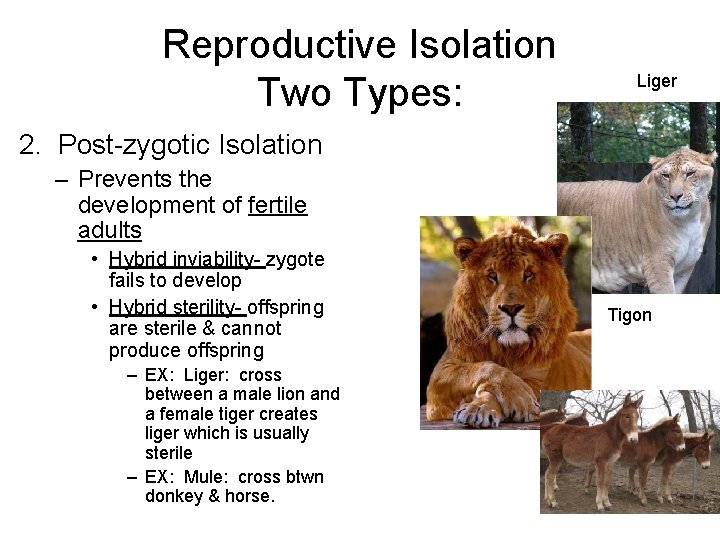
Reproductive Isolation Two Types: Liger 2. Post-zygotic Isolation – Prevents the development of fertile adults • Hybrid inviability- zygote fails to develop • Hybrid sterility- offspring are sterile & cannot produce offspring – EX: Liger: cross between a male lion and a female tiger creates liger which is usually sterile – EX: Mule: cross btwn donkey & horse. Tigon
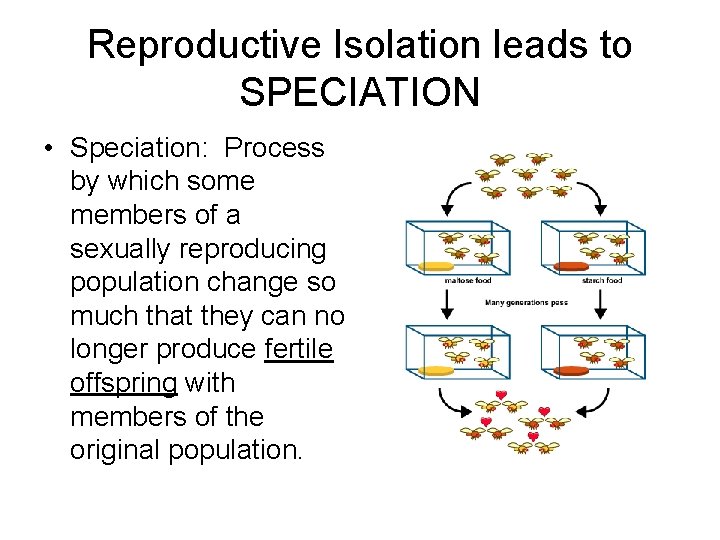
Reproductive Isolation leads to SPECIATION • Speciation: Process by which some members of a sexually reproducing population change so much that they can no longer produce fertile offspring with members of the original population.

Speciation Two Types: • Allopatric Speciation (Geographic isolation) – Physical barrier divides one population into two or more populations – Mountain ranges, channels btwn islands, rivers, canyons, lava flows – 2 different species evolve from same ancestral species – EX: Kaibab squirrel & Abert squirrel separated by Grand Canyon Activity 23. 2 Allopatric Speciation

Speciation Two Types: • Sympatric Speciation – Species evolves into a new species without a physical barrier – Some insects and plants evolve this way – Most likely due to mutation.
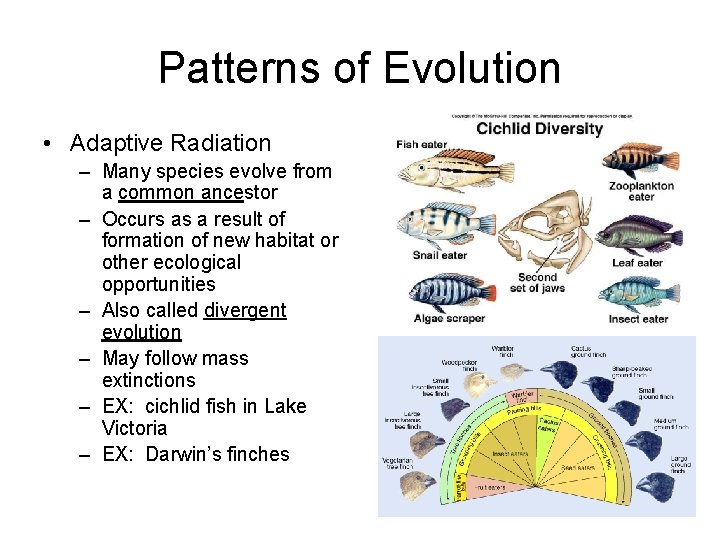
Patterns of Evolution • Adaptive Radiation – Many species evolve from a common ancestor – Occurs as a result of formation of new habitat or other ecological opportunities – Also called divergent evolution – May follow mass extinctions – EX: cichlid fish in Lake Victoria – EX: Darwin’s finches

Patterns of Evolution • Coevolution – Species evolve in close relationships with other species – Mutualism • Ex: flowers & their insect pollinators – Predator-prey • Ex: cheetahs & antelope • Ex: plant chemical defenses & insects
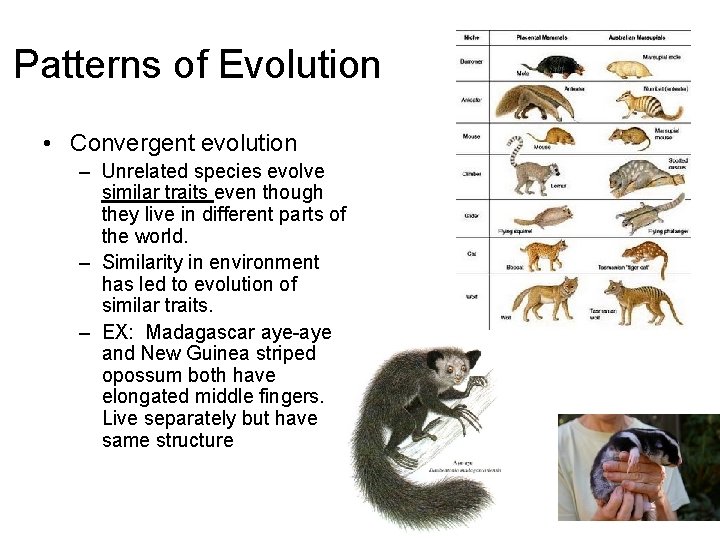
Patterns of Evolution • Convergent evolution – Unrelated species evolve similar traits even though they live in different parts of the world. – Similarity in environment has led to evolution of similar traits. – EX: Madagascar aye-aye and New Guinea striped opossum both have elongated middle fingers. Live separately but have same structure
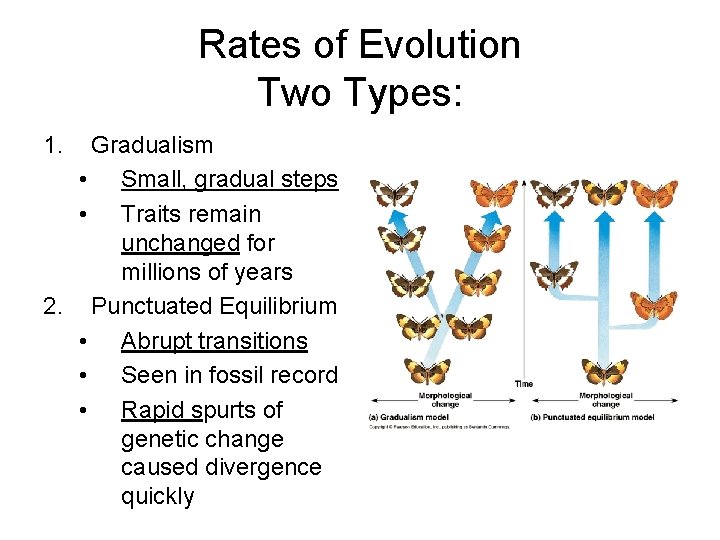
Rates of Evolution Two Types: 1. Gradualism • Small, gradual steps • Traits remain unchanged for millions of years 2. Punctuated Equilibrium • Abrupt transitions • Seen in fossil record • Rapid spurts of genetic change caused divergence quickly
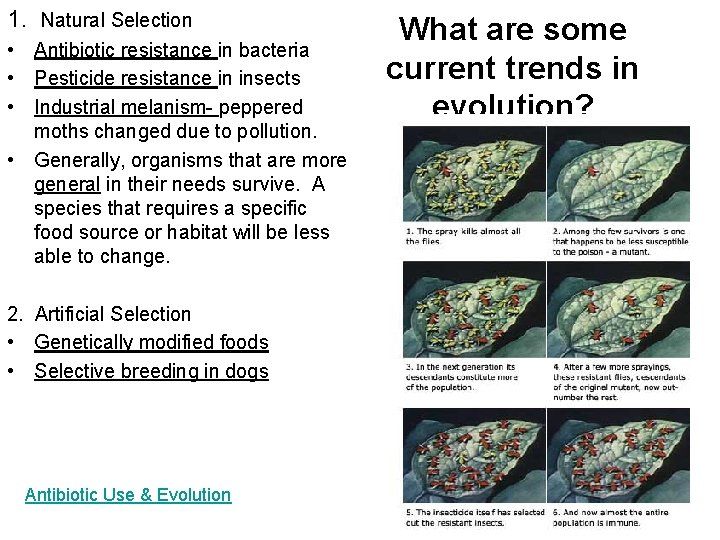
1. Natural Selection • Antibiotic resistance in bacteria • Pesticide resistance in insects • Industrial melanism- peppered moths changed due to pollution. • Generally, organisms that are more general in their needs survive. A species that requires a specific food source or habitat will be less able to change. 2. Artificial Selection • Genetically modified foods • Selective breeding in dogs Antibiotic Use & Evolution What are some current trends in evolution?

HIV and drug resistance • http: //www. pbs. org/wgbh/evolution/library/ 10/4/l_104_10. html
- Slides: 12