
Specialized Cells Cell Origins Page Essential Questions Do

- Slides: 12
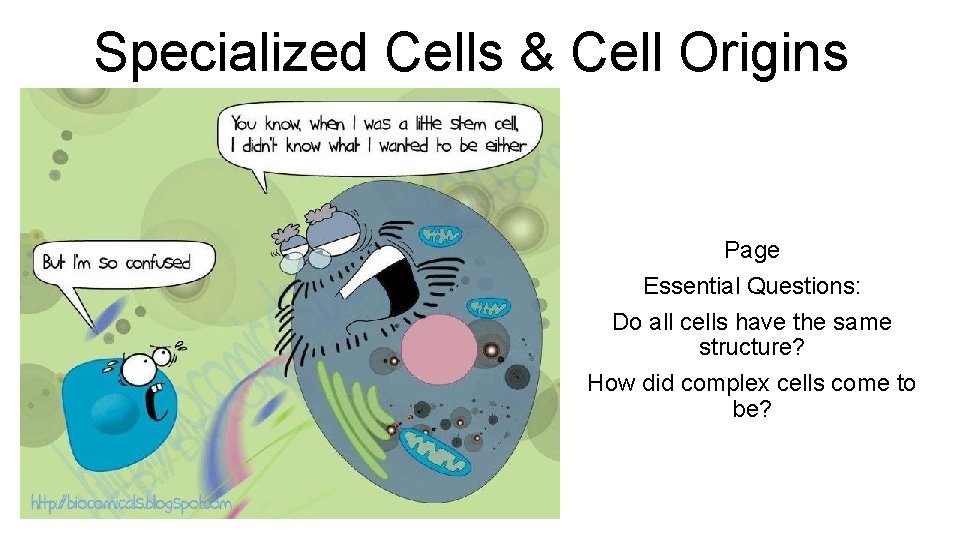
Specialized Cells & Cell Origins Page Essential Questions: Do all cells have the same structure? How did complex cells come to be?
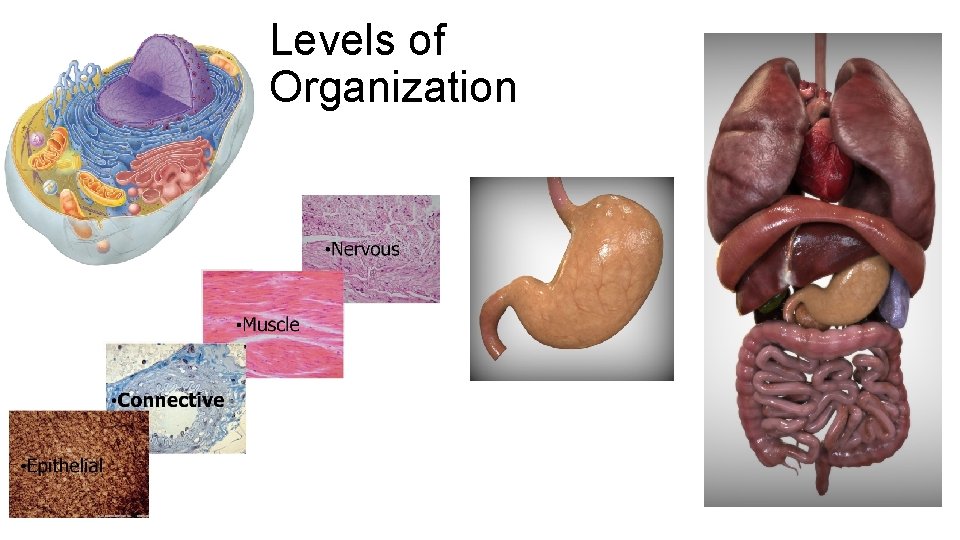
Levels of Organization
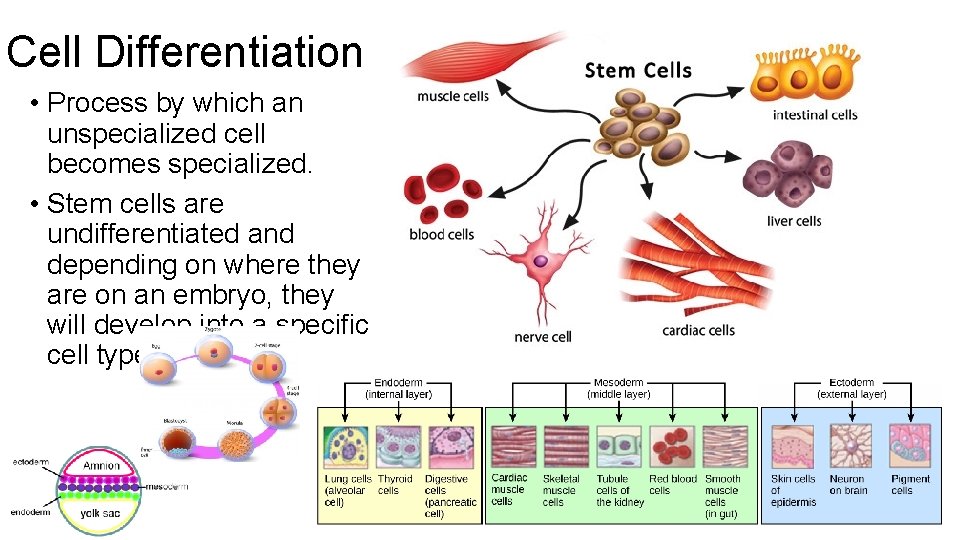
Cell Differentiation • Process by which an unspecialized cell becomes specialized. • Stem cells are undifferentiated and depending on where they are on an embryo, they will develop into a specific cell type.
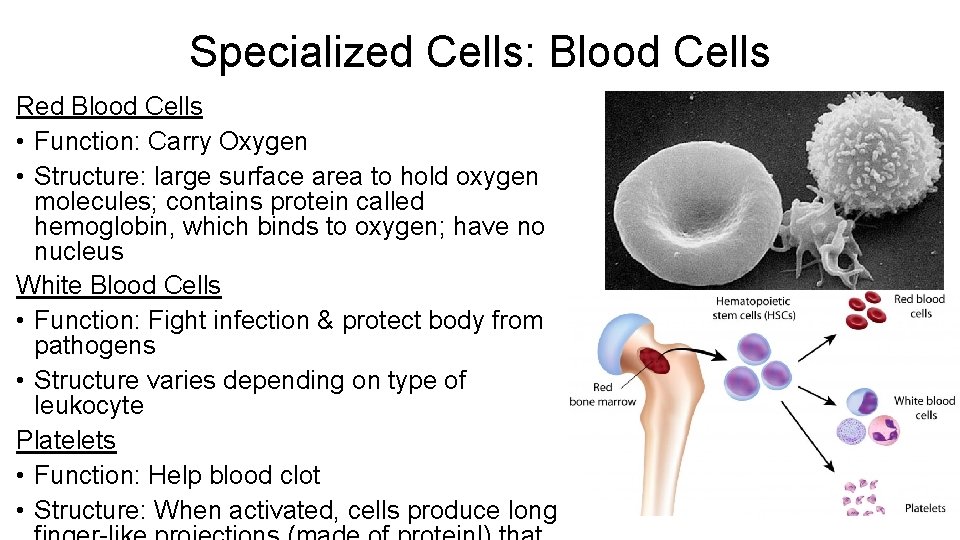
Specialized Cells: Blood Cells Red Blood Cells • Function: Carry Oxygen • Structure: large surface area to hold oxygen molecules; contains protein called hemoglobin, which binds to oxygen; have no nucleus White Blood Cells • Function: Fight infection & protect body from pathogens • Structure varies depending on type of leukocyte Platelets • Function: Help blood clot • Structure: When activated, cells produce long
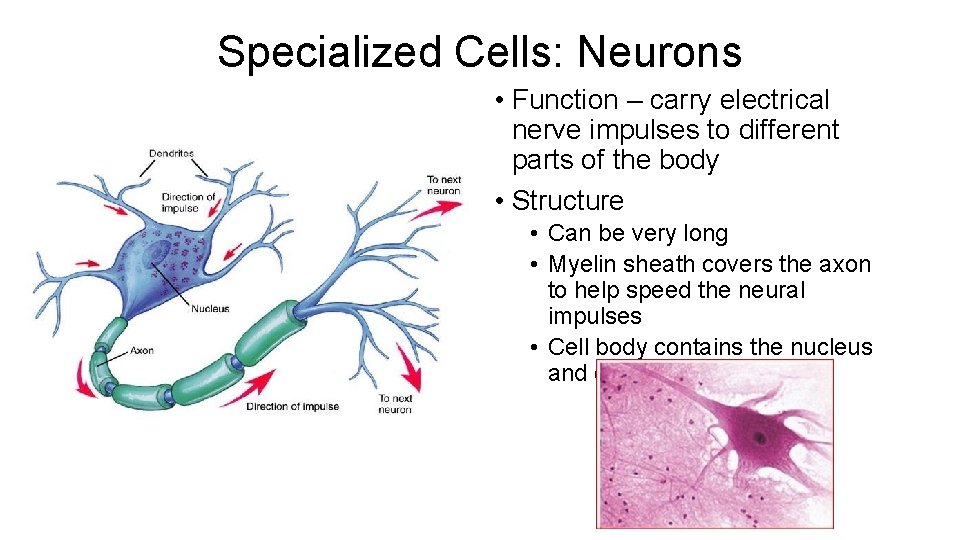
Specialized Cells: Neurons • Function – carry electrical nerve impulses to different parts of the body • Structure • Can be very long • Myelin sheath covers the axon to help speed the neural impulses • Cell body contains the nucleus and other cell organelles
Specialized Cells: Muscle Cells 3 Types of Muscle: Skeletal, Smooth, & Cardiac Function – movement • Skeletal: moves bones • Smooth: moves food via peristalsis • Cardiac: moves blood Structure: long, tubular cells
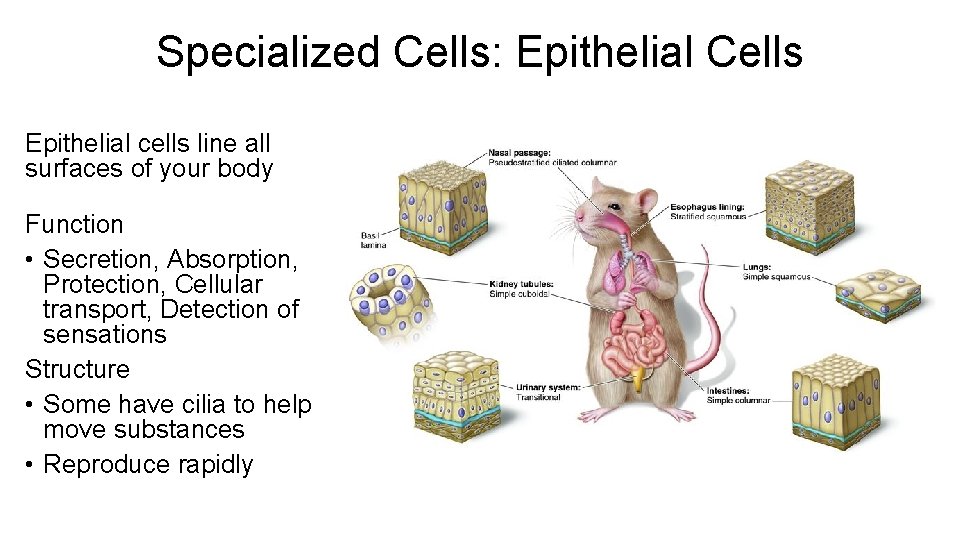
Specialized Cells: Epithelial Cells Epithelial cells line all surfaces of your body Function • Secretion, Absorption, Protection, Cellular transport, Detection of sensations Structure • Some have cilia to help move substances • Reproduce rapidly
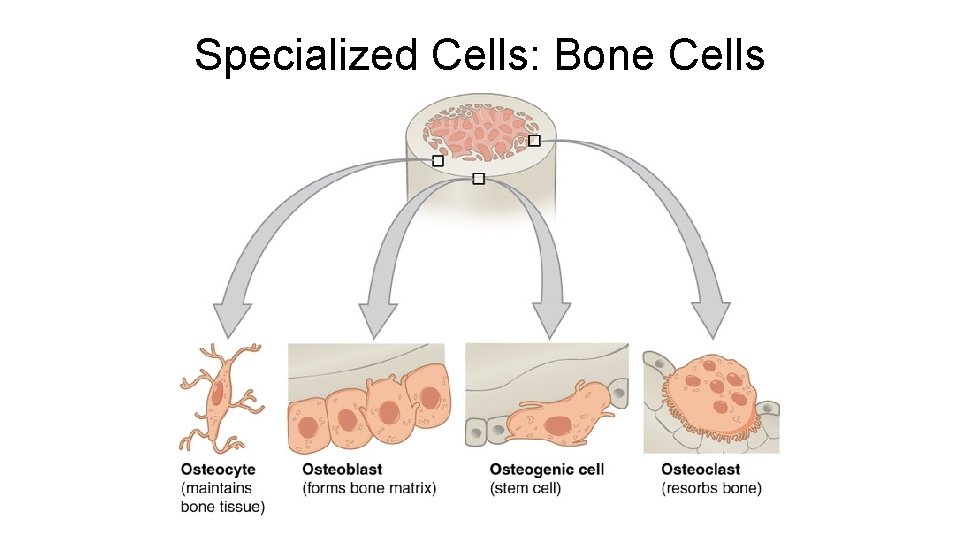
Specialized Cells: Bone Cells
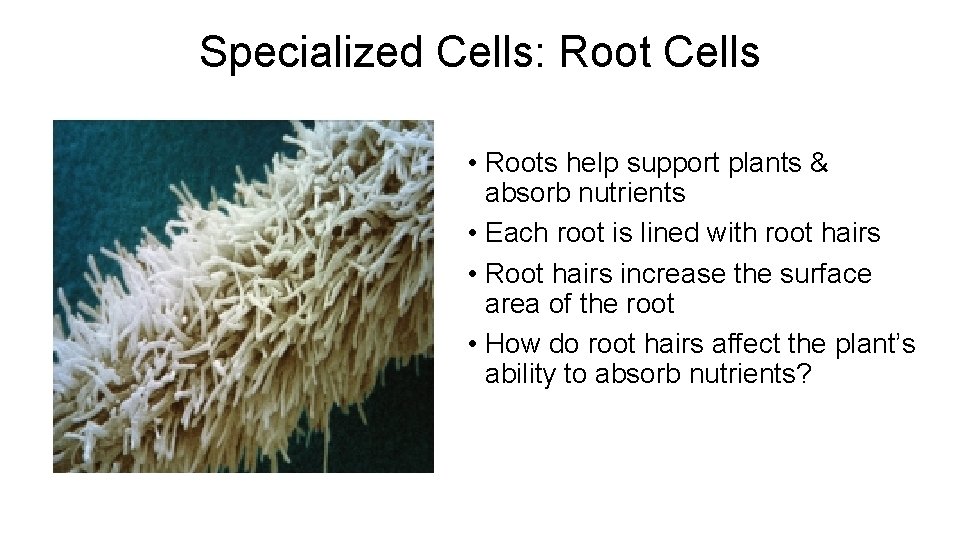
Specialized Cells: Root Cells • Roots help support plants & absorb nutrients • Each root is lined with root hairs • Root hairs increase the surface area of the root • How do root hairs affect the plant’s ability to absorb nutrients?
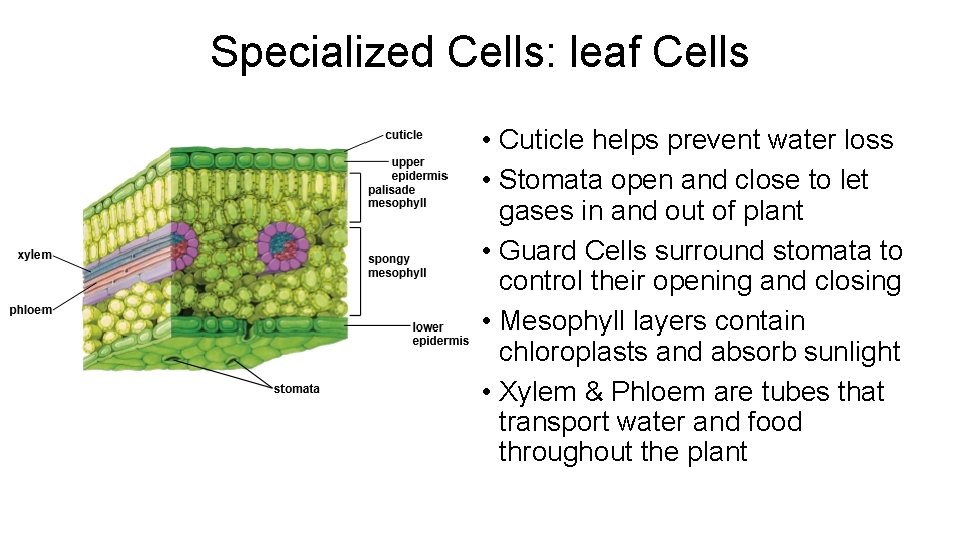
Specialized Cells: leaf Cells • Cuticle helps prevent water loss • Stomata open and close to let gases in and out of plant • Guard Cells surround stomata to control their opening and closing • Mesophyll layers contain chloroplasts and absorb sunlight • Xylem & Phloem are tubes that transport water and food throughout the plant
Where did complex cells come from?
Endosymbiotic Theory • Prokaryotic cells are believed to be the first cells to exist because they are more simple than eukaryotic cells. • Theory that more complex cells arose by one simple cell engulfing another. • Evidence: • Chloroplasts & mitochondria replicate similar to bacteria • Chloroplasts & mitochondria have their own DNA & ribosomes, which are similar to bacteria DNA & ribosomes • Chloroplasts & mitochondria have their own membranes • Believed to be the explanation for how a eukaryotic cell has specialized organelles