
SPECIAL TECHNIQUES Indication For Special Technique Infection Pathology

- Slides: 36
SPECIAL TECHNIQUES
Indication For Special Technique Infection Pathology Trismus Trauma
Nerve Block Techniques Extraoral Maxillary Nerve Block Extraoral Infraorbital Nerve Block Extraoral Mandibular Nerve Block
Nerve Block Techniques Gow-Gates Mandibular Nerve Block Akinosi Closed Mouth Mandibular Nerve Block
Infiltration Techniques Periodontal Ligament Intraosseous Mylohyoid Nerve
Gow-Gates Mandibular Block Developed to improve success rate True mandibular nerve block Has a lower rate of positive aspiration (2% vs. 10%-15% for IAN) Technique dependent
Indication For Special Technique Anatomic variation Complete nerve trunk Selective pulpal / soft tissue anesthesia
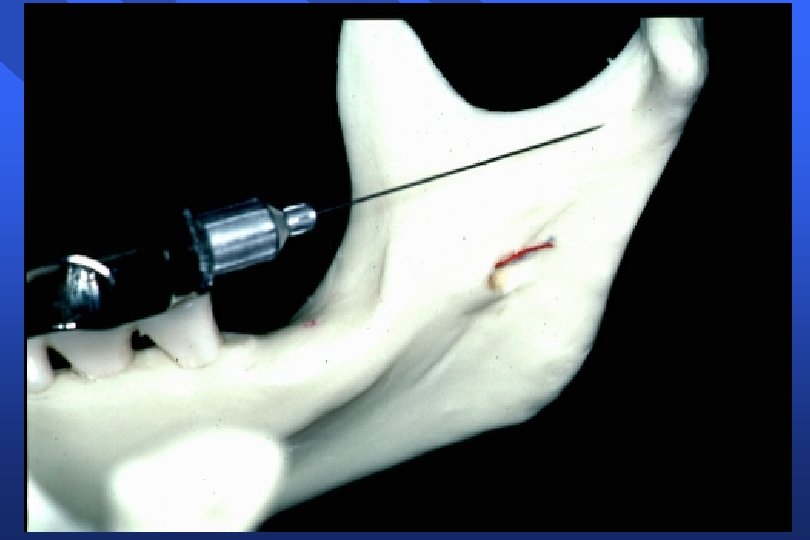
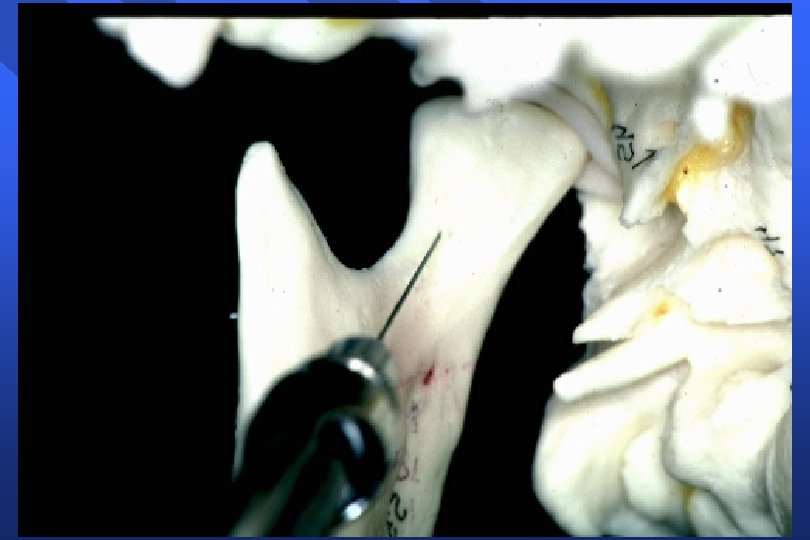
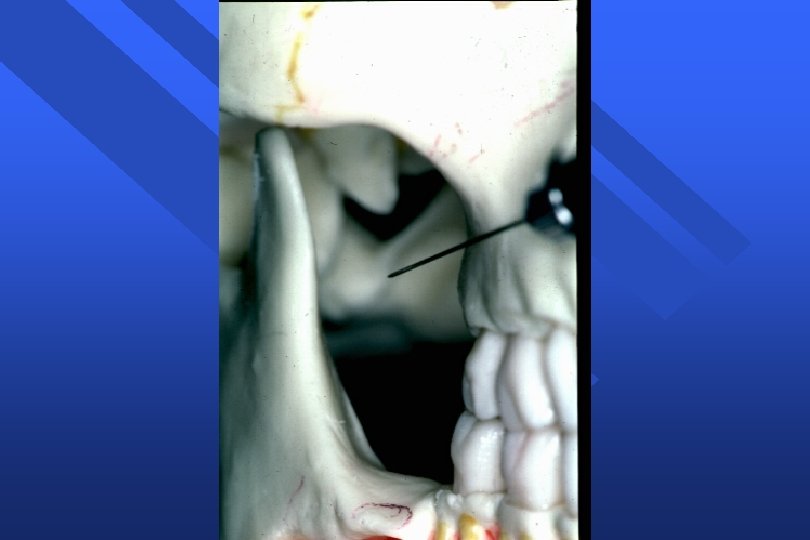
Gow-Gates Mandibular Block Target Area Neck of condyle, below insertion of lateral pterygoid muscle
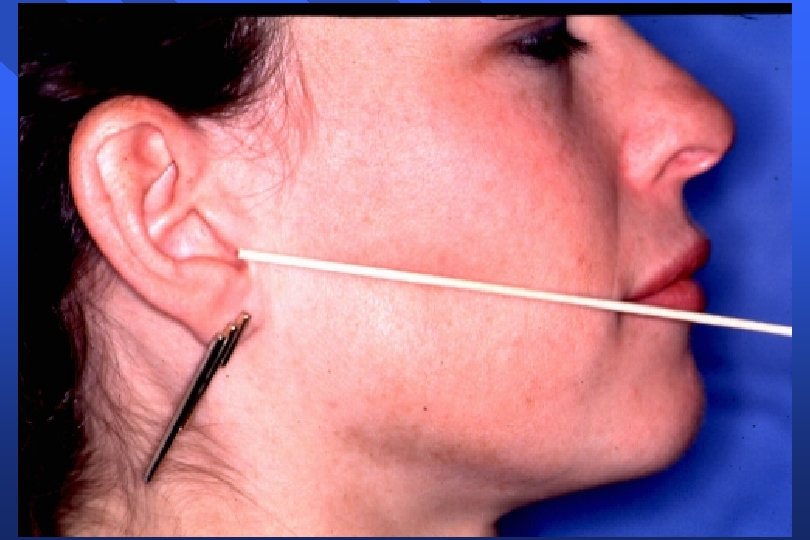
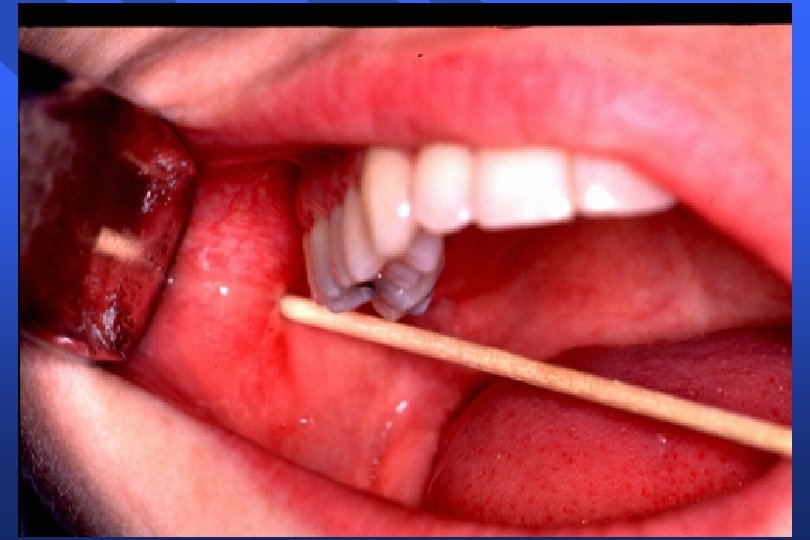
Gow-Gates Mandibular Block Landmarks Mesiolingual cusp of maxillary 2 nd molar Intertragic notch Corner of the mouth
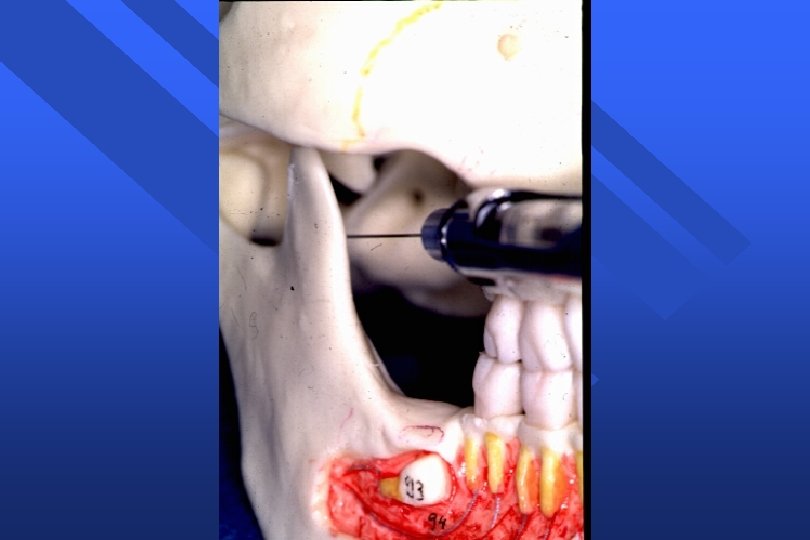
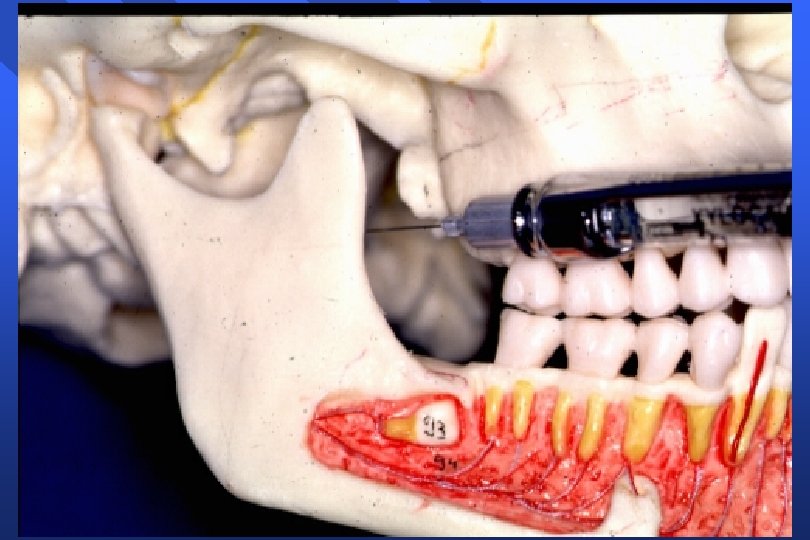
Gow-Gates Mandibular Block Technique Coordinate intraoral & extraoral landmarks Align barrel of syringe over premolars and with extraoral landmarks
Gow-Gates Mandibular Block Technique (cont. ) Penetrate mucosa distil to 2 nd molar Advance needle to bone (avg. 25 mm) Aspirate, deposit 1. 8 ml of solution slowly
Gow-Gates Mandibular Block Technique (cont. ) Patient’s mouth must be fully open during injection and for 1 -2 mins afterward May require reinforcement with second injection
Gow-Gates Mandibular Block Complications Hematoma (< 2%) Trismus
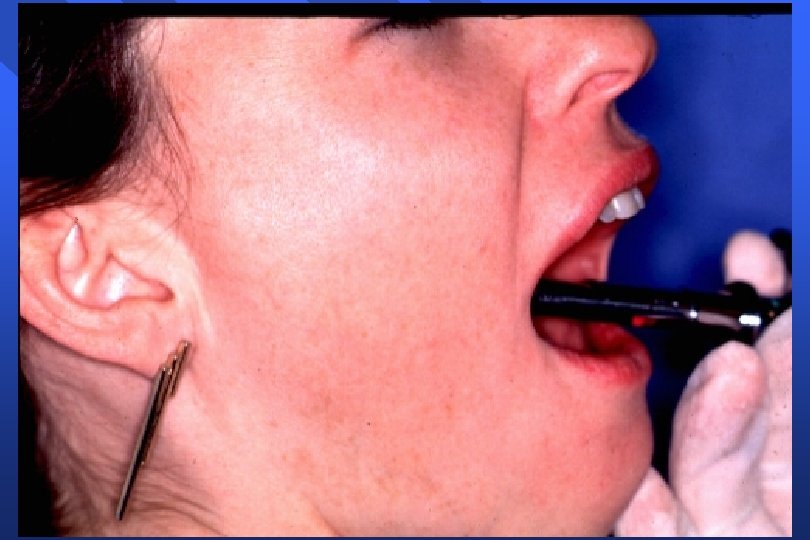
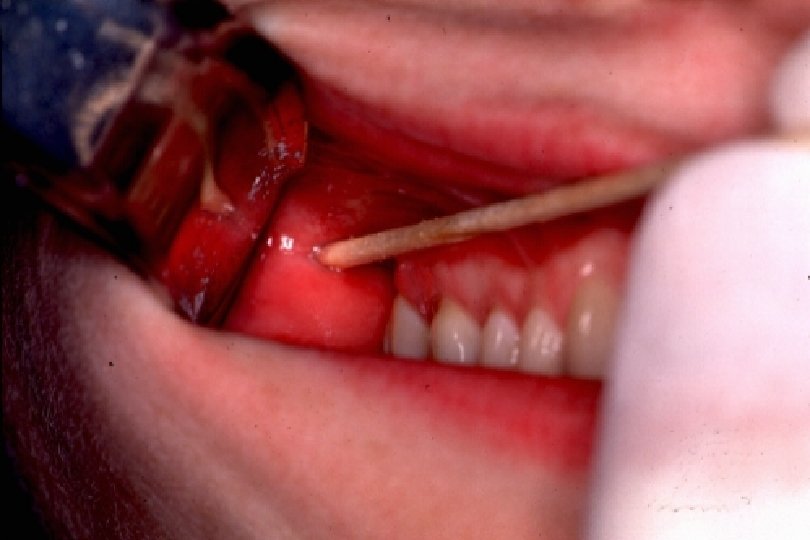
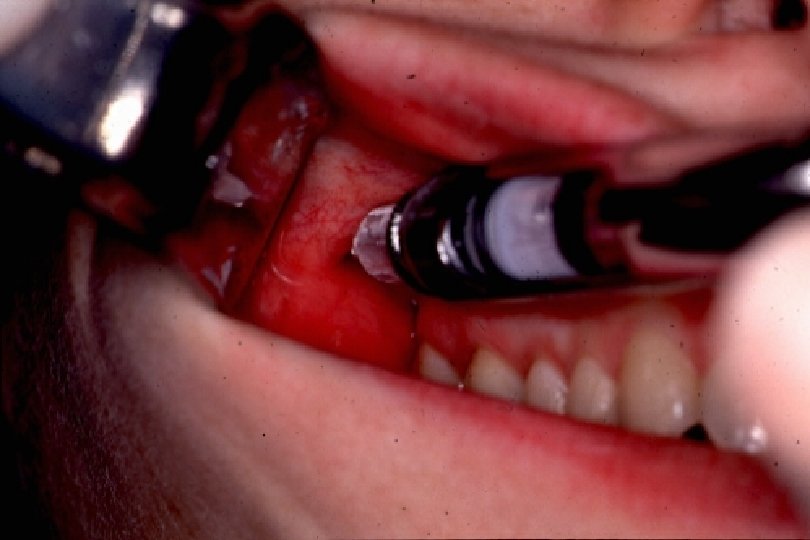
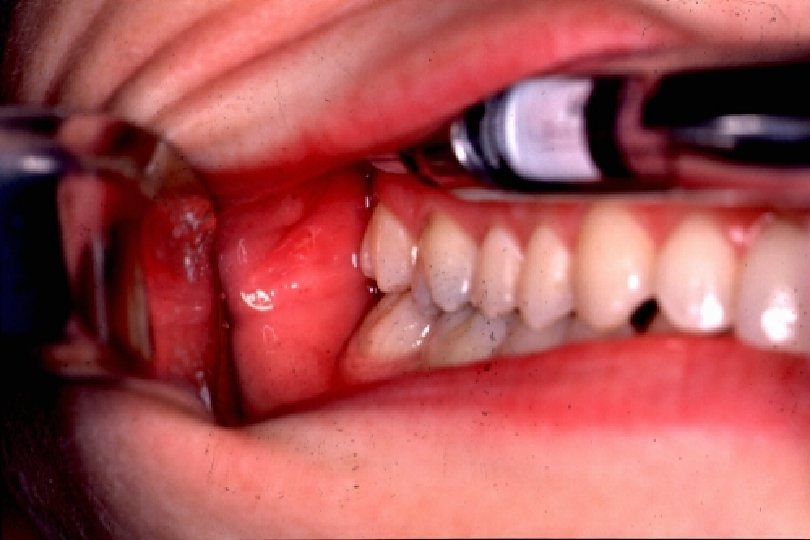
Akinosi Closed Mouth Mandibular Block Alternative for mandibular block when limited opening is present ( eg. trismus, closed lock, etc. . )
Akinosi Closed Mouth Mandibular Block Advantages Not necessary to open widely High success rate Relatively atraumatic Few complications, few positive aspirations
Akinosi Closed Mouth Mandibular Block Disadvantages Visualization of path and depth of insertion is difficult No bony contact Traumatic if needle hits periosteum
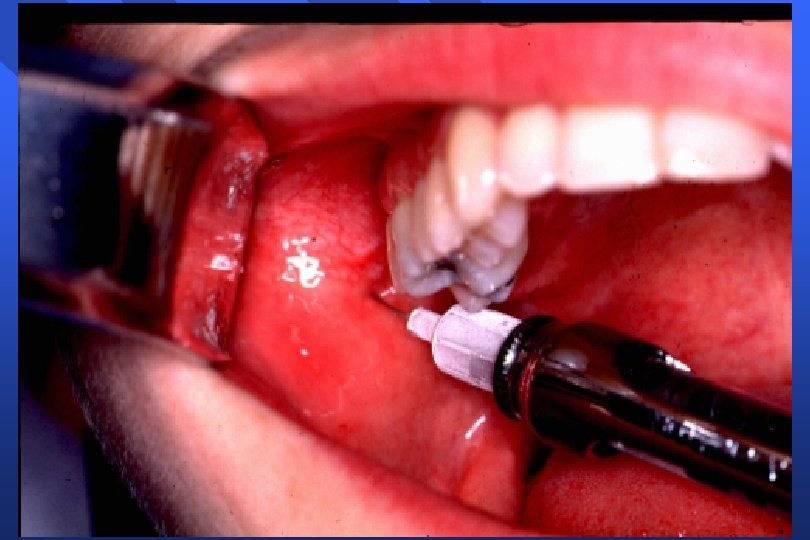
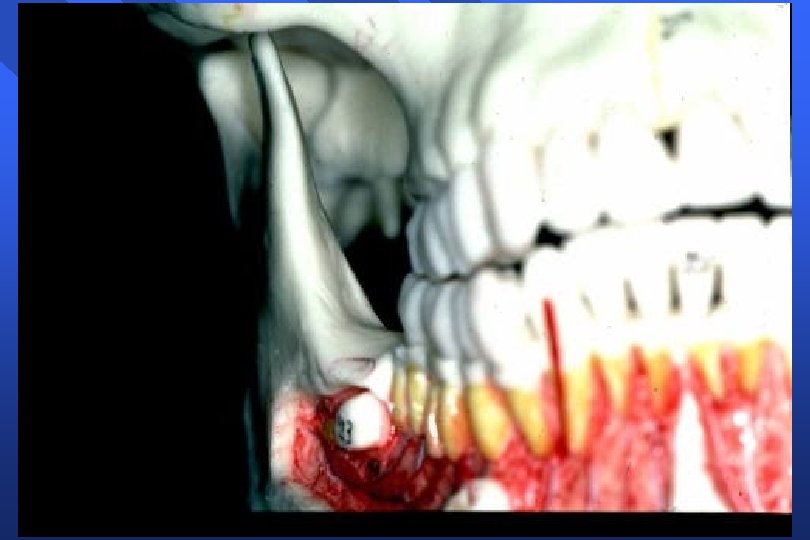
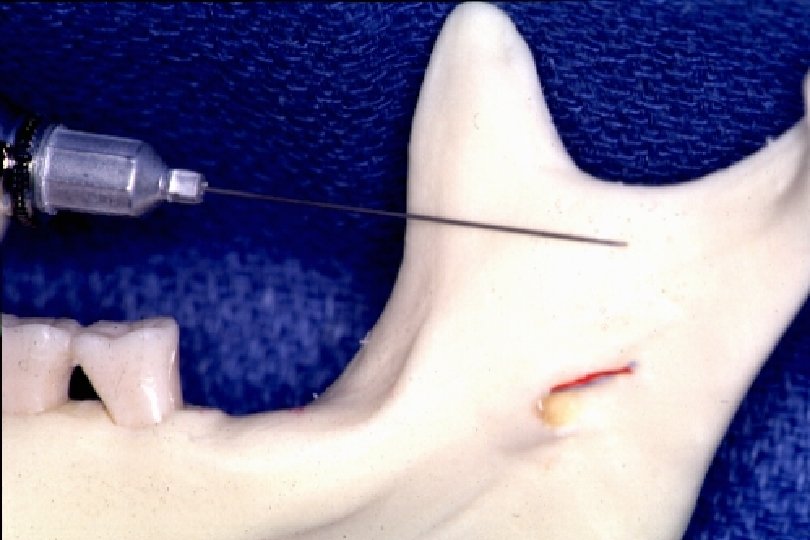
Akinosi Closed Mouth Mandibular Block Target Area Soft tissue medial to ramus Above foramen, below condyle Landmarks Mucogingival junction of maxillary 2 nd or 3 rd molar Maxillary tuberosity
Akinosi Closed Mouth Mandibular Block Area of insertion Soft tissue overlying medial ramus, adjacent to tuberosity At height of mucogingival junction of maxillary 2 nd or 3 rd molar
Akinosi Closed Mouth Mandibular Block Technique Retract soft tissues, have patient occlude Apply topical Penetrate to 25 mm, parallel to maxillary occlusal plane, in a posterior and lateral direction
Akinosi Closed Mouth Mandibular Block Technique (cont. ) Aspirate, deposit 1. 8 ml slowly Motor paralysis will develop first, allowing patient to open more widely
Akinosi Closed Mouth Mandibular Block Complications Hematoma (<10%) Facial nerve paralysis (Bell’s Palsy) Trismus (rare)
Akinosi Closed Mouth Mandibular Block Failures of anesthesia Lateral flaring of mandible Insertion too low Penetration too deep or shallow (adjust for patient size)