
Special Stain Cytochemical Reactions in Acute Leukemia Cytochemical


![Periodic Acid – Schiff [PAS] Reaction: Purpose: Diagnosis of some acute lymphocytic leukemia subtypes](https://slidetodoc.com/presentation_image/d96d6639166117ecbde9493ee893ce6f/image-21.jpg "Periodic Acid – Schiff [PAS] Reaction: Purpose: Diagnosis of some acute lymphocytic leukemia subtypes")
![Periodic Acid – Schiff [PAS] Reaction Giant multinucleate late normoblasts (left). Granular PAS positivity](https://slidetodoc.com/presentation_image/d96d6639166117ecbde9493ee893ce6f/image-22.jpg "Periodic Acid – Schiff [PAS] Reaction Giant multinucleate late normoblasts (left). Granular PAS positivity")
- Slides: 27
Special Stain
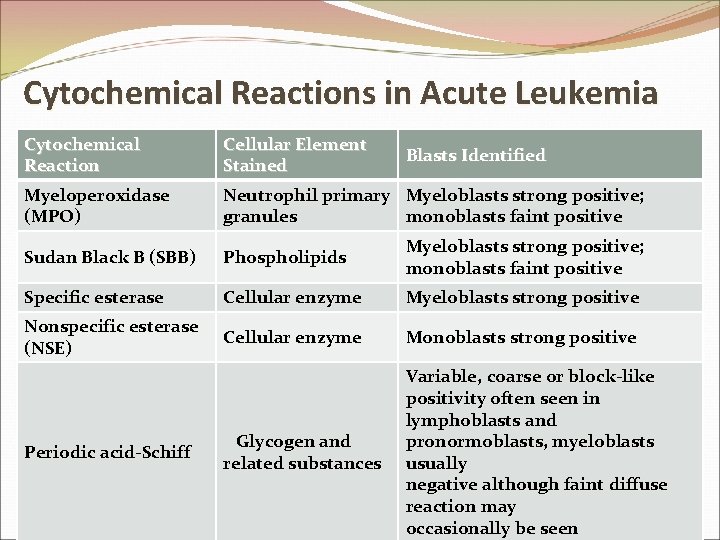
Cytochemical Reactions in Acute Leukemia Cytochemical Reaction Cellular Element Stained Myeloperoxidase (MPO) Neutrophil primary Myeloblasts strong positive; granules monoblasts faint positive Sudan Black B (SBB) Phospholipids Myeloblasts strong positive; monoblasts faint positive Specific esterase Cellular enzyme Myeloblasts strong positive Nonspecific esterase (NSE) Cellular enzyme Monoblasts strong positive Glycogen and related substances Variable, coarse or block-like positivity often seen in lymphoblasts and pronormoblasts, myeloblasts usually negative although faint diffuse reaction may occasionally be seen Periodic acid-Schiff Blasts Identified
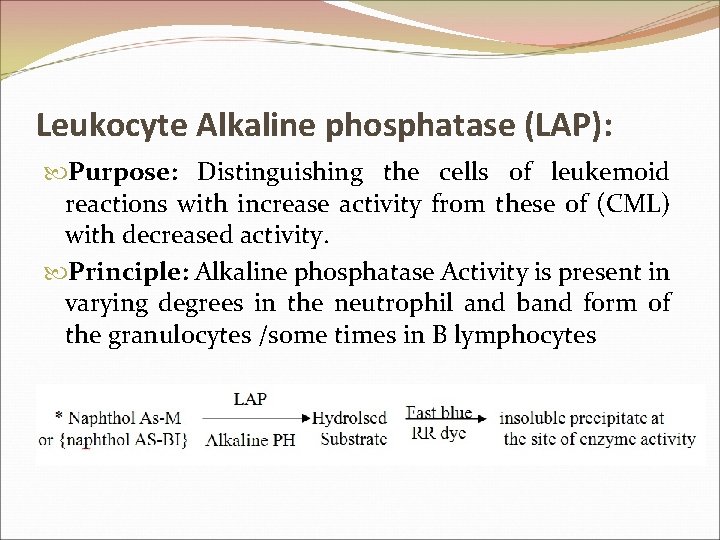
Leukocyte Alkaline phosphatase (LAP): Purpose: Distinguishing the cells of leukemoid reactions with increase activity from these of (CML) with decreased activity. Principle: Alkaline phosphatase Activity is present in varying degrees in the neutrophil and band form of the granulocytes /some times in B lymphocytes
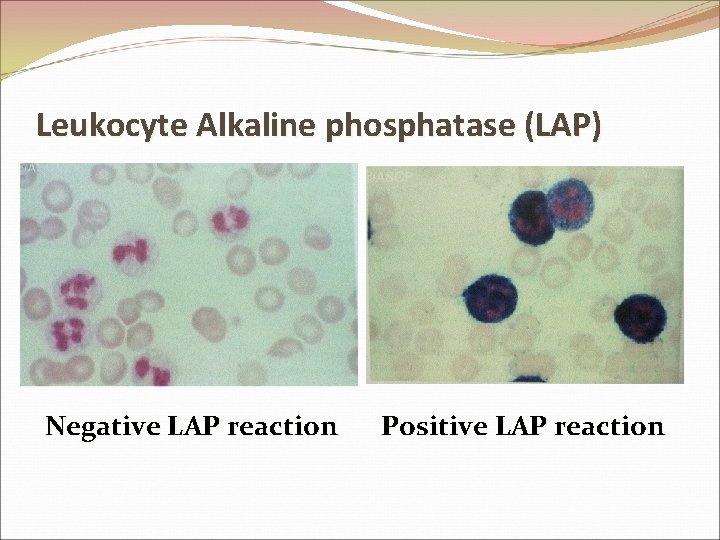
Leukocyte Alkaline phosphatase (LAP) Negative LAP reaction Positive LAP reaction
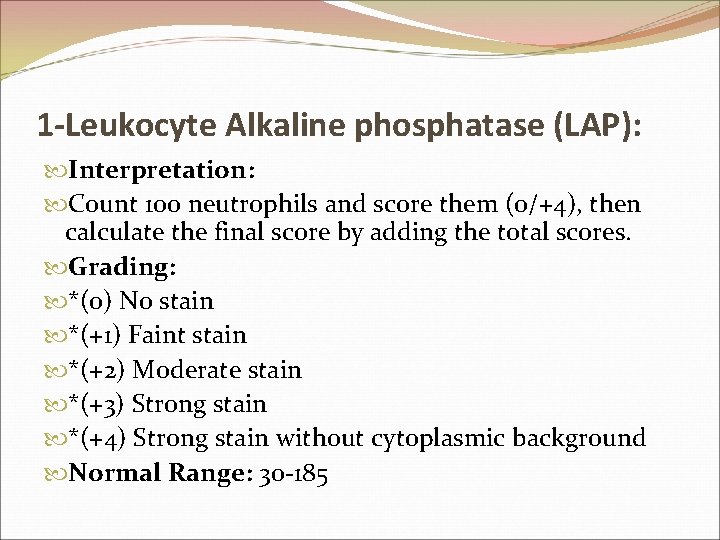
1 -Leukocyte Alkaline phosphatase (LAP): Interpretation: Count 100 neutrophils and score them (0/+4), then calculate the final score by adding the total scores. Grading: *(0) No stain *(+1) Faint stain *(+2) Moderate stain *(+3) Strong stain *(+4) Strong stain without cytoplasmic background Normal Range: 30 -185
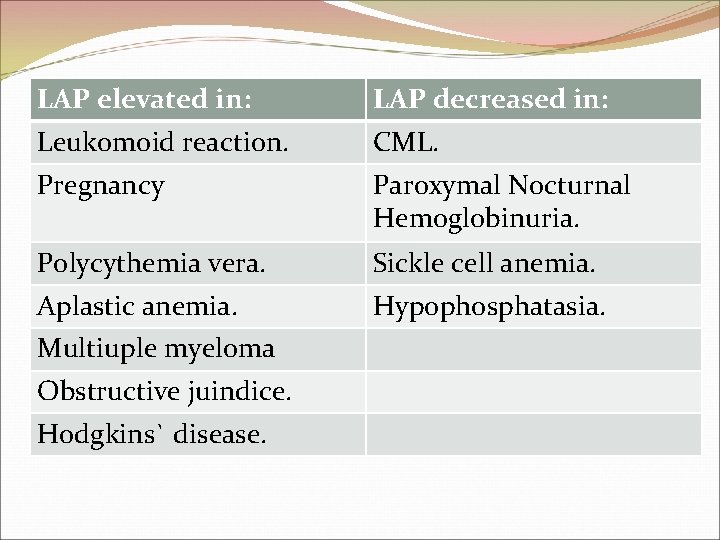
LAP elevated in: LAP decreased in: Leukomoid reaction. CML. Pregnancy Paroxymal Nocturnal Hemoglobinuria. Polycythemia vera. Sickle cell anemia. Aplastic anemia. Hypophosphatasia. Multiuple myeloma Obstructive juindice. Hodgkins` disease.
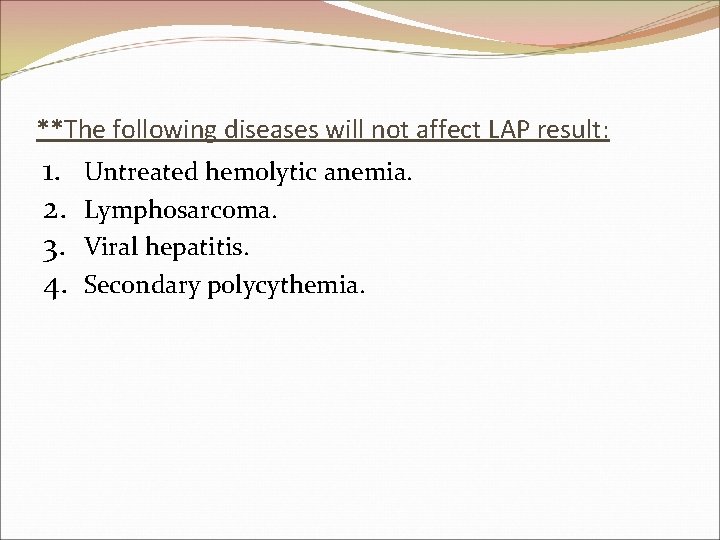
**The following diseases will not affect LAP result: 1. 2. 3. 4. Untreated hemolytic anemia. Lymphosarcoma. Viral hepatitis. Secondary polycythemia.
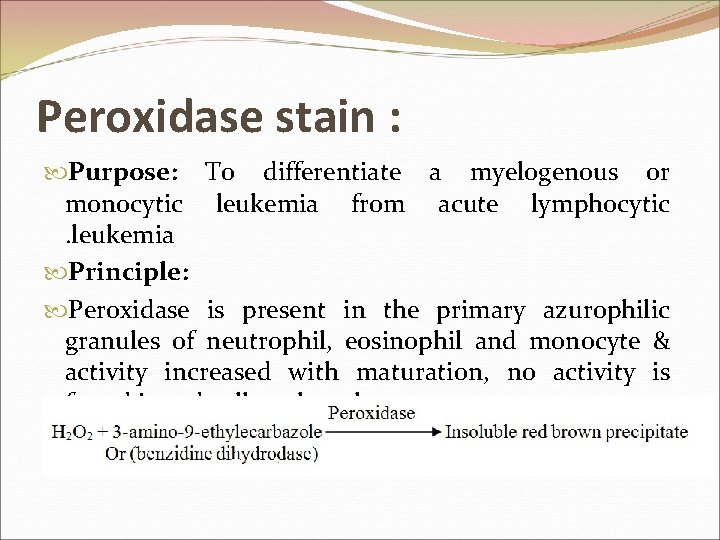
Peroxidase stain : Purpose: To differentiate a myelogenous or monocytic leukemia from acute lymphocytic. leukemia Principle: Peroxidase is present in the primary azurophilic granules of neutrophil, eosinophil and monocyte & activity increased with maturation, no activity is found in red cells or lymphocytes.
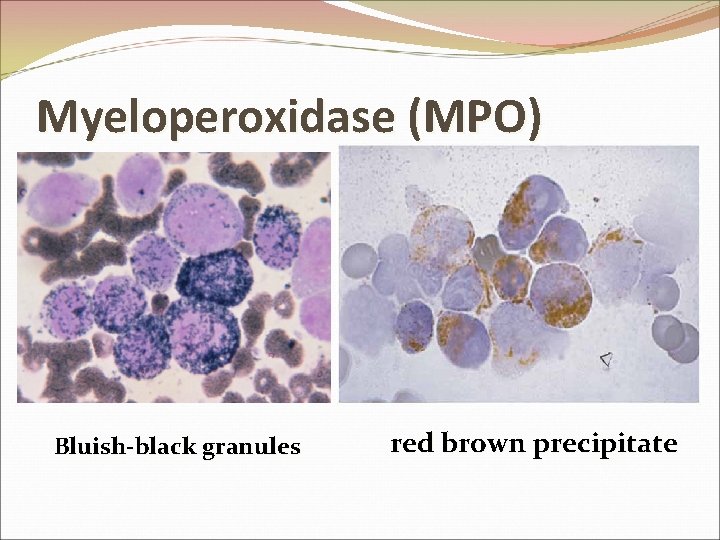
Myeloperoxidase (MPO) Bluish-black granules red brown precipitate
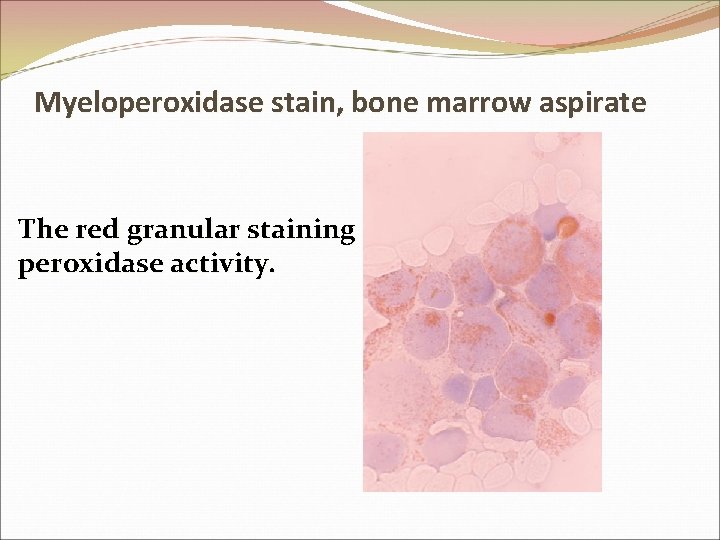
Myeloperoxidase stain, bone marrow aspirate The red granular staining peroxidase activity.
Peroxidase stain : Red – brown peroxidase found in: neutrophil and eosinophil {promyelocyte – Metamyelocyte} Finely granular staining found in: - Monocyte Negative stain found in: ( early Myeloblast, lymphblast, basophiles and plasma cell)
Notes: In acute leukemia, infection & myelodysplasia neutrophils show (-ve) stain Increase in CML* Basophile May stain +ve in granulocytic leukemia Peroxidase stain show results similar to those of sudan Black B stain
Sudan Black B: Purpose: To distinguish acute myelogenous and monocytic leukemia from lymphocytic leukemia. Principle: Sudan black B dye is fat soluble, then it stains fat particles (Steroles, phospholipids and neutral fats) which present in the primary and secondery granules of myelocytic and monocytic cells.
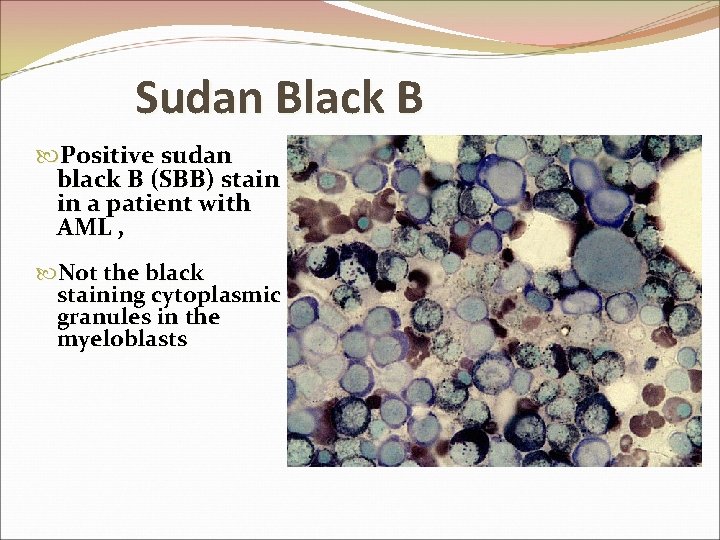
Sudan Black B Positive sudan black B (SBB) stain in a patient with AML , Not the black staining cytoplasmic granules in the myeloblasts
Interpretation: Myelogenous cells show coarse staining granules with faint staining pattern for myelobast and increase staining with maturation. Auer rods are +vely stained. Monocytic cells show finely scatterd granules. -ve lymphoctic staining except Burkitt`s lymphoma cells, may show +ve staining vacuoles.
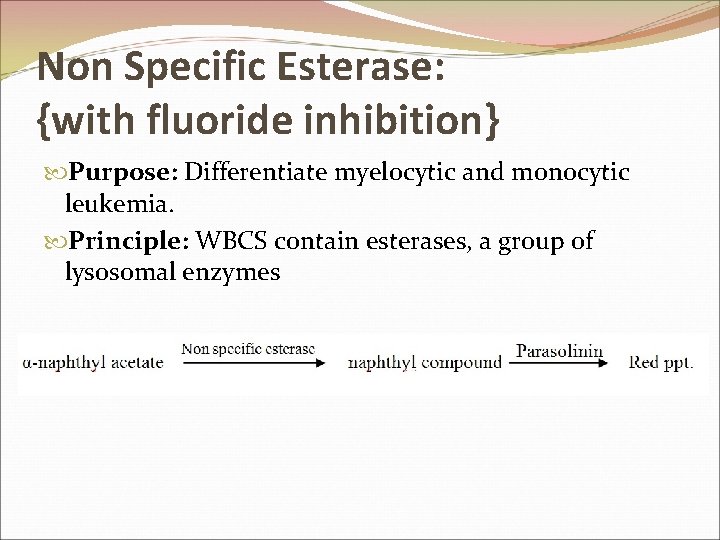
Non Specific Esterase: {with fluoride inhibition} Purpose: Differentiate myelocytic and monocytic leukemia. Principle: WBCS contain esterases, a group of lysosomal enzymes
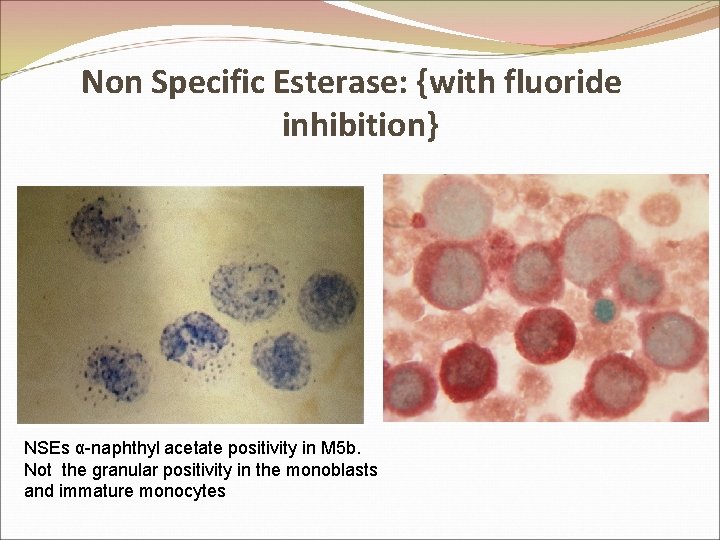
Non Specific Esterase: {with fluoride inhibition} NSEs α-naphthyl acetate positivity in M 5 b. Not the granular positivity in the monoblasts and immature monocytes
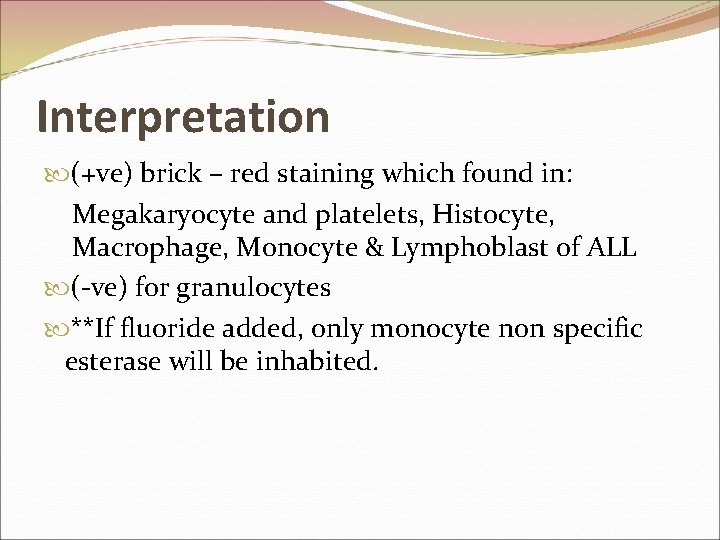
Interpretation (+ve) brick – red staining which found in: Megakaryocyte and platelets, Histocyte, Macrophage, Monocyte & Lymphoblast of ALL (-ve) for granulocytes **If fluoride added, only monocyte non specific esterase will be inhabited.
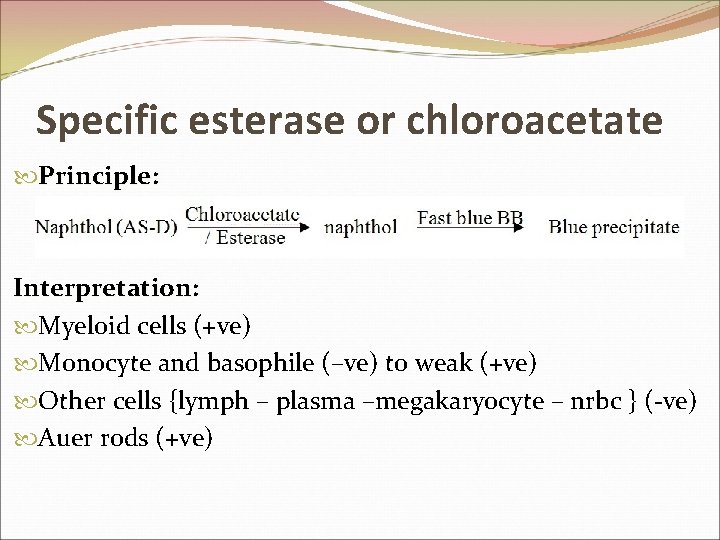
Specific esterase or chloroacetate Principle: Interpretation: Myeloid cells (+ve) Monocyte and basophile (–ve) to weak (+ve) Other cells {lymph – plasma –megakaryocyte – nrbc } (-ve) Auer rods (+ve)
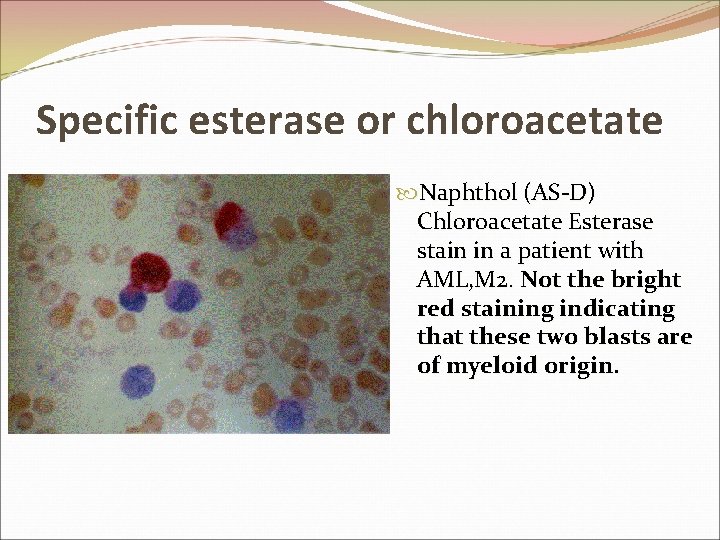
Specific esterase or chloroacetate Naphthol (AS-D) Chloroacetate Esterase stain in a patient with AML, M 2. Not the bright red staining indicating that these two blasts are of myeloid origin.
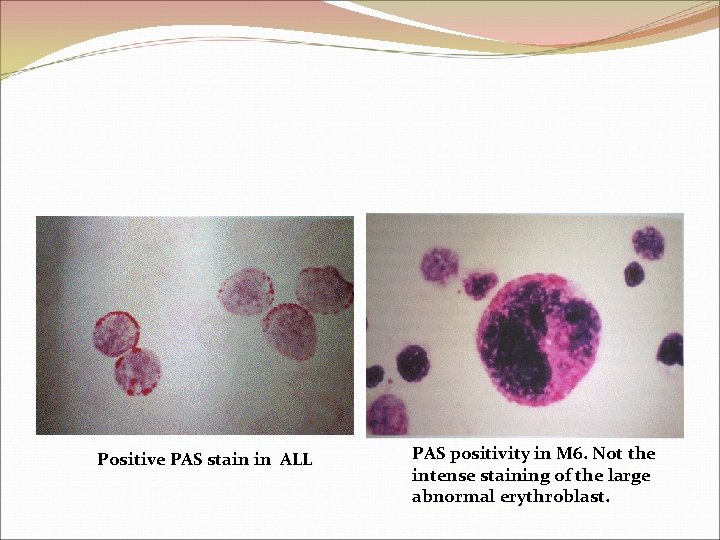
Periodic Acid – Schiff [PAS] Reaction: Purpose: Diagnosis of some acute lymphocytic leukemia subtypes of AML M 6 Principle: the stain indicates the presence of muccoproteins , glycoproteins and high molecular weight carbohydrates in blood cells.
Periodic Acid – Schiff [PAS] Reaction Giant multinucleate late normoblasts (left). Granular PAS positivity in proerythroblasts and homogeneous positivity in the later normoblasts
Positive PAS stain in ALL PAS positivity in M 6. Not the intense staining of the large abnormal erythroblast.
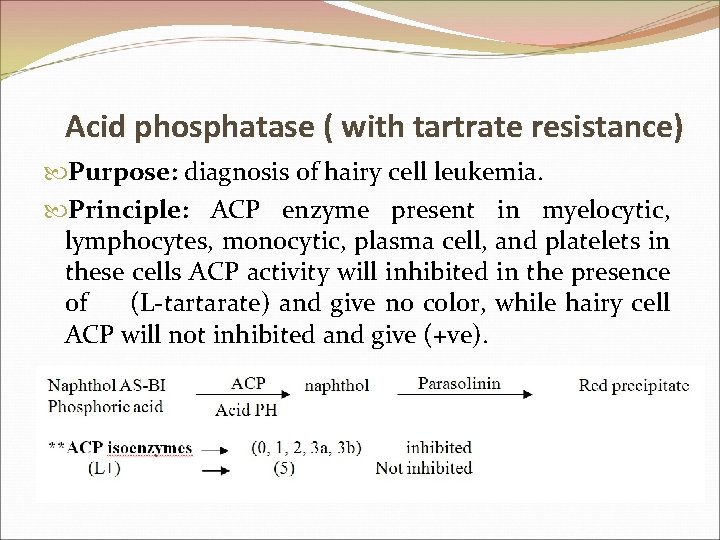
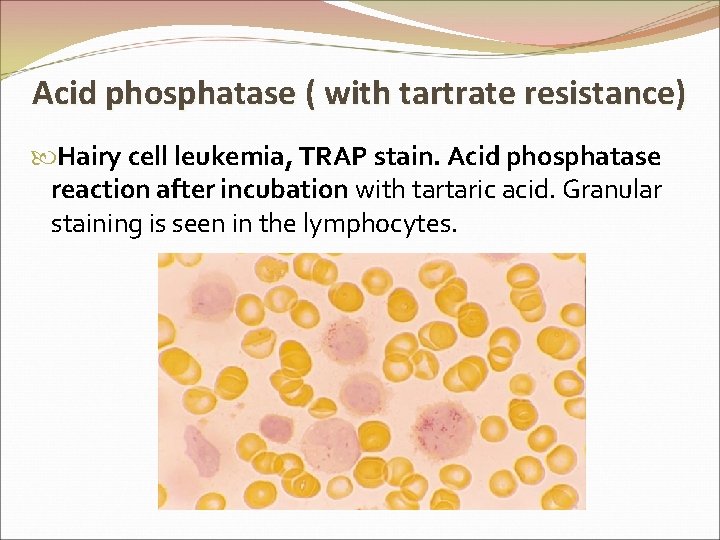
Acid phosphatase ( with tartrate resistance) Purpose: diagnosis of hairy cell leukemia. Principle: ACP enzyme present in myelocytic, lymphocytes, monocytic, plasma cell, and platelets in these cells ACP activity will inhibited in the presence of (L-tartarate) and give no color, while hairy cell ACP will not inhibited and give (+ve).
Acid phosphatase ( with tartrate resistance) Hairy cell leukemia, TRAP stain. Acid phosphatase reaction after incubation with tartaric acid. Granular staining is seen in the lymphocytes.
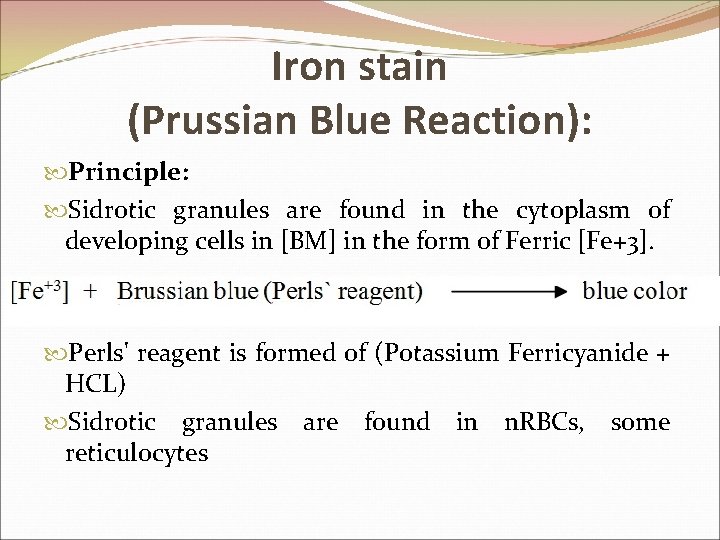
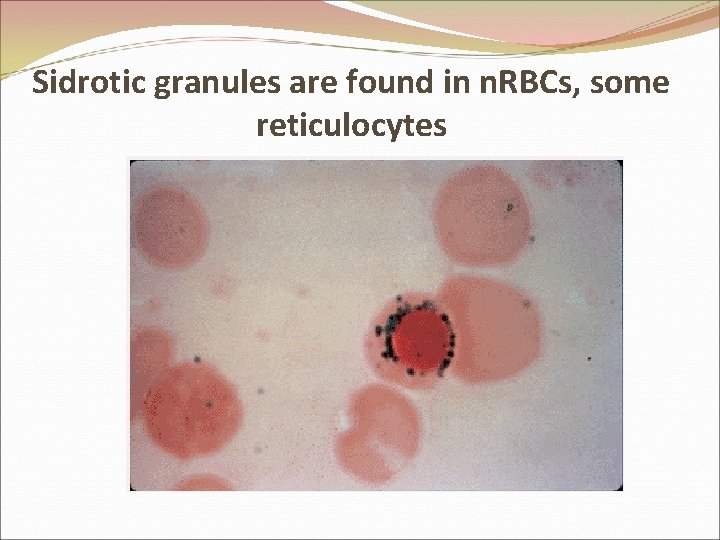
Iron stain (Prussian Blue Reaction): Principle: Sidrotic granules are found in the cytoplasm of developing cells in [BM] in the form of Ferric [Fe+3]. Perls' reagent is formed of (Potassium Ferricyanide + HCL) Sidrotic granules are found in n. RBCs, some reticulocytes
Sidrotic granules are found in n. RBCs, some reticulocytes