
Special senses Vision Hearing Smell Taste Smell Anatomy


- Slides: 20
Special senses
• • Vision Hearing Smell Taste
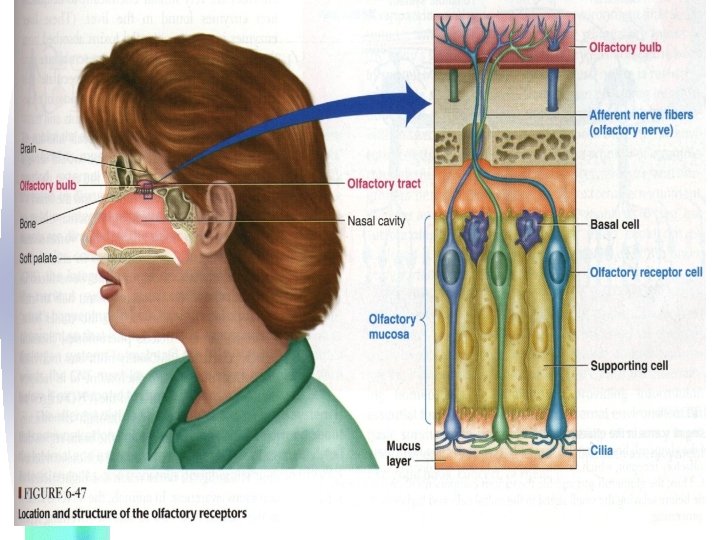
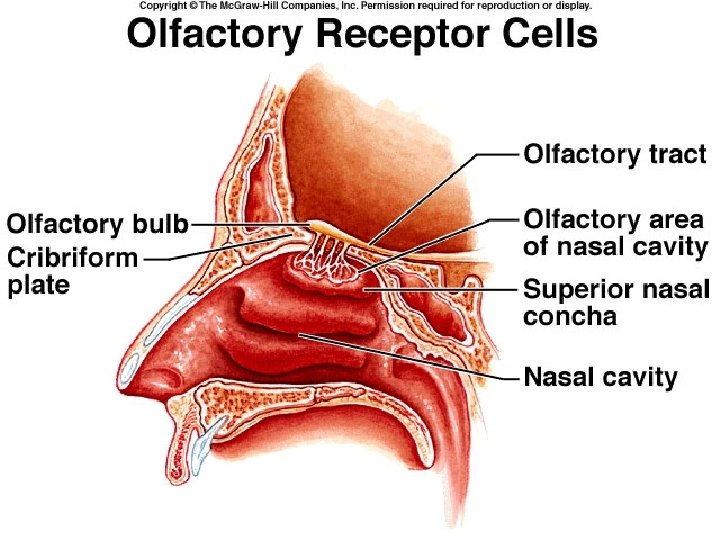
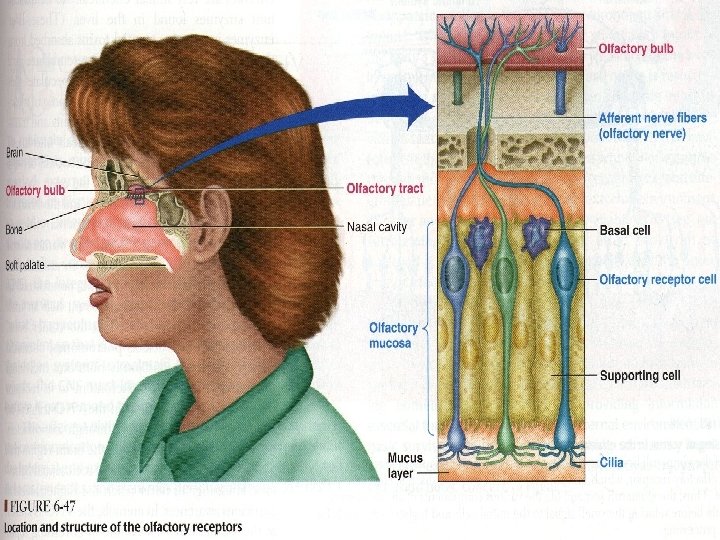
Smell • Anatomy – Olfactory mucus: in the roof of nasal cavity near the septum – Contain olfactory receptors (bipolar neurone) – Axons collected in bundles called fila olfactoria
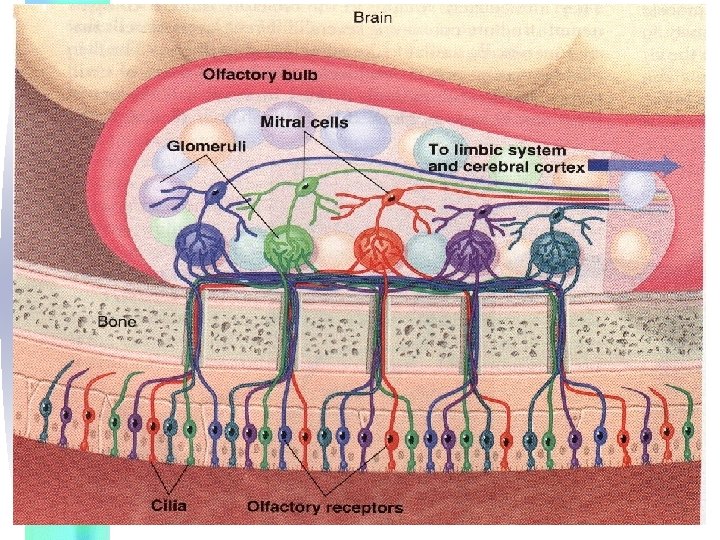
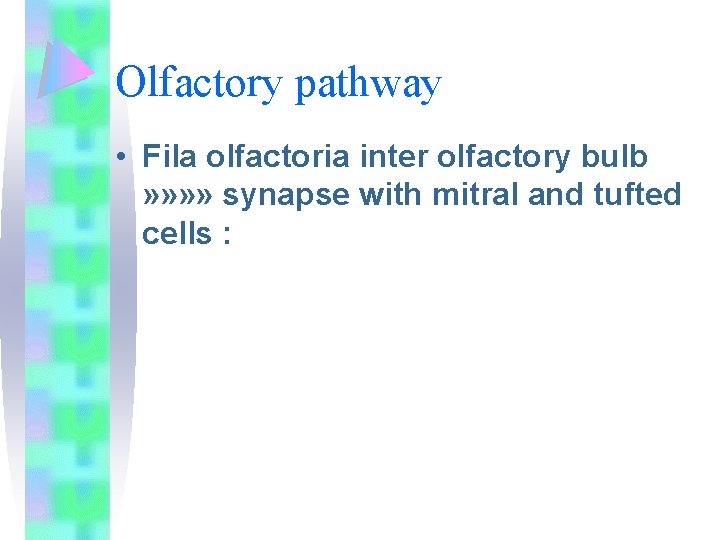
Olfactory pathway • Fila olfactoria inter olfactory bulb » » synapse with mitral and tufted cells :
• » » from mitral cells lateral and intermediate stria start » » end on ipsilateral cortex
• » » from tufted cells medial strai start then cross the midline & end on granular cells in opposite side (contralateral)
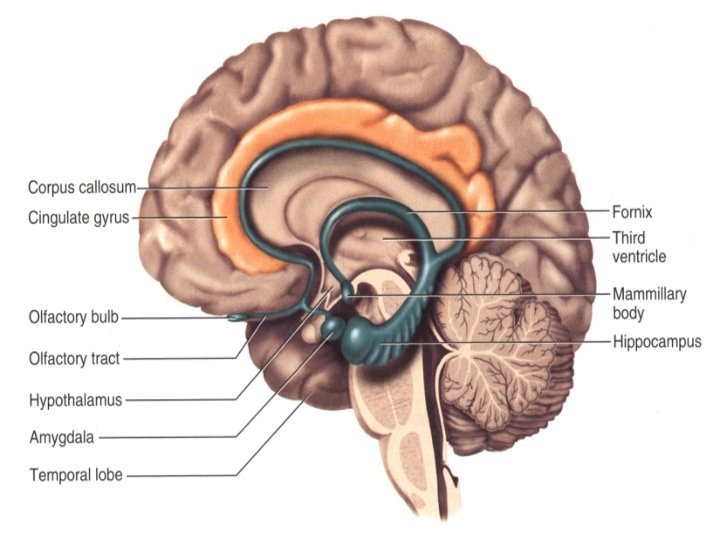
• Impulses travel along the olfactory tracts to the limbic system – (also involved in emotions and memory • Impulses are interpreted in olfactory cortex – Deep in temporal lobe and base of frontal lobe
Physiology of olfaction • Molecules dissolve in mucus layer » » combine with receptors on cilia • » » stimulate adenylat cyclase » » increase intracellular c. AMP • » » opening of Na channels » » receptors potential » » AP in olfactory pathway
Physiology of olfaction • Human can differentiate between 2000 -4000 odours • Adaptation can occur to pleasant and nasty smells due to changes both in receptors and central connections
Pathophysiology • Anosmia: loss of smell sensation • Due to damage to olfactory epithelium
Pathophysiology • Parosmia (dysosmia) • Alteration in smell sensation
Pathophysiology • Hyperosmia (increase in smell sensation) • Adrenal insufficiency
Pathophysiology • Hyposomia (decreased smell sensation) • Vitamin A deficiency