
Special senses Two types of peripheral nerve terminals
- Slides: 38
Special senses
Two types of peripheral nerve terminals • Terminals of axons, which transmit impulses from the CNS to skeletal or smooth muscles (motor endings), or to glands (secretory endings) • Terminals of dendrites, called sensory nerve endings or receptors, which perceive various stimuli and transmit this sensory input to the CNS
Receptors are classified into 3 types • Exteroceptors – located near the body surface, are specialized to perceive stimuli from the external environment; other exteroceptors include receptors for vision, hearing, smell and taste • Interoceptors – are specialized to perceive sensory information from visceral organs • Proprioceptors – located in joint capsules, tendons, muscle spindles, inner ear, are specialized to perceive information that relates to an awareness of the body in space and movement
Eye: organ for visual perception
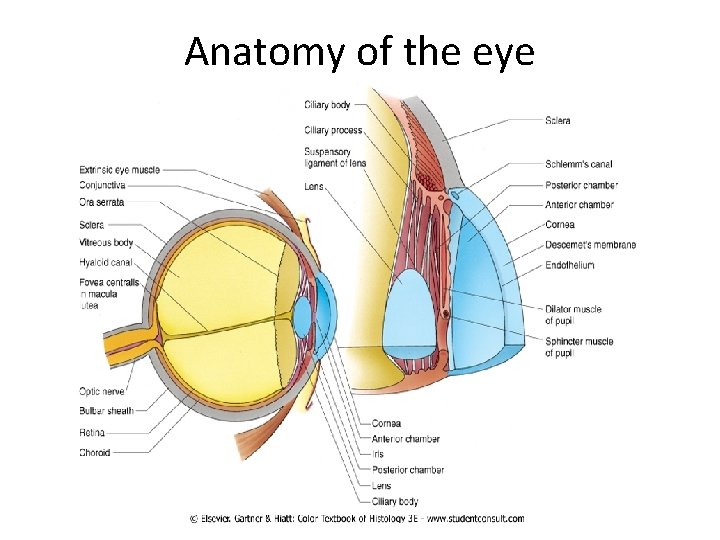
Anatomy of the eye
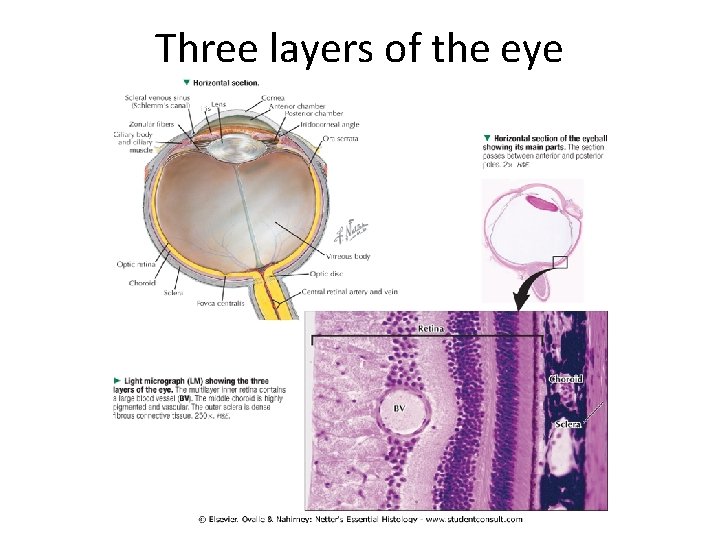
Anatomy of the eye • Tunica externa – Cornea – Sclera • Tunica vasculosa – Choroid – Corpus ciliaris – Iris • Retina – Fovea centralis (yellow spot) – Optic nerve disc (blind spot) – Pars iridica et pars ciliaris (non-visual retina)
Three layers of the eye
Important components of the eye • • • Schlemm’s canal Anterior chamber Posterior chamber Pupil Ciliary processes Aqueous humor Ciliary muscle Lens Zonula fibers Corpus vitreum
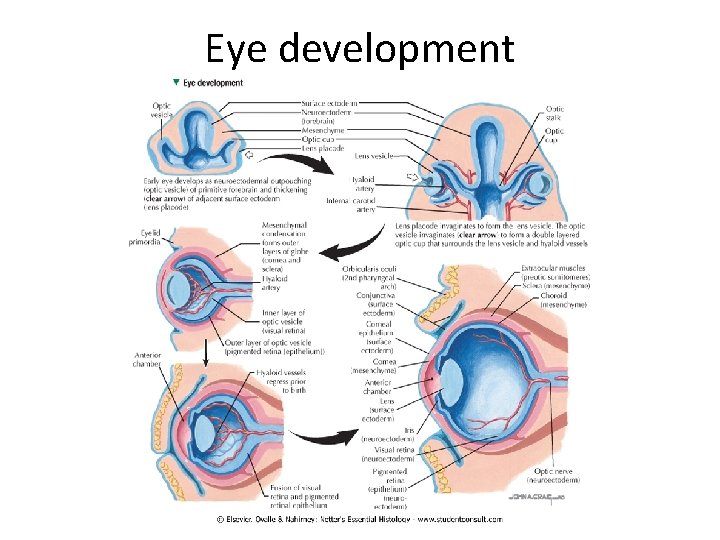
Eye development
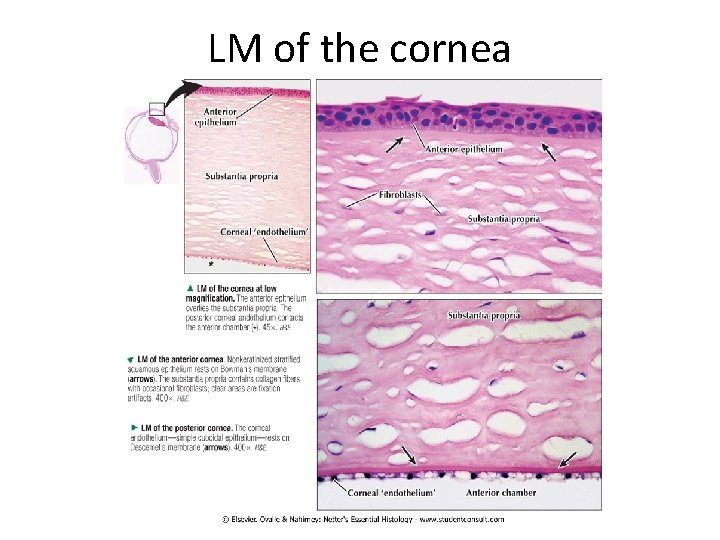
LM of the cornea
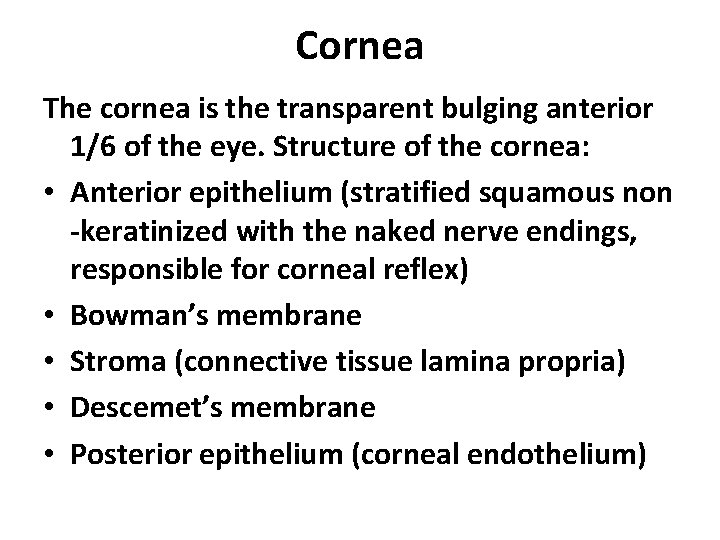
Cornea The cornea is the transparent bulging anterior 1/6 of the eye. Structure of the cornea: • Anterior epithelium (stratified squamous non -keratinized with the naked nerve endings, responsible for corneal reflex) • Bowman’s membrane • Stroma (connective tissue lamina propria) • Descemet’s membrane • Posterior epithelium (corneal endothelium)
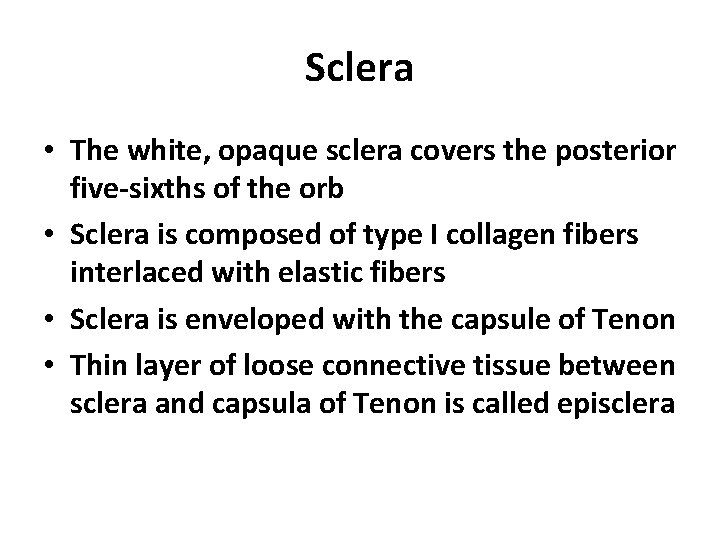
Sclera • The white, opaque sclera covers the posterior five-sixths of the orb • Sclera is composed of type I collagen fibers interlaced with elastic fibers • Sclera is enveloped with the capsule of Tenon • Thin layer of loose connective tissue between sclera and capsula of Tenon is called episclera
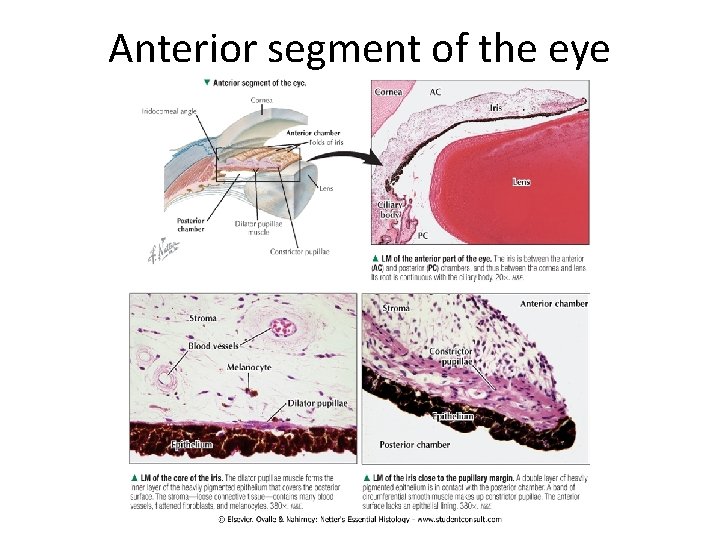
Anterior segment of the eye
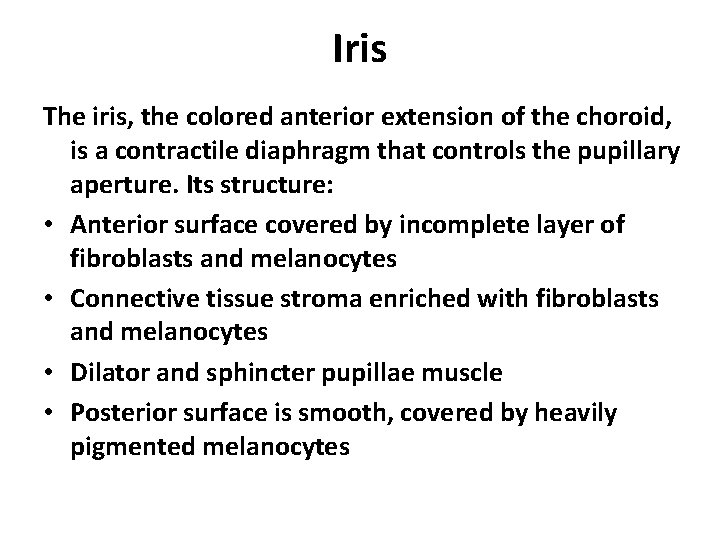
Iris The iris, the colored anterior extension of the choroid, is a contractile diaphragm that controls the pupillary aperture. Its structure: • Anterior surface covered by incomplete layer of fibroblasts and melanocytes • Connective tissue stroma enriched with fibroblasts and melanocytes • Dilator and sphincter pupillae muscle • Posterior surface is smooth, covered by heavily pigmented melanocytes
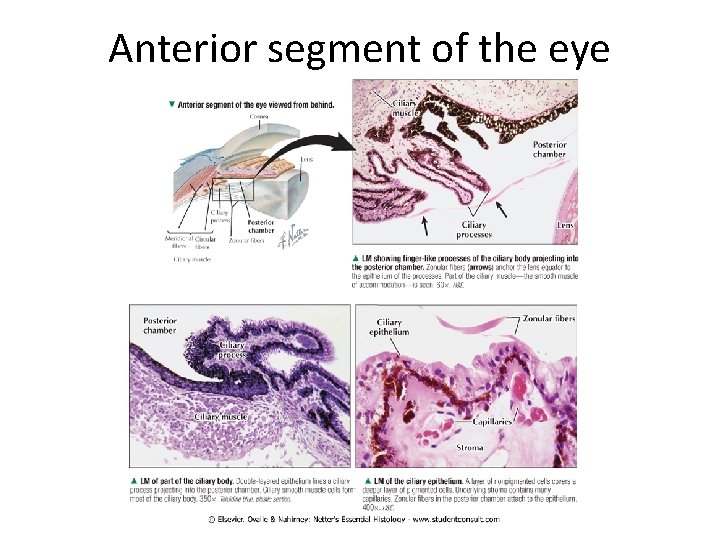
Anterior segment of the eye
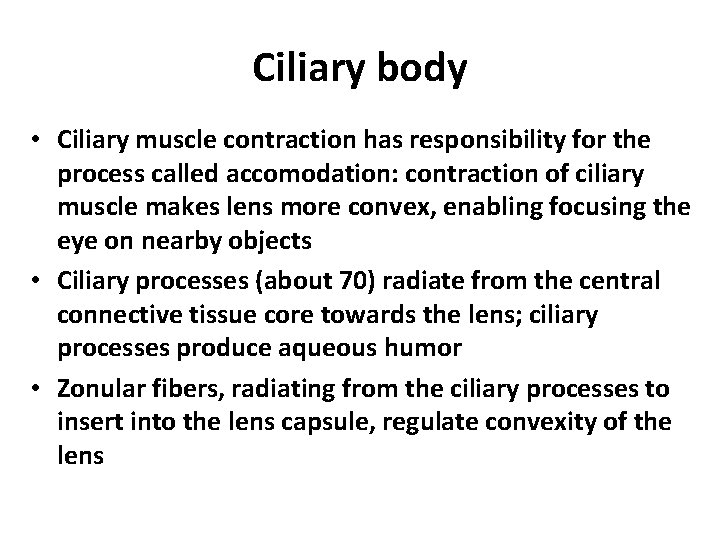
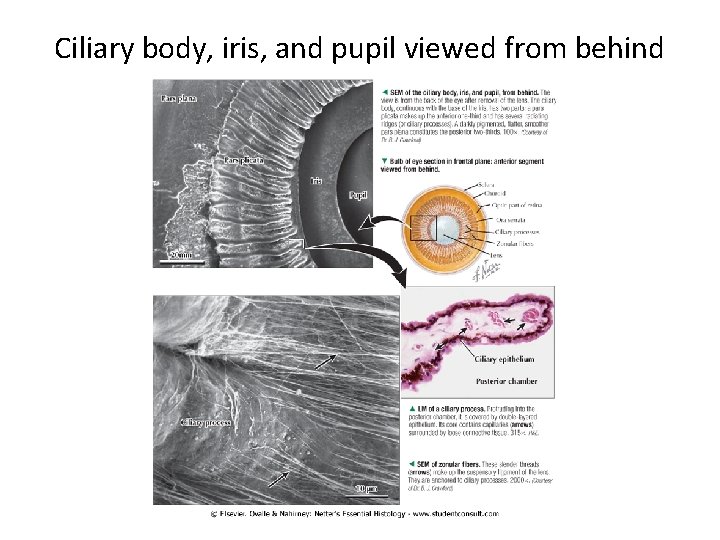
Ciliary body • Ciliary muscle contraction has responsibility for the process called accomodation: contraction of ciliary muscle makes lens more convex, enabling focusing the eye on nearby objects • Ciliary processes (about 70) radiate from the central connective tissue core towards the lens; ciliary processes produce aqueous humor • Zonular fibers, radiating from the ciliary processes to insert into the lens capsule, regulate convexity of the lens
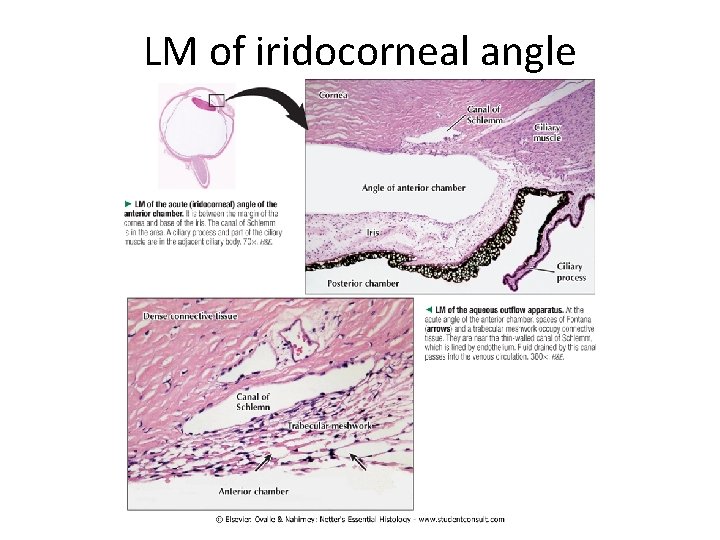
LM of iridocorneal angle
Aqueous humor turnover • Ciliary processes produce aqueous humor which is responsible for the maintenance of intraocular pressure • Corneo-scleral junction (limbus of the eye) houses canal of Schlemm, which is the site of outflow of the aqueous humor from the anterior chamber of the eye into the venous system
Ciliary body, iris, and pupil viewed from behind
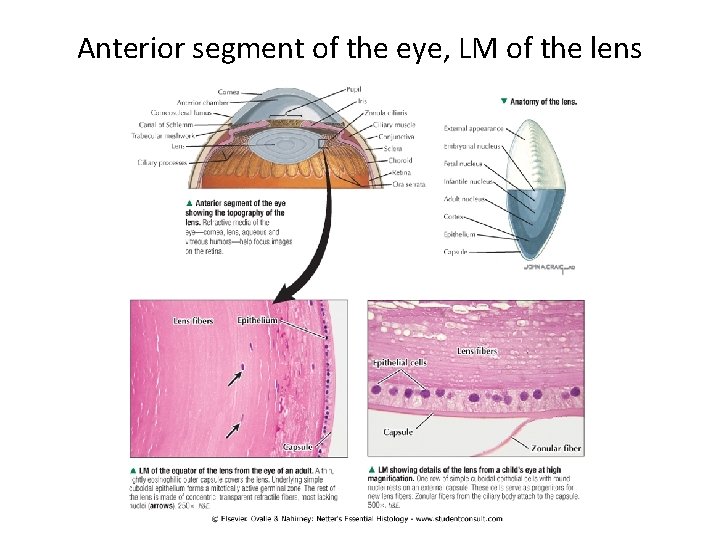
Anterior segment of the eye, LM of the lens
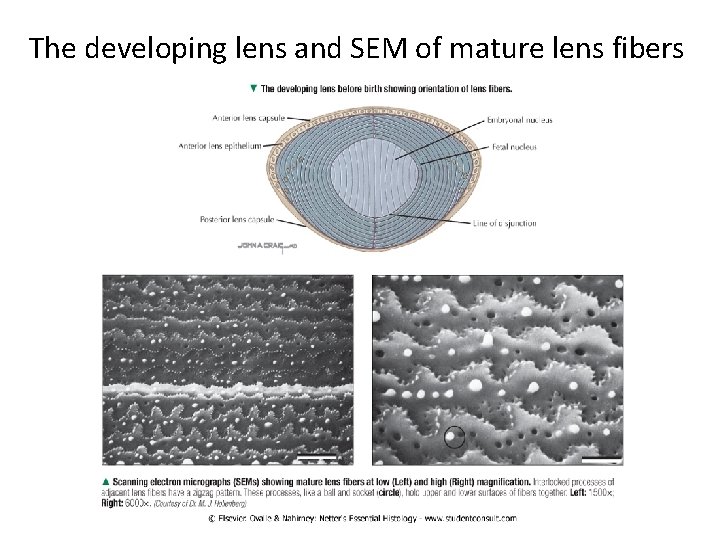
The developing lens and SEM of mature lens fibers
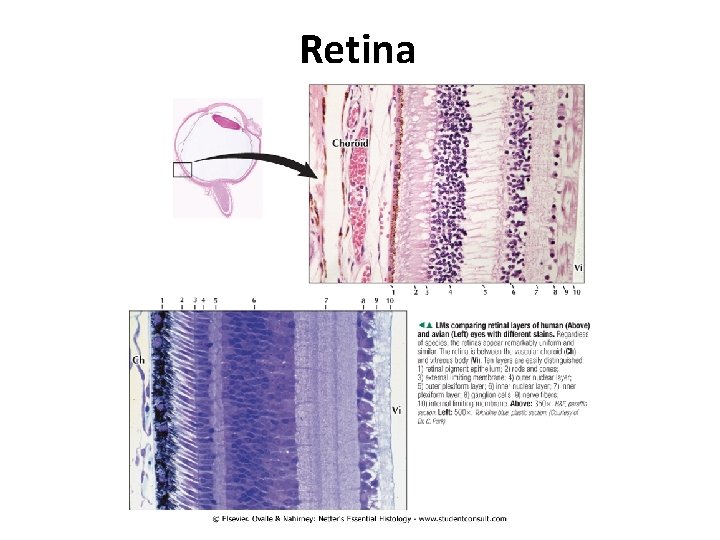
Retina
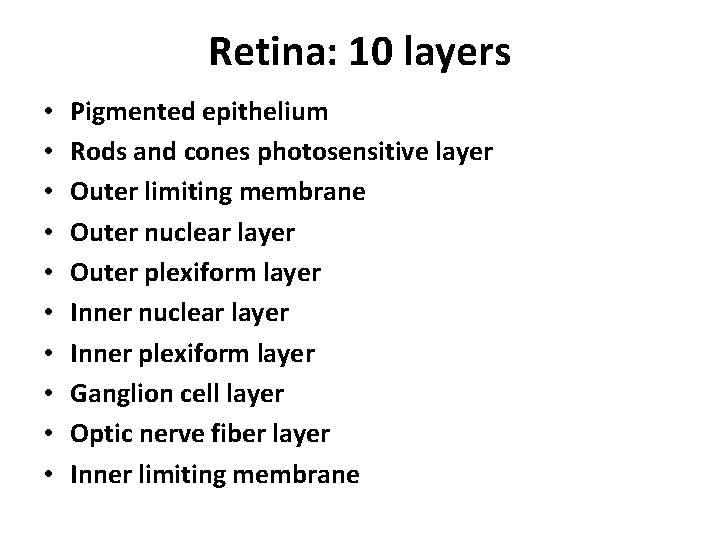
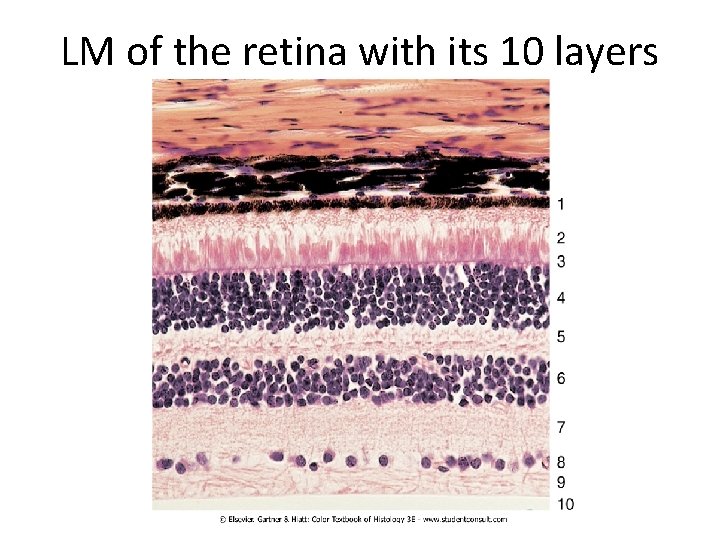
Retina: 10 layers • • • Pigmented epithelium Rods and cones photosensitive layer Outer limiting membrane Outer nuclear layer Outer plexiform layer Inner nuclear layer Inner plexiform layer Ganglion cell layer Optic nerve fiber layer Inner limiting membrane
LM of the retina with its 10 layers
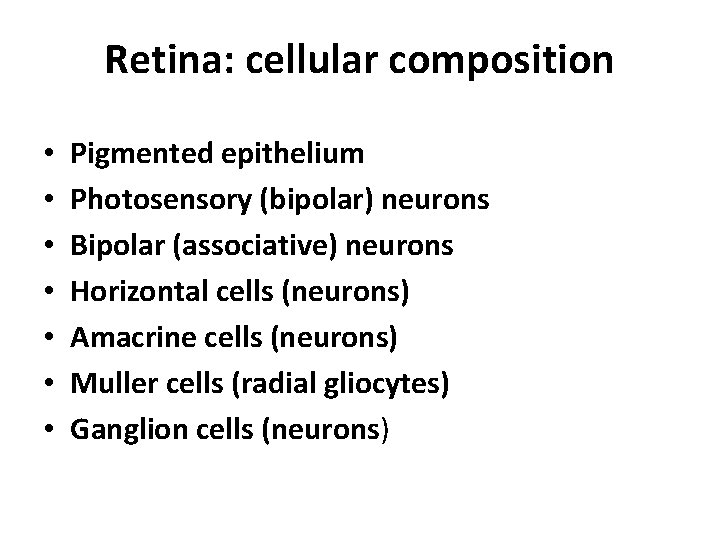
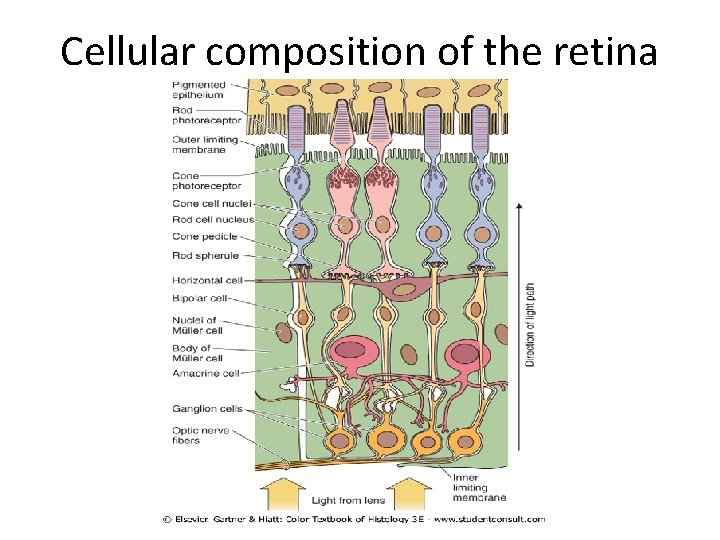
Retina: cellular composition • • Pigmented epithelium Photosensory (bipolar) neurons Bipolar (associative) neurons Horizontal cells (neurons) Amacrine cells (neurons) Muller cells (radial gliocytes) Ganglion cells (neurons)
Cellular composition of the retina
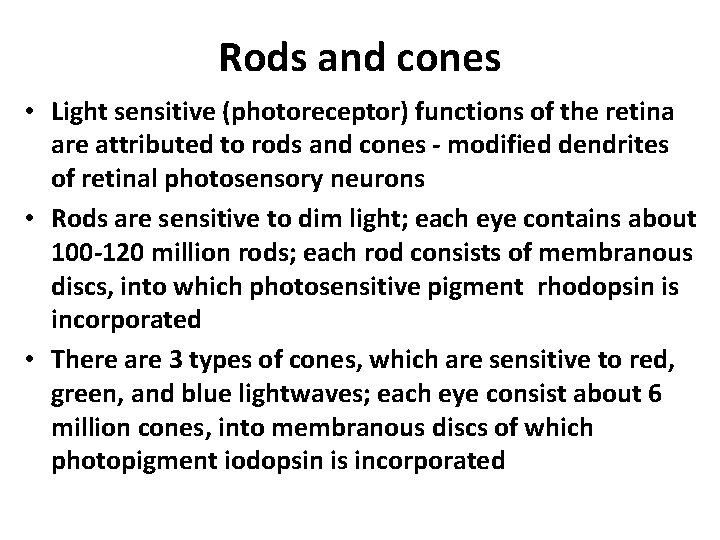
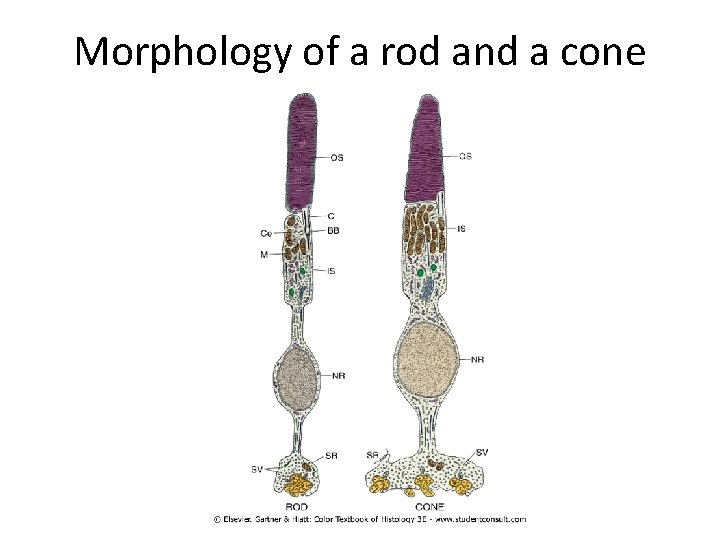
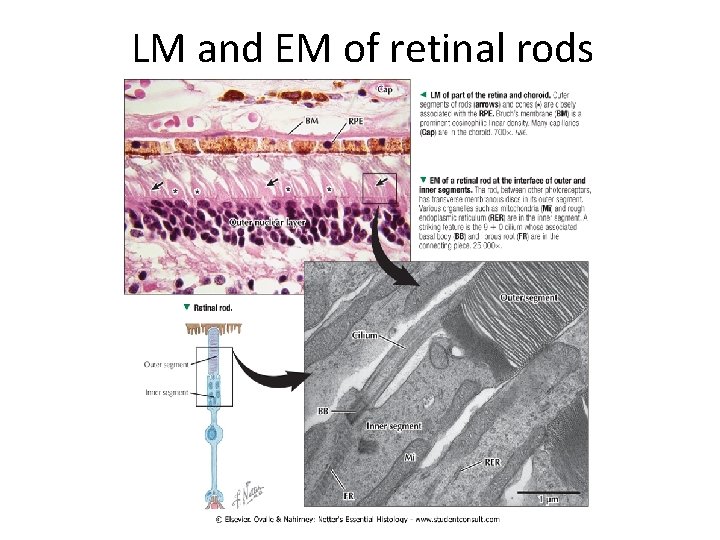
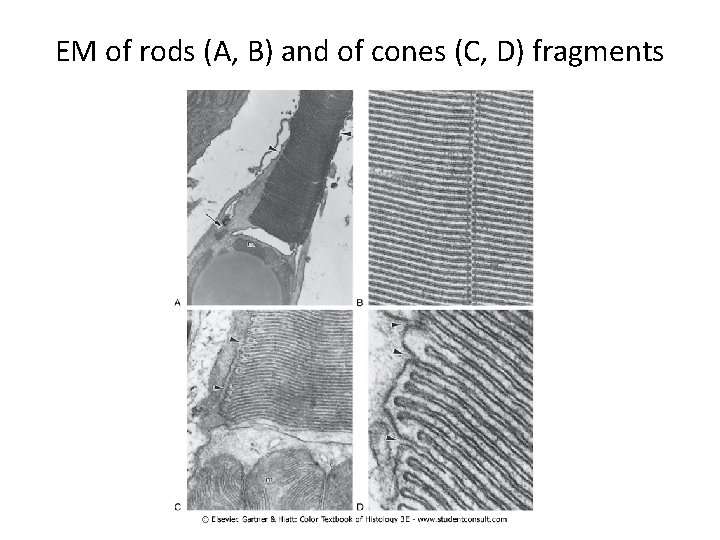
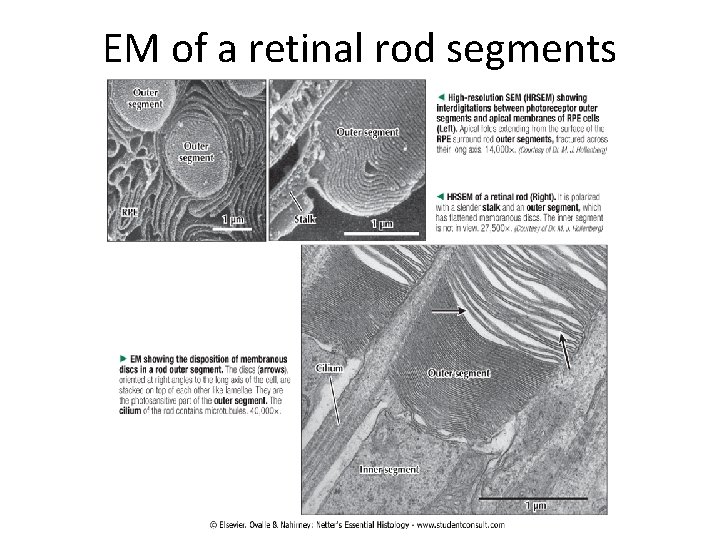
Rods and cones • Light sensitive (photoreceptor) functions of the retina are attributed to rods and cones - modified dendrites of retinal photosensory neurons • Rods are sensitive to dim light; each eye contains about 100 -120 million rods; each rod consists of membranous discs, into which photosensitive pigment rhodopsin is incorporated • There are 3 types of cones, which are sensitive to red, green, and blue lightwaves; each eye consist about 6 million cones, into membranous discs of which photopigment iodopsin is incorporated
Morphology of a rod and a cone
LM and EM of retinal rods
EM of rods (A, B) and of cones (C, D) fragments
EM of a retinal rod segments
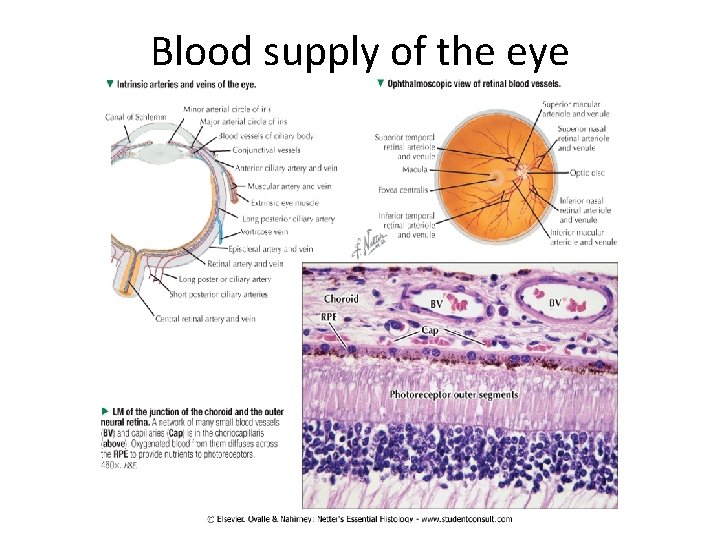
Blood supply of the eye
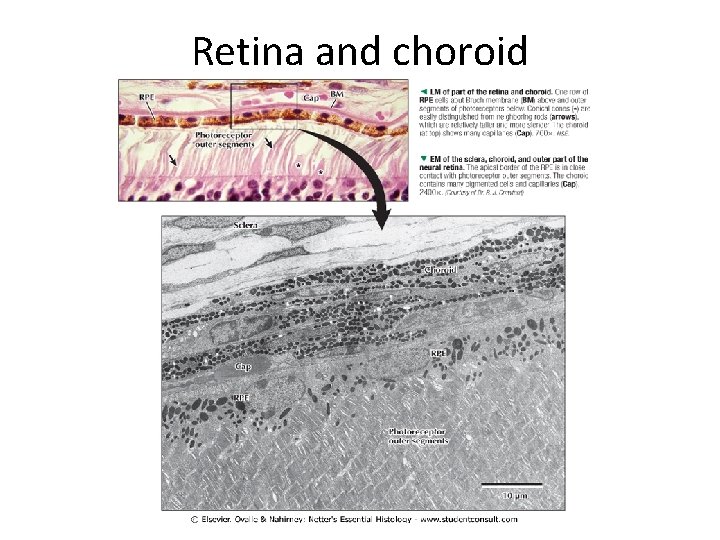
Retina and choroid
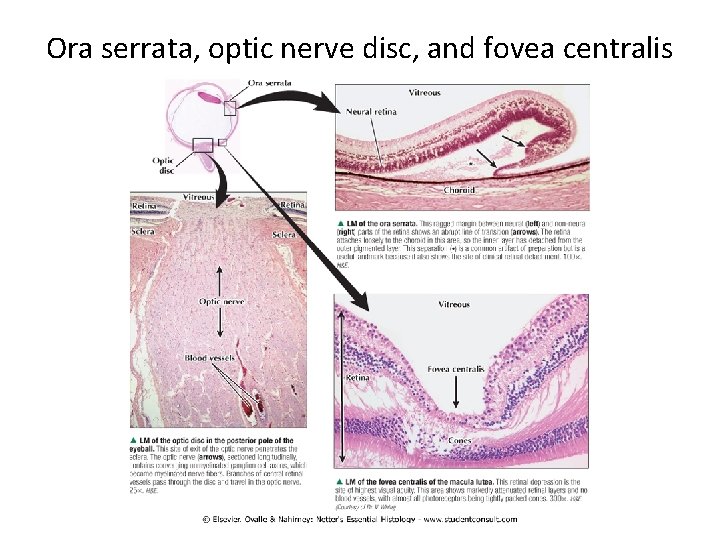
Ora serrata, optic nerve disc, and fovea centralis
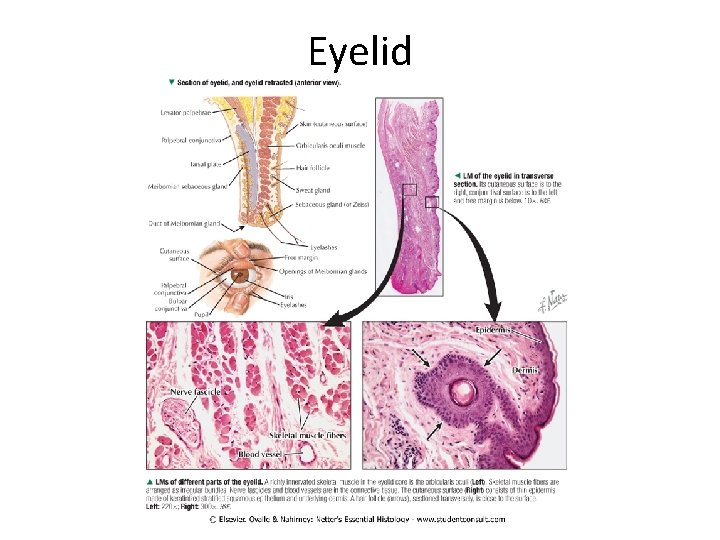
Eyelid
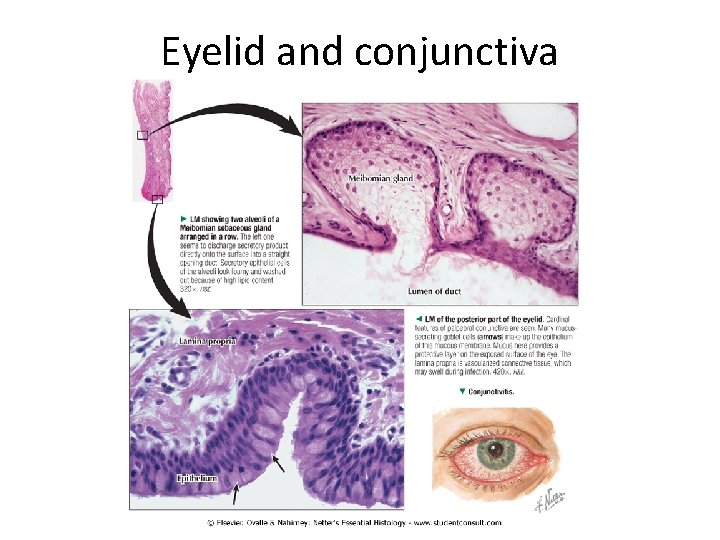
Eyelid and conjunctiva
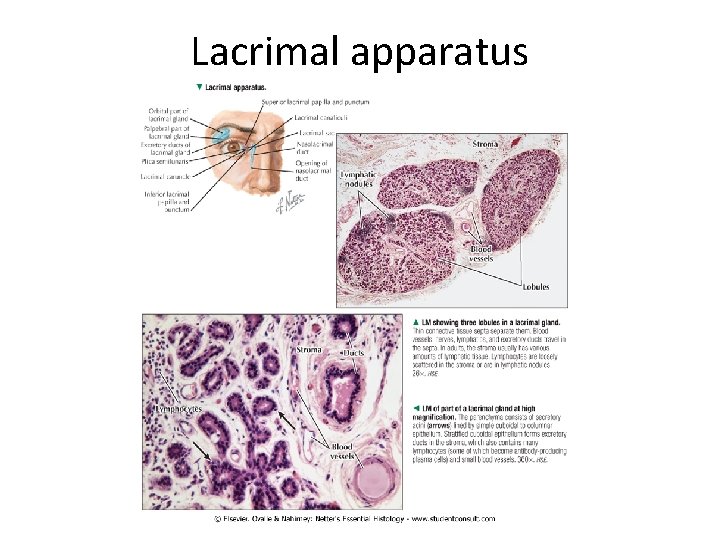
Lacrimal apparatus
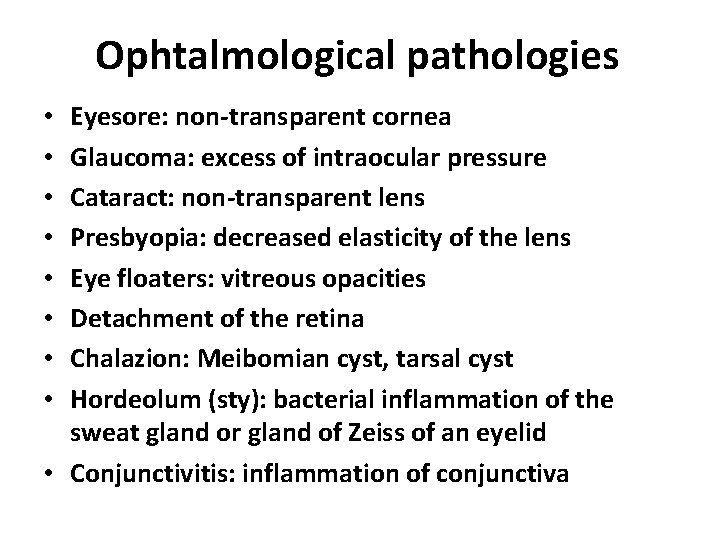
Ophtalmological pathologies Eyesore: non-transparent cornea Glaucoma: excess of intraocular pressure Cataract: non-transparent lens Presbyopia: decreased elasticity of the lens Eye floaters: vitreous opacities Detachment of the retina Chalazion: Meibomian cyst, tarsal cyst Hordeolum (sty): bacterial inflammation of the sweat gland or gland of Zeiss of an eyelid • Conjunctivitis: inflammation of conjunctiva • •