
Special Senses Introductory Laboratory Lecture 2012 Pearson Education
Special Senses Introductory Laboratory Lecture © 2012 Pearson Education, Inc.

Sensory Receptors • Sensation is the arriving information from these senses; that information has been transduced • Perception is a conscious awareness of that sensation (the transduced information) • The term general senses is used to describe our sensitivity to temperature, pain, touch, pressure, vibration and proprioception • General sensory receptors are distributed throughout the body and are simple in structure https: //en. wikipedia. org/wiki/Sensory_receptor © 2012 Pearson Education, Inc.
• The term special senses is used to describe our sensitivity to olfaction (smell), vision (sight), gustation (taste), equilibrium (balance) and hearing • Special sensory receptors are located in sense organs (i. e. eye, ear) and are rather complicated in structure • The information these receptors provide is distributed to specific areas of the cerebral cortex (i. e. auditory cortex, etc… © 2012 Pearson Education, Inc.

Detection of Stimuli • Each receptor has a characteristic specificity to stimuli; this is referred to as receptor specificity (i. e. pressure, temperature, etc…) • The receptive field is the area monitored by a single receptor cell; the larger the receptive field, the more difficult it is to localize a stimulus • The simplest receptors have a broad scope of specificity and are not shielded by accessory structures; free nerve endings are an abundant example (branched tips of sensory neuron dendrites) • Complex receptors are protected by accessory cells and layers of connective tissue, shielding them from any stimulus other than one that is intended (i. e. eyes visual receptors) © 2012 Pearson Education, Inc.
The Interpretation of Sensory Information • Sensory information that arrives at the CNS is routed according to the location and the nature of the stimulus • The link between a peripheral receptor and its cortical neuron is called a labeled line • Each labeled line consists of axons carrying information about one type of stimulus, or modiality (i. e. touch, pressure, light, etc…) • The CNS interprets the modiality entirely on the basis of the labeled line over which it arrives; this can lead to a false-positive sensation (i. e. close your eyes and rub them; you see “twinkling-light”) © 2012 Pearson Education, Inc.
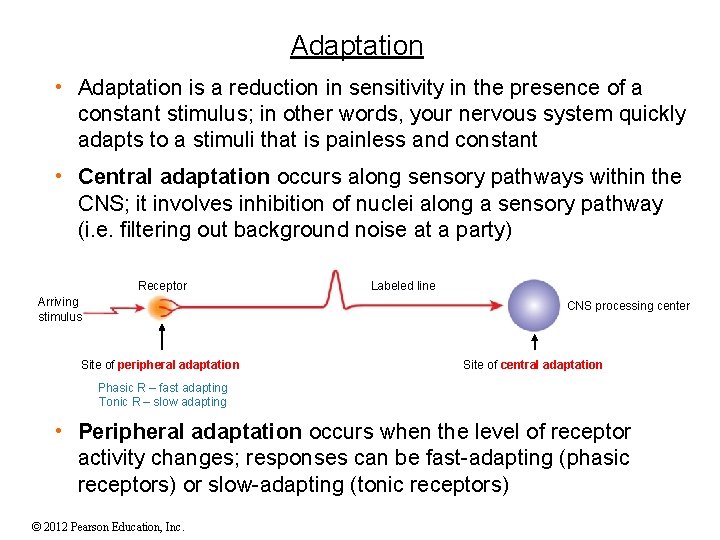
Adaptation • Adaptation is a reduction in sensitivity in the presence of a constant stimulus; in other words, your nervous system quickly adapts to a stimuli that is painless and constant • Central adaptation occurs along sensory pathways within the CNS; it involves inhibition of nuclei along a sensory pathway (i. e. filtering out background noise at a party) Receptor Arriving stimulus Labeled line CNS processing center Site of peripheral adaptation Site of central adaptation Phasic R – fast adapting Tonic R – slow adapting • Peripheral adaptation occurs when the level of receptor activity changes; responses can be fast-adapting (phasic receptors) or slow-adapting (tonic receptors) © 2012 Pearson Education, Inc.
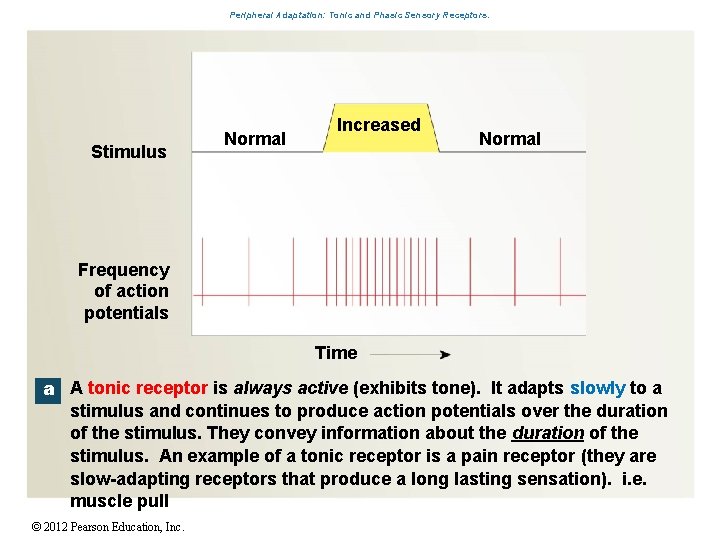
Peripheral Adaptation: Tonic and Phasic Sensory Receptors. Stimulus Normal Increased Normal Frequency of action potentials Time a A tonic receptor is always active (exhibits tone). It adapts slowly to a stimulus and continues to produce action potentials over the duration of the stimulus. They convey information about the duration of the stimulus. An example of a tonic receptor is a pain receptor (they are slow-adapting receptors that produce a long lasting sensation). i. e. muscle pull © 2012 Pearson Education, Inc.

Peripheral Adaptation: Tonic and Phasic Sensory Receptors. Stimulus Normal Increased Normal Frequency of action potentials Time b A phasic receptor adapts rapidly to a stimulus; the response of the cell diminishes very quickly and then stops. They provide information about the intensity and the rate of change of a stimulus. An example of a phasic receptor is a thermoreceptor (you don’t notice gradual changes in temperature; only rapid ones – i. e. getting in a hot car). © 2012 Pearson Education, Inc.
Central Adaptation • Output from higher centers can increase receptor sensitivity or facilitate transmission along a sensory pathway • The RAS (midbrain) helps focus our attention and heighten our awareness of arriving sensations. This adjustment of sensitivity can occur under conscious or subconscious direction (i. e. are you listening more carefully, now? ) • Output from higher centers can also inhibit transmission along a sensory pathway (i. e. when you “tune-out” background noise in a crowded room) © 2012 Pearson Education, Inc.
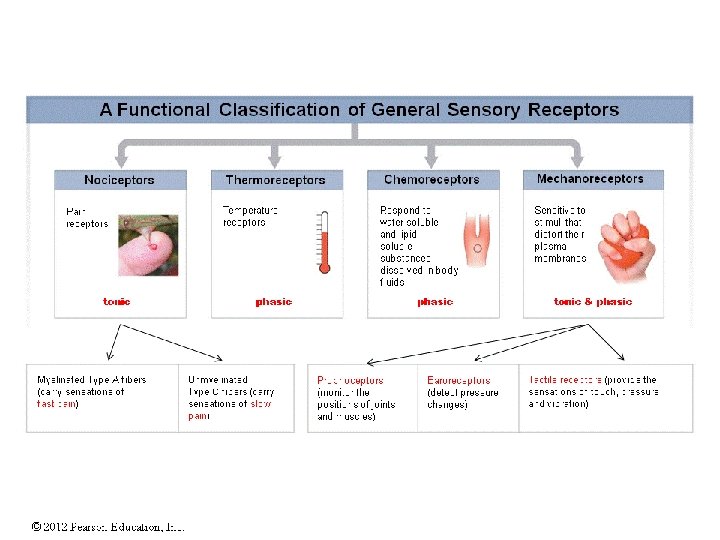
Classifying Sensory Receptors • General Sensory Receptors are divided into four types by the nature of the stimulus that excites them: 1. Nociceptors (pain) 2. Thermoreceptors (temperature) 3. Chemoreceptors (chemical concentration) 4. Mechanoreceptors (physical distortion) © 2012 Pearson Education, Inc.
© 2012 Pearson Education, Inc.
Nociceptors • Pain receptors are free nerve endings (branching tips of dendrites) with large receptive fields • They can be stimulated by many different types of stimuli and are located in every organ of the body except the brain (superficial portions of the skin, joint capsules, periostea of bones, around the walls of blood vessels) • Pain receptors notify the brain about injuries or changes that may harm the body; clinically, they are used as a sign during diagnosis of disease or injury • Pain receptors are tonic – adaptation is slight if at all (i. e. you feel pain long after the injury takes place) © 2012 Pearson Education, Inc.
Fast Pain • Fast pain is acute, sharp and prickly (i. e. injection, deep cut) • It is carried by myelinated Type A fibers, which quickly reach the CNS and trigger fast reflexive responses • It is also relayed to the primary sensory cortex for conscious attention • The stimulus can be located to an area within a few cm Slow Pain • Slow pain is chronic, burning or aching (i. e. a sore neck from studying too much Neurobiology!) • It is carried by unmyelinated Type C fibers • The individual is only aware of the general location of the pain © 2012 Pearson Education, Inc.
• Phantom limb pain is a sensation of pain in a limb that has been amputated. This has two root sources: • The brain interprets sensations from the remaining part of the limb as sensations from the amputated part • Neurons in the brain that received input from the missing limb are still firing (sensory neurons are inactive, but hyperexcitable interneurons continue to fire) • Referred pain is a sensation of pain in one region of the body that is not the source of the stimulus • For example, organ pain is usually referred to the skin; both the organ and that region of the skin input to the same spinal segment, activating the same interneurons that converge on the same ascending neuron © 2012 Pearson Education, Inc.
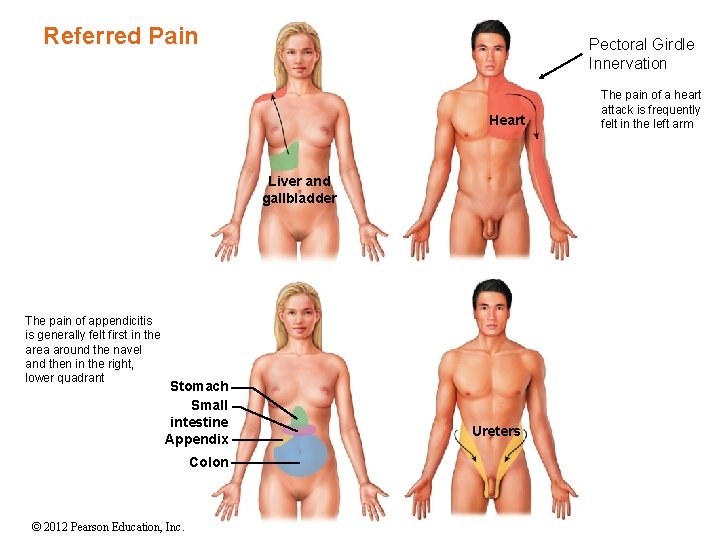
Referred Pain Pectoral Girdle Innervation Heart Liver and gallbladder The pain of appendicitis is generally felt first in the area around the navel and then in the right, lower quadrant Stomach Small intestine Appendix Colon © 2012 Pearson Education, Inc. Ureters The pain of a heart attack is frequently felt in the left arm
Pain Management • The sensory neurons that bring pain sensations into the CNS release glutamate and substance P as neurotransmitters, which facilitate neurons along the pain pathways of the limbic system, hypothalamus and reticular formation • The level of pain felt by an individual can be reduced by the release of endophins and enkephalins within the CNS; these neuromodulators inhibit activity along pain pathways • Endorphins bind to the presynaptic membrane and prevent the release of substance P, reducing the conscious preception of pain (although the painful stimulus remains) • Opiods, morphine and heroin mimic endorphins; with chronic usage, these drugs have disasterous side effects © 2012 Pearson Education, Inc.
Thermoreceptors § Temperature receptors are free nerve endings located in the skin, skeletal muscles, liver and the hypothalamus; they maintain body temperature § These sensations are conducted along the same pathways that carry pain sensations (reticular formation, thalamus, cortex) § Thermoreceptors are phasic; they are fast-adapting (they respond adapt quickly to a change in temperature – i. e. you experience a quick response and adapt quickly when walking into an air conditioned room during the summer) © 2012 Pearson Education, Inc.
Chemoreceptors • Chemical receptors detect changes in the concentration of specific chemicals or compounds that are dissolved in body fluids (includes water-soluble and lipid-soluble substances in the interstitial fluid, plasma and CSF) • This information is sent to autonomic control centers in the brainstem and the viscera, subconsciously enabling us to monitor p. H, CO 2 and O 2 levels in the blood (CN IX, X to respiratory and cardiovascular centers) • Chemoreceptors are phasic; they are fast-adapting (i. e. your body monitors blood p. H through the concentration of hydrogen ion in the blood) CO 2 + H 2 O H 2 CO 3 HCO 3 - + H+ © 2012 Pearson Education, Inc.
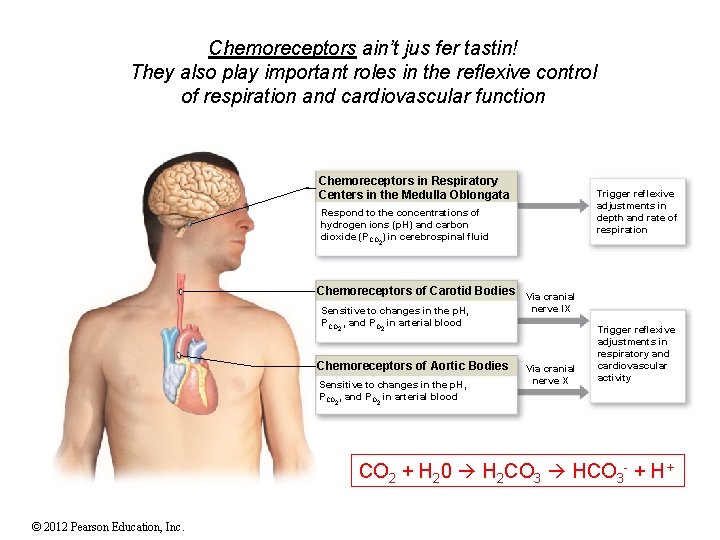
Chemoreceptors ain’t jus fer tastin! They also play important roles in the reflexive control of respiration and cardiovascular function Chemoreceptors in Respiratory Centers in the Medulla Oblongata Trigger reflexive adjustments in depth and rate of respiration Respond to the concentrations of hydrogen ions (p. H) and carbon dioxide (PCO 2) in cerebrospinal fluid Chemoreceptors of Carotid Bodies Via cranial Sensitive to changes in the p. H, PCO 2 , and PO 2 in arterial blood Chemoreceptors of Aortic Bodies Sensitive to changes in the p. H, PCO 2, and PO 2 in arterial blood nerve IX Via cranial nerve X Trigger reflexive adjustments in respiratory and cardiovascular activity CO 2 + H 20 H 2 CO 3 HCO 3 - + H+ © 2012 Pearson Education, Inc.
Mechanoreceptors • Mechanoreceptors are sensitive to stimuli that distort their plasma membranes; membrane distortion effects mechanically-gated ion channels, whose gates open or close, initiating a sensation • There are three classes of mechanoreceptors: 1. Tactile receptors (six types) provide the closely related sensations of touch, pressure, and vibration 2. Baroreceptors detect pressure changes in the walls of blood vessels and in portions of the digestive, reproductive and urinary tract 3. Proprioceptors monitor the positions of joints, tendons and muscles (structurally and functionally complex) © 2012 Pearson Education, Inc.
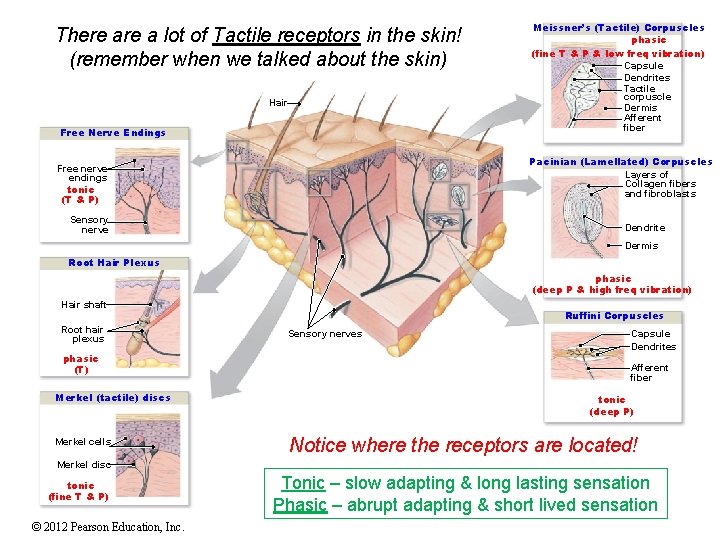
There a lot of Tactile receptors in the skin! (remember when we talked about the skin) Hair Free Nerve Endings Meissner’s (Tactile) Corpuscles phasic (fine T & P & low freq vibration) Capsule Dendrites Tactile corpuscle Dermis Afferent fiber Pacinian (Lamellated) Corpuscles Layers of Collagen fibers and fibroblasts Free nerve endings tonic (T & P) Sensory nerve Dendrite Dermis Root Hair Plexus phasic (deep P & high freq vibration) Hair shaft Root hair plexus phasic (T) Merkel (tactile) discs Merkel cells Ruffini Corpuscles Sensory nerves Capsule Dendrites Afferent fiber tonic (deep P) Notice where the receptors are located! Merkel disc tonic (fine T & P) © 2012 Pearson Education, Inc. Tonic – slow adapting & long lasting sensation Phasic – abrupt adapting & short lived sensation
Types of Tactile Receptors • Fine touch and pressure receptors are extremely sensitive • They have a relatively narrow receptive field and provide detailed information about a source of stimulation, including its exact location, shape, size, texture and movement • Crude touch and pressure receptors have relatively large receptive fields • They provide poor localization (a wide receptive field) and give little information about the stimulus © 2012 Pearson Education, Inc.
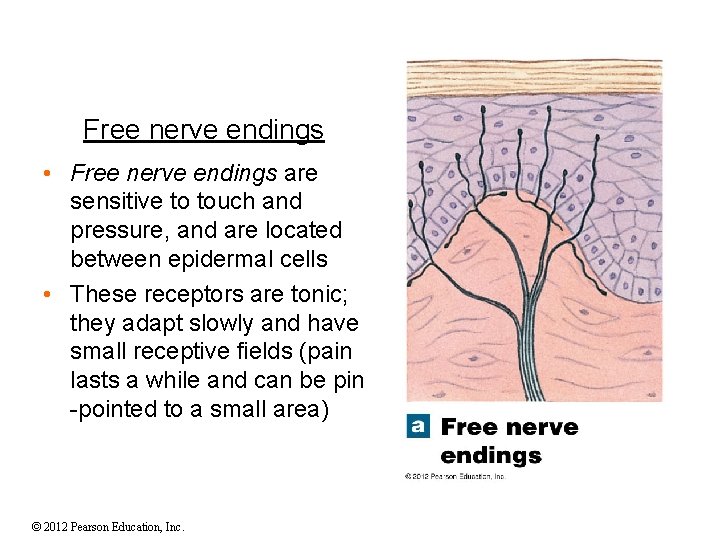
Free nerve endings • Free nerve endings are sensitive to touch and pressure, and are located between epidermal cells • These receptors are tonic; they adapt slowly and have small receptive fields (pain lasts a while and can be pin -pointed to a small area) © 2012 Pearson Education, Inc.
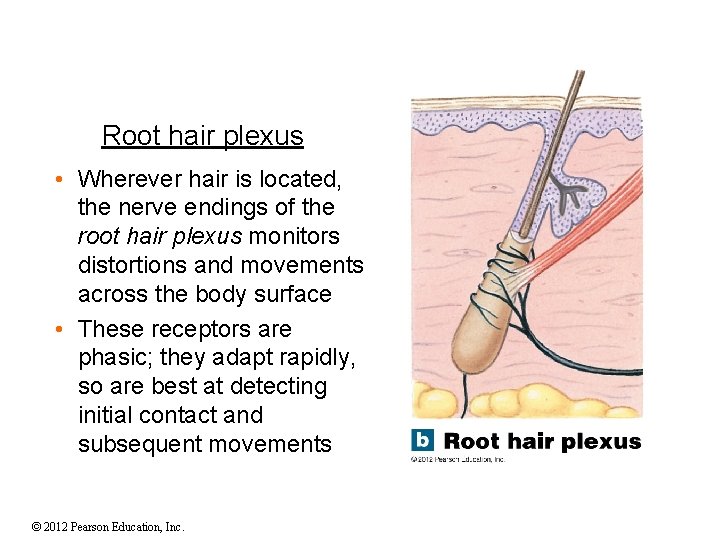
Root hair plexus • Wherever hair is located, the nerve endings of the root hair plexus monitors distortions and movements across the body surface • These receptors are phasic; they adapt rapidly, so are best at detecting initial contact and subsequent movements © 2012 Pearson Education, Inc.
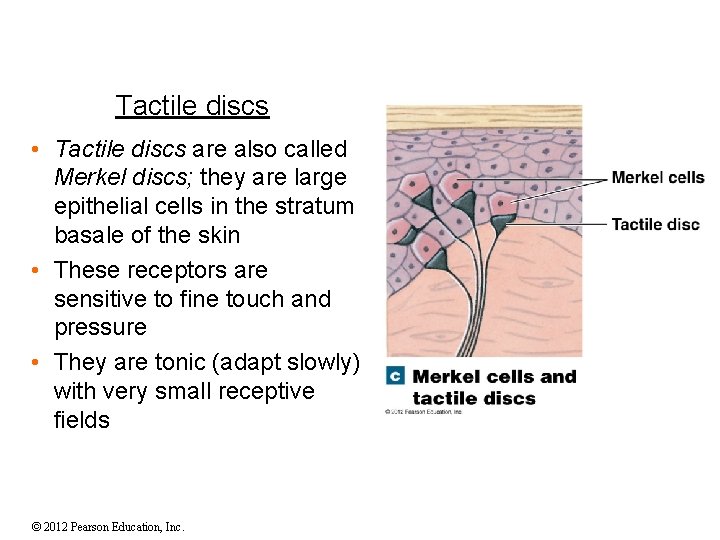
Tactile discs • Tactile discs are also called Merkel discs; they are large epithelial cells in the stratum basale of the skin • These receptors are sensitive to fine touch and pressure • They are tonic (adapt slowly) with very small receptive fields © 2012 Pearson Education, Inc.
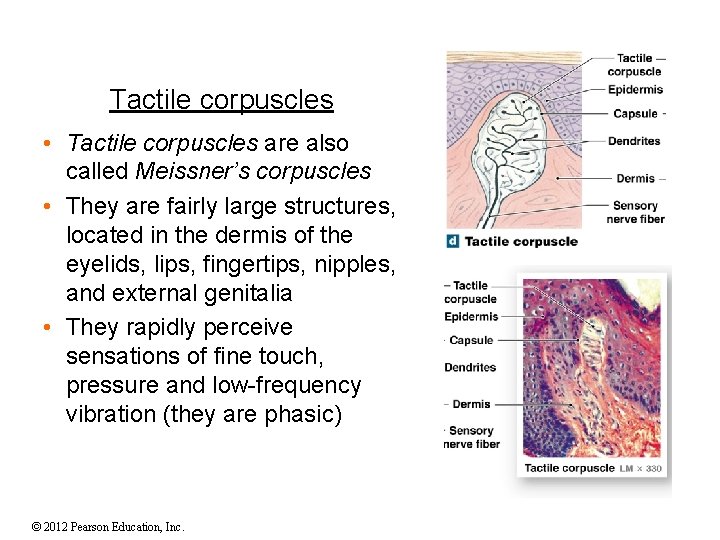
Tactile corpuscles • Tactile corpuscles are also called Meissner’s corpuscles • They are fairly large structures, located in the dermis of the eyelids, lips, fingertips, nipples, and external genitalia • They rapidly perceive sensations of fine touch, pressure and low-frequency vibration (they are phasic) © 2012 Pearson Education, Inc.
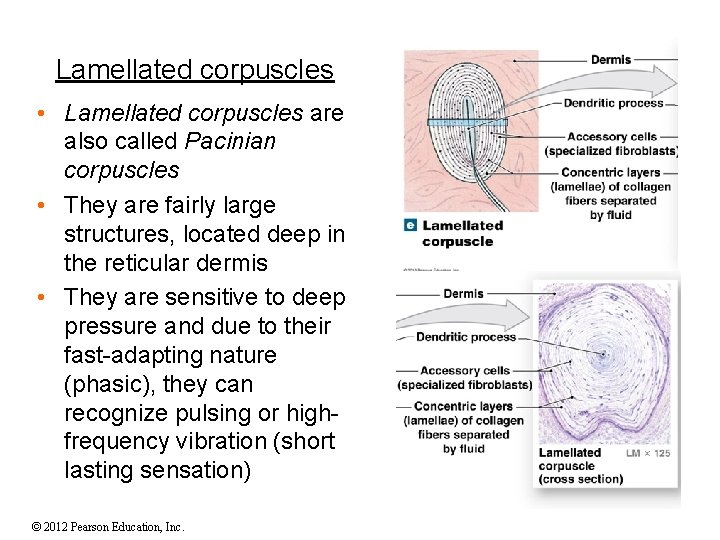
Lamellated corpuscles • Lamellated corpuscles are also called Pacinian corpuscles • They are fairly large structures, located deep in the reticular dermis • They are sensitive to deep pressure and due to their fast-adapting nature (phasic), they can recognize pulsing or highfrequency vibration (short lasting sensation) © 2012 Pearson Education, Inc.
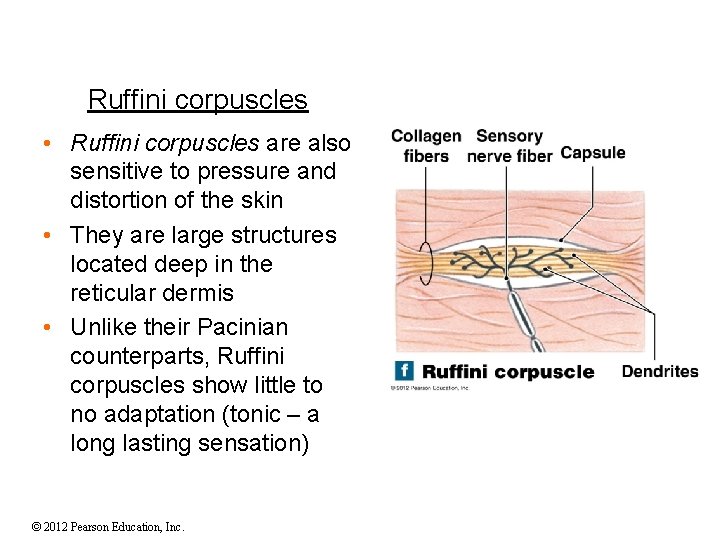
Ruffini corpuscles • Ruffini corpuscles are also sensitive to pressure and distortion of the skin • They are large structures located deep in the reticular dermis • Unlike their Pacinian counterparts, Ruffini corpuscles show little to no adaptation (tonic – a long lasting sensation) © 2012 Pearson Education, Inc.
2. Baroreceptors • Baroreceptors subconsciously detect changes in stretch, distension or pressure in the walls of blood vessels and in portions of the digestive, reproductive and urinary tract • They consist of free nerve endings that branch within elastic tissues in the wall of a distensible vessel or organ • Baroreceptors are phasic; they respond immediately to a change in pressure, then adapt rapidly • Examples of baroceptors: monitor blood pressure in carotid artery and aorta; monitor lung volume (expansion); visceral innervation (defacation and urination) © 2012 Pearson Education, Inc.
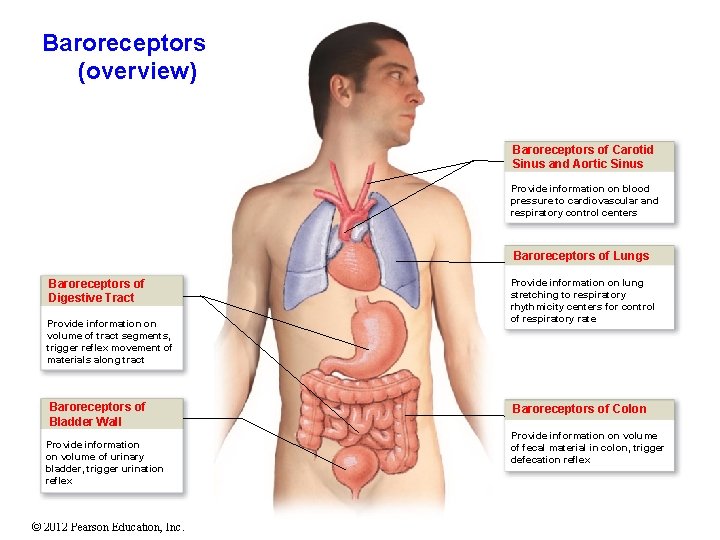
Baroreceptors (overview) Baroreceptors of Carotid Sinus and Aortic Sinus Provide information on blood pressure to cardiovascular and respiratory control centers Baroreceptors of Lungs Baroreceptors of Digestive Tract Provide information on volume of tract segments, trigger reflex movement of materials along tract Baroreceptors of Bladder Wall Provide information on volume of urinary bladder, trigger urination reflex © 2012 Pearson Education, Inc. Provide information on lung stretching to respiratory rhythmicity centers for control of respiratory rate Baroreceptors of Colon Provide information on volume of fecal material in colon, trigger defecation reflex
3. Proprioceptors • Proprioceptors report subconscious information about the position of joints, tension in ligaments and tendons, and the state of muscular contraction • They are tonic; non-adaptive to constant stimulation • There are three classes of proprioceptors: 1. Muscle Spindles monitor skeletal muscle length and trigger stretch reflexes 2. Golgi Tendon Organs monitor external tension developed during muscle contraction 3. Receptors in Joint Capsules detect pressure, tension, and movement at the joint • There are no proprioceptors in the visceral organs of the thoracic and abdominopelvic cavities (these organs do not contribute to your overall sense of balance) © 2012 Pearson Education, Inc.
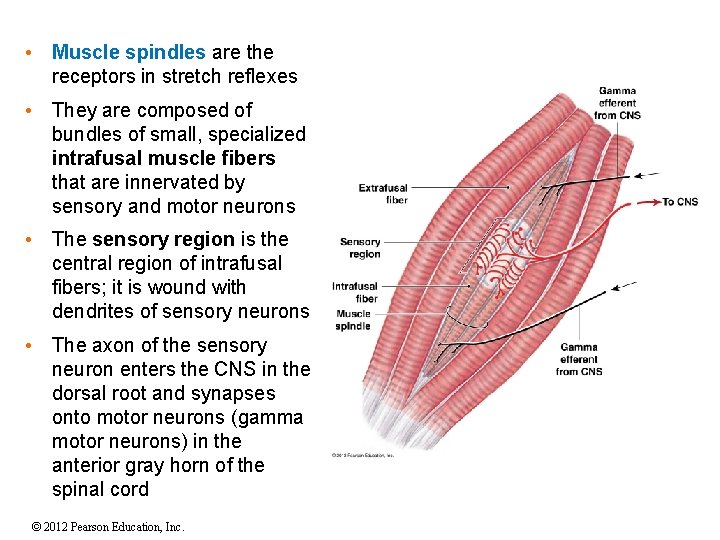
• Muscle spindles are the receptors in stretch reflexes • They are composed of bundles of small, specialized intrafusal muscle fibers that are innervated by sensory and motor neurons • The sensory region is the central region of intrafusal fibers; it is wound with dendrites of sensory neurons • The axon of the sensory neuron enters the CNS in the dorsal root and synapses onto motor neurons (gamma motor neurons) in the anterior gray horn of the spinal cord © 2012 Pearson Education, Inc.
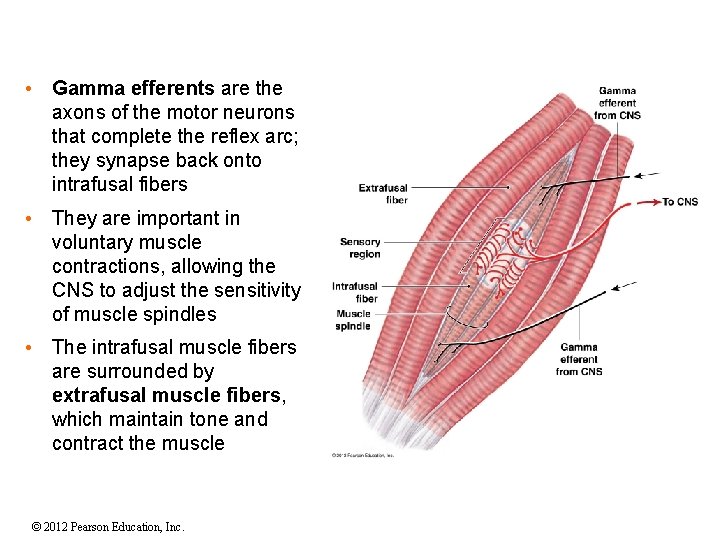
• Gamma efferents are the axons of the motor neurons that complete the reflex arc; they synapse back onto intrafusal fibers • They are important in voluntary muscle contractions, allowing the CNS to adjust the sensitivity of muscle spindles • The intrafusal muscle fibers are surrounded by extrafusal muscle fibers, which maintain tone and contract the muscle © 2012 Pearson Education, Inc.
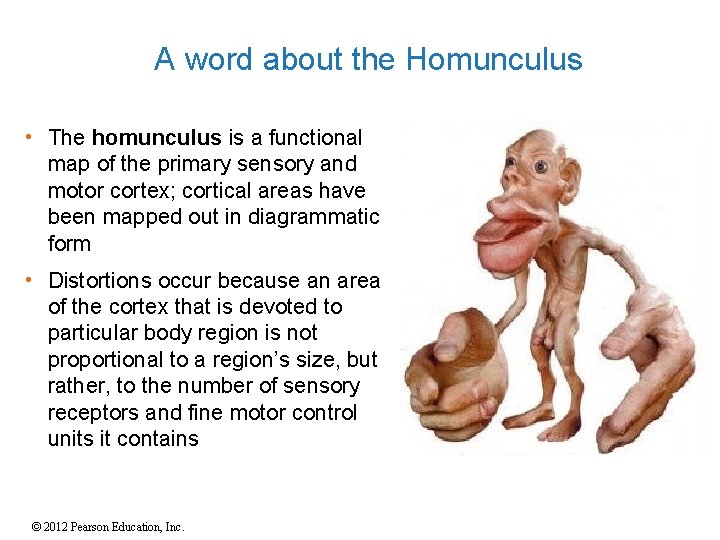
A word about the Homunculus • The homunculus is a functional map of the primary sensory and motor cortex; cortical areas have been mapped out in diagrammatic form • Distortions occur because an area of the cortex that is devoted to particular body region is not proportional to a region’s size, but rather, to the number of sensory receptors and fine motor control units it contains © 2012 Pearson Education, Inc.
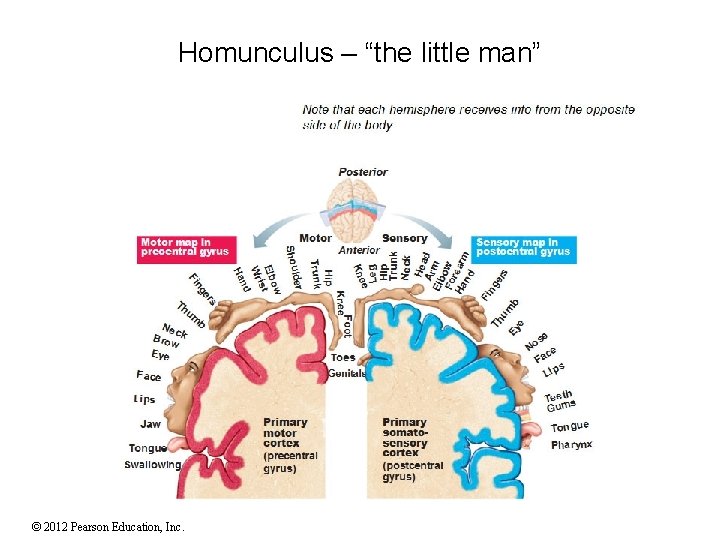
Homunculus – “the little man” © 2012 Pearson Education, Inc.

extra stuff © 2012 Pearson Education, Inc.
15 -4 Somatic and Visceral Sensory Pathways • Most somatic sensory information is relayed to the thalamus for processing • Only a very small fraction of the arriving information (1%) is projected to the cerebral cortex and reaches our awareness © 2012 Pearson Education, Inc.
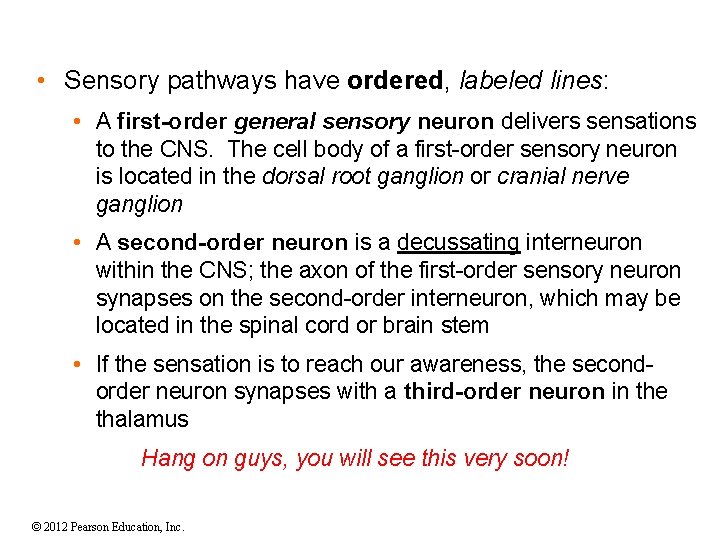
• Sensory pathways have ordered, labeled lines: • A first-order general sensory neuron delivers sensations to the CNS. The cell body of a first-order sensory neuron is located in the dorsal root ganglion or cranial nerve ganglion • A second-order neuron is a decussating interneuron within the CNS; the axon of the first-order sensory neuron synapses on the second-order interneuron, which may be located in the spinal cord or brain stem • If the sensation is to reach our awareness, the secondorder neuron synapses with a third-order neuron in the thalamus Hang on guys, you will see this very soon! © 2012 Pearson Education, Inc.
Somatic Sensory Pathways • Somatic sensory pathways carry sensory information from the skin and musculature of the body wall, head, neck and limbs • There are three major somatic sensory pathways 1. The Spinothalamic Pathway 2. The Posterior Column Pathway 3. The Spinocerebellar Pathway © 2012 Pearson Education, Inc.

Locations of Sensory Pathways and Ascending Tracts in the Spinal Cord Dorsal root ganglion Dorsal root Posterior column pathway Fasciculus gracilis Fasciculus cuneatus Spinocerebellar pathway Posterior spinocerebellar tract Anterior spinocerebellar tract Spinothalamic pathway Ventral root Lateral spinothalamic tract Anterior spinothalamic tract You know where the tracts are and where they go because of their names! © 2012 Pearson Education, Inc.
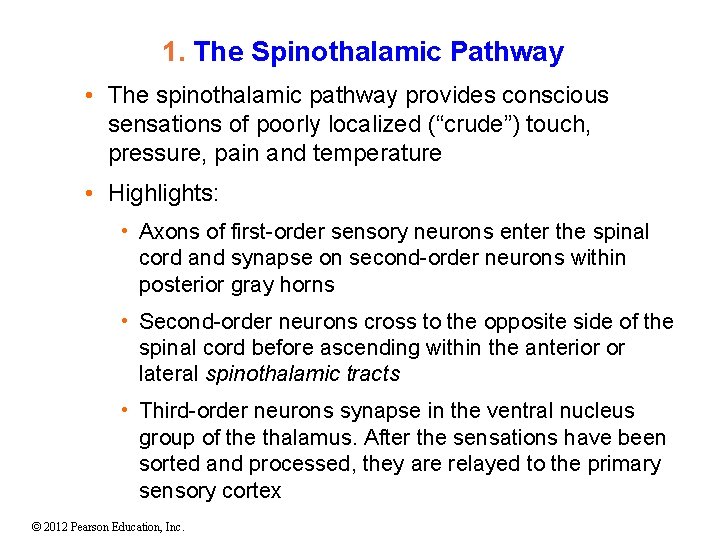
1. The Spinothalamic Pathway • The spinothalamic pathway provides conscious sensations of poorly localized (“crude”) touch, pressure, pain and temperature • Highlights: • Axons of first-order sensory neurons enter the spinal cord and synapse on second-order neurons within posterior gray horns • Second-order neurons cross to the opposite side of the spinal cord before ascending within the anterior or lateral spinothalamic tracts • Third-order neurons synapse in the ventral nucleus group of the thalamus. After the sensations have been sorted and processed, they are relayed to the primary sensory cortex © 2012 Pearson Education, Inc.
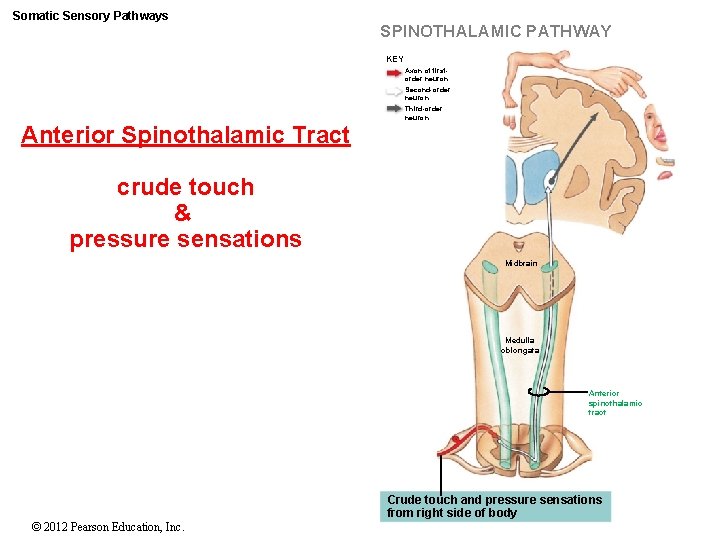
Somatic Sensory Pathways SPINOTHALAMIC PATHWAY KEY Axon of firstorder neuron Second-order neuron Third-order neuron Anterior Spinothalamic Tract crude touch & pressure sensations Midbrain Medulla oblongata Anterior spinothalamic tract Crude touch and pressure sensations from right side of body © 2012 Pearson Education, Inc.
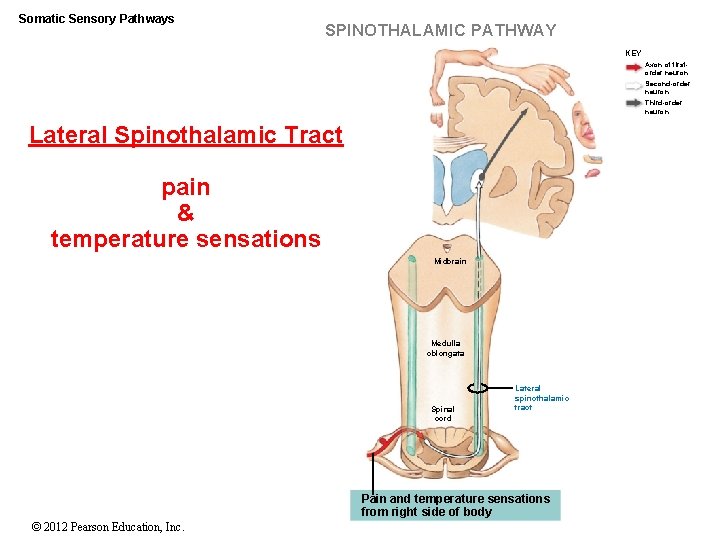
Somatic Sensory Pathways SPINOTHALAMIC PATHWAY KEY Axon of firstorder neuron Second-order neuron Third-order neuron Lateral Spinothalamic Tract pain & temperature sensations Midbrain Medulla oblongata Spinal cord Lateral spinothalamic tract Pain and temperature sensations from right side of body © 2012 Pearson Education, Inc.
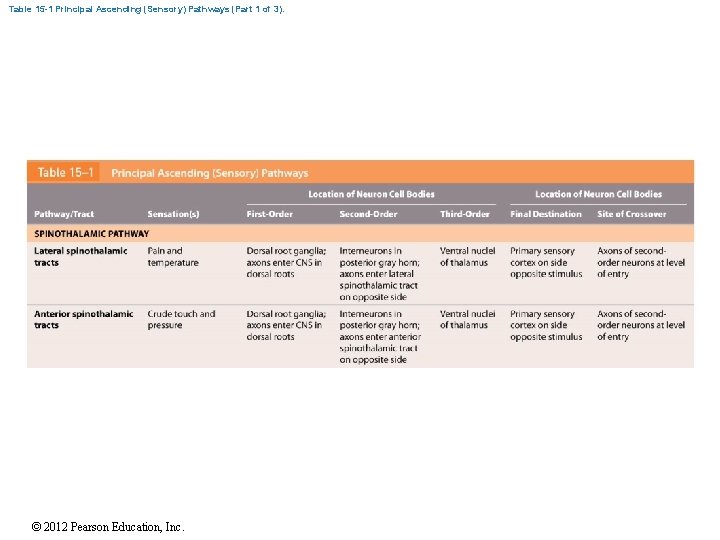
Table 15 -1 Principal Ascending (Sensory) Pathways (Part 1 of 3). © 2012 Pearson Education, Inc.
2. The Posterior Column Pathway • The posterior column pathway carries sensations of highly localized (“fine”) touch, pressure, vibration, and proprioception • Highlights • Axons of first-order sensory neurons enter the spinal cord, ascend within the gracilis and cuneatus fasciculi, and synapse on second-order neurons within the medulla oblongata • Second-order neurons cross to the opposite side of the medulla oblongata before ascending within the medial lemniscus • Third-order neurons synapse in the ventral nucleus group of the thalamus. After the sensations have been sorted and processed, they are relayed to the primary sensory cortex © 2012 Pearson Education, Inc.

Figure 15 -5 Somatic Sensory Pathways POSTERIOR COLUMN PATHWAY Posterior Column Pathway Fine touch Vibration Pressure Proprioception Ventral nuclei in thalamus Midbrain Nucleus gracilis and nucleus cuneatus Medial lemniscus Medulla oblongata Fasciculus gracilis and fasciculus cuneatus Dorsal root ganglion Fine-touch, vibration, pressure, and proprioception sensations from right side of body © 2012 Pearson Education, Inc.
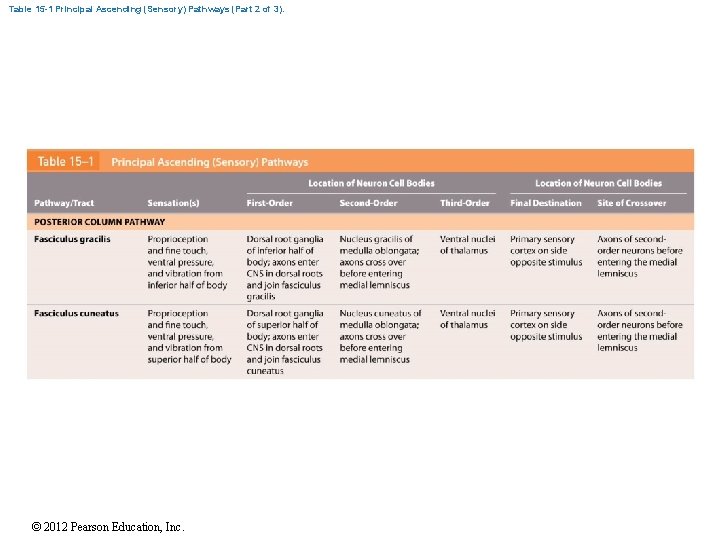
Table 15 -1 Principal Ascending (Sensory) Pathways (Part 2 of 3). © 2012 Pearson Education, Inc.
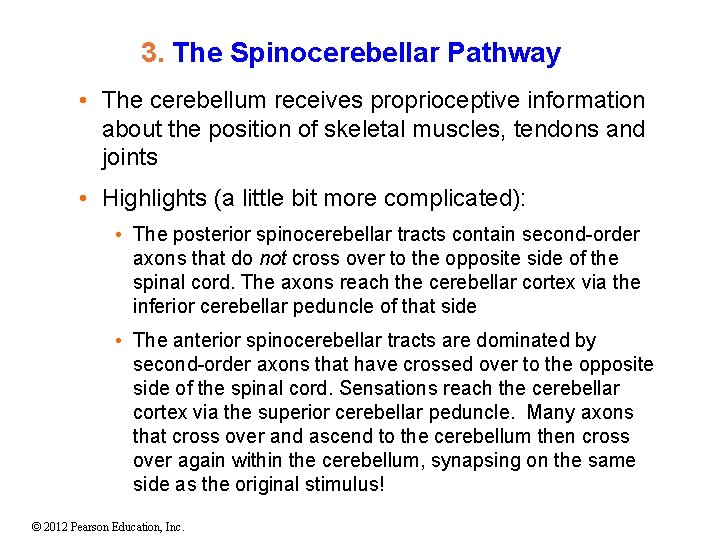
3. The Spinocerebellar Pathway • The cerebellum receives proprioceptive information about the position of skeletal muscles, tendons and joints • Highlights (a little bit more complicated): • The posterior spinocerebellar tracts contain second-order axons that do not cross over to the opposite side of the spinal cord. The axons reach the cerebellar cortex via the inferior cerebellar peduncle of that side • The anterior spinocerebellar tracts are dominated by second-order axons that have crossed over to the opposite side of the spinal cord. Sensations reach the cerebellar cortex via the superior cerebellar peduncle. Many axons that cross over and ascend to the cerebellum then cross over again within the cerebellum, synapsing on the same side as the original stimulus! © 2012 Pearson Education, Inc.
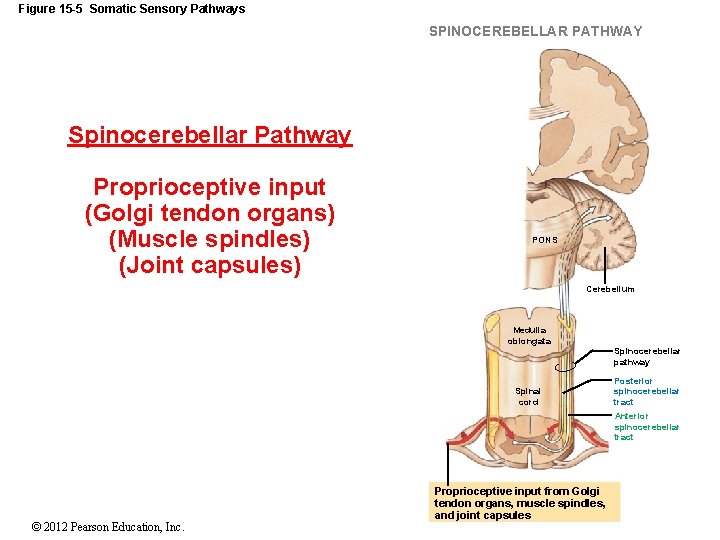
Figure 15 -5 Somatic Sensory Pathways SPINOCEREBELLAR PATHWAY Spinocerebellar Pathway Proprioceptive input (Golgi tendon organs) (Muscle spindles) (Joint capsules) PONS Cerebellum Medulla oblongata Spinocerebellar pathway Spinal cord Posterior spinocerebellar tract Anterior spinocerebellar tract © 2012 Pearson Education, Inc. Proprioceptive input from Golgi tendon organs, muscle spindles, and joint capsules
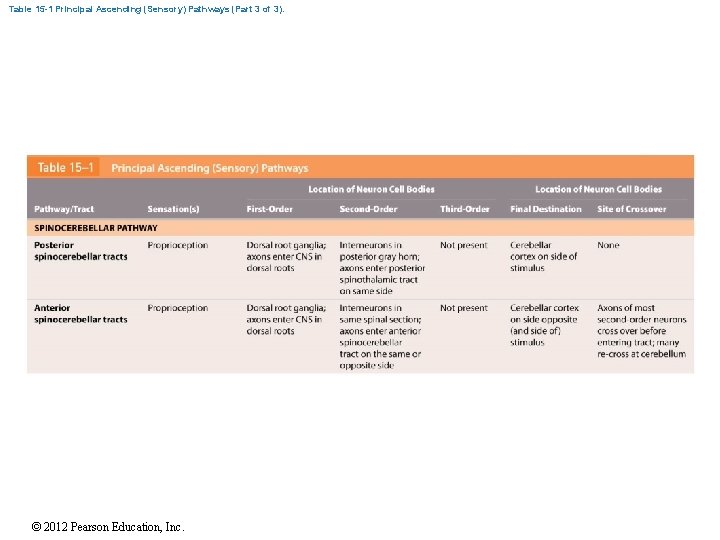
Table 15 -1 Principal Ascending (Sensory) Pathways (Part 3 of 3). © 2012 Pearson Education, Inc.
Visceral Sensory Pathways • Visceral sensory information is collected by interoceptors; they survey visceral tissues and organs, primarily within the thoracic and abdominopelvic cavities • These interoceptors include nociceptors, thermoreceptors, tactile receptors, baroreceptors and chemoreceptors • Cranial Nerves V, VII, IX, and X carry visceral sensory information from the mouth, palate, pharynx, larynx, trachea, esophagus, and associated vessels and glands • The solitary nucleus (a large nucleus in the medulla oblongata) is a major processing and sorting center for visceral sensory information; it has extensive connections with the various cardiovascular and respiratory centers, and the reticular formation © 2012 Pearson Education, Inc.
15 -5 Somatic Motor Pathways • The somatic nervous system (SNS) is also called the somatic motor system. It controls contractions of skeletal muscles (discussed next) • The autonomic nervous system (ANS) is also called the visceral motor system. It controls visceral effectors, such as smooth muscle, cardiac muscle, and glands (Ch. 16) © 2012 Pearson Education, Inc.
• Somatic motor pathways always involve at least two motor neurons in series (a labeled line) • The upper motor neuron cell body lies in a CNS processing center in the cortex; it synapses on the lower motor neuron (activity in the upper motor neuron may facilitate or inhibit the lower motor neuron) • The lower motor neuron cell body lies in a nucleus of the brain stem or spinal cord; it triggers a contraction in an innervated muscle. (Destruction of, or damage to, the lower motor neuron eliminates voluntary and reflex control over the innervated motor unit) © 2012 Pearson Education, Inc.
Somatic Motor Pathways • Conscious and subconscious motor commands control skeletal muscles by traveling over three integrated motor pathways • The three major somatic motor pathways are: 1. The Corticospinal Pathway 2. The Medial Pathway 3. The Lateral Pathway © 2012 Pearson Education, Inc.
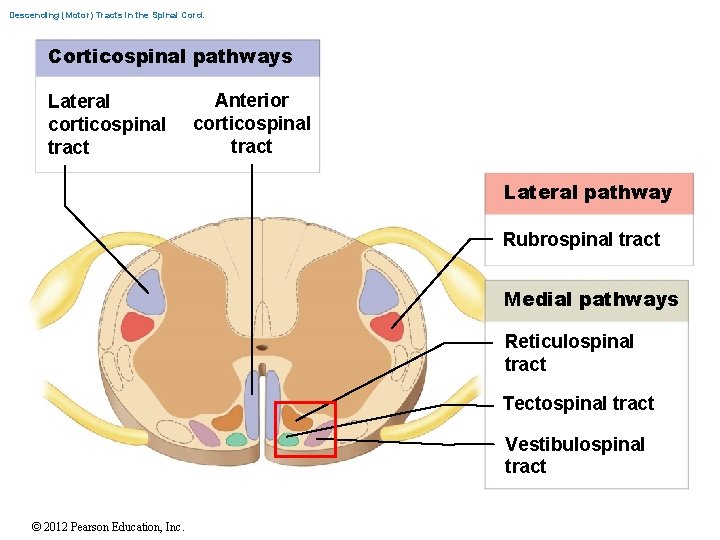
Descending (Motor) Tracts in the Spinal Cord. Corticospinal pathways Lateral corticospinal tract Anterior corticospinal tract Lateral pathway Rubrospinal tract Medial pathways Reticulospinal tract Tectospinal tract Vestibulospinal tract © 2012 Pearson Education, Inc.
1. The Corticospinal Pathway • The corticospinal pathway is sometimes called the pyramidal system. It provides voluntary skeletal muscle control, employing three pairs of descending tracts • Highlights: • The system begins at pyramidal cells of the primary motor cortex. Axons of these upper motor neurons descend into the brain stem and spinal cord to synapse on lower motor neurons (anterior gray horns) that control skeletal muscle function • Corticobulbar tracts provide conscious control over skeletal muscles that move the eye, jaw, face and some muscles of the neck and pharynx (decussation in brain stem) • Lateral and anterior corticospinal tracts provide conscious control over skeletal muscles that move the remaining axial and appendicular regions of the body (decussation varies) © 2012 Pearson Education, Inc.
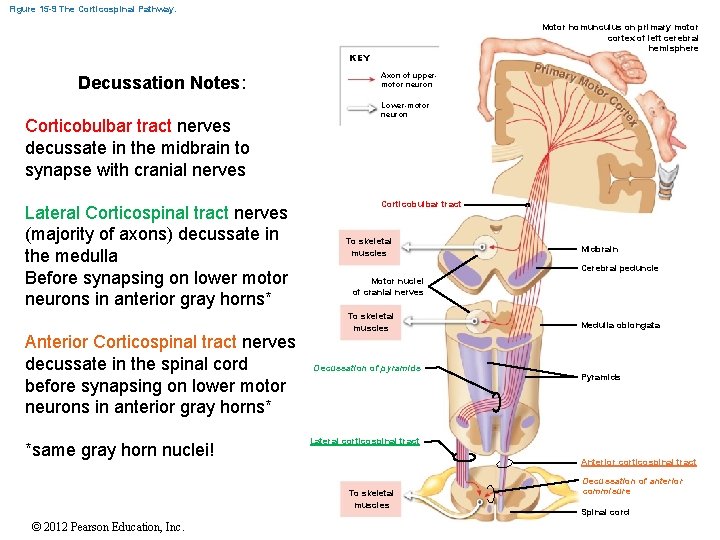
Figure 15 -9 The Corticospinal Pathway. Motor homunculus on primary motor cortex of left cerebral hemisphere KEY Decussation Notes: Corticobulbar tract nerves decussate in the midbrain to synapse with cranial nerves Lateral Corticospinal tract nerves (majority of axons) decussate in the medulla Before synapsing on lower motor neurons in anterior gray horns* Anterior Corticospinal tract nerves decussate in the spinal cord before synapsing on lower motor neurons in anterior gray horns* *same gray horn nuclei! Axon of uppermotor neuron Lower-motor neuron Corticobulbar tract To skeletal muscles Cerebral peduncle Motor nuclei of cranial nerves To skeletal muscles Decussation of pyramids Medulla oblongata Pyramids Lateral corticospinal tract Anterior corticospinal tract To skeletal muscles © 2012 Pearson Education, Inc. Midbrain Decussation of anterior commisure Spinal cord
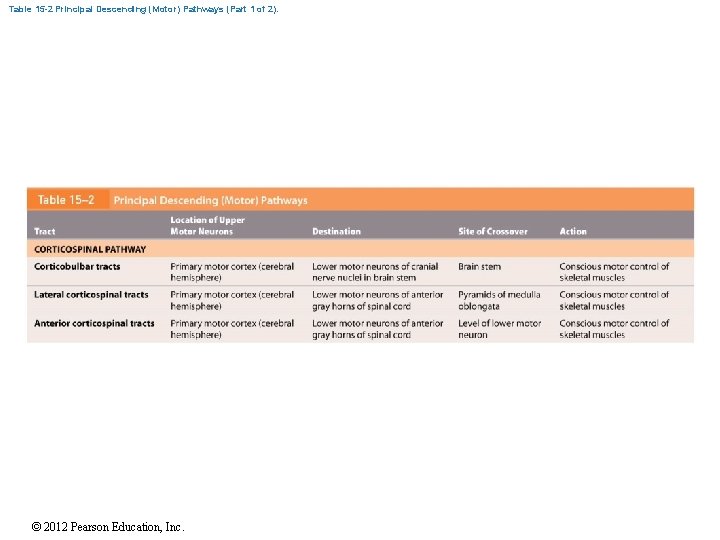
Table 15 -2 Principal Descending (Motor) Pathways (Part 1 of 2). © 2012 Pearson Education, Inc.
2. & 3. The Medial and Lateral Pathways • Several centers in the cerebrum, diencephalon, and brain stem may issue somatic motor commands as a result of processing that has been performed at the subconscious level • These nuclei and tracts are grouped by their primary functions: • Components of the medial pathway help control gross movements of the trunk and proximal limb muscles (balance, muscle tone, eye, head, neck and upper limb) • Components of the lateral pathway help control muscle tone and distal limb muscles that perform more precise movements (muscle tone and movement) © 2012 Pearson Education, Inc.
A Summary of the Medial and Lateral Pathways • The medial pathway is concerned with the control of muscle tone and gross movements of the neck, trunk and proximal limb muscles. Upper motor neurons of the medial pathway are located in: • Vestibular Nuclei receive information over the vestibulocochlear nerve (CN VIII) from receptors that monitor the position and movement of the head. The primary goal is to maintain body posture, balance and tone. Axons of upper motor neurons (VN) descend in the vestibulospinal tracts • Superior and Inferior Colliculi of the Mesencephalon (tectum) receive visual (superior) and auditory (inferior) sensations. Axons of upper motor neurons (S/IC) descend in the tectospinal tracts (these axons cross to the opposite side, before descending to synapse on lower motor neurons in brain stem or spinal cord) • Reticular Formation is a loosely organized network of neurons that extends throughout the brain stem. Axons of upper motor neurons (RF) descend into reticulospinal tracts without crossing to the opposite side • The lateral pathway is primarily concerned with the control of muscle tone and more precise movements of the distal parts of limbs. Axons of upper motor neurons in red nuclei cross to opposite side of brain and descend into spinal cord in rubrospinal tracts © 2012 Pearson Education, Inc.
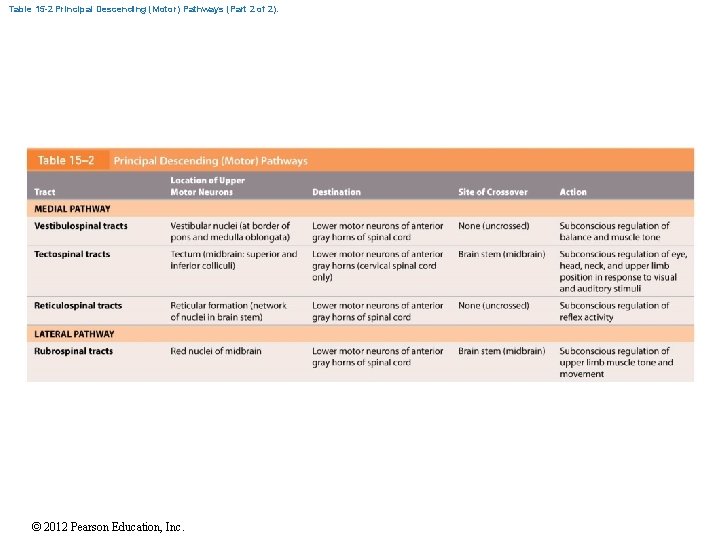
Table 15 -2 Principal Descending (Motor) Pathways (Part 2 of 2). © 2012 Pearson Education, Inc.
The Basal Nuclei and Cerebellum • The basal nuclei and cerebellum are responsible for coordination and feedback control over consciously or subconsciously directed muscle contractions • The basal nuclei provide background patterns of movement that are involved in voluntary motor activities • Some axons extend to the premotor cortex, the motor association area that directs activities of the primary motor cortex. These axons alter the pattern of instructions carried by the corticospinal tracts • Other axons alter the excitatory or inhibitory output of the reticulospinal tracts • The Cerebellum monitors proprioceptive (position) sensations, visual information from the eyes and vestibular (balance) sensations from the inner ear as movements are under way © 2012 Pearson Education, Inc.
Summary – Levels of Processing and Motor Control • All sensory and motor pathways involve a series of synapses, one after the other. This is a general pattern: • Spinal and cranial reflexes provide rapid, involuntary, preprogrammed responses that preserve homeostasis over the short term; they control the most basic motor activities • Integrative centers in the brain (cerebellum) perform more elaborate processing, and as we move from the medulla oblongata to the cerebral cortex, the motor patterns become increasingly more complex and variable • The most complex and variable motor activities are directed by the primary motor cortex. Neurons of the primary motor cortex innervate motor neurons in the brain and spinal cord responsible for stimulating skeletal muscles • Higher centers in the brain can suppress or facilitate reflex responses; reflexes can complement or increase the complexity of voluntary movements © 2012 Pearson Education, Inc.

© 2012 Pearson Education, Inc.
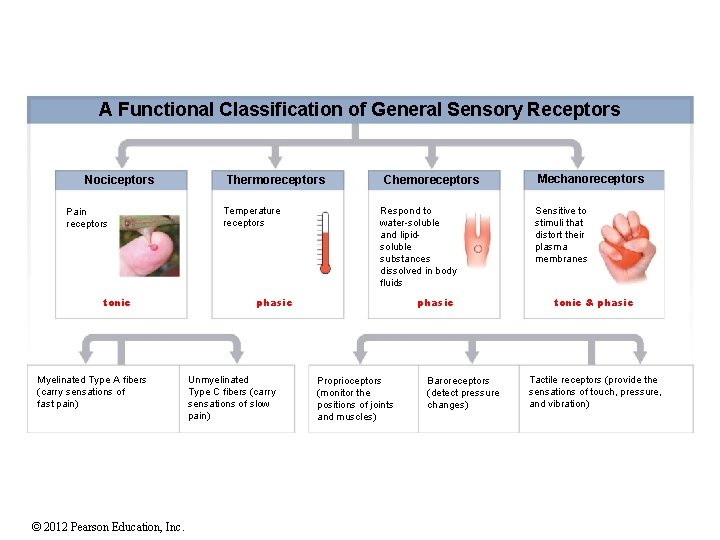
A Functional Classification of General Sensory Receptors Nociceptors Pain receptors tonic Myelinated Type A fibers (carry sensations of fast pain) © 2012 Pearson Education, Inc. Thermoreceptors Temperature receptors Chemoreceptors Respond to water-soluble and lipidsoluble substances dissolved in body fluids phasic Unmyelinated Type C fibers (carry sensations of slow pain) phasic Proprioceptors (monitor the positions of joints and muscles) Baroreceptors (detect pressure changes) Mechanoreceptors Sensitive to stimuli that distort their plasma membranes tonic & phasic Tactile receptors (provide the sensations of touch, pressure, and vibration)
- Slides: 65