
Special organs of taste Approximately 10 000 on
- Slides: 9
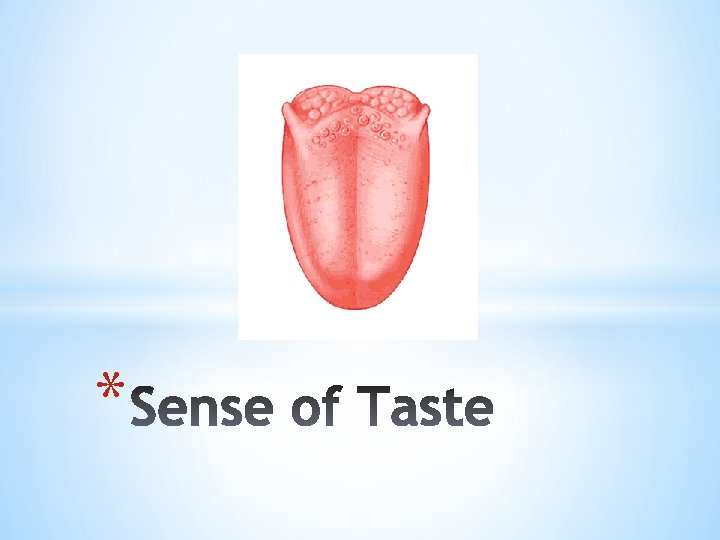
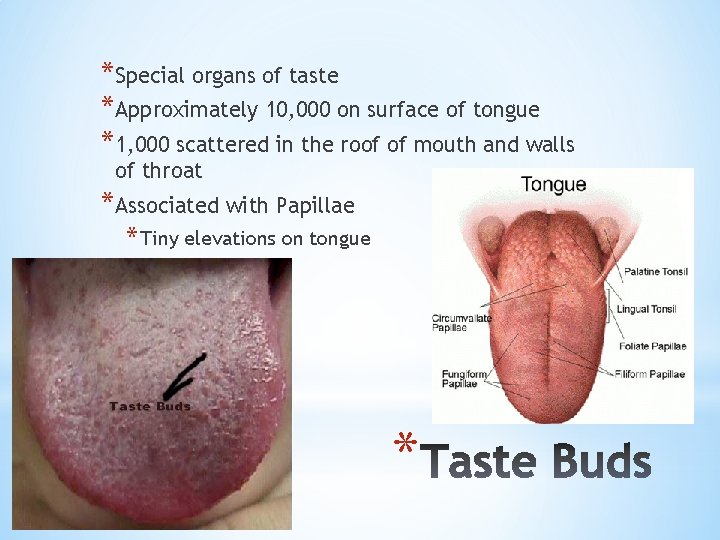
*Special organs of taste *Approximately 10, 000 on surface of tongue *1, 000 scattered in the roof of mouth and walls of throat *Associated with Papillae * Tiny elevations on tongue *
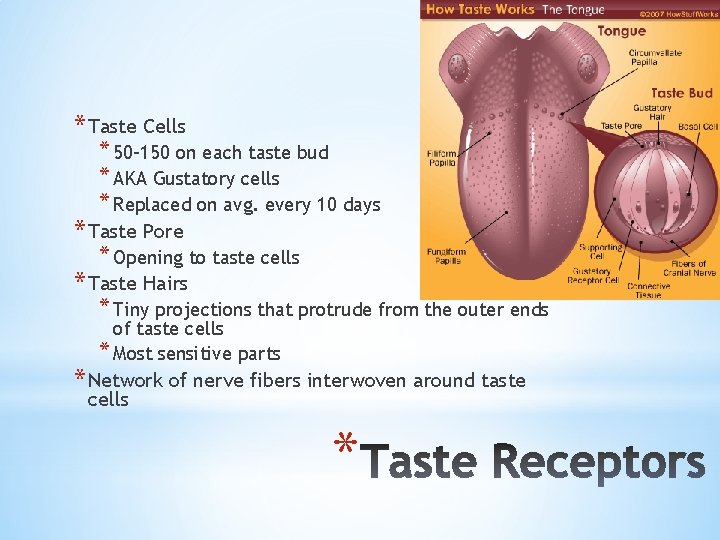
* Taste Cells * 50 -150 on each taste bud * AKA Gustatory cells * Replaced on avg. every 10 days * Taste Pore * Opening to taste cells * Taste Hairs * Tiny projections that protrude from the outer ends of taste cells * Most sensitive parts * Network of nerve fibers interwoven around taste cells *
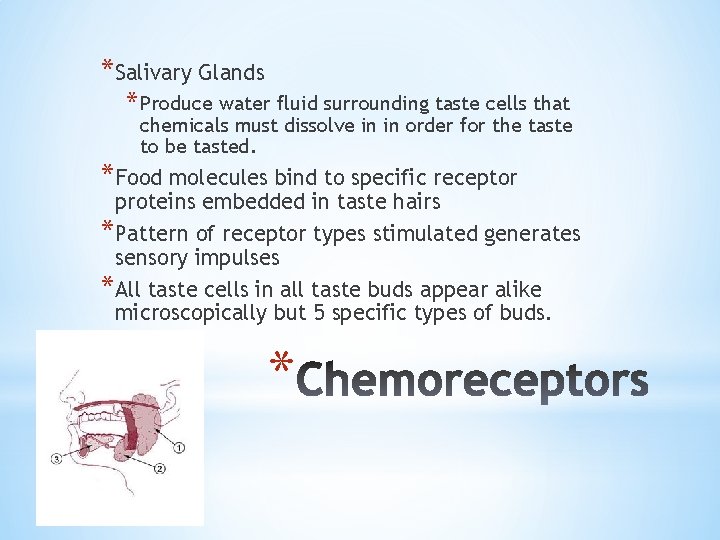
*Salivary Glands * Produce water fluid surrounding taste cells that chemicals must dissolve in in order for the taste to be tasted. *Food molecules bind to specific receptor proteins embedded in taste hairs *Pattern of receptor types stimulated generates sensory impulses *All taste cells in all taste buds appear alike microscopically but 5 specific types of buds. *
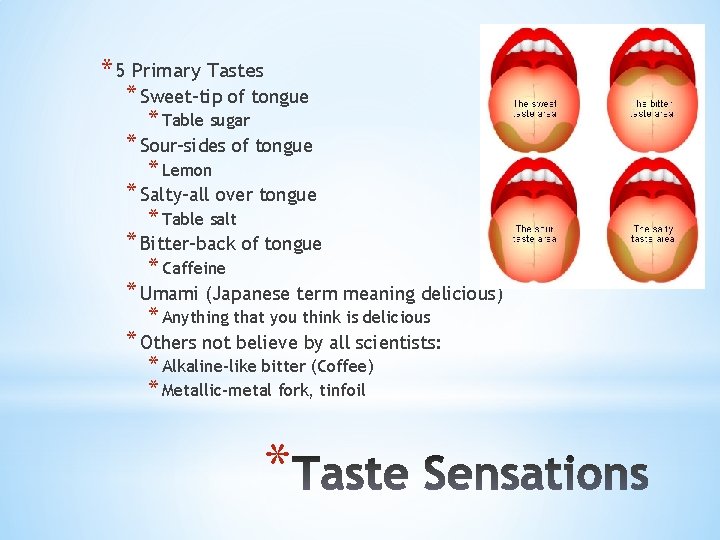
* 5 Primary Tastes * Sweet-tip of tongue * Table sugar * Sour-sides of tongue * Lemon * Salty-all over tongue * Table salt * Bitter-back of tongue * Caffeine * Umami (Japanese term meaning delicious) * Anything that you think is delicious * Others not believe by all scientists: * Alkaline-like bitter (Coffee) * Metallic-metal fork, tinfoil *
*Flavor results from one or more combinations of primary sensations * Also includes: smelling, feeling texture, and temperature *Pain Receptor * Stimulated by chili peppers, ginger etc. *Taste Cells respond to one sensation and are found throughout tongue * Most strong in certain regions *
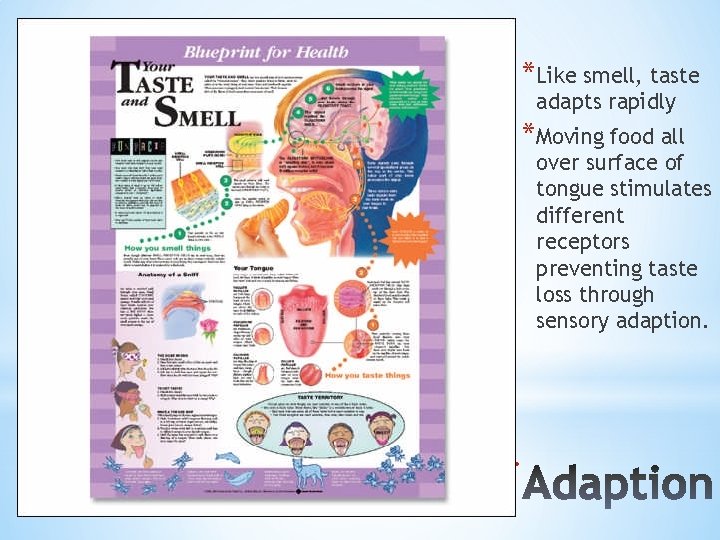
*Like smell, taste adapts rapidly *Moving food all over surface of tongue stimulates different receptors preventing taste loss through sensory adaption. *
*Cranial Nerves * Facial * Glossopharyngeal * Vagus *Flow to Medulla Oblongta *Then Ascend to Thalamus and further to gustatory cortex in parietal lobe. *
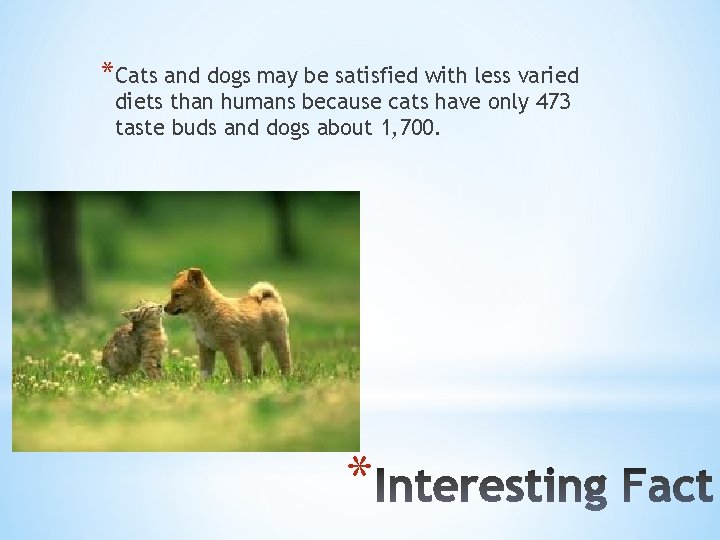
*Cats and dogs may be satisfied with less varied diets than humans because cats have only 473 taste buds and dogs about 1, 700. *