
Special Considerations Objectives Suspect and manage Pneumothorax and
Special Considerations
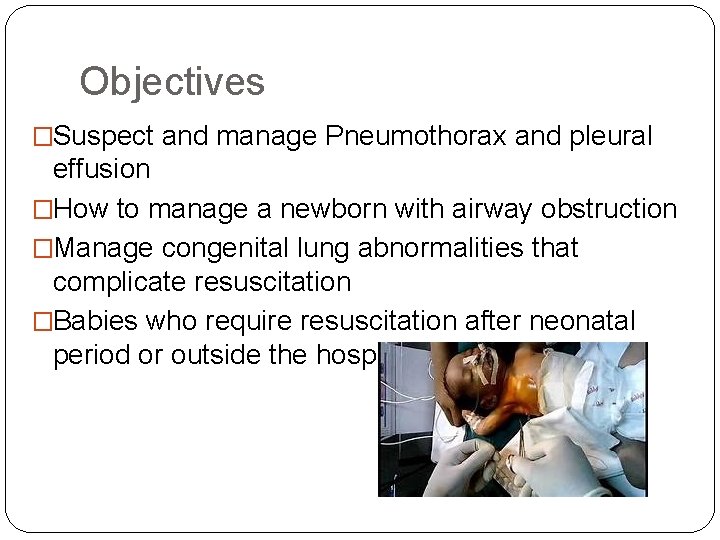
Objectives �Suspect and manage Pneumothorax and pleural effusion �How to manage a newborn with airway obstruction �Manage congenital lung abnormalities that complicate resuscitation �Babies who require resuscitation after neonatal period or outside the hospital delivery room
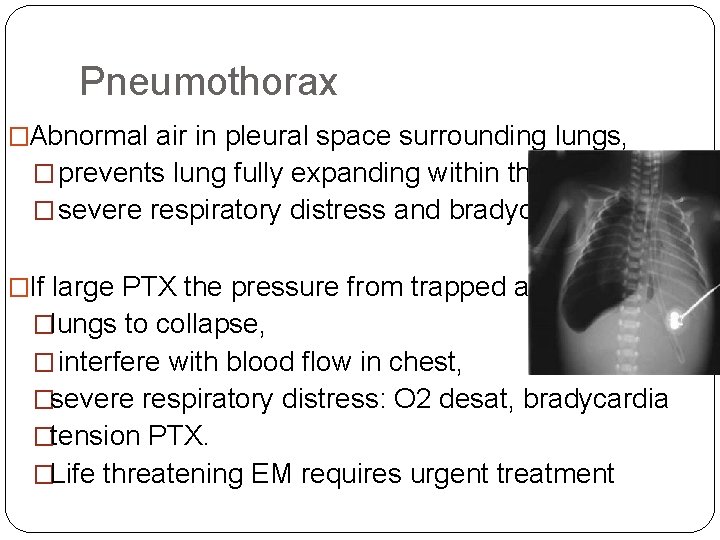
Pneumothorax �Abnormal air in pleural space surrounding lungs, � prevents lung fully expanding within the chest � severe respiratory distress and bradycardia �If large PTX the pressure from trapped air �lungs to collapse, � interfere with blood flow in chest, �severe respiratory distress: O 2 desat, bradycardia �tension PTX. �Life threatening EM requires urgent treatment
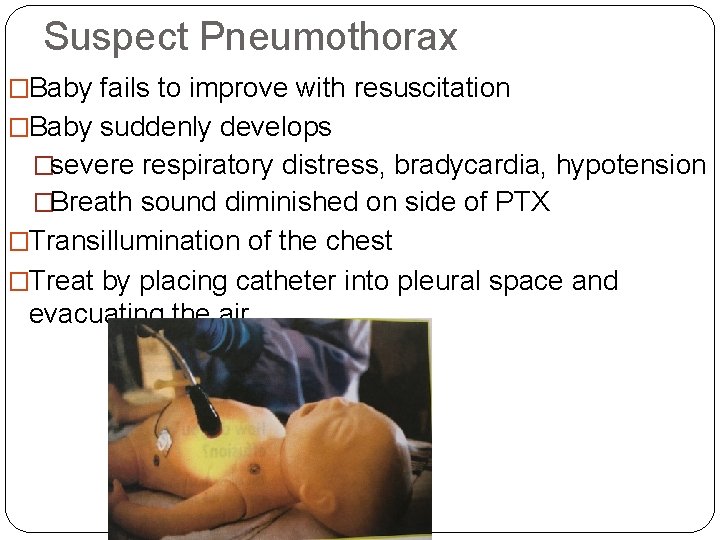
Suspect Pneumothorax �Baby fails to improve with resuscitation �Baby suddenly develops �severe respiratory distress, bradycardia, hypotension �Breath sound diminished on side of PTX �Transillumination of the chest �Treat by placing catheter into pleural space and evacuating the air
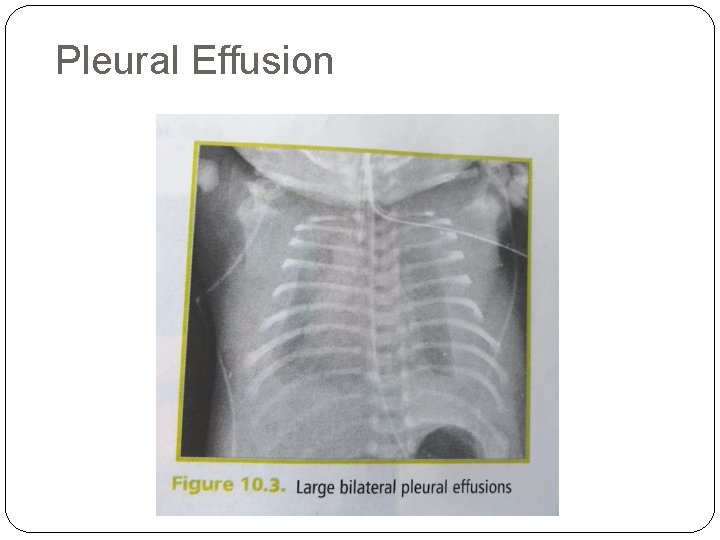
Pleural Effusion
Pleural Effusion �Fluid that collects in pleural space �Caused by Edema, infection, leakage from lymphatic system �History of fetal anemia, twin to twin transfusion, cardiac arrhythmia, congenital heart disease, congenital infection, genetic syndrome �Suspect if �Respiratory distress and generalize body edema (hydrops fetalis), ascites, pericardial effusion �Lung sounds decreased on affected side �CXR evidence �If severe respiratory distress, doesn’t resolve with intubation, PPV
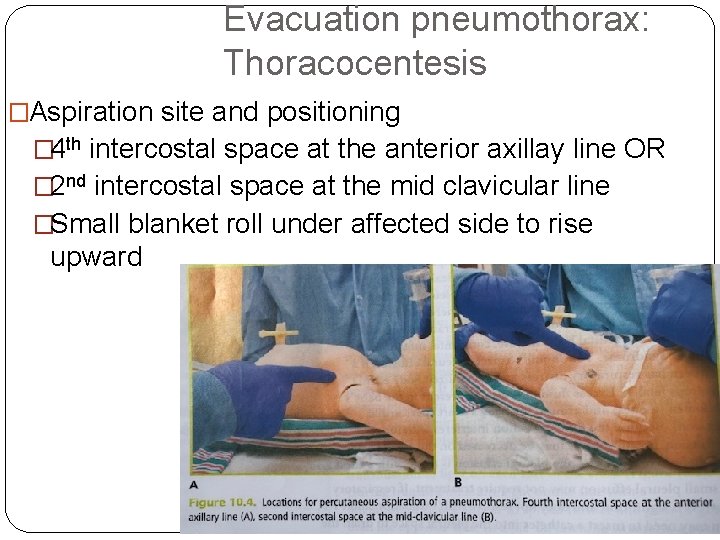
Evacuation pneumothorax: Thoracocentesis �Aspiration site and positioning � 4 th intercostal space at the anterior axillay line OR � 2 nd intercostal space at the mid clavicular line �Small blanket roll under affected side to rise upward
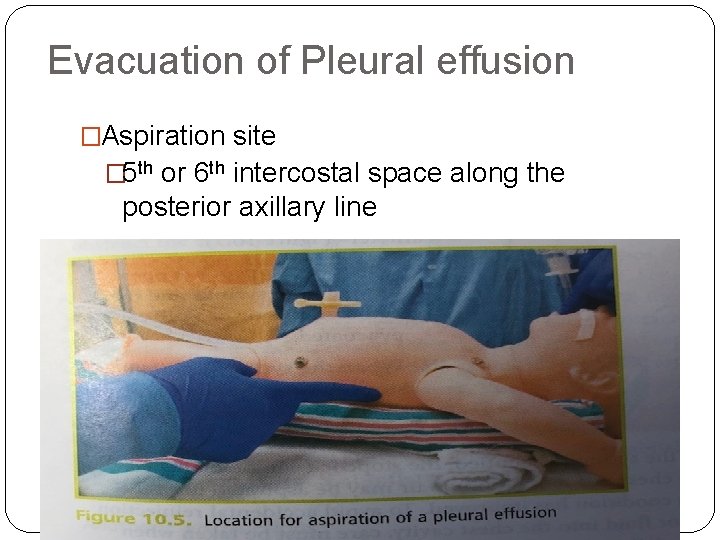
Evacuation of Pleural effusion �Aspiration site � 5 th or 6 th intercostal space along the posterior axillary line
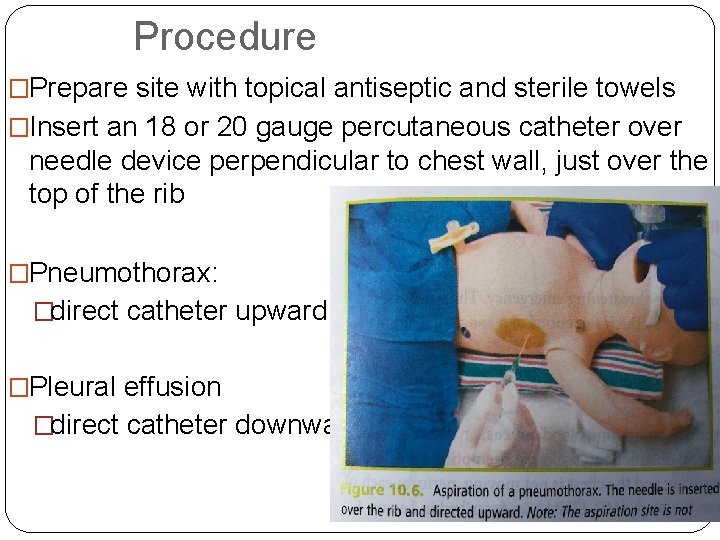
Procedure �Prepare site with topical antiseptic and sterile towels �Insert an 18 or 20 gauge percutaneous catheter over needle device perpendicular to chest wall, just over the top of the rib �Pneumothorax: �direct catheter upward �Pleural effusion �direct catheter downward
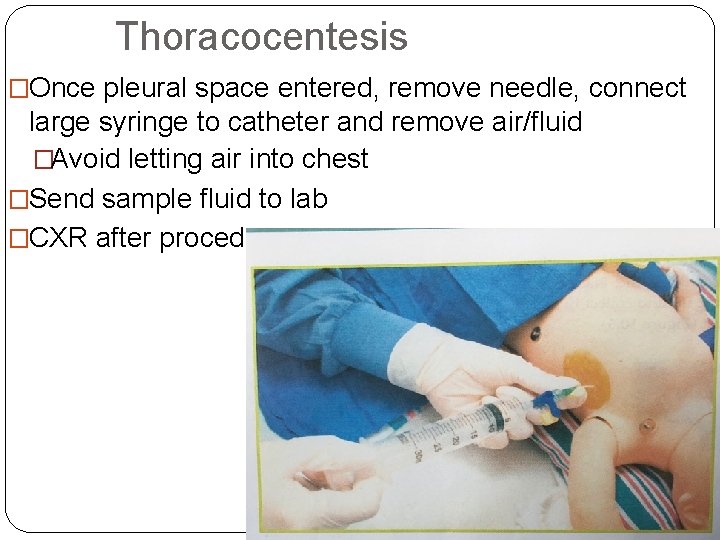
Thoracocentesis �Once pleural space entered, remove needle, connect large syringe to catheter and remove air/fluid �Avoid letting air into chest �Send sample fluid to lab �CXR after procedure
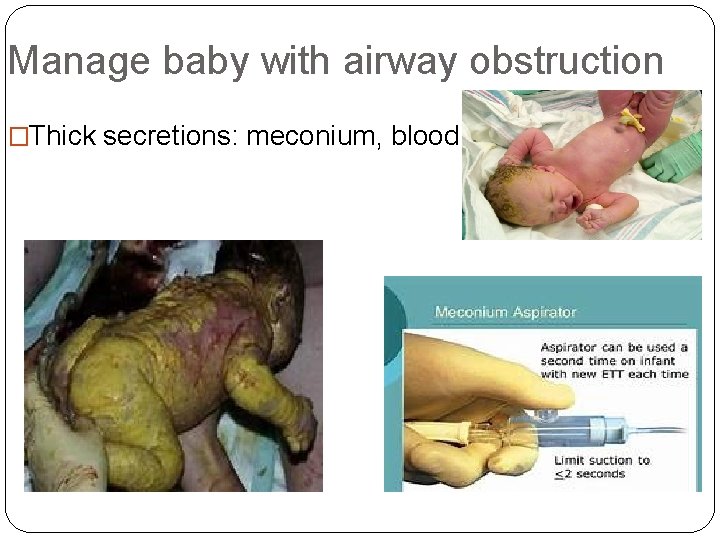
Manage baby with airway obstruction �Thick secretions: meconium, blood
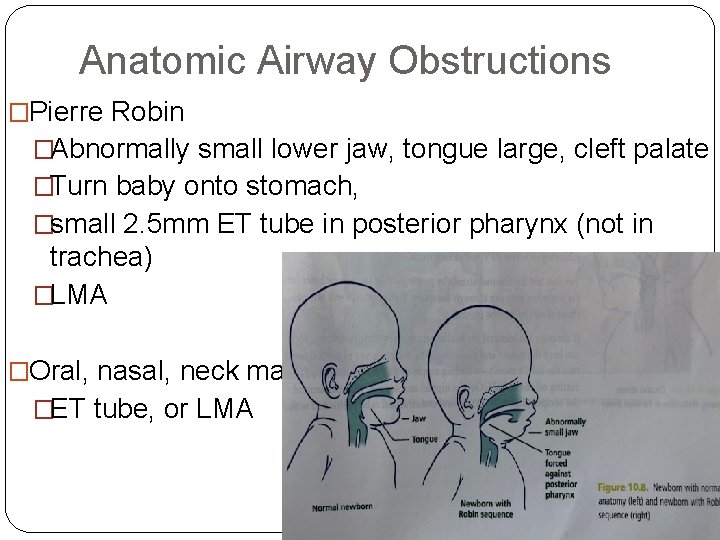
Anatomic Airway Obstructions �Pierre Robin �Abnormally small lower jaw, tongue large, cleft palate �Turn baby onto stomach, �small 2. 5 mm ET tube in posterior pharynx (not in trachea) �LMA �Oral, nasal, neck masses �ET tube, or LMA
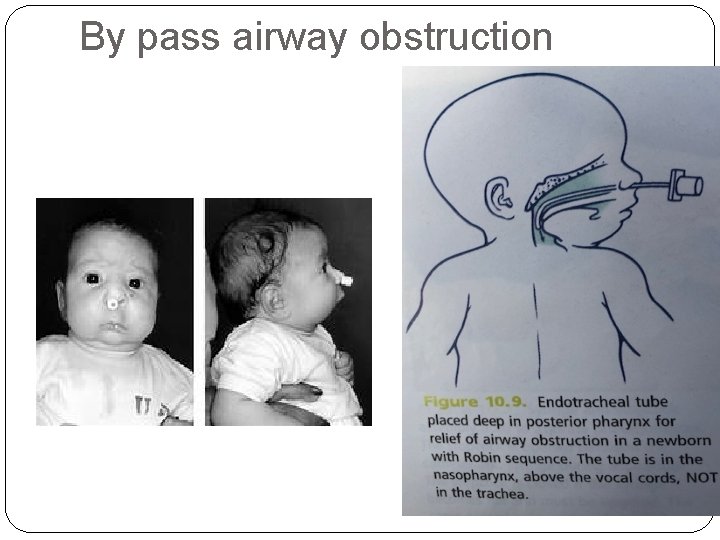
By pass airway obstruction
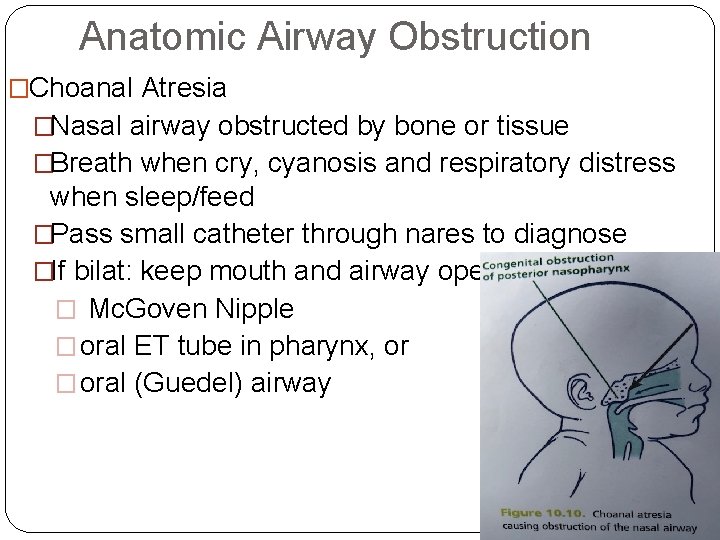
Anatomic Airway Obstruction �Choanal Atresia �Nasal airway obstructed by bone or tissue �Breath when cry, cyanosis and respiratory distress when sleep/feed �Pass small catheter through nares to diagnose �If bilat: keep mouth and airway open with � Mc. Goven Nipple � oral ET tube in pharynx, or � oral (Guedel) airway
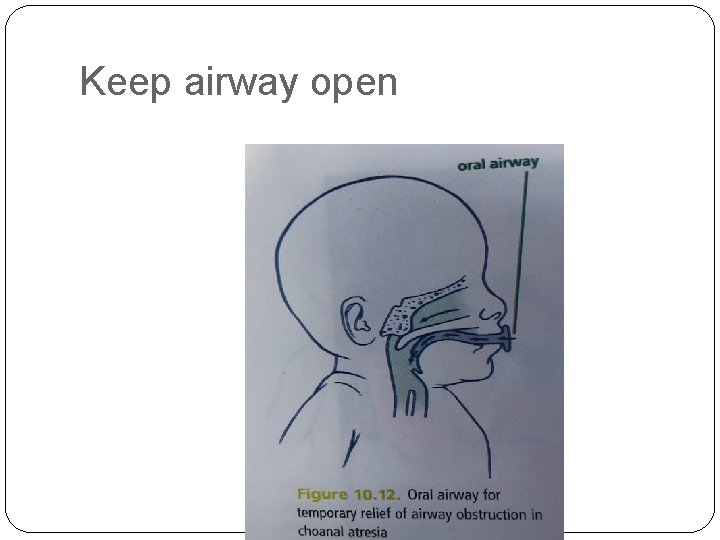
Keep airway open
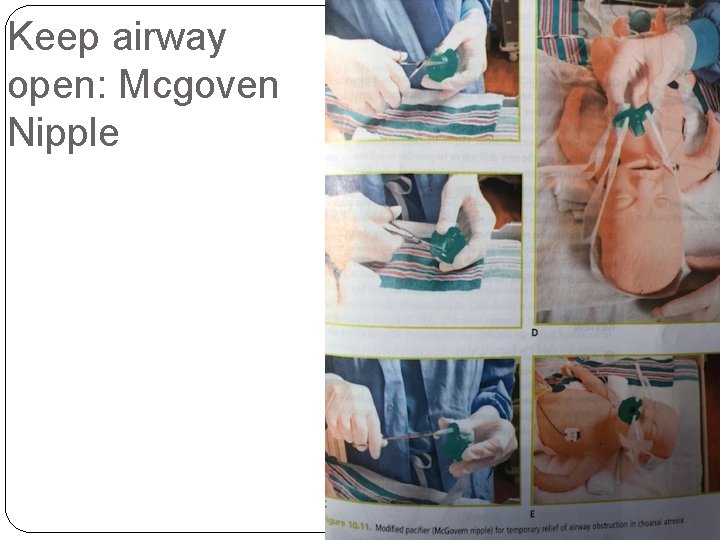
Keep airway open: Mcgoven Nipple
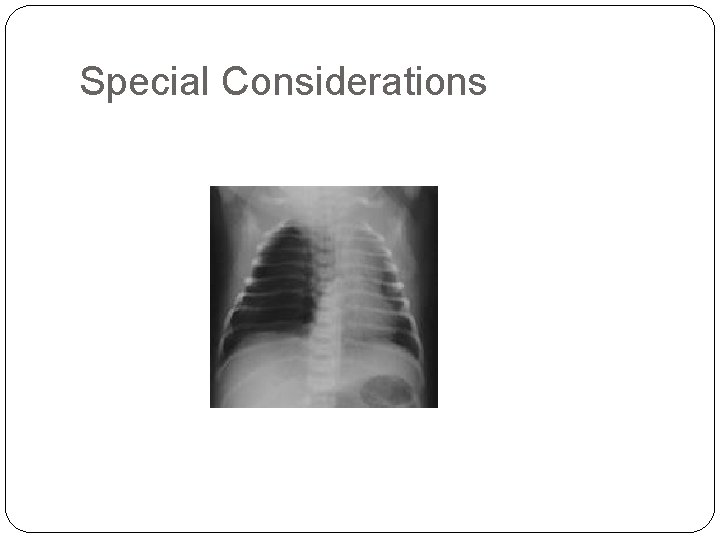
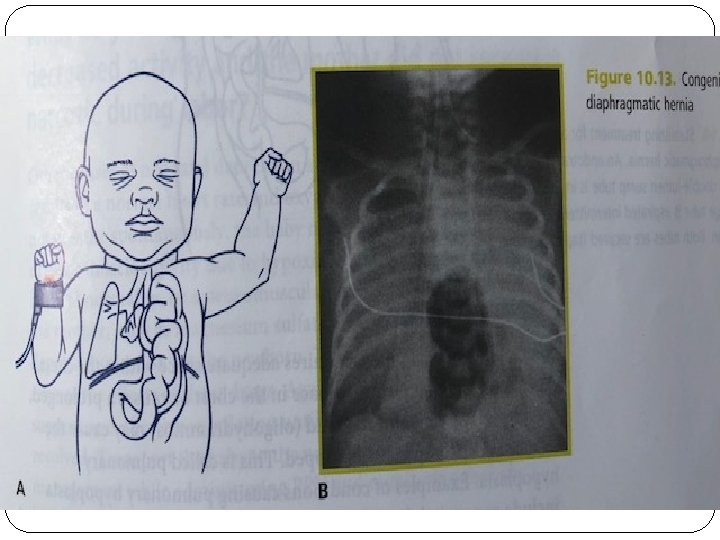
Abnormalities of fetal lung development that complicate resuscitation �Congenital diaphragmatic hernia, mainly left side �Diaphragm malformed �Intestines, stomach, and liver can enter chest �Prevent lung from developing: pulmonary hypoplasia �Scaphoid abdomen, respiratory distress, hypoxemia, �Decreased breath sounds on hernia side, gurgling heard from intestines �If PPV administered: gas enters stomach and intestines �Inhibits lung inflation �Pneumothorax may develop
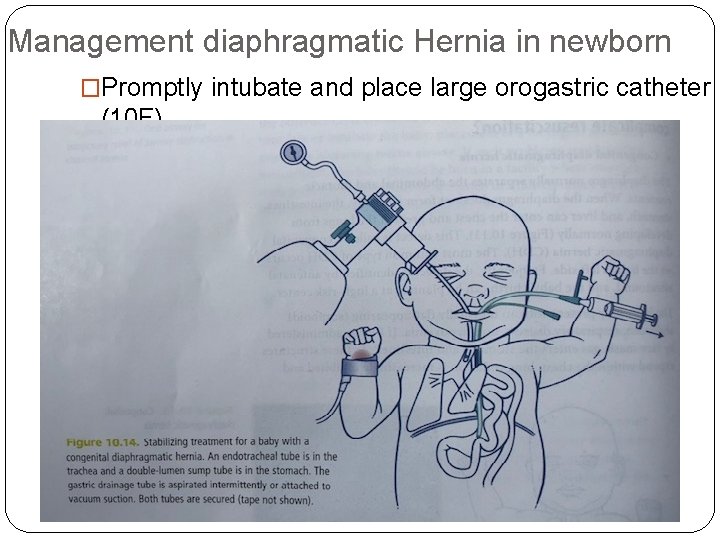
Management diaphragmatic Hernia in newborn �Promptly intubate and place large orogastric catheter (10 F)
Resuscitating Newborns outside hospital �Initial priority for resuscitation, regardless of location, is to restore adequate ventilation �Temperature management �Dry, change towels, skin to skin �Plastic wrap, hat �Clearing the airway �Bulb syringe, wipe mouth and nose with clean cloth wrapped around finger �Ventilation �Drying, stimulation �PPV with bag and mask or mouth to mouth and nose �Sniffing position �Chest compression � 3: 1 compression to ventilation �Vascular access �IO
- Slides: 20