
Speaker and listener Listening Listening is an essential
- Slides: 13
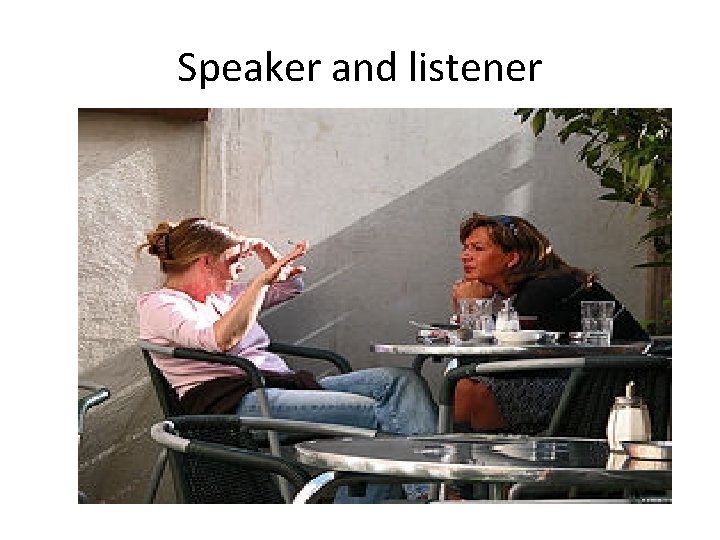
Speaker and listener
Listening • Listening is an essential part of communication, and it is different from hearing. Being a good and patient listener helps you not only solve many problems at work or home
HOW TO BE A GOOD LISTENERS • you must look at the problems from the other person's perspective and actively try to see his or her point of view • Create a conducive physical and mental space Give all of your attention. Turn off cell phones. Quiet your mind and open yourself to whatever the person might have to say.
• Stop talking and try to be silent. many think that empathy means sharing with the listener similar experiences that the listener has had. • Follow and encourage the speaker with body language. Adopting body postures, positions and movements that are similar to the speaker (called mirroring) will allow the speaker to relax and open up more.
• Practice the empathetic sounding back technique. Repeat and encourage: Repeat some of the things said by the speaker. At the same time, encourage the speaker with positive feedback. For example, you might say: "You didn't enjoy having to take the blame Summarize and restate
• Do not interrupt with what you feel or think about the topic being discussed. Wait for another person to ask your opinion before interrupting the flow of discussion. • Ask meaningful and empowering questions In the process of doing so, the speaker should begin to move from a more emotional response to a more constructive response.
• Wait for the person to open up. In the process of encouraging a constructive response, • Use Bod. y Language to express your interest Your expression, Read between the lines: – such expressions, body language, and volume. – Speak at approximately the same energy level as the other person. This way, he or she will know that the message is getting through and that there is no need to repeat.
• Try to reassure the speaker that all is well. Whatever the conclusion of the conversation, let the speaker know that you have been happy to listen and to be a sounding board • Be attentive: – Use your face, voice and body to show that you are interested in what that person is talking about
• Use encouraging words to show you are listening: – Mmm, – I see – Right – Uh, huh
• Use nonverbal actions to show you pay attention to what is being said: – Relaxed posture – Head-nodding – Facial expression – Relaxed body expression
• Use encouraging words that will invite them to continue: – Tell me more – Let's talk about it
Things to avoid: – Do not interrupt – Do not interrogate – Do not try to think of your response in your head while listening – Do not change the subject
• Avoid phrases like: – Are you sure? – It's not that bad – Sleep on it. You'll feel better tomorrow – Do not be judgmental