
SPE Introduction to Exploration and Production Field Development
- Slides: 23
SPE Introduction to Exploration and Production : Field Development / Facilities Engineering Working together for a safer world
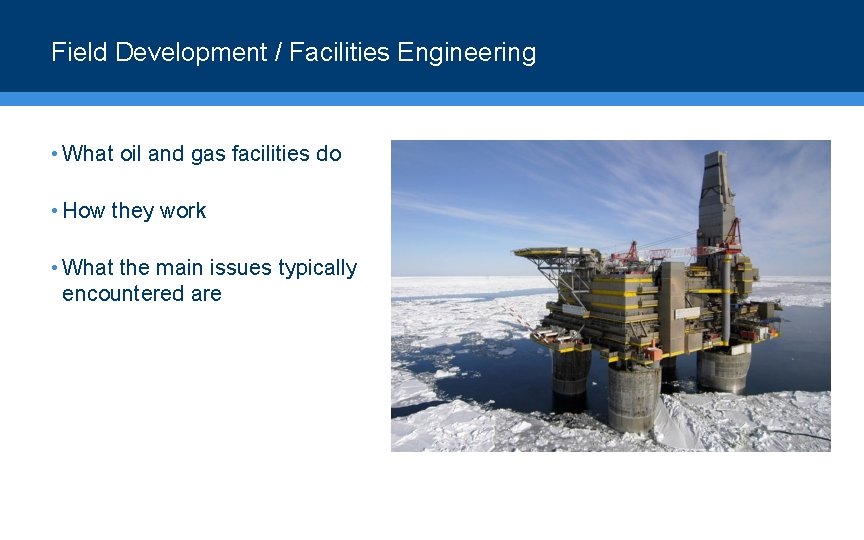
Field Development / Facilities Engineering • What oil and gas facilities do • How they work • What the main issues typically encountered are
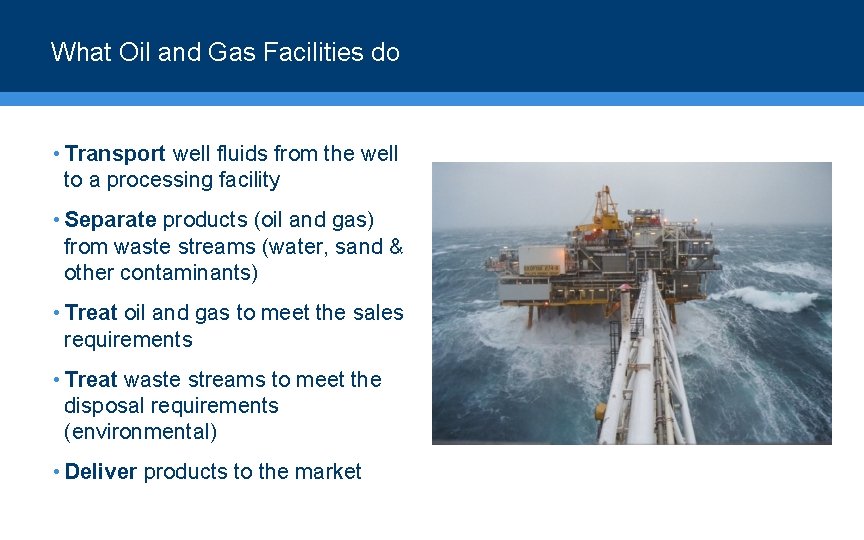
What Oil and Gas Facilities do • Transport well fluids from the well to a processing facility • Separate products (oil and gas) from waste streams (water, sand & other contaminants) • Treat oil and gas to meet the sales requirements • Treat waste streams to meet the disposal requirements (environmental) • Deliver products to the market
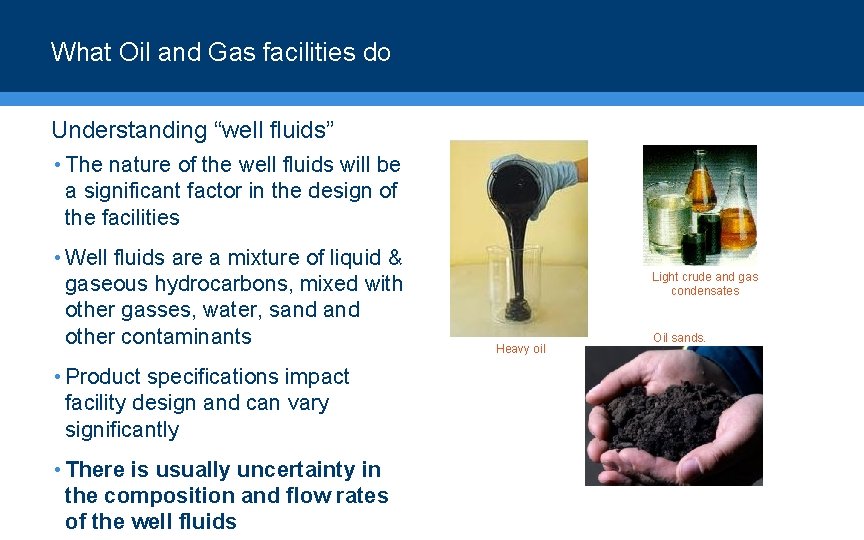
What Oil and Gas facilities do Understanding “well fluids” • The nature of the well fluids will be a significant factor in the design of the facilities • Well fluids are a mixture of liquid & gaseous hydrocarbons, mixed with other gasses, water, sand other contaminants • Product specifications impact facility design and can vary significantly • There is usually uncertainty in the composition and flow rates of the well fluids Light crude and gas condensates Heavy oil Oil sands.
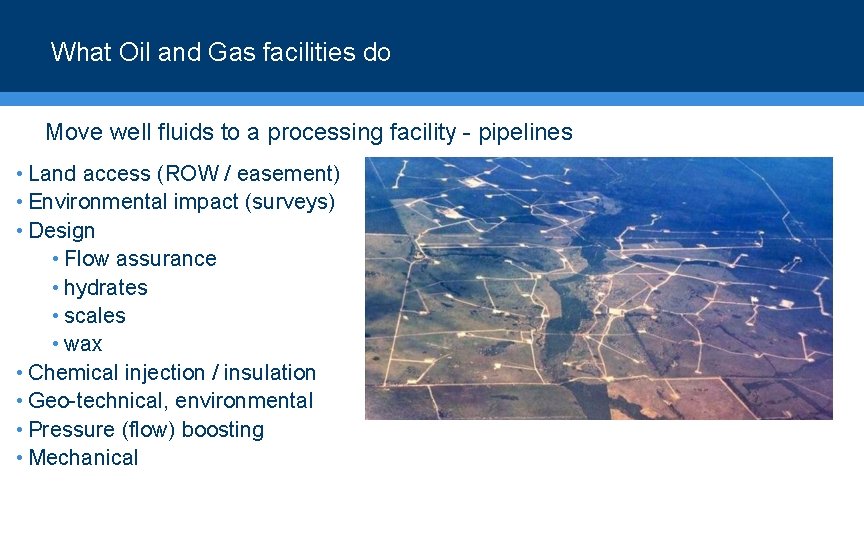
What Oil and Gas facilities do Move well fluids to a processing facility - pipelines • Land access (ROW / easement) • Environmental impact (surveys) • Design • Flow assurance • hydrates • scales • wax • Chemical injection / insulation • Geo-technical, environmental • Pressure (flow) boosting • Mechanical
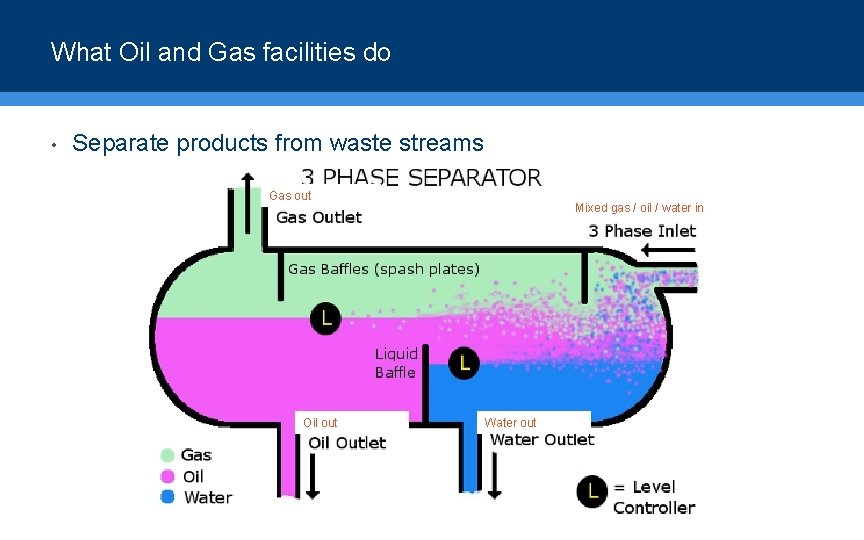
What Oil and Gas facilities do • Separate products from waste streams Gas out Oil out Mixed gas / oil / water in Water out
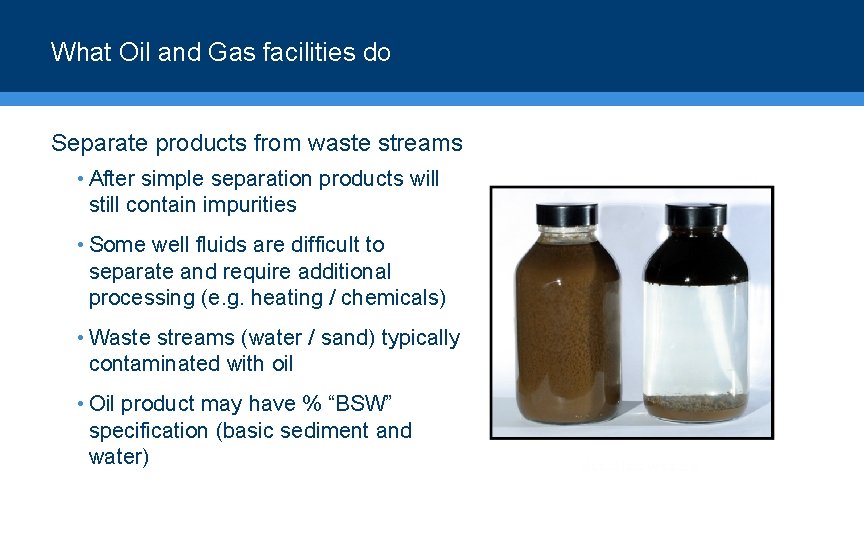
What Oil and Gas facilities do Separate products from waste streams • After simple separation products will still contain impurities • Some well fluids are difficult to separate and require additional processing (e. g. heating / chemicals) • Waste streams (water / sand) typically contaminated with oil • Oil product may have % “BSW” specification (basic sediment and water)
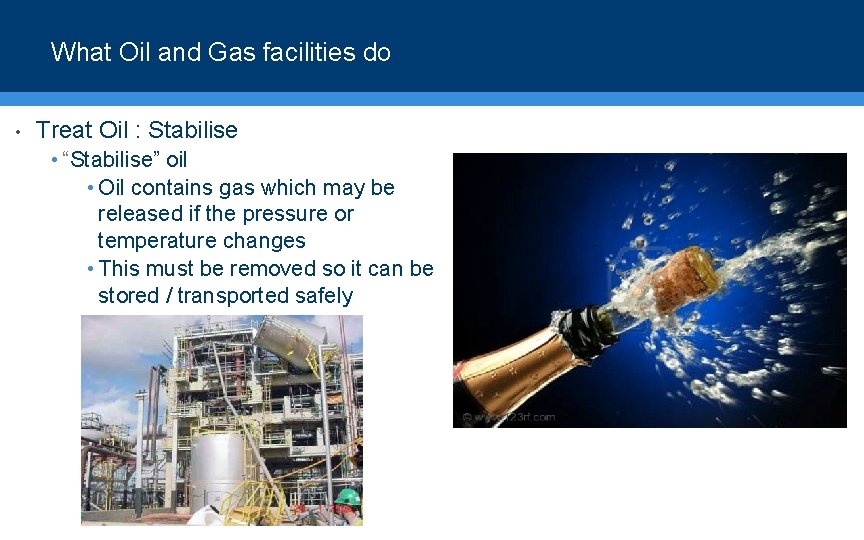
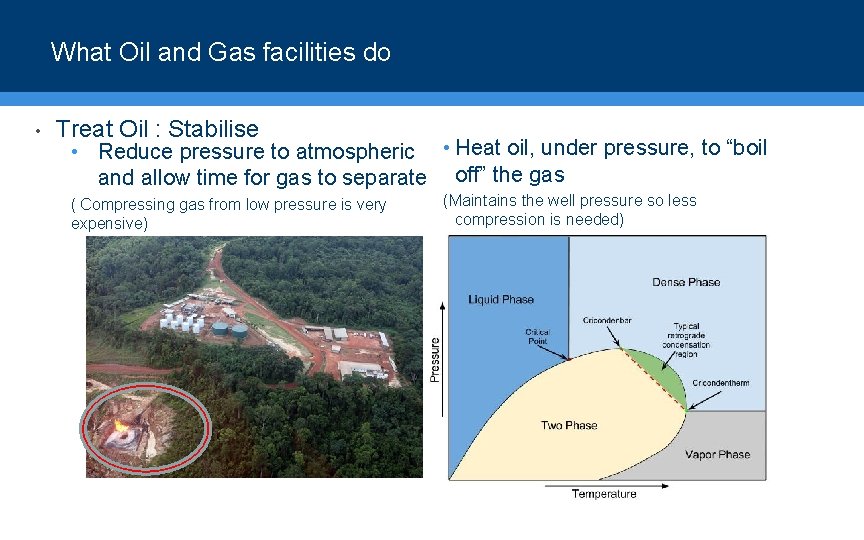
What Oil and Gas facilities do • Treat Oil : Stabilise • “Stabilise” oil • Oil contains gas which may be released if the pressure or temperature changes • This must be removed so it can be stored / transported safely
What Oil and Gas facilities do • Treat Oil : Stabilise • Reduce pressure to atmospheric • Heat oil, under pressure, to “boil and allow time for gas to separate off” the gas ( Compressing gas from low pressure is very expensive) (Maintains the well pressure so less compression is needed)
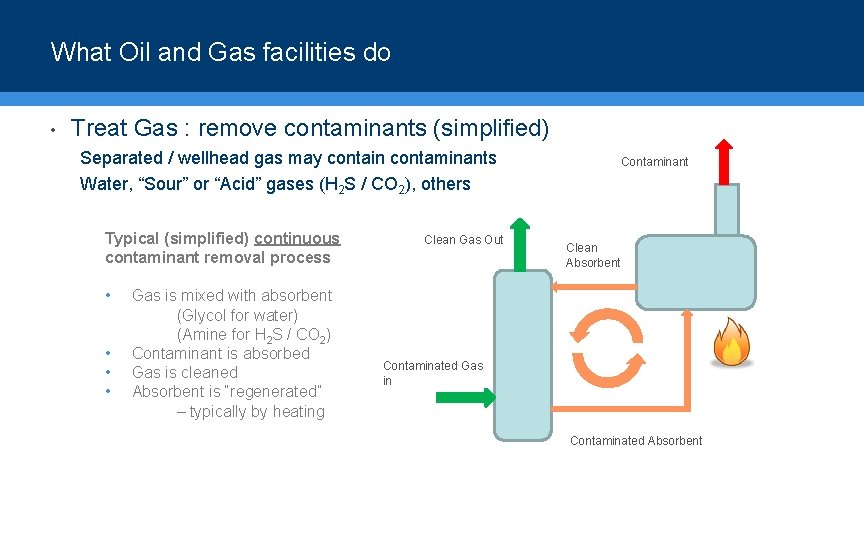
What Oil and Gas facilities do • Treat Gas : remove contaminants (simplified) Separated / wellhead gas may contain contaminants Water, “Sour” or “Acid” gases (H 2 S / CO 2), others Typical (simplified) continuous contaminant removal process • • Gas is mixed with absorbent (Glycol for water) (Amine for H 2 S / CO 2) Contaminant is absorbed Gas is cleaned Absorbent is “regenerated” – typically by heating Clean Gas Out Contaminant Clean Absorbent Contaminated Gas in Contaminated Absorbent
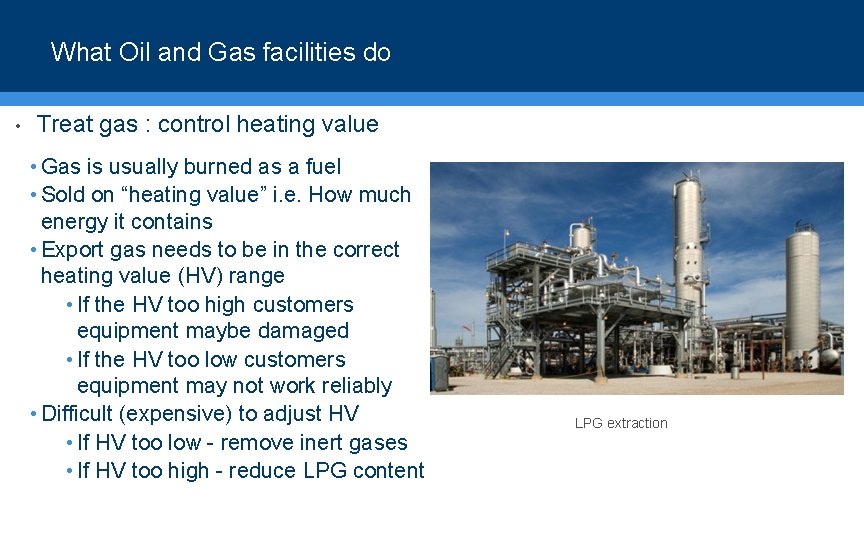
What Oil and Gas facilities do • Treat gas : control heating value • Gas is usually burned as a fuel • Sold on “heating value” i. e. How much energy it contains • Export gas needs to be in the correct heating value (HV) range • If the HV too high customers equipment maybe damaged • If the HV too low customers equipment may not work reliably • Difficult (expensive) to adjust HV • If HV too low - remove inert gases • If HV too high - reduce LPG content LPG extraction
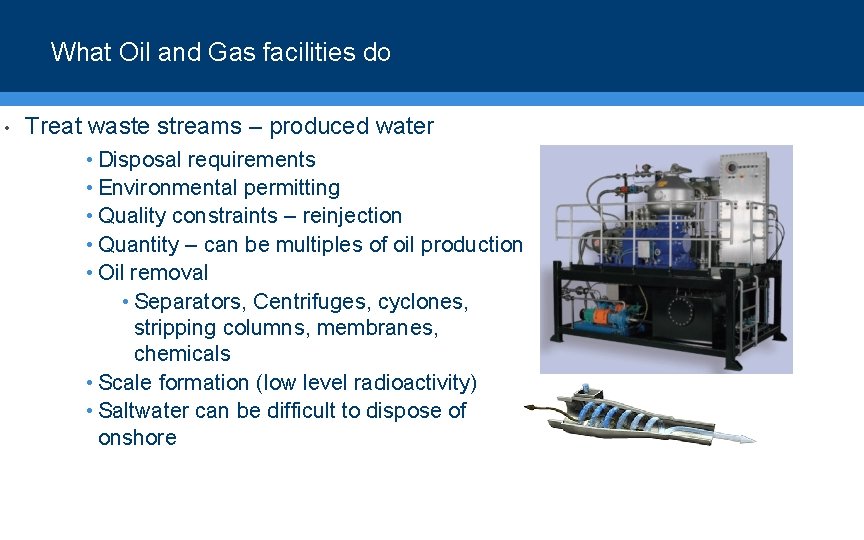
What Oil and Gas facilities do • Treat waste streams – produced water • Disposal requirements • Environmental permitting • Quality constraints – reinjection • Quantity – can be multiples of oil production • Oil removal • Separators, Centrifuges, cyclones, stripping columns, membranes, chemicals • Scale formation (low level radioactivity) • Saltwater can be difficult to dispose of onshore
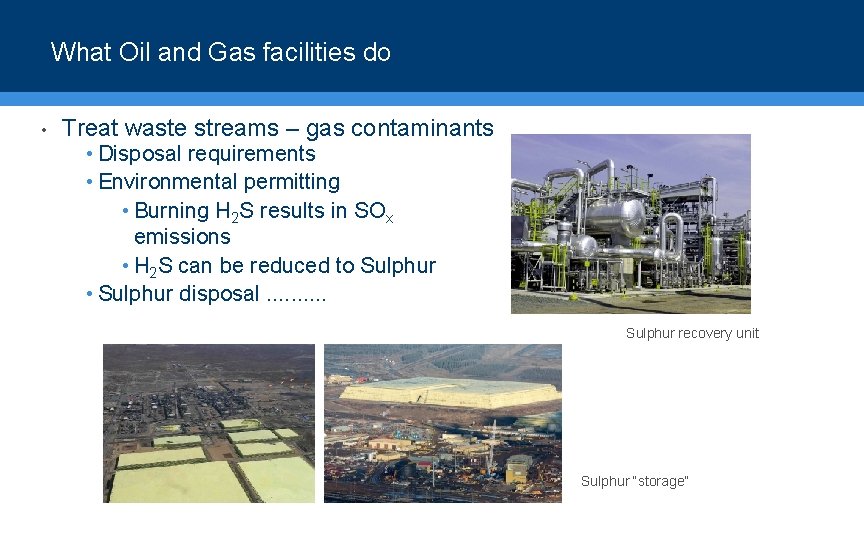
What Oil and Gas facilities do • Treat waste streams – gas contaminants • Disposal requirements • Environmental permitting • Burning H 2 S results in SOx emissions • H 2 S can be reduced to Sulphur • Sulphur disposal. . Sulphur recovery unit Sulphur “storage”
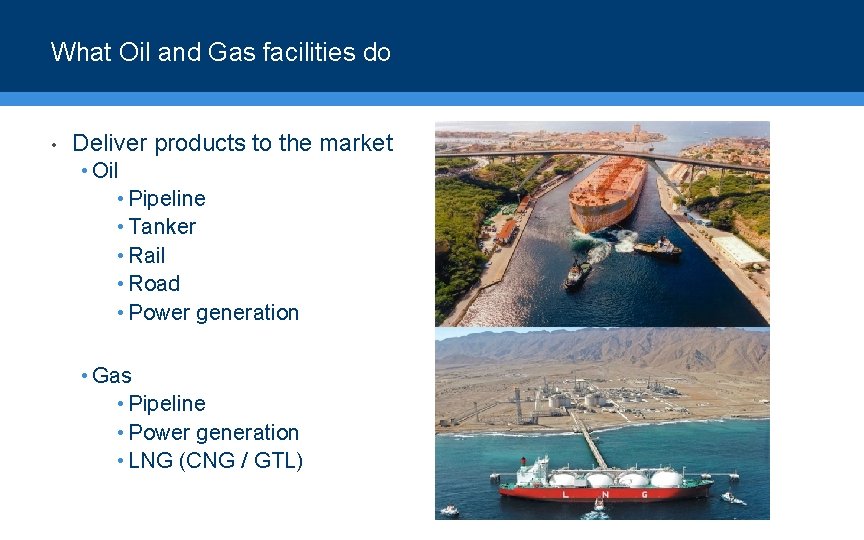
What Oil and Gas facilities do • Deliver products to the market • Oil • Pipeline • Tanker • Rail • Road • Power generation • Gas • Pipeline • Power generation • LNG (CNG / GTL)
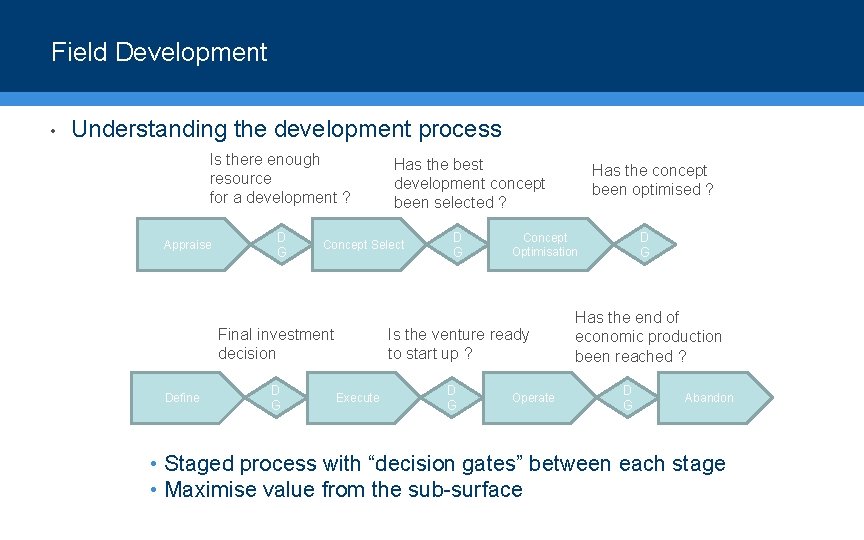
Field Development • Understanding the development process Is there enough resource for a development ? Appraise D G Concept Select Final investment decision Define D G Has the best development concept been selected ? D G D G Concept Optimisation Is the venture ready to start up ? Execute Has the concept been optimised ? Operate Has the end of economic production been reached ? D G Abandon • Staged process with “decision gates” between each stage • Maximise value from the sub-surface
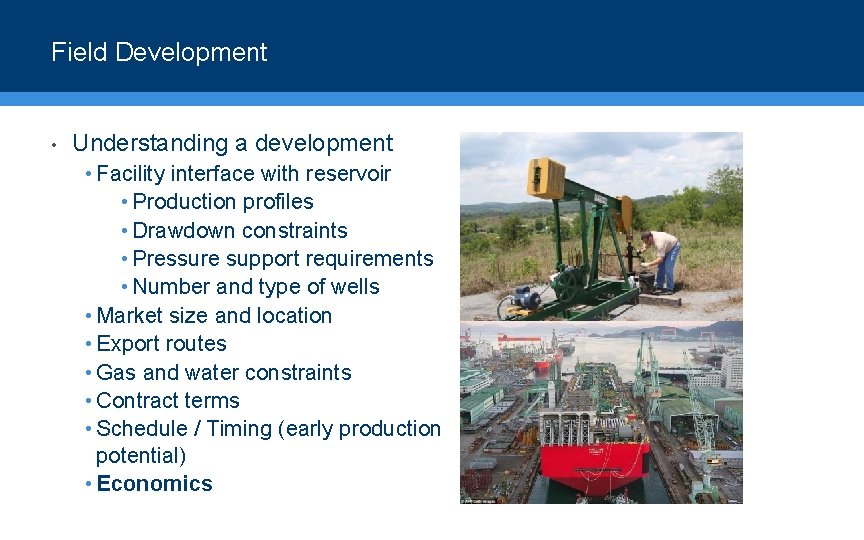
Field Development • Understanding a development • Facility interface with reservoir • Production profiles • Drawdown constraints • Pressure support requirements • Number and type of wells • Market size and location • Export routes • Gas and water constraints • Contract terms • Schedule / Timing (early production potential) • Economics
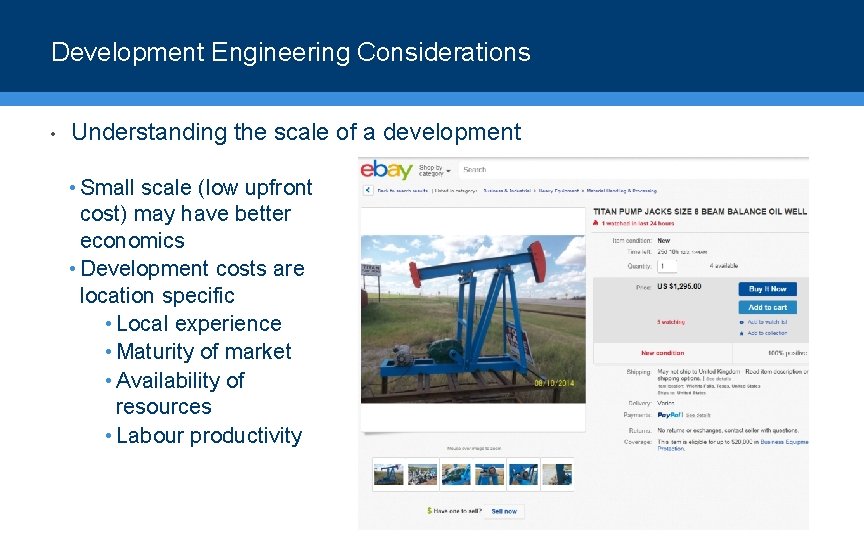
Development Engineering Considerations • Understanding the scale of a development • Small scale (low upfront cost) may have better economics • Development costs are location specific • Local experience • Maturity of market • Availability of resources • Labour productivity
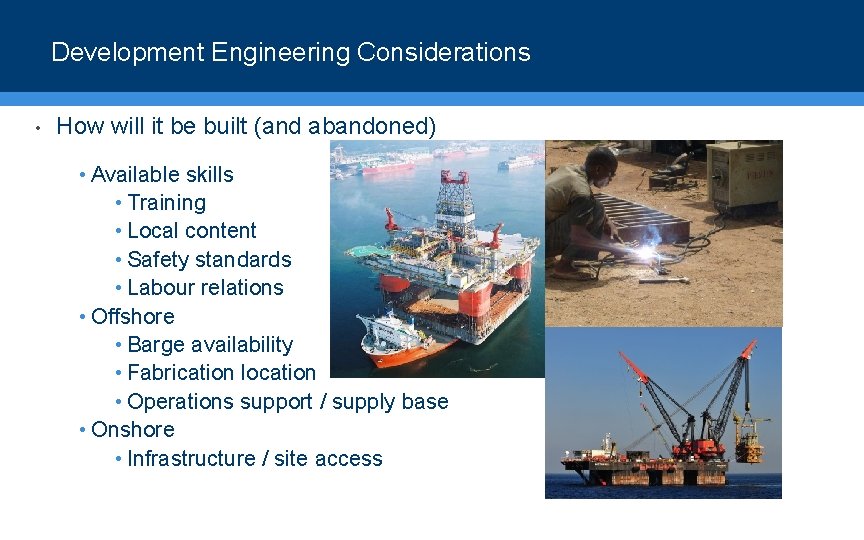
Development Engineering Considerations • How will it be built (and abandoned) • Available skills • Training • Local content • Safety standards • Labour relations • Offshore • Barge availability • Fabrication location • Operations support / supply base • Onshore • Infrastructure / site access
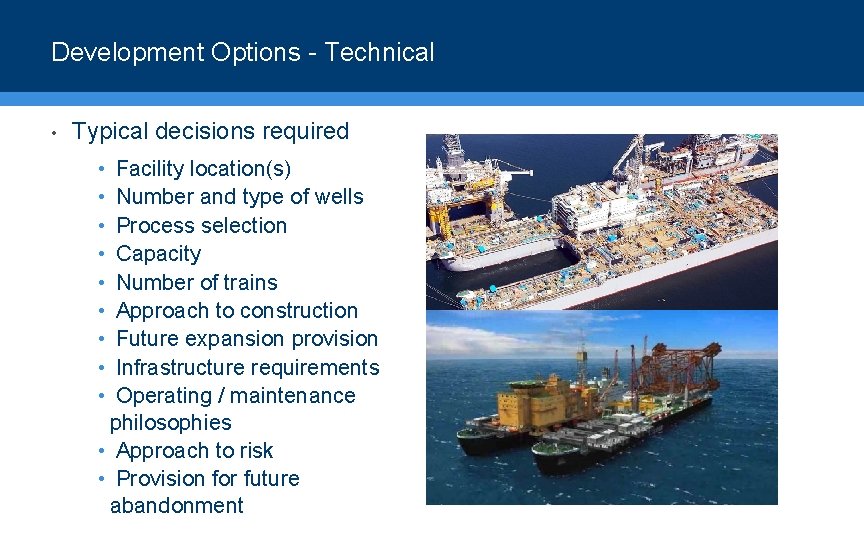
Development Options - Technical • Typical decisions required • • • Facility location(s) Number and type of wells Process selection Capacity Number of trains Approach to construction Future expansion provision Infrastructure requirements Operating / maintenance philosophies • Approach to risk • Provision for future abandonment
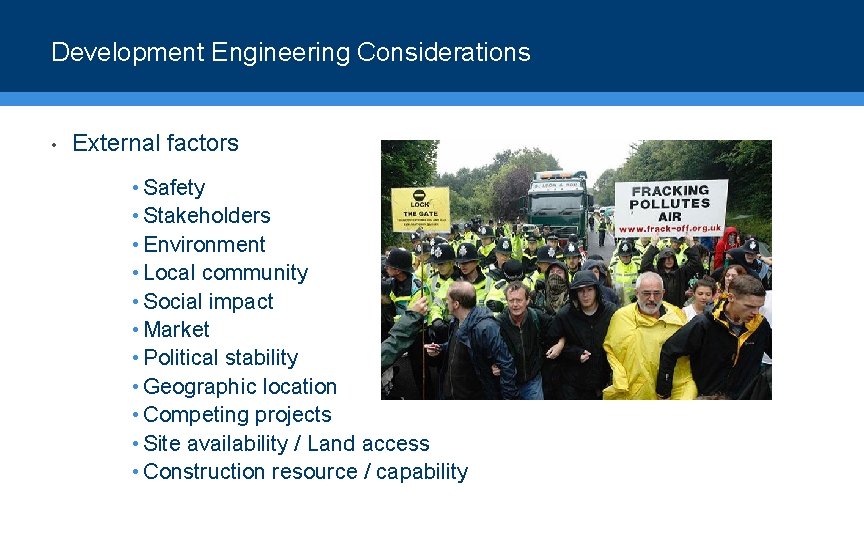
Development Engineering Considerations • External factors • Safety • Stakeholders • Environment • Local community • Social impact • Market • Political stability • Geographic location • Competing projects • Site availability / Land access • Construction resource / capability
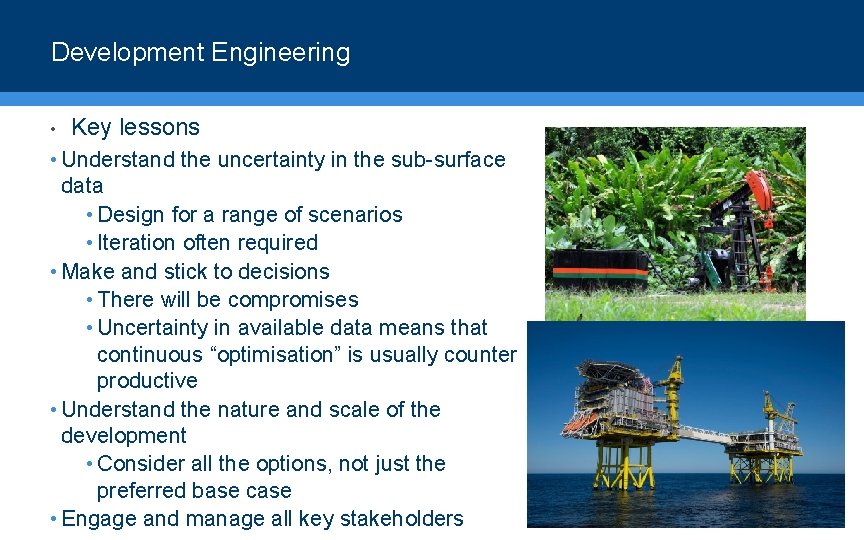
Development Engineering • Key lessons • Understand the uncertainty in the sub-surface data • Design for a range of scenarios • Iteration often required • Make and stick to decisions • There will be compromises • Uncertainty in available data means that continuous “optimisation” is usually counter productive • Understand the nature and scale of the development • Consider all the options, not just the preferred base case • Engage and manage all key stakeholders
Development Engineering THANK YOU
Nigel Talintyre Development Solutions Manager T +44 (0)207 438 4716 E nigel. talintyre@lr. org Lloyd’s Register 71 Fenchurch Street, London EC 3 M 4 BS Working together for a safer world Lloyd’s Register and variants of it are trading names of Lloyd’s Register Group Limited, its subsidiaries and affiliates. Copyright © Lloyd’s Register. 2013. A member of the Lloyd’s Register group.