
SPE 11 Chapter 2 Listening Poor listening skills
- Slides: 13
SPE 11 Chapter 2: Listening
Poor listening skills… After listening to a 10 -minute presentation, how much is understood and retained? • Ten minutes later: 50% • Two days later: 25%
Poor listening skills… • 53% of human communication time is spent in listening! • Yet 75% of our listening time, we are preoccupied, distracted, or forgetful!
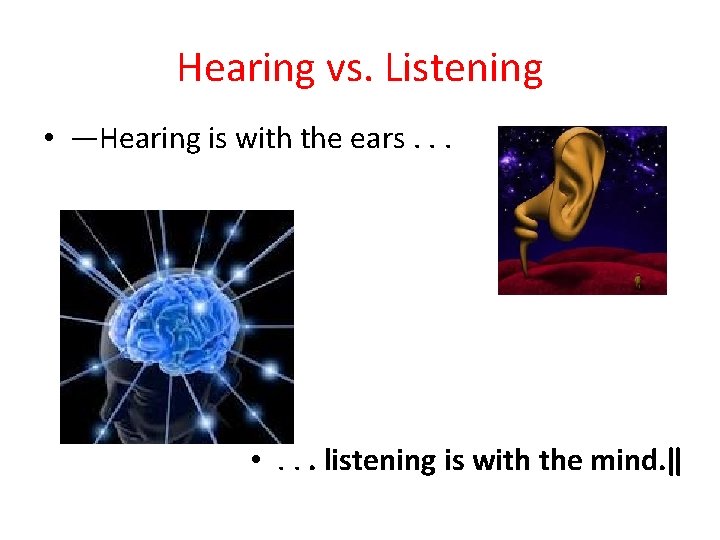
Hearing vs. Listening • Hearing – your ears pick up sound waves being transmitted by a speaker • Listening – making sense out of what is being transmitted
Hearing vs. Listening • ―Hearing is with the ears. . . • . . . listening is with the mind. ‖
Hearing vs. Listening • Hearing is physiological. • Listening is mental, requires skill, energy, and concentration.
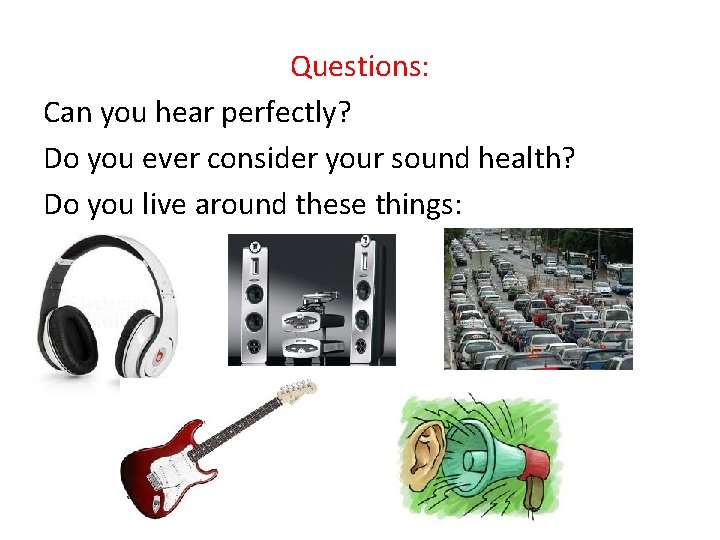
Questions: Can you hear perfectly? Do you ever consider your sound health? Do you live around these things:
Shhhh…Sound Health is important! http: //www. ted. com/talks/julian_treasure_shh_ sound_health_in_8_steps. html
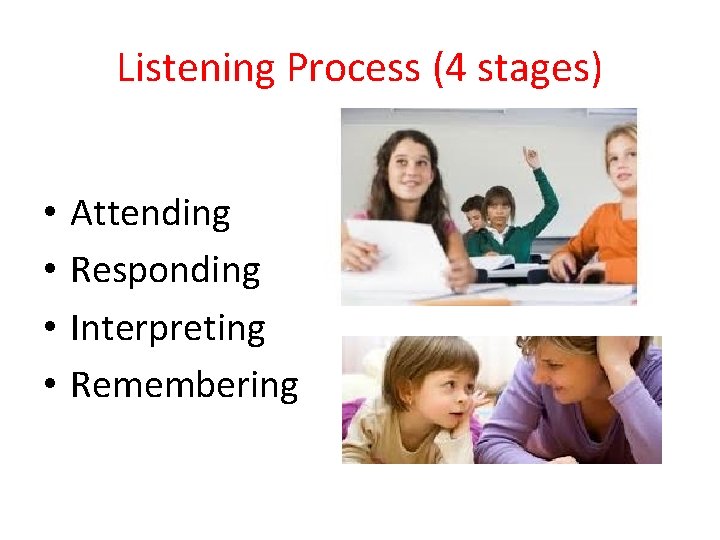
Listening Process (4 stages) • • Attending Responding Interpreting Remembering
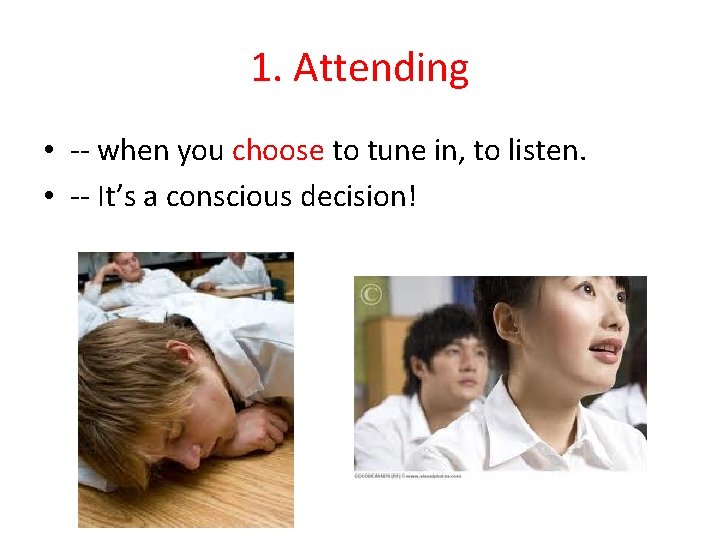
1. Attending • -- when you choose to tune in, to listen. • -- It’s a conscious decision!
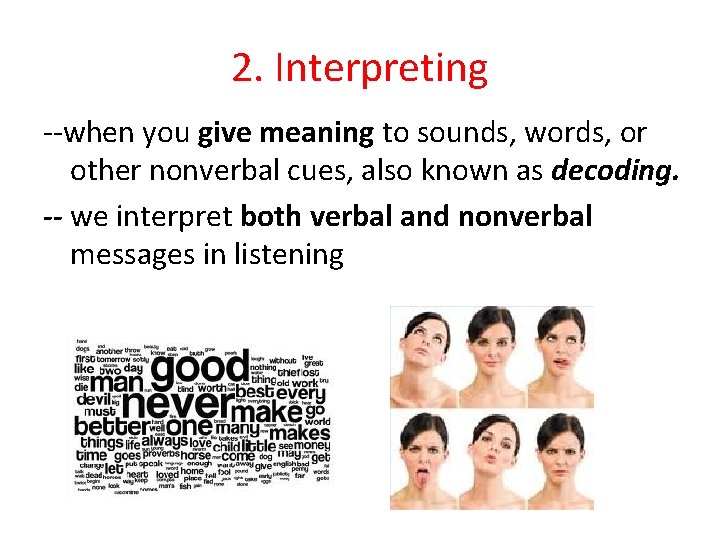
2. Interpreting --when you give meaning to sounds, words, or other nonverbal cues, also known as decoding. -- we interpret both verbal and nonverbal messages in listening
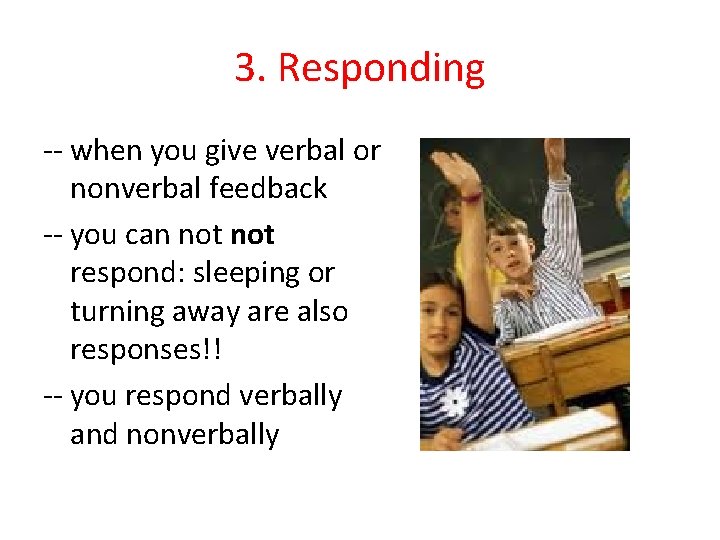
3. Responding -- when you give verbal or nonverbal feedback -- you can not respond: sleeping or turning away are also responses!! -- you respond verbally and nonverbally
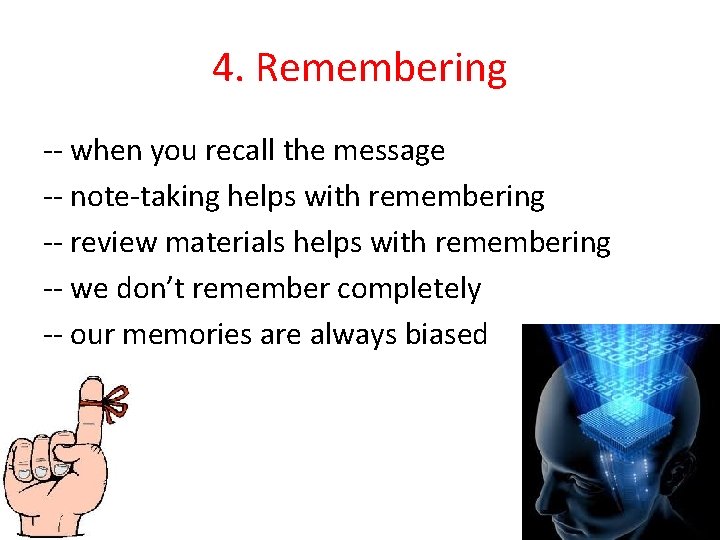
4. Remembering -- when you recall the message -- note-taking helps with remembering -- review materials helps with remembering -- we don’t remember completely -- our memories are always biased