
Spatial Models of Urban Land Use Directions North
Spatial Models of Urban Land Use Directions: North American Urban Models Foldables Front: Name of the model and the picture. Inside Left: Creator, Year, City Example (if applicable) and date created Inside Right: Definition Major facts about the model Back: Critiques of the Model.
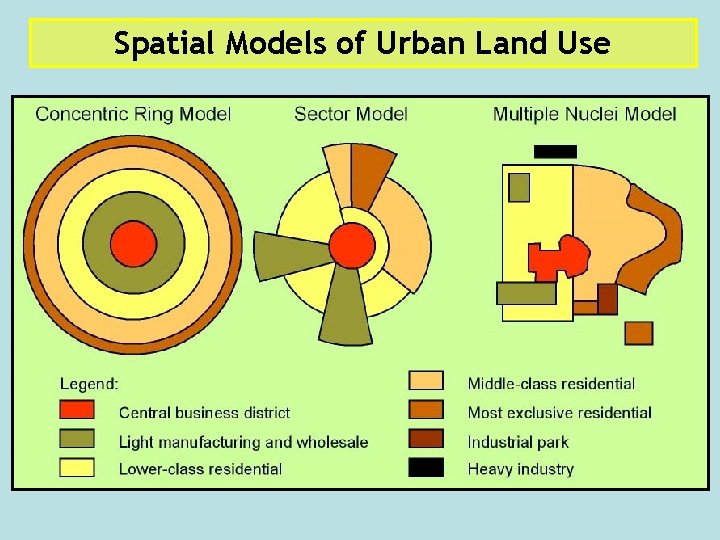
Spatial Models of Urban Land Use
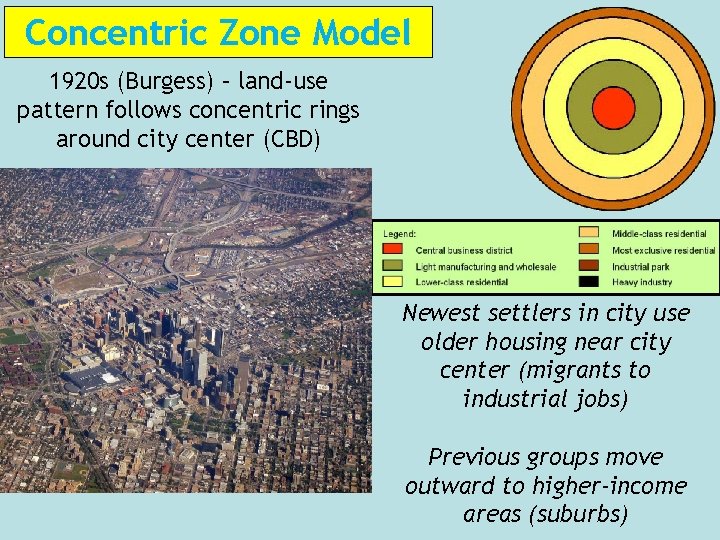
Concentric Zone Model 1920 s (Burgess) – land-use pattern follows concentric rings around city center (CBD) Newest settlers in city use older housing near city center (migrants to industrial jobs) Previous groups move outward to higher-income areas (suburbs)
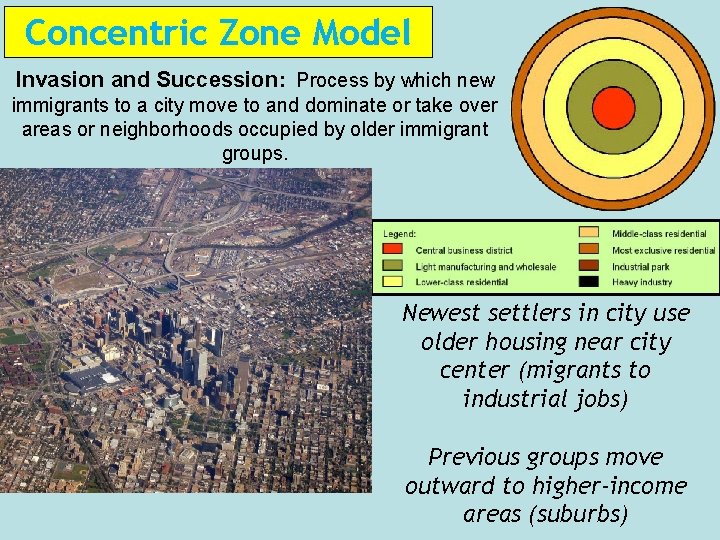
Concentric Zone Model Invasion and Succession: Process by which new immigrants to a city move to and dominate or take over areas or neighborhoods occupied by older immigrant groups. Newest settlers in city use older housing near city center (migrants to industrial jobs) Previous groups move outward to higher-income areas (suburbs)
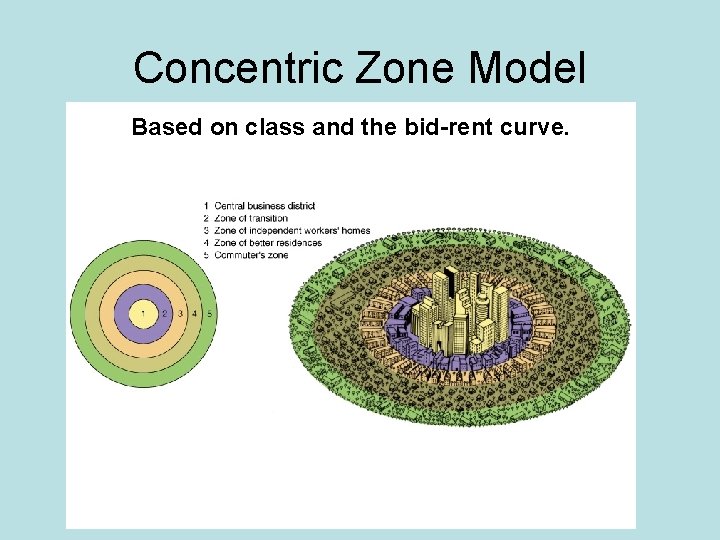
Concentric Zone Model Based on class and the bid-rent curve.
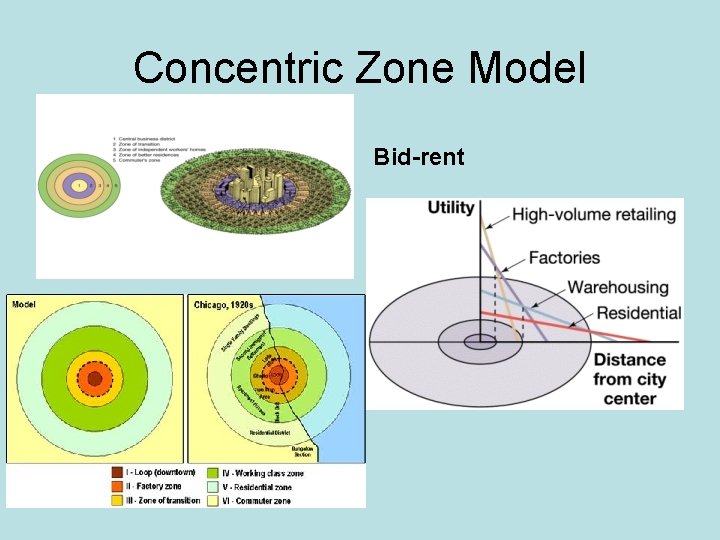
Concentric Zone Model Bid-rent
Analyzing Urban Models Concentric Zone 1. 2. 3. 4. • Benefits (pros) Reflects historical movement Pattern can still be seen today. All cities have a CBD Similar to von Thunen.
Analyzing Urban Models Concentric Zone • Drawbacks (cons) 1. 2. 3. 4. 5. 6. Based on Chicago of 1900. Reflects perception of US cities but not the reality. Does not exist in its pure form the US. Upper and Middle classes are moving back into urban center Too simple. Over emphasized residential patterns, and does not give credit other land uses. 7. Assumes there is a strong central city. 8. Urban growth and development proceeds outward from a single central core.
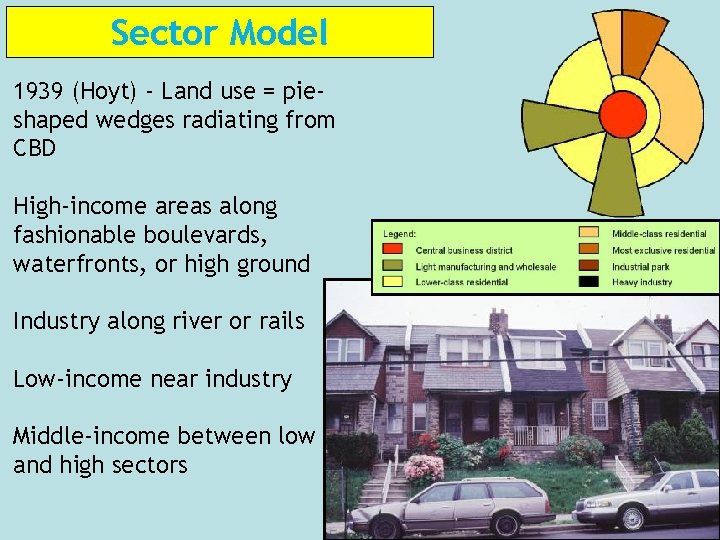
Sector Model 1939 (Hoyt) - Land use = pieshaped wedges radiating from CBD High-income areas along fashionable boulevards, waterfronts, or high ground Industry along river or rails Low-income near industry Middle-income between low and high sectors
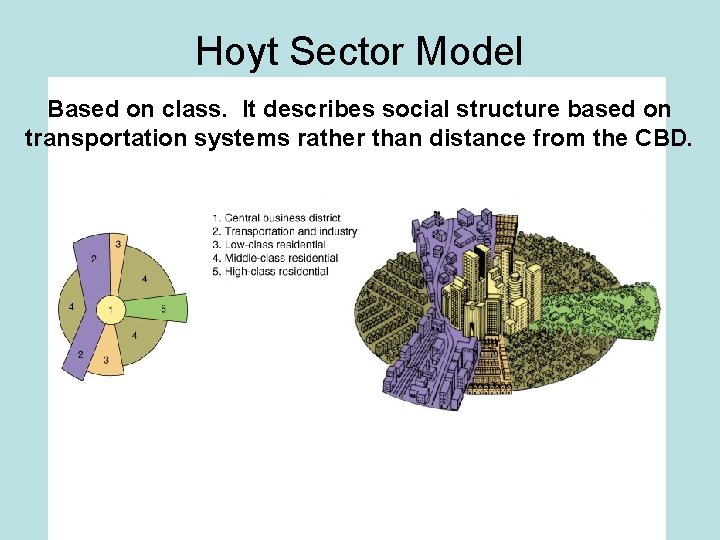
Hoyt Sector Model Based on class. It describes social structure based on transportation systems rather than distance from the CBD.
Analyzing Urban Models Sector Model • Benefits (pros) 1. Patterns still seen today. 2. More realistic. 3. Can show ethnic variations.
Analyzing Urban Models Sector Model 1. 2. 3. 4. 5. • Drawbacks (cons) Does not reflect modern cities. Too simple. Areas around highways tend to be low rent districts. Assumes there is a strong central city. Urban growth and development proceeds outward from a single central core.
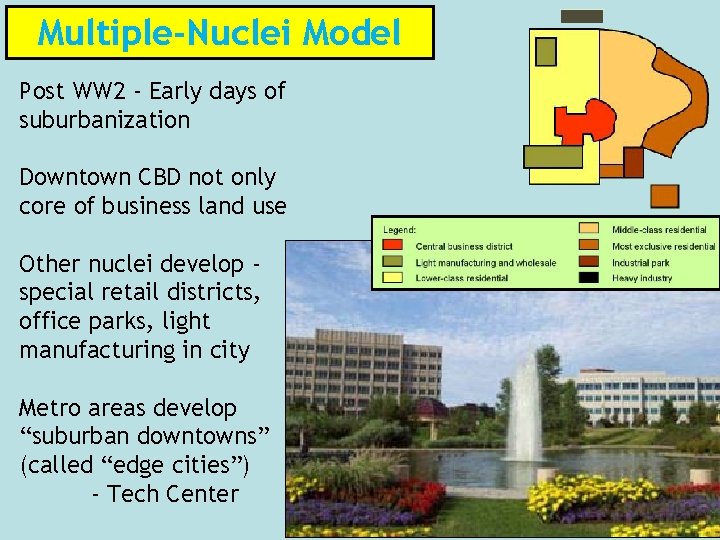
Multiple-Nuclei Model Post WW 2 - Early days of suburbanization Downtown CBD not only core of business land use Other nuclei develop special retail districts, office parks, light manufacturing in city Metro areas develop “suburban downtowns” (called “edge cities”) - Tech Center
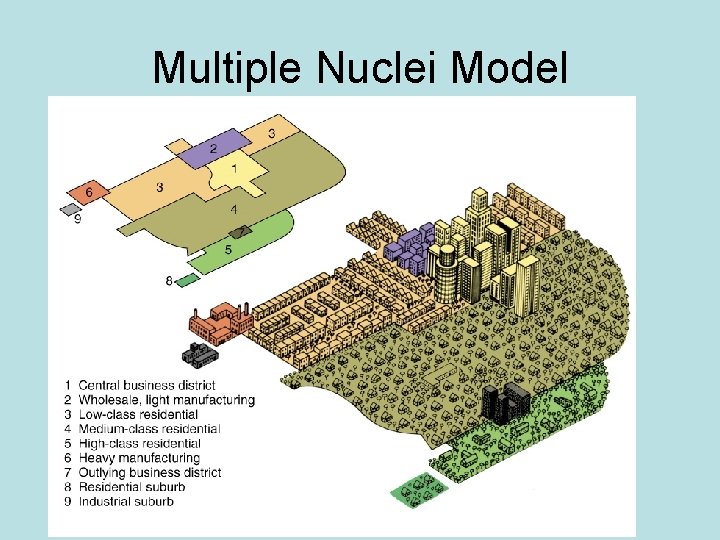
Multiple Nuclei Model
Analyzing Urban Models Multiple Nuclei • Benefits (pros) 1. Takes into account varied factors of decentralization into the structure of the North America city. 2. Encompasses a larger spectrum of economic and social factors. 3. Takes ‘car’ into account.
Analyzing Urban Models Multiple Nuclei • Drawbacks (cons) 1. Too simple 2. Equal weight given to all nodes.
Problems with all these models: 1. Too simple 2. Do not take into account modern transportation corridors. 3. Availability of cars not considered. 4. Outer cities became independent and created suburban downtowns. 5. Creation of edge cities loosen ties to central city. 6. American suburbs surpassed central cities in total employment by 1973.
More problems… 7. Urban patterns are shaped by an economic trade-off between the desire to live in a suburban neighborhood appropriate to ones economic status and the need to live relatively close to the CBD for employment opportunities. 8. Assume only one person in the family is a wage worker. Ignore dual income families and households headed by single women who different considerations (childcare). 9. All created by men who shared assumptions about how cities operate – thus presented a partial view of urban life.
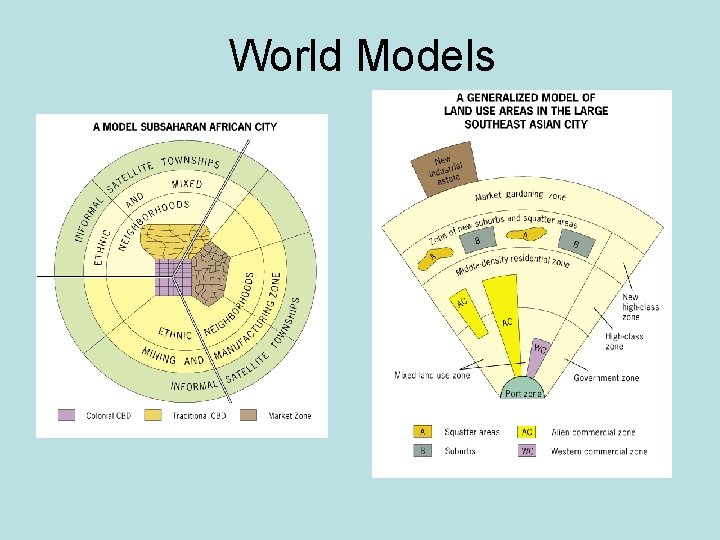
World Models
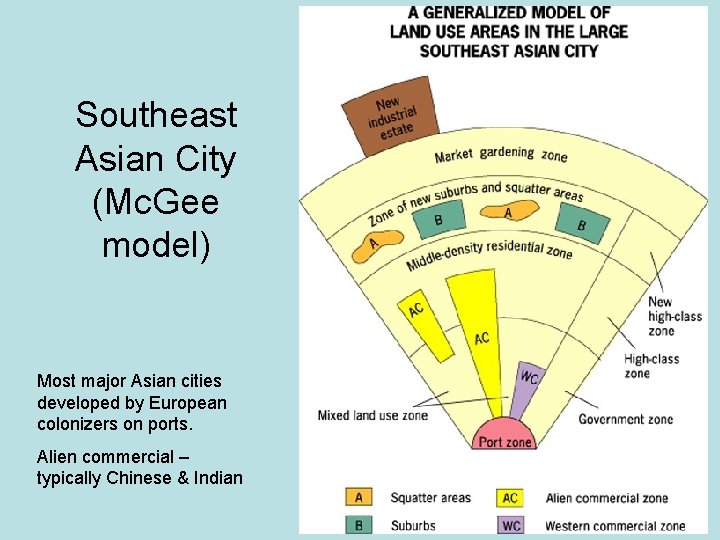
Southeast Asian City (Mc. Gee model) Most major Asian cities developed by European colonizers on ports. Alien commercial – typically Chinese & Indian
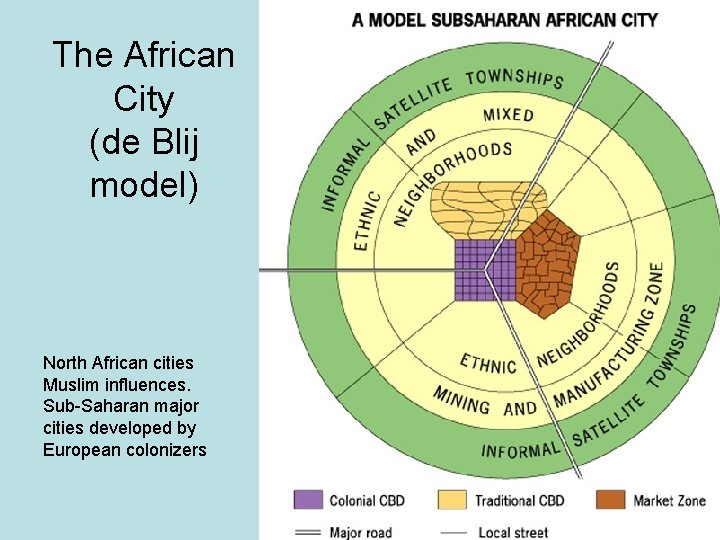
The African City (de Blij model) North African cities Muslim influences. Sub-Saharan major cities developed by European colonizers
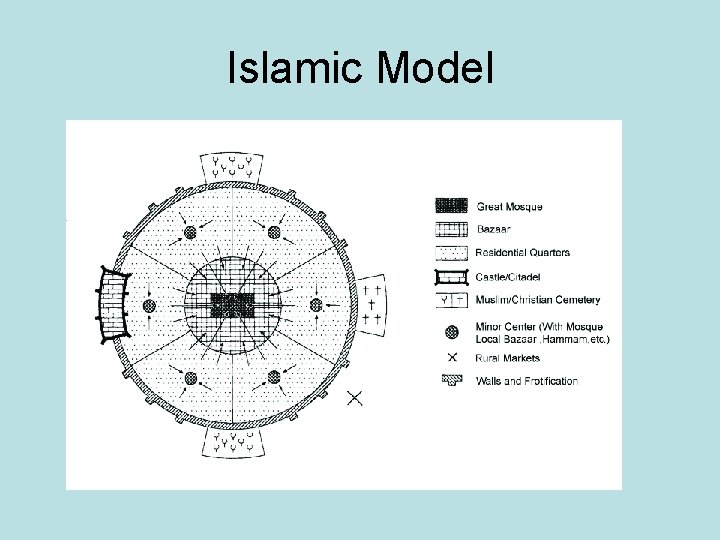
Islamic Model
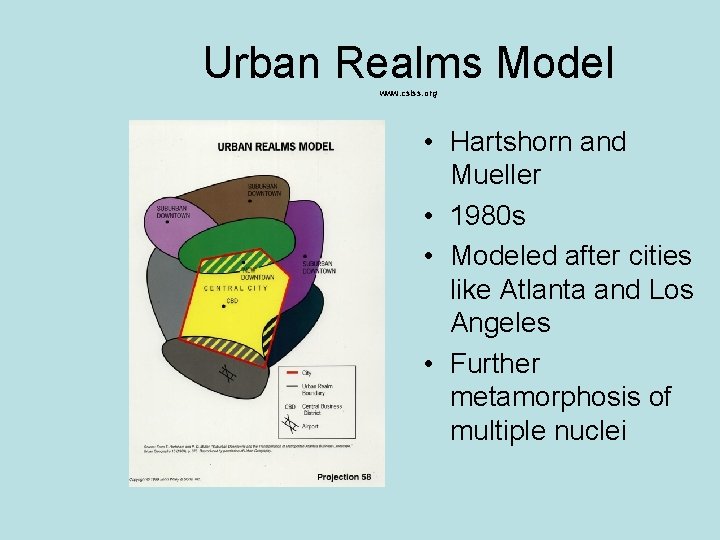
Urban Realms Model www. csiss. org • Hartshorn and Mueller • 1980 s • Modeled after cities like Atlanta and Los Angeles • Further metamorphosis of multiple nuclei
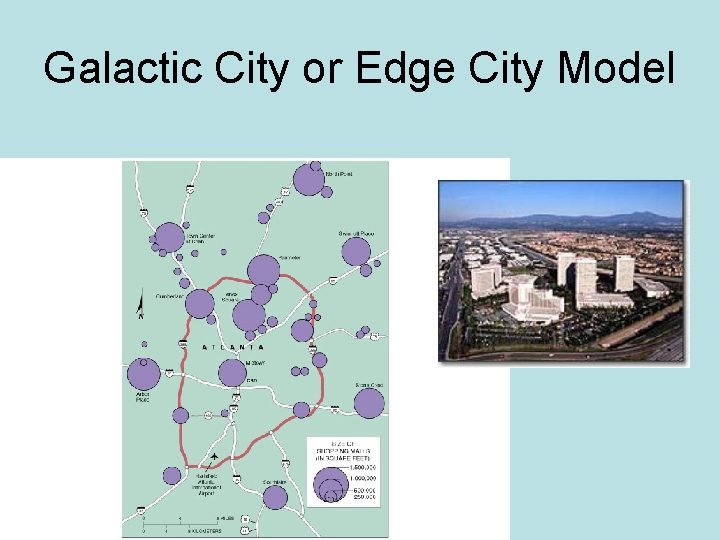
Galactic City or Edge City Model
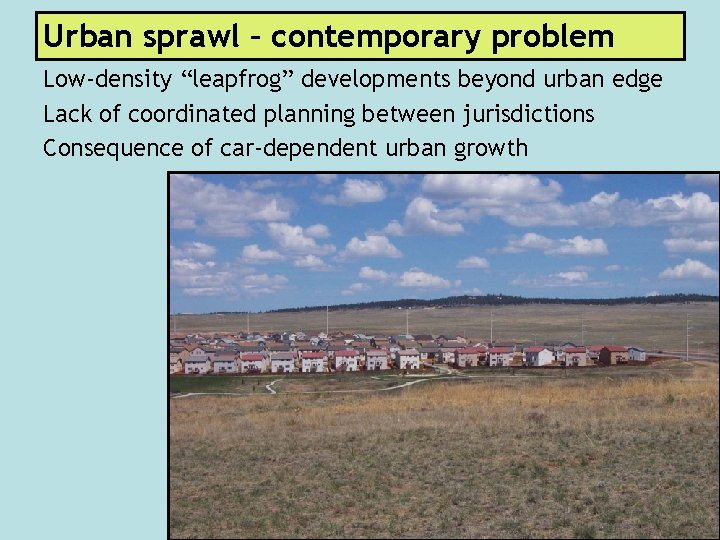
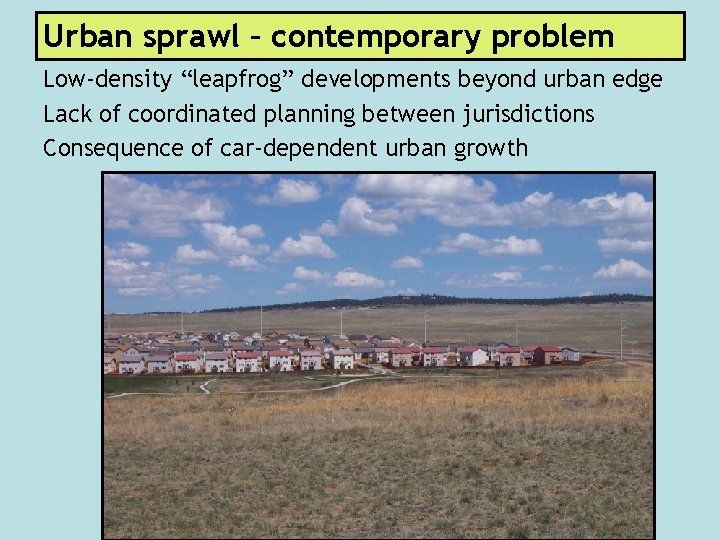
Urban sprawl – contemporary problem Low-density “leapfrog” developments beyond urban edge Lack of coordinated planning between jurisdictions Consequence of car-dependent urban growth
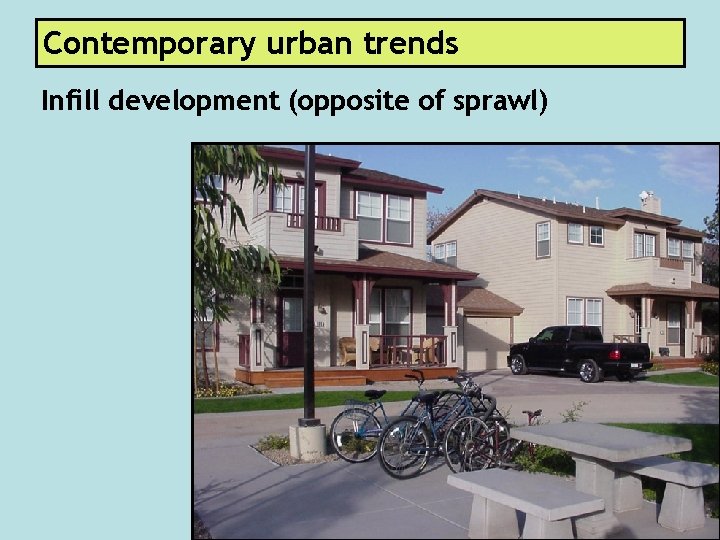
Contemporary urban trends Infill development (opposite of sprawl)
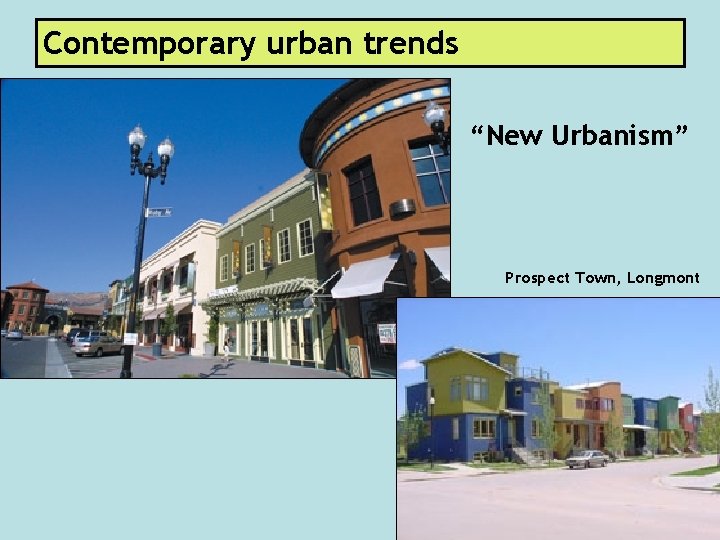
Contemporary urban trends “New Urbanism” Prospect Town, Longmont
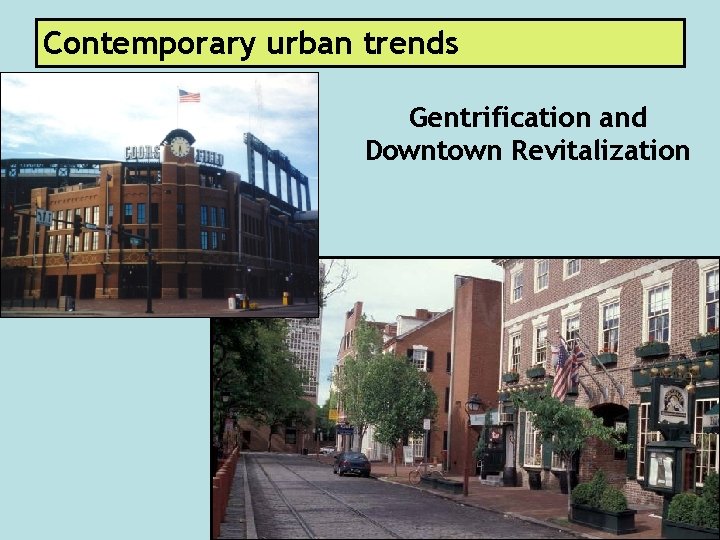
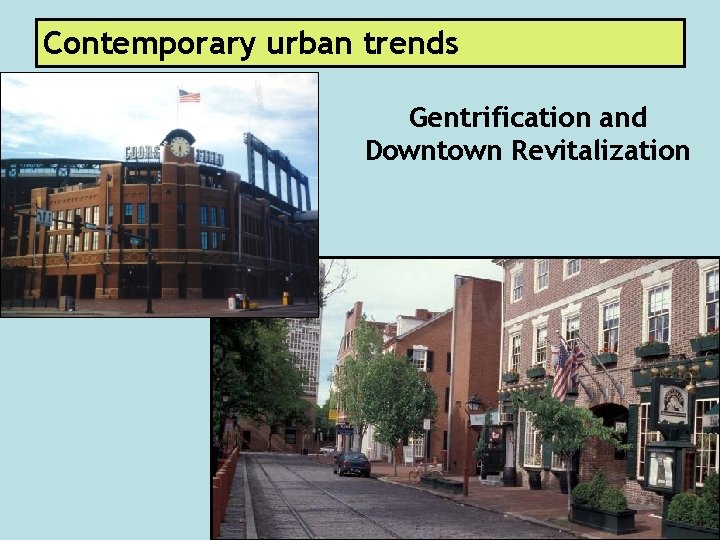
Contemporary urban trends Gentrification and Downtown Revitalization
Urban sprawl – contemporary problem Low-density “leapfrog” developments beyond urban edge Lack of coordinated planning between jurisdictions Consequence of car-dependent urban growth
Words associated w/ but not used in the definition Definition Gentrificatio n A non-example w/ explanation An example w/ explanation
Contemporary urban trends Gentrification and Downtown Revitalization
- Slides: 31