
Spatial Contiguity Principle Multimedia Learning 2 nd Edition
- Slides: 14
Spatial Contiguity Principle Multimedia Learning, (2 nd Edition), 2009, Richard E. Mayer EME 6208 Week 8 Presentation Michael Ayres Spring, 2015 1
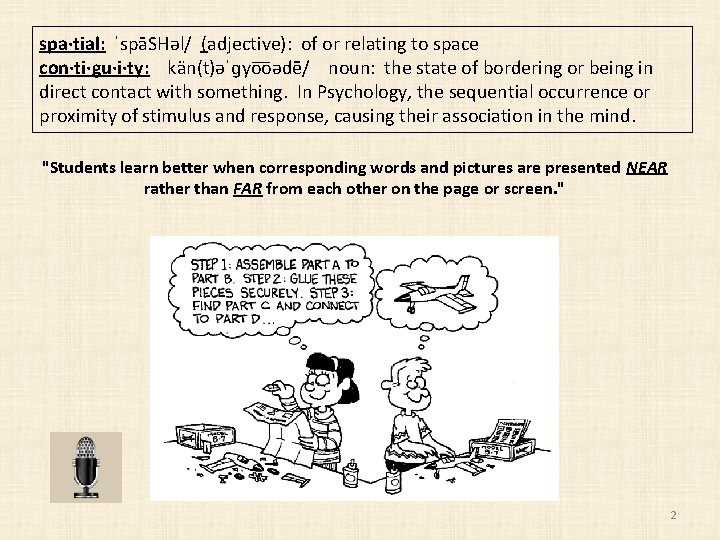
spa·tial: ˈspāSHəl/ (adjective): of or relating to space con·ti·gu·i·ty: kän(t)əˈɡyo oədē/ noun: the state of bordering or being in direct contact with something. In Psychology, the sequential occurrence or proximity of stimulus and response, causing their association in the mind. "Students learn better when corresponding words and pictures are presented NEAR rather than FAR from each other on the page or screen. " 2
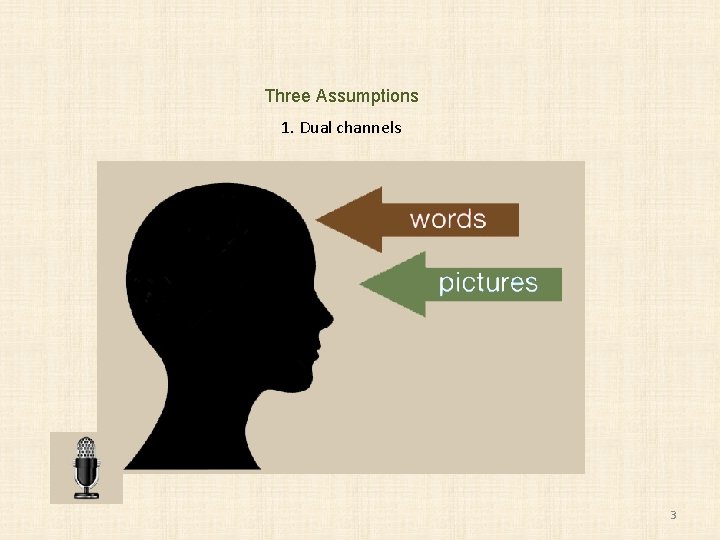
Three Assumptions 1. Dual channels 3
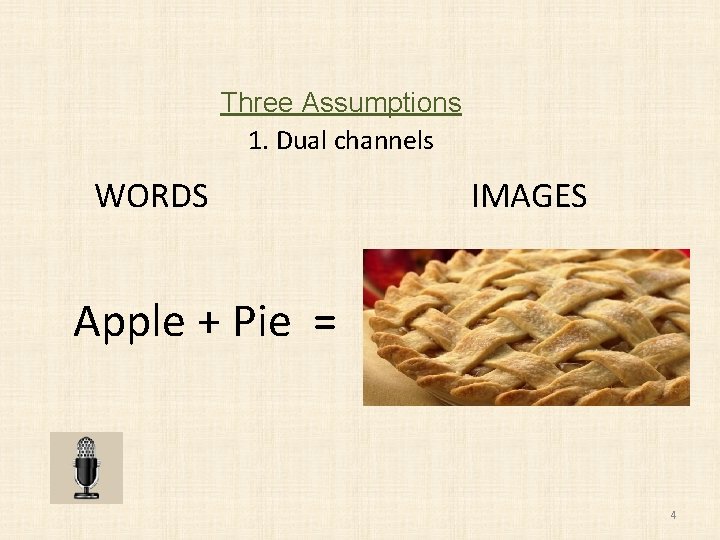
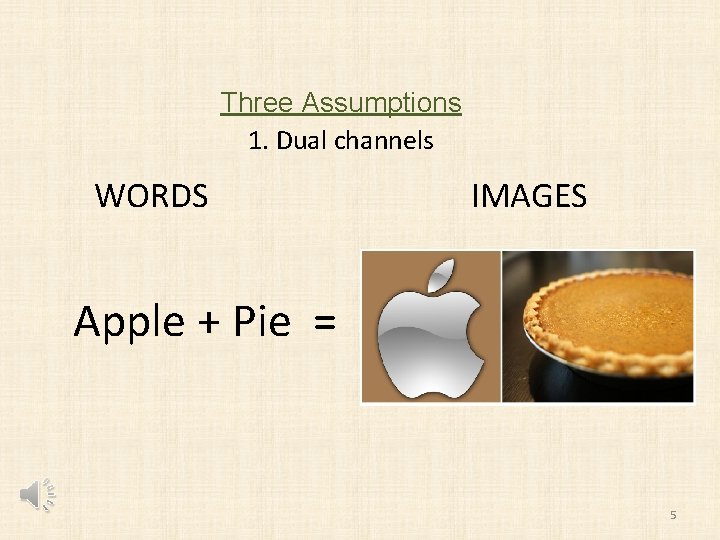
Three Assumptions 1. Dual channels WORDS IMAGES Apple + Pie = 4
Three Assumptions 1. Dual channels WORDS IMAGES Apple + Pie = 5
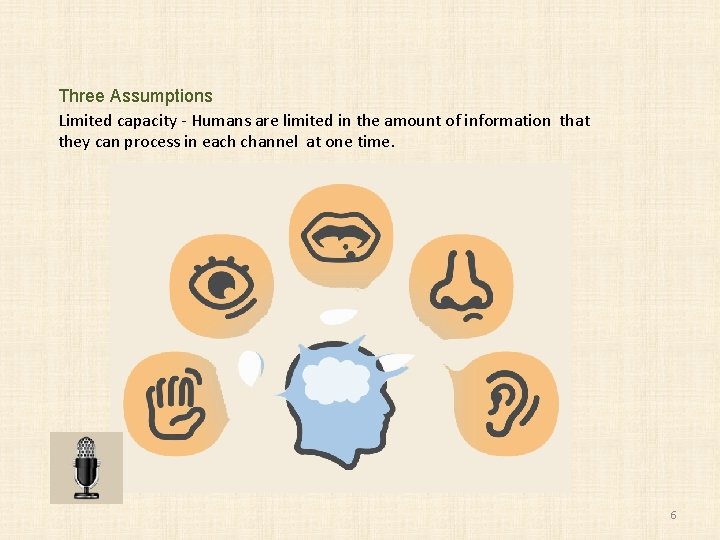
Three Assumptions Limited capacity - Humans are limited in the amount of information that they can process in each channel at one time. 6
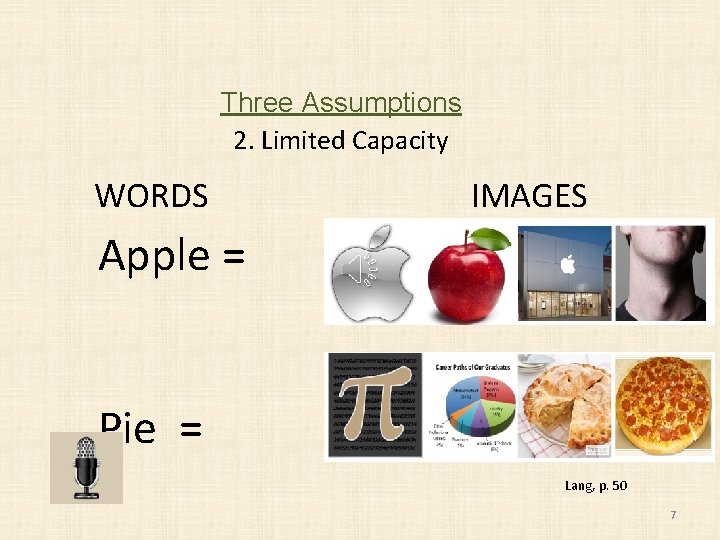
Three Assumptions 2. Limited Capacity WORDS IMAGES Apple = Pie = Lang, p. 50 7
Three Assumptions Active processing - Humans engage in active learning by organizing and integrating relevant incoming information into coherent mental representations 8
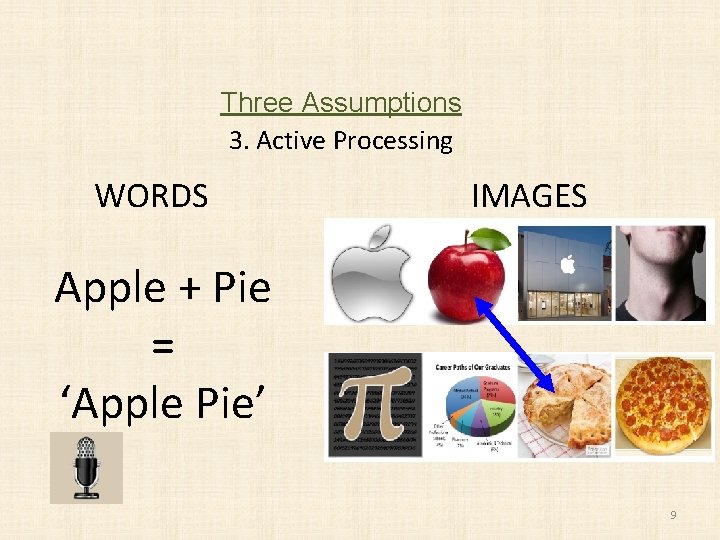
Three Assumptions 3. Active Processing WORDS IMAGES Apple + Pie = ‘Apple Pie’ 9
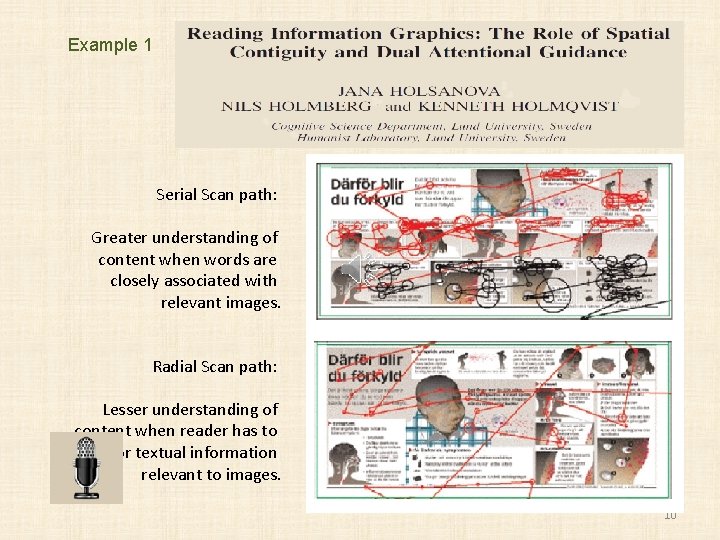
Example 1 Serial Scan path: Greater understanding of content when words are closely associated with relevant images. Radial Scan path: Lesser understanding of content when reader has to scan for textual information relevant to images. 10
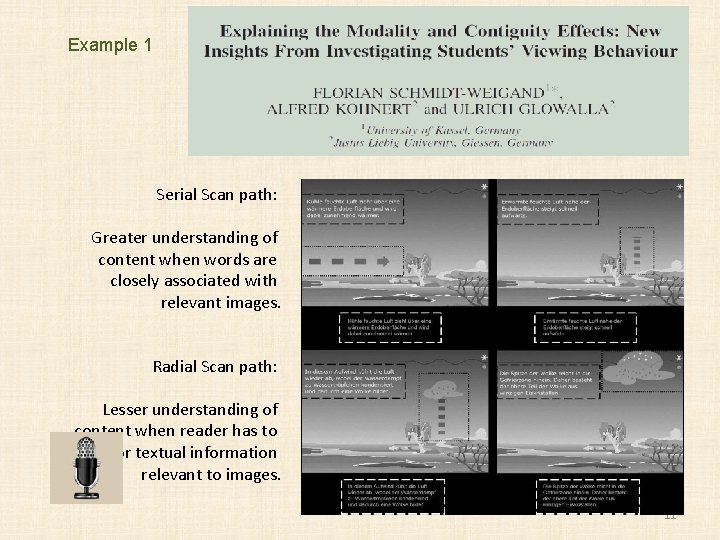
Example 1 Serial Scan path: Greater understanding of content when words are closely associated with relevant images. Radial Scan path: Lesser understanding of content when reader has to scan for textual information relevant to images. 11
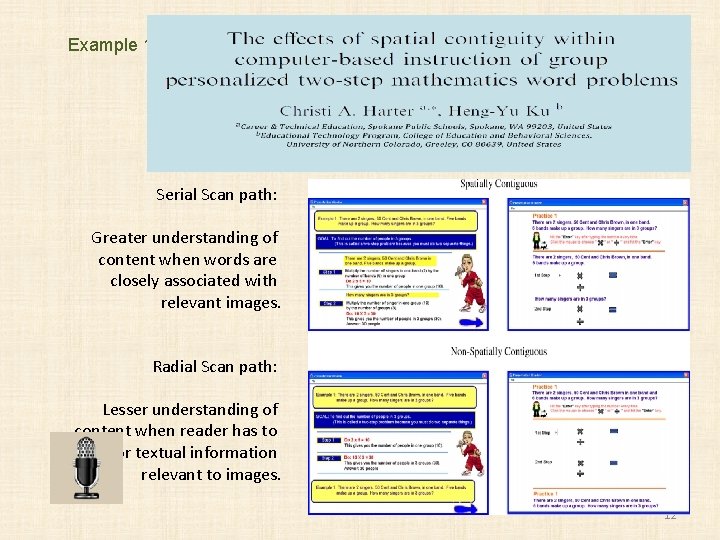
Example 1 Serial Scan path: Greater understanding of content when words are closely associated with relevant images. Radial Scan path: Lesser understanding of content when reader has to scan for textual information relevant to images. 12
Spatial Contiguity Principle - Summary 13
References Harter, C. A. , & Ku, H. (2008). The effects of spatial contiguity within computerbased instruction of group personalized two-step mathematics word problems. Computers In Human Behavior, 24 1668 -1685. doi: 10. 1016/j. chb. 2007. 06. 006 HOLSANOVA, J. , HOLMBERG, N. , & HOLMQVIST, K. (2009). Reading information graphics: The role of spatial contiguity and dual attentional guidance. Applied Cognitive Psychology, 23(9), 1215 -1226. doi: 10. 1002/acp. 1525 Lang, Annie, Shin, Mija, & Lee, Seungwhan. (2005). Sensation seeking, motivation, and substance use: A dual system approach. Media Psychology, 7, 1 -29. Mayer, R. E. (2009). Multimedia learning. Cambridge ; New York : Cambridge University Press, 2009. SCHMIDT-WEIGAND, F. (. , KOHNERT, A. (. , & GLOWALLA, U. (. (0001). Explaining the Modality and Contiguity Effects: New Insights From Investigating Students' Viewing Behaviour (English). Applied Cognitive Psychology, 24(2), 226 -237. 14