
Spatial Analysis Vector Data Analysis in two different

- Slides: 12
Spatial Analysis: Vector Data
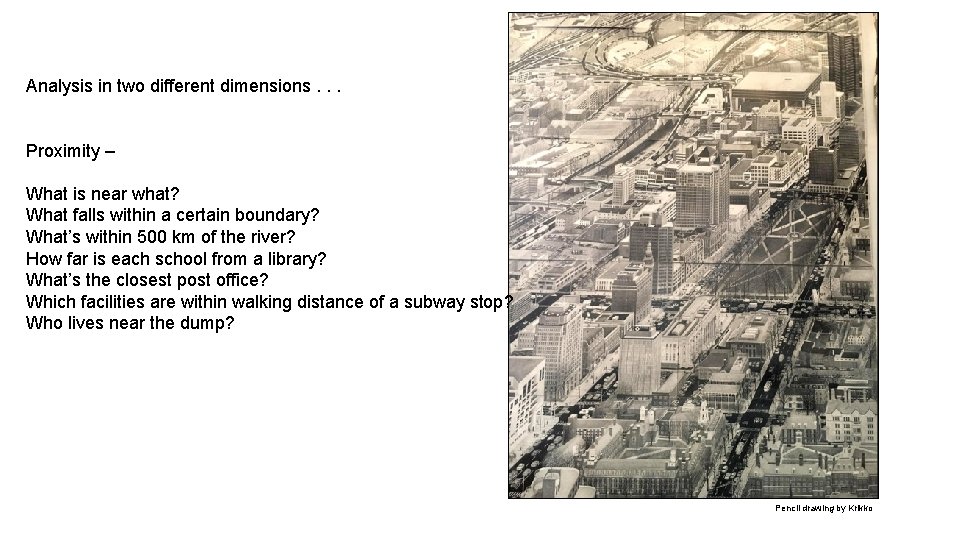
Analysis in two different dimensions. . . Proximity – What is near what? What falls within a certain boundary? What’s within 500 km of the river? How far is each school from a library? What’s the closest post office? Which facilities are within walking distance of a subway stop? Who lives near the dump? Pencil drawing by Krikko
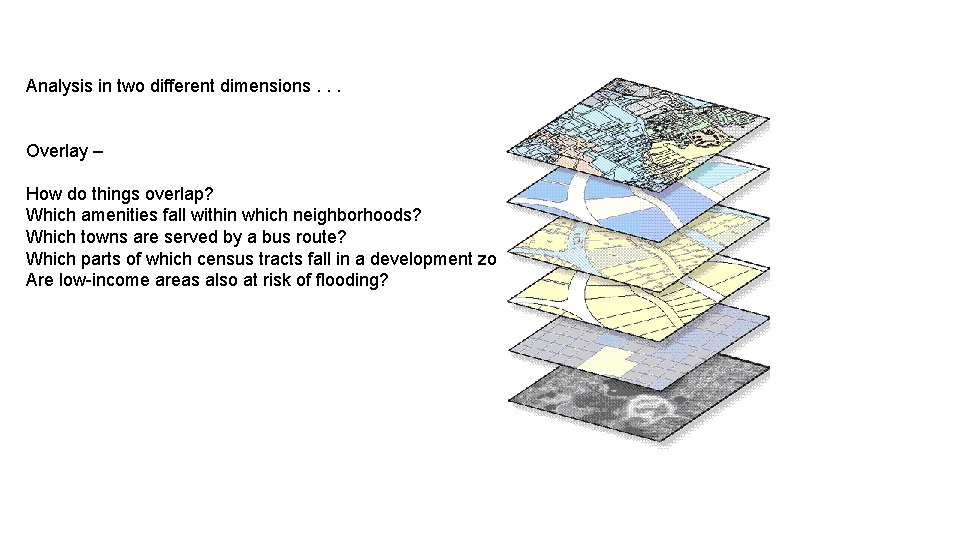
Analysis in two different dimensions. . . Overlay – How do things overlap? Which amenities fall within which neighborhoods? Which towns are served by a bus route? Which parts of which census tracts fall in a development zone? Are low-income areas also at risk of flooding?
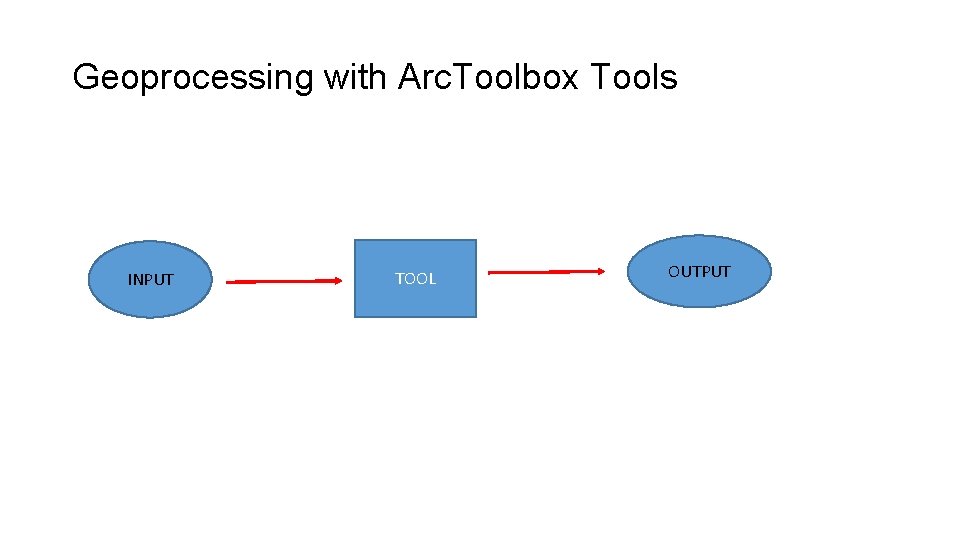
Geoprocessing with Arc. Toolbox Tools INPUT TOOL OUTPUT
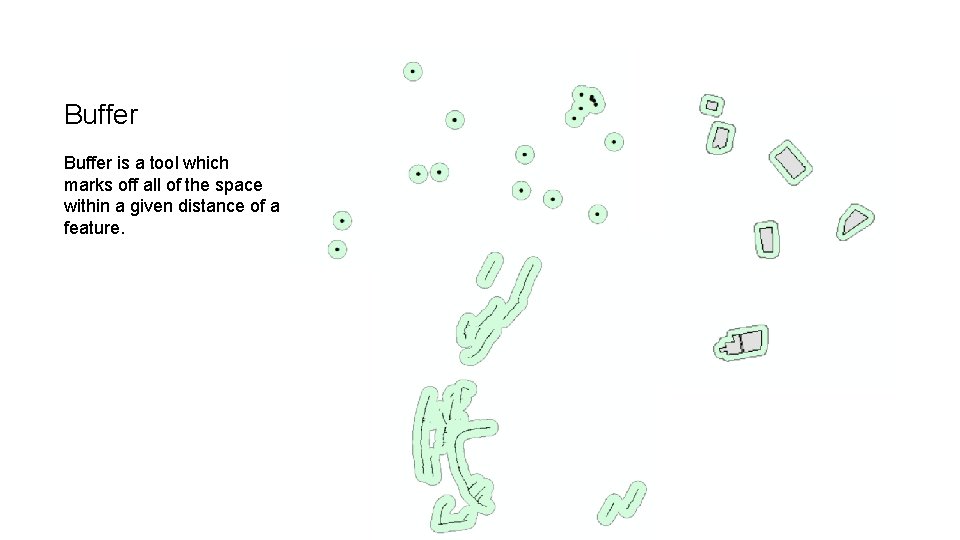
Buffer is a tool which marks off all of the space within a given distance of a feature.
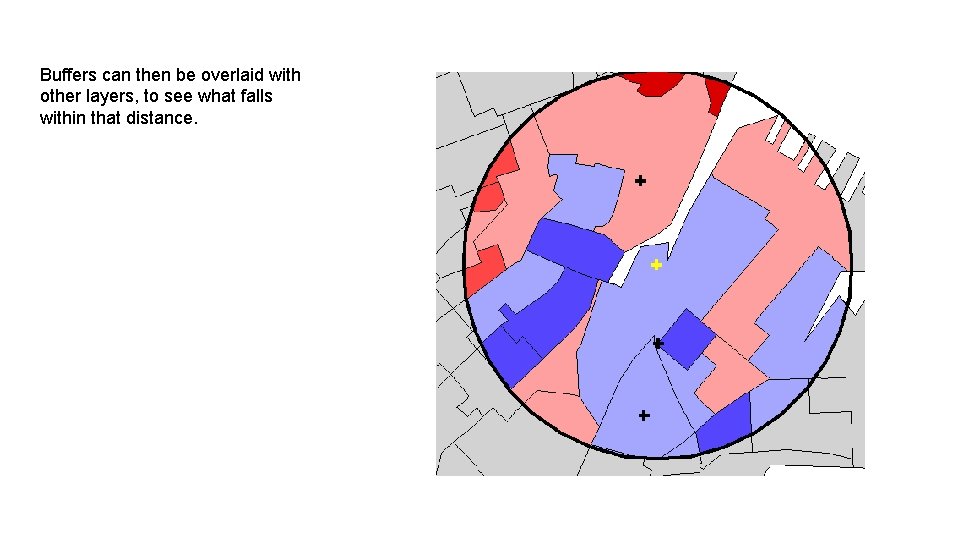
Buffers can then be overlaid with other layers, to see what falls within that distance.
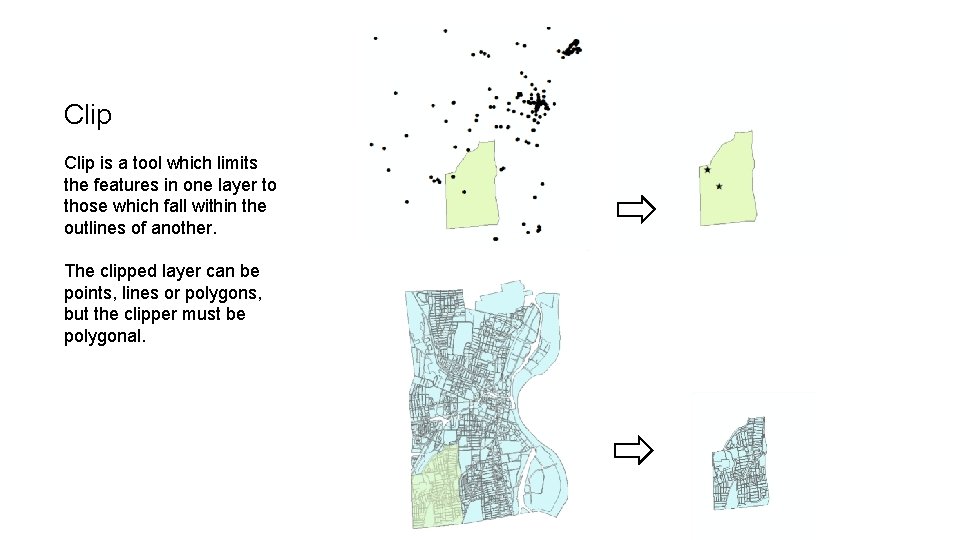
Clip is a tool which limits the features in one layer to those which fall within the outlines of another. The clipped layer can be points, lines or polygons, but the clipper must be polygonal.
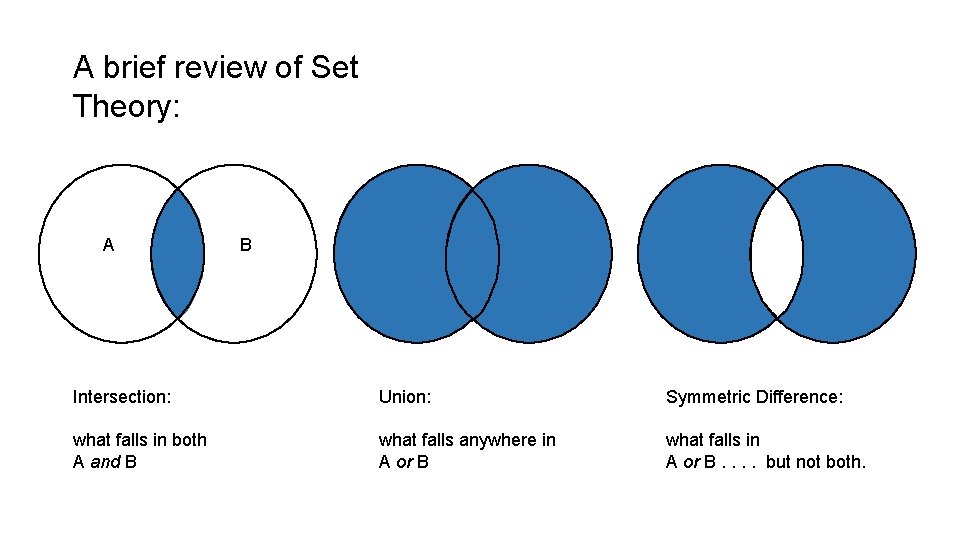
A brief review of Set Theory: A B Intersection: Union: Symmetric Difference: what falls in both A and B what falls anywhere in A or B what falls in A or B. . but not both.
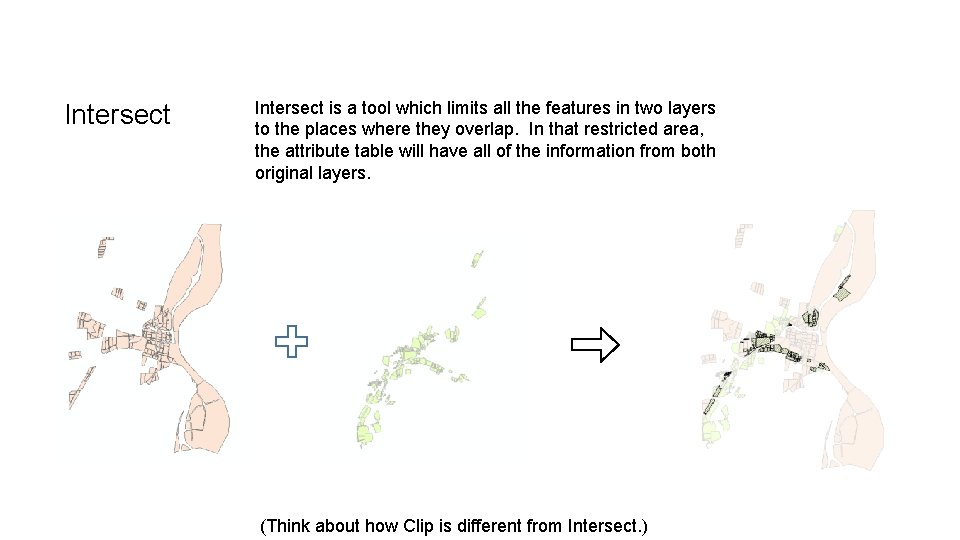
Intersect is a tool which limits all the features in two layers to the places where they overlap. In that restricted area, the attribute table will have all of the information from both original layers. (Think about how Clip is different from Intersect. )
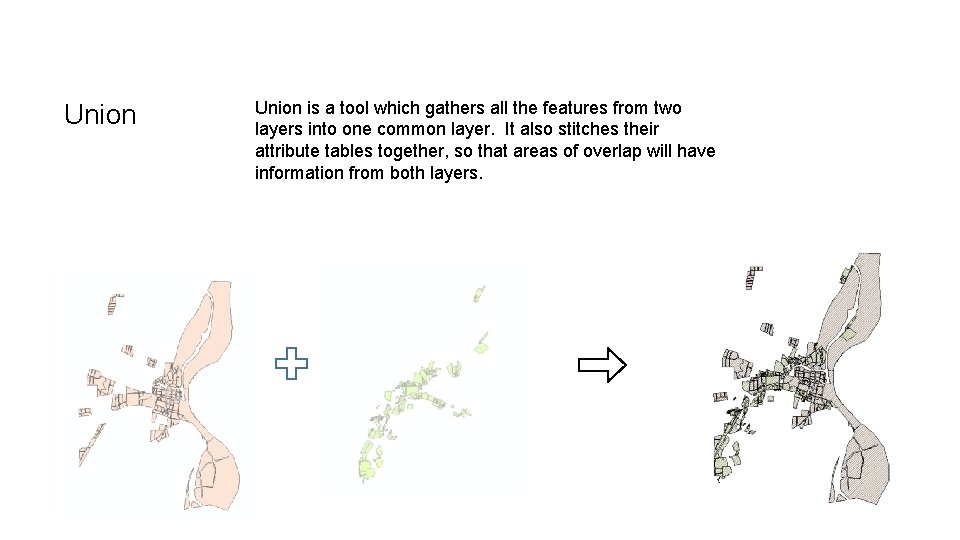
Union is a tool which gathers all the features from two layers into one common layer. It also stitches their attribute tables together, so that areas of overlap will have information from both layers.
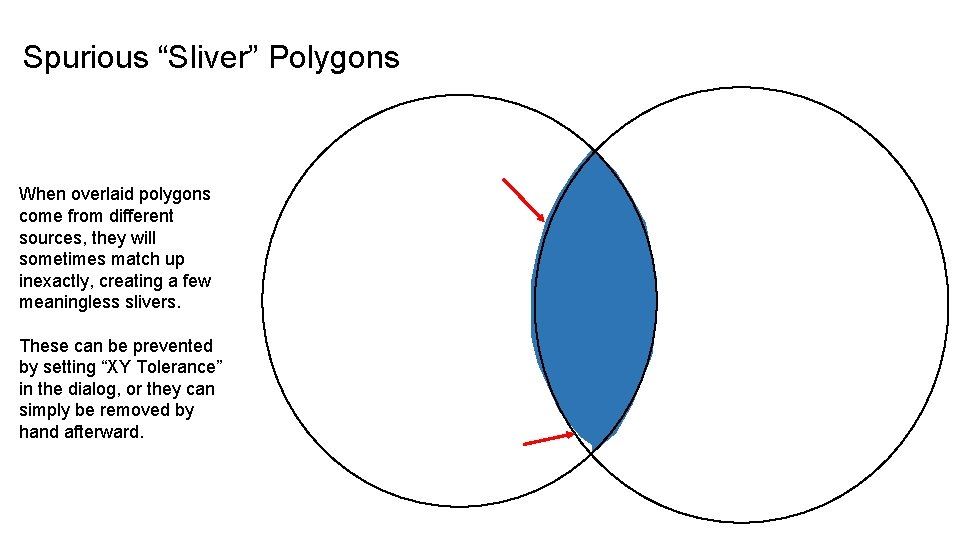
Spurious “Sliver” Polygons When overlaid polygons come from different sources, they will sometimes match up inexactly, creating a few meaningless slivers. These can be prevented by setting “XY Tolerance” in the dialog, or they can simply be removed by hand afterward.