
Spasticity Quantification Preliminary Report Olivia Sutton with Tony





- Slides: 22
Spasticity Quantification Preliminary Report Olivia Sutton with Tony Wang and Charles Wu for client Dr. John Engsberg 1
What is Spasticity? Spasticity: A velocity dependent resistance to passive stretch Cerebral Palsy (CP): 1/500 children are affected. Of those, 80% experience spasticity (NIH, 2014) Physiofunction, 2013 2
How do you measure it? Modified Ashworth Scale American Academy of Orthotists and Prosthetists, 2013 3
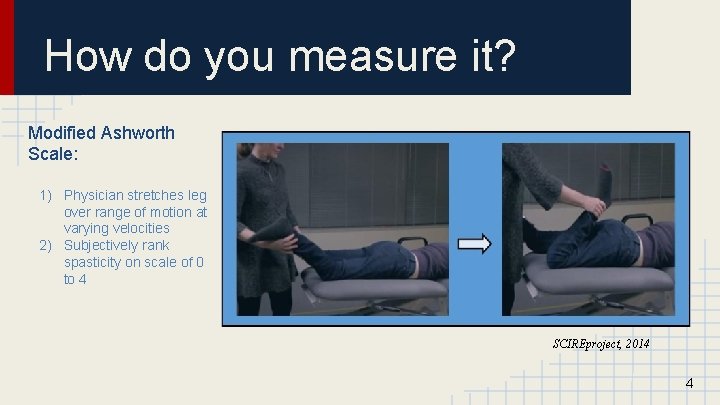
How do you measure it? Modified Ashworth Scale: 1) Physician stretches leg over range of motion at varying velocities 2) Subjectively rank spasticity on scale of 0 to 4 SCIREproject, 2014 4
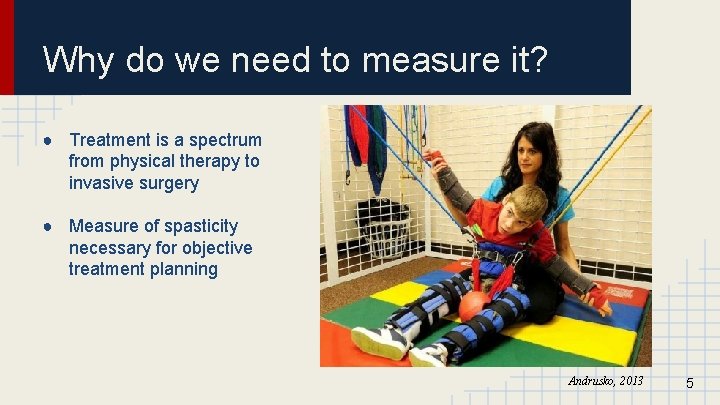
Why do we need to measure it? ● Treatment is a spectrum from physical therapy to invasive surgery ● Measure of spasticity necessary for objective treatment planning Andrusko, 2013 5
Project Scope Design a device or software needed to measure three major parameters that factor into spasticity: range of motion, velocity, and force 6
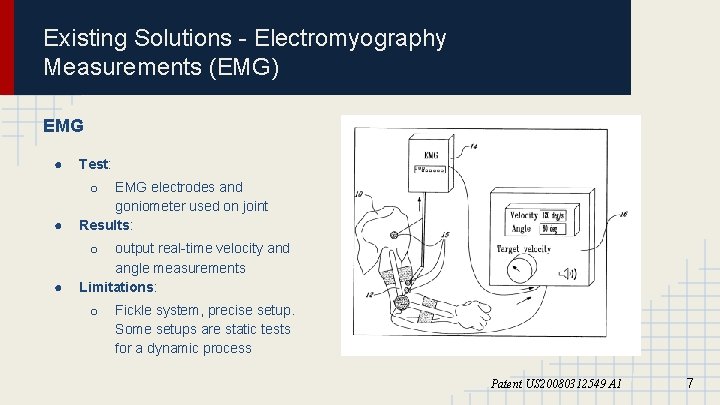
Existing Solutions - Electromyography Measurements (EMG) EMG ● Test: ● EMG electrodes and goniometer used on joint Results: ● output real-time velocity and angle measurements Limitations: o o o Fickle system, precise setup. Some setups are static tests for a dynamic process Patent US 20080312549 A 1 7
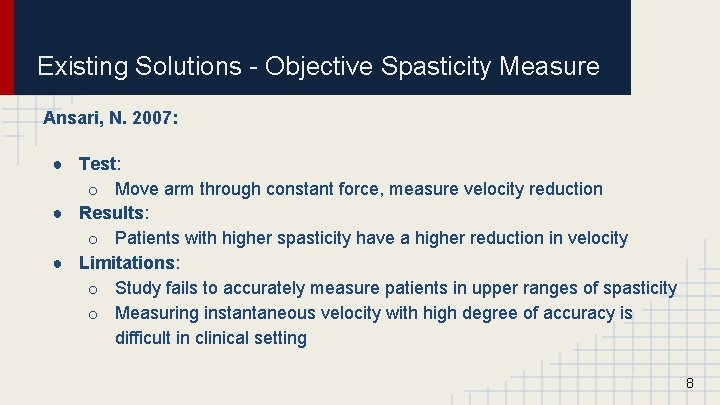
Existing Solutions - Objective Spasticity Measure Ansari, N. 2007: ● Test: o Move arm through constant force, measure velocity reduction ● Results: o Patients with higher spasticity have a higher reduction in velocity ● Limitations: o Study fails to accurately measure patients in upper ranges of spasticity o Measuring instantaneous velocity with high degree of accuracy is difficult in clinical setting 8
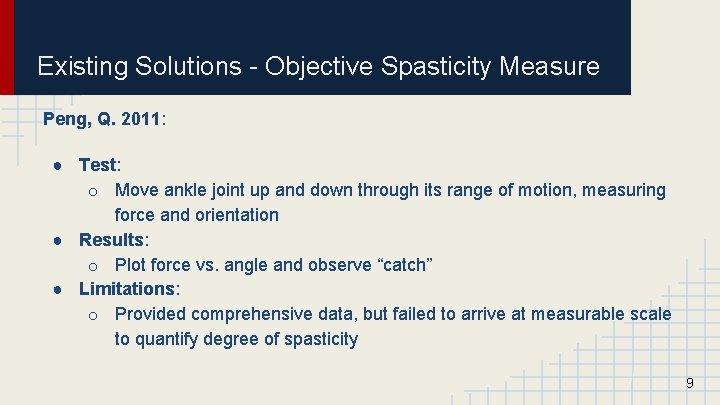
Existing Solutions - Objective Spasticity Measure Peng, Q. 2011: ● Test: o Move ankle joint up and down through its range of motion, measuring force and orientation ● Results: o Plot force vs. angle and observe “catch” ● Limitations: o Provided comprehensive data, but failed to arrive at measurable scale to quantify degree of spasticity 9
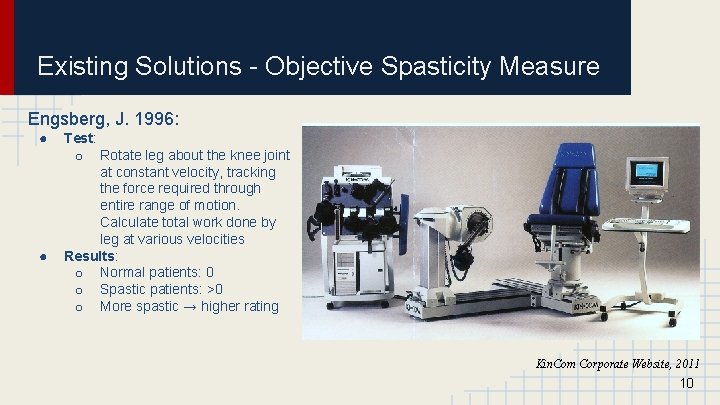
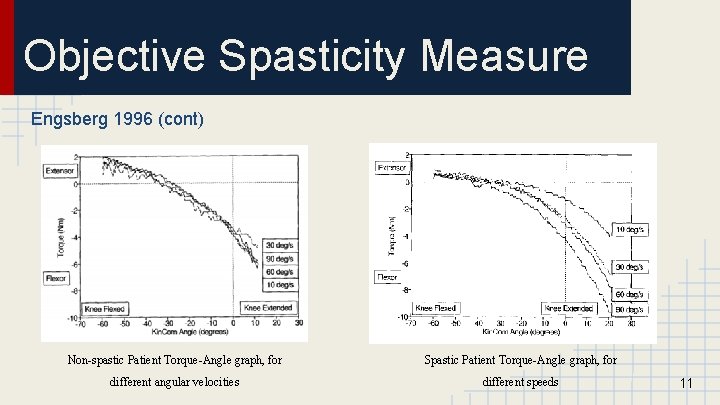
Existing Solutions - Objective Spasticity Measure Engsberg, J. 1996: ● ● Test: o Rotate leg about the knee joint at constant velocity, tracking the force required through entire range of motion. Calculate total work done by leg at various velocities Results: o Normal patients: 0 o Spastic patients: >0 o More spastic → higher rating Kin. Com Corporate Website, 2011 10
Objective Spasticity Measure Engsberg 1996 (cont) Non-spastic Patient Torque-Angle graph, for Spastic Patient Torque-Angle graph, for different angular velocities different speeds 11
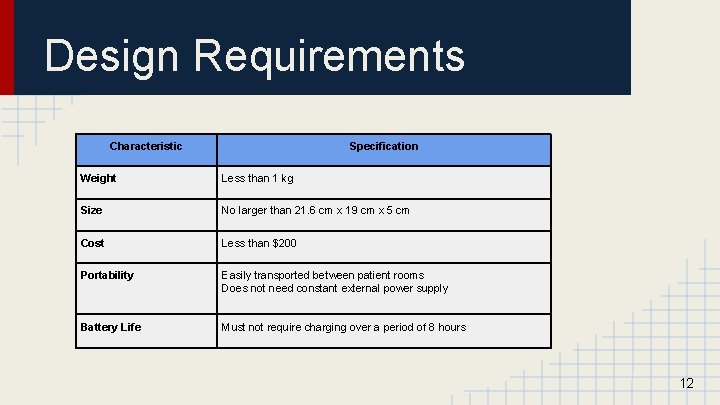
Design Requirements Characteristic Specification Weight Less than 1 kg Size No larger than 21. 6 cm x 19 cm x 5 cm Cost Less than $200 Portability Easily transported between patient rooms Does not need constant external power supply Battery Life Must not require charging over a period of 8 hours 12
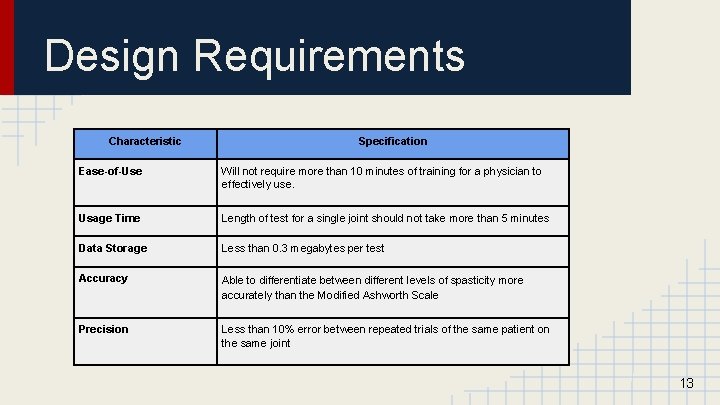
Design Requirements Characteristic Specification Ease-of-Use Will not require more than 10 minutes of training for a physician to effectively use. Usage Time Length of test for a single joint should not take more than 5 minutes Data Storage Less than 0. 3 megabytes per test Accuracy Able to differentiate between different levels of spasticity more accurately than the Modified Ashworth Scale Precision Less than 10% error between repeated trials of the same patient on the same joint 13
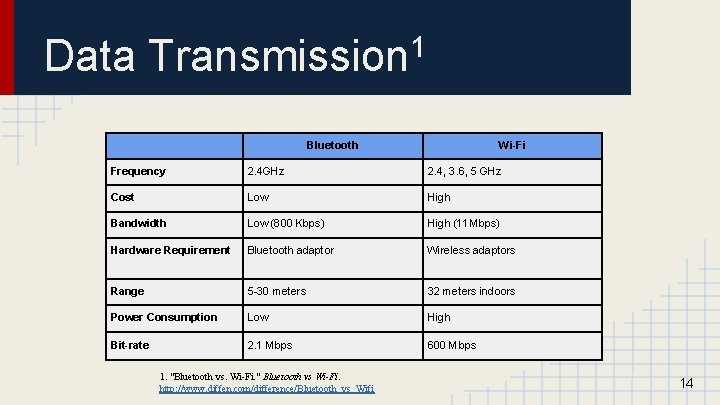
Data Transmission 1 Bluetooth Wi-Fi Frequency 2. 4 GHz 2. 4, 3. 6, 5 GHz Cost Low High Bandwidth Low (800 Kbps) High (11 Mbps) Hardware Requirement Bluetooth adaptor Wireless adaptors Range 5 -30 meters 32 meters indoors Power Consumption Low High Bit-rate 2. 1 Mbps 600 Mbps 1. "Bluetooth vs. Wi-Fi. " Bluetooth vs Wi-Fi. http: //www. diffen. com/difference/Bluetooth_vs_Wifi 14
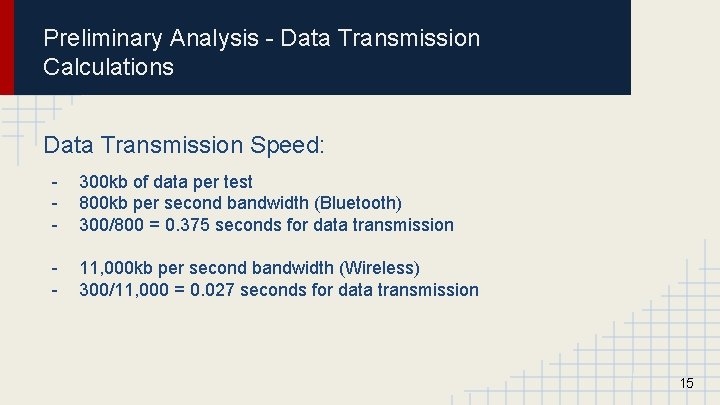
Preliminary Analysis - Data Transmission Calculations Data Transmission Speed: - 300 kb of data per test 800 kb per second bandwidth (Bluetooth) 300/800 = 0. 375 seconds for data transmission - 11, 000 kb per second bandwidth (Wireless) 300/11, 000 = 0. 027 seconds for data transmission 15
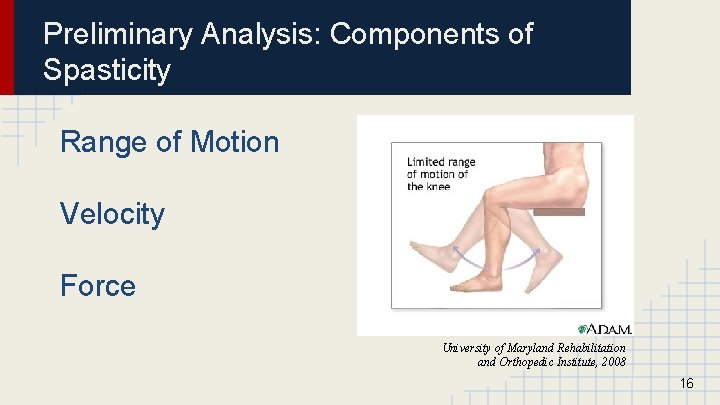
Preliminary Analysis: Components of Spasticity Range of Motion Velocity Force University of Maryland Rehabilitation and Orthopedic Institute, 2008 16
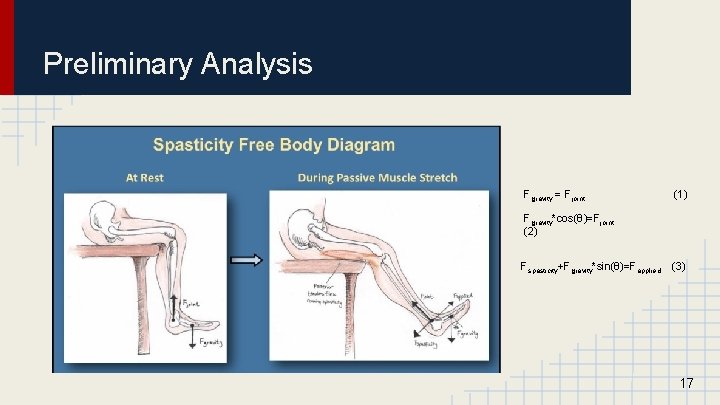
Preliminary Analysis Fgravity = Fjoint (1) Fgravity*cos(θ)=Fjoint (2) Fspasticity+Fgravity*sin(θ)=Fapplied (3) 17
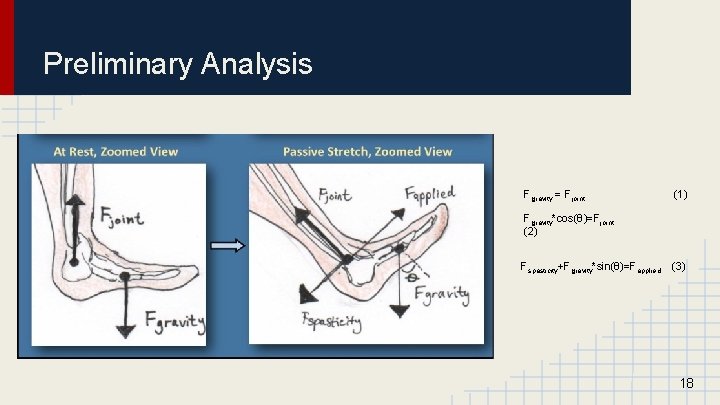
Preliminary Analysis Fgravity = Fjoint (1) Fgravity*cos(θ)=Fjoint (2) Fspasticity+Fgravity*sin(θ)=Fapplied (3) 18
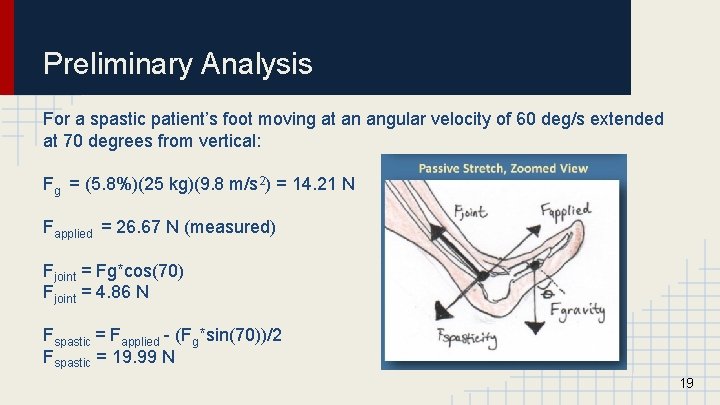
Preliminary Analysis For a spastic patient’s foot moving at an angular velocity of 60 deg/s extended at 70 degrees from vertical: Fg = (5. 8%)(25 kg)(9. 8 m/s 2) = 14. 21 N Fapplied = 26. 67 N (measured) Fjoint = Fg*cos(70) Fjoint = 4. 86 N Fspastic = Fapplied - (Fg*sin(70))/2 Fspastic = 19. 99 N 19
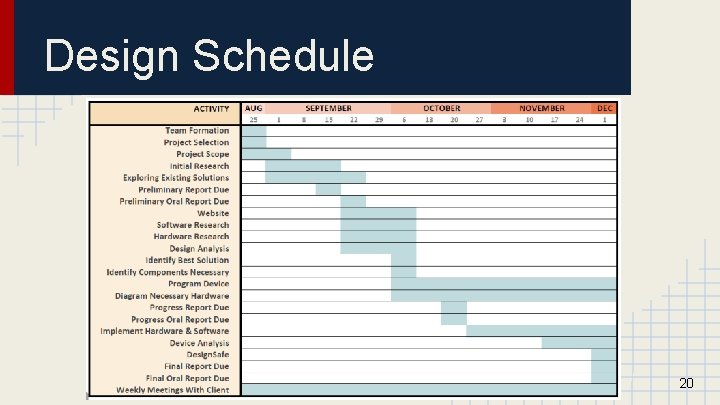
Design Schedule 20
Group Responsibilities 21
Acknowledgements Dr. Jack Engsberg Tony Wang Charles Wu Dr. Joseph Klaesner Anna Boone Dr. John Standeven 22