
SPARKING SCIENCE Energy flow in the Ecosystem ECOSYSTEMS
- Slides: 24
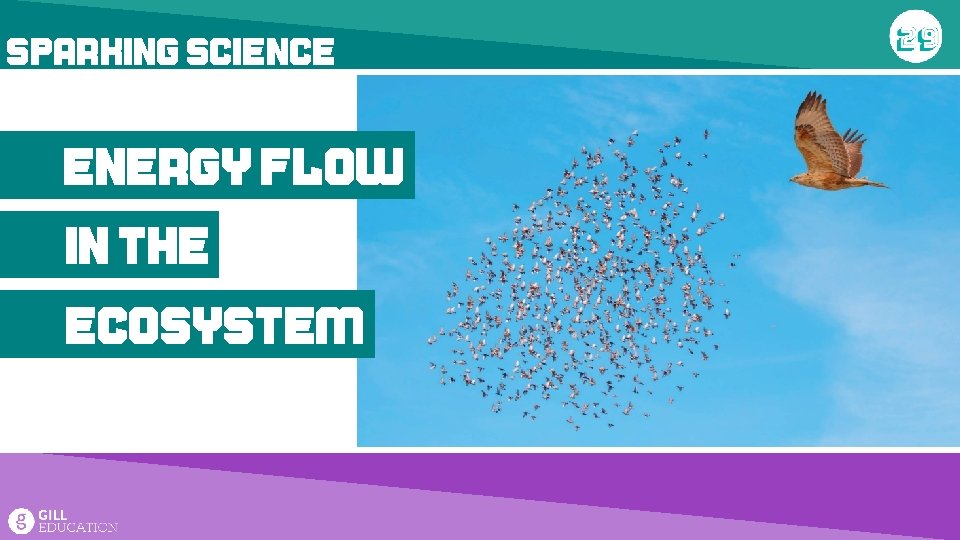
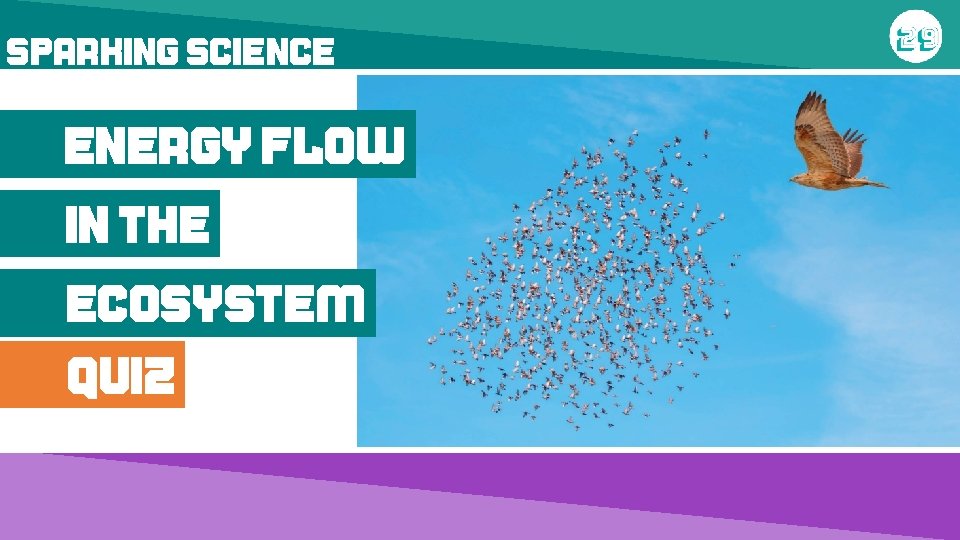
SPARKING SCIENCE Energy flow in the Ecosystem
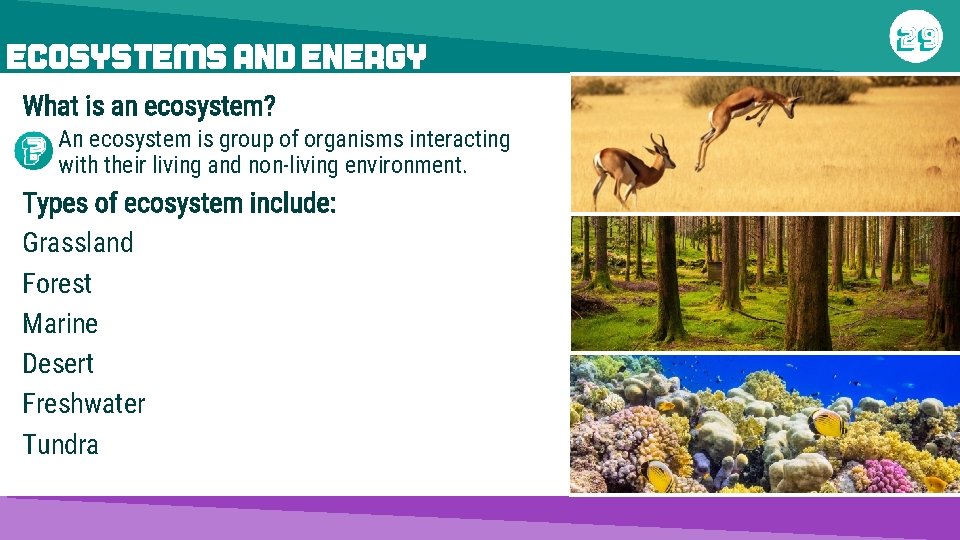
ECOSYSTEMS AND ENERGY What is an ecosystem? An ecosystem is group of organisms interacting with their living and non-living environment. Types of ecosystem include: Grassland Forest Marine Desert Freshwater Tundra
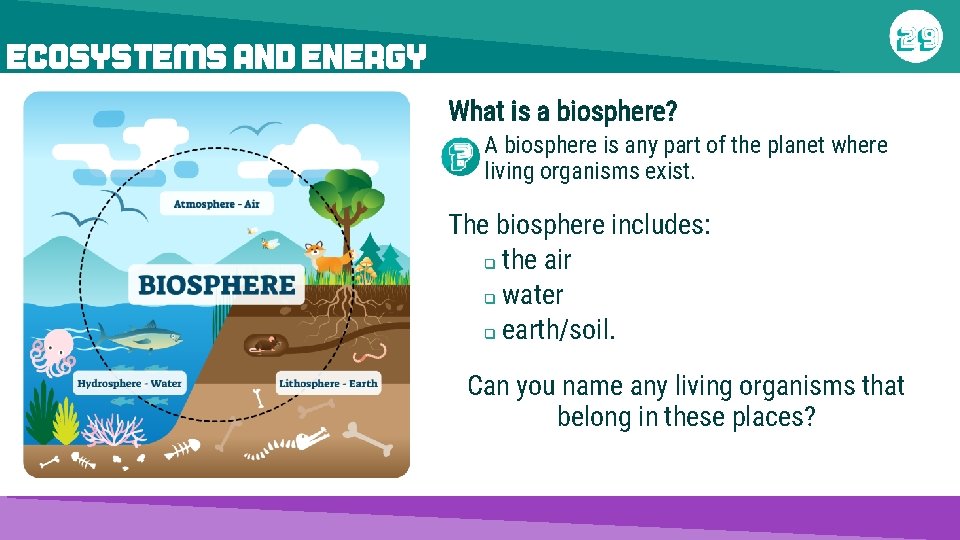
ECOSYSTEMS AND ENERGY What is a biosphere? A biosphere is any part of the planet where living organisms exist. The biosphere includes: q the air q water q earth/soil. Can you name any living organisms that belong in these places?
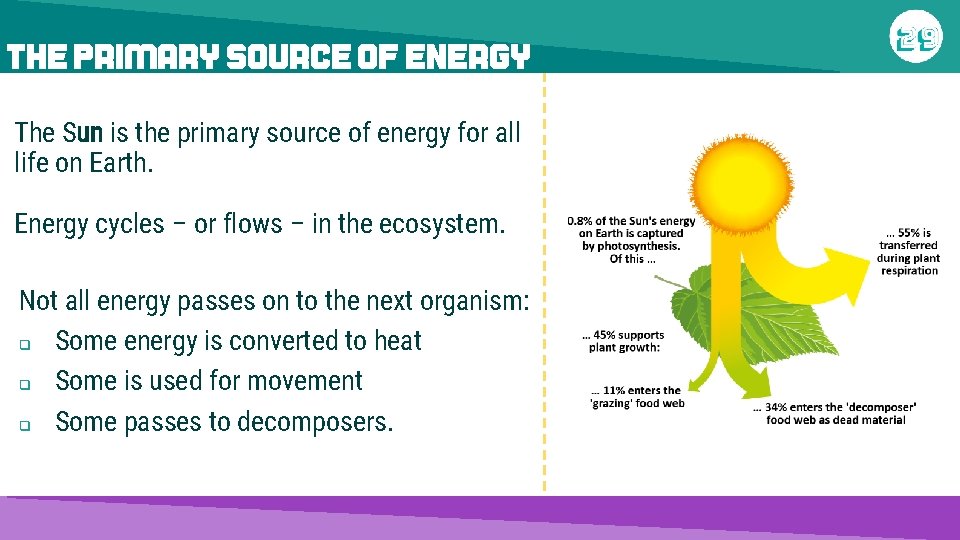
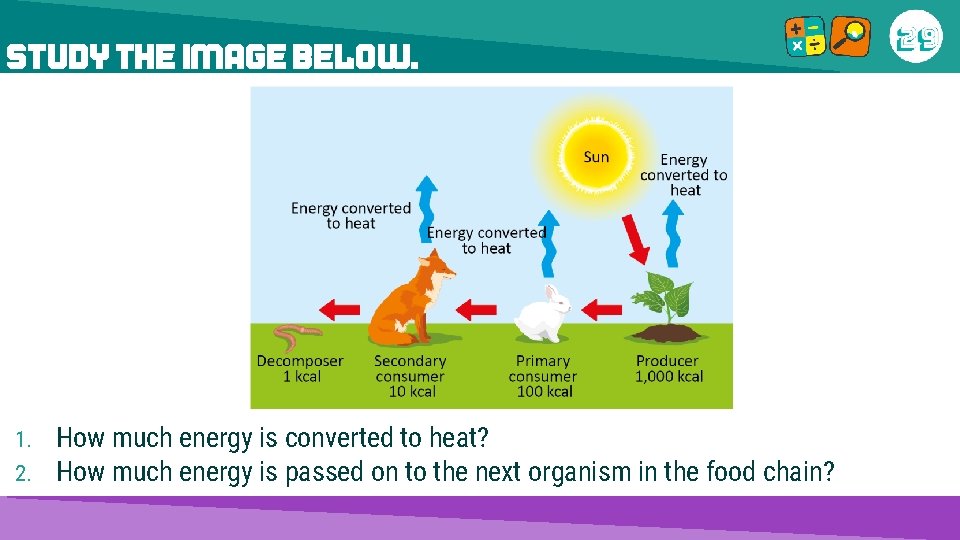
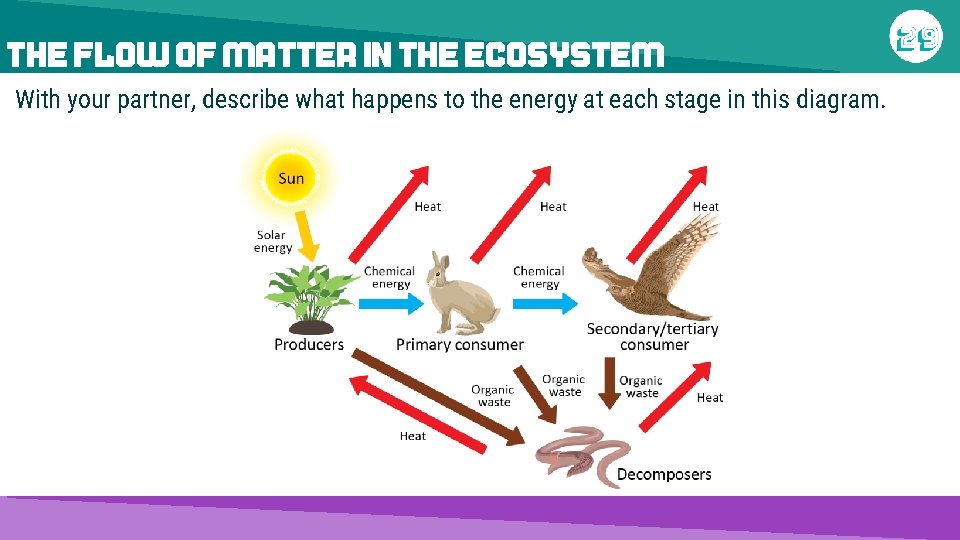
THE PRIMARY SOURCE OF ENERGY The Sun is the primary source of energy for all life on Earth. Energy cycles – or flows – in the ecosystem. Not all energy passes on to the next organism: q Some energy is converted to heat q Some is used for movement q Some passes to decomposers.
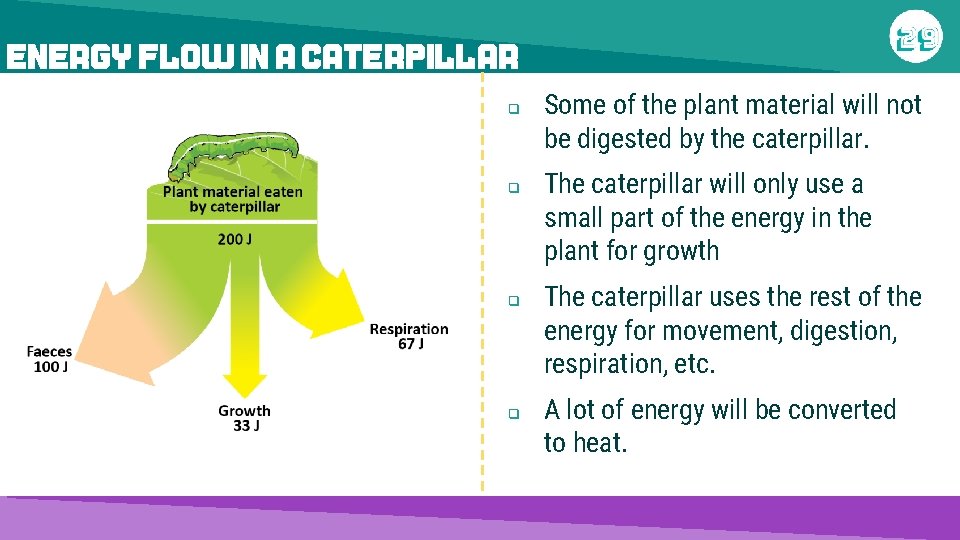
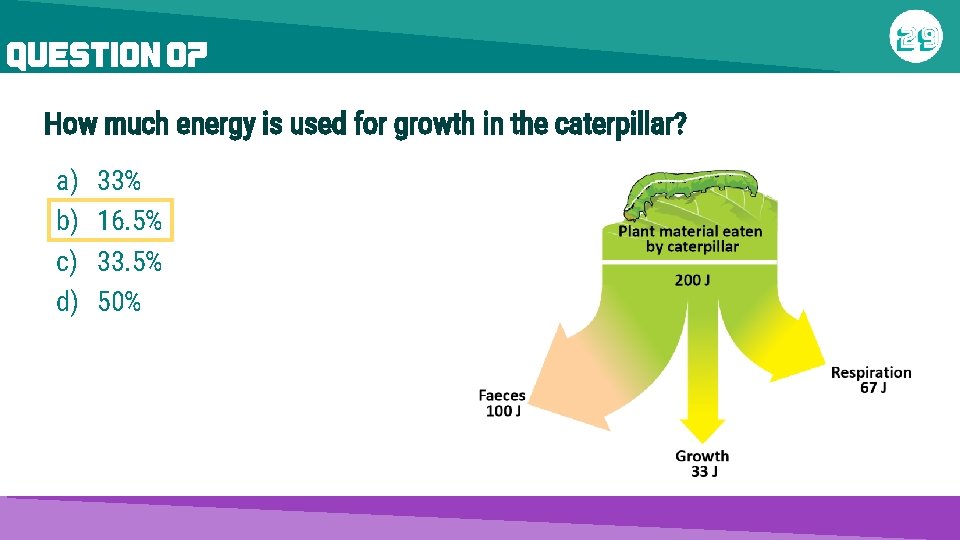
ENERGY FLOW IN A CATERPILLAR q q Some of the plant material will not be digested by the caterpillar. The caterpillar will only use a small part of the energy in the plant for growth The caterpillar uses the rest of the energy for movement, digestion, respiration, etc. A lot of energy will be converted to heat.
STUDY THE IMAGE BELOW. 1. 2. How much energy is converted to heat? How much energy is passed on to the next organism in the food chain?
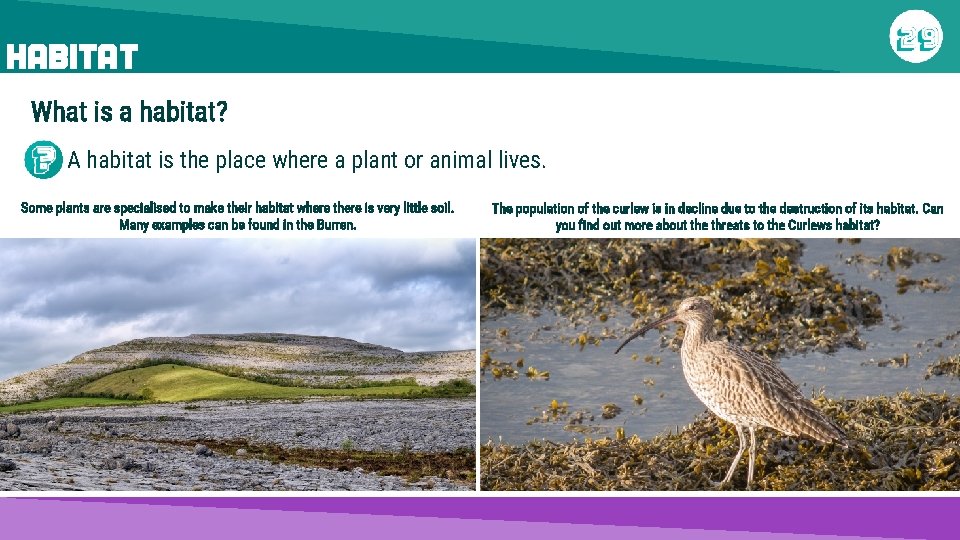
HABITAT What is a habitat? A habitat is the place where a plant or animal lives. Some plants are specialised to make their habitat where there is very little soil. Many examples can be found in the Burren. The population of the curlew is in decline due to the destruction of its habitat. Can you find out more about the threats to the Curlews habitat?
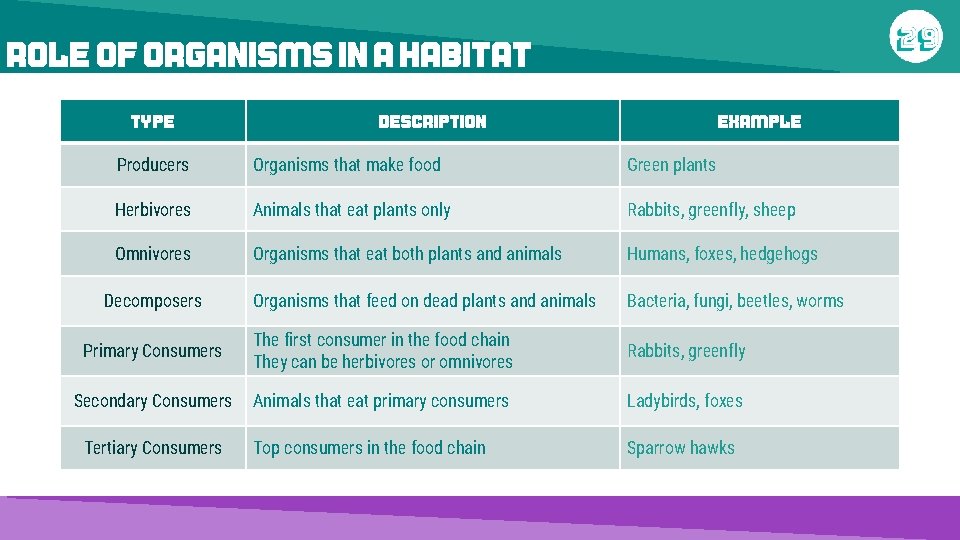
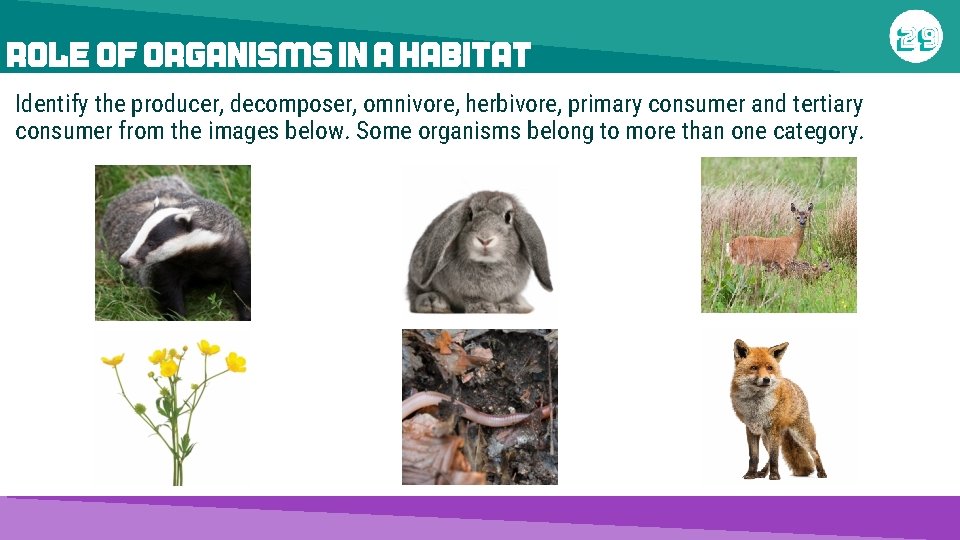
ROLE OF ORGANISMS IN A HABITAT Type Description Example Producers Organisms that make food Green plants Herbivores Animals that eat plants only Rabbits, greenfly, sheep Omnivores Organisms that eat both plants and animals Humans, foxes, hedgehogs Organisms that feed on dead plants and animals Bacteria, fungi, beetles, worms Primary Consumers The first consumer in the food chain They can be herbivores or omnivores Rabbits, greenfly Secondary Consumers Animals that eat primary consumers Ladybirds, foxes Top consumers in the food chain Sparrow hawks Decomposers Tertiary Consumers
ROLE OF ORGANISMS IN A HABITAT Identify the producer, decomposer, omnivore, herbivore, primary consumer and tertiary consumer from the images below. Some organisms belong to more than one category.
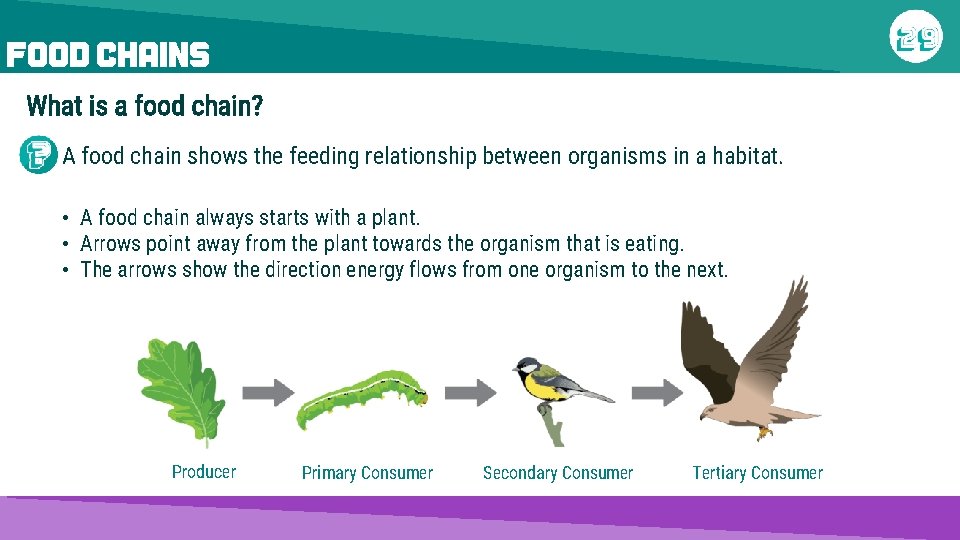
FOOD CHAINS What is a food chain? A food chain shows the feeding relationship between organisms in a habitat. • A food chain always starts with a plant. • Arrows point away from the plant towards the organism that is eating. • The arrows show the direction energy flows from one organism to the next. Producer Primary Consumer Secondary Consumer Tertiary Consumer
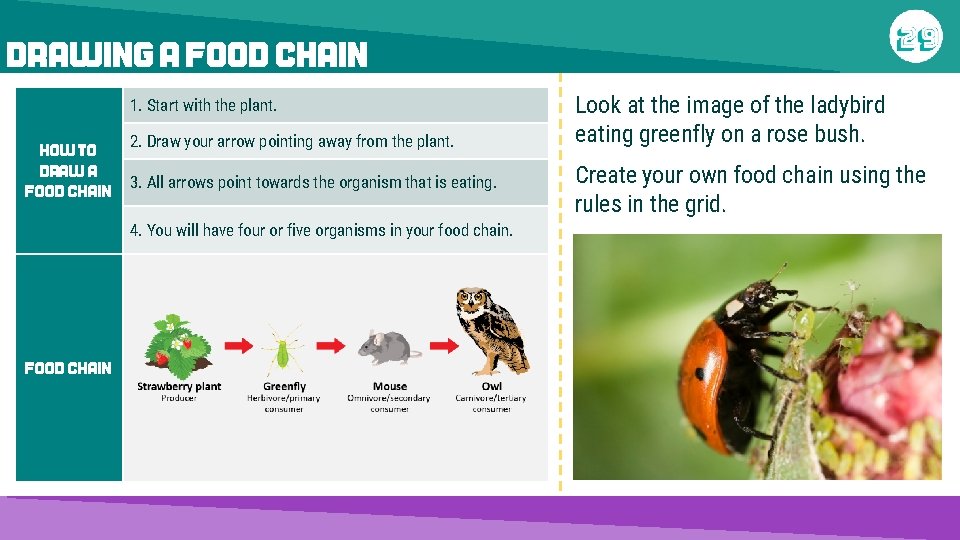
DRAWING A FOOD CHAIN 1. Start with the plant. How to draw a food chain 2. Draw your arrow pointing away from the plant. 3. All arrows point towards the organism that is eating. 4. You will have four or five organisms in your food chain. Food chain Look at the image of the ladybird eating greenfly on a rose bush. Create your own food chain using the rules in the grid.
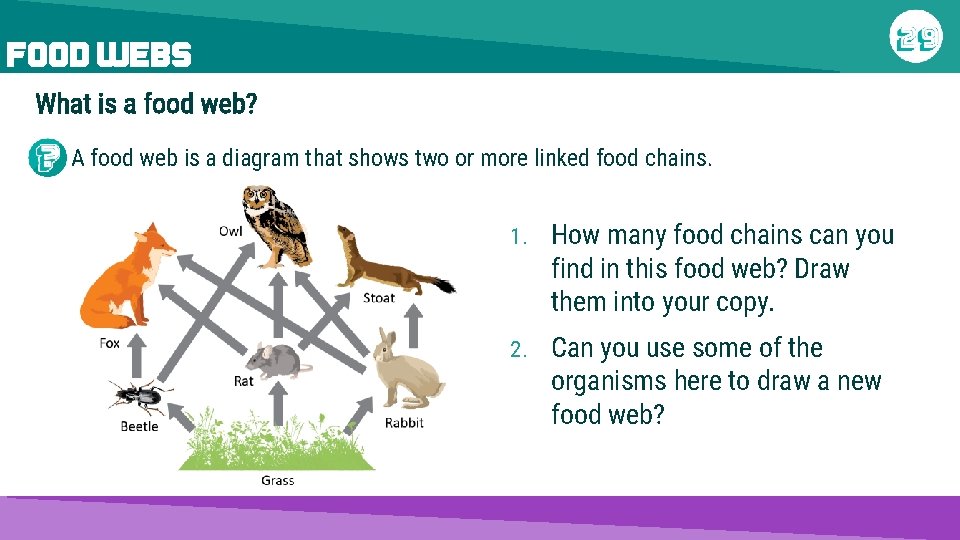
FOOD WEBS What is a food web? A food web is a diagram that shows two or more linked food chains. 1. How many food chains can you find in this food web? Draw them into your copy. 2. Can you use some of the organisms here to draw a new food web?
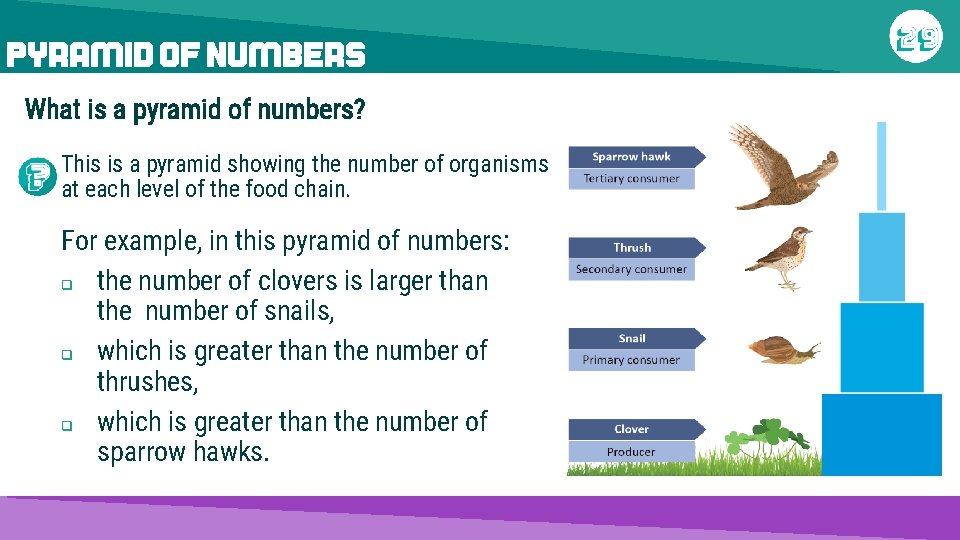
PYRAMID OF NUMBERS What is a pyramid of numbers? This is a pyramid showing the number of organisms at each level of the food chain. For example, in this pyramid of numbers: q the number of clovers is larger than the number of snails, q which is greater than the number of thrushes, q which is greater than the number of sparrow hawks.
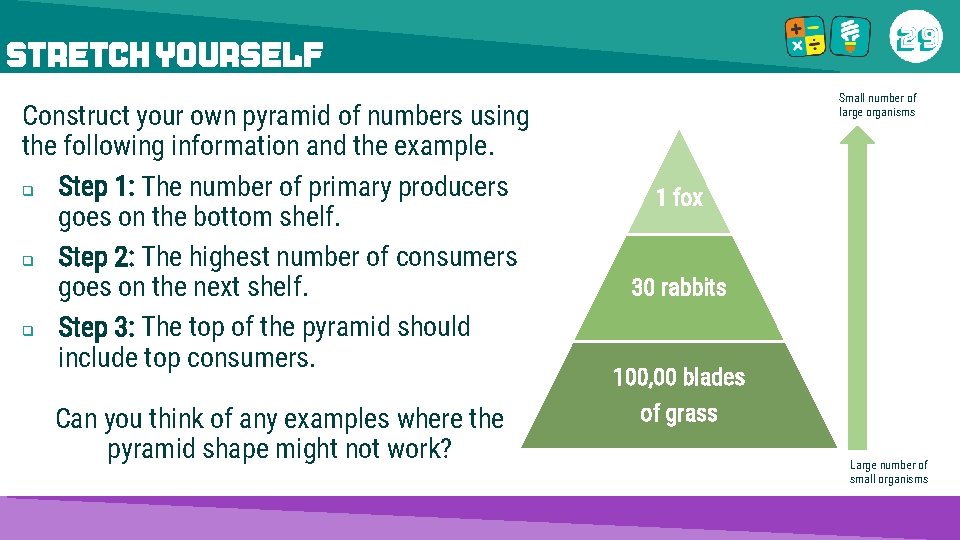
STRETCH YOURSELF Construct your own pyramid of numbers using the following information and the example. q Step 1: The number of primary producers goes on the bottom shelf. q Step 2: The highest number of consumers goes on the next shelf. q Step 3: The top of the pyramid should include top consumers. Can you think of any examples where the pyramid shape might not work? Small number of large organisms 1 fox 30 rabbits 100, 00 blades of grass Large number of small organisms
THE FLOW OF MATTER IN THE ECOSYSTEM With your partner, describe what happens to the energy at each stage in this diagram.
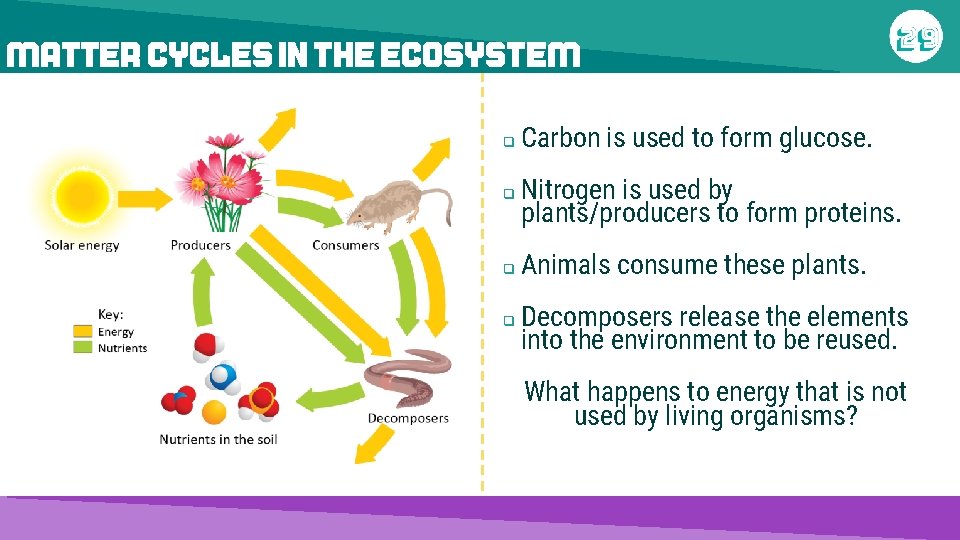
MATTER CYCLES IN THE ECOSYSTEM q Carbon is used to form glucose. q Nitrogen is used by plants/producers to form proteins. q Animals consume these plants. q Decomposers release the elements into the environment to be reused. What happens to energy that is not used by living organisms?
SPARKING SCIENCE Energy flow in the Ecosystem Quiz
QUESTION 01 The main source of energy in the ecosystem is ________? a) b) c) d) Food Water Carbon dioxide Sunlight
QUESTION 02 The parts of the planet where life exists is known as ________? a) b) c) d) The habitat The ecosystem The biosphere The food web
QUESTION 03 What term is used to describe an organism that makes its own food? a) b) c) d) Consumer Omnivore Producer Decomposer
QUESTION 04 How do we show feeding relationships between organisms? a) b) c) d) Food webs Food chains Food pyramids Sankey diagrams
QUESTION 05 Links between food chains in the ecosystem are shown in ________? a) b) c) d) Food networks Food grids Food webs Food groups
QUESTION 06 Which of the following statements is correct? a) b) c) d) Food webs always start with consumers. Food webs show only consumers in the habitat. Food chains show the feeding relationship between organisms. Consumers are not shown in food webs.
QUESTION 07 How much energy is used for growth in the caterpillar? a) b) c) d) 33% 16. 5% 33. 5% 50%