
SPARC at Purdue Chronic Stimulation Microbehavioral Analysis of

SPARC at Purdue Chronic Stimulation: Microbehavioral Analysis of Feeding Behavior Robert J Phillips, Ph. D Xueguo Zhang Zhenjun Tan Zhongming Liu Terry Powley Pedro Irazoqui Matthew Ward J. Paul Robinson Walter Voit Bartek Rajwa
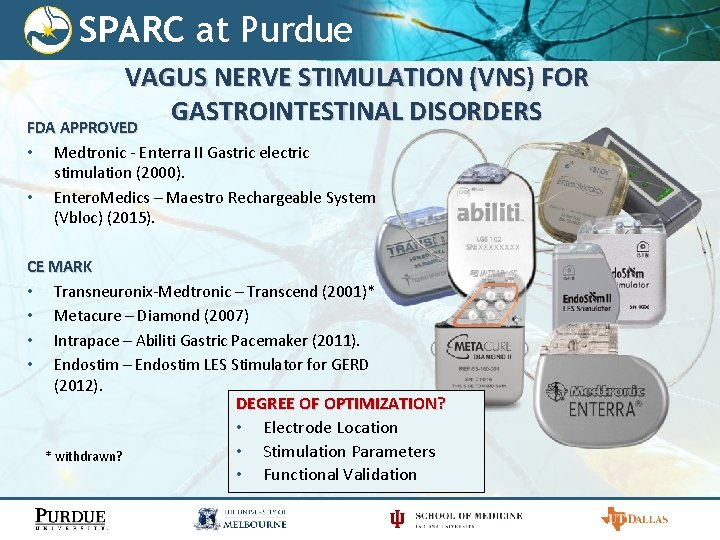
SPARC at Purdue VAGUS NERVE STIMULATION (VNS) FOR GASTROINTESTINAL DISORDERS FDA APPROVED • • Medtronic - Enterra II Gastric electric stimulation (2000). Entero. Medics – Maestro Rechargeable System (Vbloc) (2015). CE MARK • Transneuronix-Medtronic – Transcend (2001)* • Metacure – Diamond (2007) • Intrapace – Abiliti Gastric Pacemaker (2011). • Endostim – Endostim LES Stimulator for GERD (2012). * withdrawn? DEGREE OF OPTIMIZATION? • Electrode Location • Stimulation Parameters • Functional Validation

SPARC at Purdue Neural Mapping Acute Chronic Clinical Application Functional Mapping
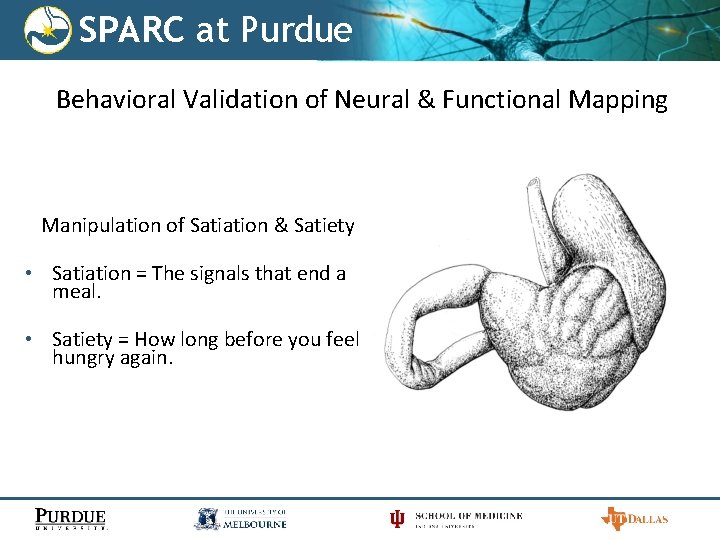
SPARC at Purdue Behavioral Validation of Neural & Functional Mapping Manipulation of Satiation & Satiety • Satiation = The signals that end a meal. • Satiety = How long before you feel hungry again.
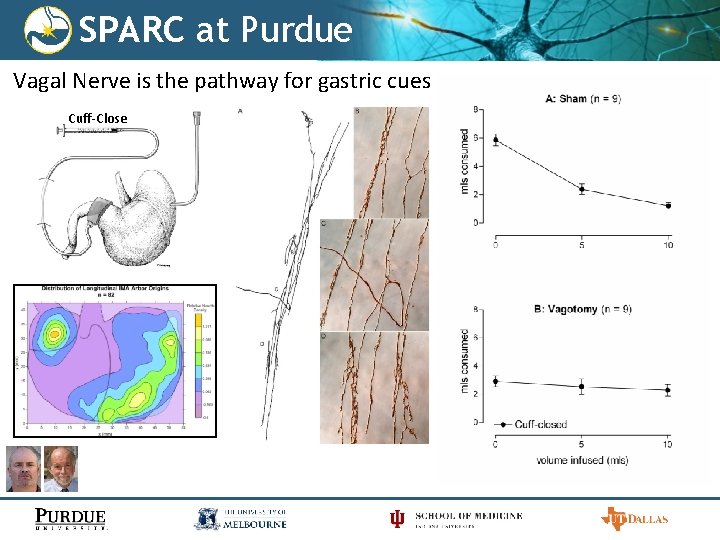
SPARC at Purdue Vagal Nerve is the pathway for gastric cues Cuff-Close
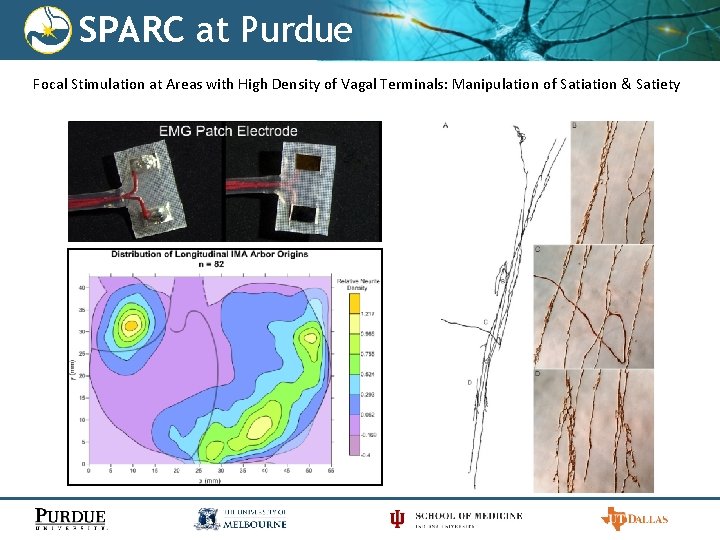
SPARC at Purdue Focal Stimulation at Areas with High Density of Vagal Terminals: Manipulation of Satiation & Satiety
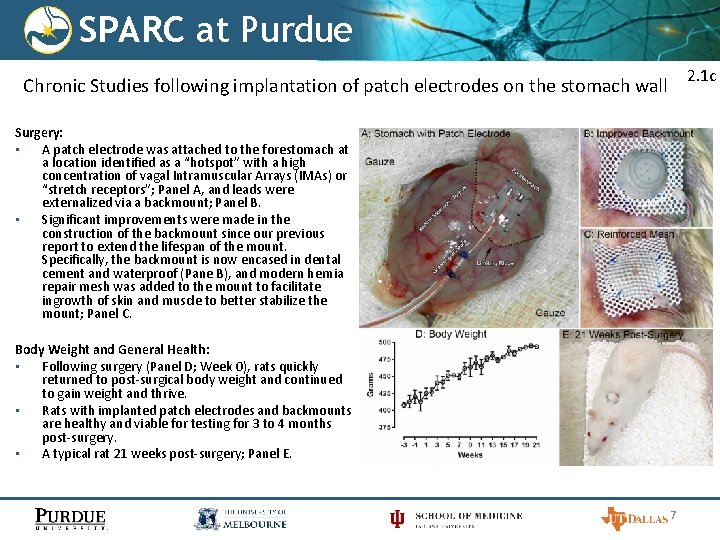
SPARC at Purdue 2. 1 c Chronic Studies following implantation of patch electrodes on the stomach wall Surgery: • A patch electrode was attached to the forestomach at a location identified as a “hotspot” with a high concentration of vagal Intramuscular Arrays (IMAs) or “stretch receptors”; Panel A, and leads were externalized via a backmount; Panel B. • Significant improvements were made in the construction of the backmount since our previous report to extend the lifespan of the mount. Specifically, the backmount is now encased in dental cement and waterproof (Pane B), and modern hernia repair mesh was added to the mount to facilitate ingrowth of skin and muscle to better stabilize the mount; Panel C. Body Weight and General Health: • Following surgery (Panel D; Week 0), rats quickly returned to post-surgical body weight and continued to gain weight and thrive. • Rats with implanted patch electrodes and backmounts are healthy and viable for testing for 3 to 4 months post-surgery. • A typical rat 21 weeks post-surgery; Panel E. 7
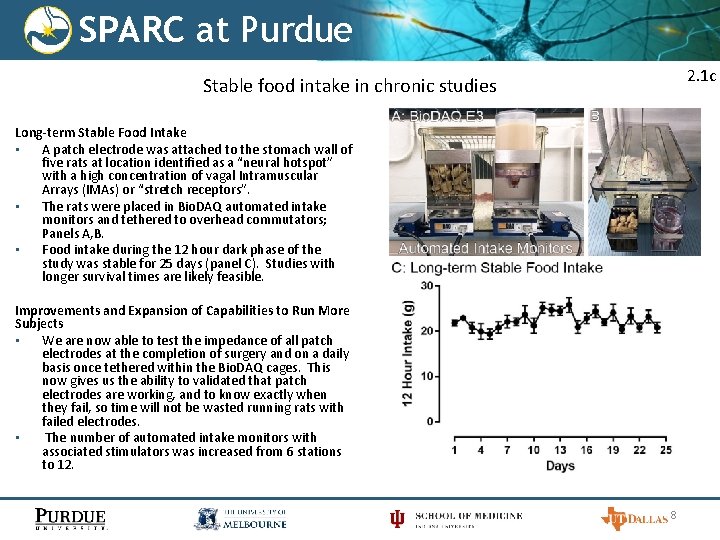
SPARC at Purdue 2. 1 c Stable food intake in chronic studies Long-term Stable Food Intake • A patch electrode was attached to the stomach wall of five rats at location identified as a “neural hotspot” with a high concentration of vagal Intramuscular Arrays (IMAs) or “stretch receptors”. • The rats were placed in Bio. DAQ automated intake monitors and tethered to overhead commutators; Panels A, B. • Food intake during the 12 hour dark phase of the study was stable for 25 days (panel C). Studies with longer survival times are likely feasible. Improvements and Expansion of Capabilities to Run More Subjects • We are now able to test the impedance of all patch electrodes at the completion of surgery and on a daily basis once tethered within the Bio. DAQ cages. This now gives us the ability to validated that patch electrodes are working, and to know exactly when they fail, so time will not be wasted running rats with failed electrodes. • The number of automated intake monitors with associated stimulators was increased from 6 stations to 12. 8
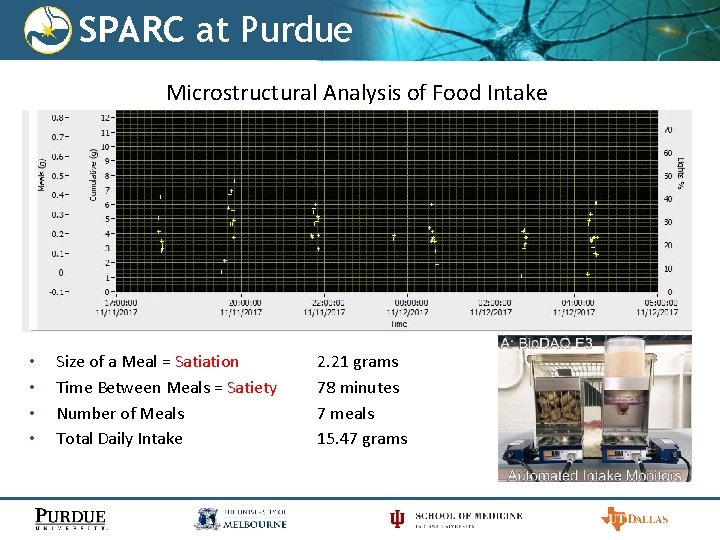
SPARC at Purdue Microstructural Analysis of Food Intake • • Size of a Meal = Satiation Time Between Meals = Satiety Number of Meals Total Daily Intake 2. 21 grams 78 minutes 7 meals 15. 47 grams
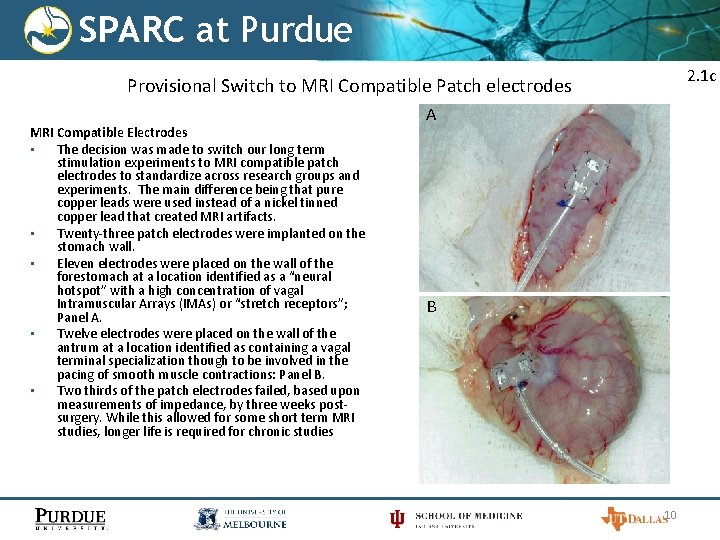
SPARC at Purdue 2. 1 c Provisional Switch to MRI Compatible Patch electrodes MRI Compatible Electrodes • The decision was made to switch our long term stimulation experiments to MRI compatible patch electrodes to standardize across research groups and experiments. The main difference being that pure copper leads were used instead of a nickel tinned copper lead that created MRI artifacts. • Twenty-three patch electrodes were implanted on the stomach wall. • Eleven electrodes were placed on the wall of the forestomach at a location identified as a “neural hotspot” with a high concentration of vagal Intramuscular Arrays (IMAs) or “stretch receptors”; Panel A. • Twelve electrodes were placed on the wall of the antrum at a location identified as containing a vagal terminal specialization though to be involved in the pacing of smooth muscle contractions: Panel B. • Two thirds of the patch electrodes failed, based upon measurements of impedance, by three weeks postsurgery. While this allowed for some short term MRI studies, longer life is required for chronic studies A B 10
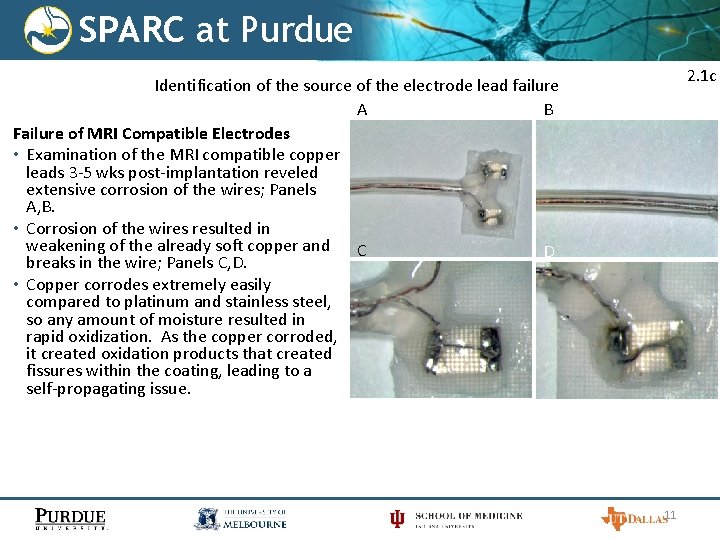
SPARC at Purdue 2. 1 c Identification of the source of the electrode lead failure A B Failure of MRI Compatible Electrodes • Examination of the MRI compatible copper leads 3 -5 wks post-implantation reveled extensive corrosion of the wires; Panels A, B. • Corrosion of the wires resulted in weakening of the already soft copper and C D breaks in the wire; Panels C, D. • Copper corrodes extremely easily compared to platinum and stainless steel, so any amount of moisture resulted in rapid oxidization. As the copper corroded, it created oxidation products that created fissures within the coating, leading to a self-propagating issue. 11
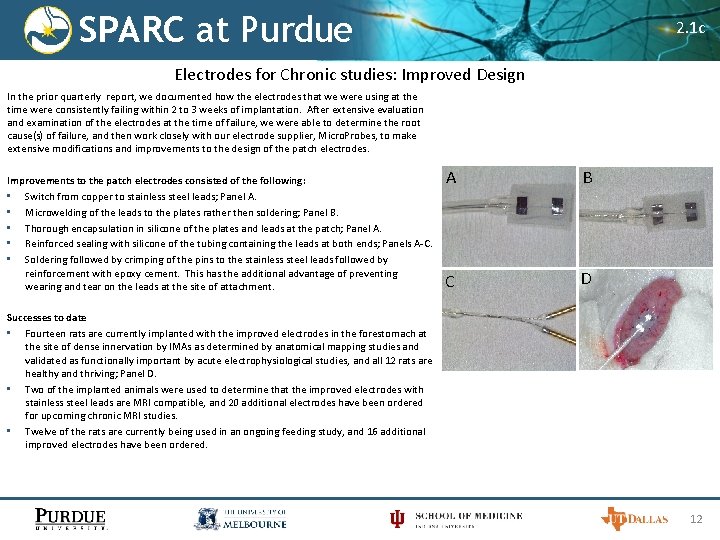
SPARC at Purdue 2. 1 c Electrodes for Chronic studies: Improved Design In the prior quarterly report, we documented how the electrodes that we were using at the time were consistently failing within 2 to 3 weeks of implantation. After extensive evaluation and examination of the electrodes at the time of failure, we were able to determine the root cause(s) of failure, and then work closely with our electrode supplier, Micro. Probes, to make extensive modifications and improvements to the design of the patch electrodes. Improvements to the patch electrodes consisted of the following: • Switch from copper to stainless steel leads; Panel A. • Microwelding of the leads to the plates rather then soldering; Panel B. • Thorough encapsulation in silicone of the plates and leads at the patch; Panel A. • Reinforced sealing with silicone of the tubing containing the leads at both ends; Panels A-C. • Soldering followed by crimping of the pins to the stainless steel leads followed by reinforcement with epoxy cement. This has the additional advantage of preventing wearing and tear on the leads at the site of attachment. A B C D Successes to date • Fourteen rats are currently implanted with the improved electrodes in the forestomach at the site of dense innervation by IMAs as determined by anatomical mapping studies and validated as functionally important by acute electrophysiological studies, and all 12 rats are healthy and thriving; Panel D. • Two of the implanted animals were used to determine that the improved electrodes with stainless steel leads are MRI compatible, and 20 additional electrodes have been ordered for upcoming chronic MRI studies. • Twelve of the rats are currently being used in an ongoing feeding study, and 16 additional improved electrodes have been ordered. 12
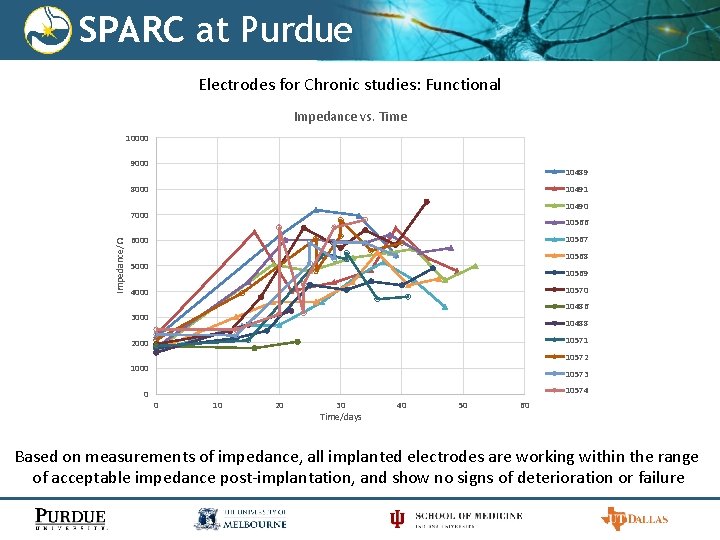
SPARC at Purdue Electrodes for Chronic studies: Functional Impedance vs. Time 10000 9000 10489 10491 8000 10490 Impedance/Ω 7000 10566 10567 6000 10568 5000 10569 10570 4000 10486 3000 10488 10571 2000 10572 1000 0 10573 10574 0 10 20 30 Time/days 40 50 60 Based on measurements of impedance, all implanted electrodes are working within the range of acceptable impedance post-implantation, and show no signs of deterioration or failure
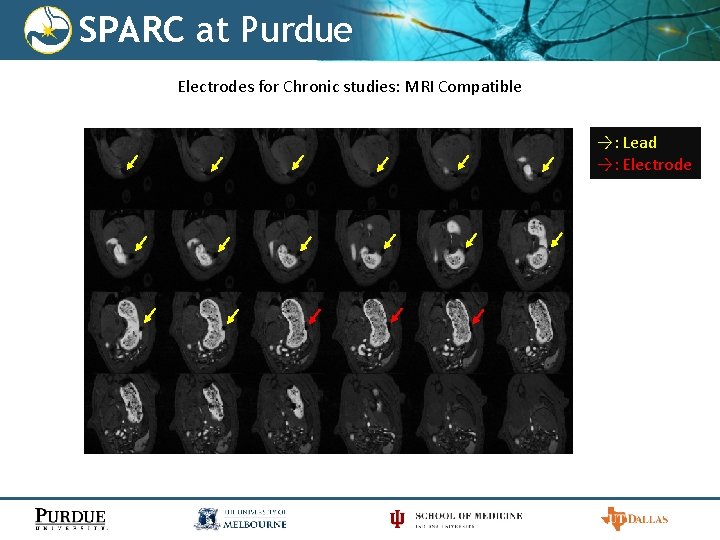
SPARC at Purdue Electrodes for Chronic studies: MRI Compatible →: Lead →: Electrode
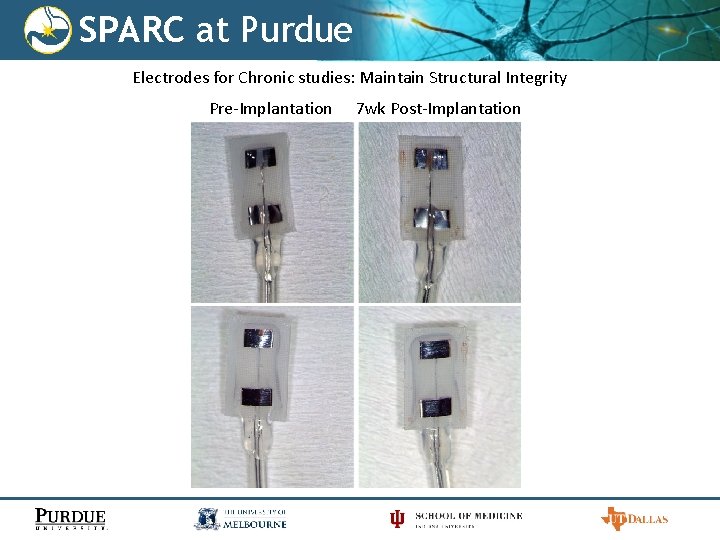
SPARC at Purdue Electrodes for Chronic studies: Maintain Structural Integrity Pre-Implantation 7 wk Post-Implantation
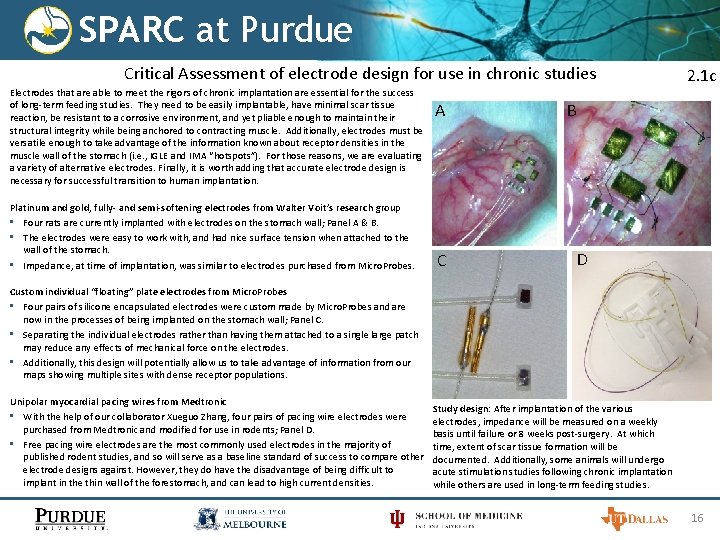
SPARC at Purdue Critical Assessment of electrode design for use in chronic studies Electrodes that are able to meet the rigors of chronic implantation are essential for the success of long-term feeding studies. They need to be easily implantable, have minimal scar tissue reaction, be resistant to a corrosive environment, and yet pliable enough to maintain their structural integrity while being anchored to contracting muscle. Additionally, electrodes must be versatile enough to take advantage of the information known about receptor densities in the muscle wall of the stomach (i. e. , IGLE and IMA “hotspots”). For those reasons, we are evaluating a variety of alternative electrodes. Finally, it is worth adding that accurate electrode design is necessary for successful transition to human implantation. Platinum and gold, fully- and semi-softening electrodes from Walter Voit’s research group • Four rats are currently implanted with electrodes on the stomach wall; Panel A & B. • The electrodes were easy to work with, and had nice surface tension when attached to the wall of the stomach. • Impedance, at time of implantation, was similar to electrodes purchased from Micro. Probes. A C 2. 1 c B D Custom individual “floating” plate electrodes from Micro. Probes • Four pairs of silicone encapsulated electrodes were custom made by Micro. Probes and are now in the processes of being implanted on the stomach wall; Panel C. • Separating the individual electrodes rather than having them attached to a single large patch may reduce any effects of mechanical force on the electrodes. • Additionally, this design will potentially allow us to take advantage of information from our maps showing multiple sites with dense receptor populations. Unipolar myocardial pacing wires from Medtronic • With the help of our collaborator Xueguo Zhang, four pairs of pacing wire electrodes were purchased from Medtronic and modified for use in rodents; Panel D. • Free pacing wire electrodes are the most commonly used electrodes in the majority of published rodent studies, and so will serve as a baseline standard of success to compare other electrode designs against. However, they do have the disadvantage of being difficult to implant in the thin wall of the forestomach, and can lead to high current densities. Study design: After implantation of the various electrodes, impedance will be measured on a weekly basis until failure or 8 weeks post-surgery. At which time, extent of scar tissue formation will be documented. Additionally, some animals will undergo acute stimulation studies following chronic implantation while others are used in long-term feeding studies. 16
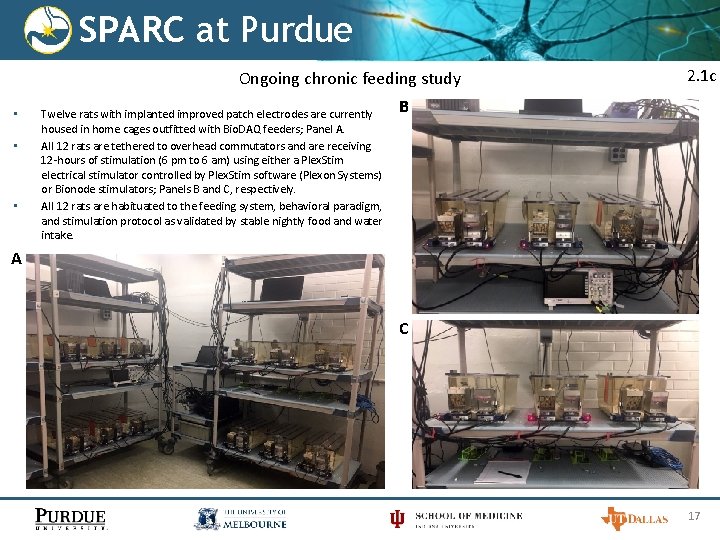
SPARC at Purdue Ongoing chronic feeding study • • • Twelve rats with implanted improved patch electrodes are currently housed in home cages outfitted with Bio. DAQ feeders; Panel A. All 12 rats are tethered to overhead commutators and are receiving 12 -hours of stimulation (6 pm to 6 am) using either a Plex. Stim electrical stimulator controlled by Plex. Stim software (Plexon Systems) or Bionode stimulators; Panels B and C, respectively. All 12 rats are habituated to the feeding system, behavioral paradigm, and stimulation protocol as validated by stable nightly food and water intake. 2. 1 c B A C 17
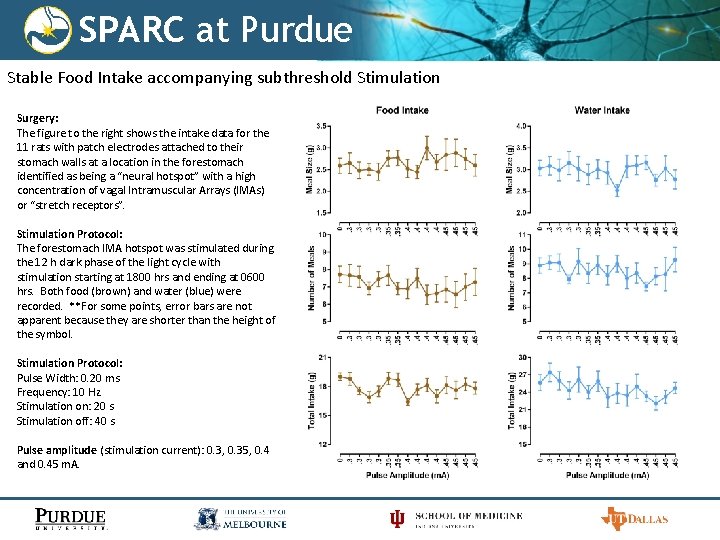
SPARC at Purdue Stable Food Intake accompanying subthreshold Stimulation Surgery: The figure to the right shows the intake data for the 11 rats with patch electrodes attached to their stomach walls at a location in the forestomach identified as being a “neural hotspot” with a high concentration of vagal Intramuscular Arrays (IMAs) or “stretch receptors”. Stimulation Protocol: The forestomach IMA hotspot was stimulated during the 12 h dark phase of the light cycle with stimulation starting at 1800 hrs and ending at 0600 hrs. Both food (brown) and water (blue) were recorded. **For some points, error bars are not apparent because they are shorter than the height of the symbol. Stimulation Protocol: Pulse Width: 0. 20 ms Frequency: 10 Hz Stimulation on: 20 s Stimulation off: 40 s Pulse amplitude (stimulation current): 0. 3, 0. 35, 0. 4 and 0. 45 m. A.
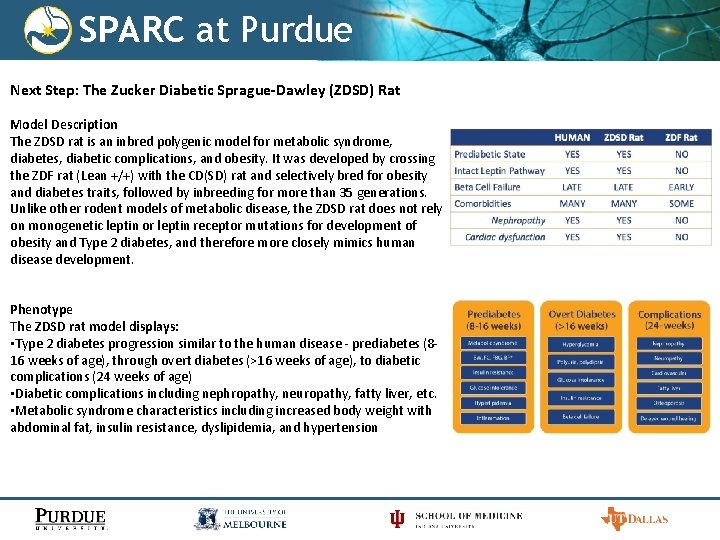
SPARC at Purdue Next Step: The Zucker Diabetic Sprague-Dawley (ZDSD) Rat Model Description The ZDSD rat is an inbred polygenic model for metabolic syndrome, diabetes, diabetic complications, and obesity. It was developed by crossing the ZDF rat (Lean +/+) with the CD(SD) rat and selectively bred for obesity and diabetes traits, followed by inbreeding for more than 35 generations. Unlike other rodent models of metabolic disease, the ZDSD rat does not rely on monogenetic leptin or leptin receptor mutations for development of obesity and Type 2 diabetes, and therefore more closely mimics human disease development. Phenotype The ZDSD rat model displays: • Type 2 diabetes progression similar to the human disease - prediabetes (816 weeks of age), through overt diabetes (>16 weeks of age), to diabetic complications (24 weeks of age) • Diabetic complications including nephropathy, neuropathy, fatty liver, etc. • Metabolic syndrome characteristics including increased body weight with abdominal fat, insulin resistance, dyslipidemia, and hypertension
- Slides: 19