
Spanish Talking about places and locations 12 Present
![Spanish Talking about places and locations [1/2] - Present tense: ‘estar’ (1 st &](https://slidetodoc.com/presentation_image_h2/70ffdf8a44f66c49694a228f534445c1/image-1.jpg "Spanish Talking about places and locations [1/2] - Present tense: ‘estar’ (1 st &")
Spanish Talking about places and locations [1/2] - Present tense: ‘estar’ (1 st & 3 rd plural) for location - Using ‘del’ vs ‘de la’ with adverbs Señorita Vázquez
![parque ¿qué? [que] pequeño porque querer [to want, wanting] quedar [to meet up, stay,](http://slidetodoc.com/presentation_image_h2/70ffdf8a44f66c49694a228f534445c1/image-2.jpg "parque ¿qué? [que] pequeño porque querer [to want, wanting] quedar [to meet up, stay,")
parque ¿qué? [que] pequeño porque querer [to want, wanting] quedar [to meet up, stay, suit]
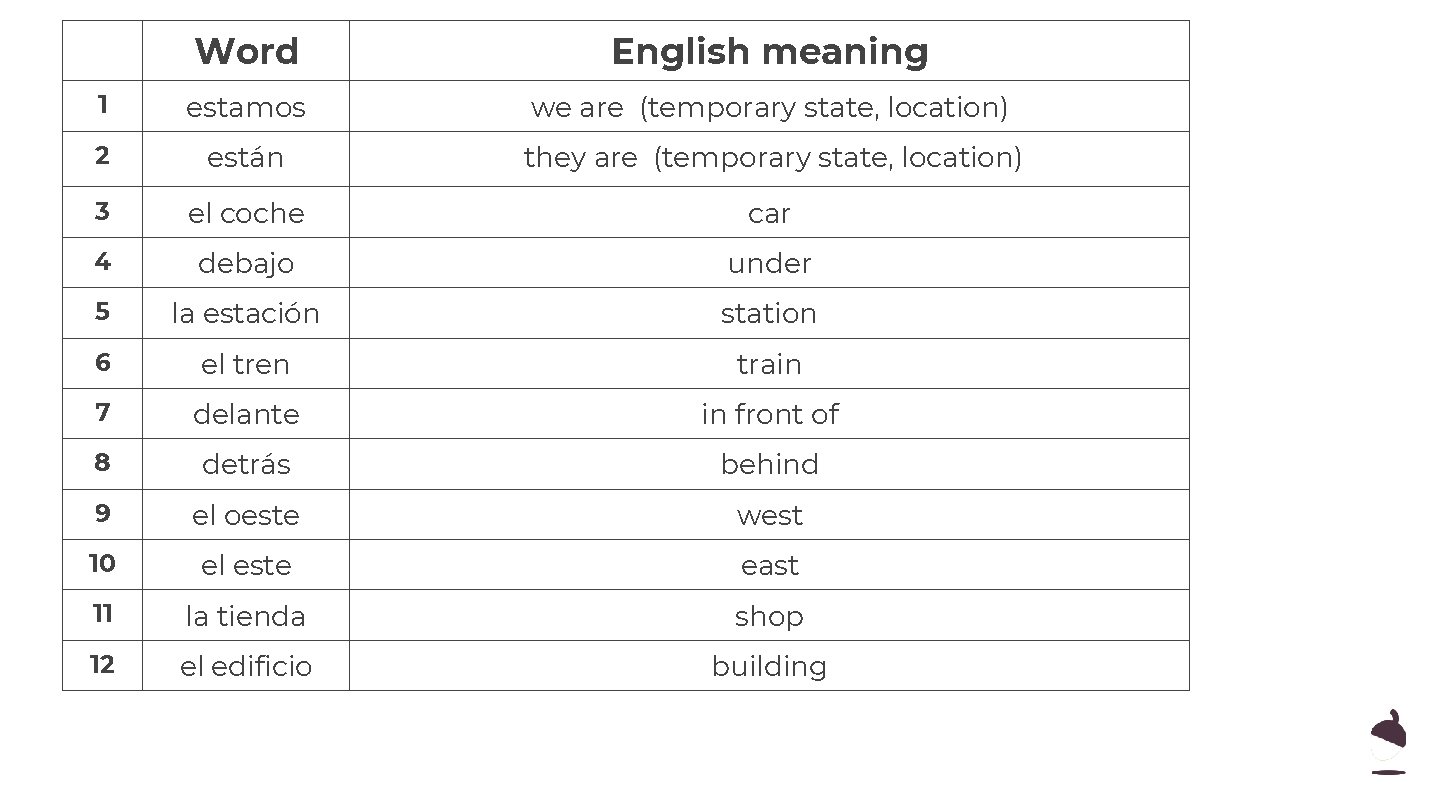
Word English meaning 1 estamos we are (temporary state, location) 2 están they are (temporary state, location) 3 el coche car 4 debajo under 5 la estación station 6 el tren train 7 delante in front of 8 detrás behind 9 el oeste west 10 el este east 11 la tienda shop 12 el edificio building
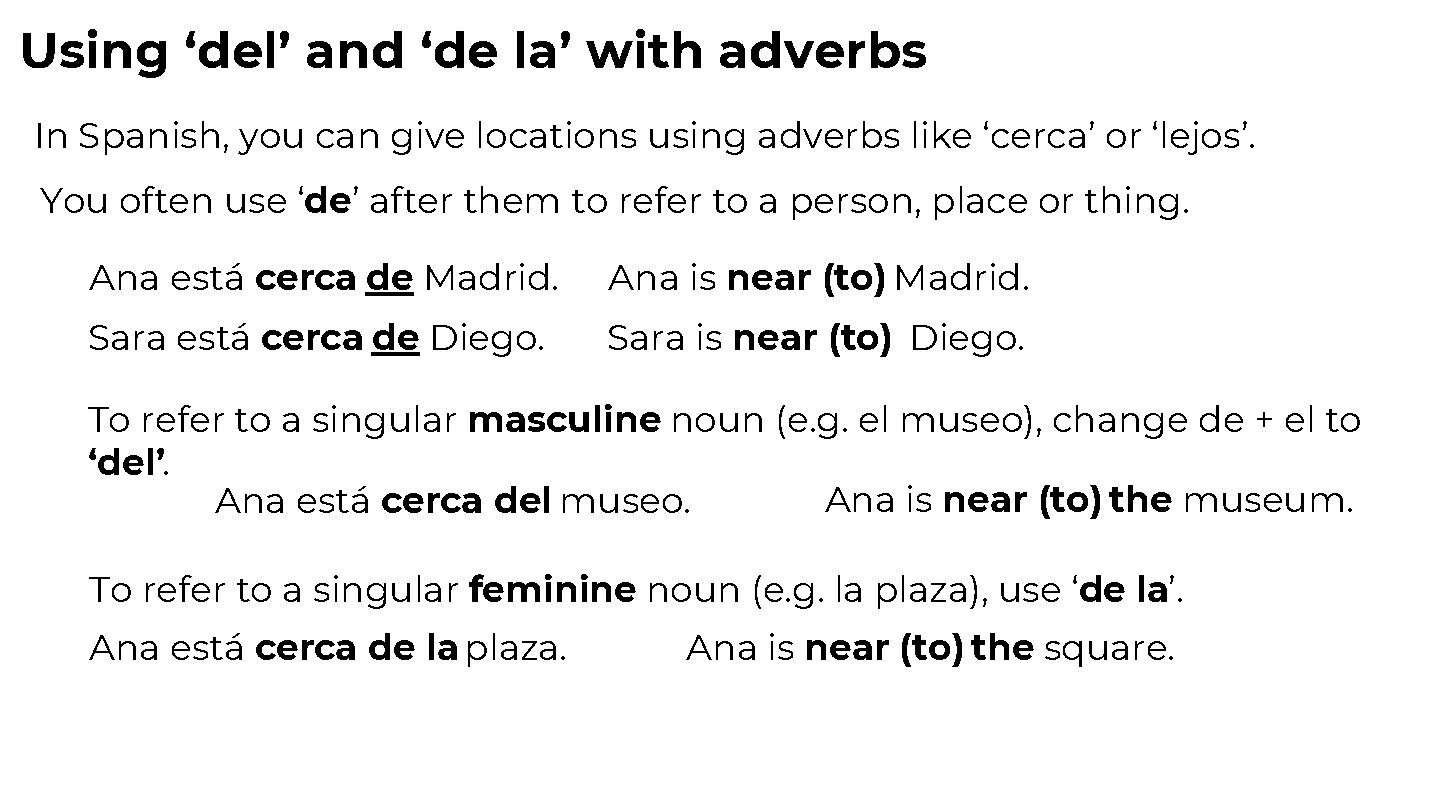
Using ‘del’ and ‘de la’ with adverbs In Spanish, you can give locations using adverbs like ‘cerca’ or ‘lejos’. You often use ‘de’ after them to refer to a person, place or thing. Ana está cerca de Madrid. Ana is near (to) Madrid. Sara está cerca de Diego. Sara is near (to) Diego. To refer to a singular masculine noun (e. g. el museo), change de + el to ‘del’. Ana is near (to) the museum. Ana está cerca del museo. To refer to a singular feminine noun (e. g. la plaza), use ‘de la’. Ana está cerca de la plaza. Ana is near (to) the square.
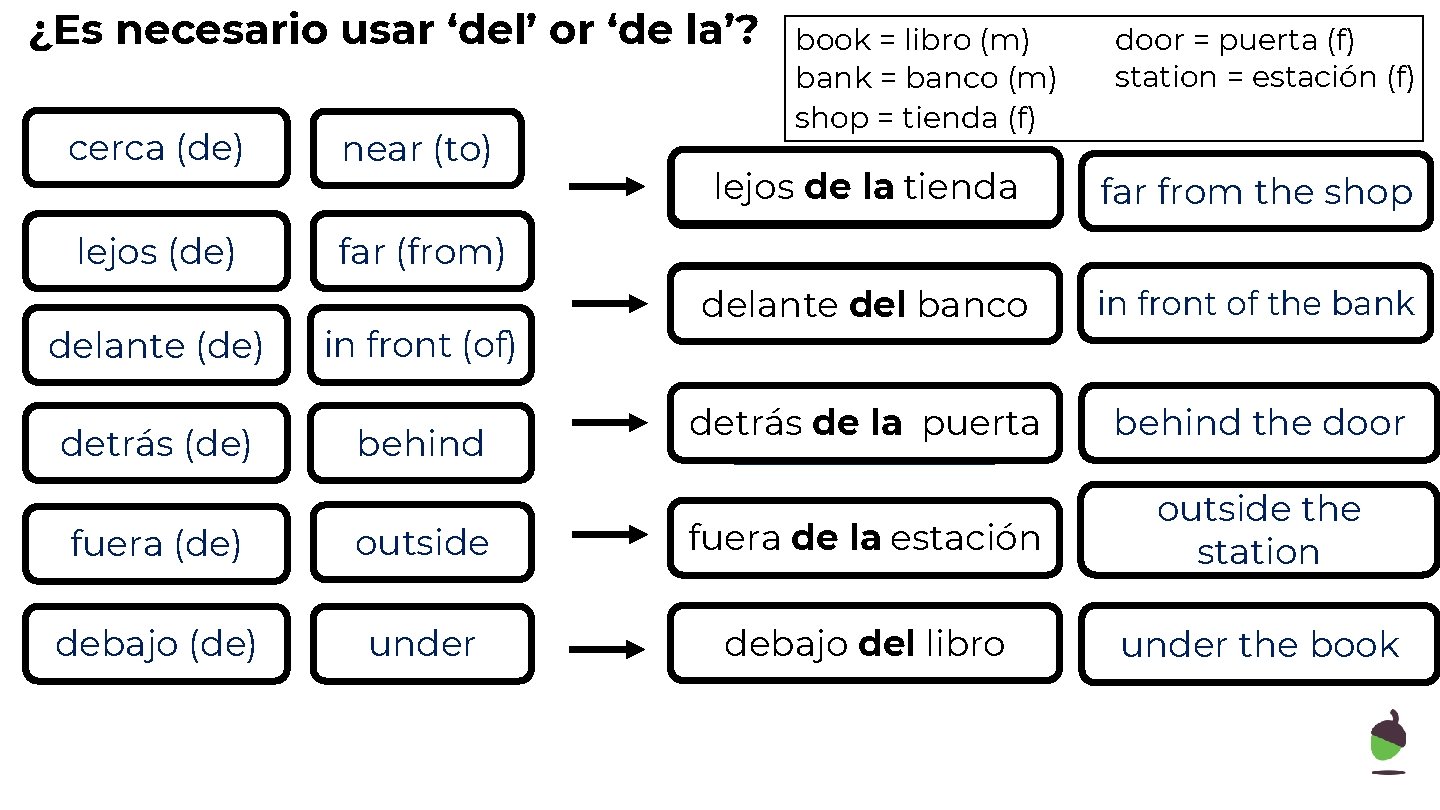
¿Es necesario usar ‘del’ or ‘de la’? cerca c_ _ _ (de) _ de near (to) lejos l_ _ _(de) _ de far (from) delante (de) detrás (de) in front (of) behind book = libro (m) bank = banco (m) shop = tienda (f) door = puerta (f) station = estación (f) lejos______ de la tienda lejos far from the shop delante______ delante del banco in front of the bank detrás de la puerta _______ behind the door fuera (de) outside fuera de la estación fuera _______ outside the station debajo (de) under debajo del libro debajo______ under the book
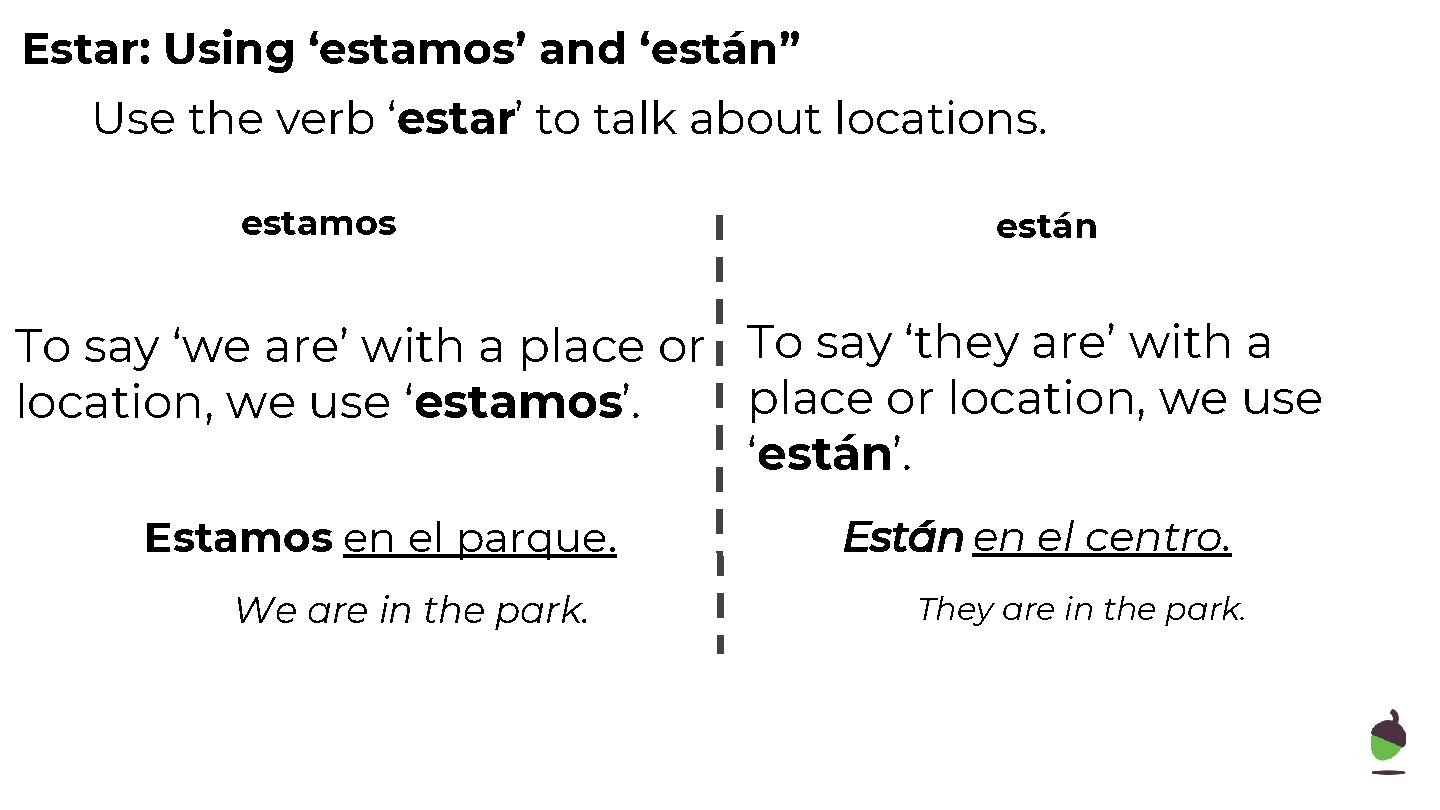
Estar: Using ‘estamos’ and ‘están” Use the verb ‘estar’ to talk about locations. estamos están To say ‘we are’ with a place or To say ‘they are’ with a place or location, we use ‘estamos’. ‘están’. Estamos en el parque. We are in the park. Están en el centro. They are in the park.
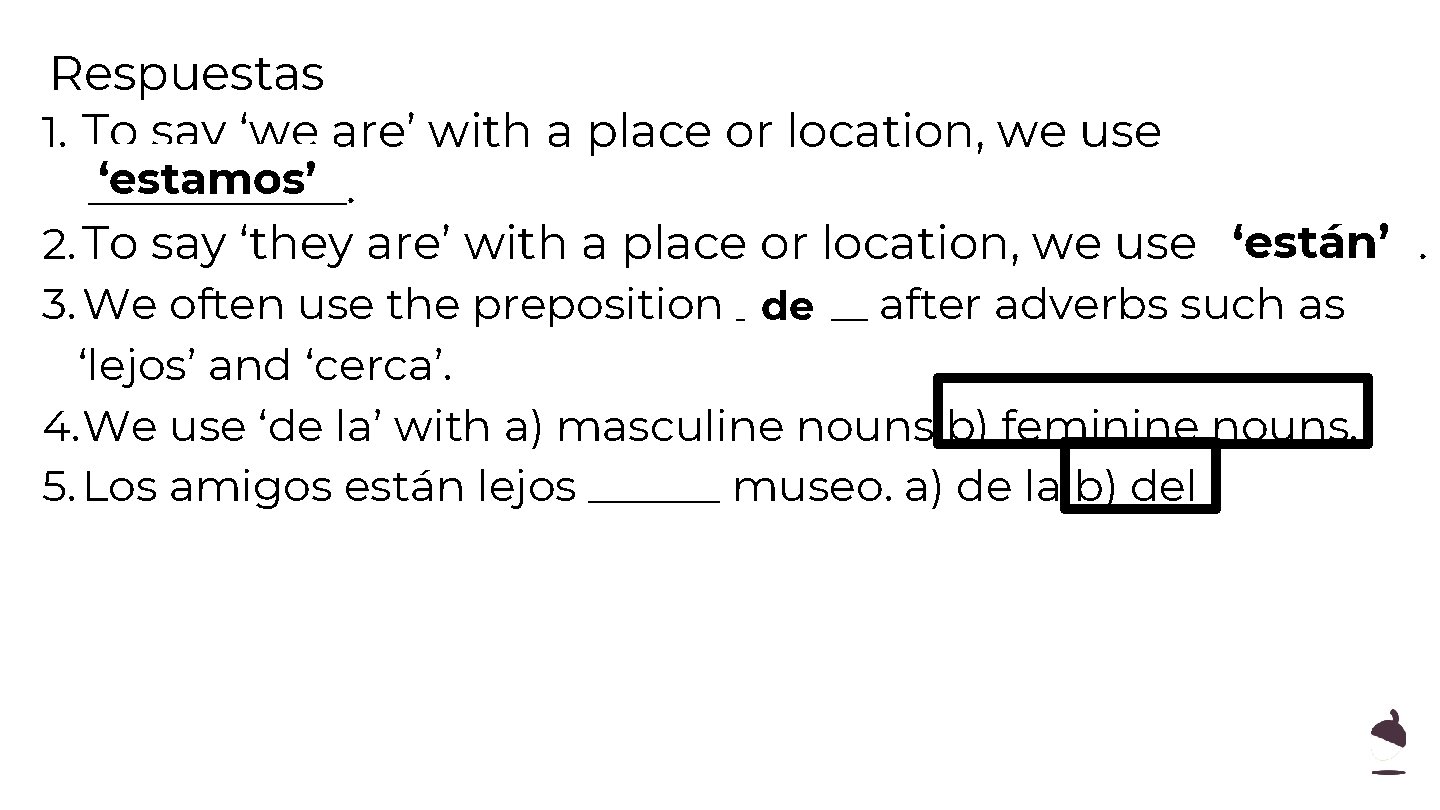
Respuestas 1. To say ‘we are’ with a place or location, we use ‘estamos’ ‘______. ‘están’ 2. To say ‘they are’ with a place or location, we use ‘____’. 3. We often use the preposition ______ after adverbs such as de ‘lejos’ and ‘cerca’. 4. We use ‘de la’ with a) masculine nouns b) feminine nouns. 5. Los amigos están lejos ______ museo. a) de la b) del
- Slides: 7