
Spanish Talking about places 2 3 Present tense
![Spanish Talking about places [2 / 3] - Present tense HAY vs ESTAR Señorita](https://slidetodoc.com/presentation_image_h2/b498754d7cc1d3d1c2066ff1e0565a59/image-1.jpg "Spanish Talking about places [2 / 3] - Present tense HAY vs ESTAR Señorita")
Spanish Talking about places [2 / 3] - Present tense HAY vs ESTAR Señorita Brown
![[gu] ¡mucho gusto! segundo preguntar](http://slidetodoc.com/presentation_image_h2/b498754d7cc1d3d1c2066ff1e0565a59/image-2.jpg "[gu] ¡mucho gusto! segundo preguntar")
[gu] ¡mucho gusto! segundo preguntar
![[ue] puedo [I can]](http://slidetodoc.com/presentation_image_h2/b498754d7cc1d3d1c2066ff1e0565a59/image-3.jpg "[ue] puedo [I can]")
[ue] puedo [I can]
![[gue] guerra](http://slidetodoc.com/presentation_image_h2/b498754d7cc1d3d1c2066ff1e0565a59/image-4.jpg "[gue] guerra")
[gue] guerra
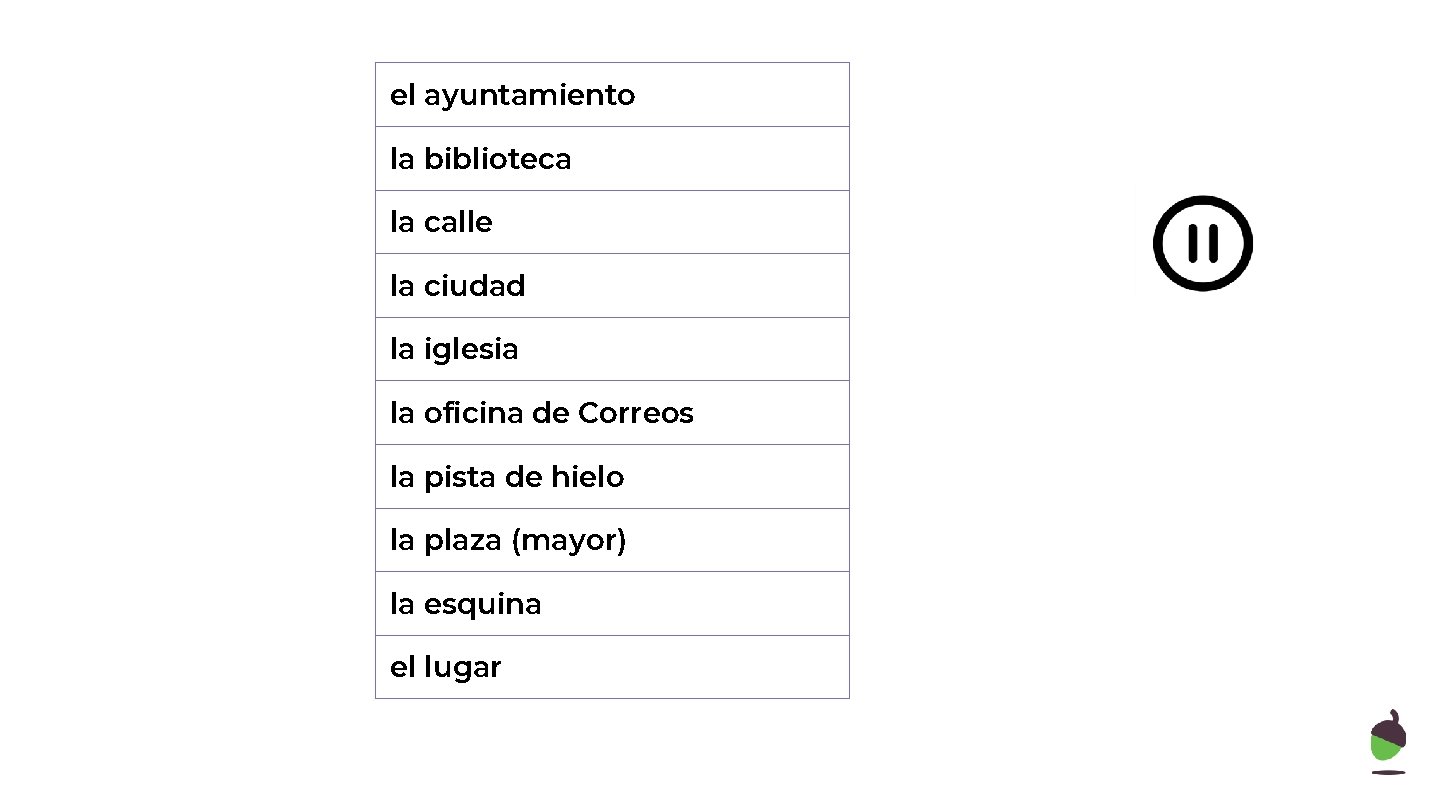
el ayuntamiento la biblioteca la calle la ciudad la iglesia la oficina de Correos la pista de hielo la plaza (mayor) la esquina el lugar
![está [is] (location, state) La tienda está en la calle. [The shop is in](http://slidetodoc.com/presentation_image_h2/b498754d7cc1d3d1c2066ff1e0565a59/image-6.jpg "está [is] (location, state) La tienda está en la calle. [The shop is in")
está [is] (location, state) La tienda está en la calle. [The shop is in the street. ]
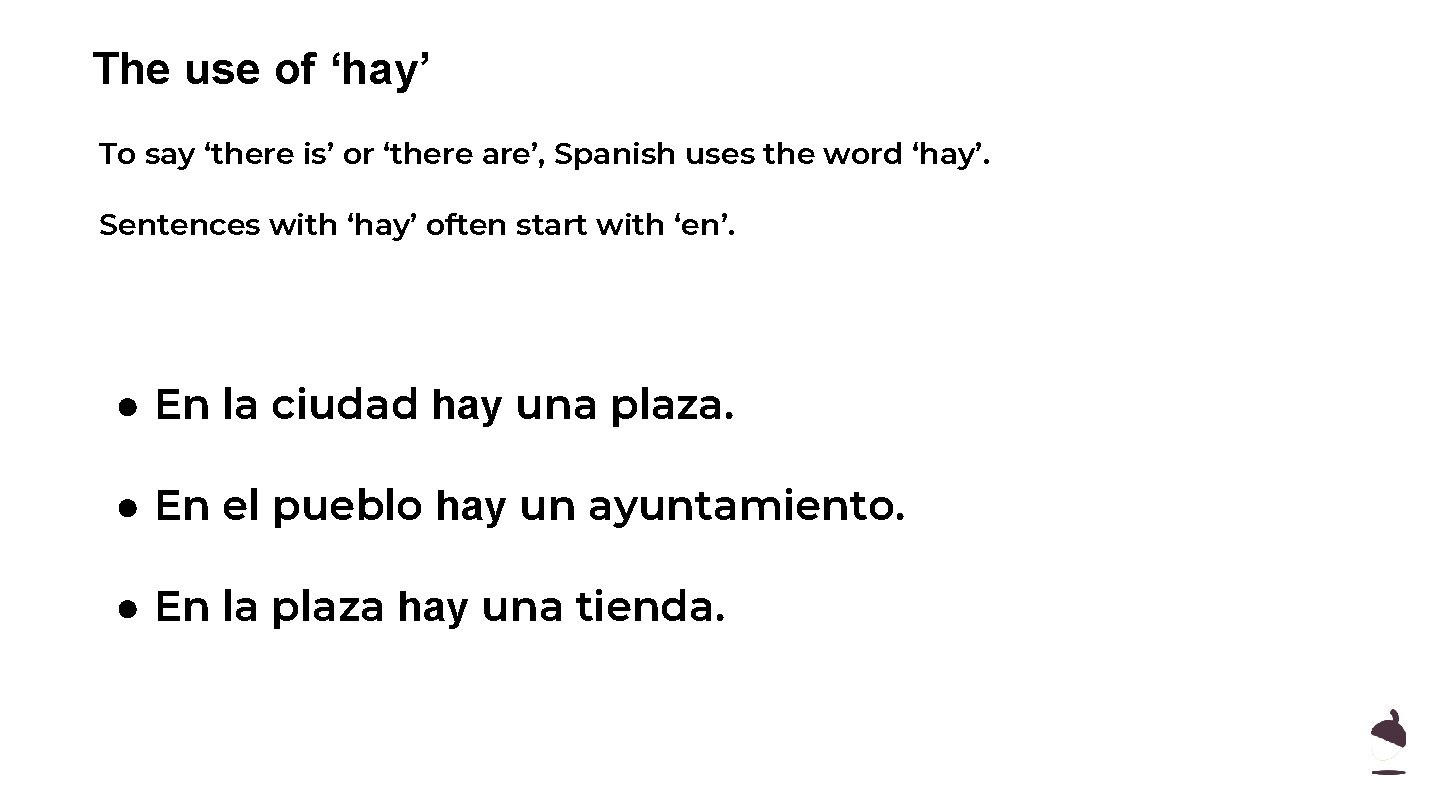
The use of ‘hay’ To say ‘there is’ or ‘there are’, Spanish uses the word ‘hay’. Sentences with ‘hay’ often start with ‘en’. ● En la ciudad hay una plaza. ● En el pueblo hay un ayuntamiento. ● En la plaza hay una tienda.
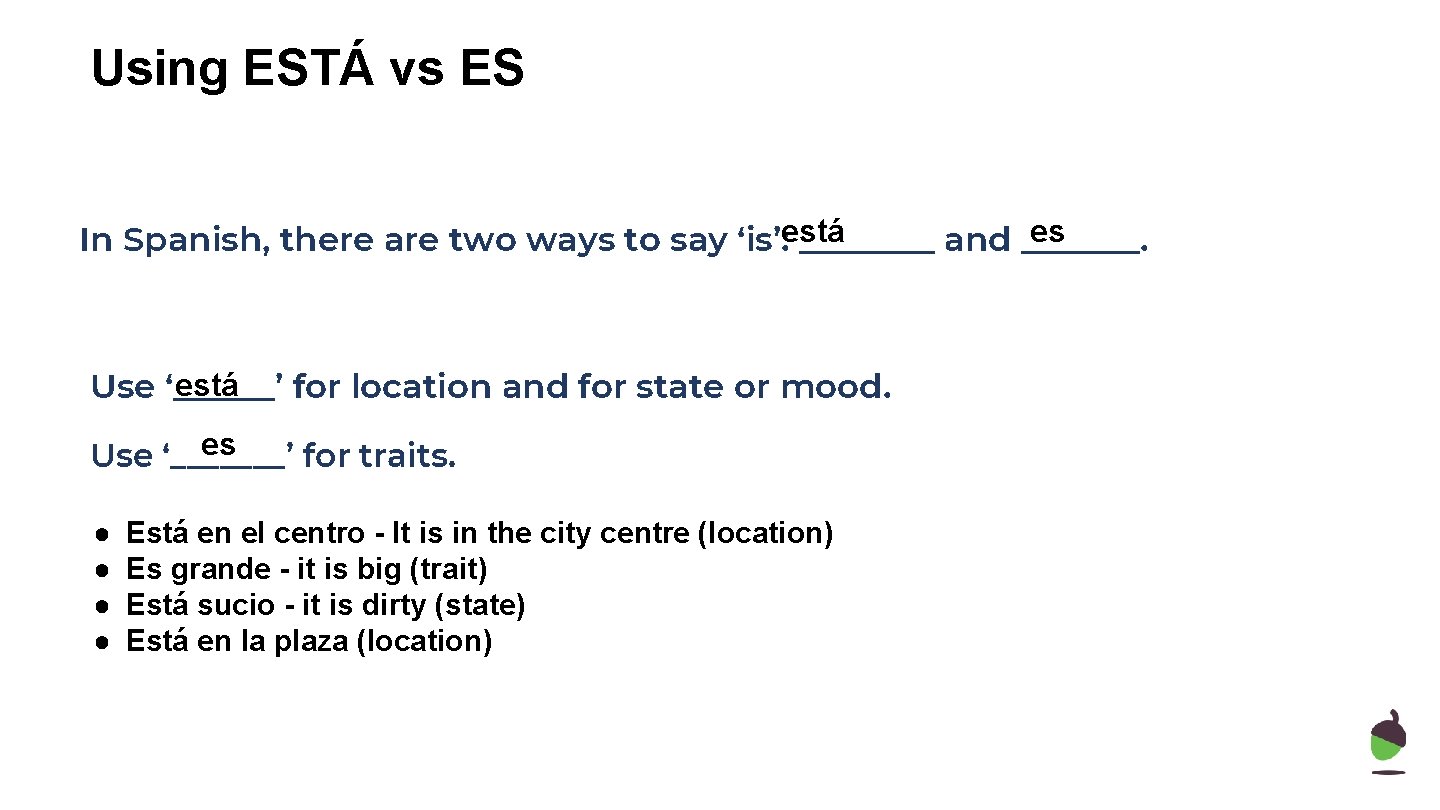
Using ESTÁ vs ES es In Spanish, there are two ways to say ‘is’: está ____ and _______. está Use ‘______’ for location and for state or mood. es Use ‘_______’ for traits. ● ● Está en el centro - It is in the city centre (location) Es grande - it is big (trait) Está sucio - it is dirty (state) Está en la plaza (location)
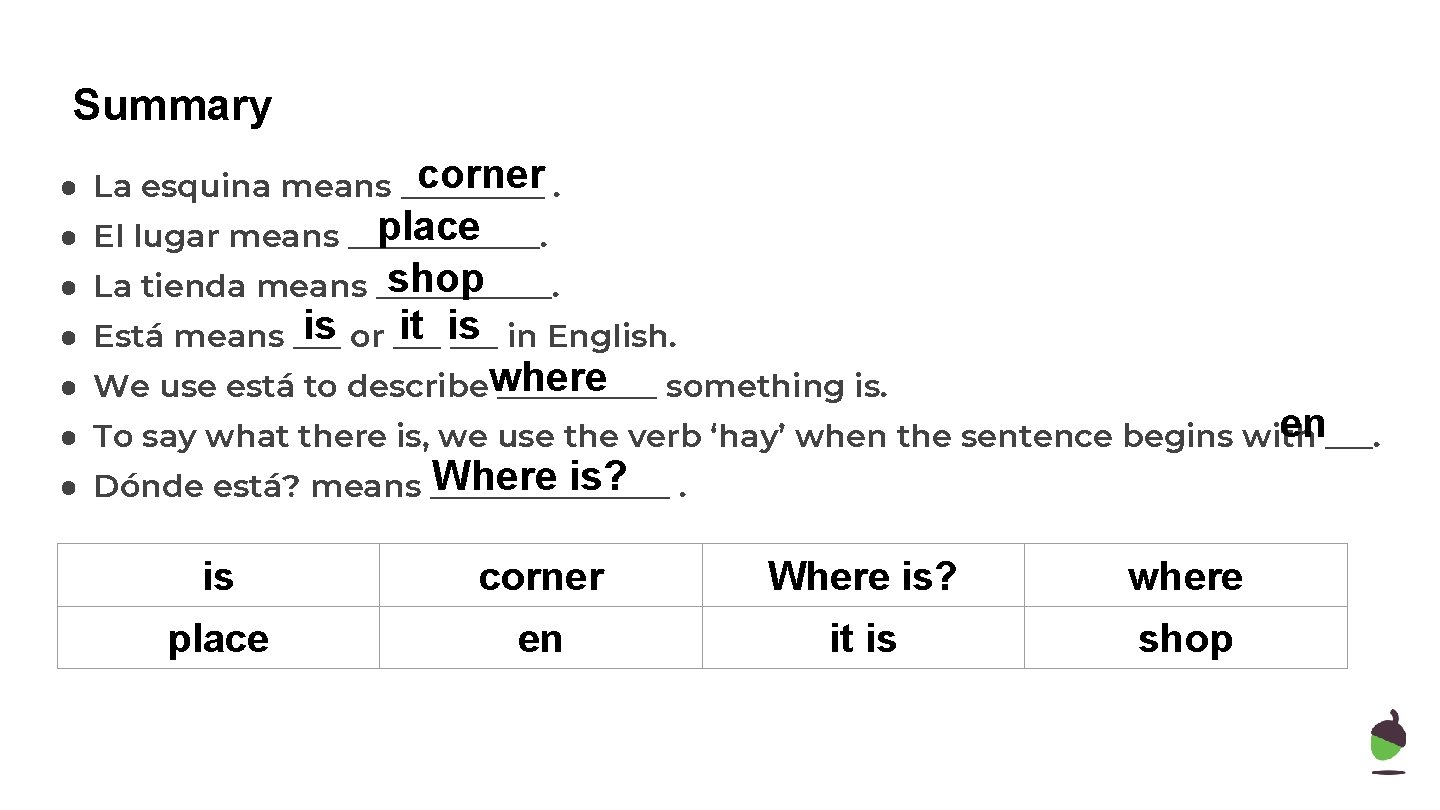
Summary corner. ● La esquina means _____ place ● El lugar means ______. shop ● La tienda means ______. is or ___ it is ● Está means ___ in English. ● We use está to describewhere _____ something is. en___. ● To say what there is, we use the verb ‘hay’ when the sentence begins with Where is? . ● Dónde está? means ________ is corner Where is? where place en it is shop
- Slides: 9