
Spanish Talk about illness and injury 2 3
![Spanish Talk about illness and injury [2 / 3] - Reflexive vs Non Reflexive](https://slidetodoc.com/presentation_image_h2/22166a377b1cf4db3f9c93cab68b867d/image-1.jpg "Spanish Talk about illness and injury [2 / 3] - Reflexive vs Non Reflexive")
Spanish Talk about illness and injury [2 / 3] - Reflexive vs Non Reflexive use of certain verbs in the perfect tense Señor Malhi
![No accent if the final syllable ends in consonant other than [n] or [s]](http://slidetodoc.com/presentation_image_h2/22166a377b1cf4db3f9c93cab68b867d/image-2.jpg "No accent if the final syllable ends in consonant other than [n] or [s]")
No accent if the final syllable ends in consonant other than [n] or [s] cruz [cross]
![club [club] nariz [nose] Final syllable stress español [Spanish] actriz [actress] Portugal [Portugal]](http://slidetodoc.com/presentation_image_h2/22166a377b1cf4db3f9c93cab68b867d/image-3.jpg "club [club] nariz [nose] Final syllable stress español [Spanish] actriz [actress] Portugal [Portugal]")
club [club] nariz [nose] Final syllable stress español [Spanish] actriz [actress] Portugal [Portugal]
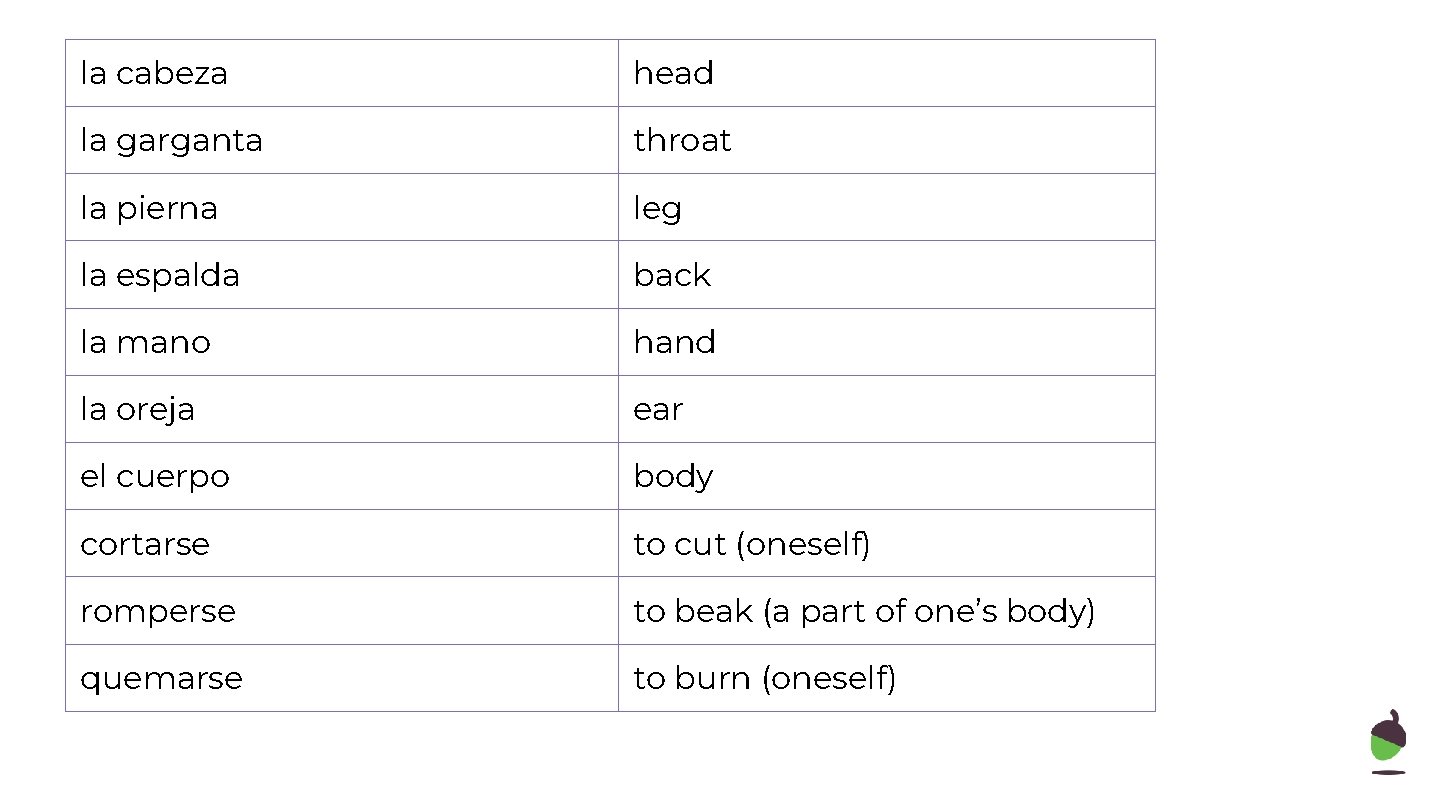
la cabeza head la garganta throat la pierna leg la espalda back la mano hand la oreja ear el cuerpo body cortarse to cut (oneself) romperse to beak (a part of one’s body) quemarse to burn (oneself)

Using verbs reflexively Most verbs can be used reflexively. The reflexive use of an infinitive verb is indicated by the -se at the end: e. g. quemar (to burn); quemarse (to burn oneself). Use the reflexive pronoun me to mean you do an action to yourself: Hablo Me hablo I speak to myself Put me in front of the verb. This is the same for all tenses: He hablado Me he hablado I have spoken to myself
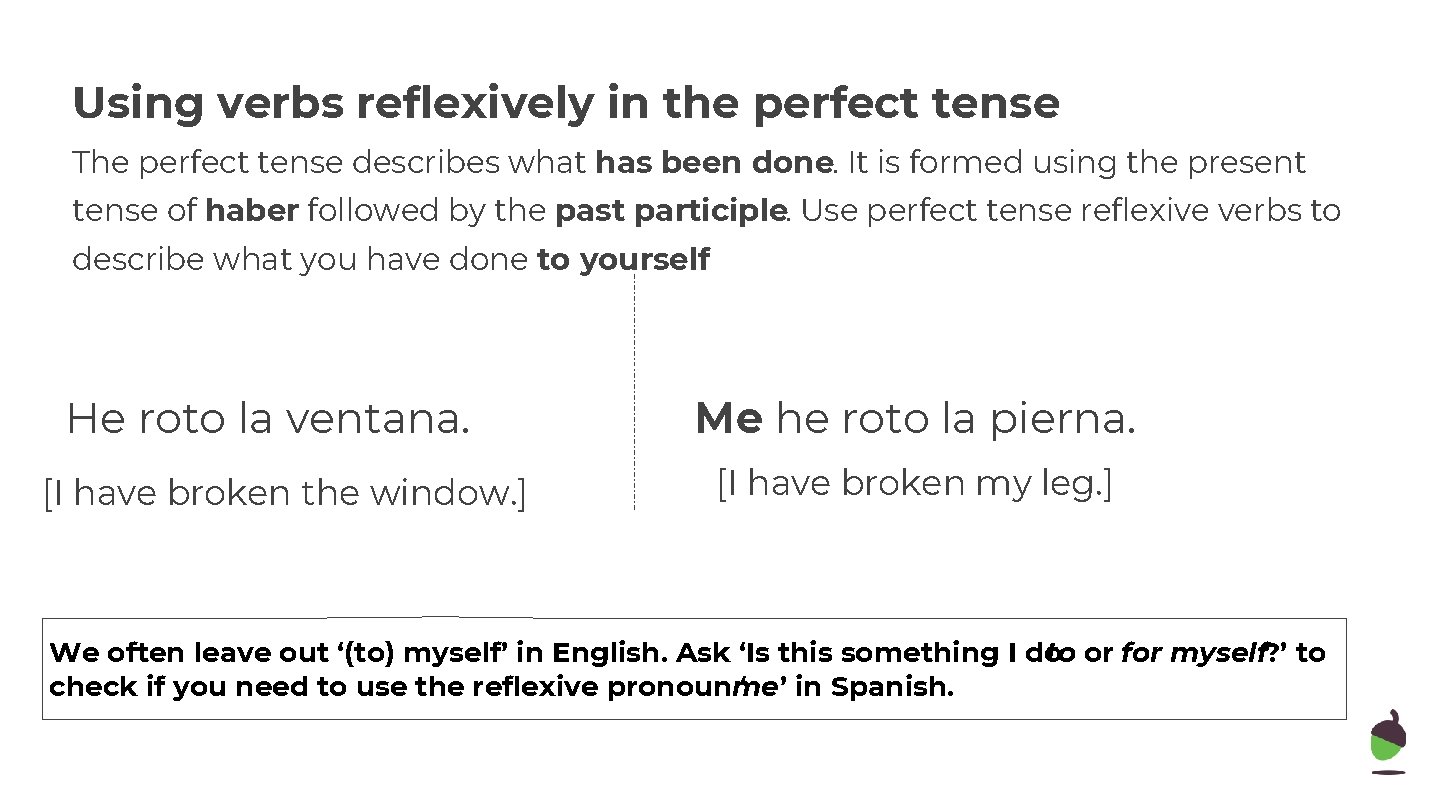
Using verbs reflexively in the perfect tense The perfect tense describes what has been done. It is formed using the present tense of haber followed by the past participle. Use perfect tense reflexive verbs to describe what you have done to yourself He roto la ventana. [I have broken the window. ] Me he roto la pierna. [I have broken my leg. ] We often leave out ‘(to) myself’ in English. Ask ‘Is this something I do to or for myself? ’ to check if you need to use the reflexive pronounme’ ‘ in Spanish.
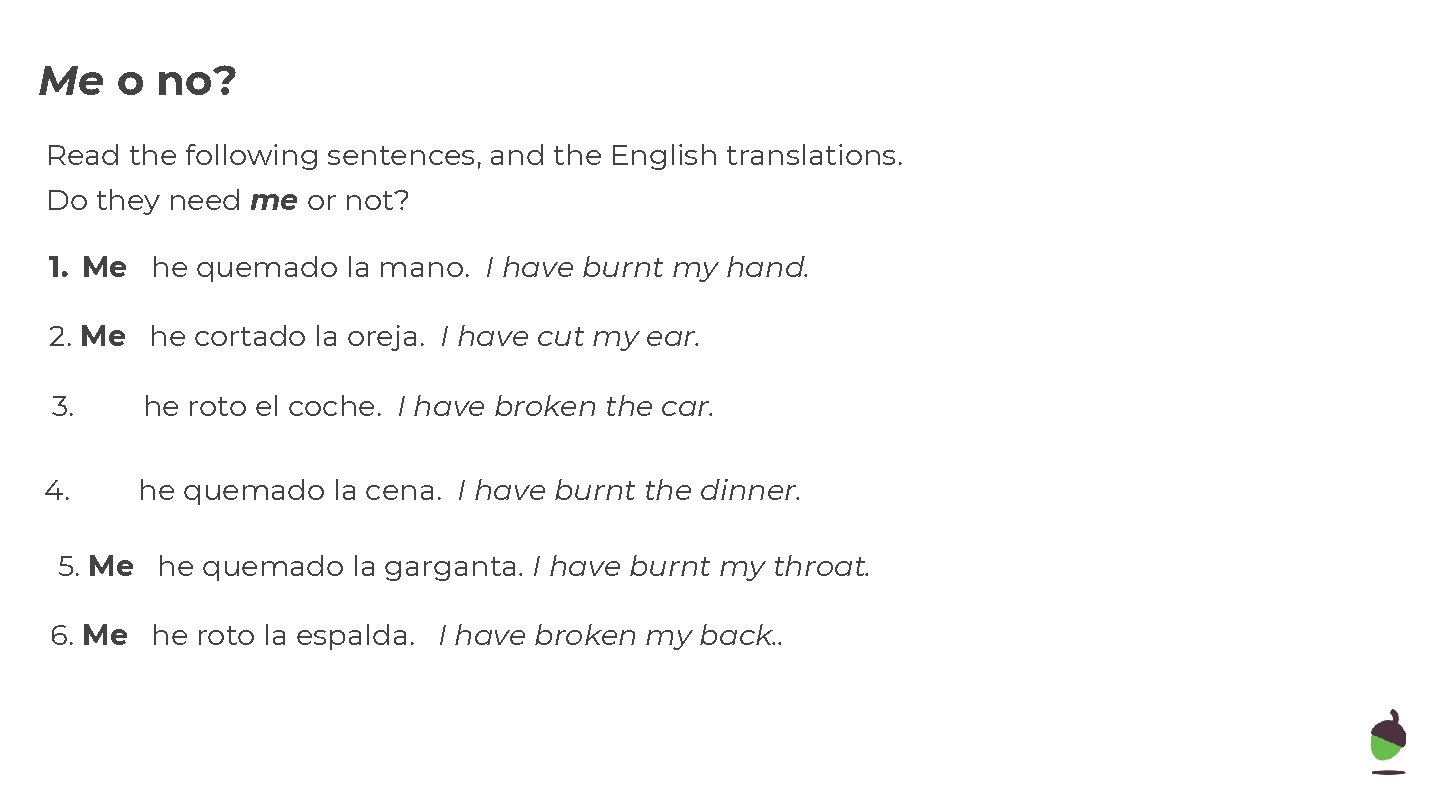
Me o no? Read the following sentences, and the English translations. Do they need me or not? 1. Me he quemado la mano. I have burnt my hand. 2. Me he cortado la oreja. I have cut my ear. 3. he roto el coche. I have broken the car. 4. he quemado la cena. I have burnt the dinner. 5. Me he quemado la garganta. I have burnt my throat. 6. Me he roto la espalda. I have broken my back. .
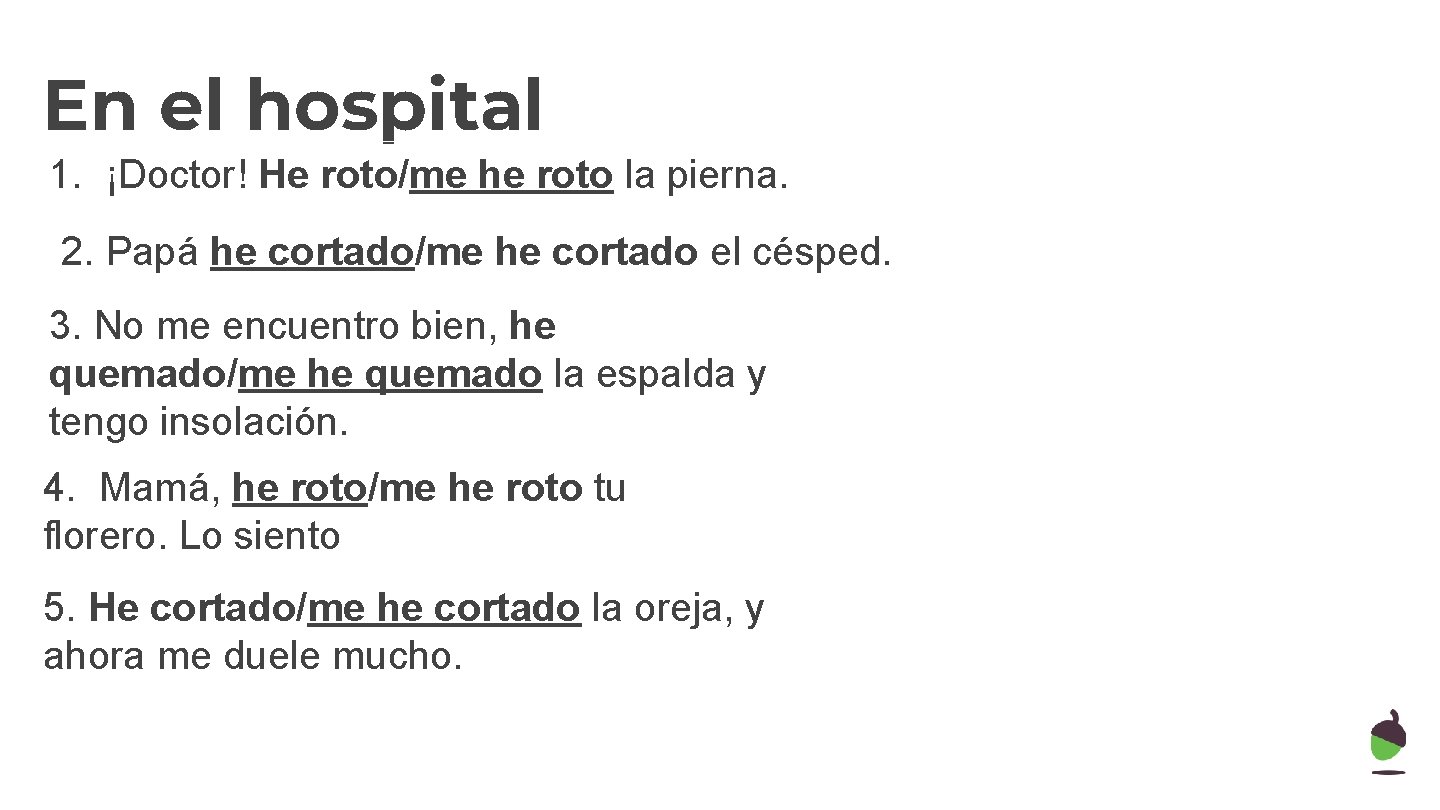
En el hospital 1. ¡Doctor! He roto/me he roto la pierna. 2. Papá he cortado/me he cortado el césped. 3. No me encuentro bien, he quemado/me he quemado la espalda y tengo insolación. 4. Mamá, he roto/me he roto tu florero. Lo siento 5. He cortado/me he cortado la oreja, y ahora me duele mucho.
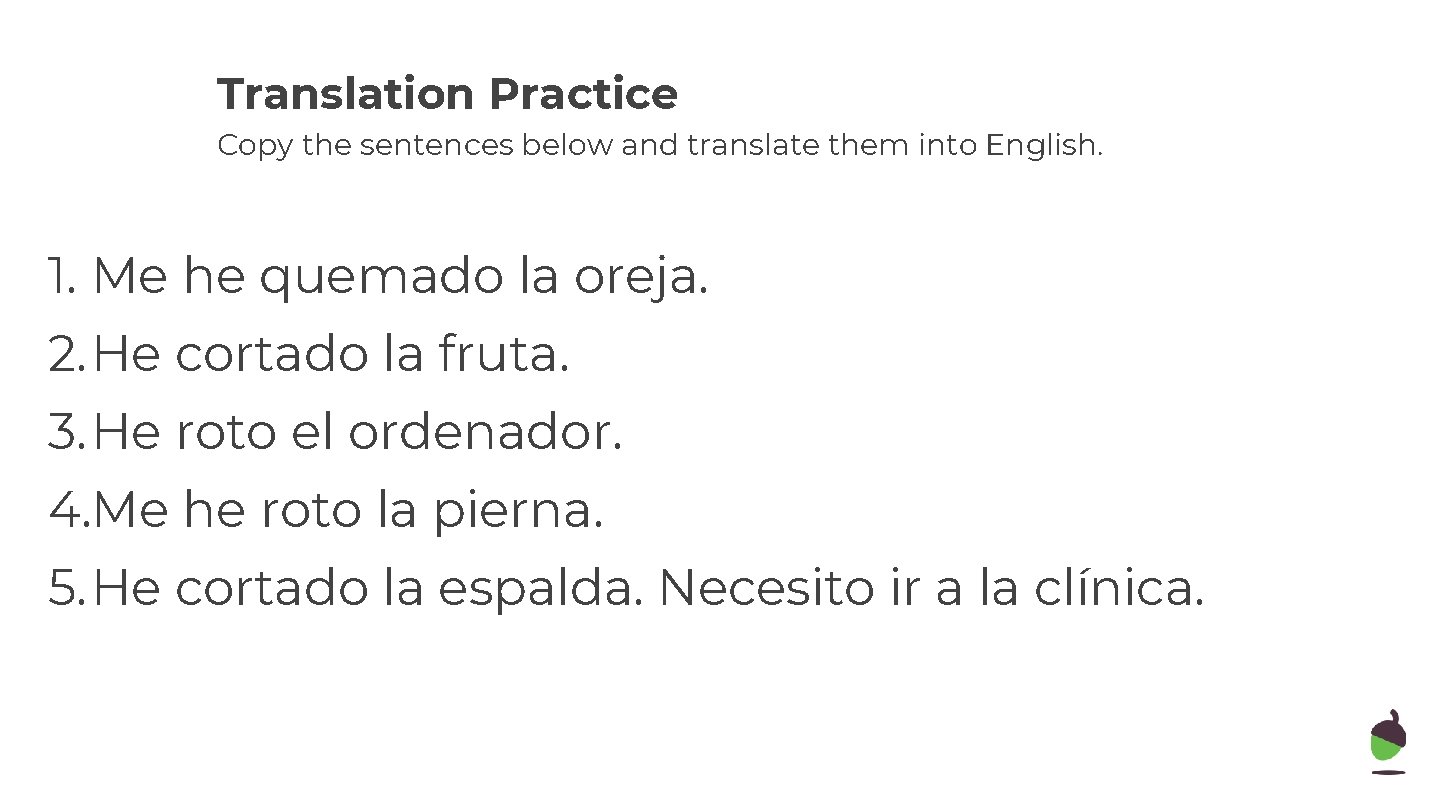
Translation Practice Copy the sentences below and translate them into English. 1. Me he quemado la oreja. 2. He cortado la fruta. 3. He roto el ordenador. 4. Me he roto la pierna. 5. He cortado la espalda. Necesito ir a la clínica.
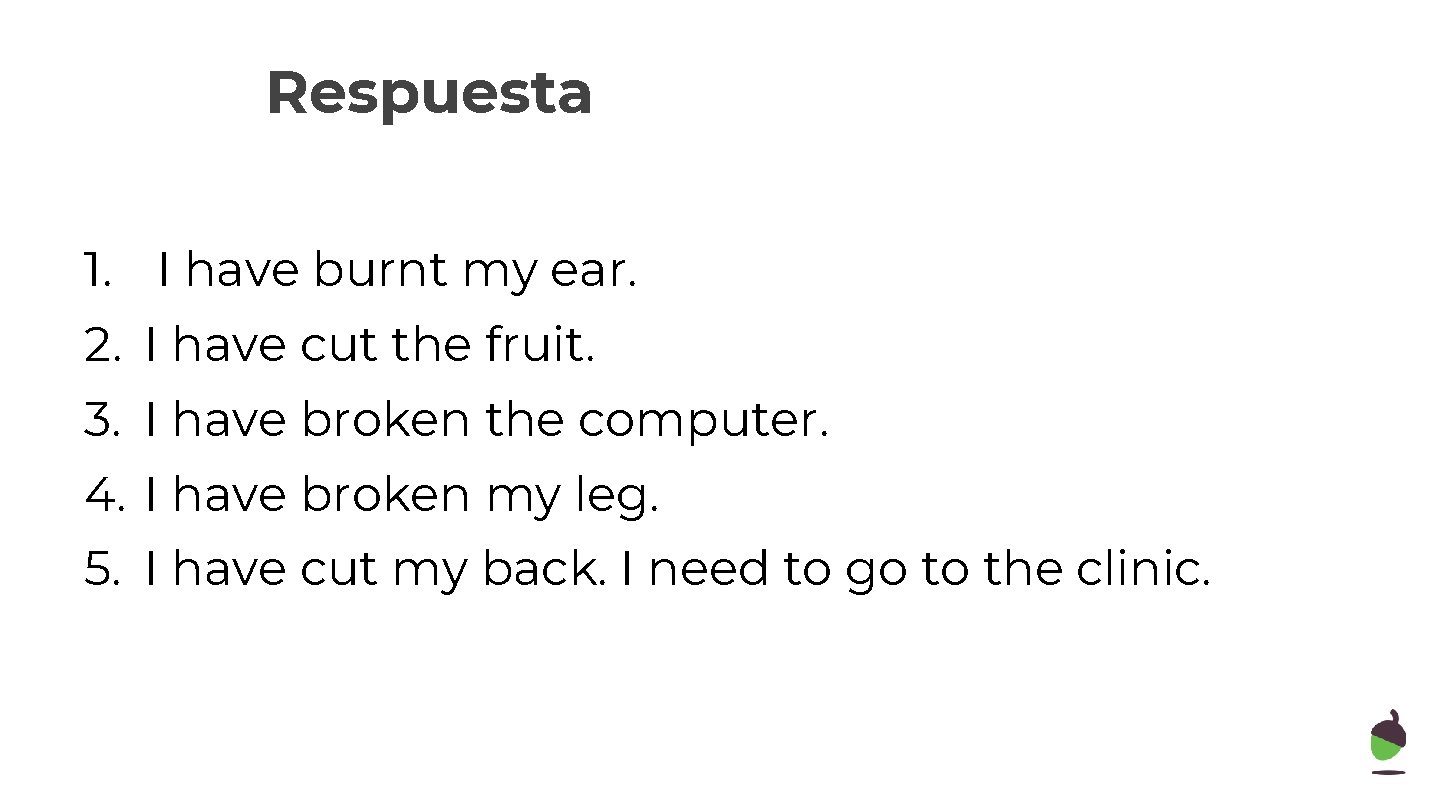
Respuesta 1. I have burnt my ear. 2. I have cut the fruit. 3. I have broken the computer. 4. I have broken my leg. 5. I have cut my back. I need to go to the clinic.
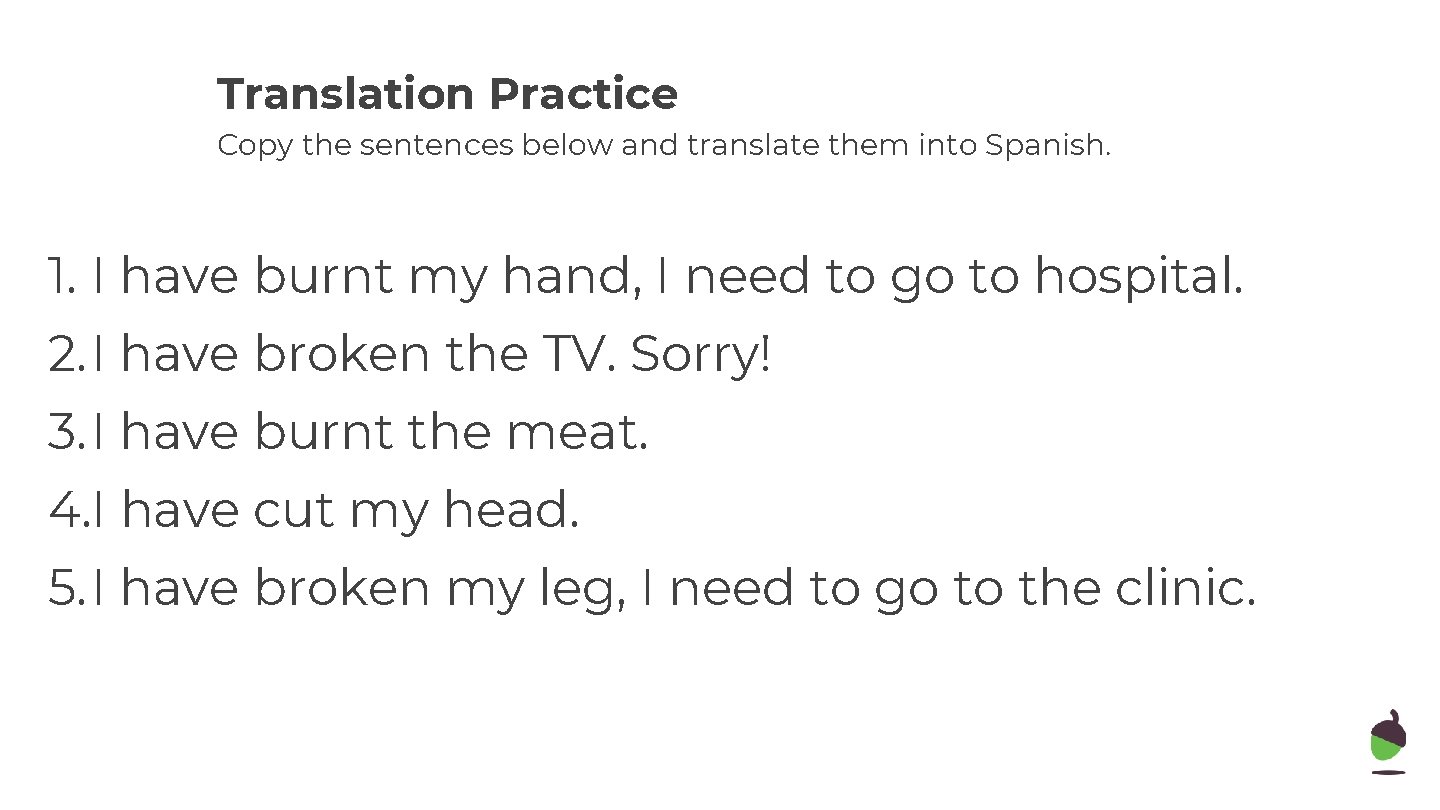
Translation Practice Copy the sentences below and translate them into Spanish. 1. I have burnt my hand, I need to go to hospital. 2. I have broken the TV. Sorry! 3. I have burnt the meat. 4. I have cut my head. 5. I have broken my leg, I need to go to the clinic.
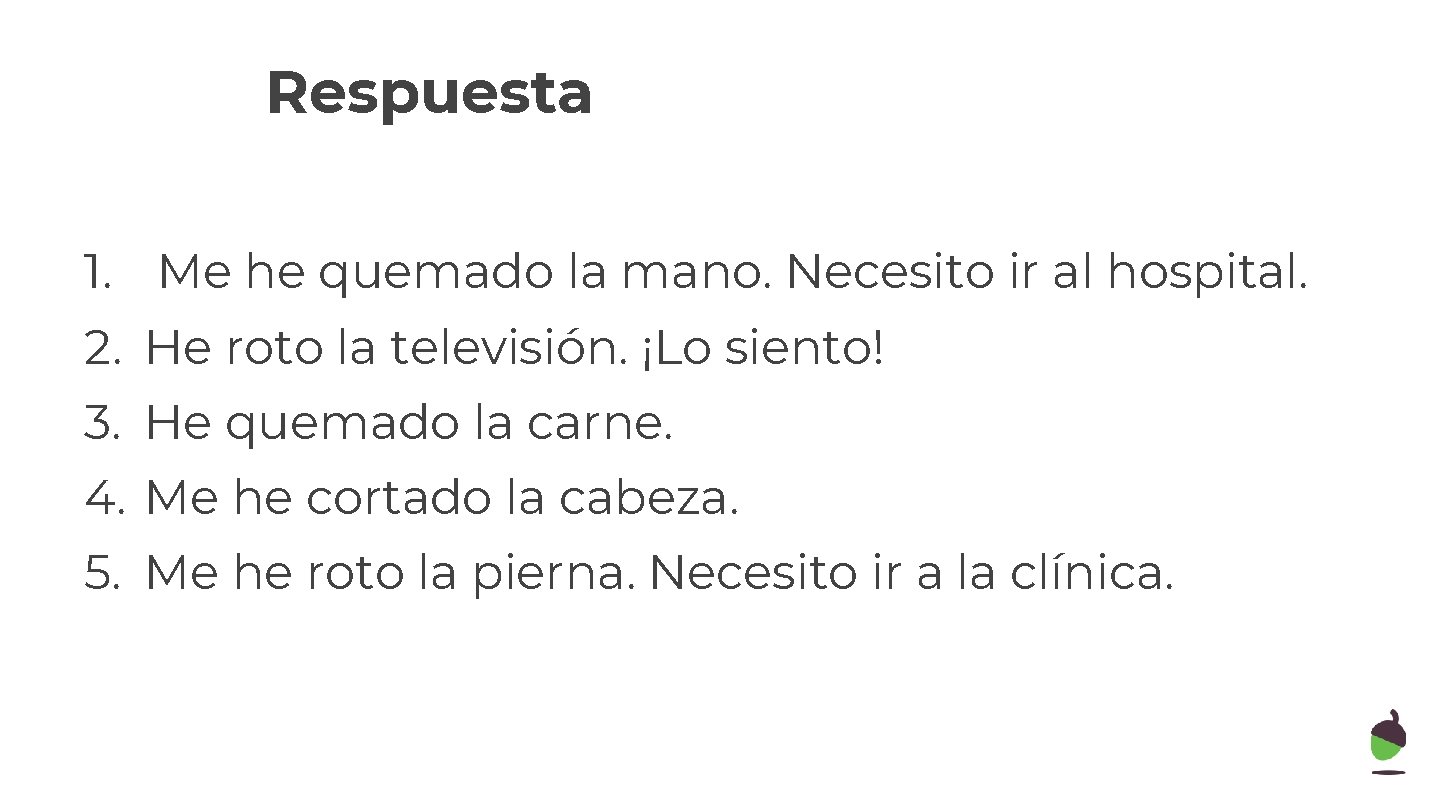
Respuesta 1. Me he quemado la mano. Necesito ir al hospital. 2. He roto la televisión. ¡Lo siento! 3. He quemado la carne. 4. Me he cortado la cabeza. 5. Me he roto la pierna. Necesito ir a la clínica.
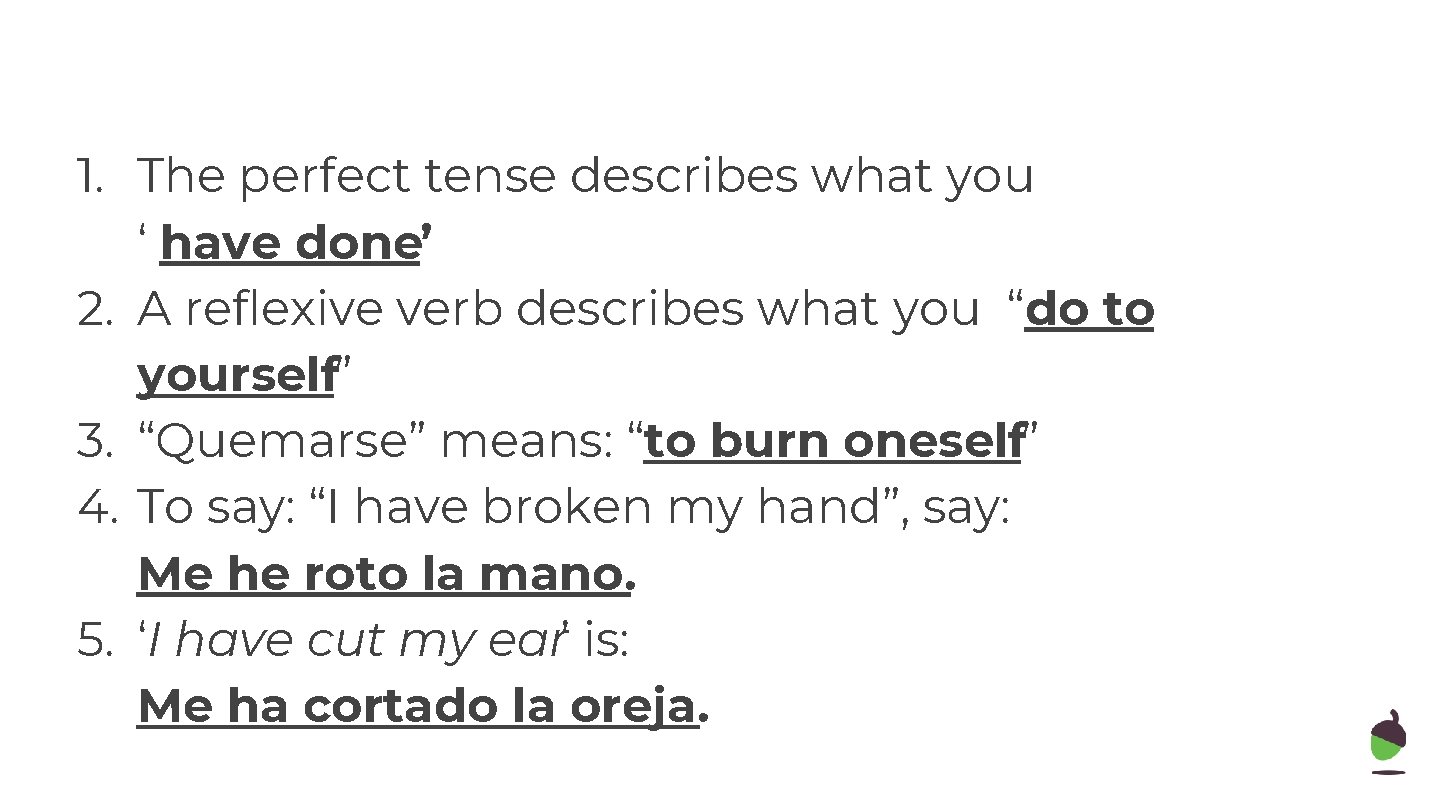
1. The perfect tense describes what you ‘ have done’ 2. A reflexive verb describes what you “do to yourself” 3. “Quemarse” means: “to burn oneself” 4. To say: “I have broken my hand”, say: Me he roto la mano. 5. ‘I have cut my ear’ is: Me ha cortado la oreja.
- Slides: 13