
Spanish Society Spanish Society Feudal system remained longer
- Slides: 11
Spanish Society
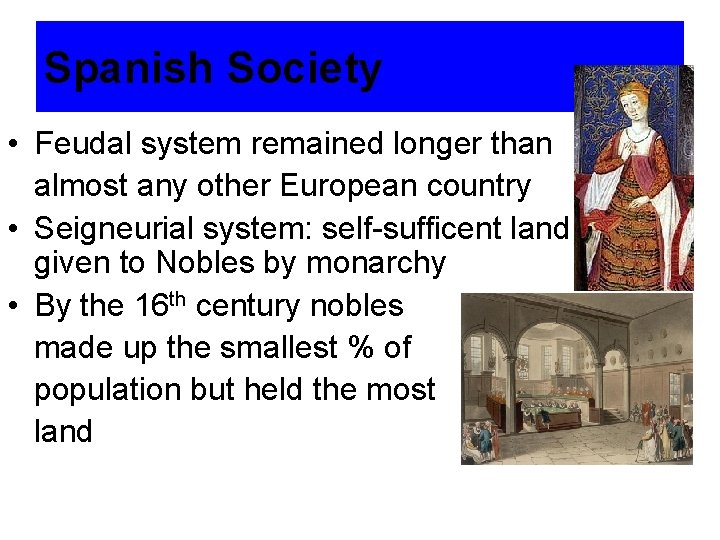
Spanish Society • Feudal system remained longer than almost any other European country • Seigneurial system: self-sufficent land given to Nobles by monarchy • By the 16 th century nobles made up the smallest % of population but held the most land
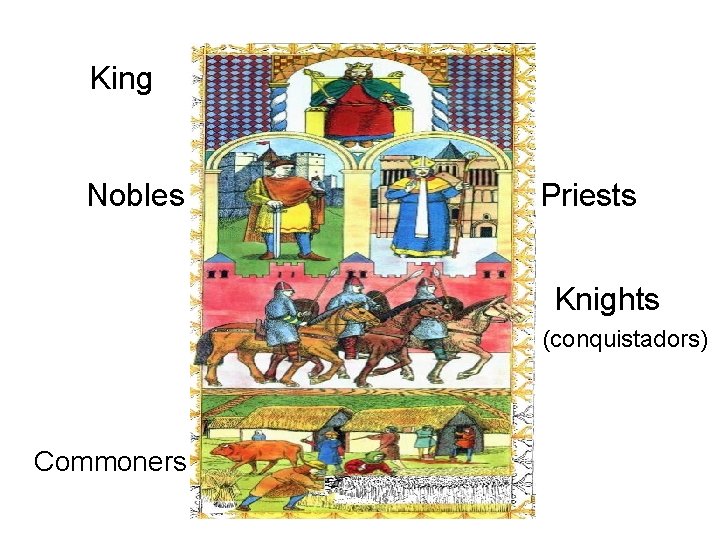
King Nobles Priests Knights (conquistadors) Commoners
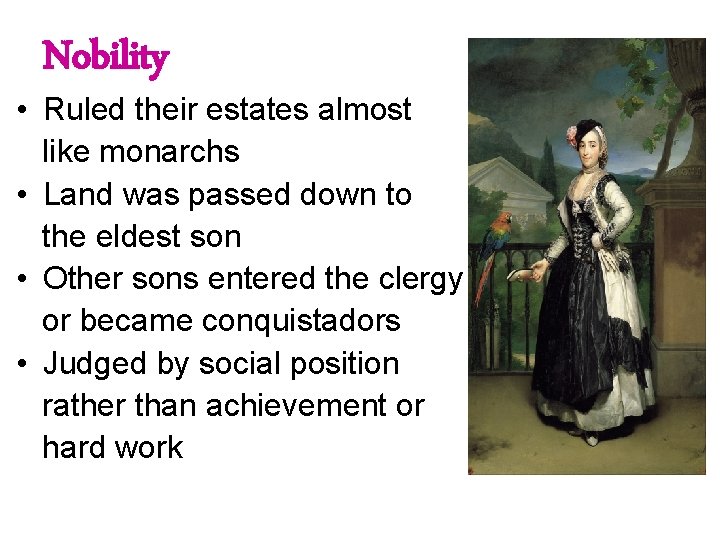
Nobility • Ruled their estates almost like monarchs • Land was passed down to the eldest son • Other sons entered the clergy or became conquistadors • Judged by social position rather than achievement or hard work
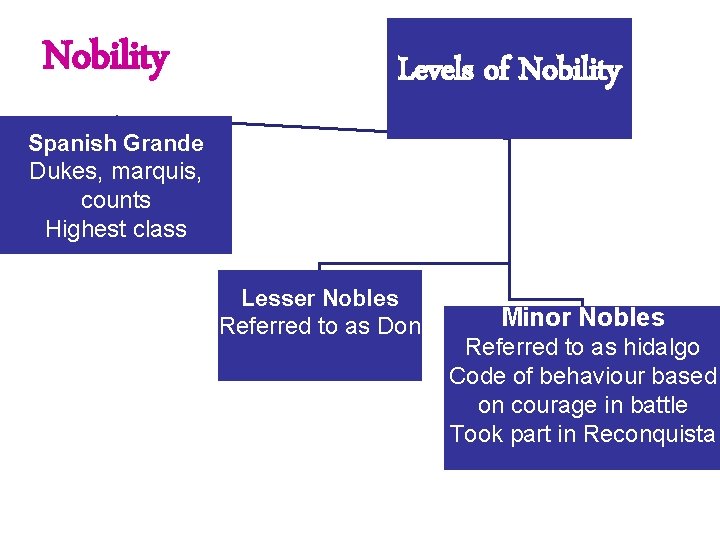
Nobility Levels of Nobility Spanish Grande Dukes, marquis, counts Highest class Lesser Nobles Referred to as Don Minor Nobles Referred to as hidalgo Code of behaviour based on courage in battle Took part in Reconquista
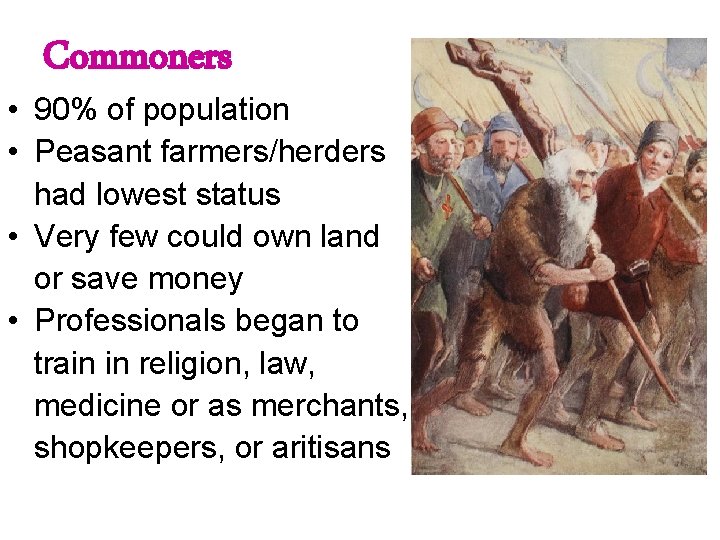
Commoners • 90% of population • Peasant farmers/herders had lowest status • Very few could own land or save money • Professionals began to train in religion, law, medicine or as merchants, shopkeepers, or aritisans
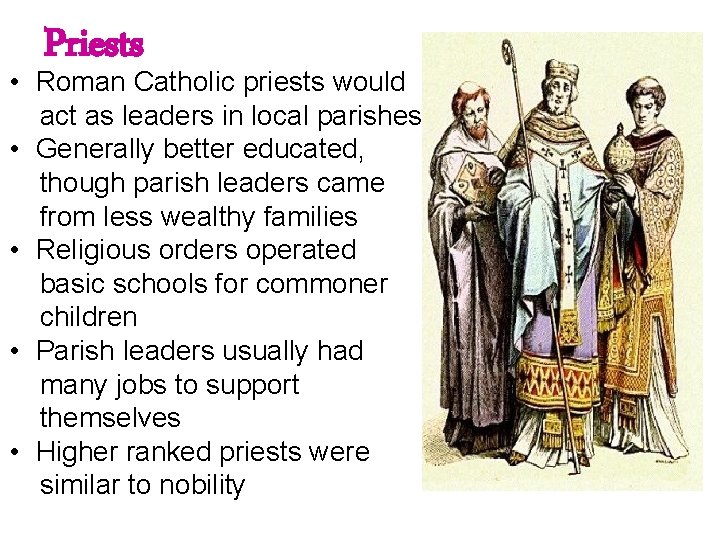
Priests • Roman Catholic priests would act as leaders in local parishes • Generally better educated, though parish leaders came from less wealthy families • Religious orders operated basic schools for commoner children • Parish leaders usually had many jobs to support themselves • Higher ranked priests were similar to nobility
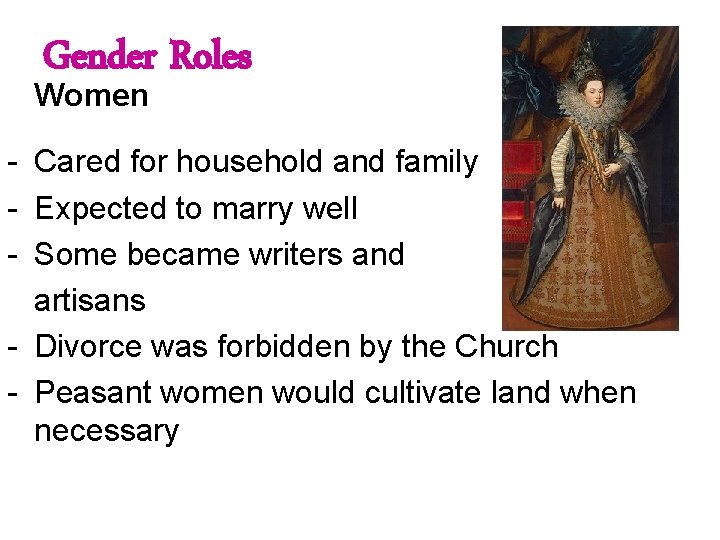
Gender Roles Women - Cared for household and family - Expected to marry well - Some became writers and artisans - Divorce was forbidden by the Church - Peasant women would cultivate land when necessary
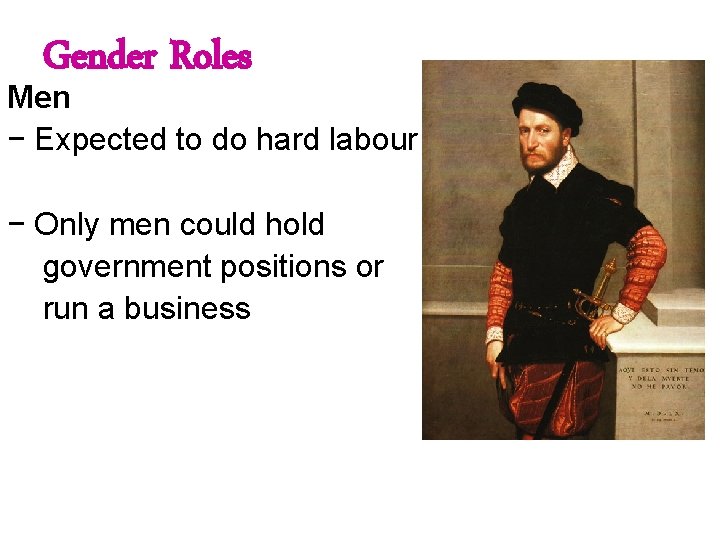
Gender Roles Men − Expected to do hard labour − Only men could hold government positions or run a business
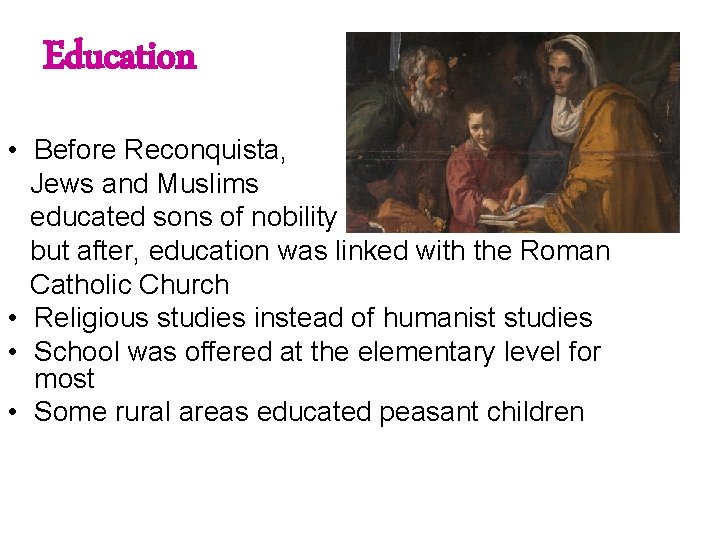
Education • Before Reconquista, Jews and Muslims educated sons of nobility but after, education was linked with the Roman Catholic Church • Religious studies instead of humanist studies • School was offered at the elementary level for most • Some rural areas educated peasant children
Gender Roles in education • Boys and Girls were taught separate skills Boys Learned Girls learned Religion Occupational skills Religion Household skills (farming, carpentry etc. ) (cooking, sewing etc. ) Sons of nobles tutored at home then went to university Noble daughters tutored at home or were taught at Royal Court (Art, music, poetry etc. )