
Spanish Period 1528 1821 The Spaniards in Arizona

- Slides: 20
Spanish Period 1528 - 1821
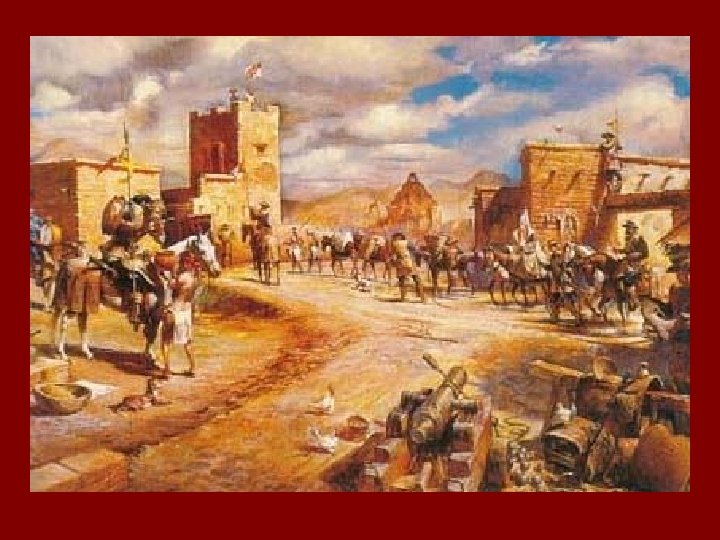
The Spaniards in Arizona • The first Europeans who entered Arizona were Spaniards, who were looking for gold. • Soon after, missionaries followed seeking to convert the Indians to Catholicism. • The name Arizona probably comes from a Basque (Spanish) word meaning “the good oak tree” after the oak trees that covered an area in south-east central Arizona where they lived.
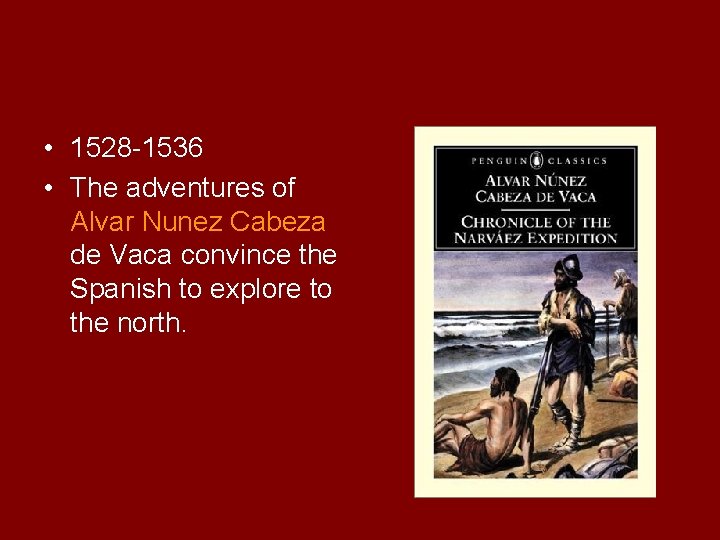
• 1528 -1536 • The adventures of Alvar Nunez Cabeza de Vaca convince the Spanish to explore to the north.
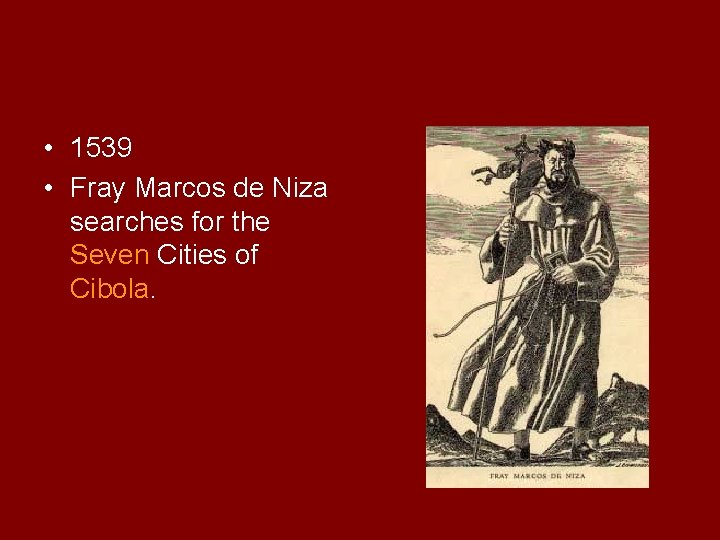
• 1539 • Fray Marcos de Niza searches for the Seven Cities of Cibola.
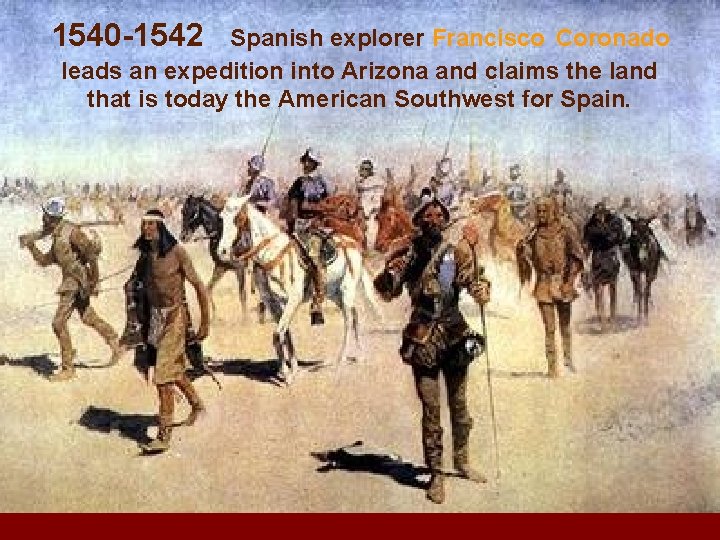
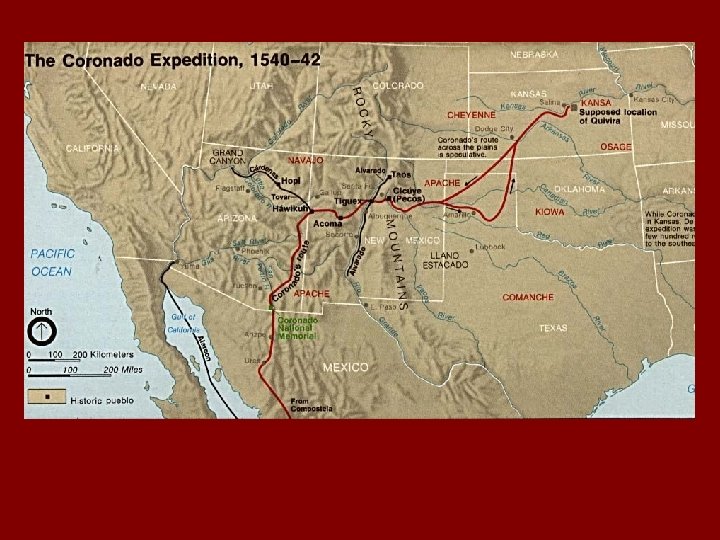
1540 -1542 Spanish explorer Francisco Coronado leads an expedition into Arizona and claims the land that is today the American Southwest for Spain.
• 1598 – 1607 – Spanish explorers travel through Arizona looking for rich mines. • 1629 – Catholic missionaries establish missions in Hopiland. • They are the first Europeans to live in Arizona. • August 10, 1680 – In the Great Pueblo Revolt, the Hopis kill settlers, including 22 priests, and burn churches. • Known as the most successful Indian uprising in the American West.
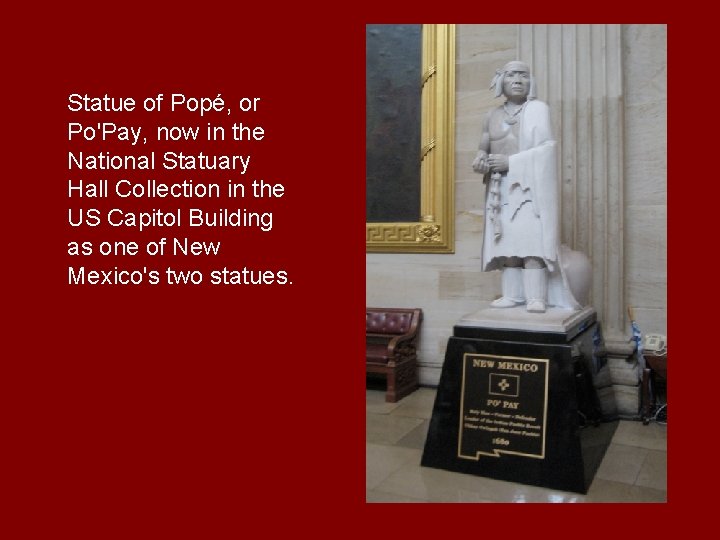
Statue of Popé, or Po'Pay, now in the National Statuary Hall Collection in the US Capitol Building as one of New Mexico's two statues.
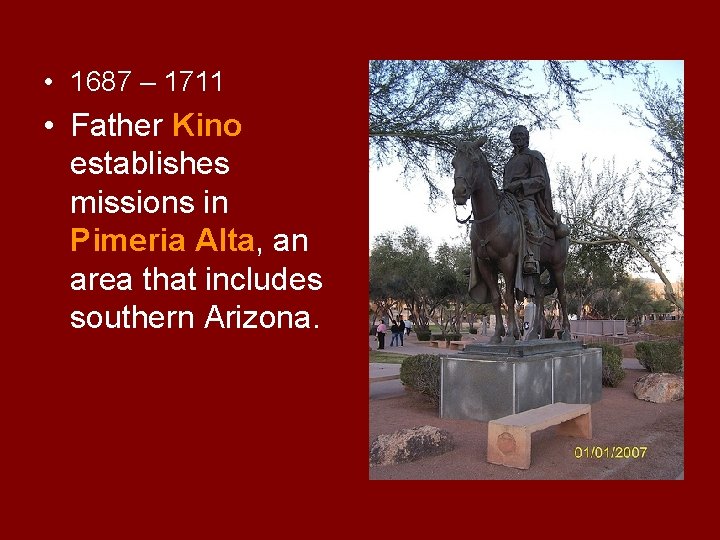
• 1687 – 1711 • Father Kino establishes missions in Pimeria Alta, an area that includes southern Arizona.
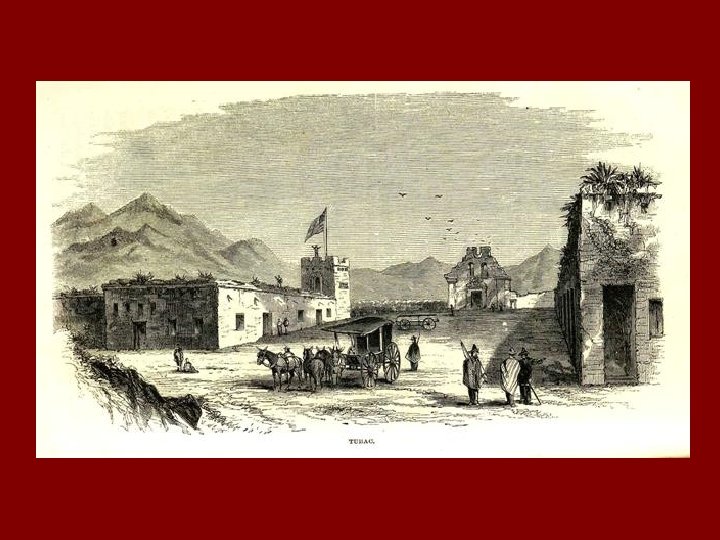
• 1736 – Silver is discovered at Planchas de Plata, just south of today’s Arizona/Sonora border. • 1751 – Pima and Papago Indians of Pimeria Alta revolt against white priests and miners in the area in the Great Pima Indian Revolt. • 1752 – Because of the Great Pima Indian Revolt, Tubac Presidio is established. • This is Arizona’s first white settlement.
Learning Target I can discuss the Spanish period in Arizona history. .
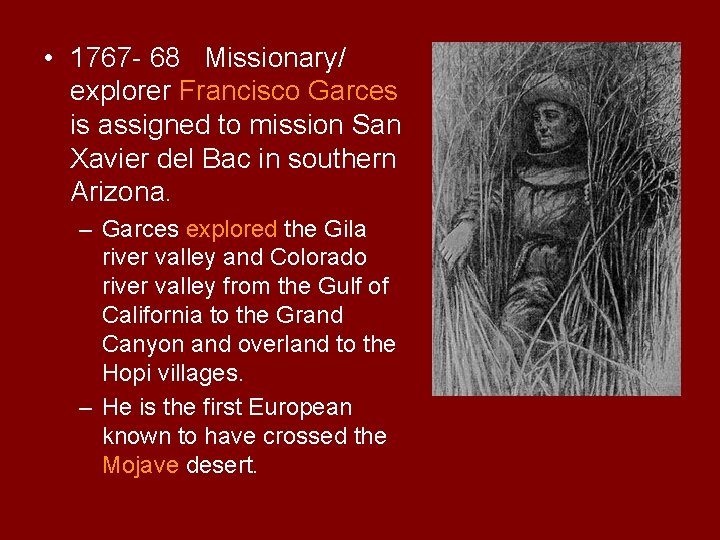
• 1767 - 68 Missionary/ explorer Francisco Garces is assigned to mission San Xavier del Bac in southern Arizona. – Garces explored the Gila river valley and Colorado river valley from the Gulf of California to the Grand Canyon and overland to the Hopi villages. – He is the first European known to have crossed the Mojave desert.
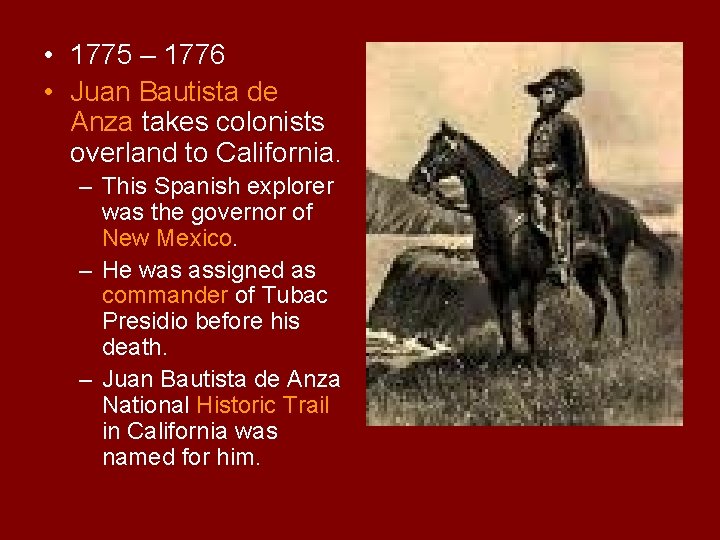
• 1775 – 1776 • Juan Bautista de Anza takes colonists overland to California. – This Spanish explorer was the governor of New Mexico. – He was assigned as commander of Tubac Presidio before his death. – Juan Bautista de Anza National Historic Trail in California was named for him.
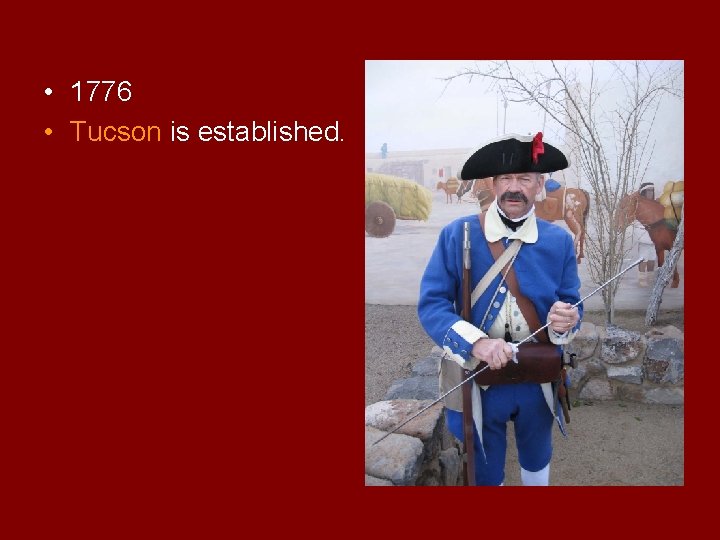
• 1776 • Tucson is established.
• 1781 • Yuma Revolt; Fray Garces is murdered. The land route to California is closed for 40 years. • 1784 • A new Indian policy, the Galvez Plan is formulated. The Spanish conduct aggressive military campaigns against the Apaches while using bribery to encourage them to settle near the trading posts where they would receive rations and supplies.
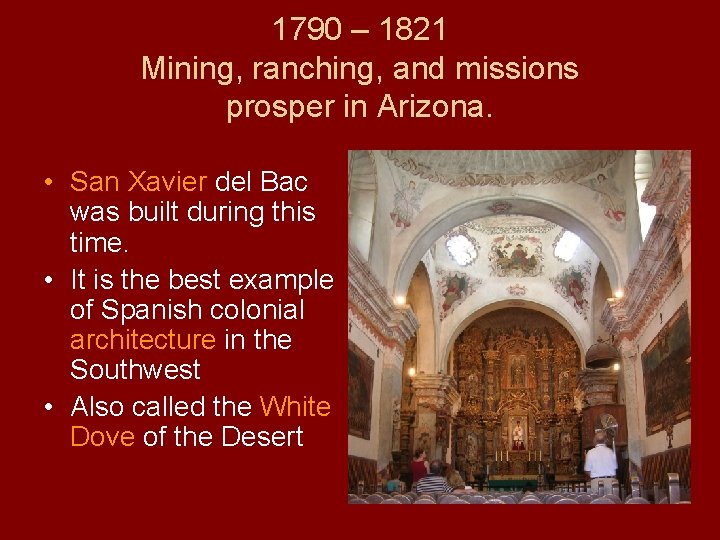
1790 – 1821 Mining, ranching, and missions prosper in Arizona. • San Xavier del Bac was built during this time. • It is the best example of Spanish colonial architecture in the Southwest • Also called the White Dove of the Desert