
Spanish Making arrangements 3 3 present continuous we
![Spanish Making arrangements [3 / 3] - present continuous ‘we’ and irregular present participles](https://slidetodoc.com/presentation_image_h2/278b6918a115011b1d1f7893fa328525/image-1.jpg "Spanish Making arrangements [3 / 3] - present continuous ‘we’ and irregular present participles")
![hijo hospital h X hablar hacer [to do, to make] helado hasta luego](https://slidetodoc.com/presentation_image_h2/278b6918a115011b1d1f7893fa328525/image-2.jpg "hijo hospital h X hablar hacer [to do, to make] helado hasta luego")
![puede [s/he, it can | is able to] pueden [they can|are able to]](https://slidetodoc.com/presentation_image_h2/278b6918a115011b1d1f7893fa328525/image-9.jpg "puede [s/he, it can | is able to] pueden [they can|are able to]")
![quiere [s/he, it wants] quieren [they want]](https://slidetodoc.com/presentation_image_h2/278b6918a115011b1d1f7893fa328525/image-10.jpg "quiere [s/he, it wants] quieren [they want]")
- Slides: 11
Spanish Making arrangements [3 / 3] - present continuous ‘we’ and irregular present participles - poder/querer - 3 rd person Señorita Allinson
hijo hospital h X hablar hacer [to do, to make] helado hasta luego
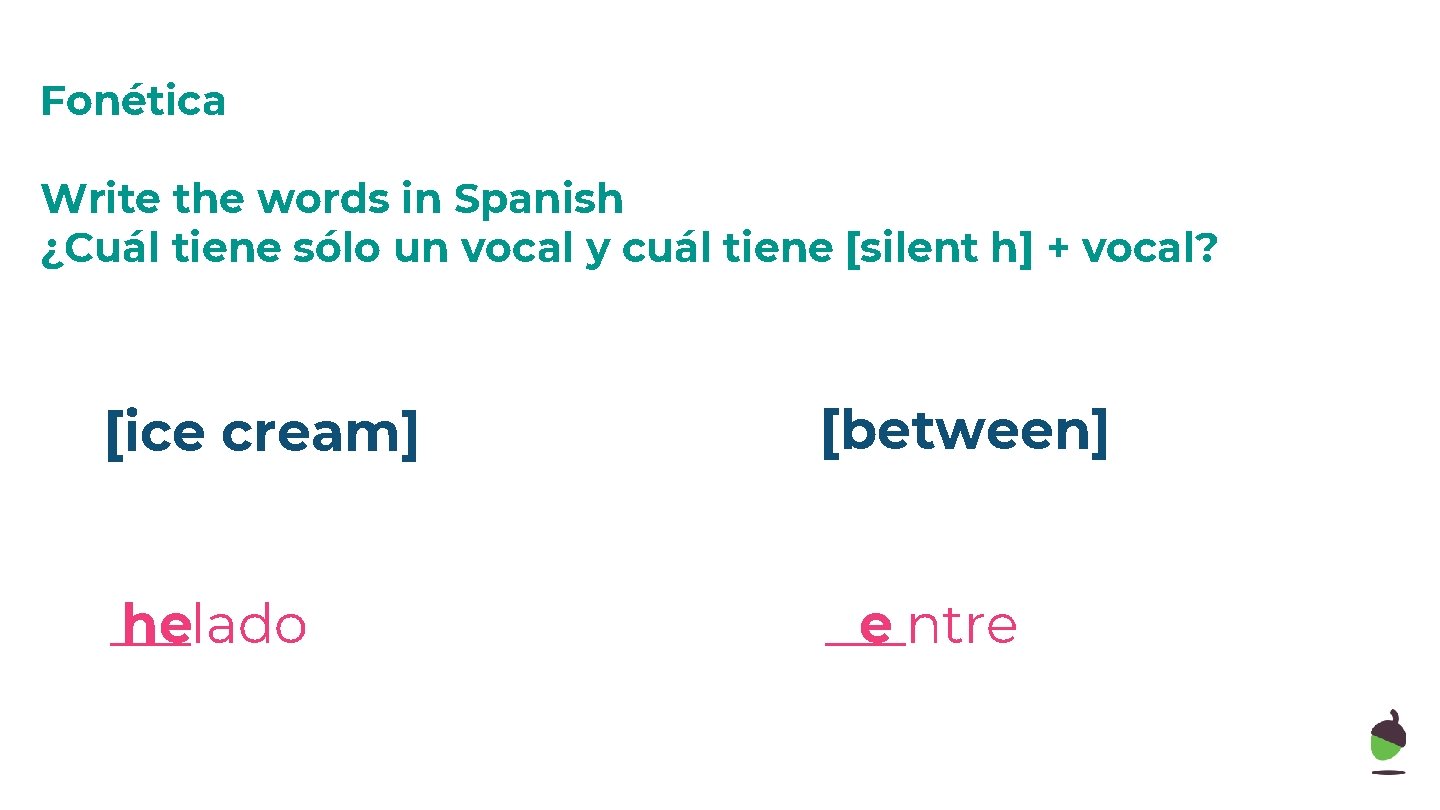
Fonética Write the words in Spanish ¿Cuál tiene sólo un vocal y cuál tiene [silent h] + vocal? [ice cream] [between] ___lado he ___ntre e
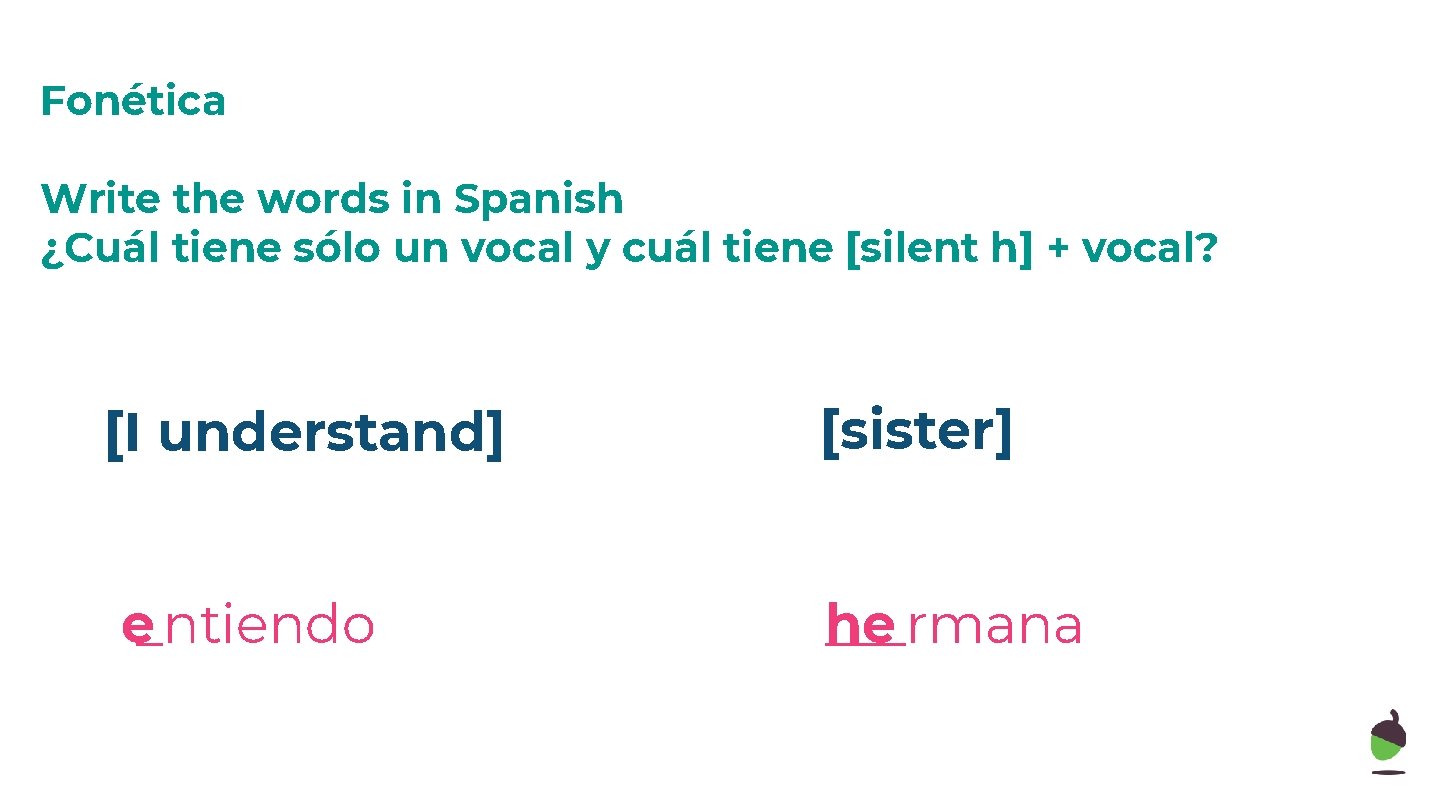
Fonética Write the words in Spanish ¿Cuál tiene sólo un vocal y cuál tiene [silent h] + vocal? [I understand] e_ntiendo [sister] he ___rmana
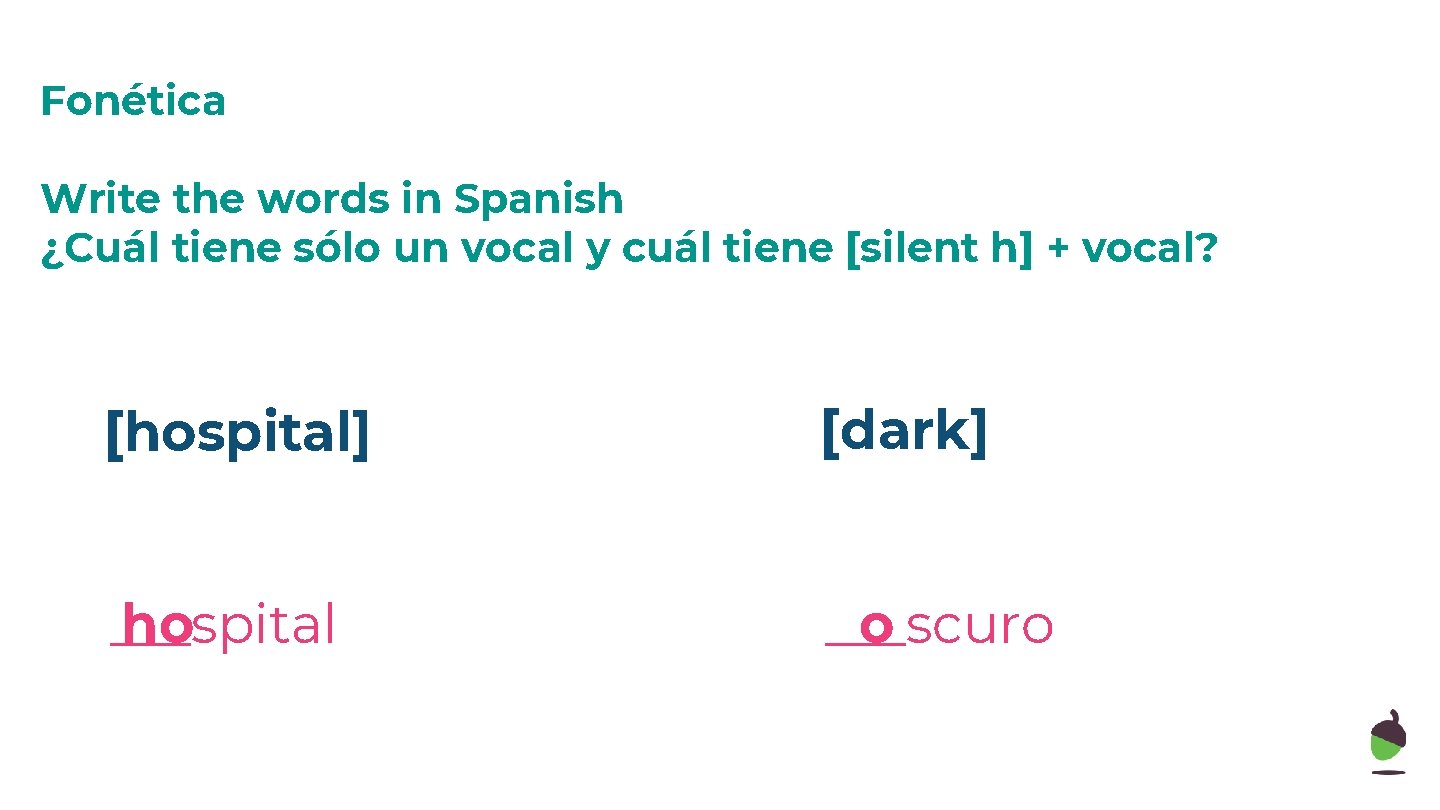
Fonética Write the words in Spanish ¿Cuál tiene sólo un vocal y cuál tiene [silent h] + vocal? [hospital] [dark] ___spital ho ___scuro o
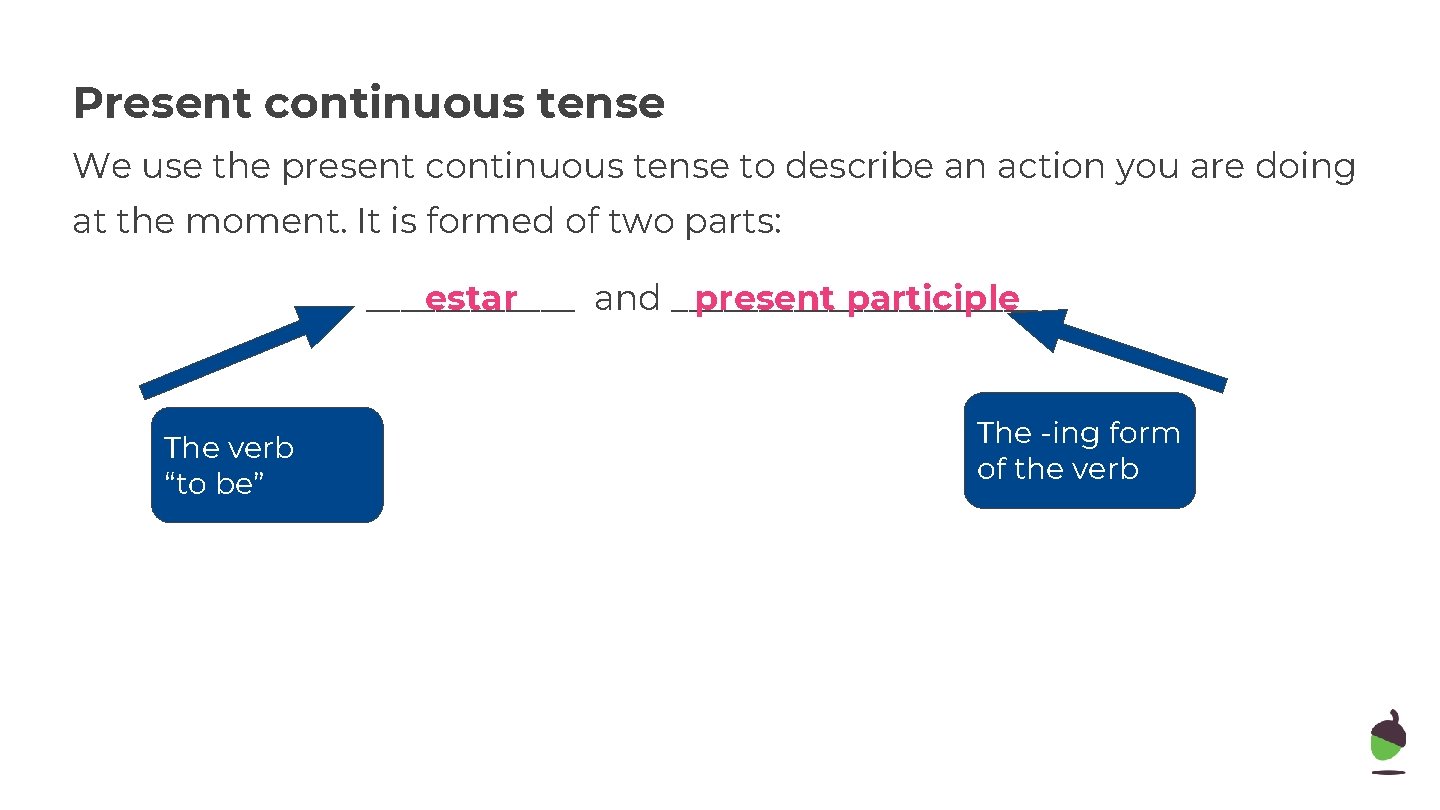
Present continuous tense We use the present continuous tense to describe an action you are doing at the moment. It is formed of two parts: ______ estar and ___________ present participle The verb “to be” The -ing form of the verb
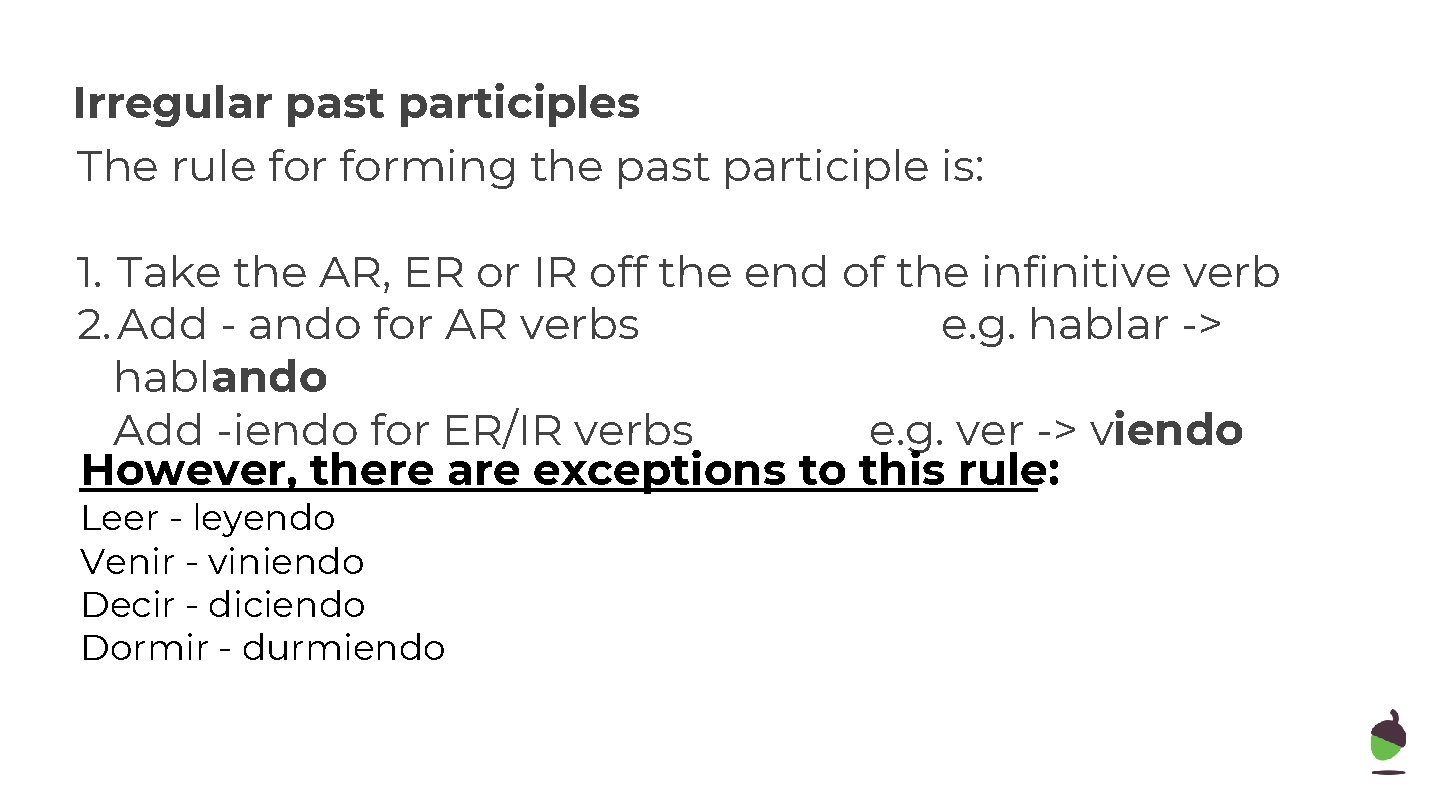
Irregular past participles The rule forming the past participle is: 1. Take the AR, ER or IR off the end of the infinitive verb 2. Add - ando for AR verbs e. g. hablar -> hablando Add -iendo for ER/IR verbs e. g. ver -> viendo However, there are exceptions to this rule: Leer - leyendo Venir - viniendo Decir - diciendo Dormir - durmiendo
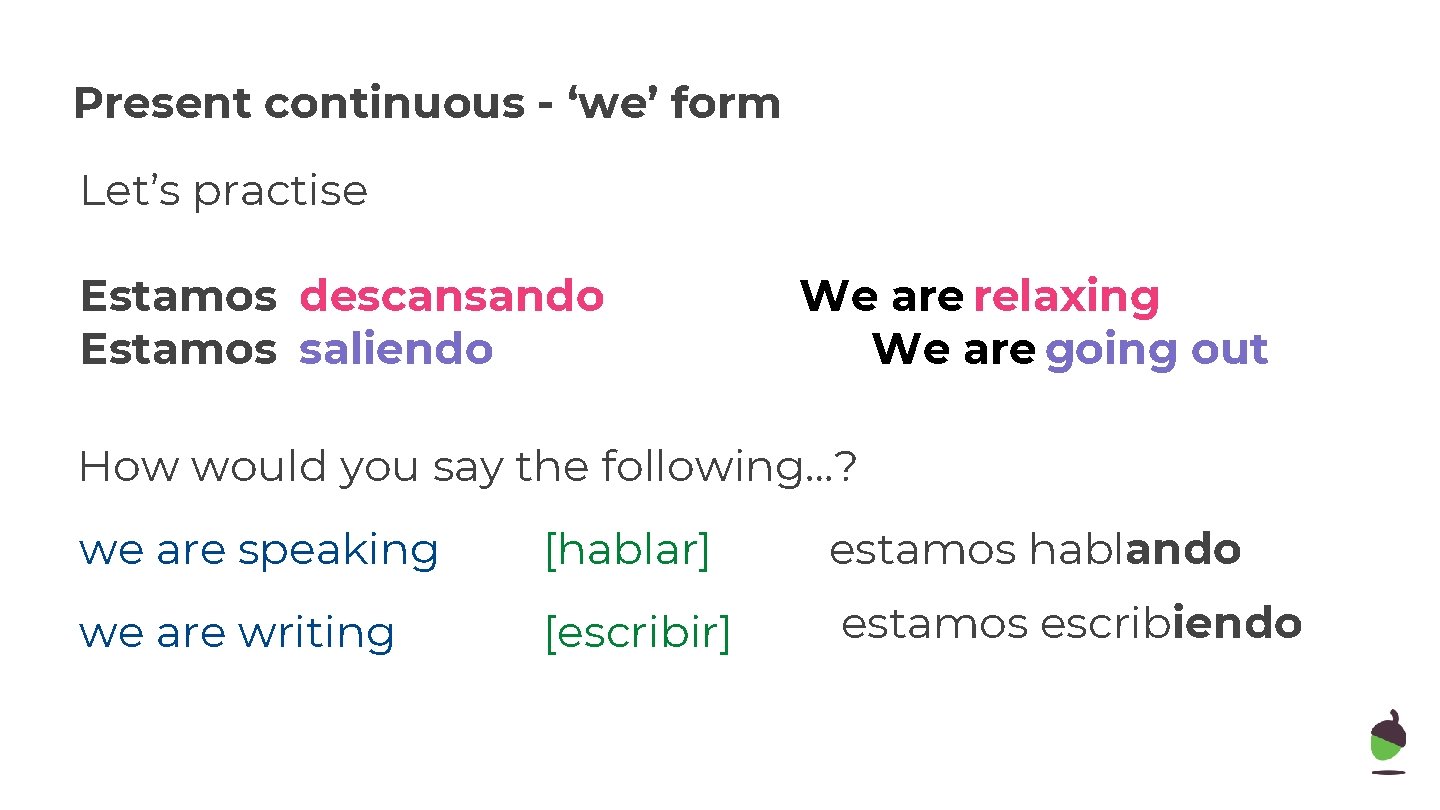
Present continuous - ‘we’ form Let’s practise Estamos descansando Estamos saliendo We are relaxing We are going out How would you say the following…? we are speaking [hablar] estamos hablando we are writing [escribir] estamos escribiendo
puede [s/he, it can | is able to] pueden [they can|are able to]
quiere [s/he, it wants] quieren [they want]
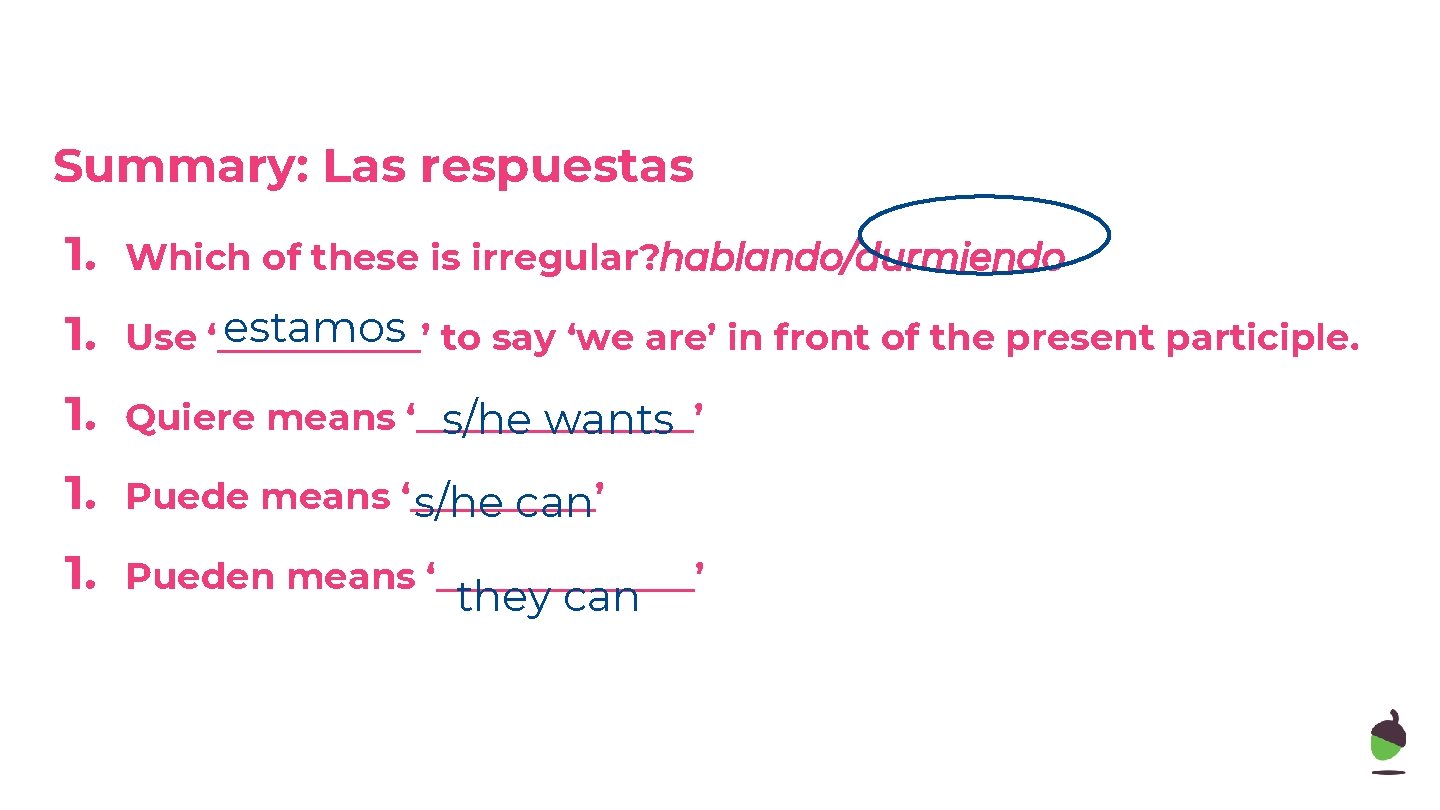
Summary: Las respuestas 1. Which of these is irregular? hablando/durmiendo 1. estamos to say ‘we are’ in front of the present participle. Use ‘______’ 1. Quiere means ‘________’ s/he wants 1. Puede means ‘_____’ s/he can 1. Pueden means ‘_______’ they can