
Spanish Describing when and where people go and
![Spanish Describing when and where people go, and future plans [1/2] - Present tense:](https://slidetodoc.com/presentation_image_h2/bd57a11e9d23a8192f75e7e6fda03e39/image-1.jpg "Spanish Describing when and where people go, and future plans [1/2] - Present tense:")
Spanish Describing when and where people go, and future plans [1/2] - Present tense: ‘ir’ (singular - I, you, s/he, it; 1 st person plural) - ‘al’ Vs. ‘a la’ Señorita Vázquez
![La fonética [g] ganar](http://slidetodoc.com/presentation_image_h2/bd57a11e9d23a8192f75e7e6fda03e39/image-2.jpg "La fonética [g] ganar")
La fonética [g] ganar
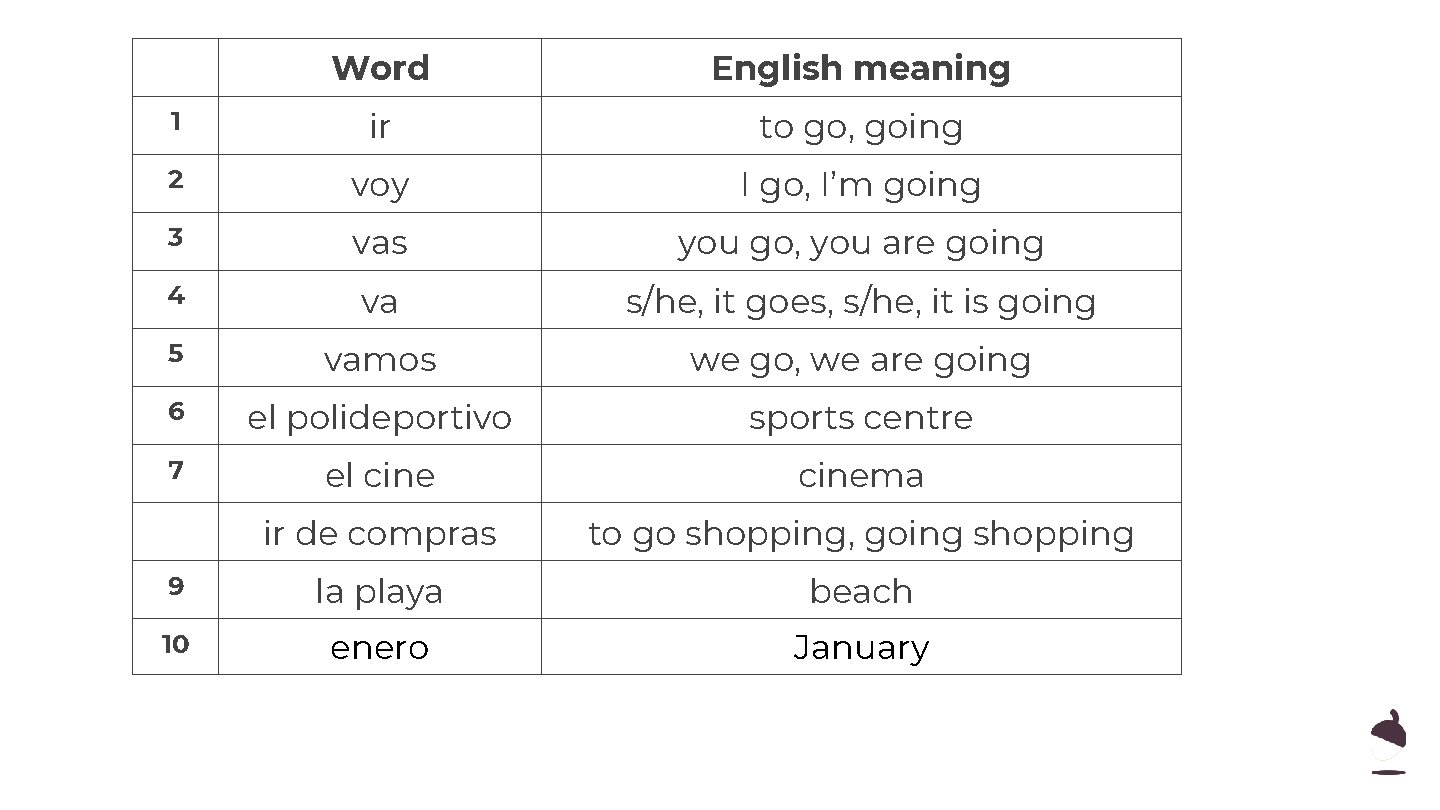
Word English meaning 1 ir to go, going 2 voy I go, I’m going 3 vas you go, you are going 4 va s/he, it goes, s/he, it is going 5 vamos we go, we are going 6 el polideportivo sports centre 7 el cinema ir de compras to go shopping, going shopping 9 la playa beach 10 enero January
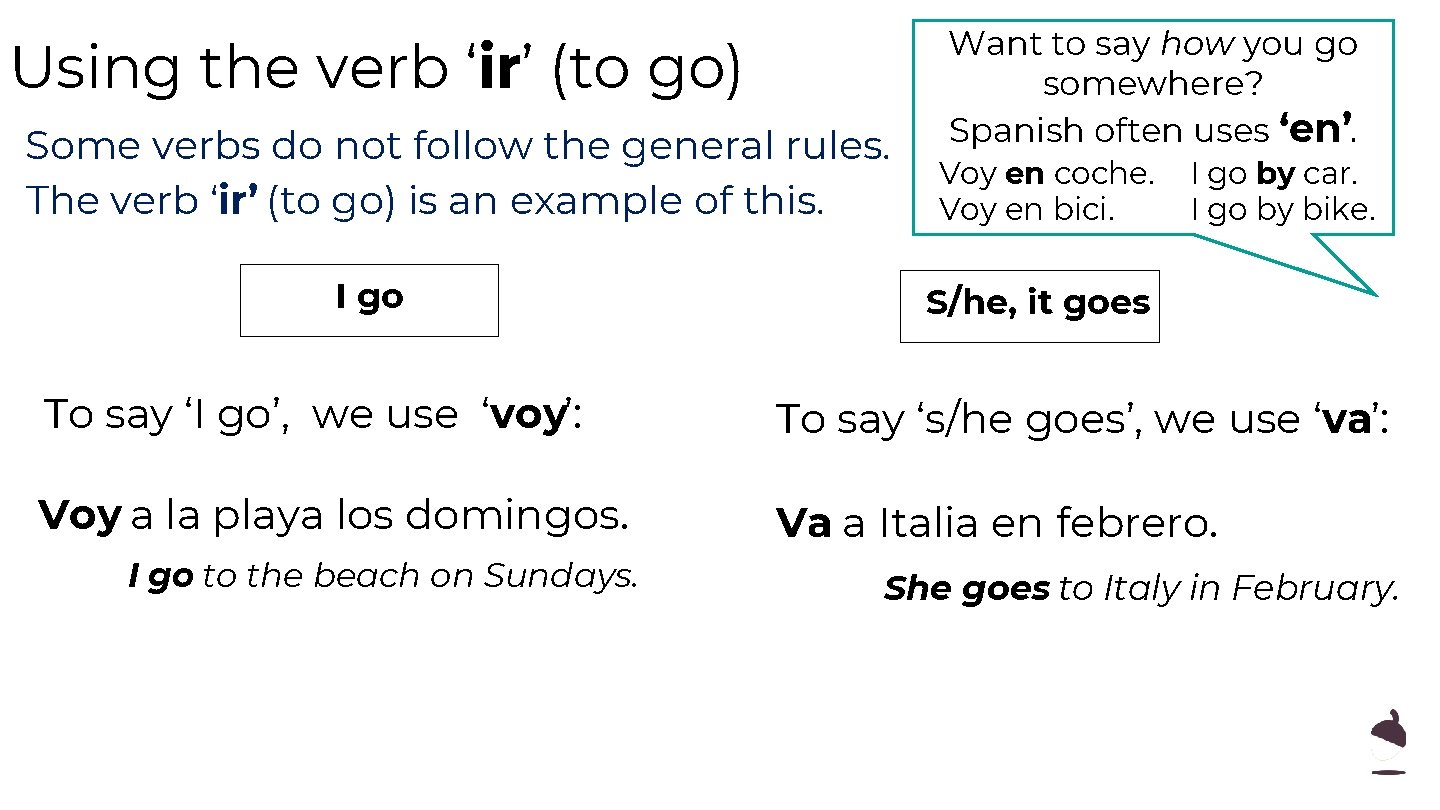
Using the verb ‘ir’ (to go) Some verbs do not follow the general rules. The verb ‘ir’ (to go) is an example of this. I go Want to say how you go somewhere? Spanish often uses ‘en’. Voy en coche. Voy en bici. I go by car. I go by bike. S/he, it goes To say ‘I go’, we use ‘voy’: To say ‘s/he goes’, we use ‘va’: Voy a la playa los domingos. Va a Italia en febrero. I go to the beach on Sundays. She goes to Italy in February.
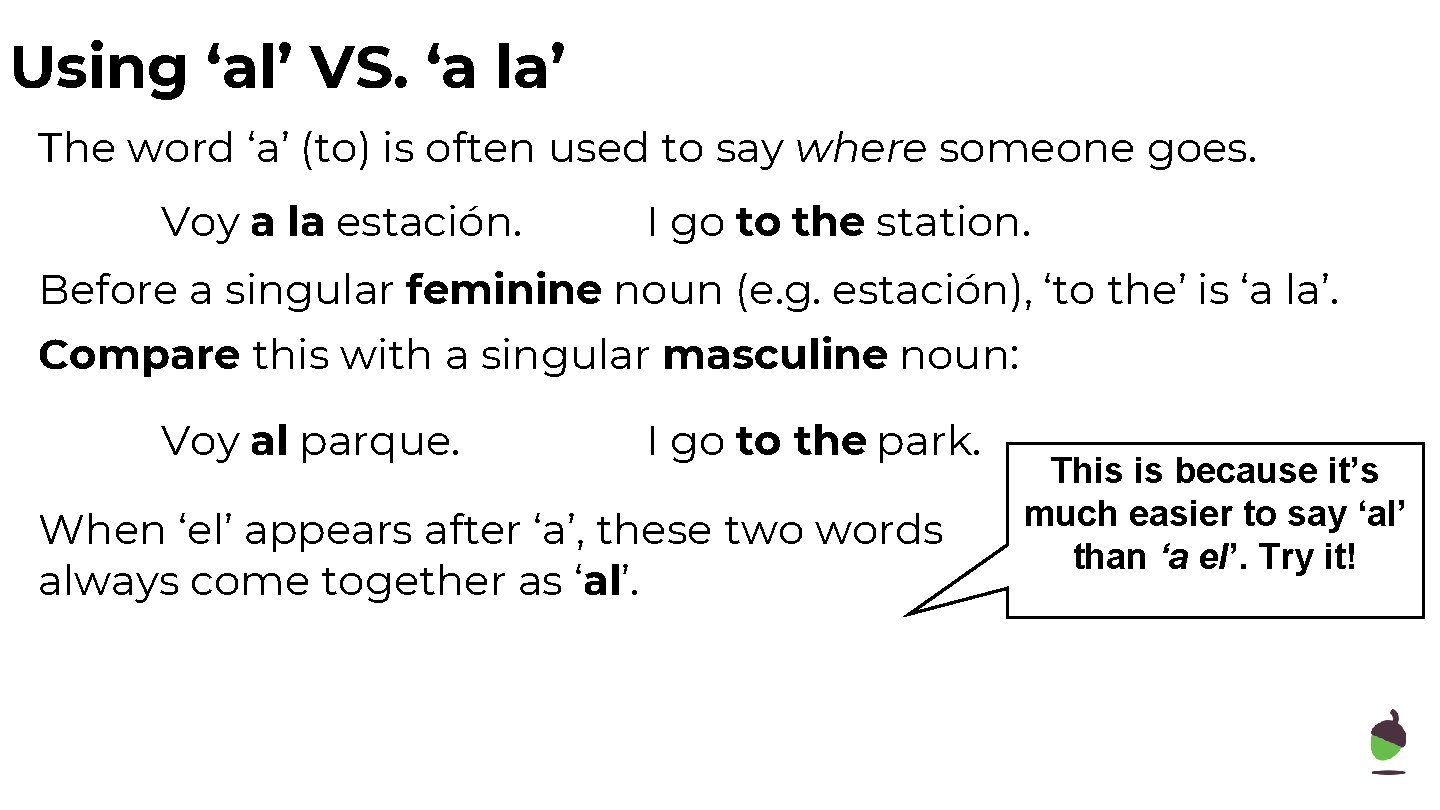
Using ‘al’ VS. ‘a la’ The word ‘a’ (to) is often used to say where someone goes. Voy a la estación. I go to the station. Before a singular feminine noun (e. g. estación), ‘to the’ is ‘a la’. Compare this with a singular masculine noun: Voy al parque. I go to the park. When ‘el’ appears after ‘a’, these two words always come together as ‘al’. This is because it’s much easier to say ‘al’ than ‘a el’. Try it!
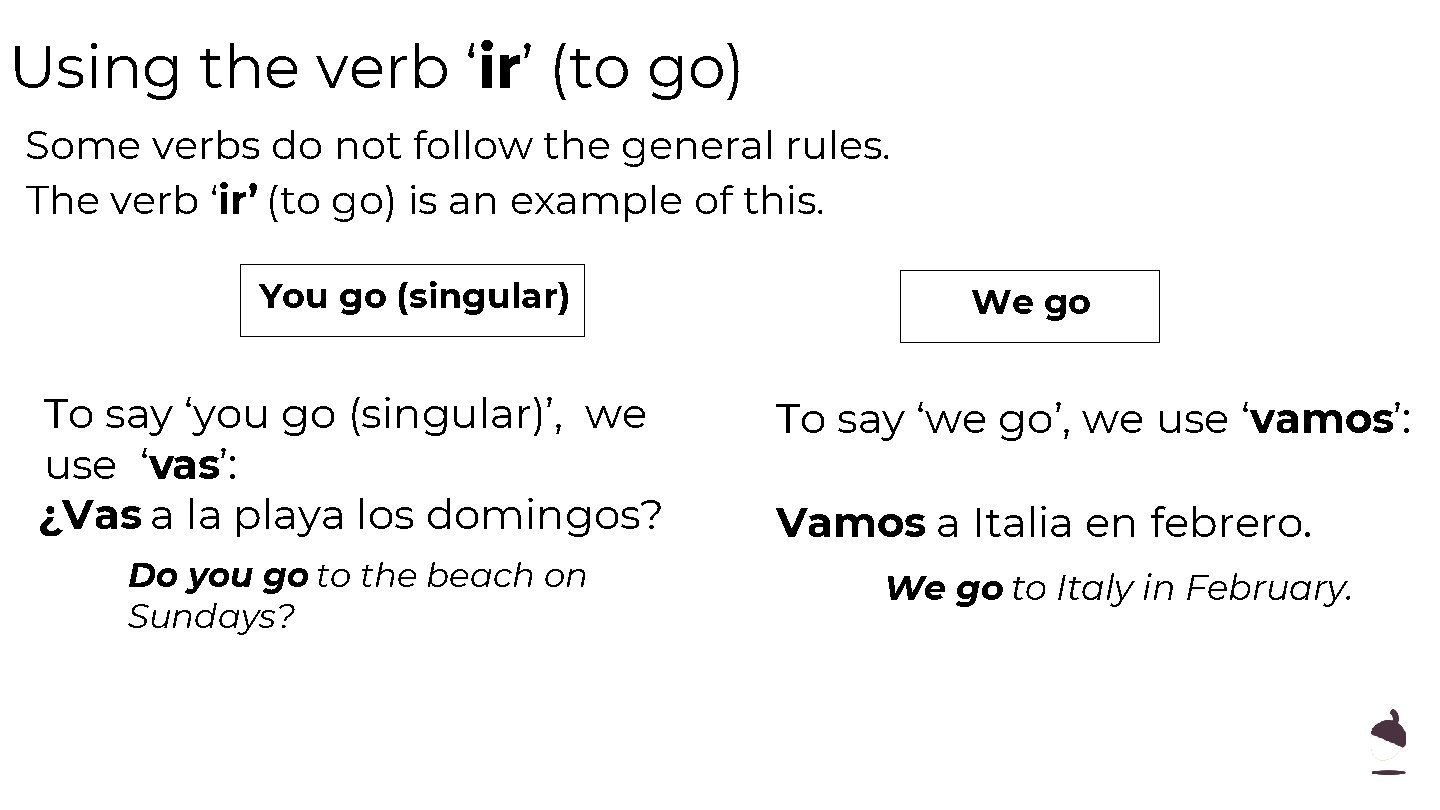
Using the verb ‘ir’ (to go) Some verbs do not follow the general rules. The verb ‘ir’ (to go) is an example of this. You go (singular) To say ‘you go (singular)’, we use ‘vas’: ¿Vas a la playa los domingos? Do you go to the beach on Sundays? We go To say ‘we go’, we use ‘vamos’: Vamos a Italia en febrero. We go to Italy in February.
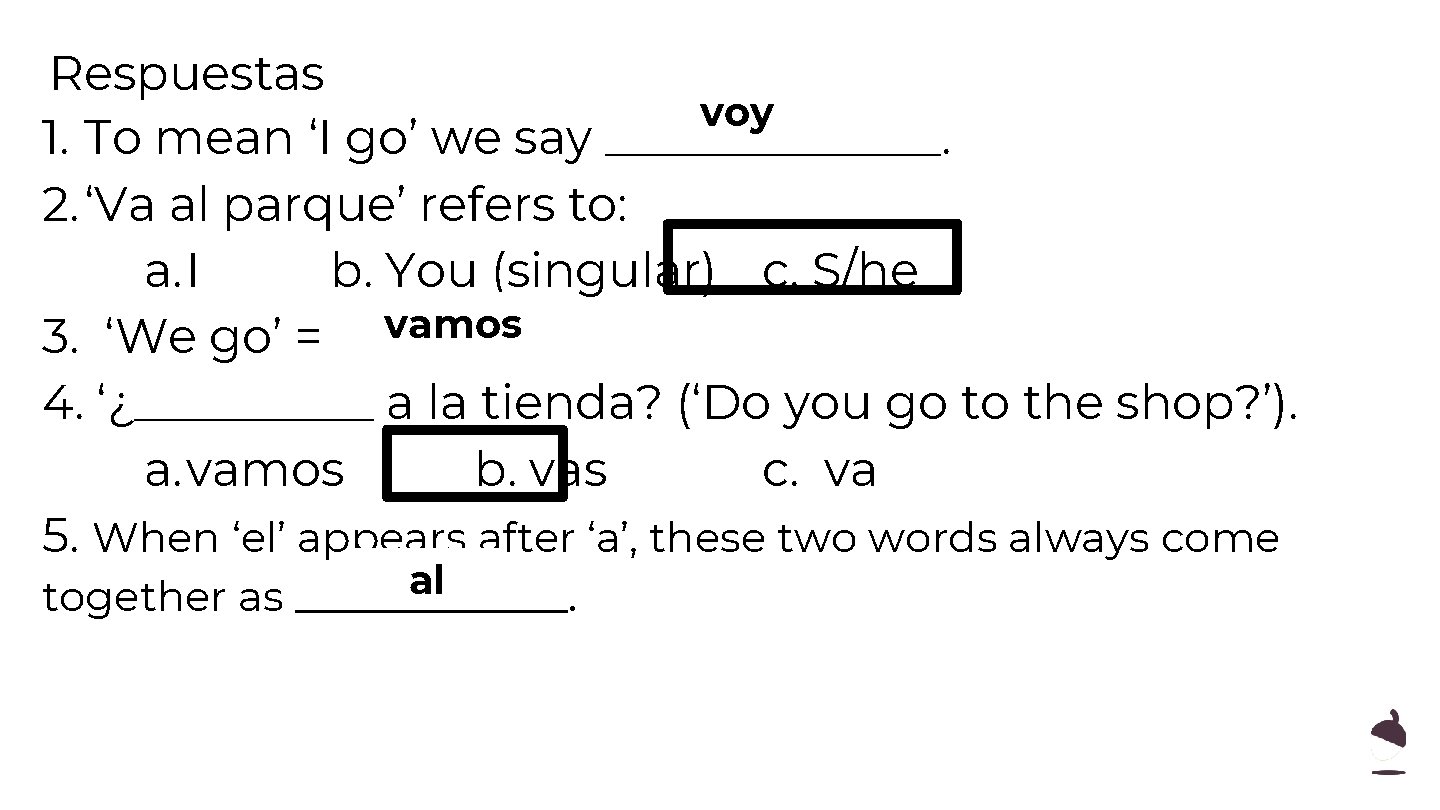
Respuestas voy 1. To mean ‘I go’ we say _______. 2. ‘Va al parque’ refers to: a. I b. You (singular) c. S/he vamos 3. ‘We go’ = 4. ‘¿_____ a la tienda? (‘Do you go to the shop? ’). a. vamos b. vas c. va 5. When ‘el’ appears after ‘a’, these two words always come al together as _______.
- Slides: 7