
Spanish Describing people 33 Worksheet Using ser and
![Spanish Describing people [3/3] Worksheet - Using ser and estar in 3 rd person](https://slidetodoc.com/presentation_image_h2/2fdc6626bf4a20f0c3b6939631a1fdae/image-1.jpg "Spanish Describing people [3/3] Worksheet - Using ser and estar in 3 rd person")
Spanish Describing people [3/3] Worksheet - Using ser and estar in 3 rd person plural - Negation: ni. . . ni…, nunca, tampocoand nadie Señorita Allinson
![La fonética The vowel [u] merges with [a], [e] and [o] to make a](http://slidetodoc.com/presentation_image_h2/2fdc6626bf4a20f0c3b6939631a1fdae/image-2.jpg "La fonética The vowel [u] merges with [a], [e] and [o] to make a")
La fonética The vowel [u] merges with [a], [e] and [o] to make a single syllable. This is a ‘weak’ vowel. 1 u __ o antig__ 2 ag__ u __ntar a 3 a g __ u __rdar 4 u __ a leng__ Because the [u] is ‘gliding’ into the next vowel, it sounds like a [w]!
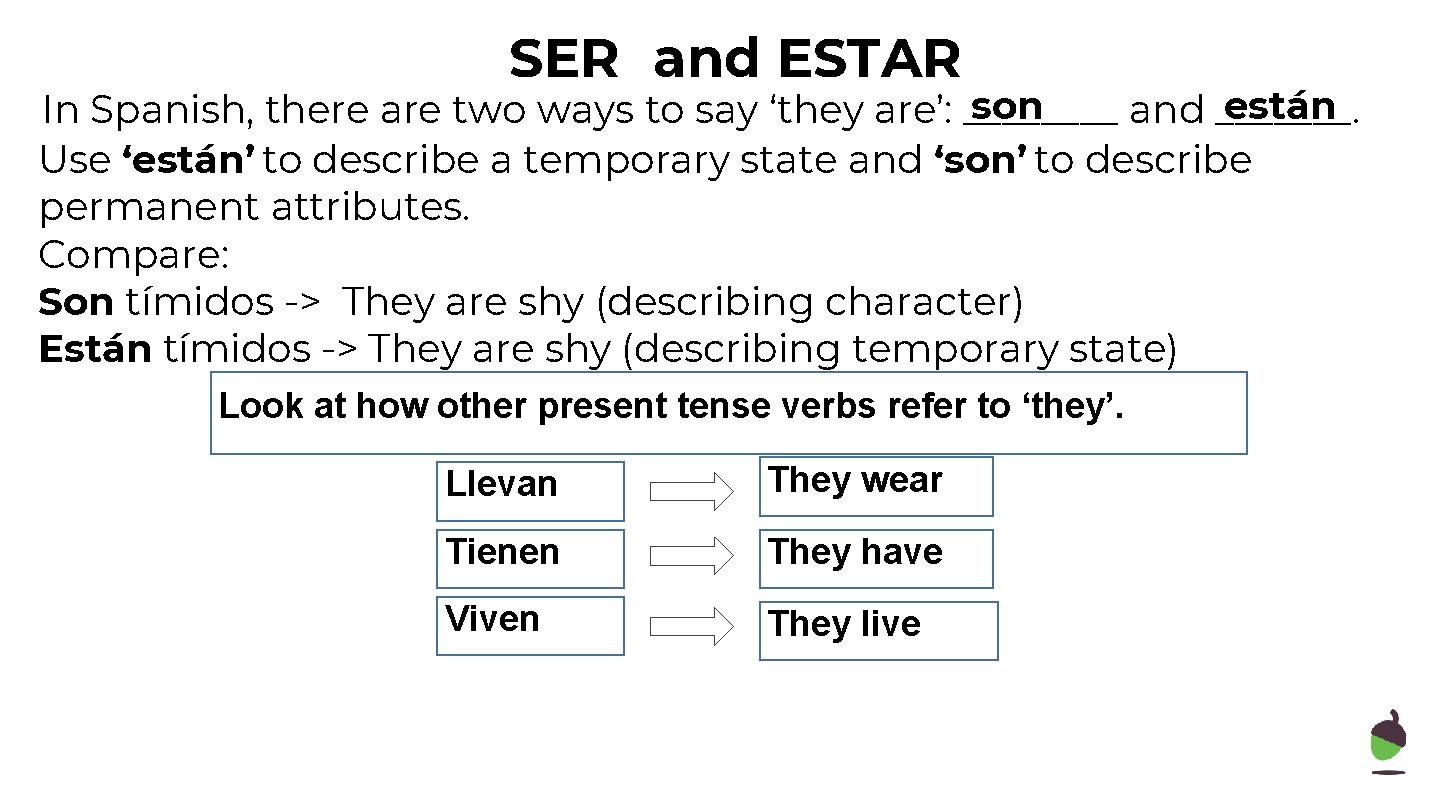
SER and ESTAR son están In Spanish, there are two ways to say ‘they are’: ____ and _______. Use ‘están’ to describe a temporary state and ‘son’ to describe permanent attributes. Compare: Son tímidos -> They are shy (describing character) Están tímidos -> They are shy (describing temporary state) Look at how other present tense verbs refer to ‘they’. Llevan They wear Tienen They have Viven They live
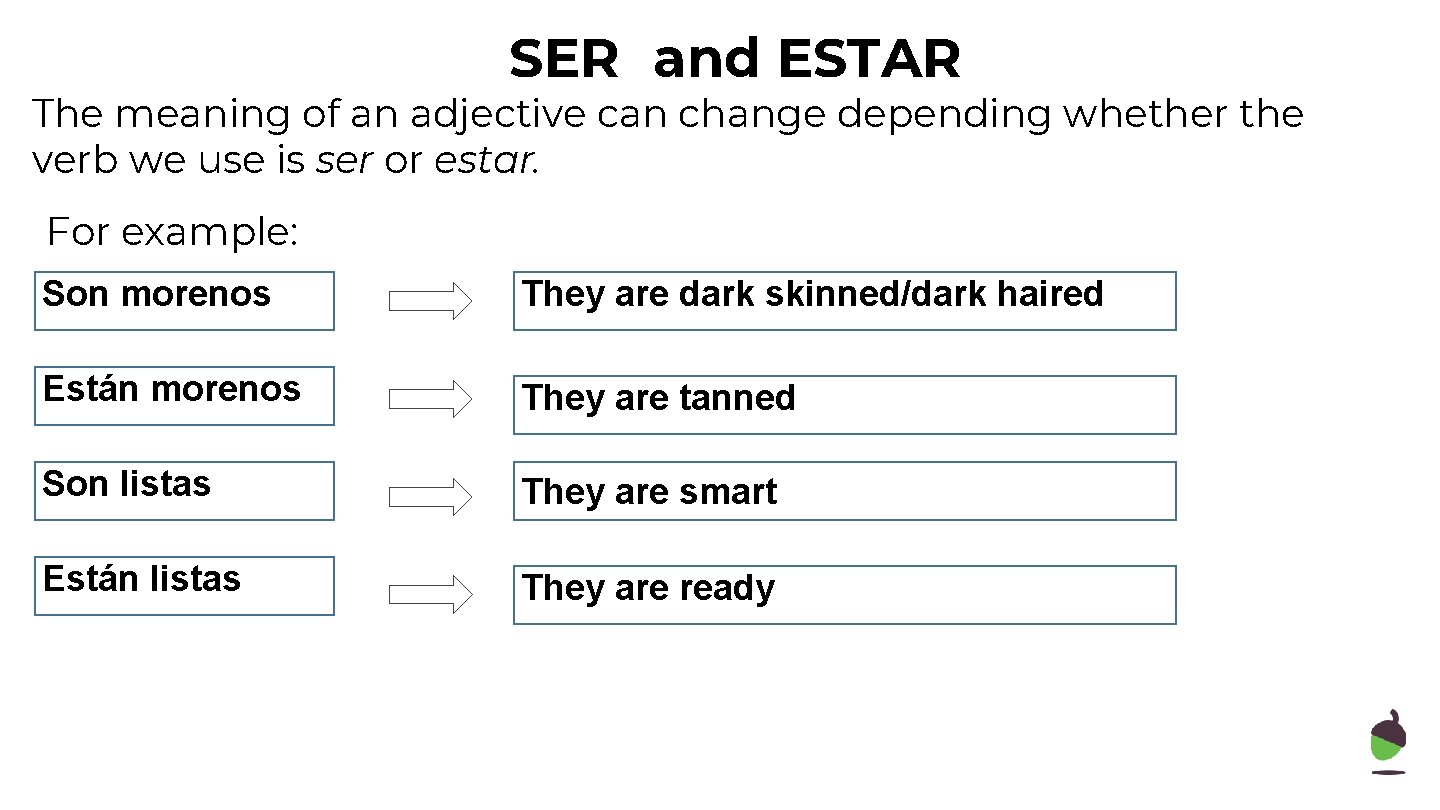
SER and ESTAR The meaning of an adjective can change depending whether the verb we use is ser or estar. For example: Son morenos They are dark skinned/dark haired Están morenos They are tanned Son listas They are smart Están listas They are ready
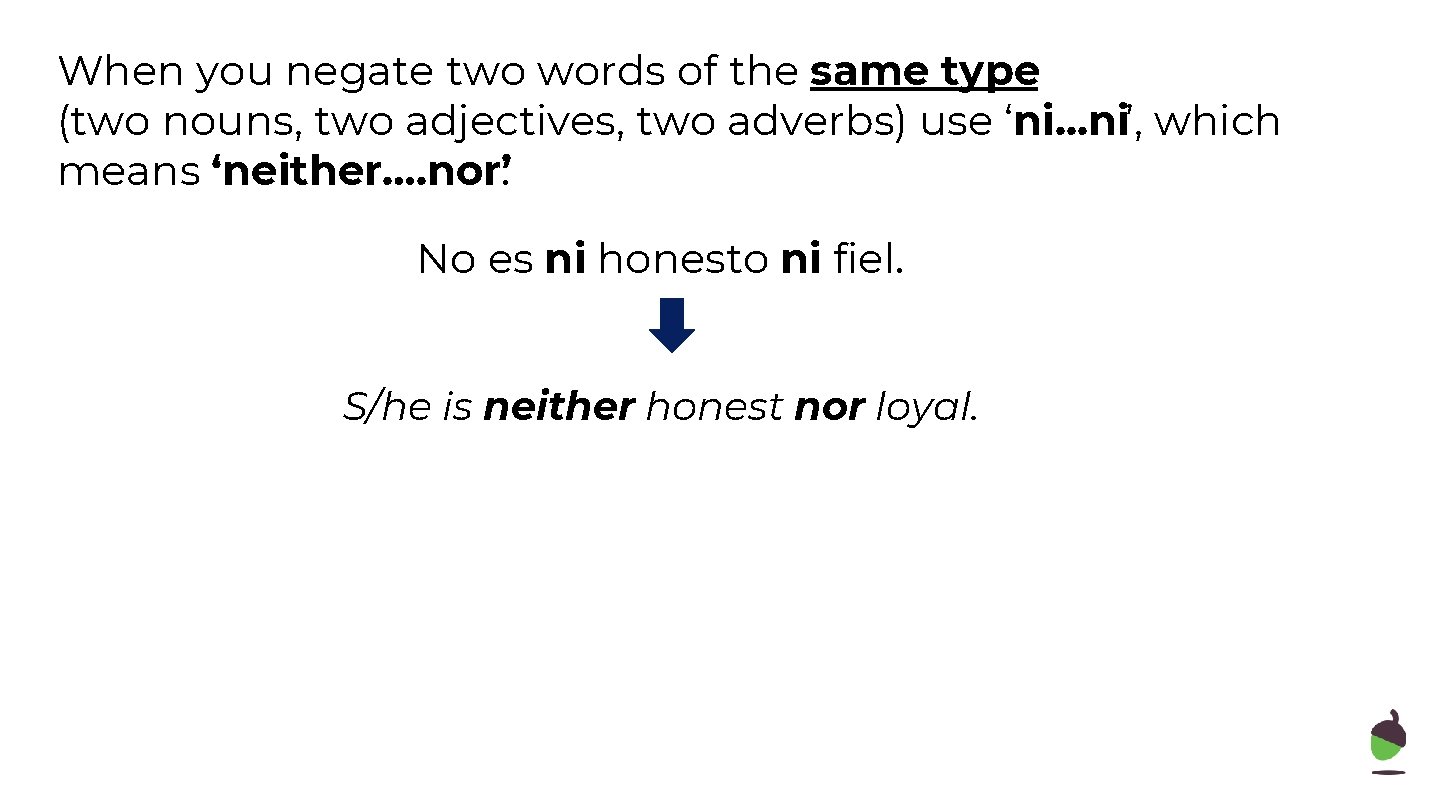
When you negate two words of the same type (two nouns, two adjectives, two adverbs) use ‘ni. . . ni’, which means ‘neither…. nor’. No es ni honesto ni fiel. S/he is neither honest nor loyal.
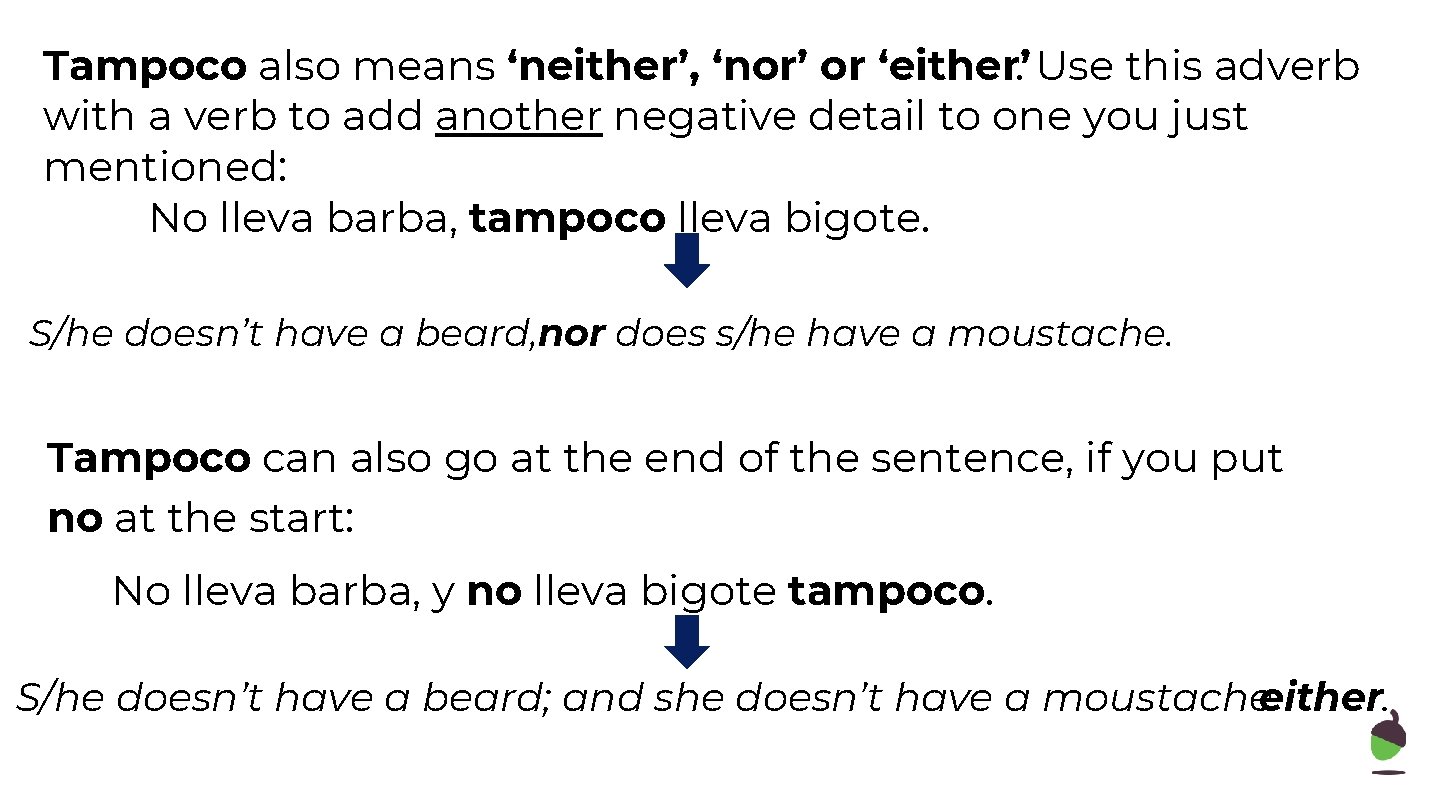
Tampoco also means ‘neither’, ‘nor’ or ‘either’. Use this adverb with a verb to add another negative detail to one you just mentioned: No lleva barba, tampoco lleva bigote. S/he doesn’t have a beard, nor does s/he have a moustache. Tampoco can also go at the end of the sentence, if you put no at the start: No lleva barba, y no lleva bigote tampoco. S/he doesn’t have a beard; and she doesn’t have a moustacheeither.
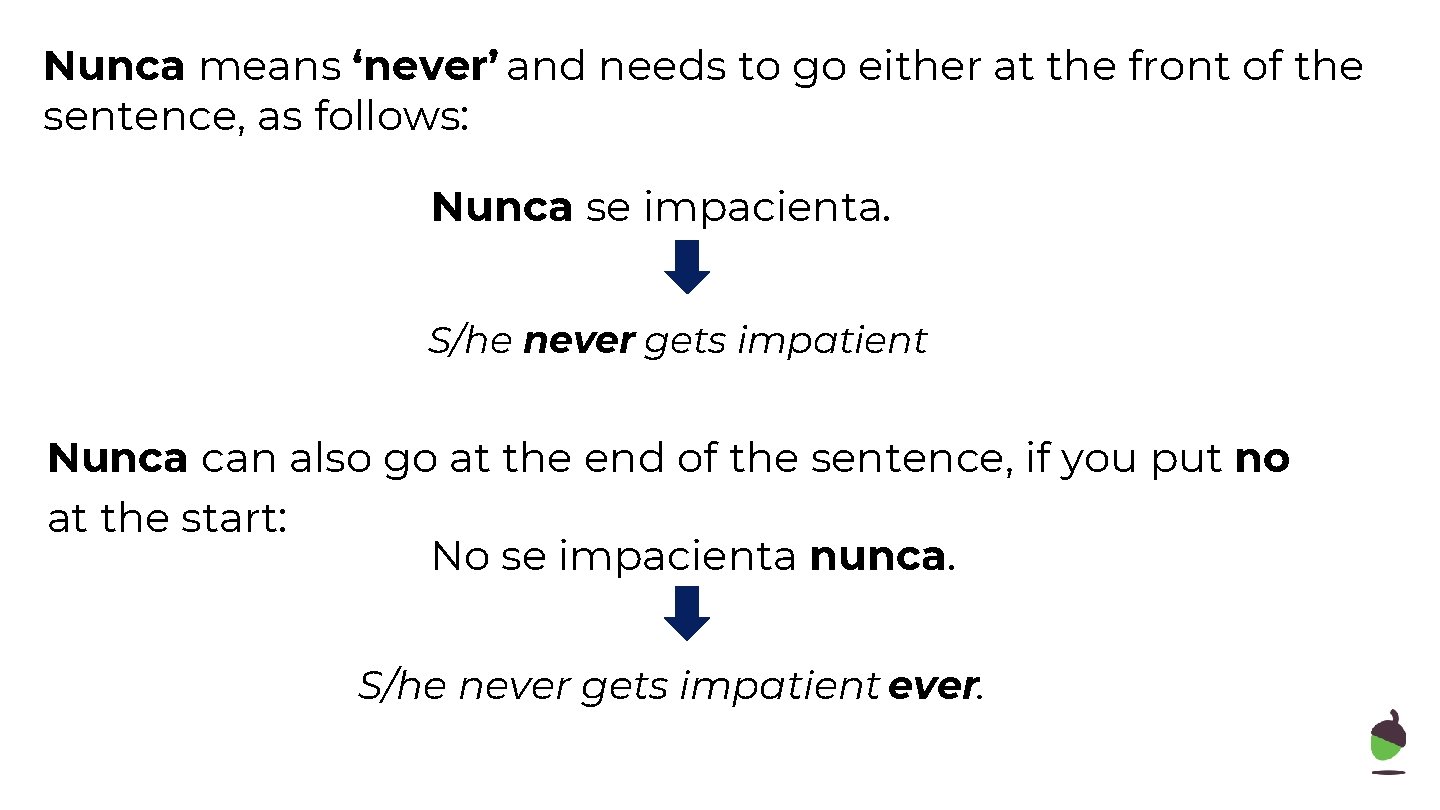
Nunca means ‘never’ and needs to go either at the front of the sentence, as follows: Nunca se impacienta. S/he never gets impatient Nunca can also go at the end of the sentence, if you put no at the start: No se impacienta nunca. S/he never gets impatient ever.
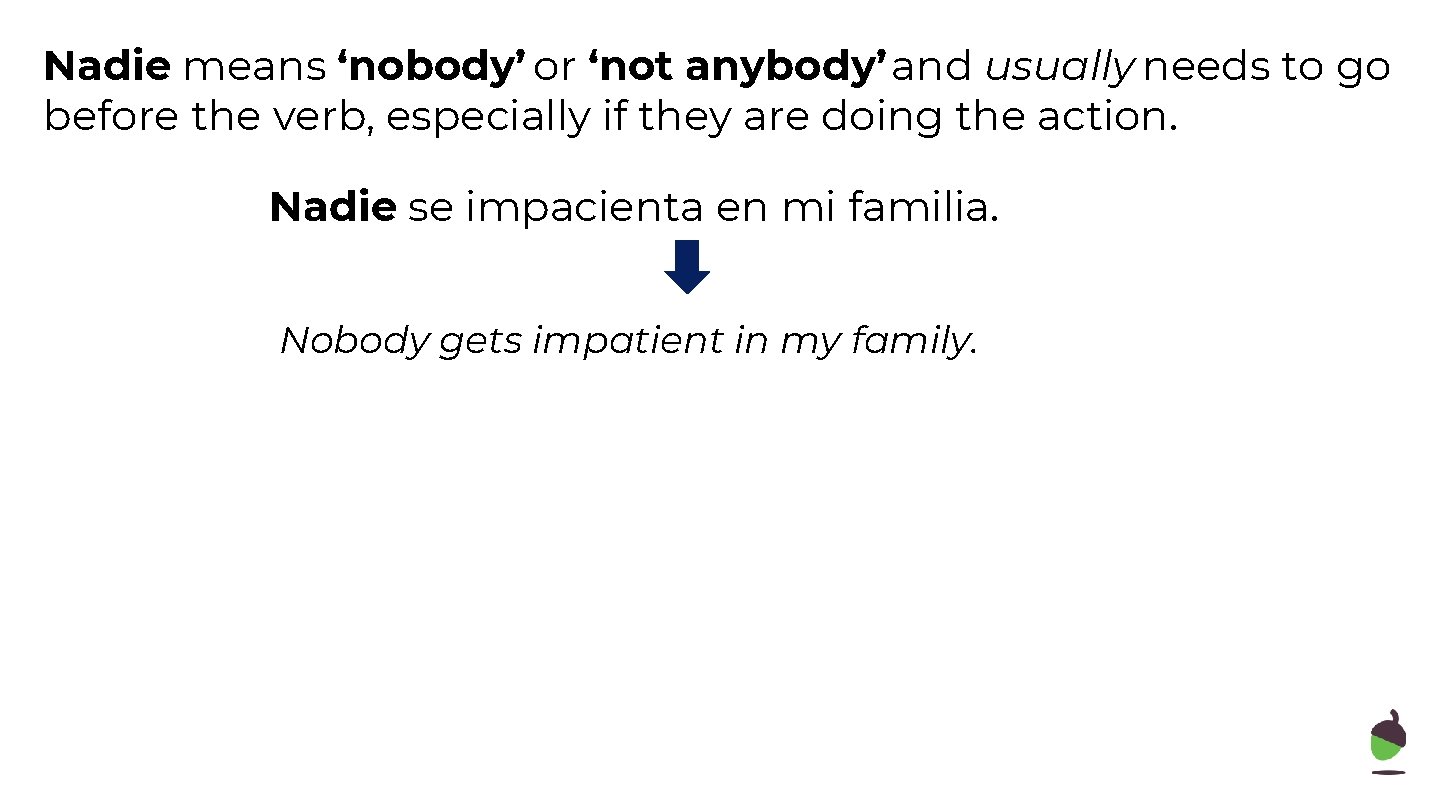
Nadie means ‘nobody’ or ‘not anybody’ and usually needs to go before the verb, especially if they are doing the action. Nadie se impacienta en mi familia. Nobody gets impatient in my family.
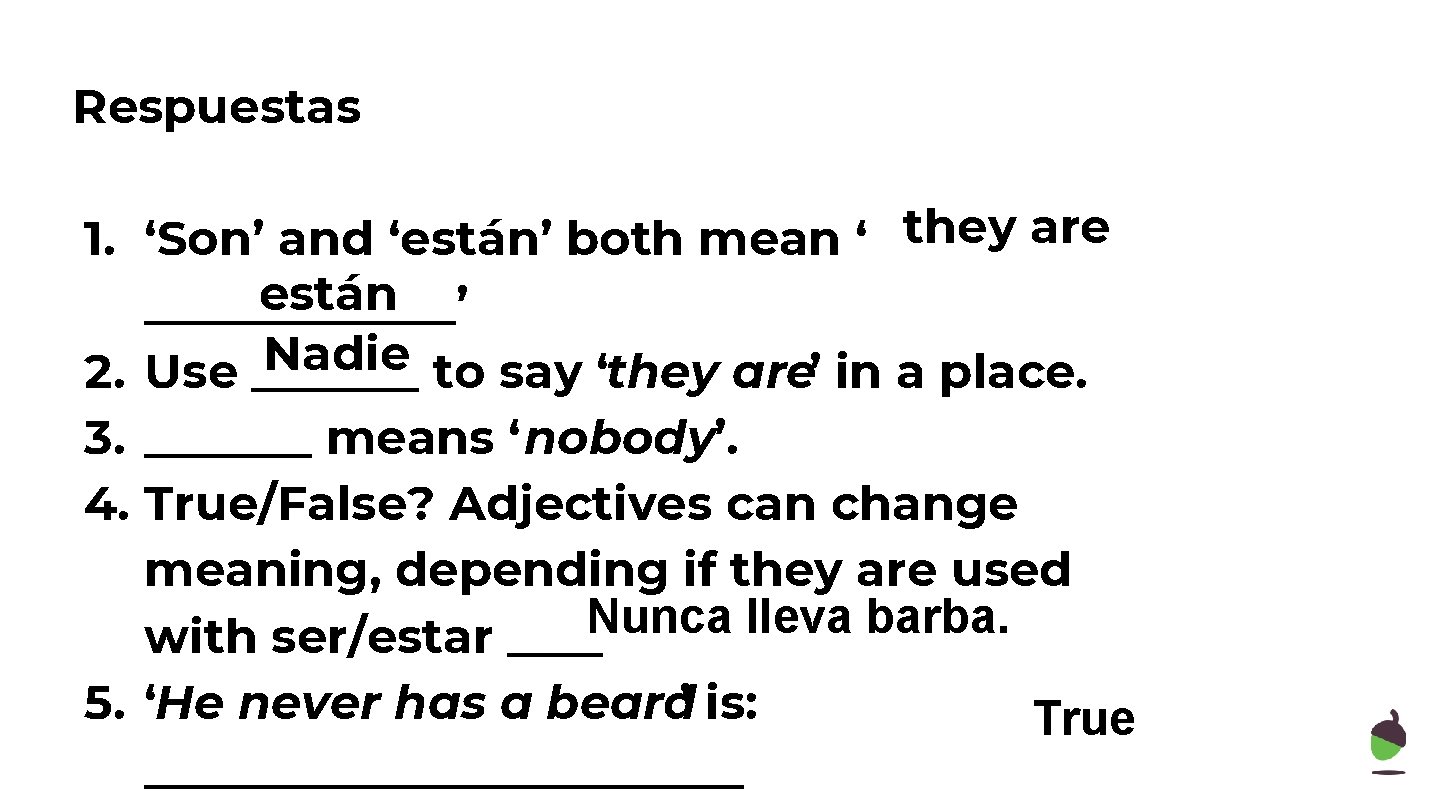
Respuestas 1. ‘Son’ and ‘están’ both mean ‘ they are están _______’ Nadie 2. Use _______ to say ‘they are’ in a place. 3. _______ means ‘nobody’. 4. True/False? Adjectives can change meaning, depending if they are used Nunca lleva barba. with ser/estar ____ 5. ‘He never has a beard’ is: True _____________
- Slides: 9