
Spanish Commands With Reflexive and Direct Object Pronouns

Spanish Commands With Reflexive and Direct Object Pronouns
Informal Commands Informal commands are for people you know well. The only subject that we use informal commands for is tú. We don’t know the nosotros command form. If there are plural people you know that you are giving a command to use the formal command for ustedes.
Affirmative Informal Commands There are two easy steps to remember for informal commands: 1. Conjugate for “tú” 2. Drop the “s” Example: Verb: Comer –to eat informal) 1. Comes 2. Come 3. ¡Come! Subject: Tú (always will be for
Negative Informal Commands The same steps that are for affirmative are very similar for the negative: 1. Conjugate for yo 2. Drop the “o” 3. Add these endings: -ar es -er/ir as 4. Place no in front of the verb Example: Verd: Caminar –to walk 1. Camino 2. Camin 3. Camines 4. ¡No Camines! Subject: Tú
Commands with Pronouns There are different types of pronouns that we use, Direct Object Pronouns and Reflexive pronouns are two that we’ll be using. Both have VERY similar steps to follow with commands.
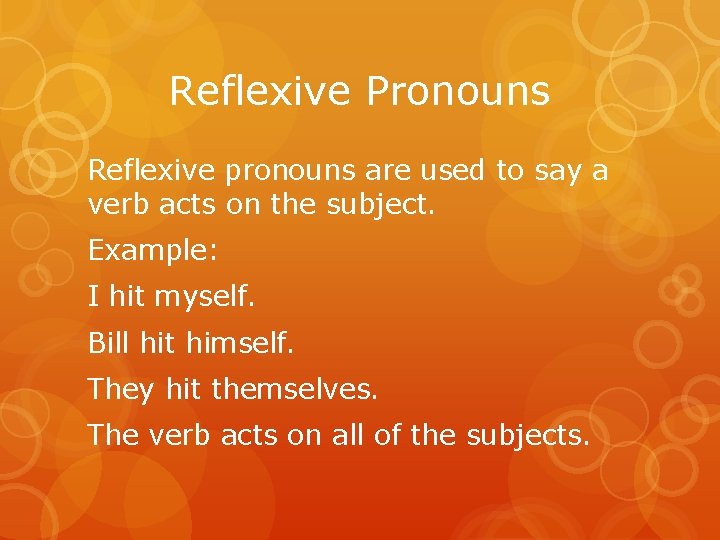
Reflexive Pronouns Reflexive pronouns are used to say a verb acts on the subject. Example: I hit myself. Bill hit himself. They hit themselves. The verb acts on all of the subjects.
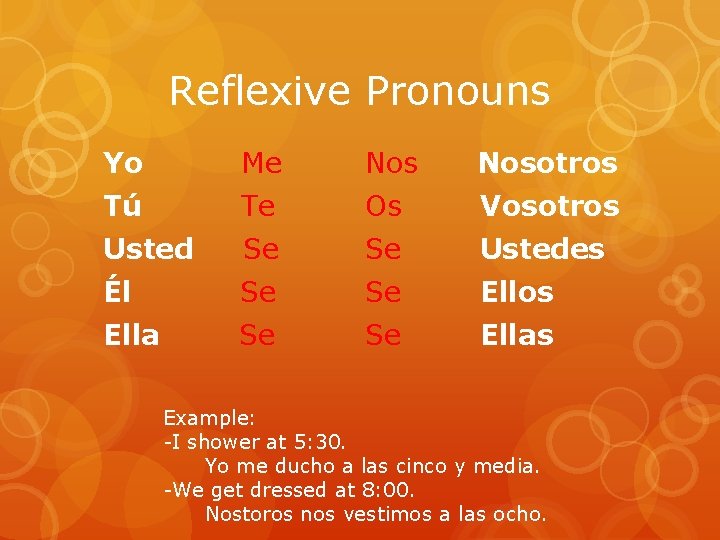
Reflexive Pronouns Yo Me Nosotros Tú Te Os Vosotros Usted Se Se Ustedes Él Se Se Ellos Ella Se Se Ellas Example: -I shower at 5: 30. Yo me ducho a las cinco y media. -We get dressed at 8: 00. Nostoros nos vestimos a las ocho.
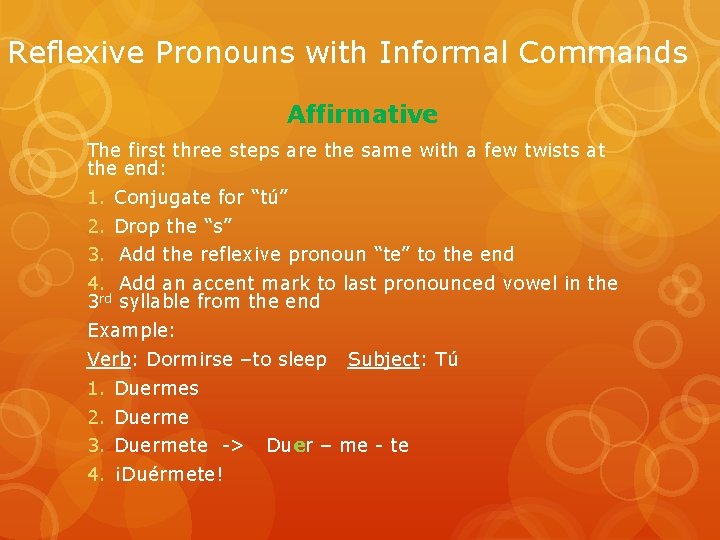
Reflexive Pronouns with Informal Commands Affirmative The first three steps are the same with a few twists at the end: 1. Conjugate for “tú” 2. Drop the “s” 3. Add the reflexive pronoun “te” to the end 4. Add an accent mark to last pronounced vowel in the 3 rd syllable from the end Example: Verb: Dormirse –to sleep Subject: Tú 1. Duermes 2. Duerme 3. Duermete -> Duer – me - te 4. ¡Duérmete!
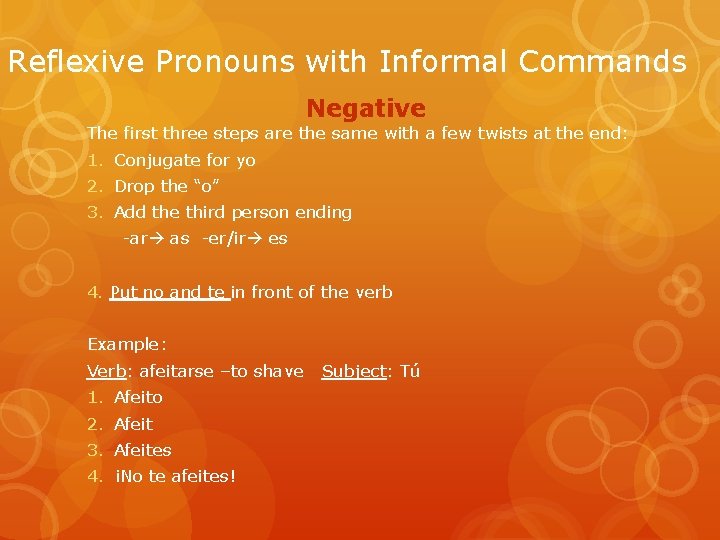
Reflexive Pronouns with Informal Commands Negative The first three steps are the same with a few twists at the end: 1. Conjugate for yo 2. Drop the “o” 3. Add the third person ending -ar as -er/ir es 4. Put no and te in front of the verb Example: Verb: afeitarse –to shave 1. Afeito 2. Afeit 3. Afeites 4. ¡No te afeites! Subject: Tú
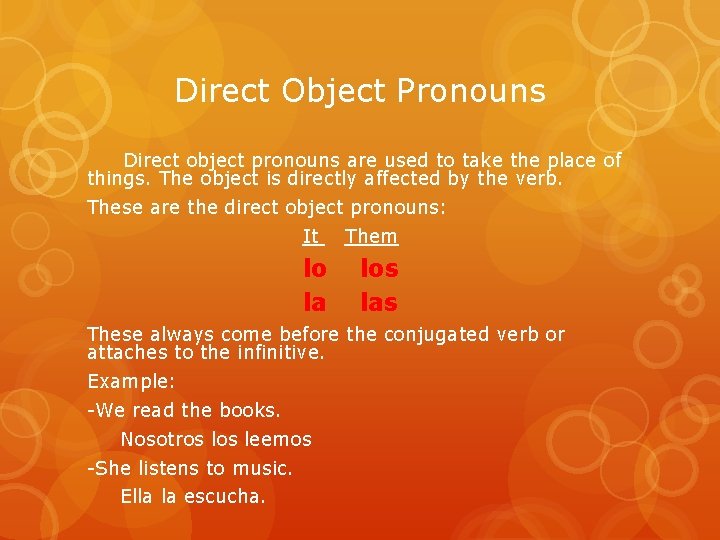
Direct Object Pronouns Direct object pronouns are used to take the place of things. The object is directly affected by the verb. These are the direct object pronouns: It lo la Them los las These always come before the conjugated verb or attaches to the infinitive. Example: -We read the books. Nosotros leemos -She listens to music. Ella la escucha.
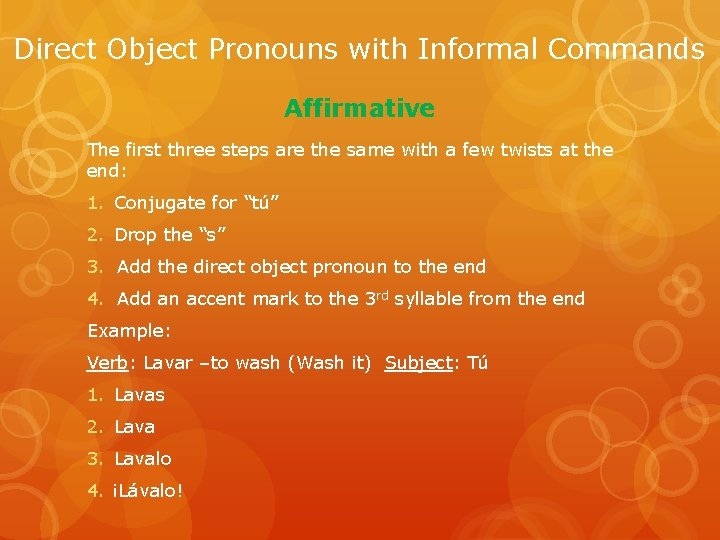
Direct Object Pronouns with Informal Commands Affirmative The first three steps are the same with a few twists at the end: 1. Conjugate for “tú” 2. Drop the “s” 3. Add the direct object pronoun to the end 4. Add an accent mark to the 3 rd syllable from the end Example: Verb: Lavar –to wash (Wash it) Subject: Tú 1. Lavas 2. Lava 3. Lavalo 4. ¡Lávalo!
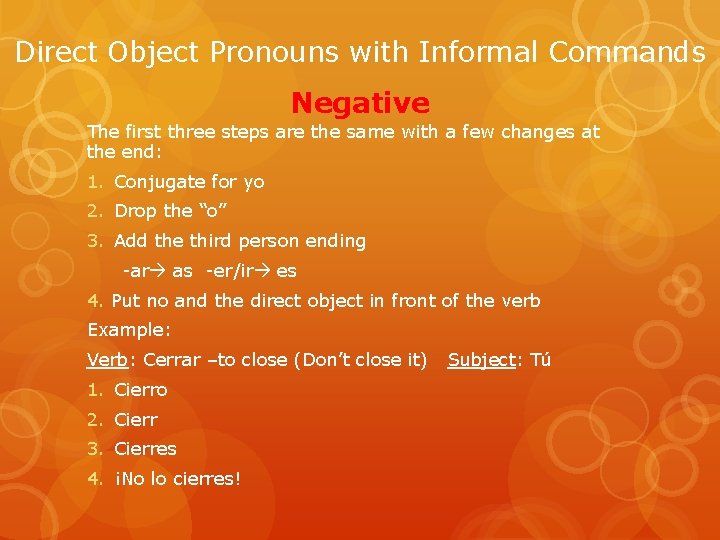
Direct Object Pronouns with Informal Commands Negative The first three steps are the same with a few changes at the end: 1. Conjugate for yo 2. Drop the “o” 3. Add the third person ending -ar as -er/ir es 4. Put no and the direct object in front of the verb Example: Verb: Cerrar –to close (Don’t close it) 1. Cierro 2. Cierr 3. Cierres 4. ¡No lo cierres! Subject: Tú
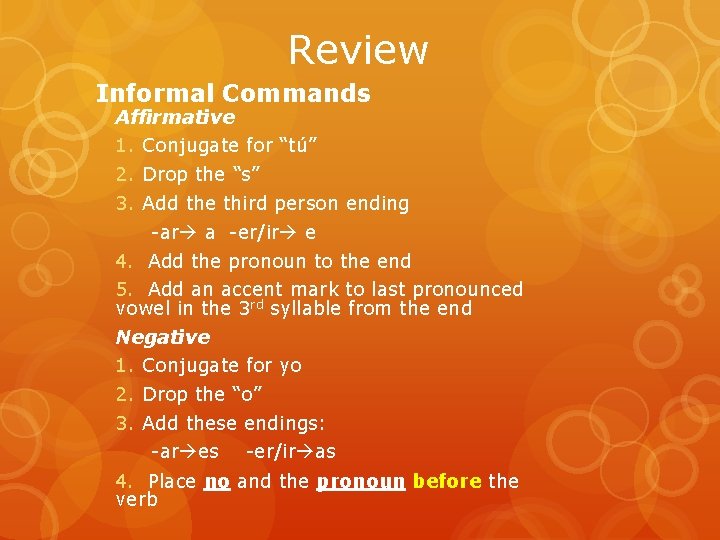
Review Informal Commands Affirmative 1. Conjugate for “tú” 2. Drop the “s” 3. Add the third person ending -ar a -er/ir e 4. Add the pronoun to the end 5. Add an accent mark to last pronounced vowel in the 3 rd syllable from the end Negative 1. Conjugate for yo 2. Drop the “o” 3. Add these endings: -ar es -er/ir as 4. Place no and the pronoun before the verb
Quiz: Use direct objects or reflexive pronouns with commands to write sentences.
1. Tell your best friend to brush their teeth. (cepillarse los dientes) ¡Cepíllate los dientes!
2. Tell your brother to wash the dishes. (lavar los platos) ¡Lávalos!
3. Tell your friend not to sleep in class. (dormirse en clase) ¡No te duermas en clase!
4. Tell your friend to sit down. (sentarse) ¡Siéntate!
5. Tell you friend not to choose the color. (escoger el color) ¡No lo escojas!

El fin
- Slides: 20