
Spanish Colonial System 18 th Century In the
- Slides: 9
Spanish Colonial System 18 th Century
• In the 18 th century, Spain’s colonies remained an important part of the Atlantic economy – Silver mining recovered in Mexico and Peru (Pitosi mines) – Quadrupled between 1700 and 1800 – Accounted for ½ the world’s supply of silver • Primary purpose – supply Spain with New World precious metals • Both politically and economically rigid and monopolistic
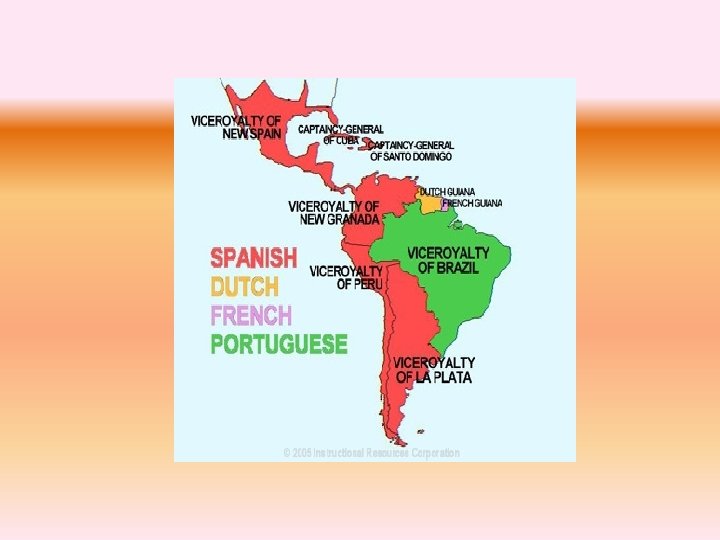
Colonial Government • Virtually ALL power flowed from the top • Appointed Viceroys ruled as chief executives – Viceroys appointed “audiencias” (judicial councils) – All were “peninsulares”: born in Spain, not the colonials (creoles) – HUGE system of patronage
Trade Regulation • Complicated system of trade benefitted the crown • Trade only from licenced ports both in Spain and in America • Commercial vessels “flota” carried goods to America and silver and gold back to Spain • Piracy a big issue • Monopoly on all trade • Inter-America trade not allowed
Colonial Reform Under the Spanish Bourbon Monarchs • The Spanish empire recovered under the reign of Philip V (Louis XIV’s grandson) – It’s navy became the 3 rd most powerful in the world (behind Britain and France) • After the War of Spanish Succession Spain improved its control over the empire – Enlightened despotism of Charles III expanded economic and administrative reforms
Social System • Peninsulares – government and military autholrities • Creoles—Spaniards born in Latin America—came to rival the power of Spanish authorities – Strove to recreate a European-style aristocracy in Latin America – Some were wealthy class merchants who benefited from smuggling activities – Indians were shifted from forced labor to debt peonage on owners’ lands – About 20% of the American population
• Mestizos were children born to Spanish fathers and Indian mothers – Eventually represented about 30% of the population • Amerindian population constituted about 70% – Land owners believed Amerindians should do the hard labor in the countryside • Black slavery was main source of labor in the sugar plantations of Cuba and Puerto Rico
Portuguese Brazil • Sugar plantations in Brazil required massive numbers of slaves • By early 19 th century, half of Brazil’s population was of African descent • The Portuguese, Indian and African populations in Brazil intermixed socially to a greater degree than in the Spanish empire, resulting in a multi-color population.