
Spanish American War 1898 Spanish American War Questions
- Slides: 21
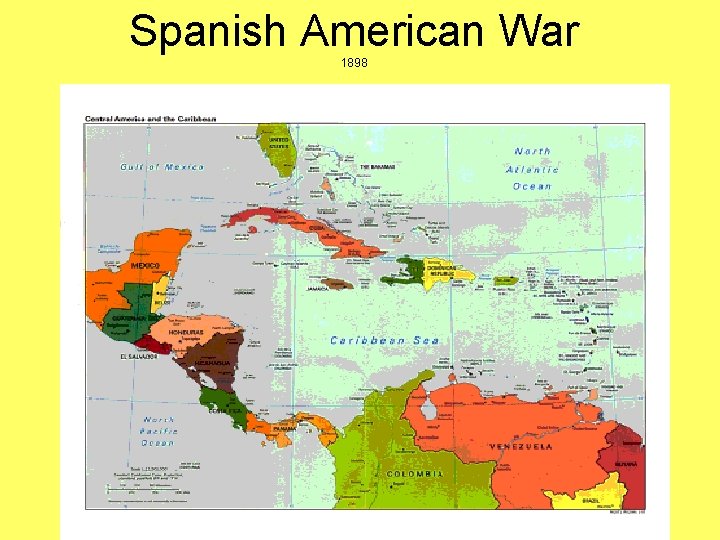
Spanish American War 1898
Spanish American War Questions 1. • • • 2. 3. 4. 5. 6. 7. What led to war? http: //www. ushistory. org/us/44 c. asp Spanish treatment of Cubans Harsh: Yellow Journalists Economic interests – markets for American goods Spanish Ambassador Enrique Dupuy de Lome’s Letter: Explosion of the USS Maine: What is yellow journalism and its impact on the Spanish-American war? What is the Teller Amendment? What territories did the US gain control of following the Spanish. American War? What is the Platt Amendment? What did the Supreme Court decide in the “Insular Cases”? Why did America promote expansionism?
Spanish American War Resources • Overview of War: http: //www. ushistory. org/us/44 c. asp VIDEOS • APUSH Lecture on You Tube: http: //www. youtube. com/watch? v=iv 10 o. Yo. Zi. MQ • Start of Spanish American War – Explosion of the USS Maine: https: //www. schooltube. com/video/102 a 16609608689 b 8 bcc/The%20 Spanish%20 American%20 War • Overview of Expansionist US in the Spanish American War: http: //www. youtube. com/watch? v=IU 5 l 4 y. QCp. MM
Crisis over Cuba Spain v Cuba • 1895 Cubans revolted against Spanish rule in Cuba • Spanish authorities brutally attempted to suppress the rebellion – Cuban Leader of revolt was Jose Marti • 1896, Spain sent "The Butcher“(General Weyler) to Cuba to prevent the insurrections – Weyler built concentration camps - imprisoned a large portion of the population
Yellow Journalism http: //www. pbs. org/crucible/frames/_journalism. html • Yellow Journalism: sensationalist newspapers • Public opinion in the U. S. turned against the Spanish because of yellow-journalism and many Americans supported war: – – – William Randolph Hearst: New York Journal Joseph Pulitzer: New York World Both turned Jose Marti into a martyr Both featured daily accounts of Spanish atrocities Americans sympathized with Cuban struggle against Spanish colonizers
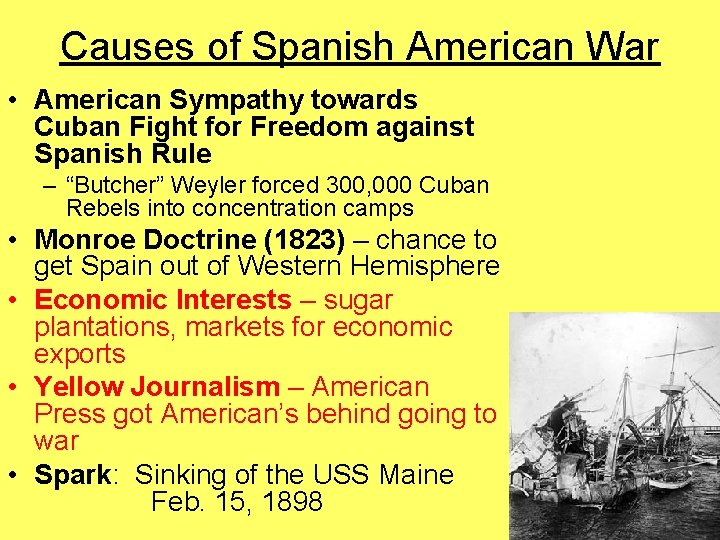
Causes of Spanish American War • American Sympathy towards Cuban Fight for Freedom against Spanish Rule – “Butcher” Weyler forced 300, 000 Cuban Rebels into concentration camps • Monroe Doctrine (1823) – chance to get Spain out of Western Hemisphere • Economic Interests – sugar plantations, markets for economic exports • Yellow Journalism – American Press got American’s behind going to war • Spark: Sinking of the USS Maine Feb. 15, 1898
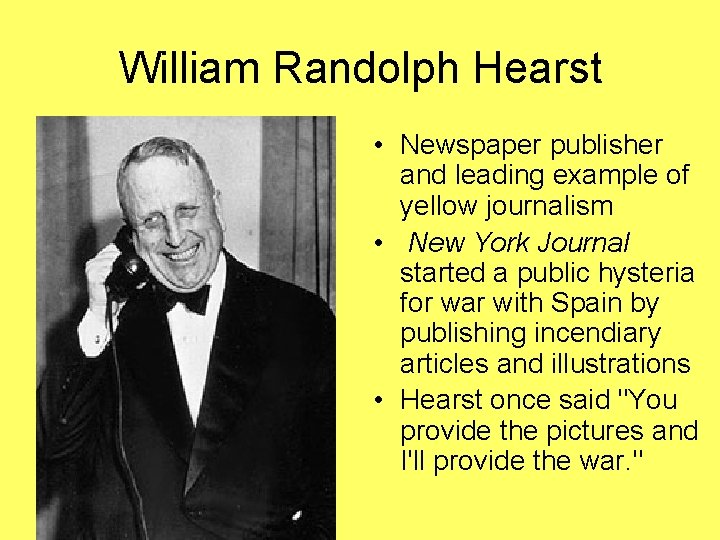
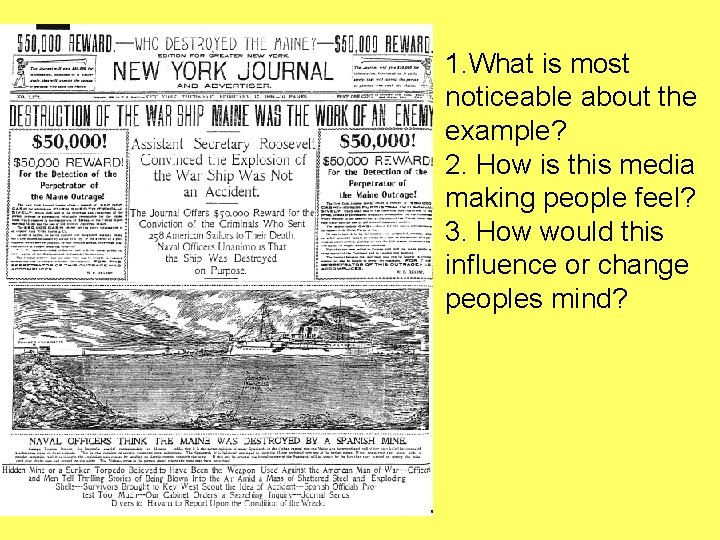
William Randolph Hearst • Newspaper publisher and leading example of yellow journalism • New York Journal started a public hysteria for war with Spain by publishing incendiary articles and illustrations • Hearst once said "You provide the pictures and I'll provide the war. "
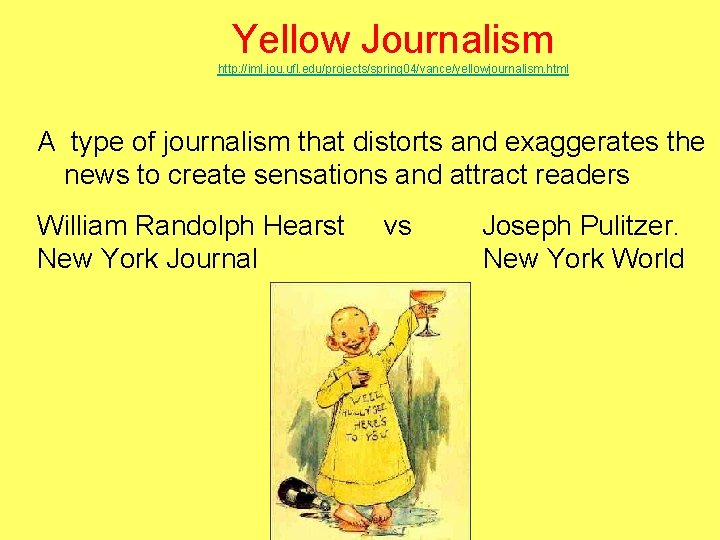
Yellow Journalism http: //iml. jou. ufl. edu/projects/spring 04/vance/yellowjournalism. html A type of journalism that distorts and exaggerates the news to create sensations and attract readers William Randolph Hearst vs Joseph Pulitzer. New York Journal New York World
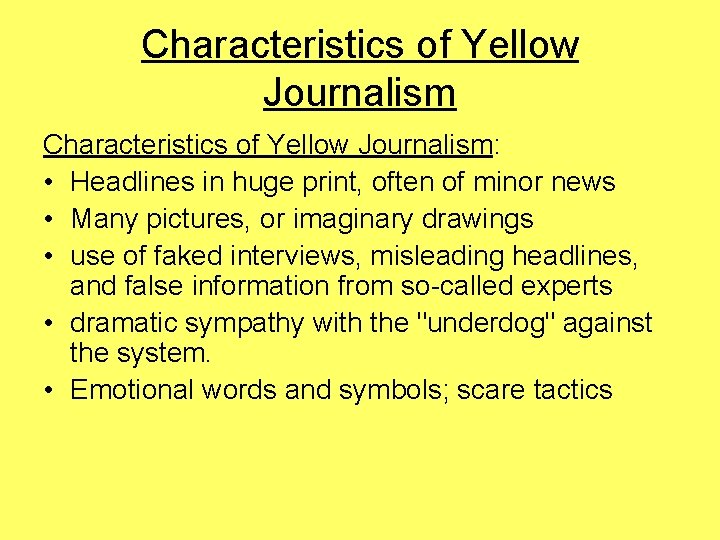
Characteristics of Yellow Journalism: • Headlines in huge print, often of minor news • Many pictures, or imaginary drawings • use of faked interviews, misleading headlines, and false information from so-called experts • dramatic sympathy with the "underdog" against the system. • Emotional words and symbols; scare tactics
1. What is most noticeable about the example? 2. How is this media making people feel? 3. How would this influence or change peoples mind?
Crisis in Cuba • • • US Entangled in War Pres. Mc. Kinley didn’t want to intervene in Cuba He sent the US battleship Maine to Havana to protect the lives and property of Americans in Cuba On Feb. 15, 1898, an explosion on the Maine killed about 266 of its crewmen US Public and Newspapers demanded revenge Giving in to popular pressure, Mc. Kinley asked Congress to declare war on Spain Congress declared war on April 1898
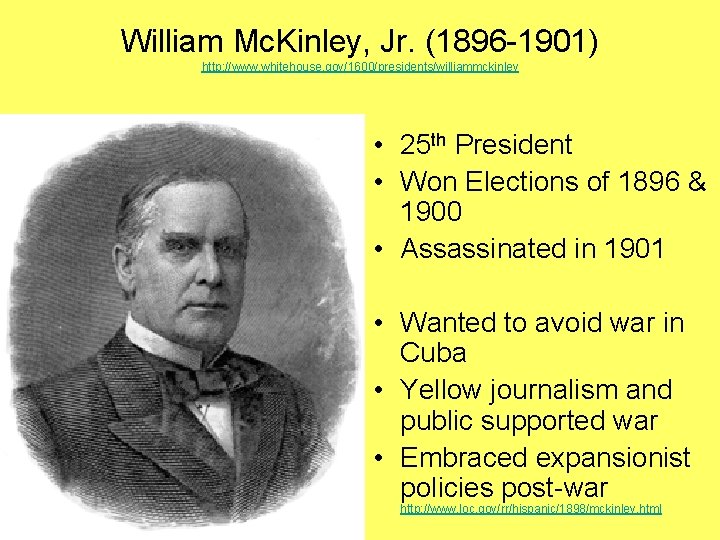
William Mc. Kinley, Jr. (1896 -1901) http: //www. whitehouse. gov/1600/presidents/williammckinley • 25 th President • Won Elections of 1896 & 1900 • Assassinated in 1901 • Wanted to avoid war in Cuba • Yellow journalism and public supported war • Embraced expansionist policies post-war http: //www. loc. gov/rr/hispanic/1898/mckinley. html
Events-Timeline Ø 1895: Cuban nationalists revolt against Spanish rule Ø 1896: Spanish General Weyler (the "Butcher") comes to Cuba. Ø 1897: Spain recalls Weyler Ø Early 1898: USS Maine sent to Cuba Ø February 9, 1898: Hearst publishes Spanish Ambassador, Dupuy du Lome's letter insulting Mc. Kinley. http: //www. pbs. org/crucible/tl 9. html
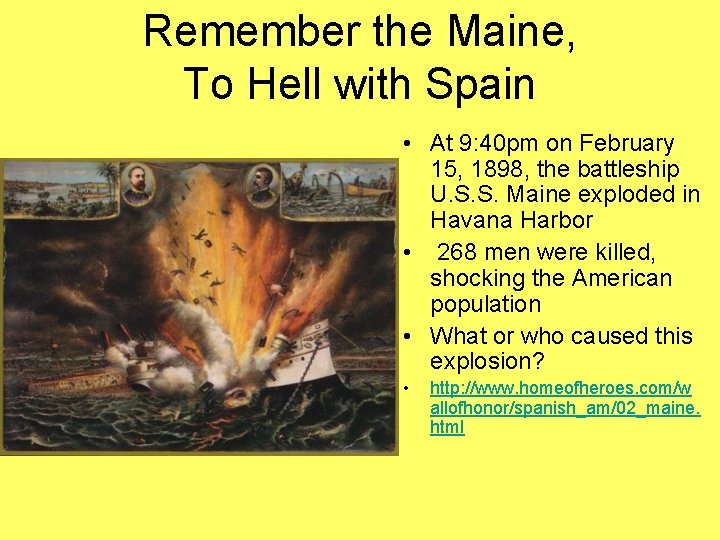
Remember the Maine, To Hell with Spain • At 9: 40 pm on February 15, 1898, the battleship U. S. S. Maine exploded in Havana Harbor • 268 men were killed, shocking the American population • What or who caused this explosion? • http: //www. homeofheroes. com/w allofhonor/spanish_am/02_maine. html
Important Events Ø Feb. 18, 1898: Sinking of the USS Maine -Cuba – 266 US Servicemen are killed – Blamed on a Spanish mine Ø April 1898: Teller Amendment – stated that the U. S. would not annex Cuba; this was to show that the US was interested in Cuban Independence and not colonization http: //www. historyofcuba. com/history/teller. htm Ø May 1, 1898: Admiral Dewey – Surprise attack on the Spanish Fleet in Manila Harbor (Philippines) http: //www. nps. gov/goga/historyculture/spanish-american-war. htm – All Spanish Ships are Sunk Ø Spanish Defeated in Battle of San Juan Hill – T. Roosevelt led the “Rough Riders” to victory http: //www. spanamwar. com/tr 2. htm Ø Dec. 10, 1898: Spain signs Treaty of Paris Ending the War http: //www. pbs. org/wgbh/amex/macarthur/peopleevents/pande. AMEX 87. html
The Spanish-American War, 1898 “Splendid Little War” • The fighting against Spain lasted less than 4 months • Spain fled Cuba in defeat • Teddy Roosevelt’s Rough Riders were famous for their charge of San Juan Hill (national hero) https: //www. youtube. com/watch? v=e. Ql. Cbe. Nw. Kzg&safe=active http: //amhistory. si. edu/militaryhistory/exhibition/flash. html • Video: Video Clip – Background on Teddy Roosevelt and the Rough Riders: http: //classroomclips. org/video/673 • Admiral George Dewey attacked the Spanish fleet in the Philippines • American troops took Manila Bay in August • By July, the Spanish were driven from Cuba • The defeated Spanish: – Recognized Cuba’s independence – Ceded to the United States: • Philippines • Puerto Rico • Guam
Effects of the Spanish American War • US becomes an Imperialist Power • Treaty of Paris signed on December 10, 1898 ended the Spanish- American War • Cuba went free, Guam, Puerto Rico, and the Philippines were ceded to the US, and the US agreed to pay Spain an indemnity of $20 million • Guam, Puerto Rico, and the Philippines become colonies of the US • Cuba gains its independence from Spain, but becomes a US Protectorate – US will “protect” and partially control Cuba
The Spanish-American War, 1898 • Contrary to the Teller Amendment, the U. S. occupied Cuba from 1898 to 1902 • The U. S. withdrew its forces only after Cuba agreed to the conditions set forth in the 1901 Platt Amendment – Authorized the US to intervene militarily in Cuba – It limited Cuba’s sovereignty by: • Reserving to the U. S. the right to intervene in Cuba • The U. S. could maintain a naval base on Cuba (Guantanamo) • Insular Cases - held that the Constitution did not fully apply to the territories acquired by the US during the Spanish American War http: //www. law. virginia. edu/html/news/2007_spr/insular. htm
Critics of Empire • Some Americans were horrified by their nation’s actions in the Spanish-American War • They founded the Anti-Imperialist League – Pointed out that imposing U. S. rule on other peoples by military force violated the principles of human equality and liberty championed in our own Declaration of Independence
Guerrilla War in the Philippines, a continuation of war 1898 -1902 • Pres. Mc. Kinley was persuaded that the U. S. should keep the Philippines by the arguments of: – the expansionists – businessmen to use the islands as a way of penetrating nearby Chinese markets – He wanted to help civilize them • This U. S. decision to dominate and withhold independence from the Philippines, led to a war against Filipino independence fighters led by Emilio Aquinaldo
Guerrilla War in the Philippines, 1898 -1902 • To crush the guerrilla resistance of the Filipinos, the U. S. used brutal tactics • The U. S. lost many more soldiers than it had in the Spanish-American War • In 1946, the U. S. granted the Philippines their independence