
Space Weather Training 2020 Space Weather Models running
- Slides: 33
Space Weather Training 2020 Space Weather Models running in real-time or forecasting mode Yihua Zheng 1
Space Weather Training 2020 About WSA+ENLIL
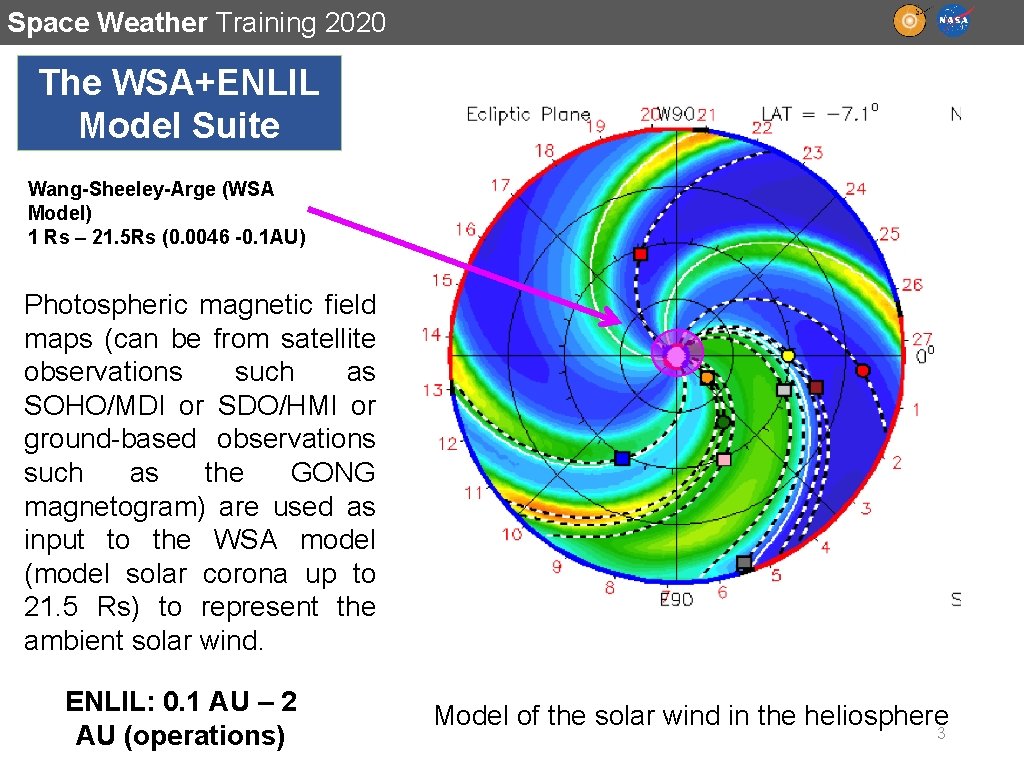
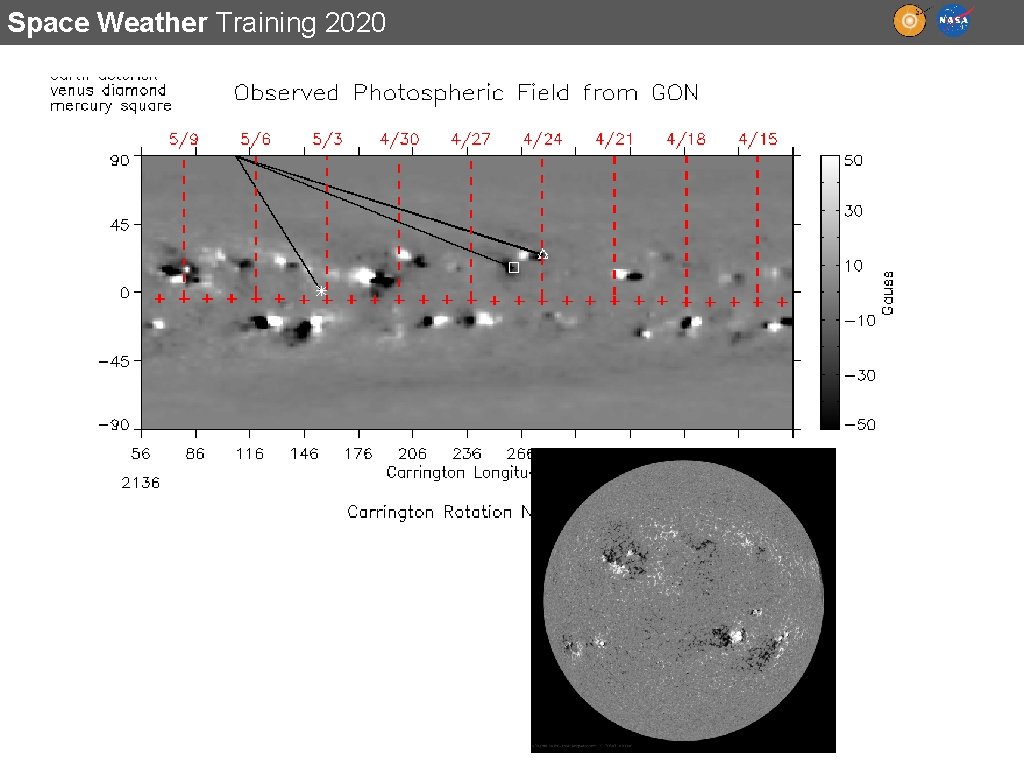
Space Weather Training 2020 The WSA+ENLIL Model Suite Wang-Sheeley-Arge (WSA Model) 1 Rs – 21. 5 Rs (0. 0046 -0. 1 AU) Photospheric magnetic field maps (can be from satellite observations such as SOHO/MDI or SDO/HMI or ground-based observations such as the GONG magnetogram) are used as input to the WSA model (model solar corona up to 21. 5 Rs) to represent the ambient solar wind. ENLIL: 0. 1 AU – 2 AU (operations) Model of the solar wind in the heliosphere 3
Space Weather Training 2020 Inputs
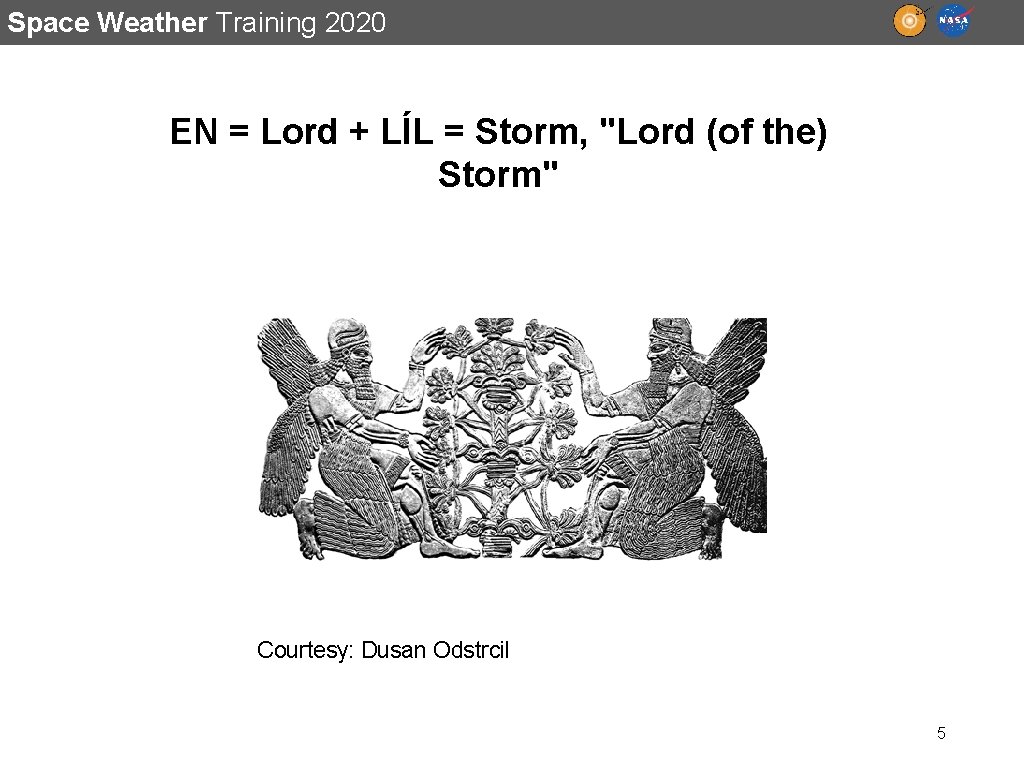
Space Weather Training 2020 EN = Lord + LÍL = Storm, "Lord (of the) Storm" Courtesy: Dusan Odstrcil 5
Space Weather Training 2020 WSA+ENLIL: capable of modeling the solar wind for both ‘fair’ weather and ‘storm’ conditions 6
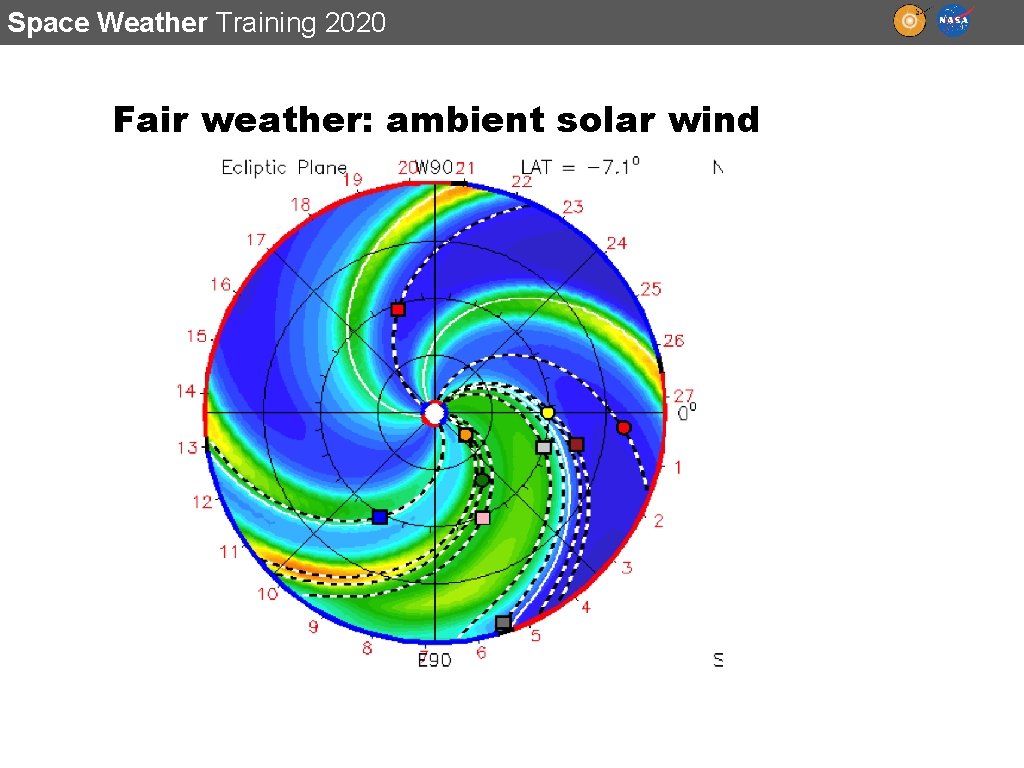
Space Weather Training 2020 Fair weather: ambient solar wind
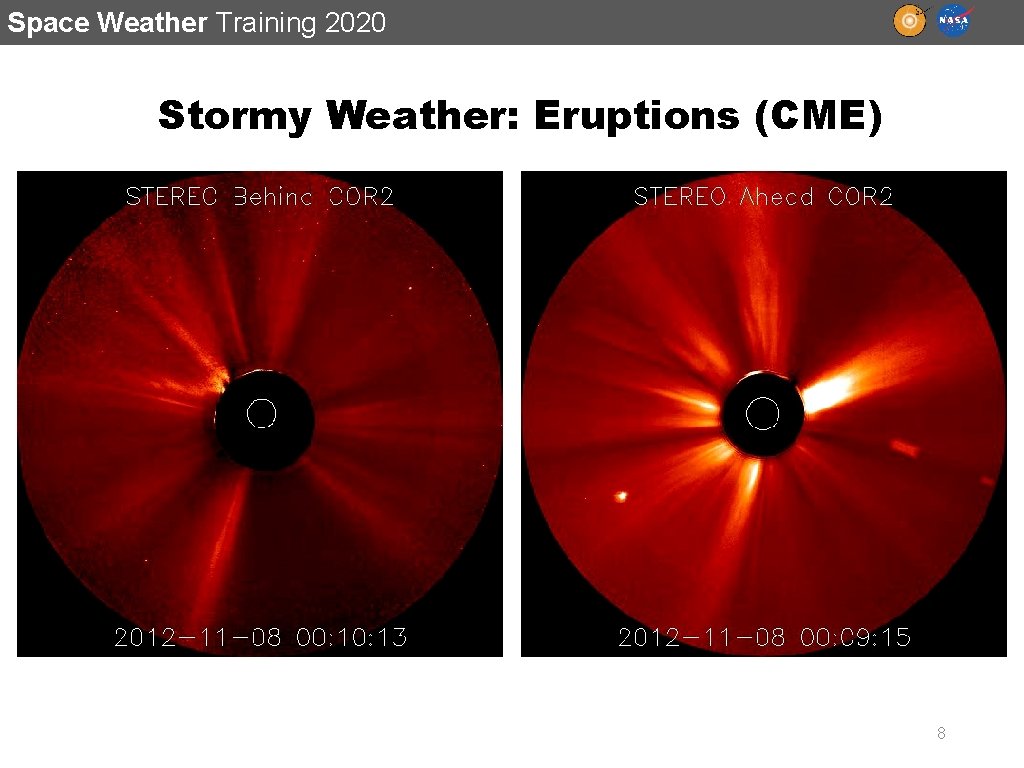
Space Weather Training 2020 Stormy Weather: Eruptions (CME) 8
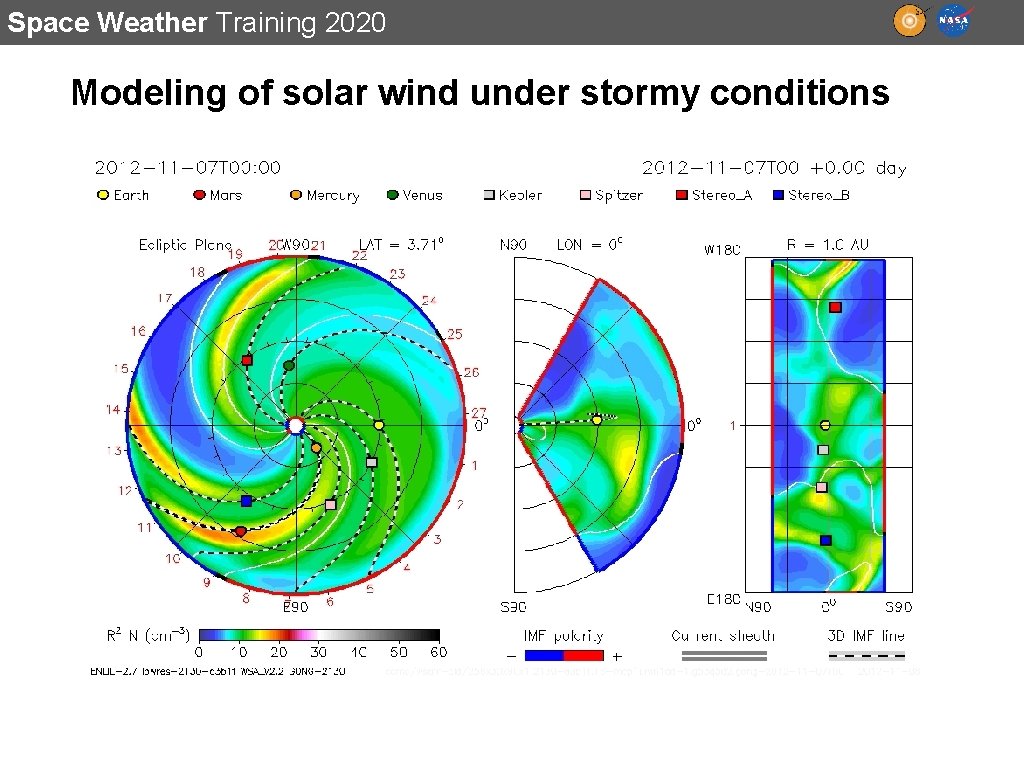
Space Weather Training 2020 Modeling of solar wind under stormy conditions
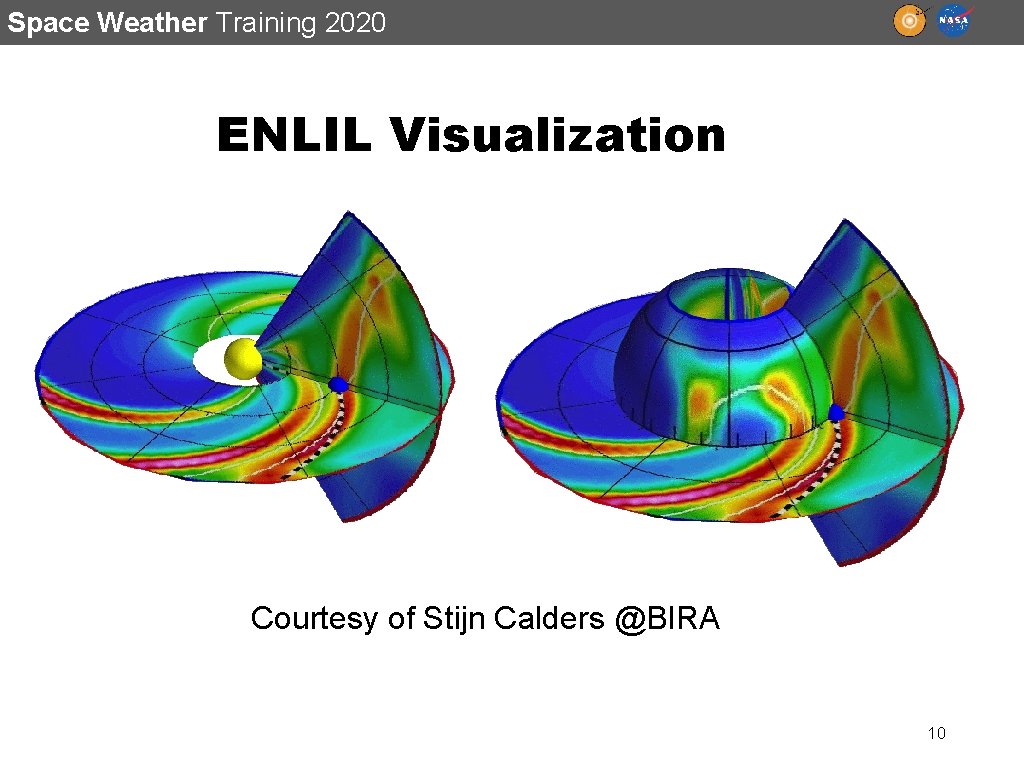
Space Weather Training 2020 ENLIL Visualization Courtesy of Stijn Calders @BIRA 10
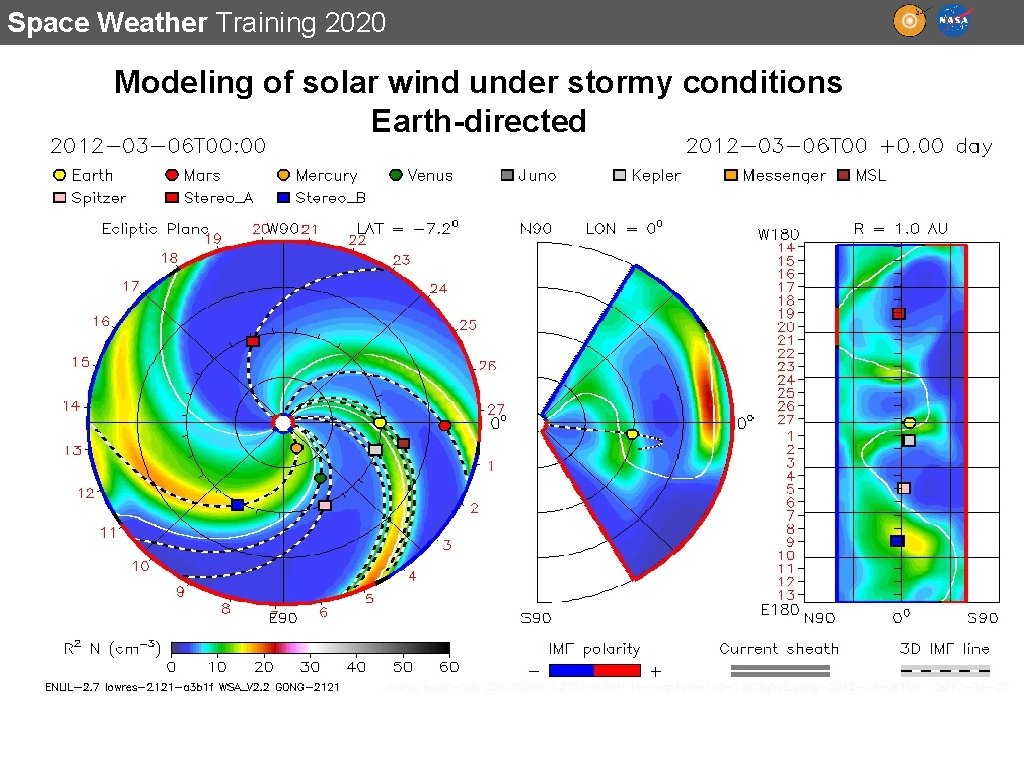
Space Weather Training 2020 Modeling of solar wind under stormy conditions Earth-directed
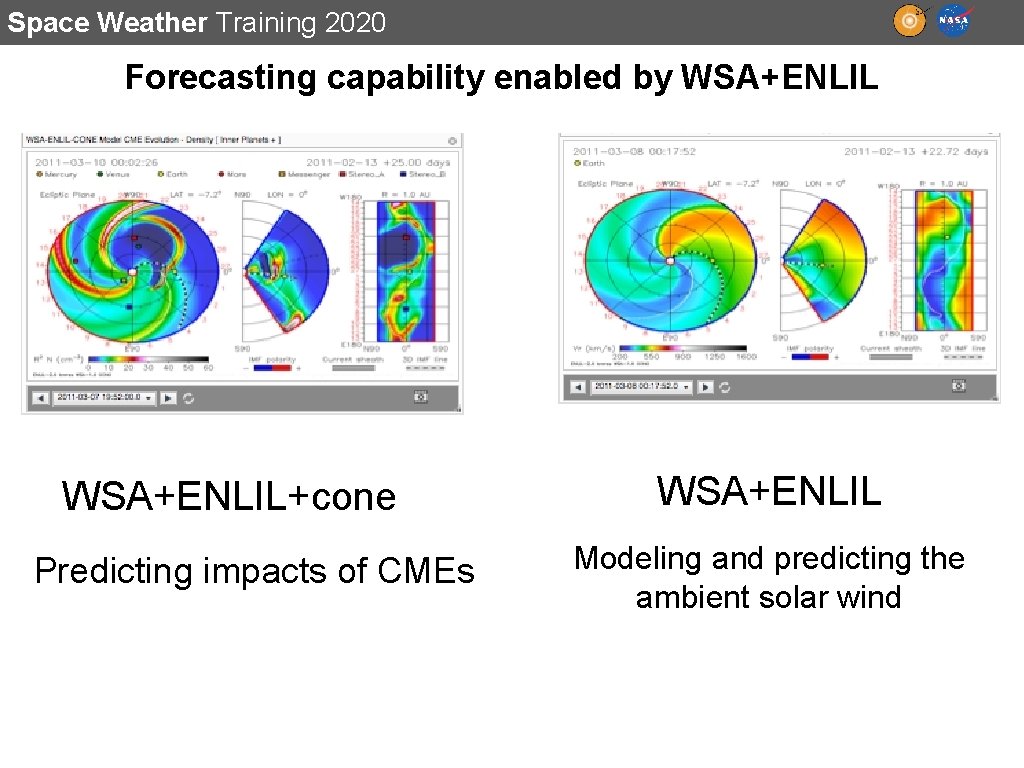
Space Weather Training 2020 Forecasting capability enabled by WSA+ENLIL+cone Predicting impacts of CMEs WSA+ENLIL Modeling and predicting the ambient solar wind
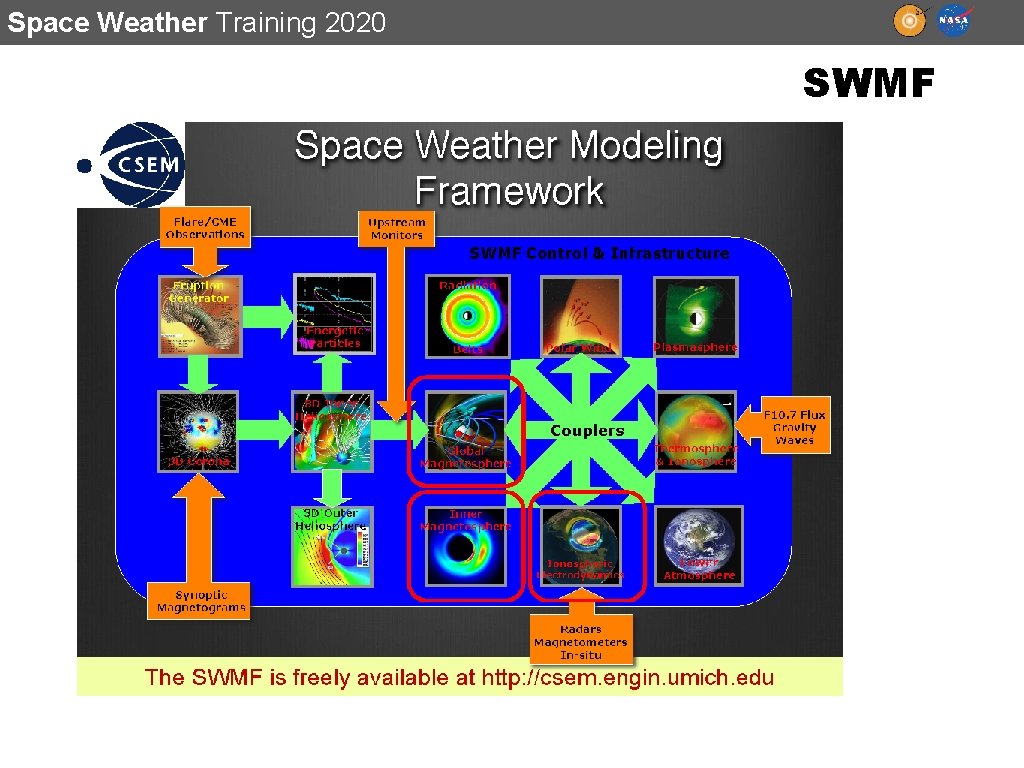
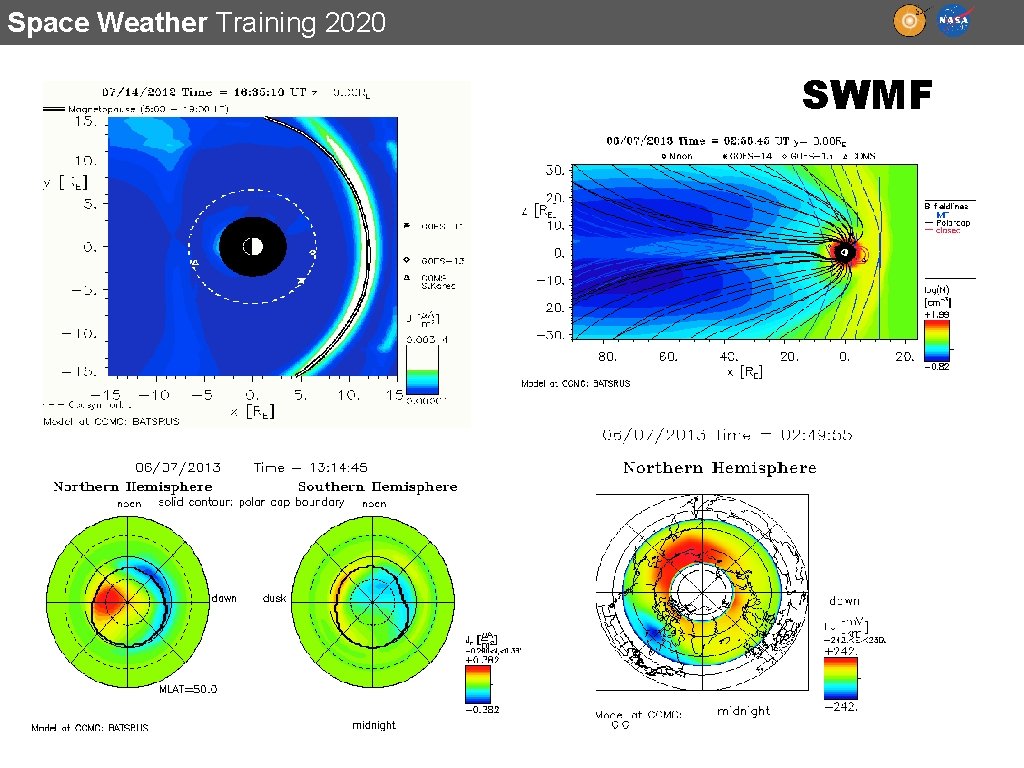
Space Weather Training 2020 SWMF
Space Weather Training 2020 SWMF
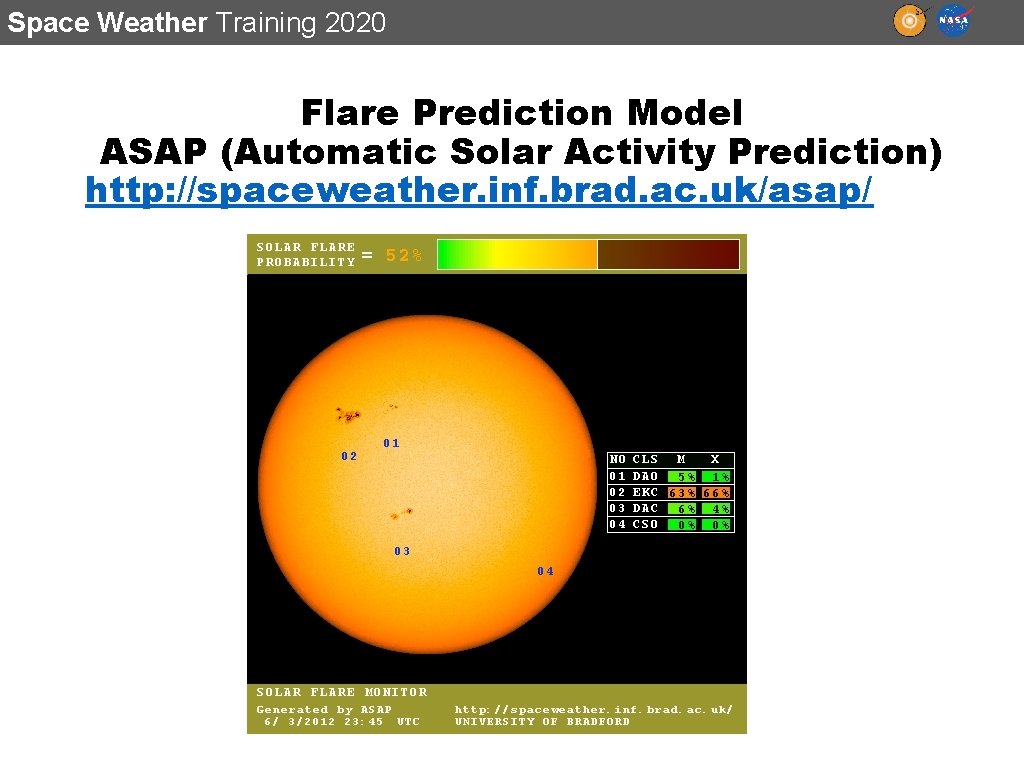
Space Weather Training 2020 Flare Prediction Model ASAP (Automatic Solar Activity Prediction) http: //spaceweather. inf. brad. ac. uk/asap/
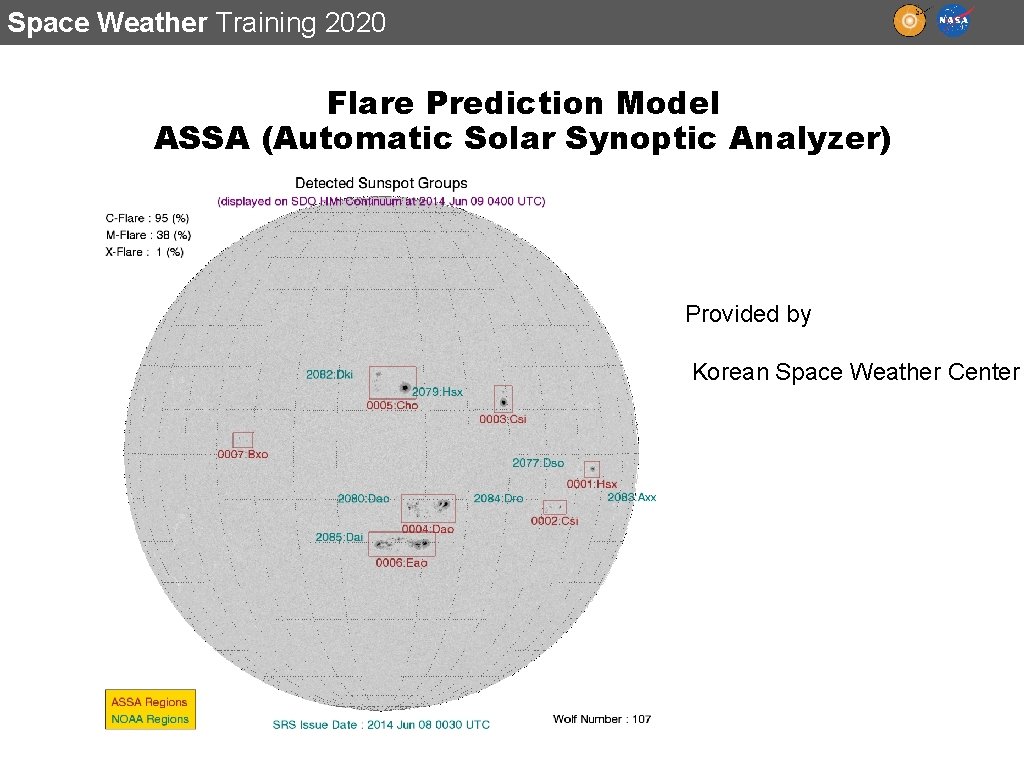
Space Weather Training 2020 Flare Prediction Model ASSA (Automatic Solar Synoptic Analyzer) Provided by Korean Space Weather Center
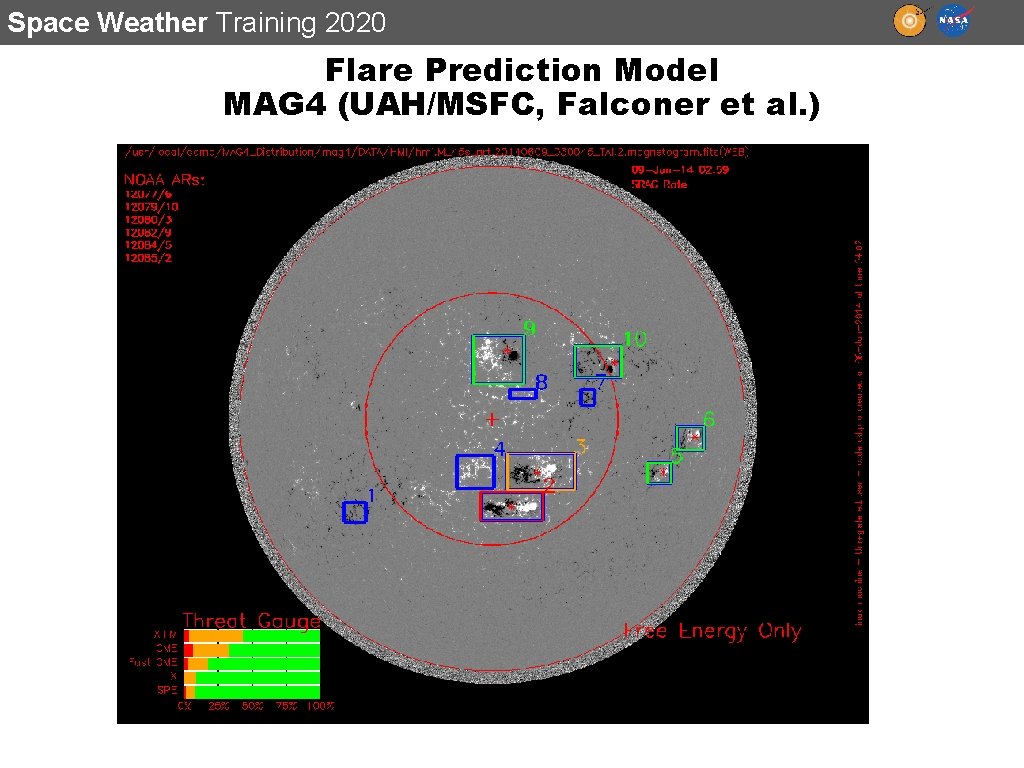
Space Weather Training 2020 Flare Prediction Model MAG 4 (UAH/MSFC, Falconer et al. )
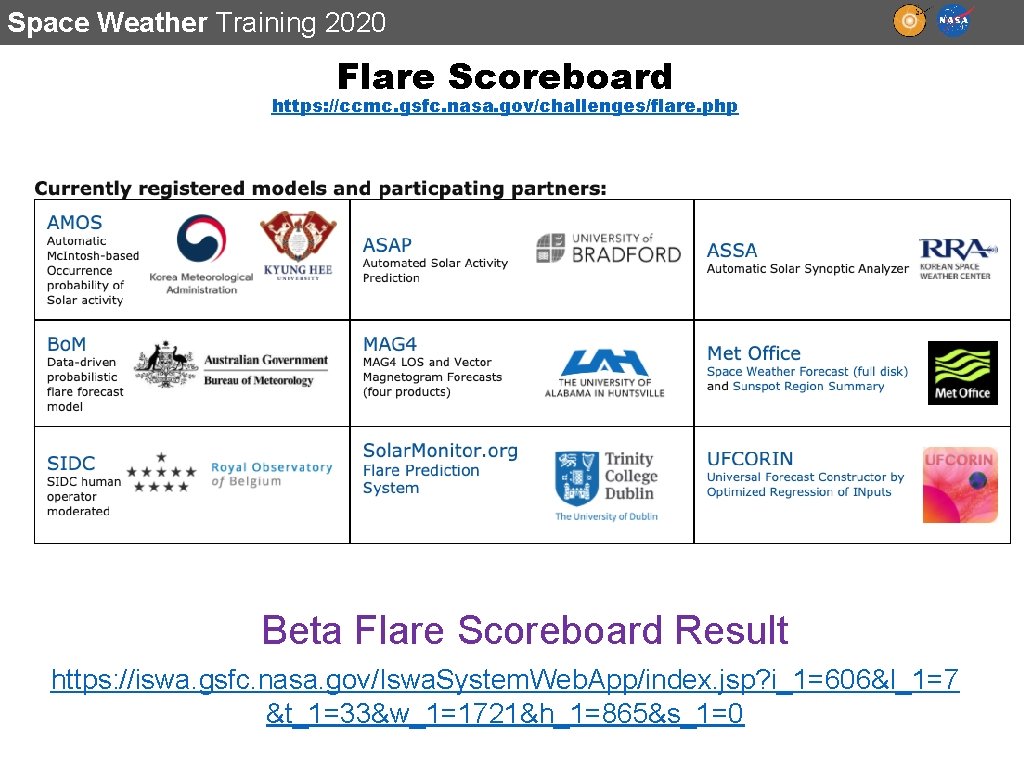
Space Weather Training 2020 Flare Scoreboard https: //ccmc. gsfc. nasa. gov/challenges/flare. php Beta Flare Scoreboard Result https: //iswa. gsfc. nasa. gov/Iswa. System. Web. App/index. jsp? i_1=606&l_1=7 &t_1=33&w_1=1721&h_1=865&s_1=0
Space Weather Training 2020 SEP prediction REle. ASE (Relativistic electron Alert System for Exploration) Proton flux forecast model based on electron measurements by SOHO/COSTEP developed by Arik Posner Reference: Posner, A. (2007), Up to 1 -hour forecasting of radiation hazards from solar energetic ion events with relativistic electrons, Space Weather, 5, S 05001, doi: 10. 1029/2006 SW 000268. HESPERIA_REle. ASE (v 20190101)
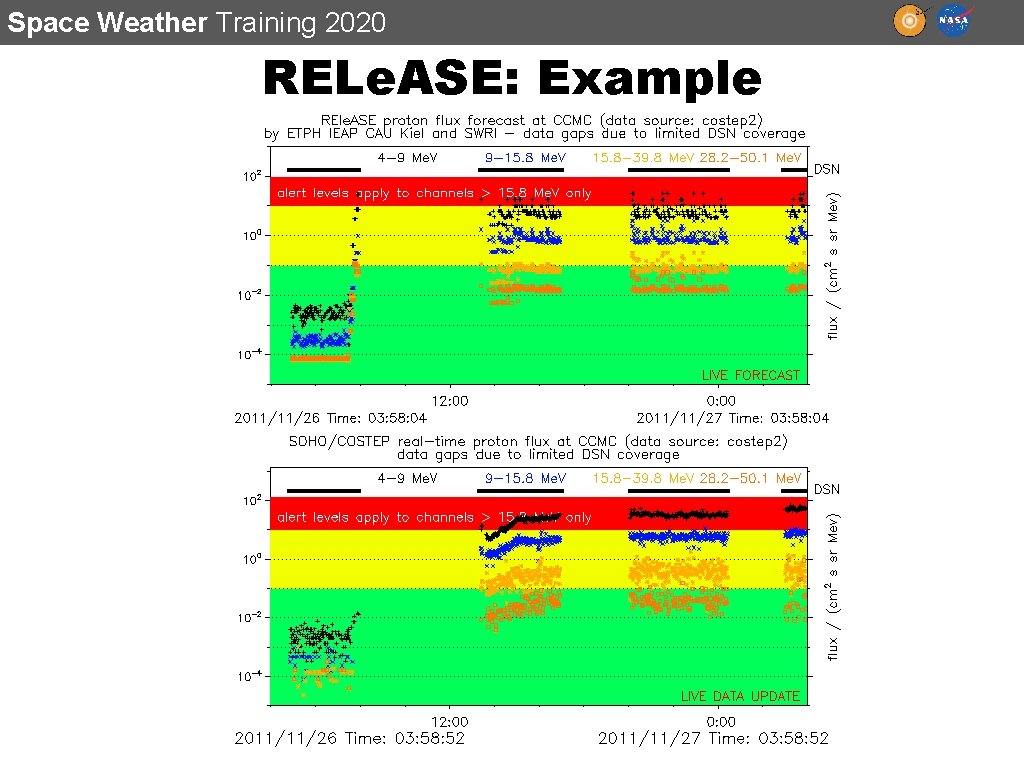
Space Weather Training 2020 RELe. ASE: Example
Space Weather Training 2020 SEP Prediction UMA Proton Flux Forecast Núñez, M. (2011), Predicting solar energetic proton events (E > 10 Me. V), Space Weather, 9, S 07003, doi 10. 1029/2010 SW 000640.
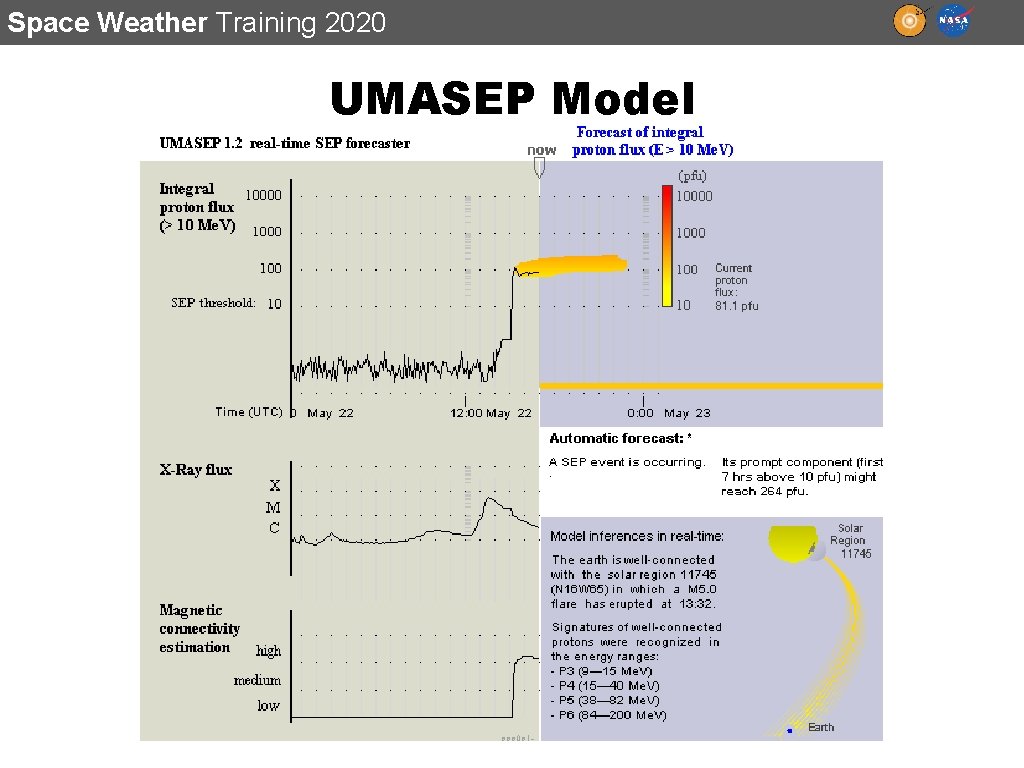
Space Weather Training 2020 UMASEP Model
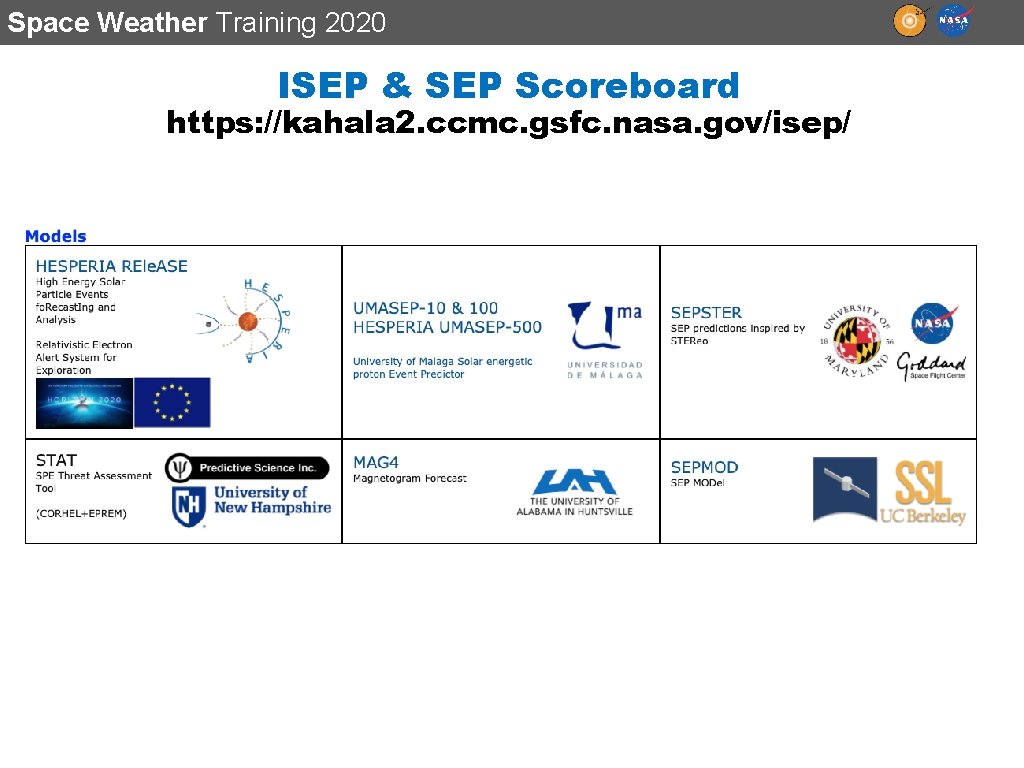
Space Weather Training 2020 ISEP & SEP Scoreboard https: //kahala 2. ccmc. gsfc. nasa. gov/isep/
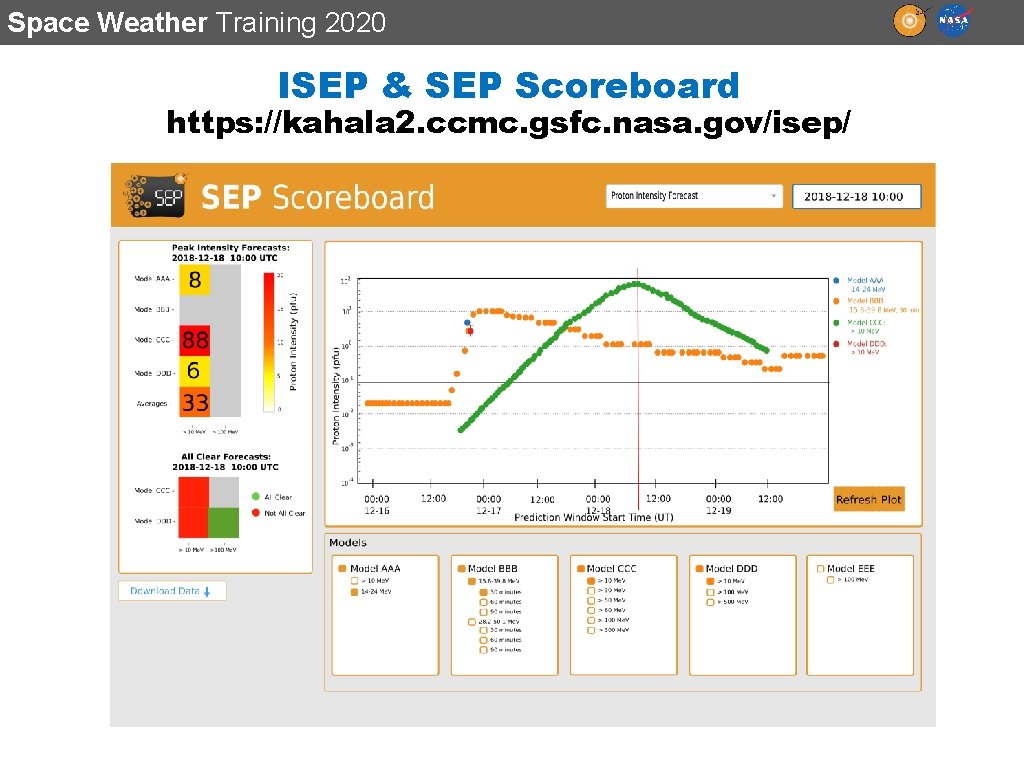
Space Weather Training 2020 ISEP & SEP Scoreboard https: //kahala 2. ccmc. gsfc. nasa. gov/isep/
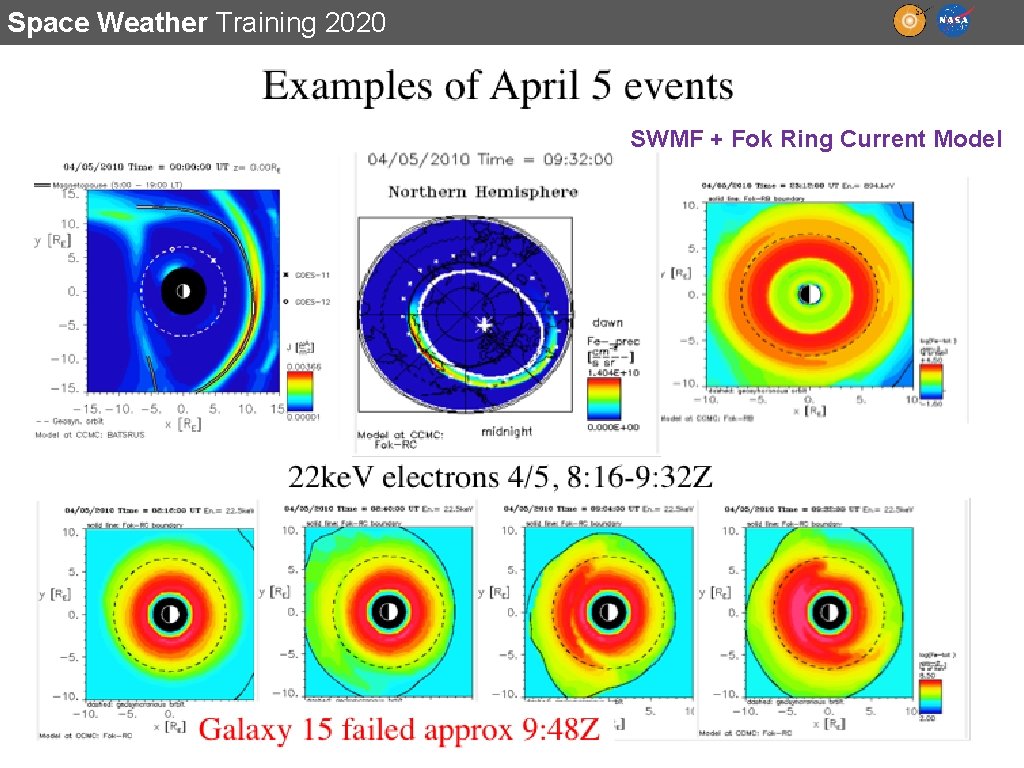
Space Weather Training 2020 SWMF + Fok Ring Current Model
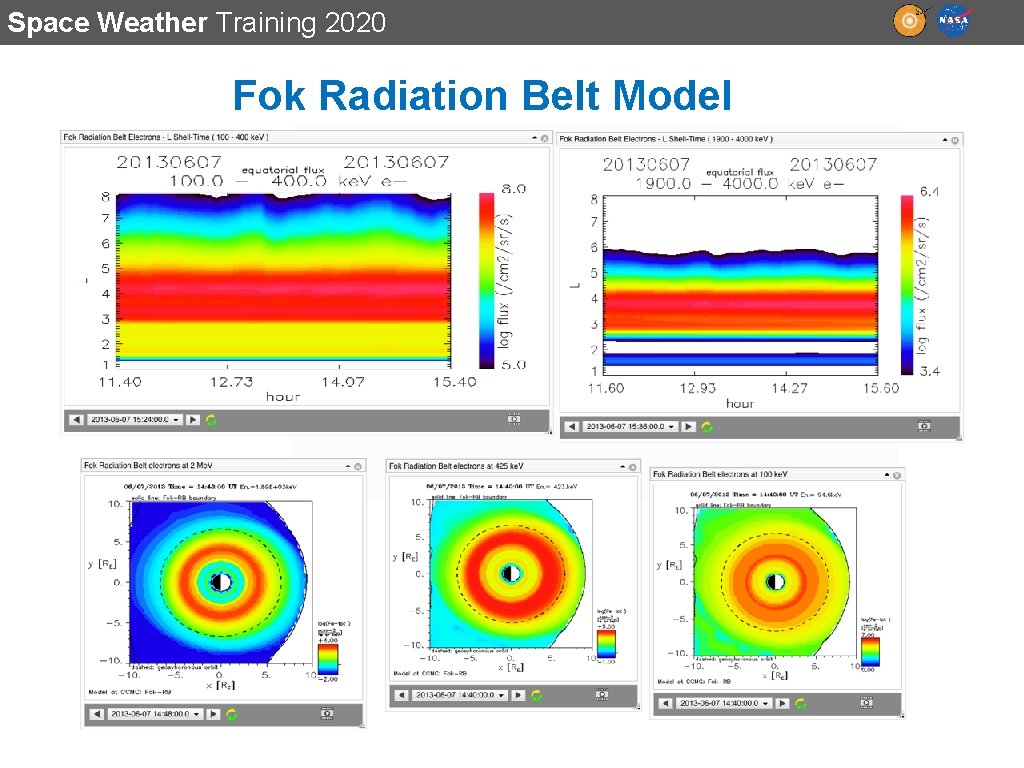
Space Weather Training 2020 Fok Radiation Belt Model
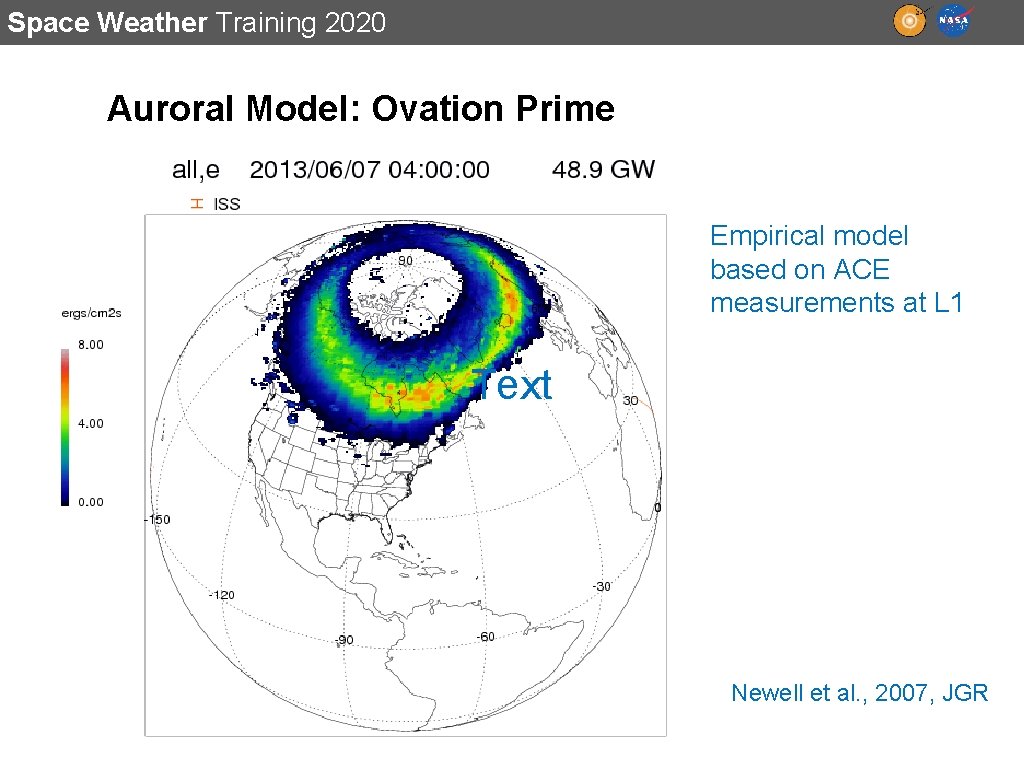
Space Weather Training 2020 Auroral Model: Ovation Prime Empirical model based on ACE measurements at L 1 Text Newell et al. , 2007, JGR
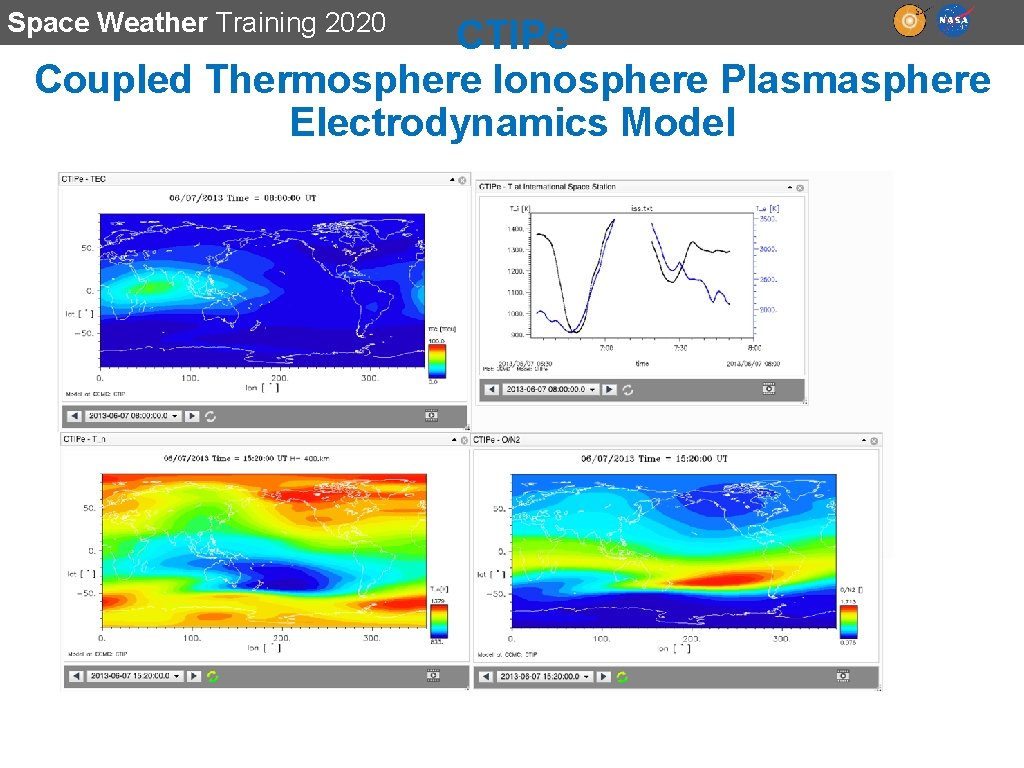
Space Weather Training 2020 CTIPe Coupled Thermosphere Ionosphere Plasmasphere Electrodynamics Model
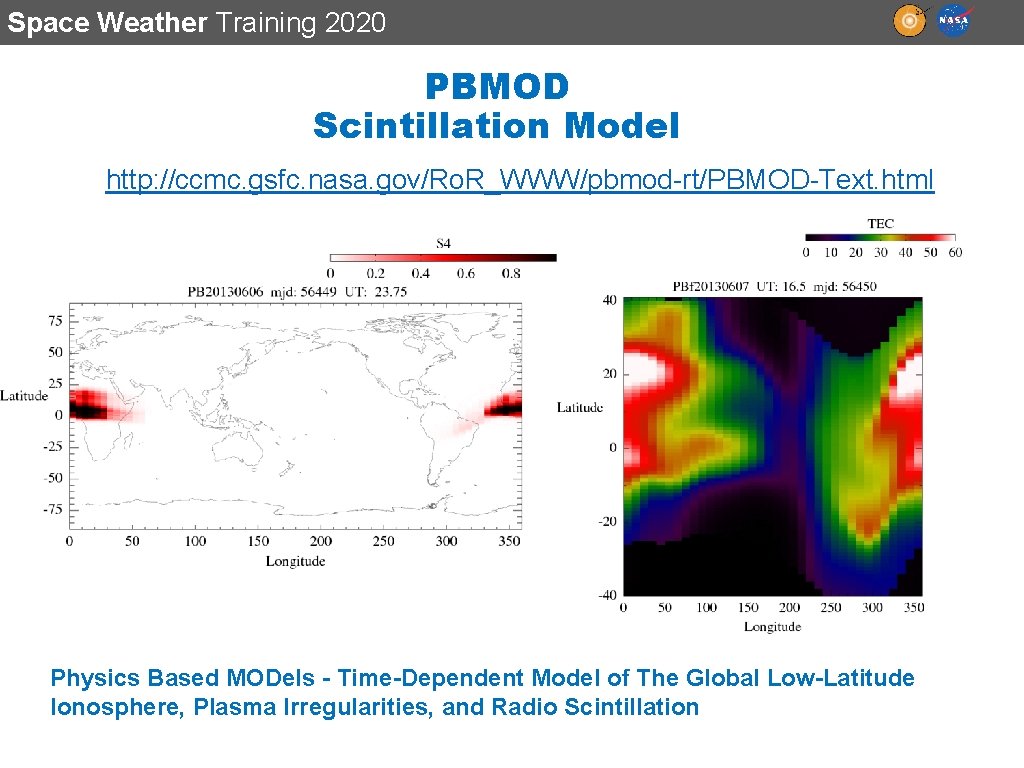
Space Weather Training 2020 PBMOD Scintillation Model http: //ccmc. gsfc. nasa. gov/Ro. R_WWW/pbmod-rt/PBMOD-Text. html Physics Based MODels - Time-Dependent Model of The Global Low-Latitude Ionosphere, Plasma Irregularities, and Radio Scintillation
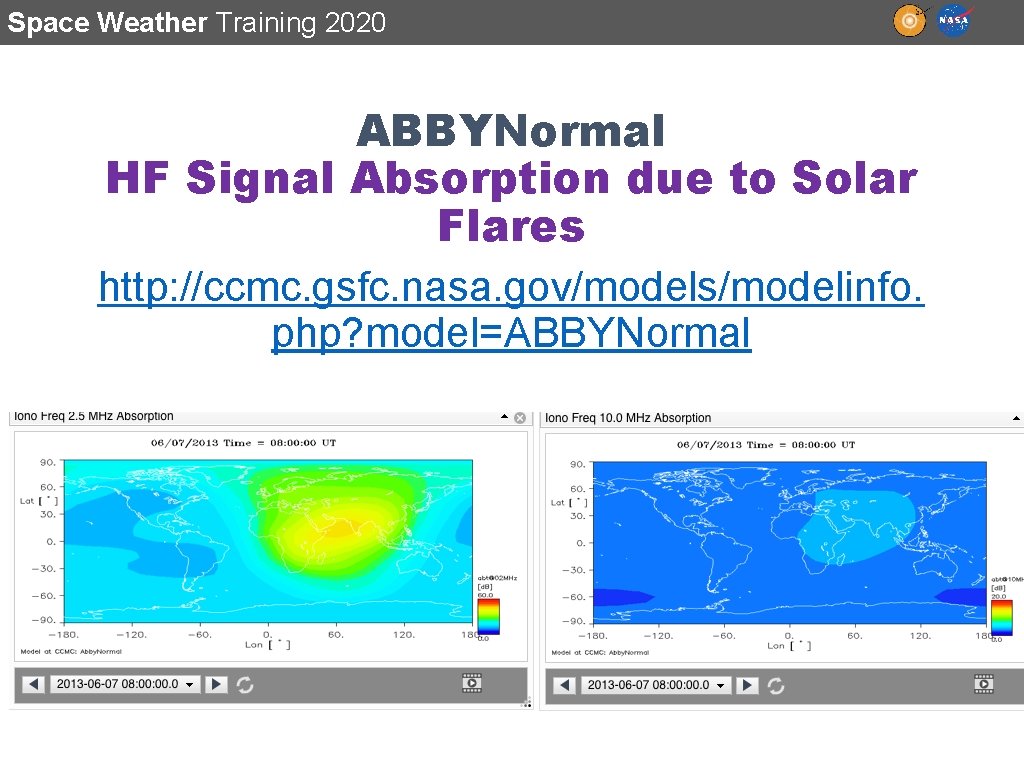
Space Weather Training 2020 ABBYNormal HF Signal Absorption due to Solar Flares http: //ccmc. gsfc. nasa. gov/models/modelinfo. php? model=ABBYNormal
Space Weather Training 2020 Predicted Kp, Dst Kp based on Newell et al. Formula Dst from SWMF Dst from WINDMI http: //ccmc. gsfc. nasa. gov/models/modelinfo. p hp? model=WINDMI
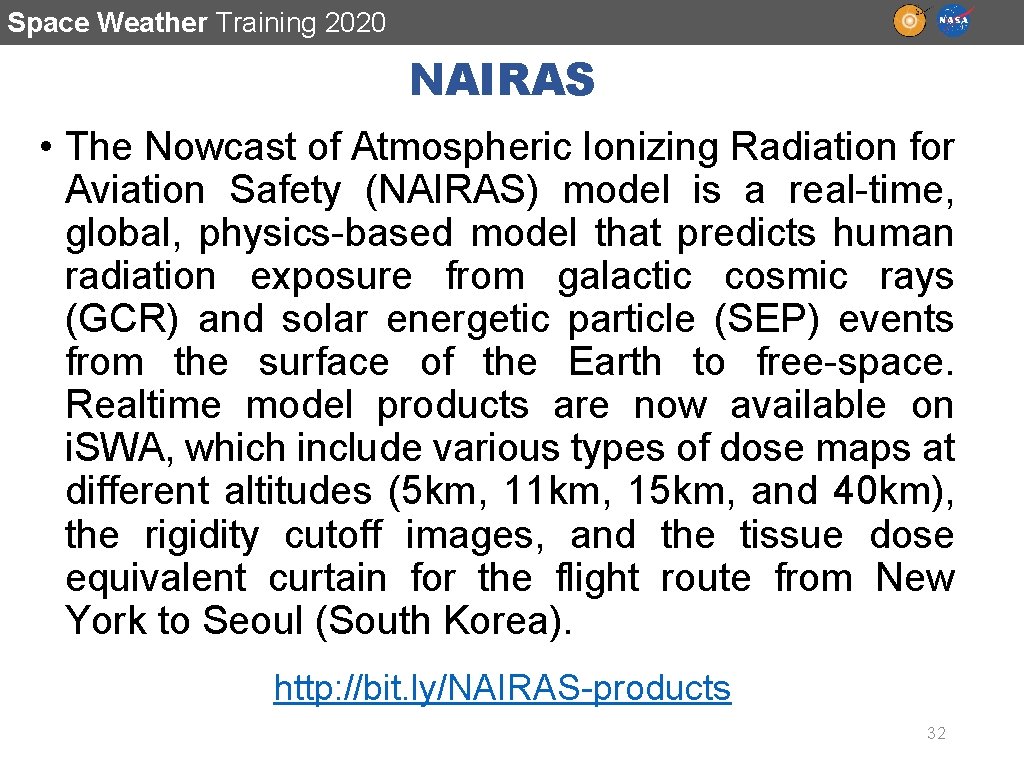
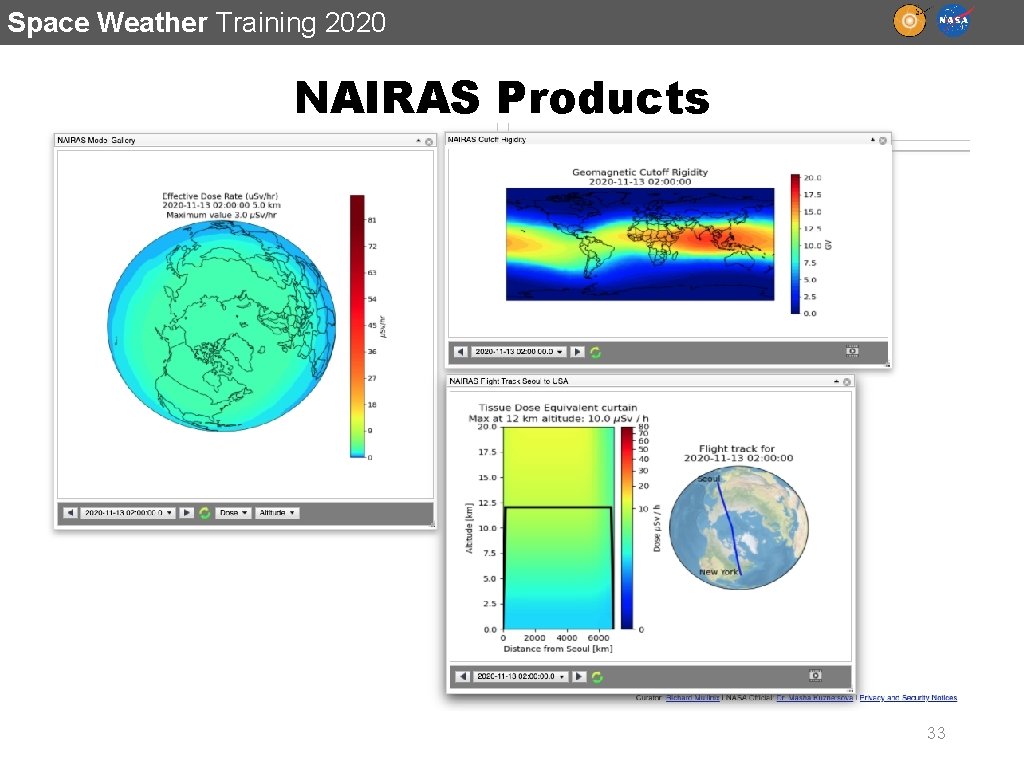
Space Weather Training 2020 NAIRAS • The Nowcast of Atmospheric Ionizing Radiation for Aviation Safety (NAIRAS) model is a real-time, global, physics-based model that predicts human radiation exposure from galactic cosmic rays (GCR) and solar energetic particle (SEP) events from the surface of the Earth to free-space. Realtime model products are now available on i. SWA, which include various types of dose maps at different altitudes (5 km, 11 km, 15 km, and 40 km), the rigidity cutoff images, and the tissue dose equivalent curtain for the flight route from New York to Seoul (South Korea). http: //bit. ly/NAIRAS-products 32
Space Weather Training 2020 NAIRAS Products 33