
SPACE SHUTTLE PROGRAM Space Shuttle Systems Engineering and
- Slides: 8
SPACE SHUTTLE PROGRAM Space Shuttle Systems Engineering and Integration Office NASA Johnson Space Center, Houston, Texas Debris Environment Overview September 16, 2003 John Muratore Chief, Systems Engineering and Integration Office Space Shuttle Program
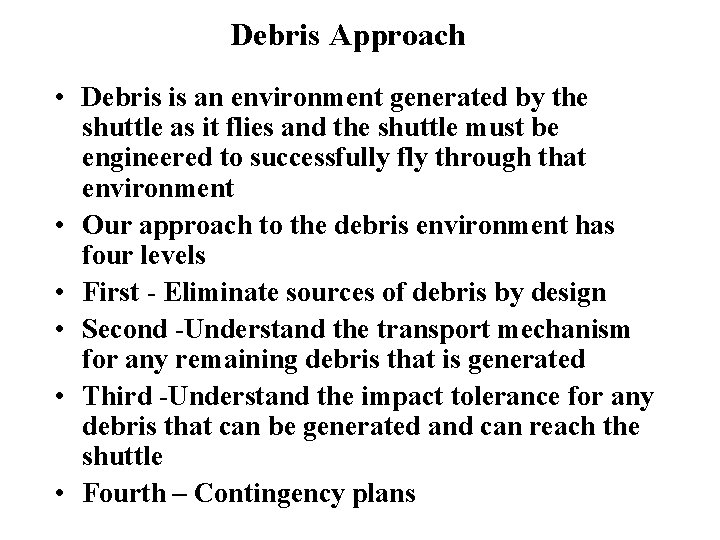
Debris Approach • Debris is an environment generated by the shuttle as it flies and the shuttle must be engineered to successfully fly through that environment • Our approach to the debris environment has four levels • First - Eliminate sources of debris by design • Second -Understand the transport mechanism for any remaining debris that is generated • Third -Understand the impact tolerance for any debris that can be generated and can reach the shuttle • Fourth – Contingency plans
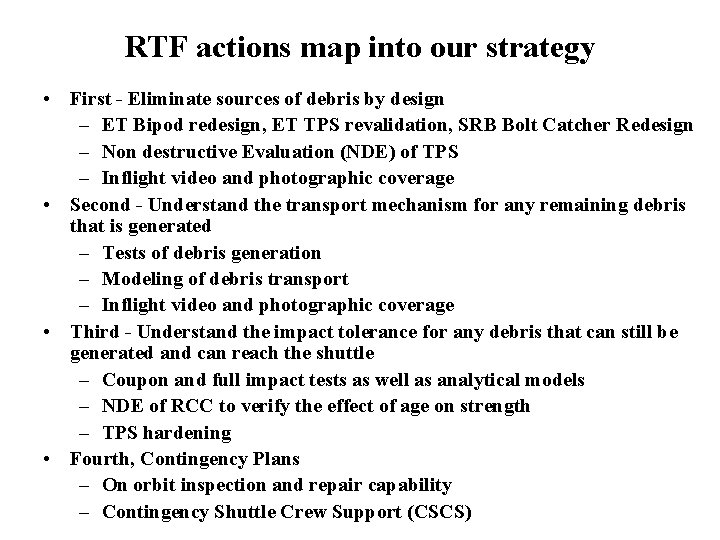
RTF actions map into our strategy • First - Eliminate sources of debris by design – ET Bipod redesign, ET TPS revalidation, SRB Bolt Catcher Redesign – Non destructive Evaluation (NDE) of TPS – Inflight video and photographic coverage • Second - Understand the transport mechanism for any remaining debris that is generated – Tests of debris generation – Modeling of debris transport – Inflight video and photographic coverage • Third - Understand the impact tolerance for any debris that can still be generated and can reach the shuttle – Coupon and full impact tests as well as analytical models – NDE of RCC to verify the effect of age on strength – TPS hardening • Fourth, Contingency Plans – On orbit inspection and repair capability – Contingency Shuttle Crew Support (CSCS)
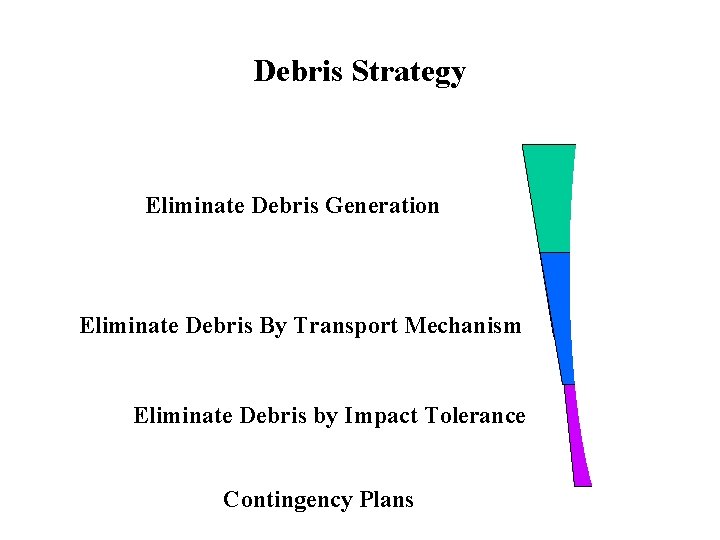
Debris Strategy Eliminate Debris Generation Eliminate Debris By Transport Mechanism Eliminate Debris by Impact Tolerance Contingency Plans
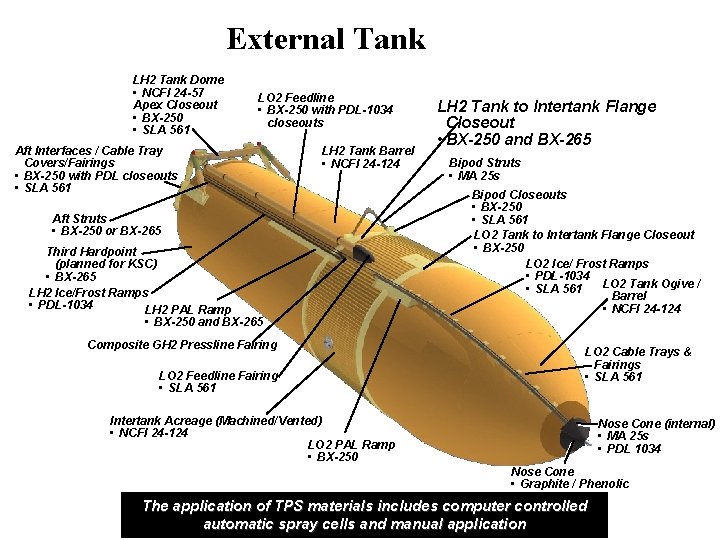
External Tank LH 2 Tank Dome • NCFI 24 -57 Apex Closeout • BX-250 • SLA 561 LO 2 Feedline • BX-250 with PDL-1034 closeouts Aft Interfaces / Cable Tray Covers/Fairings • BX-250 with PDL closeouts • SLA 561 LH 2 Tank Barrel • NCFI 24 -124 Aft Struts • BX-250 or BX-265 Third Hardpoint (planned for KSC) • BX-265 LH 2 Ice/Frost Ramps • PDL-1034 LH 2 PAL Ramp • BX-250 and BX-265 Composite GH 2 Pressline Fairing LO 2 Feedline Fairing • SLA 561 LH 2 Tank to Intertank Flange Closeout • BX-250 and BX-265 Bipod Struts • MA 25 s Bipod Closeouts • BX-250 • SLA 561 LO 2 Tank to Intertank Flange Closeout • BX-250 LO 2 Ice/ Frost Ramps • PDL-1034 LO 2 Tank Ogive / • SLA 561 Barrel • NCFI 24 -124 LO 2 Cable Trays & Fairings • SLA 561 Intertank Acreage (Machined/Vented) • NCFI 24 -124 LO 2 PAL Ramp • BX-250 Nose Cone (internal) • MA 25 s • PDL 1034 Nose Cone • Graphite / Phenolic The application of TPS materials includes computer controlled automatic spray cells and manual application
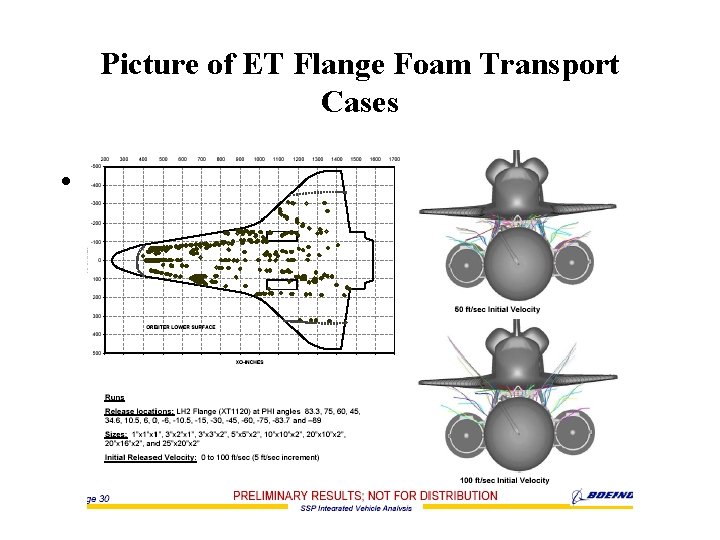
Picture of ET Flange Foam Transport Cases • Example of ET Flange Foam Debris Transport Analysis, Mach 3. 5
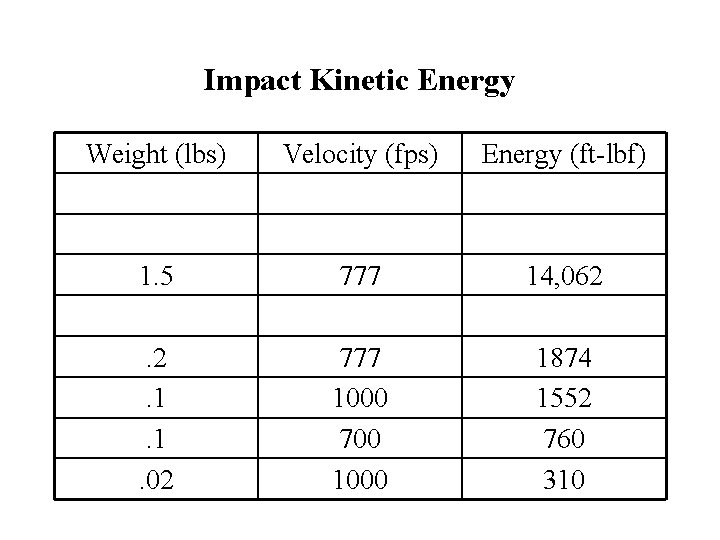
Impact Kinetic Energy Weight (lbs) Velocity (fps) Energy (ft-lbf) 1. 5 777 14, 062 . 2. 1. 1. 02 777 1000 700 1000 1874 1552 760 310
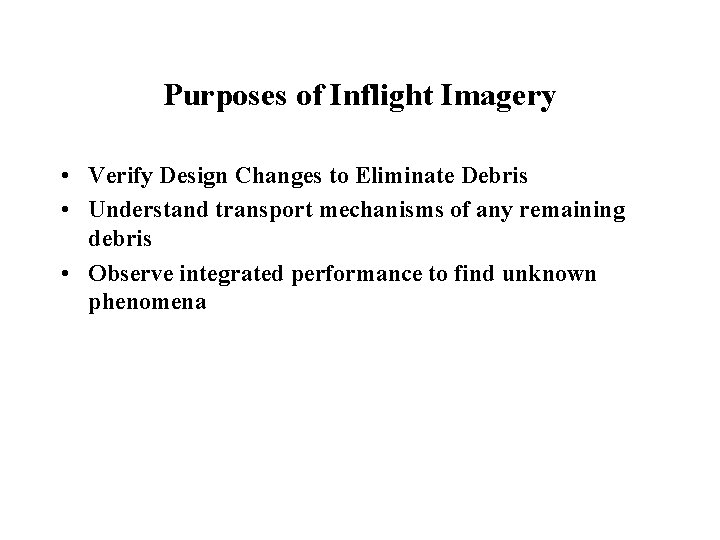
Purposes of Inflight Imagery • Verify Design Changes to Eliminate Debris • Understand transport mechanisms of any remaining debris • Observe integrated performance to find unknown phenomena