
Space Shape and Form Shape Shape is a
- Slides: 15
Space, Shape and Form
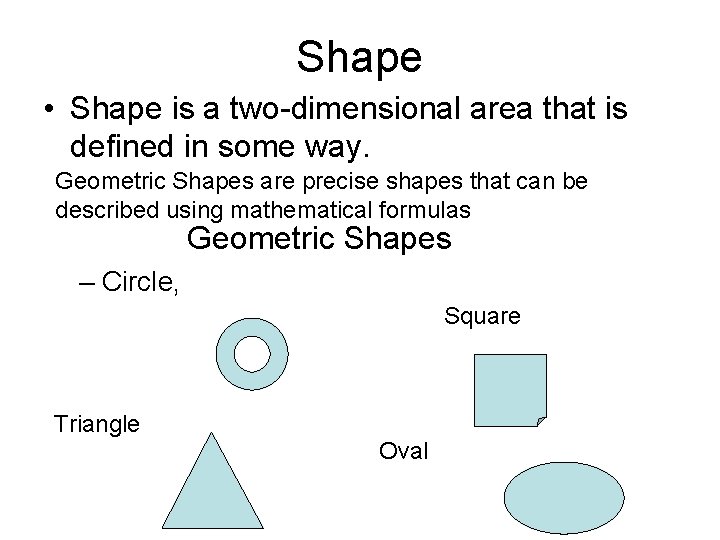
Shape • Shape is a two-dimensional area that is defined in some way. Geometric Shapes are precise shapes that can be described using mathematical formulas Geometric Shapes – Circle, Square Triangle Oval
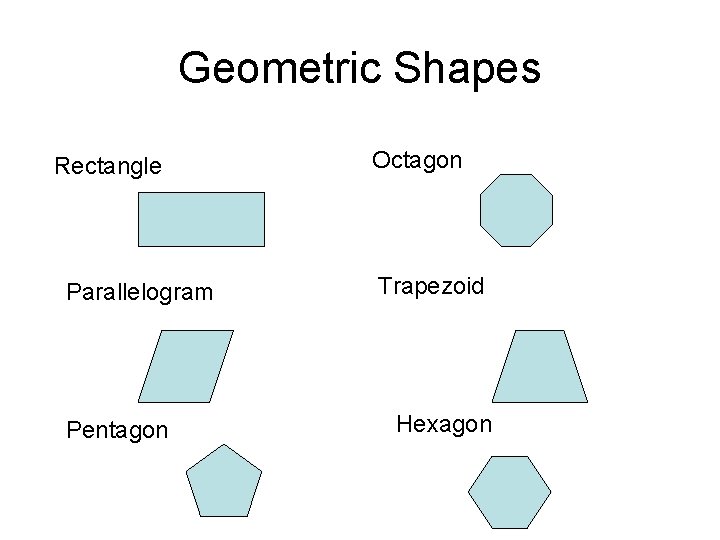
Geometric Shapes Rectangle Parallelogram Pentagon Octagon Trapezoid Hexagon
Free-form shapes/Organic • Free-form shapes are irregular and uneven shapes. • Outlines may be curved, angular or a combination of both. • Often occur in nature
• Forms are objects having three dimensions. • Forms may be either geometric or free-form. • Shapes and forms are related. One side of a cube is a square for example.
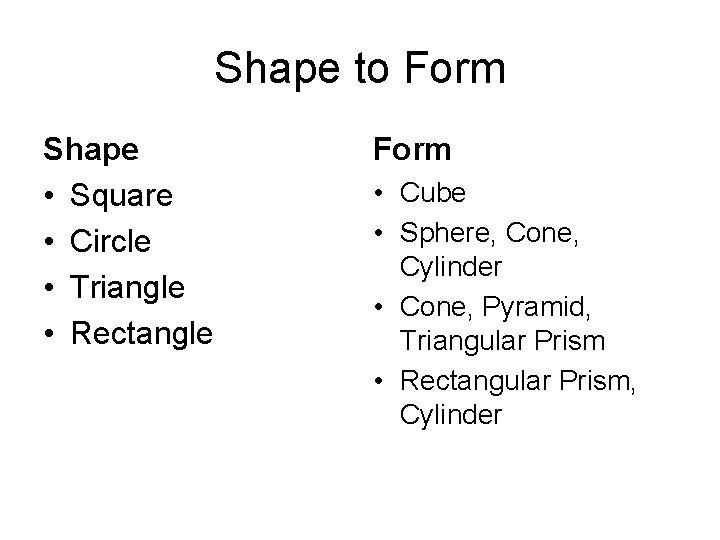
Shape to Form Shape • Square • Circle • Triangle • Rectangle Form • Cube • Sphere, Cone, Cylinder • Cone, Pyramid, Triangular Prism • Rectangular Prism, Cylinder
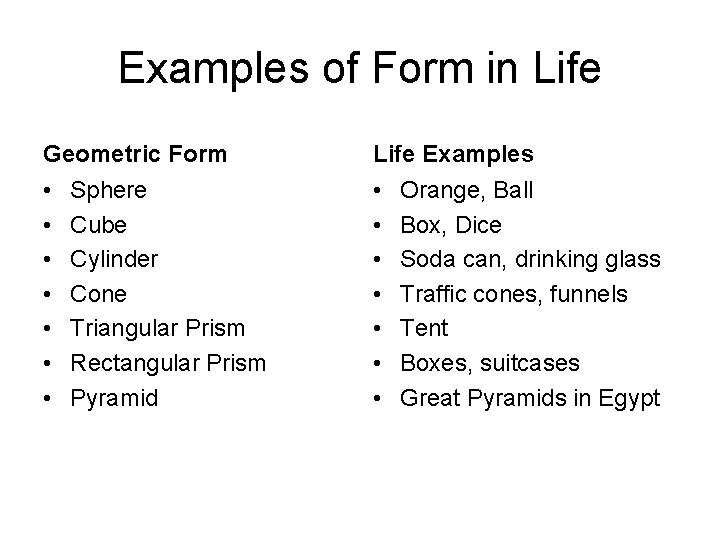
Examples of Form in Life Geometric Form Life Examples • • • • Sphere Cube Cylinder Cone Triangular Prism Rectangular Prism Pyramid Orange, Ball Box, Dice Soda can, drinking glass Traffic cones, funnels Tent Boxes, suitcases Great Pyramids in Egypt
Illusion of Form • Chiaroscuro is the arrangement of light and shadow. It is called modeling or shading today. • Highlights—small areas of white used to show the very brightest spots.
Expressive qualities • Free-form shapes and forms symbolize living things. • Angular shapes with zigzag and forms with pointed projections remind us of sharp, jagged things. • Geometric shapes and forms suggest mechanical perfection.
Outline and Surface Expressive qualities • Density—mass of an object. Dense materials are solid and heavy, soft fluffy forms are less dense. • Openness—an open form appears inviting and invites the viewer or audience in. Closed shapes and forms look solid and self-contained. • Activity and stability—active shapes and forms seem to defy gravity—they slant diagonally. Static shapes and forms are motionless or stable and usually horizontal
Space • Space is the element of art that refers to the emptiness or area between, around, above, below, or within objects. • Positive space—figure—the space within objects. • Negative space—ground—the empty spaces between objects.
Space in 3 D Art • Over, under, through, behind around are words that describe 3 D space. • 3 D art works take up real space. • Architects shape space • Negative areas in 3 D art are very real.
• Picture plane—the surface of a painting or drawing • Foreground: part of the picture plane that appears nearest to the viewer. • Background: the part that appears farthest away in a drawing or painting. • Middle Ground: the area between the foreground and background.
• Techniques for creating Space: • Perspective: a graphic system that creates the illusion of depth and volume on a 2 D surface. • Overlapping: when one object covers part of a second object so the first seems closer to the viewer. • Size: large objects appear to be closer to the viewer than small objects.
• Placement: objects placed low on the picture plane seem to be closer to the viewer that objects placed near eye level. • Detail: objects with clear sharp edges and visible details seem closer to you. • Color: brightly colored objects seem closer than dull colors. Warm colors appear closer than cool colors. • Point Perspective