
SOUTHWEST ASIA Middle East Geographic Understandings SS 7

- Slides: 62
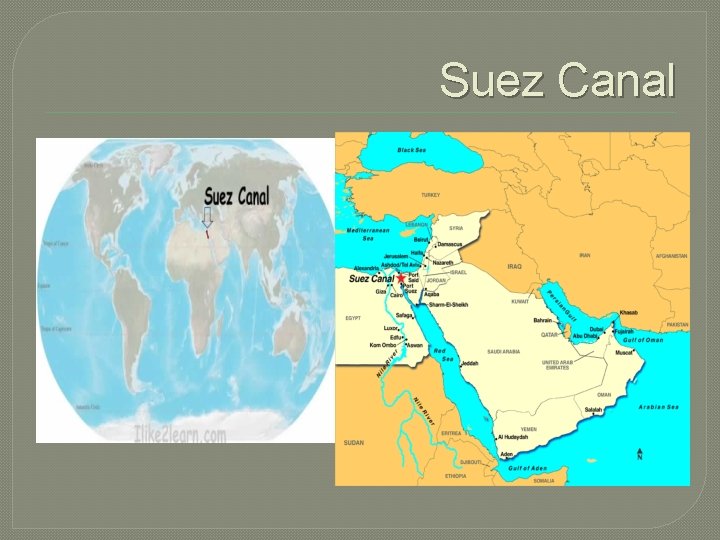
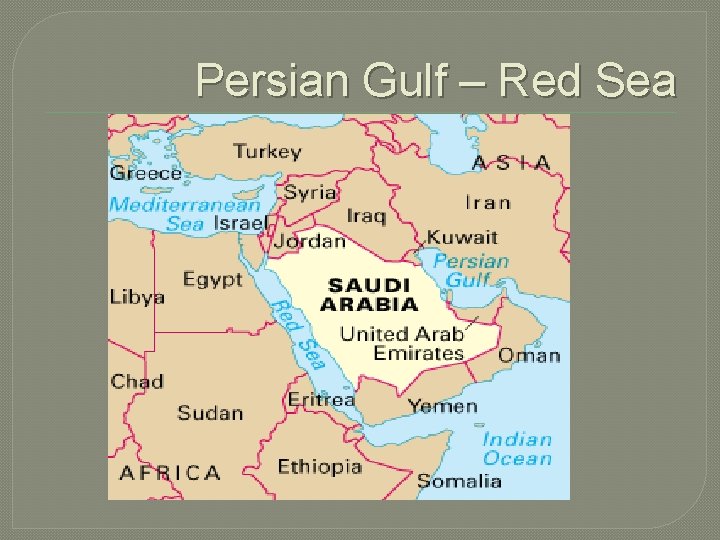
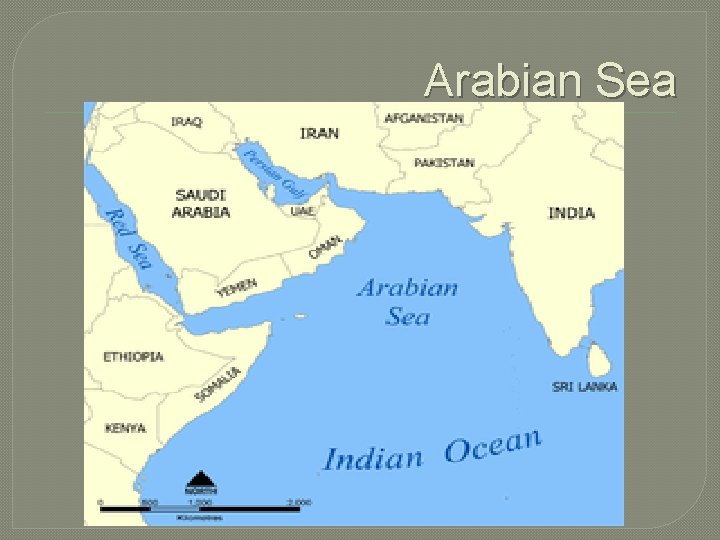
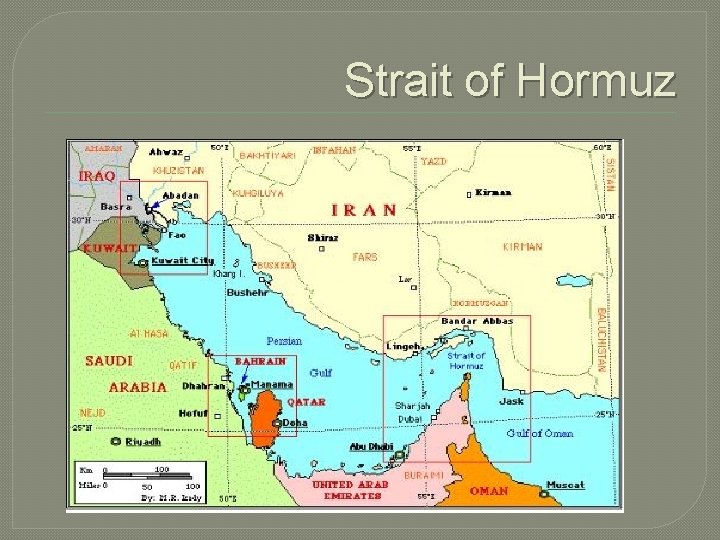
SOUTHWEST ASIA (Middle East) Geographic Understandings SS 7 G 5 The student will locate selected features in Southwestern Asia (Middle East). a. Locate on a world and regional politicalphysical map: Euphrates River, Jordan River, Tigris River, Suez Canal, Persian Gulf, Strait of Hormuz, Arabian Sea, Red Sea, and Gaza Strip.
Middle East Geography
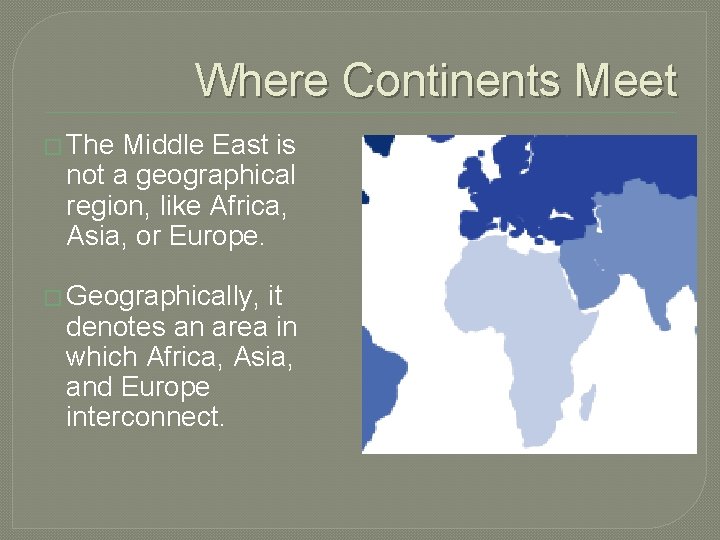
Where Continents Meet � The Middle East is not a geographical region, like Africa, Asia, or Europe. � Geographically, it denotes an area in which Africa, Asia, and Europe interconnect.
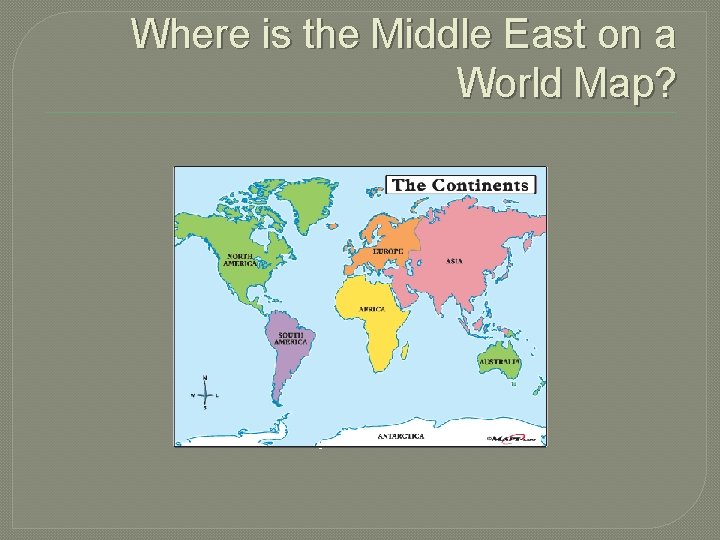
Where is the Middle East on a World Map?
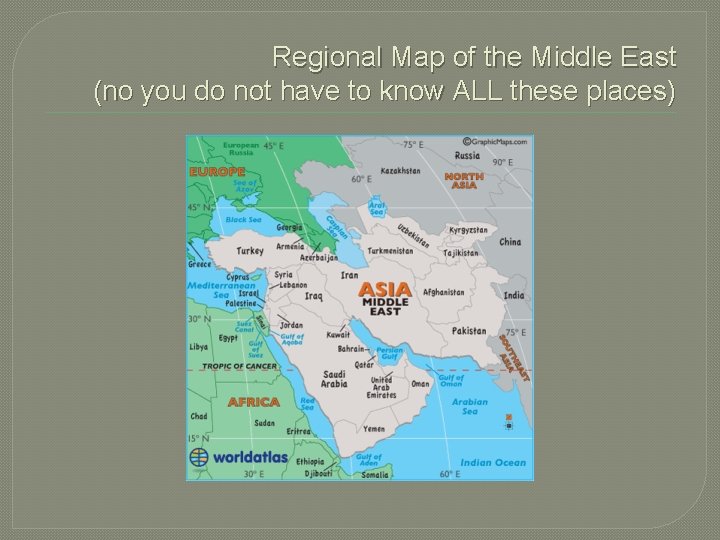
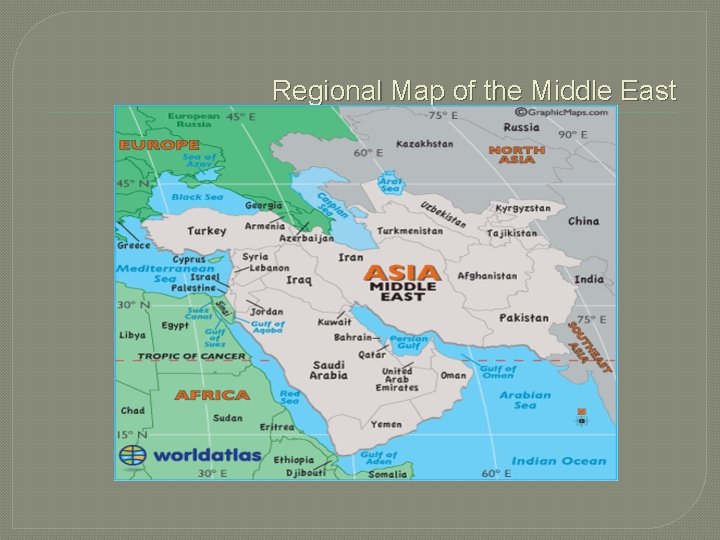
Regional Map of the Middle East (no you do not have to know ALL these places)
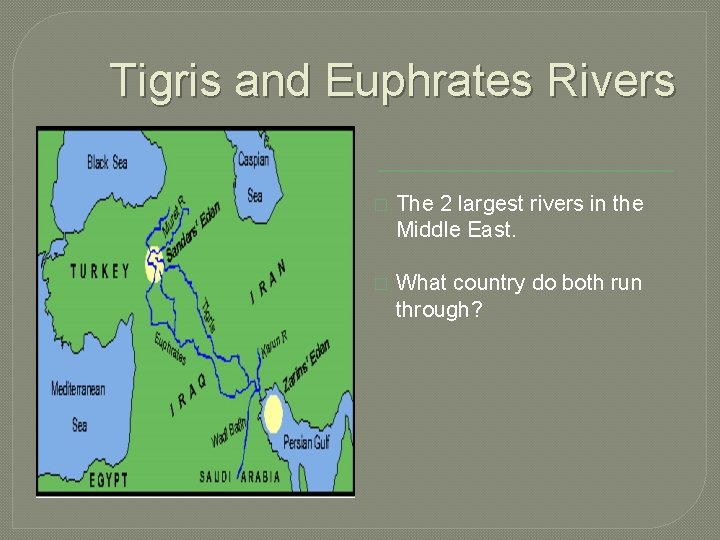
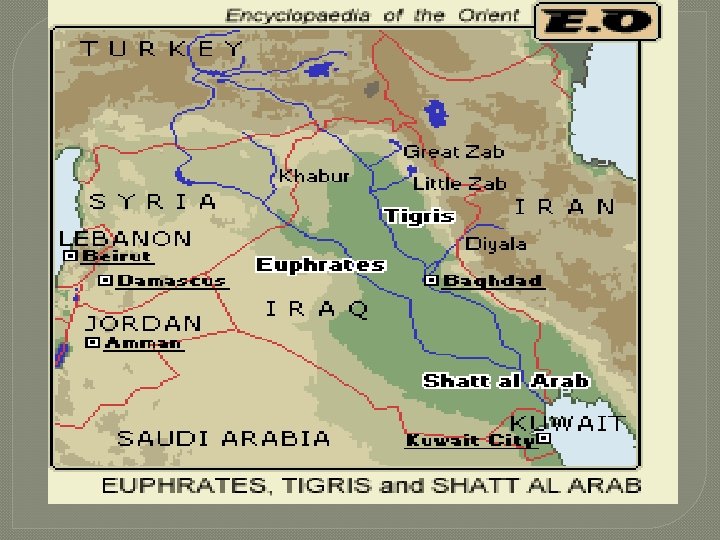
Tigris and Euphrates Rivers � The 2 largest rivers in the Middle East. � What country do both run through?
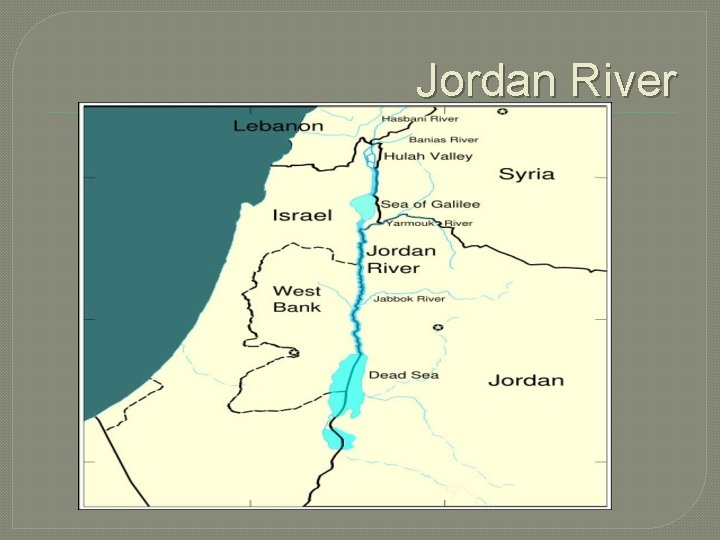
Jordan River
Suez Canal
Persian Gulf – Red Sea
Arabian Sea
Strait of Hormuz
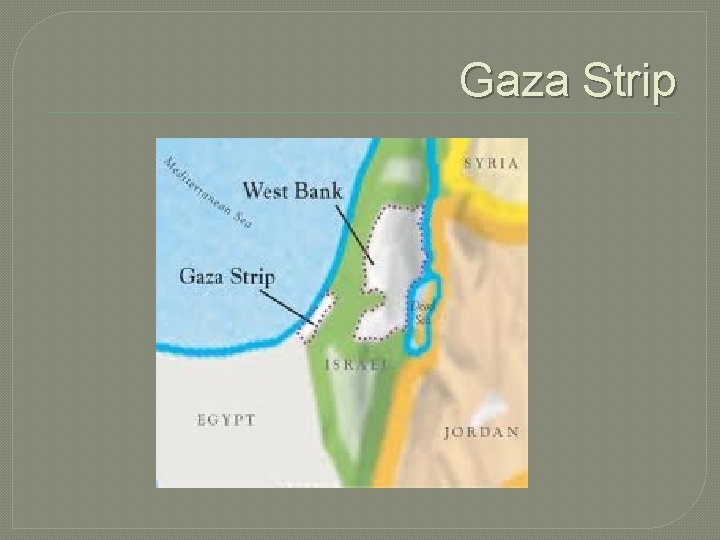
Gaza Strip
SS 7 G 5 The student will locate selected features in Southwestern Asia (Middle East). b. Locate on a world and regional political-physical map the nations of Afghanistan, Iraq, Israel, Saudi Arabia, and Turkey.
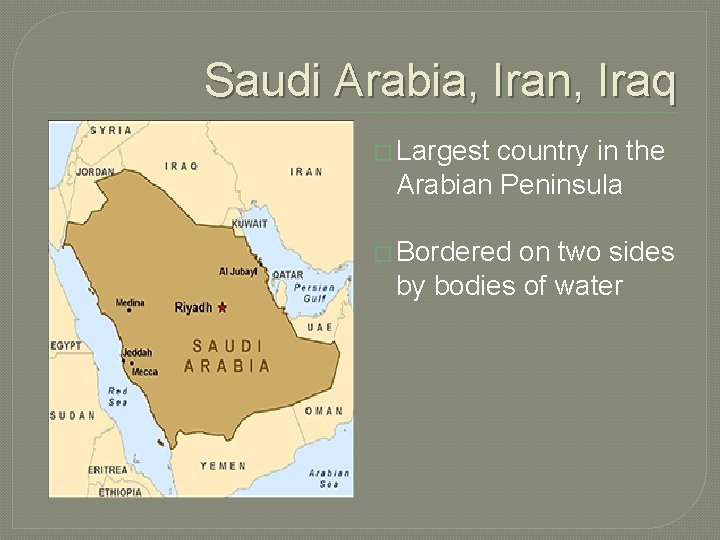
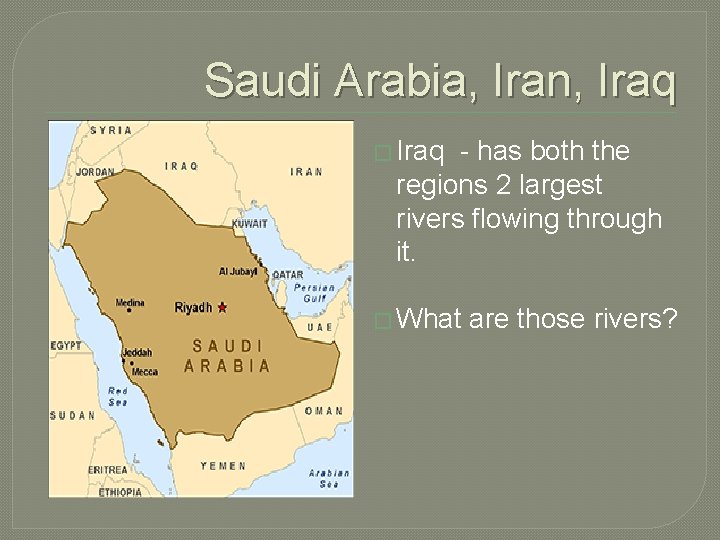
Saudi Arabia, Iran, Iraq � Largest country in the Arabian Peninsula � Bordered on two sides by bodies of water
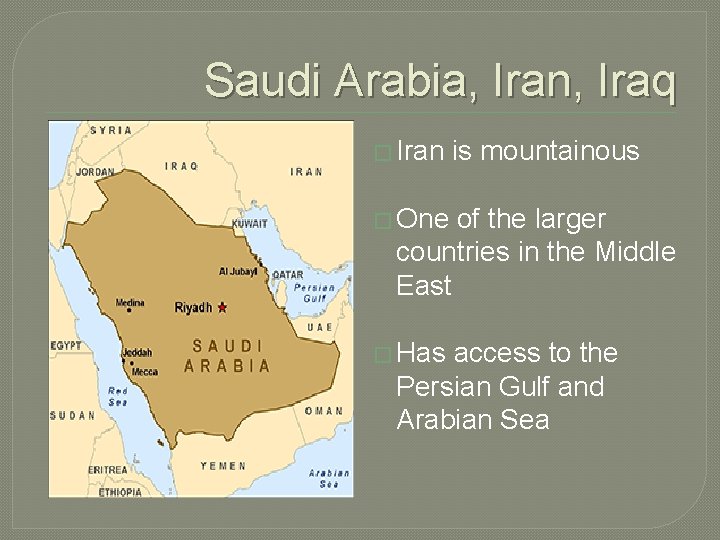
Saudi Arabia, Iran, Iraq � Iran is mountainous � One of the larger countries in the Middle East � Has access to the Persian Gulf and Arabian Sea
Saudi Arabia, Iran, Iraq � Iraq - has both the regions 2 largest rivers flowing through it. � What are those rivers?
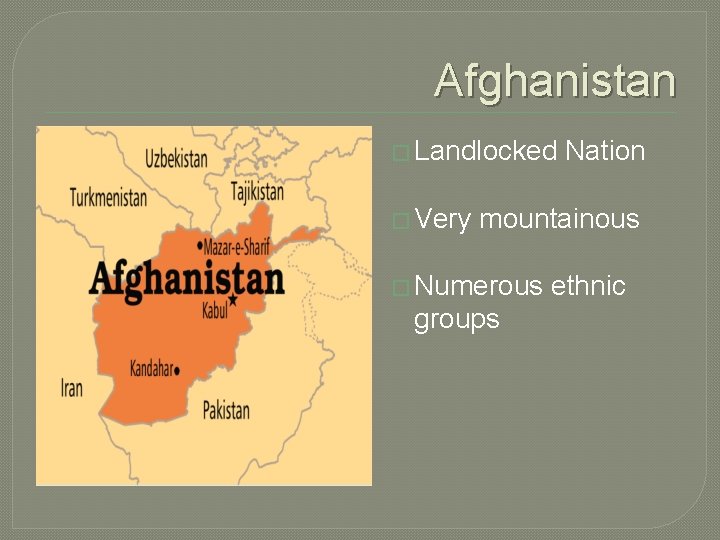
Afghanistan � Landlocked � Very Nation mountainous � Numerous groups ethnic
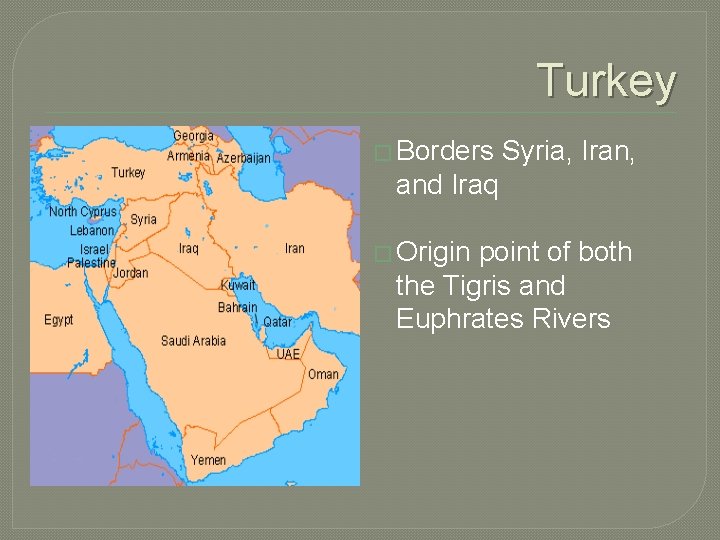
Turkey � Borders Syria, Iran, and Iraq � Origin point of both the Tigris and Euphrates Rivers
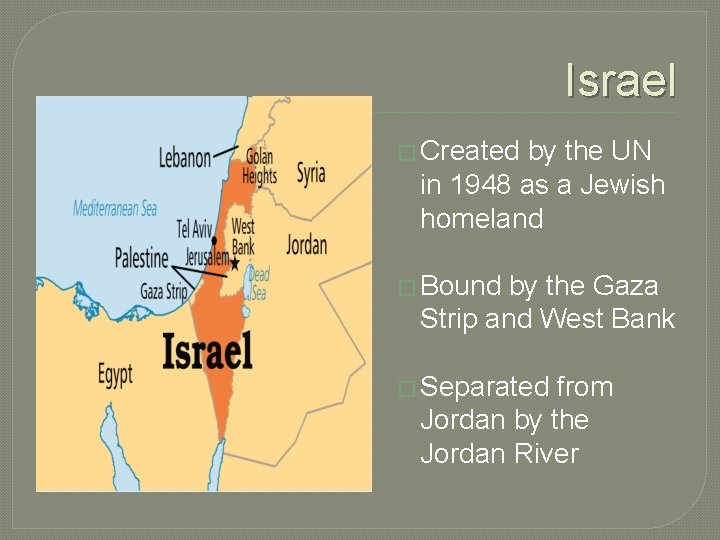
Israel � Created by the UN in 1948 as a Jewish homeland � Bound by the Gaza Strip and West Bank � Separated from Jordan by the Jordan River
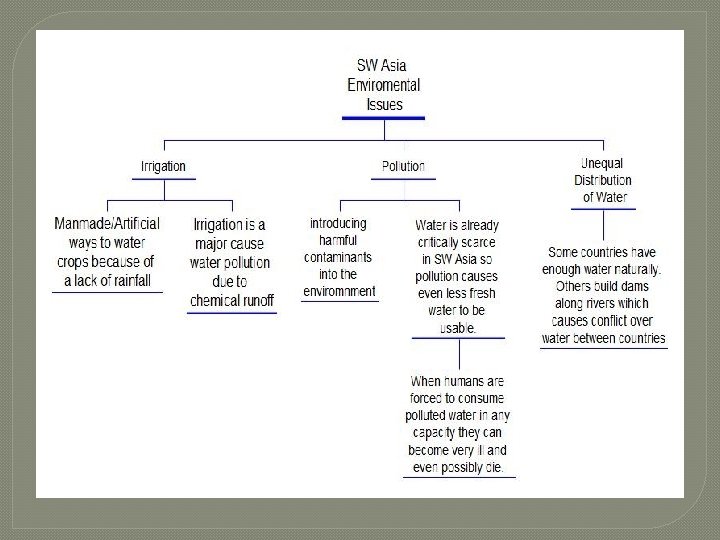
SS 7 G 6 - The student will discuss environmental issues across Southwest Asia (Middle East). a. Explain how water pollution and the unequal distribution of water impacts irrigation and drinking water.
What is the most important Natural Resource in the world? http: //www. youtube. com/watch? v=7 RZu 4 t. Tp_0 U&featu re=player_detailpage __ __ __
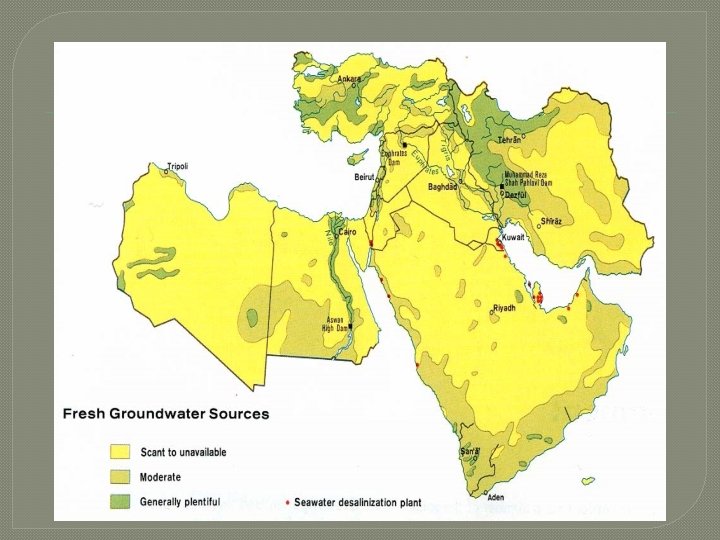
Some Middle Eastern Countries have an abundance of water while others have very little!!! http: //www. youtube. com/watch? v=k. ZNx. PRf. ZJnc&feature=player_detai lpage Building of Dams have caused major conflict between ME countries Why Build Dams, and why might this cause trouble?
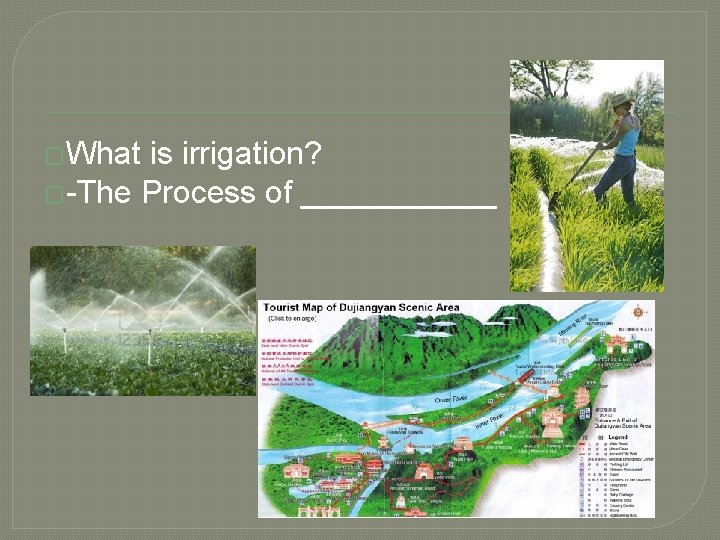
�What is irrigation? �-The Process of ______
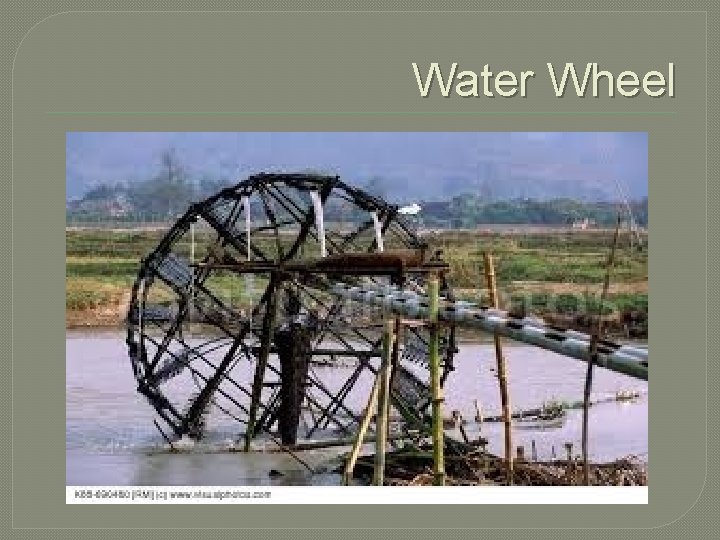
Water Wheel
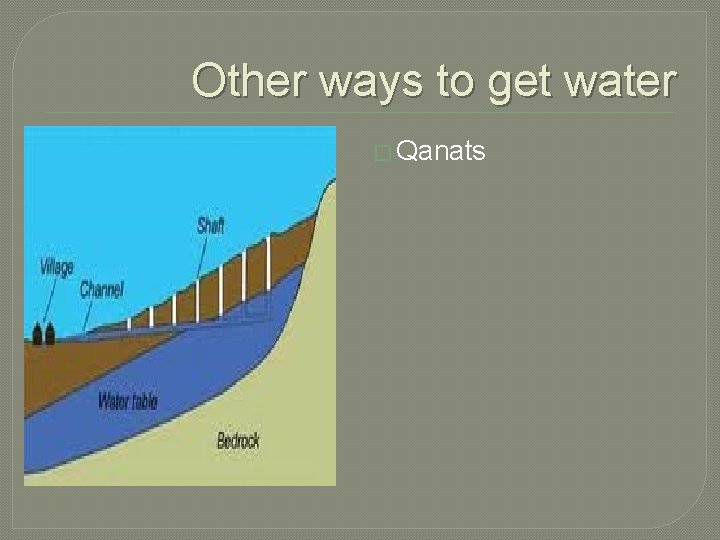
Other ways to get water � Qanats
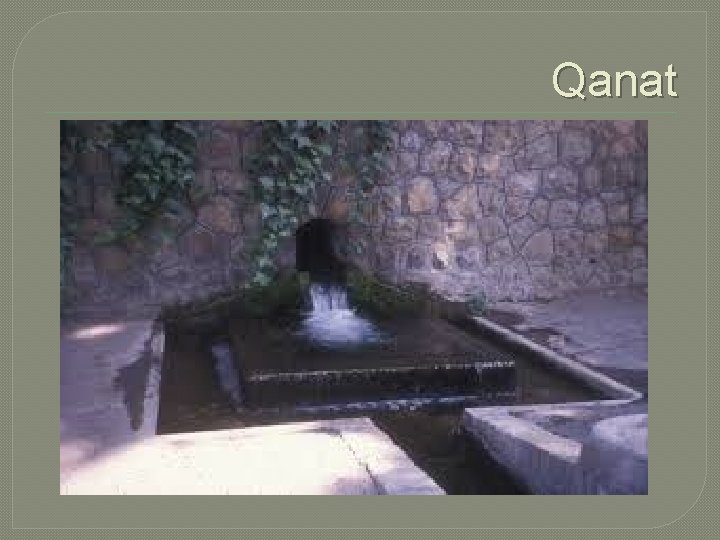
Qanat
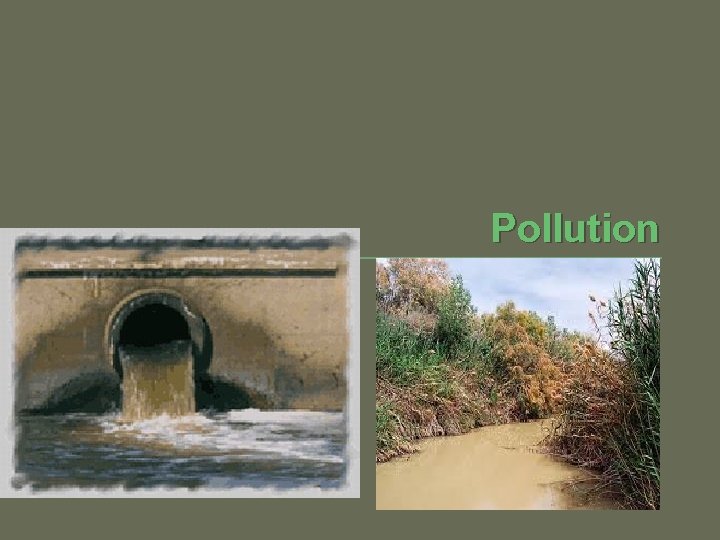
Pollution
Polluted Water http: //www. youtube. com/watch? v=Ip 3 Q 2 VZv_Ks&feature=player_ detailpage
SS 7 G 7 The student will explain the impact of location, climate, physical characteristics, Distribution of natural resources and population distribution on Southwest Asia (Middle East). a. Explain how the distribution of oil has affected the development of Southwest Asia (Middle East).
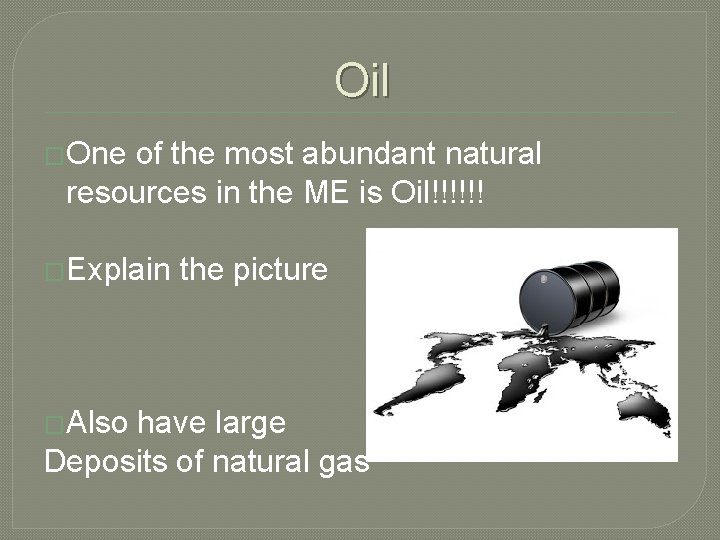
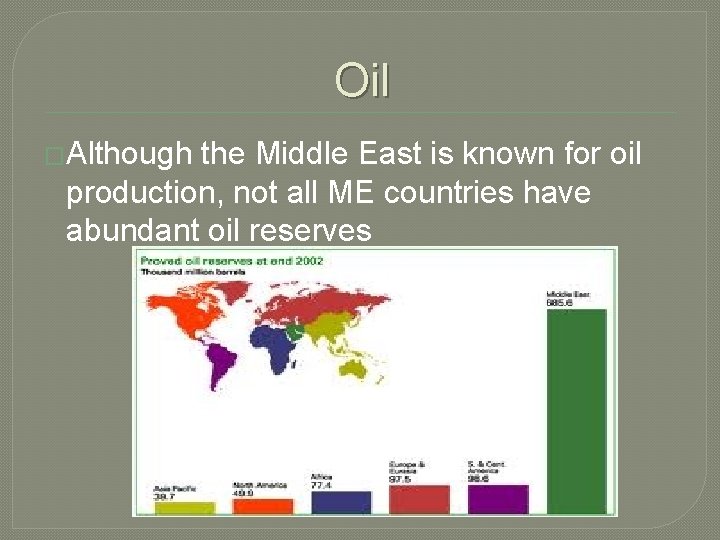
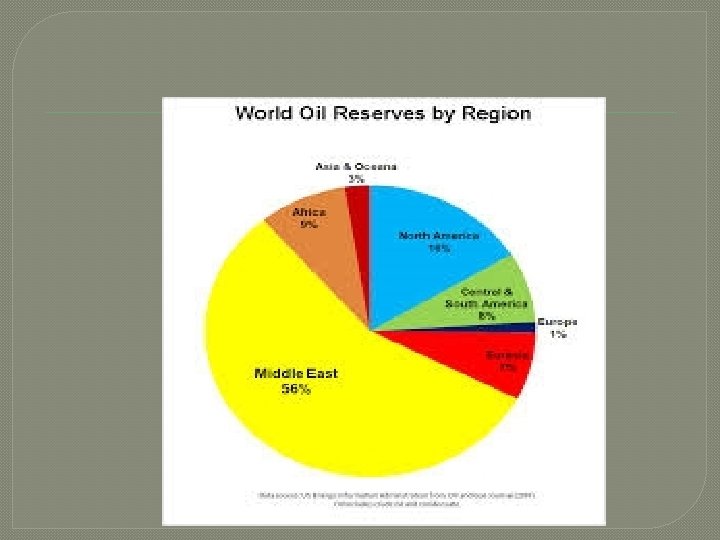
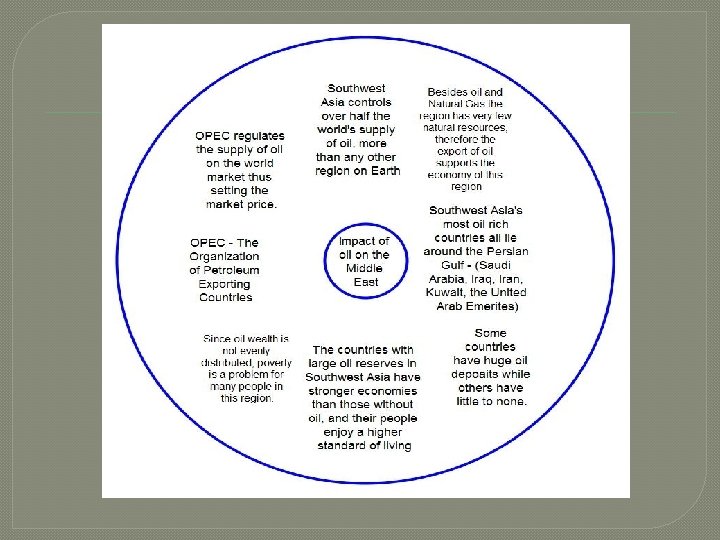
Oil �One of the most abundant natural resources in the ME is Oil!!!!!! �Explain �Also the picture have large Deposits of natural gas
Oil �Although the Middle East is known for oil production, not all ME countries have abundant oil reserves
Regional Map of the Middle East
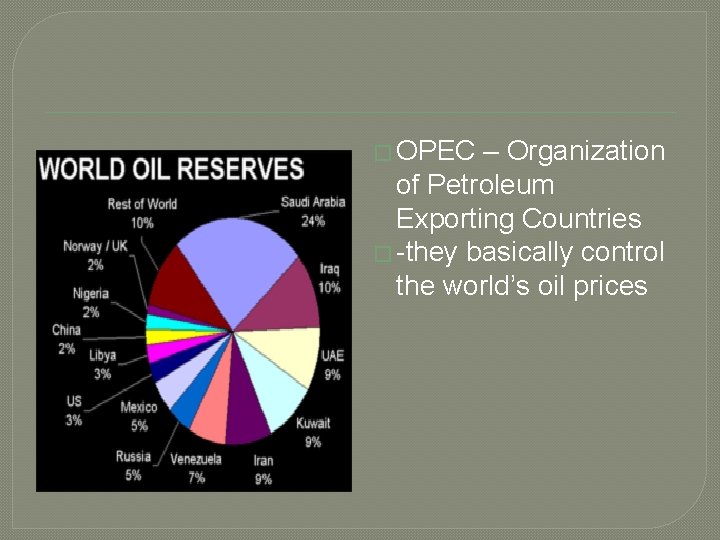
� OPEC – Organization of Petroleum Exporting Countries � -they basically control the world’s oil prices
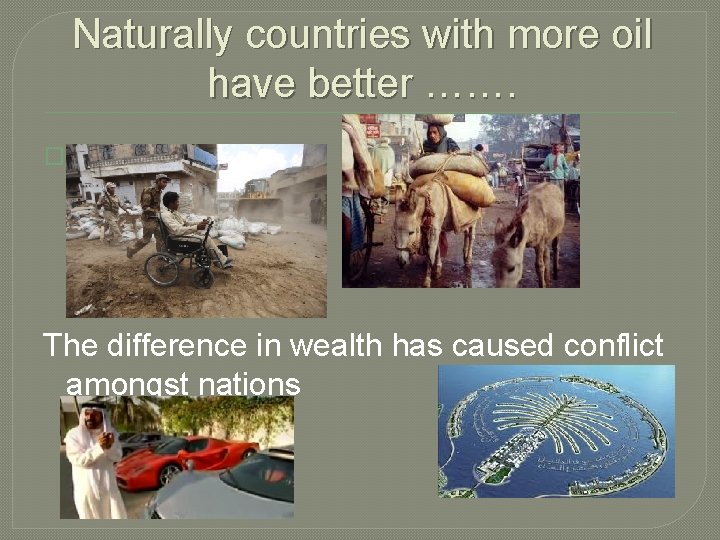
Naturally countries with more oil have better ……. �…………… The difference in wealth has caused conflict amongst nations
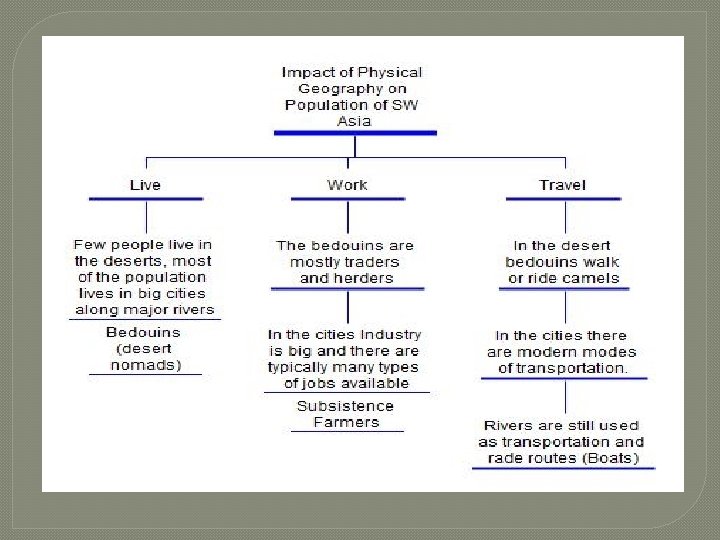
SS 7 G 7 The student will explain the impact of location, climate, physical characteristics, Distribution of natural resources and population distribution on Southwest Asia (Middle East). b. Describe how the deserts and rivers of Southwest Asia (Middle East) have affected the population in terms of where people live, the type of work they do, and how they travel.
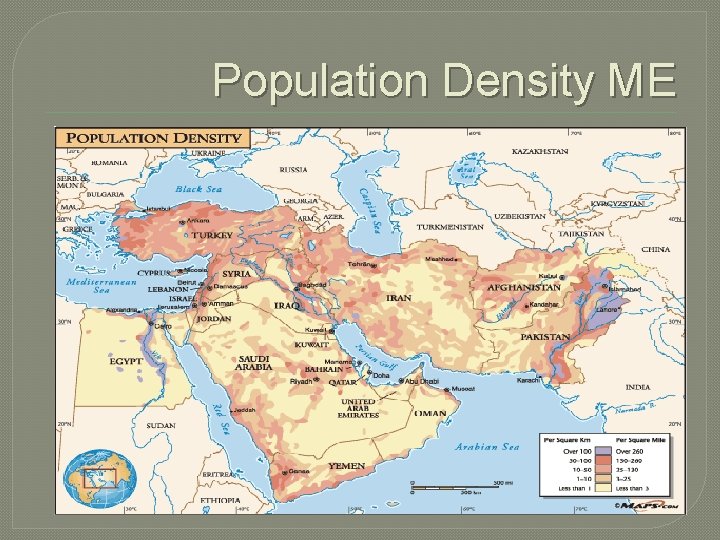
Population Density ME
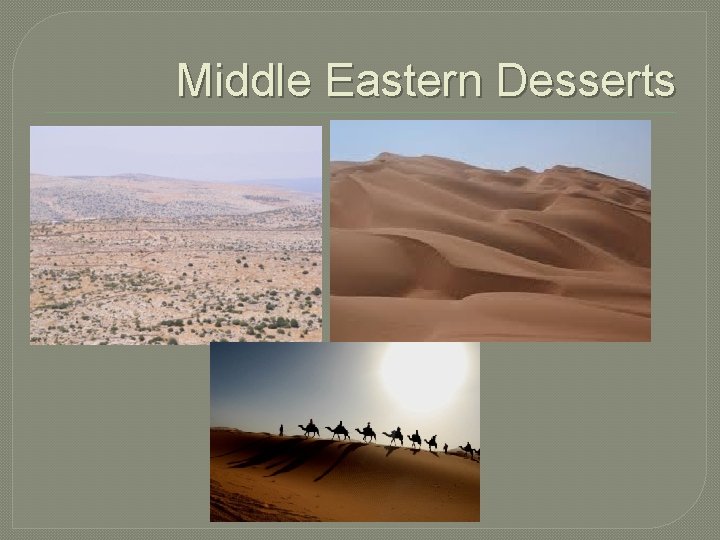
�Climate – the type of weather a region has over a long period of time. �What type of climate does the Middle East have?
Middle Eastern Desserts
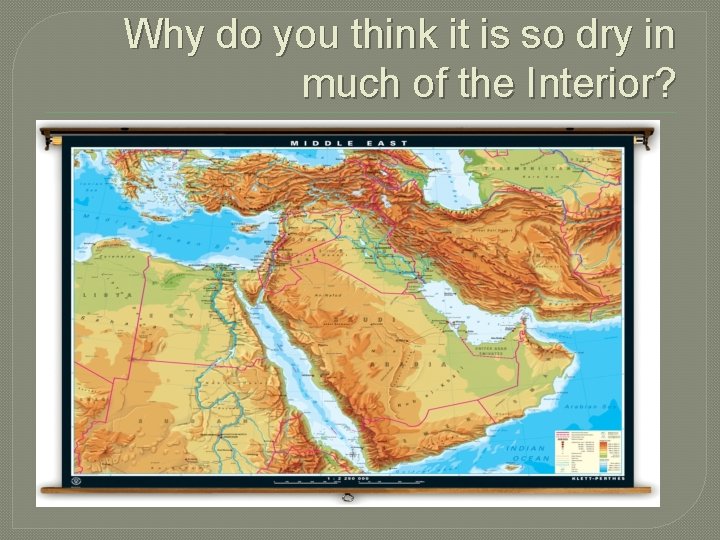
Why do you think it is so dry in much of the Interior?
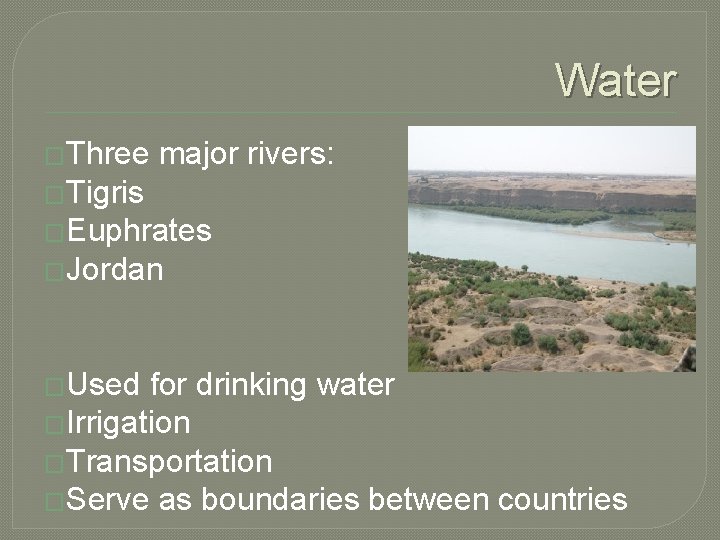
Water �Three major rivers: �Tigris �Euphrates �Jordan �Used for drinking water �Irrigation �Transportation �Serve as boundaries between countries
�Most of the people live in or around cities which are typically built along or around _______ �Some groups do live in the desert �Bedouins
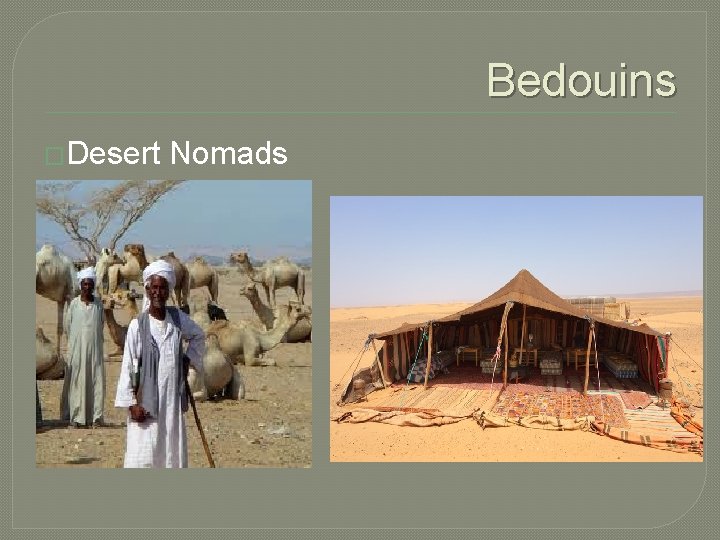
Bedouins �Desert Nomads
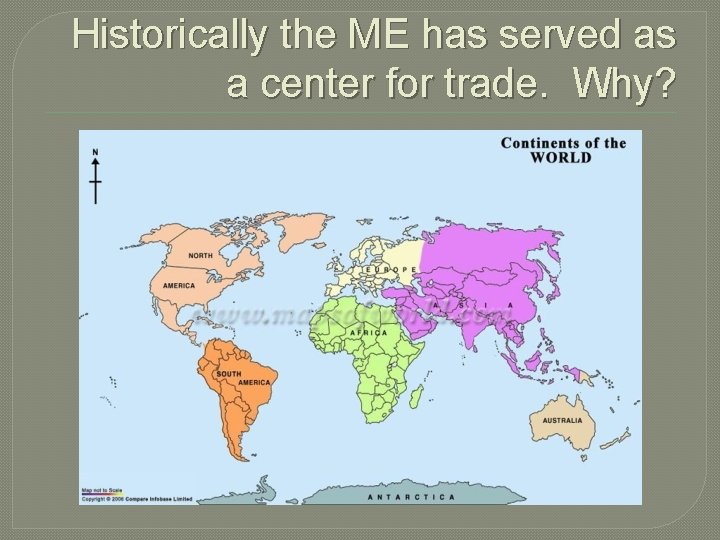
Historically the ME has served as a center for trade. Why?
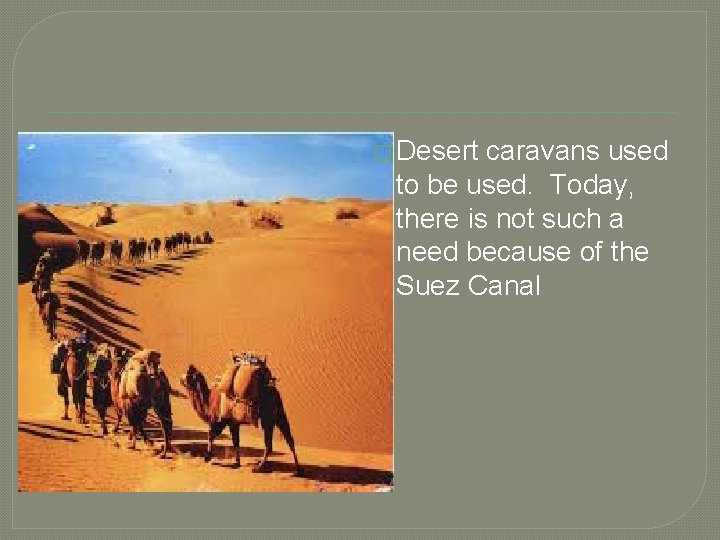
� Desert caravans used to be used. Today, there is not such a need because of the Suez Canal
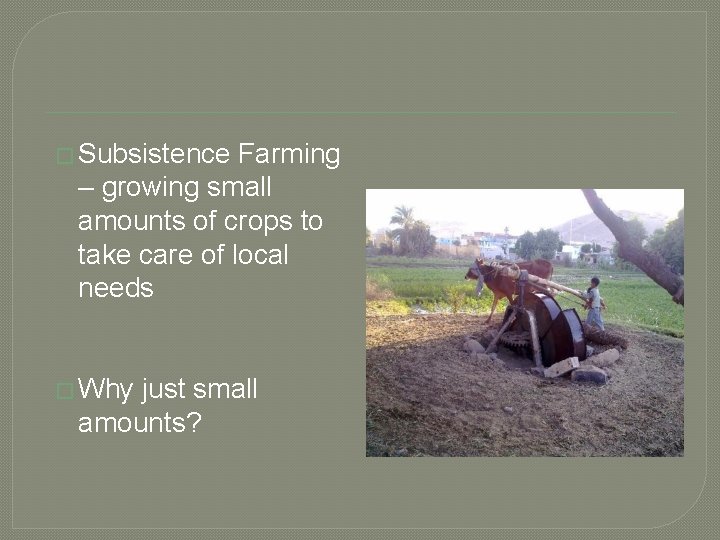
� Subsistence Farming – growing small amounts of crops to take care of local needs � Why just small amounts?
SS 7 G 8 The student will describe the diverse cultures of the people who live in Southwest Asia (Middle East). a. Explain the differences between an ethnic group and a religious group.
Ethnic Group �A group of people who share cultural ideas and beliefs that have been a part of their community for generations -language -physical appearance -religion -shared history -food -traditional stories
Religious Group �A group of people who share a belief system in God or Gods, with a specific set of rituals and literature. �Example: �Very Jews, Christians, Muslims Important: Religious groups can be composed of more than 1 ethnic group!
SS 7 G 8 The student will describe the diverse cultures of the people who live in Southwest Asia (Middle East). b. Explain the diversity of religions within the Arabs, Persians, and Kurds.
�SW Asia/ Middle East is home to many different ethnic groups who share similar religions �The three most numerous ethnic groups in SW Asia are Arabs, Persians, and Kurds
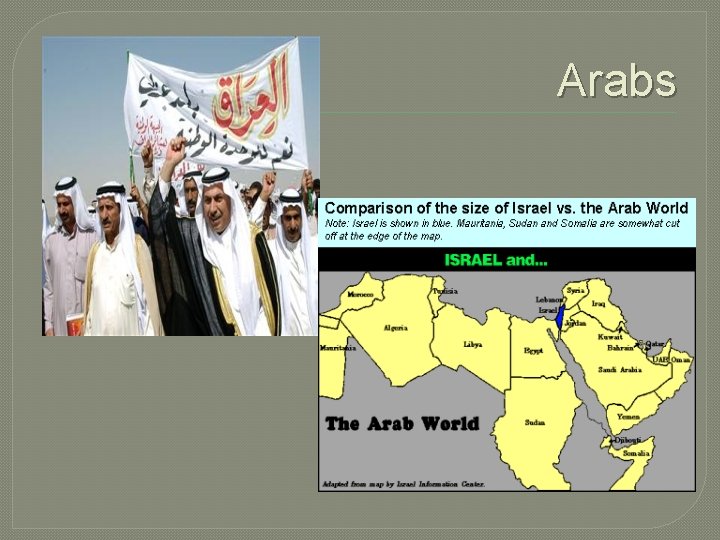
Arabs
Arabs �Arabs believe they are descendants of Abraham via Ishmael �Most Arabs practice Islam, therefore are Muslims �Speak Arabic
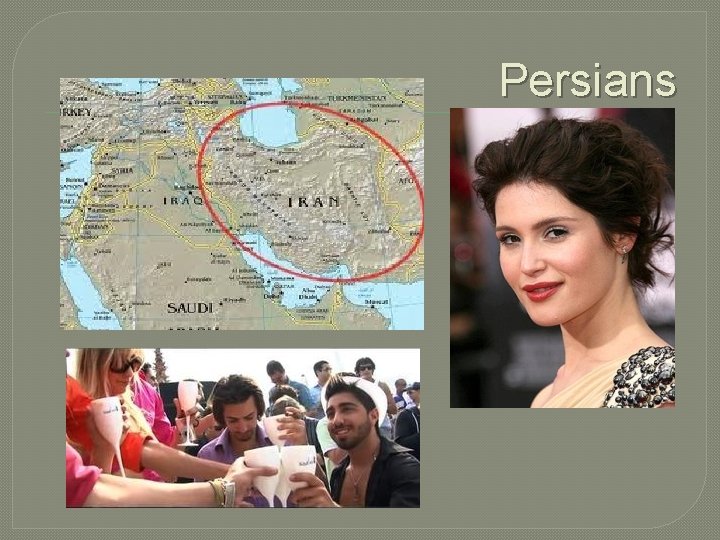
Persians
Persians �Majority of Persians live in what is today Iran, but can be found scattered in other parts of the ME �Descended from Indo-Europeans from Central Europe and Southern Russia �Speak Farsi �Many practice Islam (Shia-about 15% of Muslims), some are Christian
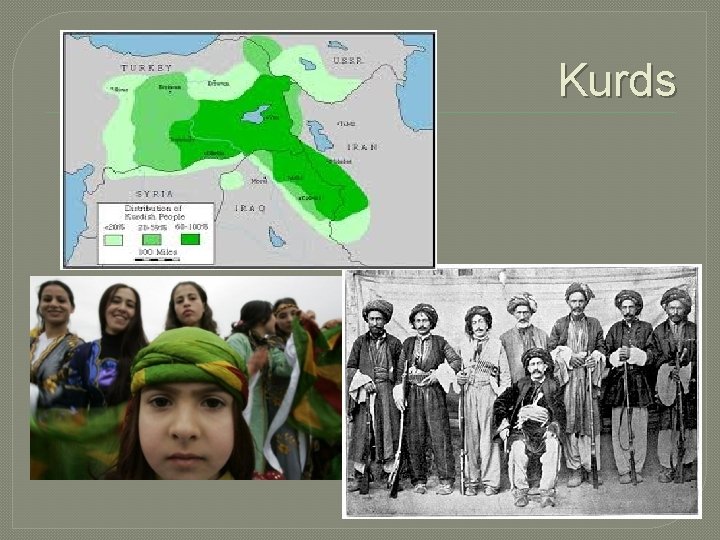
Kurds
Kurds �World’s largest ethnic group without a homeland �Live in the mountainous areas where Syria, Turkey, Iran, and Iraq come together �Speak Kurdish �Most Kurds are Sunni Muslim(a small minority of Shia) �Have a distinct history, Lit. , Music, traditions